Publication: Gen. S. Afr. Fl. Pl. 245. 1926
Description
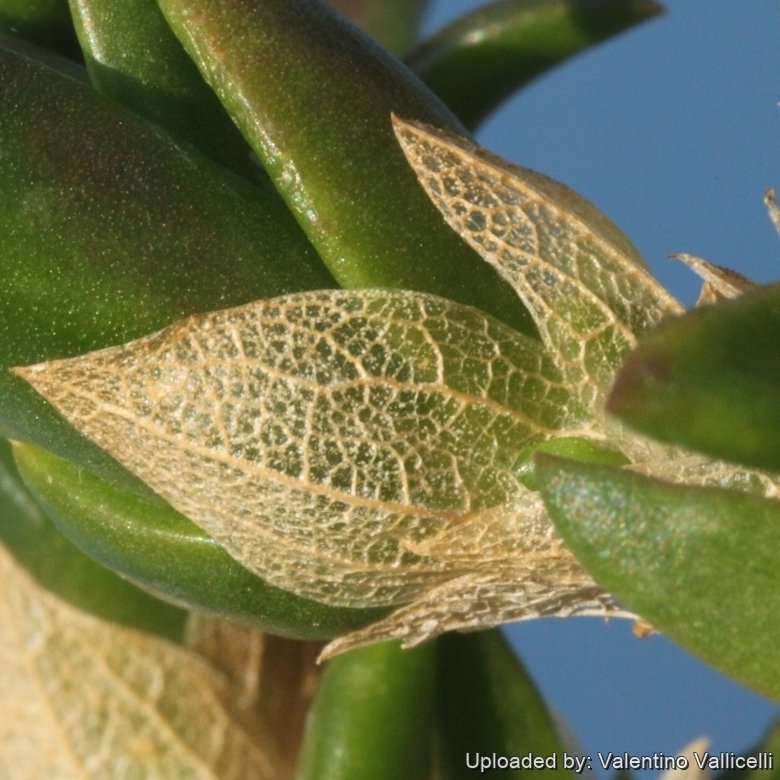
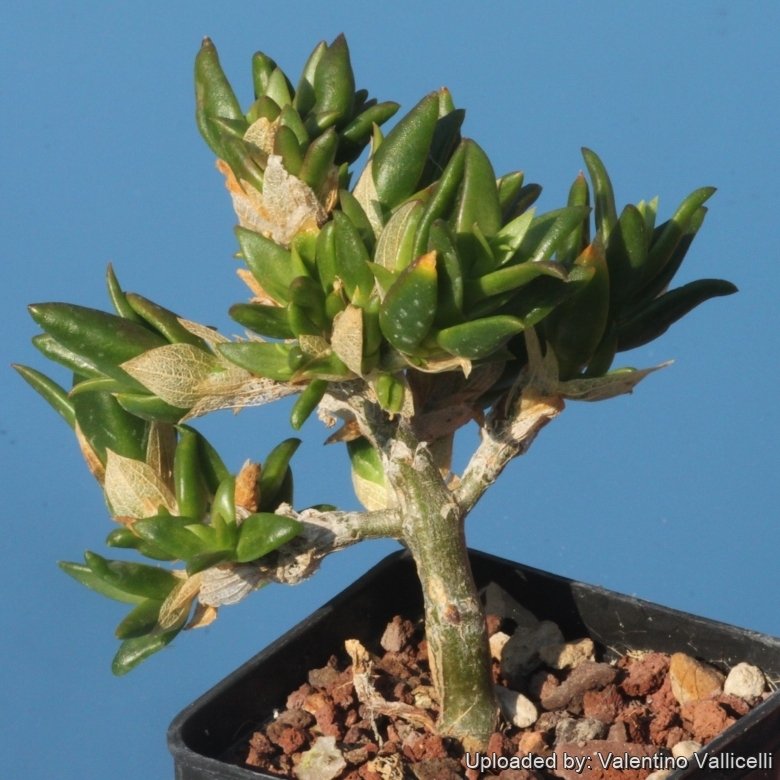
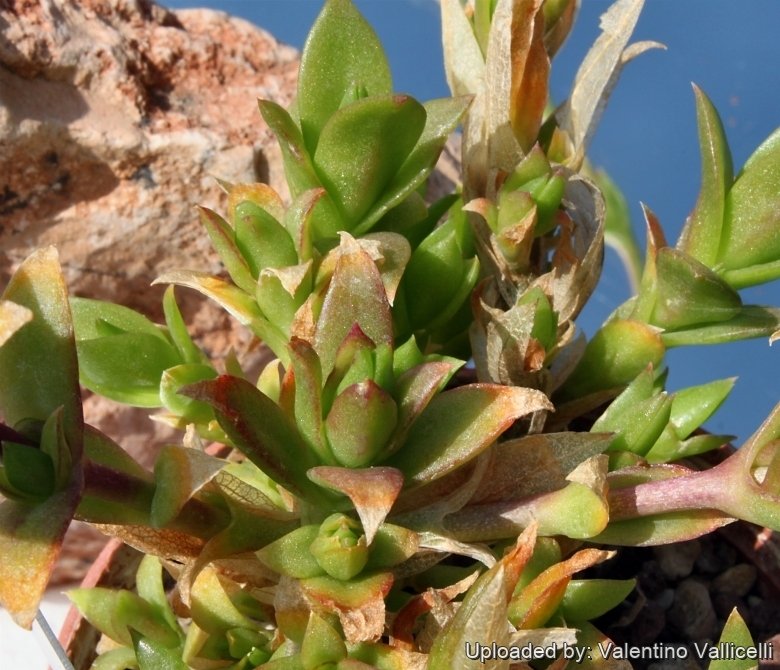
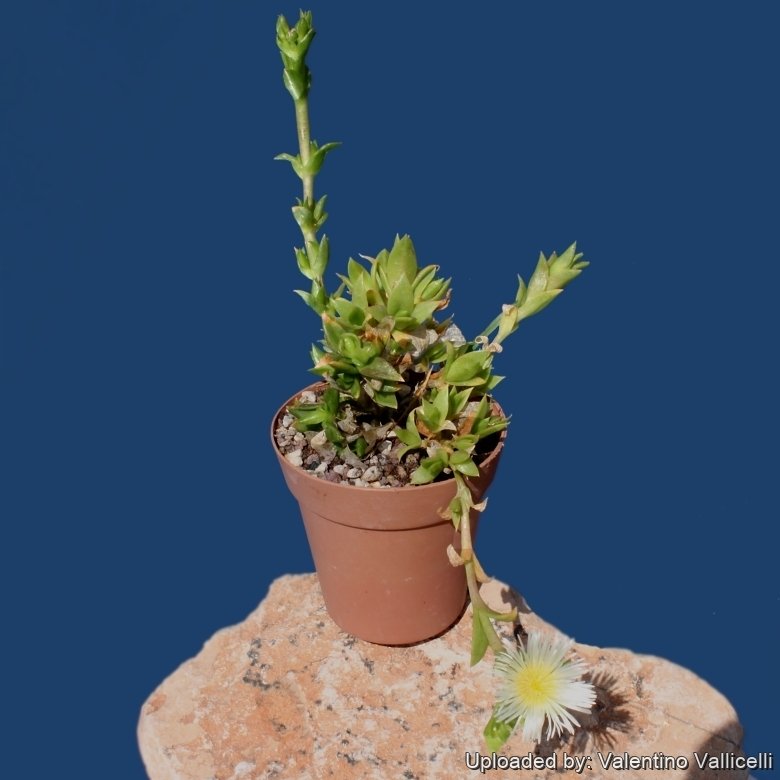
It is a short-lived (with a life span of approximately 3 to 5 years. ) perennial climbing or creeping mesemb. It has characteristic persistent leaf veins that remain on the plant. When the leaves dry out they become “scheletonised”, hence the name Sceletium. The species is readily distinguishable by the imbricate leaves with incurved tips.
Stem: The slender branches become thick and only slightly woody with age.
Leaves: Imbricated with recurved tips and 3 to 5 major veins.
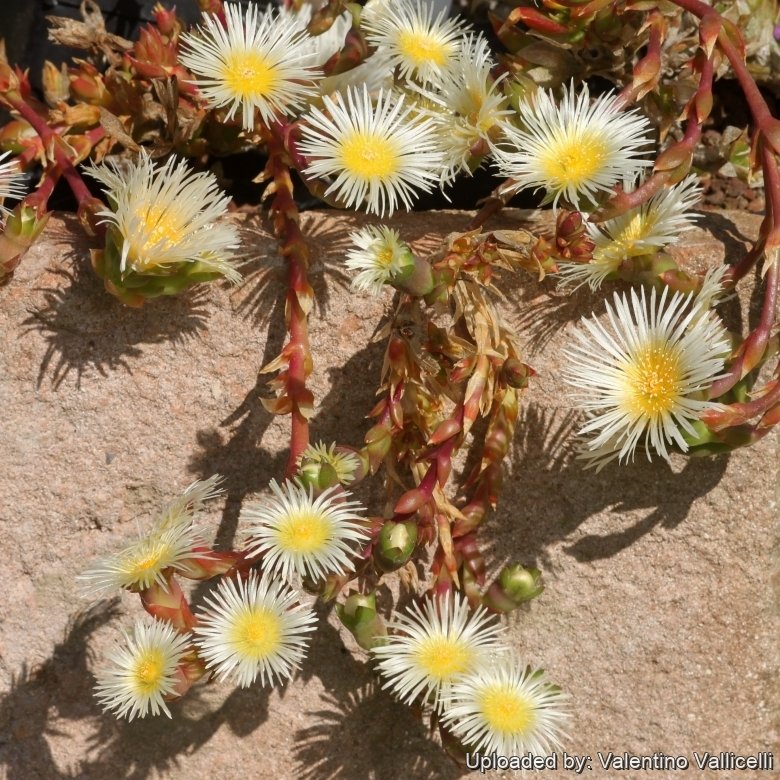
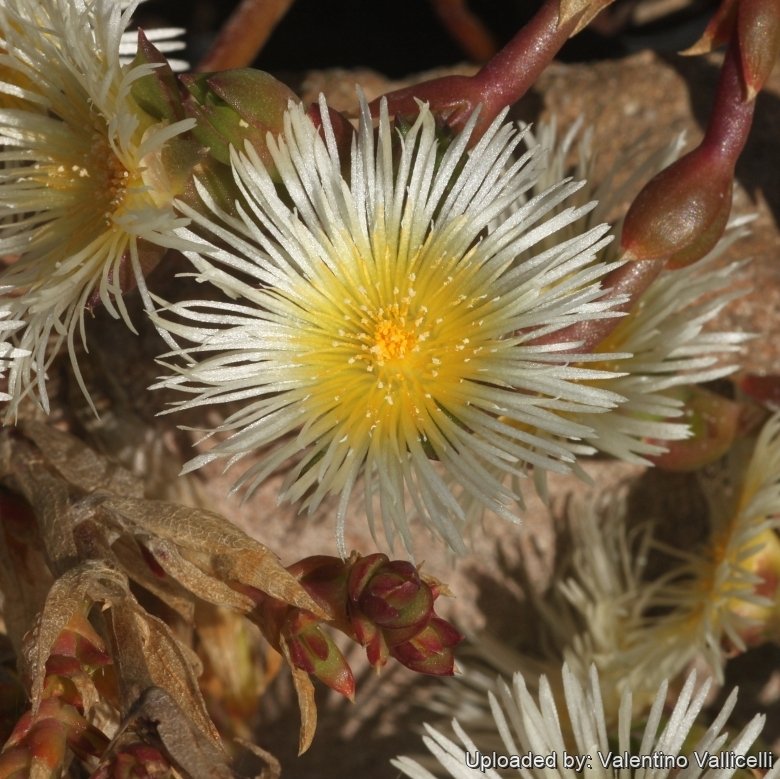
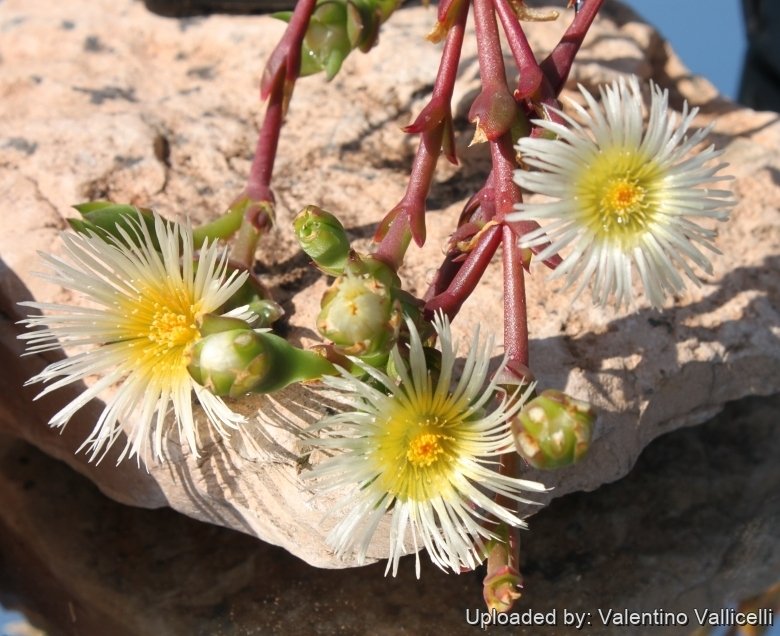
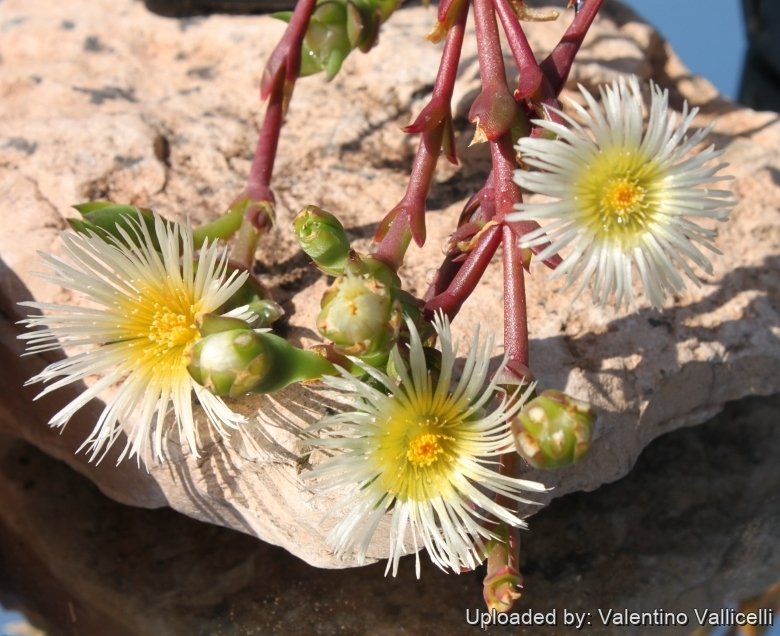
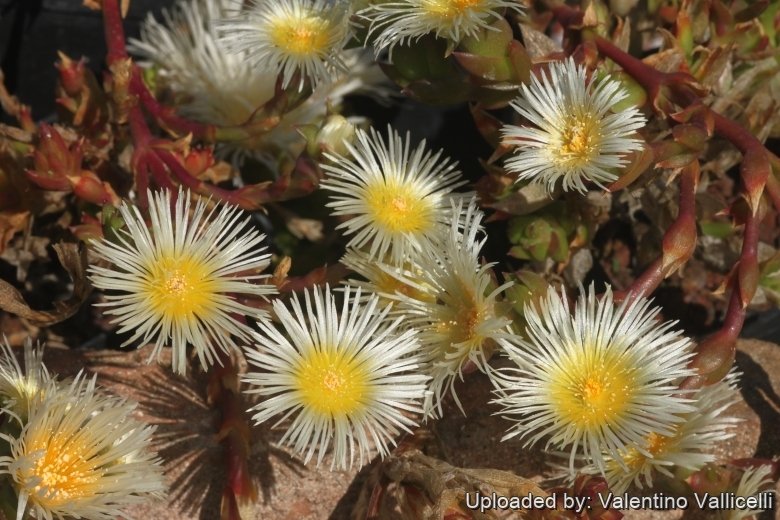
Flowers: Shortly pedicellate (almost sessile) about 20 to 30 mm diameter. Petals are white to pale yellow, pale salmon or pale pink. The calyx has four or five sepals.
Fruit: Hygrochastic ( That open when wet ) 10 to 15 mm in diameter.
Origin and Habitat
Namaqualand to Montagu through to Aberdeen.
Habitat: Grow in quartz patches under bushes, where they get good sunlight for at least part of the day.
Ecology: They are insect pollinated. Seed dispersal occurs during rain events by means of hygrochastic fruit capsules that open when wet allowing seed to escape.
Cultivation and Propagation
It is an opportunistic species quite easy to cultivate. Keep them in bright light in very drained somewhat loamy soil. Their active growth takes place in autumn, winter and spring, with a rest period during summer when plants should not be watered.
Propagation: Cuttings or seed. Cuttings take readily whereas seeds do not always germinate easily.
Bibliography
Major references and further lectures:
-
S. M Walters “The European Garden Flora Flowering Plants: Casuarinaceae to Aristolochiaceae” Cambridge University Press, 1989
-
H. E. K. Hartmann “Illustrated Handbook of Succulent Plants: Aizoaceae F-Z” Springer, 2002
Gallery