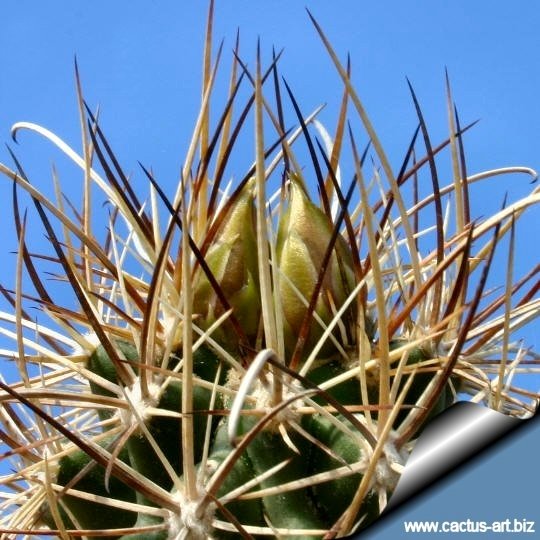
Publication: Bull. Torrey Bot. Club 68: 419, fig. 1941
Description
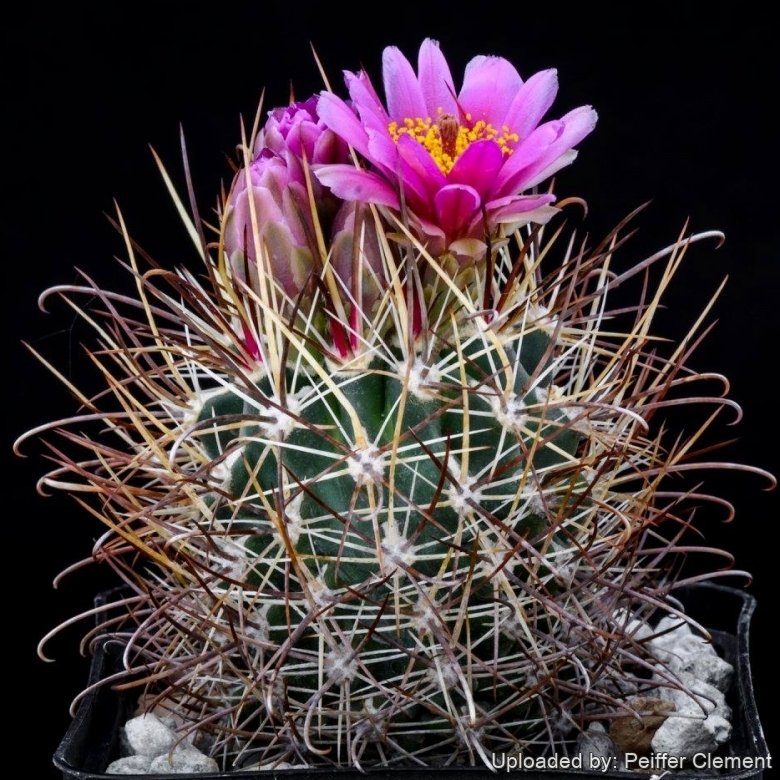
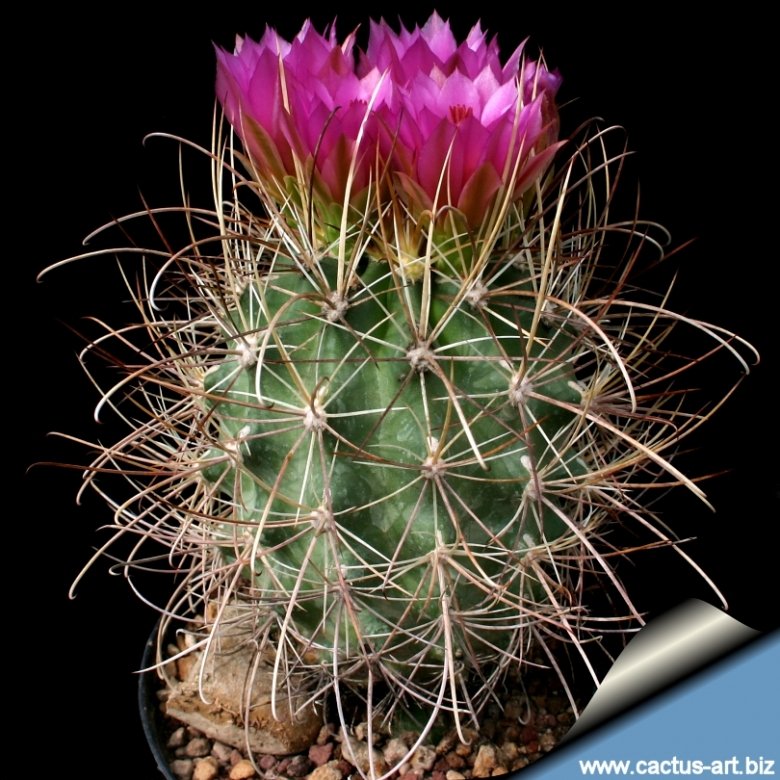
Sclerocactus parviflorus is the most frequent and well known cactus of the cold American deserts. Due to its vast region of origin the plants vary in the amount and colouring of hooked central spines as well as in flower colour. The plant dimensions vary from minuscule plants of only a few cm living almost buried in the ground, to the largest plants up to 45cm and 15 cm in diameter. The scientific classification of this plant has been controversial. Many names, forms, subspecies or varieties have been proposed and changed.
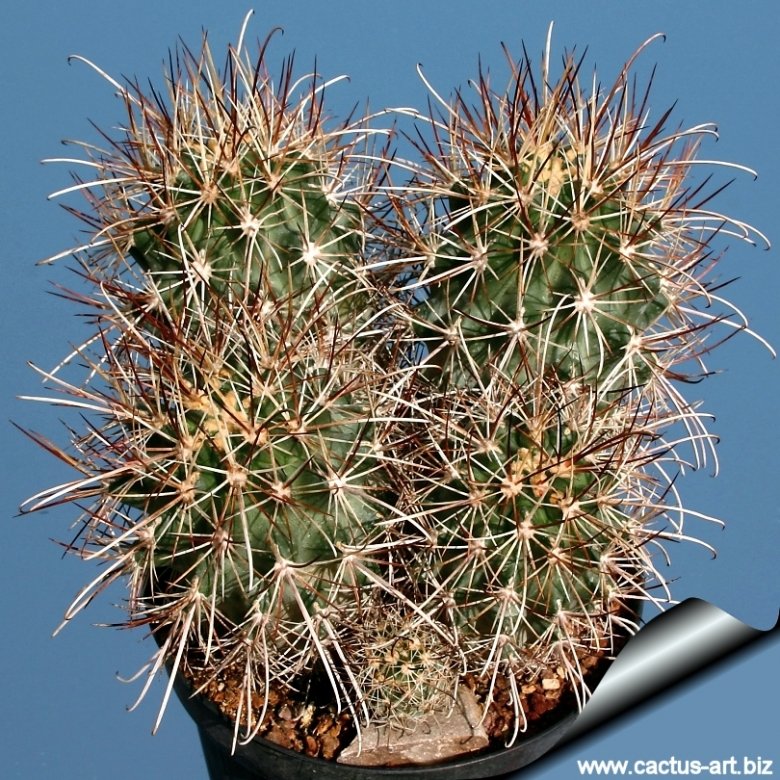
Stems: Usually unbranched, but also branched near the base, 4.5–45 cm tall, 3.5-14.5 cm in diameter, depressed-spheric, spheric, cylindrical, or elongated-cylindric, with tubercles evident on ribs.
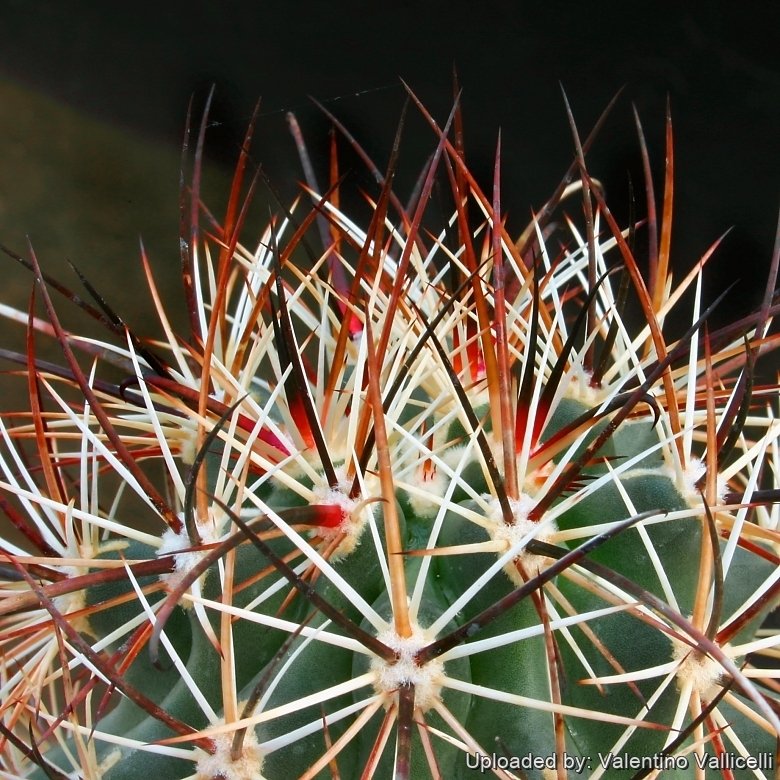
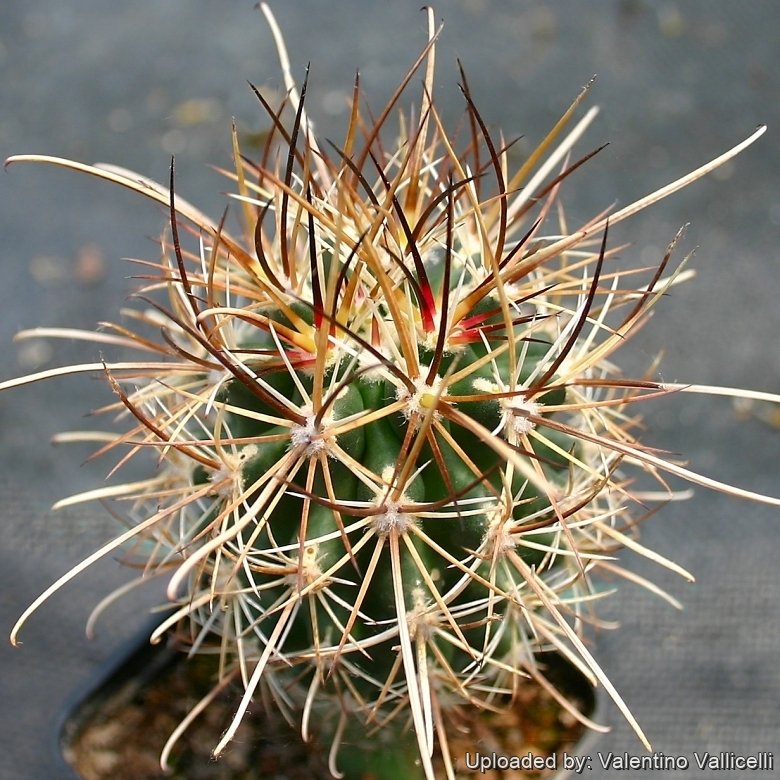
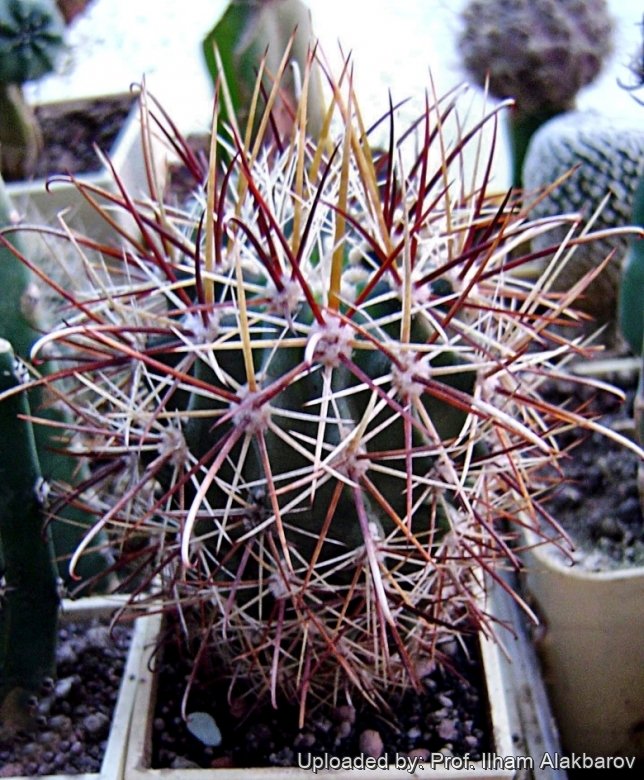
Spines: Often obscuring stems; radial spines 8-17 per areole, usually white, sometimes brown or purplish pink, 6-36 mm; central spines 4-8 per areole, 1-5 hooked usually purple- black, hooked, 15-72 mm; lateral spines 2-6 per areole, similar to centrals, usually shorter and not not hooked usually white (rarely gray, straw colored, pink, or reddish brown), flat to angled straight (rarely contorted).
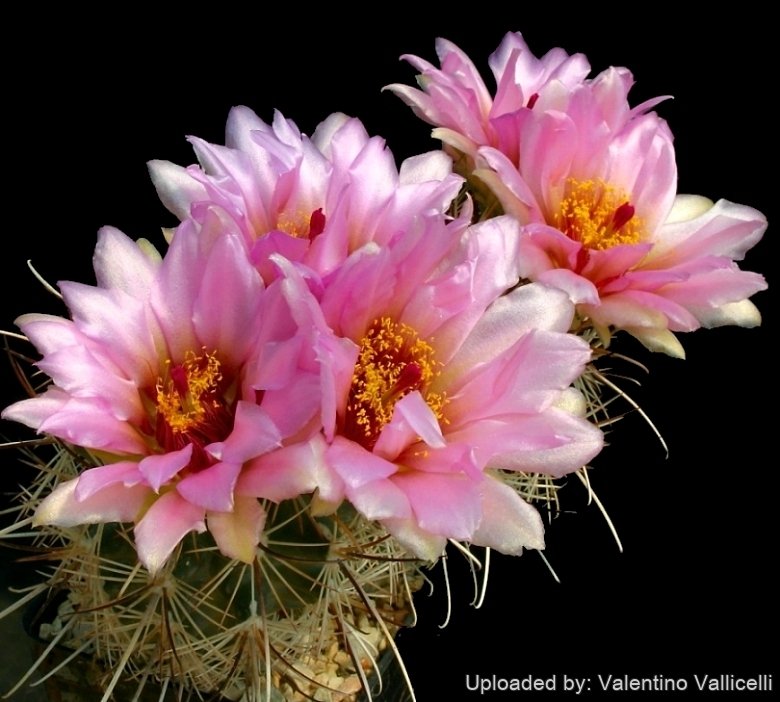
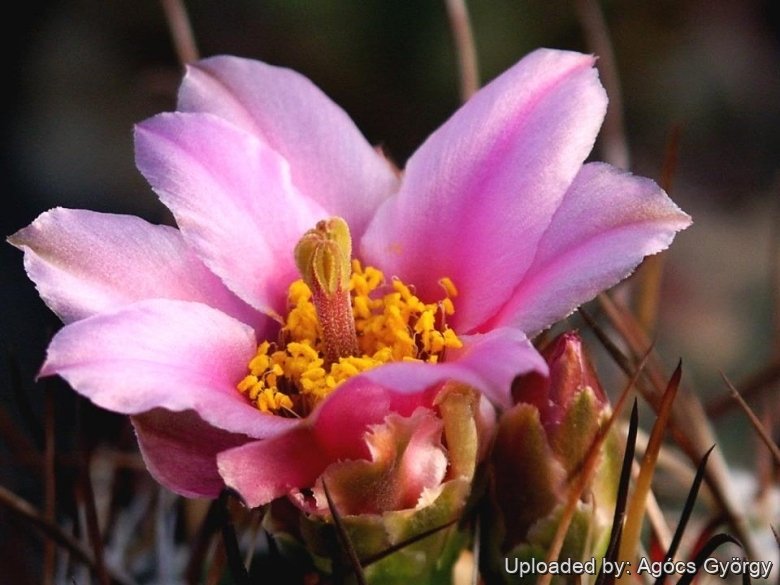
Flowers: The crown of campanulate flowers in late spring are spectacular, pleasantly perfumed, usually rose to purple, pink, but also multicolour, yellow or (rarely) white.
Blooming season (in habitat): April-May (spring)
Fruits: 10-30 mm long, 10-15 mm in diameter Green turning reddish pink with a few membranous fringed scales irregularly dehiscent.
Seeds: Dark brown to black, 2.5–3.5 × 1.5–3 mm; testa with rounded papillae.
Origin and Habitat
Sclerocactus parviflorus is the most widely distributed species among the genus, it ranges from northern Arizona to Colorado, northern New Mexico and southeast Utah.
Altitude range: It is distributed mostly along the great river system above the 1000 m up to 2100 m over sea level.
Habitat and ecology: It lives on many type of soil, such sandy, gravelly, or clay hills, mesas, and washes, desert grasslands, especially on red sandstone under sparse sage brush, salt bush, black brush and junipers trees, on cracked clay plains etc. The species is found in trade and collected from the wild, but this is not a major threat. The species is threatened by oil and gas exploration, mining, grazing, and off highway vehicle activity.
Cultivation and Propagation
Rarely seen in cultivation, it needs perfect drainage to flourish. It is quite difficult to grow on its own roots and to propagate (only 2-3 percent of seeds germinate). Mature individuals easily rot and die.
It is indispensable to provide a greenhouse with good ventilation and full sun exposure. Keep totally dry during winter. It can tolerate temperature below zero (-20° C). Plants grafted on hardy Opuntia humifusa stock are quite easy to grow, and no special skill is required.
Propagation: Seeds are extremely difficult to germinate (only 2-3 percent of seeds germinate). Grafting is often used to speed growth rate and to create a back-up for plants in collection.
Bibliography
Major references and further lectures
-
Sclerocactus parviflorus Clover & Jotter [family CACTACEAE] in Kenneth D. Heil, J. Mark Porter, Flora of North America, Vol 4
-
Edward Anderson “The Cactus family” Timber Press, Incorporated, 2001
-
James Cullen, Sabina G. Knees, H. Suzanne Cubey “The European Garden Flora Flowering Plants: A Manual for the Identification of Plants Cultivated in Europe, Both Out-of-Doors and Under Glass” Cambridge University Press, 11/Aug/2011
-
David R Hunt; Nigel P Taylor; Graham Charles; International Cactaceae Systematics Group. “The New Cactus Lexicon” dh books, 2006
-
Porter, J.M. 2013. “Sclerocactus parviflorus.” The IUCN Red List of Threatened Species. Version 2014.3. <www.iucnredlist.org>. Downloaded on 21 December 2014.
From llifle page Sclerocactus contortus
Description
Sclerocactus contortus, is generally included within (as a synonym of) Sclerocactus parviflorus ssp. parviflorus, suggesting that there is not really a fundamental difference between the two.
Derivation of specific name: “Contortus, -a, -um”, twisted, in reference to the usually spirally arranged ribs, (and/or spines?).
Stems: Usually solitary, depressed-hemispheric to shortly cylindrical, 3-9.5 cm tall, 2-8 cm wide.
Ribs: Often arranged in a spiral or curved obliquely mostly clockwise. Tubercles distinct, especially at the top of the stem, 12-15 mm apart.
Root: A single taproot, branching repeatedly within 2.5-5 cm from the base of the stem
Areoles: Woolly especially near the stem apex.
Central spines. 2 hooked, 3.9-8.2 cm long, usually 1-2 mm wide at base, white, pink, grey, or dark red moderately twisted or straight, one straight (rarely contorted) central 2-5.2 cm long, flattened or angular white to grey often twisted commonly 1-1. 5 mm wide, and (usually) 4 lateral centrals the the upper two 2.5-4.2 cm long and the lower two 2.2-3 cm, and 0.5- 1 mm wide, white or whitish to grey or rose, tinged with red or even the black, straight to very contorted.
Radial spines: usually 6-8 (but varying from 5 to 11) 9-28 mm long, white to pink or grey or whitish.
Flowers: Near the apex of stem, funnelshaped, 4-5.5 cm long, 3-4 cm in diameter, dark pink
Outer perianth segments narrowly spatulate, translucent, inner segments pink, spatulate, with a dark pink midline. Stigma lobes 8-10, purple.
Fruits: Dry 1.2-1.3 cm long, c. 1 cm in diameter, deihishing from a transverse incision in the ovary wall beyond the spines. Flower remnants persistent.
Seeds: Pear shaped, 3-3.5 mm long, 2 mm wide and 1 mm thick, black, papillate, with a deep, with a deep, elliptical hilum, c.1 mm in diameter. The seeds of Sclerocactus contortus are larger than Sclerocactus parviflorus and Sclerocactus whipplei.
Origin and Habitat
United States, Utah.
Bibliography
Major references and further lectures
-
Heil, K. and S. Welsh. “New Sclerocactus (Cactaceae) from Nevada”. Great Basin Naturalist 46: 677-678. 1987.
-
Heil, K. D. and J. M. Porter. “Sclerocactus (Cactaceae): a revision”. Haseltonia 2: 20-46. 1994.
-
Fritz Hochstätter “Tribe Cacteae, Family Cactaceae: The genera Pediocactus Navajoa Toumeya” Hochstätter, 2005
-
Fritz Hochstätter “Tribe Cacteae, Family Cactaceae: The genus Sclerocactus” Fritz Hochstätter, 2005
Source: Sclerocactus contortus, LLIFLE - Encyclopedia of living forms, CC-BY-SA, retrieved 2026-10-25.
Cultivars and forms (5)
Gallery