Description
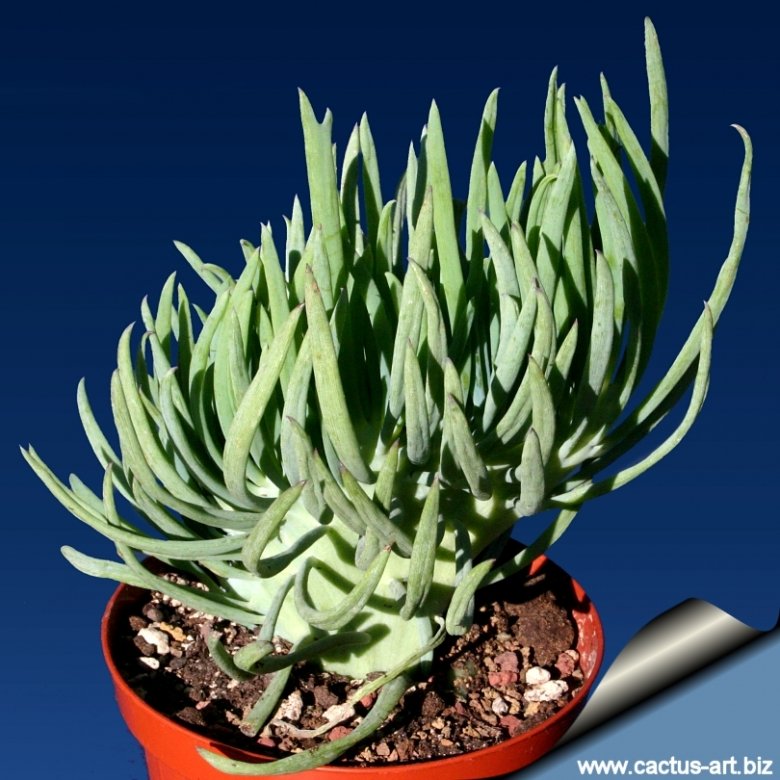
The Sedum talinoides (standard form) is a very distinct succulent, with a remarkable glaucous blue leaves angled upward from the ground.
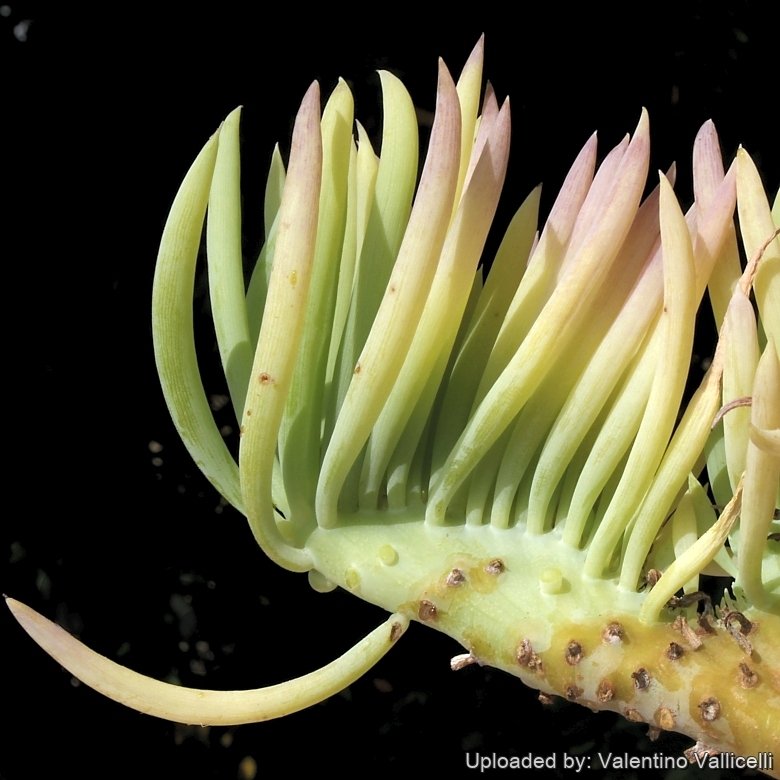
Stem: Sparingly branched, erect becoming procumbent and often rooting at the nodes, fleshy and brittle, 5-10 mm in diameter, usually short but much more long in cultivation.
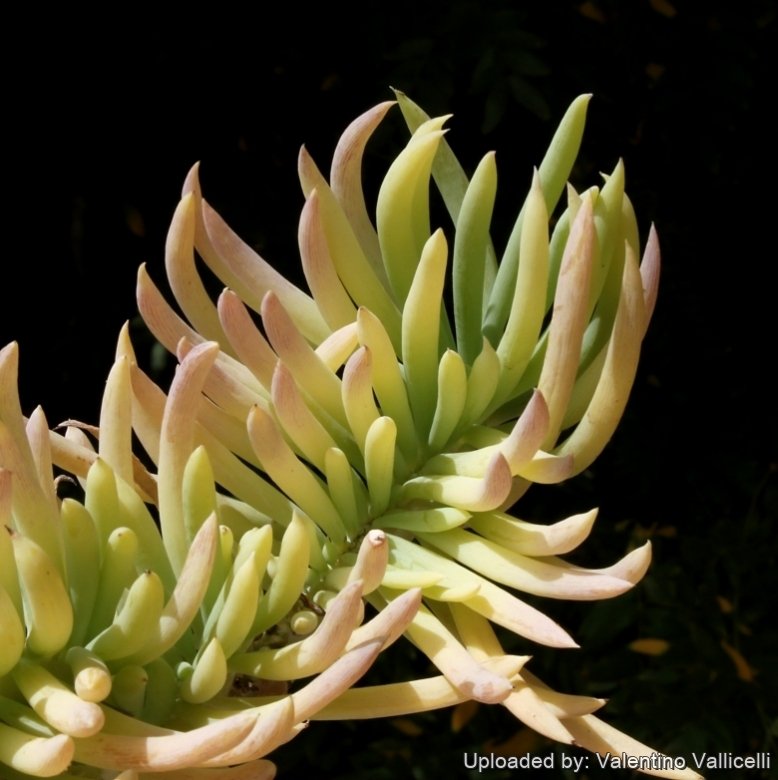
Leaves: In tufts at the stem tips, long fusiform to terete, 6-15 cm long, 4-11 mm in diameter slightly flattened above, erect or arching, glaucous-grey with darker stripes, but can rub off the pruine and it’s a blue-green beneath.
Inflorescence: Corymbose 10-40 cm long, the subsp. talinoides has the largest and most branched inflorescence with up to 100 small ray-less capitula (flower heads) held above the foliage. The outside of the capitulum is blue-green, and the small flowers within are white or off-white and not showy. They are followed by long thin wind-dispersed seeds.
Origin and Habitat
Garden origin.
Cultivation and Propagation
It requires a very free draining substrata and is very tolerant of poor soils.
Watering: It needs moderate water during from spring to autumn, keep rather dry in winter or the plants may rot at the base. But it adapts to different growing conditions from extreme heat and drought, to high moisture as it has a low rot potential.
Exposition: They seem to do well in part shade such as at the base of trees, but thrives also in hot sunny positions and will tolerate coastal conditions.
Frost Tolerance: It is cultivated in open air in the tropical and warm Mediterranean climate , with temperatures which it is good to keep over the 5°C, best 10-12°C , but can withstand light frost for short periods if very dry (hardy down to -2 to -10º C, even if with damage to the foliage) in these situations it will better resist if sheltered by the winter rains, seen that the humidity and low temperatures render it more sensitive to rottenness. Plants in containers however, suffered major leaf loss. USDA Zone 9b to 12.
Maintenance: The flower stems need to be removed to keep a tidy appearance. These species do tend to get sort of leggy, which is particularly a problem if grown as a potted plant, and yearly trimming back is often necessary.
Propagation: Cuttings.
Crested growth: Unlike ‘monstrose’ varieties of plants, where the variation from normal growth is due to genetic mutation, crested growth can occur on normal plants. Sometimes it’s due to variances in light intensity, or damage, but generally the causes are unknown. A crested plant may have some areas growing normally, and a cresting plant that looks like a brain, may revert to normal growth for no apparent reason. Any normal shoots should be removed to promote the growth of the crest.