Publication: Möller’s deutsche gärtner-zeitung 1933, xlviii. 397. as ‘ochoterenae’
Description
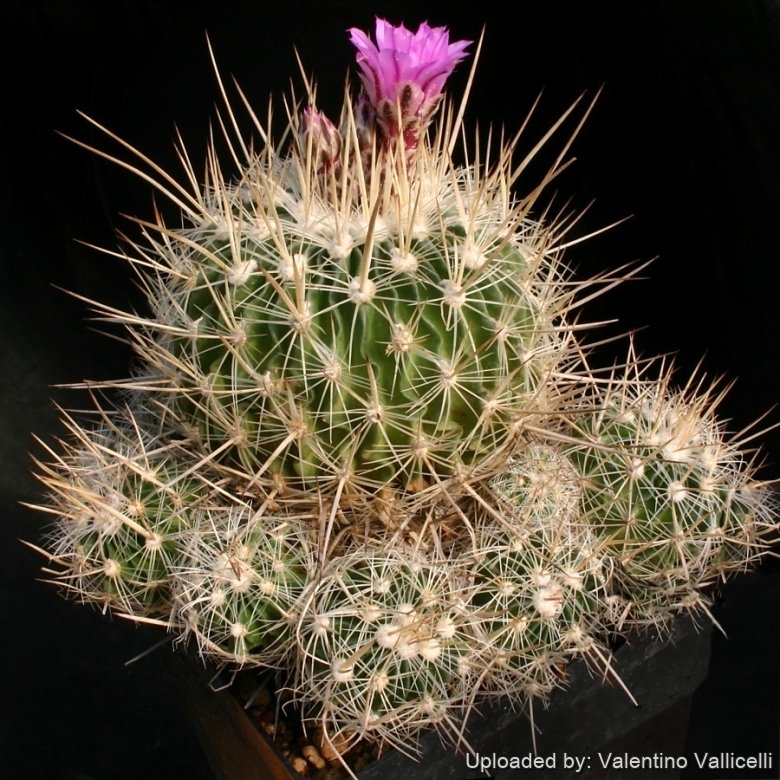
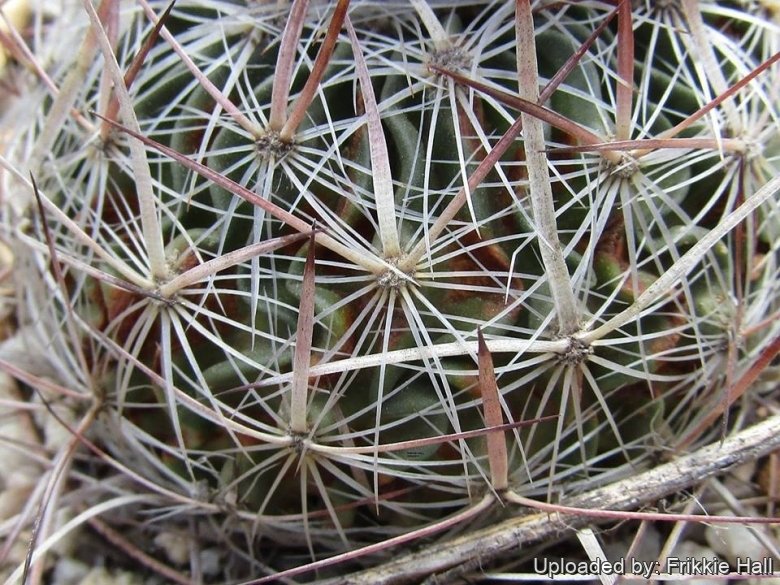
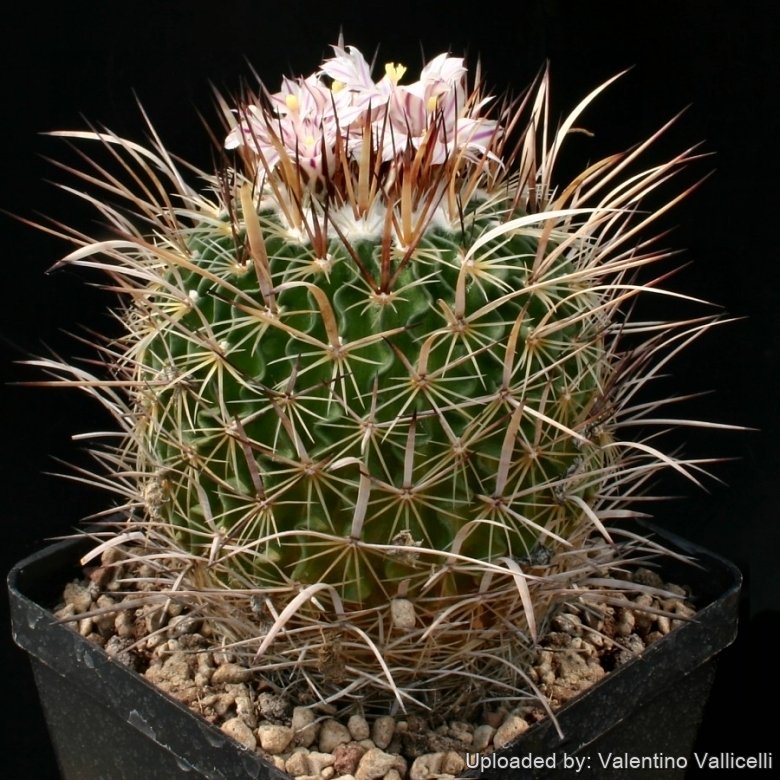
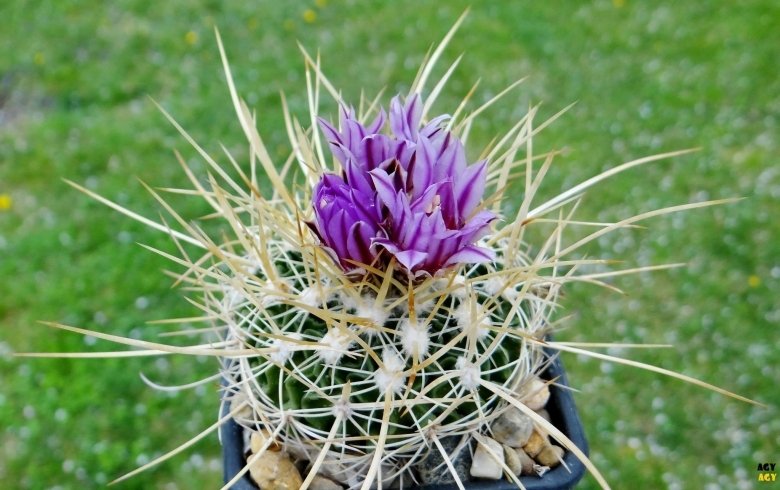
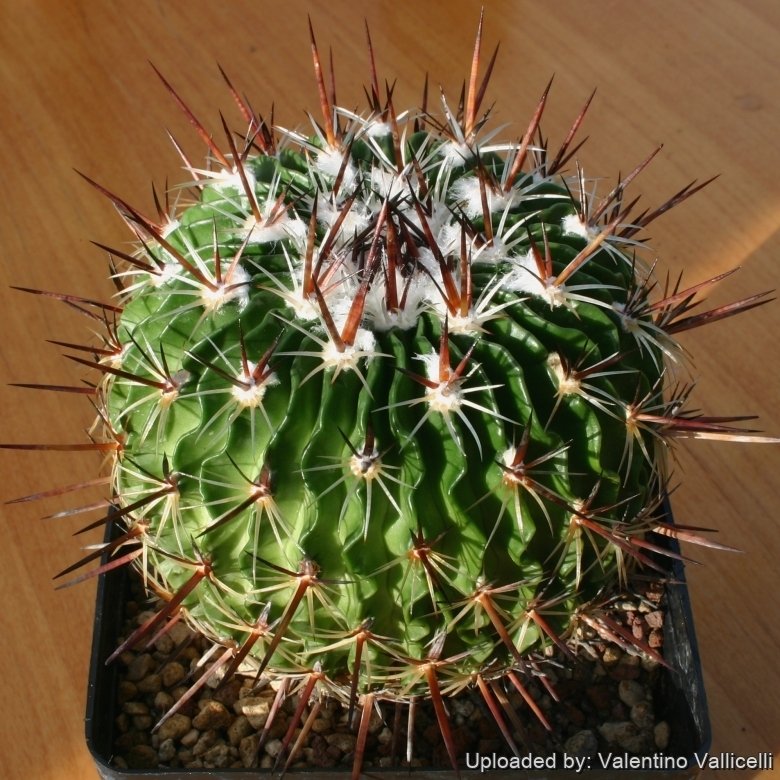
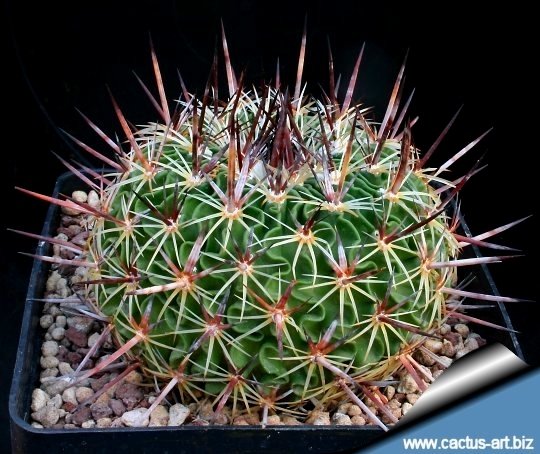
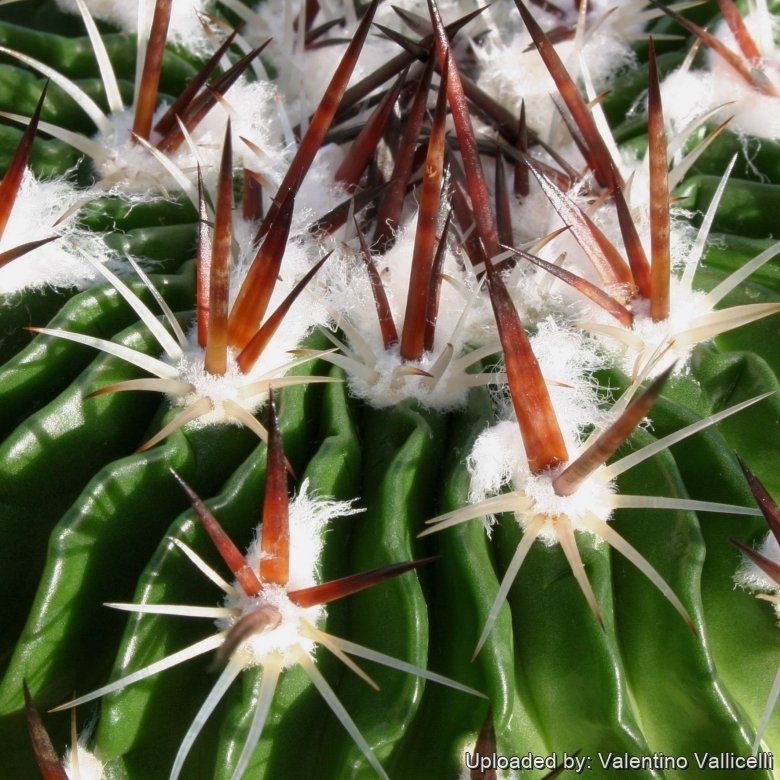
Stenocactus ochoterenanus is a solitary or clustering cactus characterized by numerous, acicular radial spines. The 4 central spines are usually more or less terete and the green plant body is generally obscured by the spination. It is extremely variable with one form intergrading into another, creating a taxonomic nightmare.
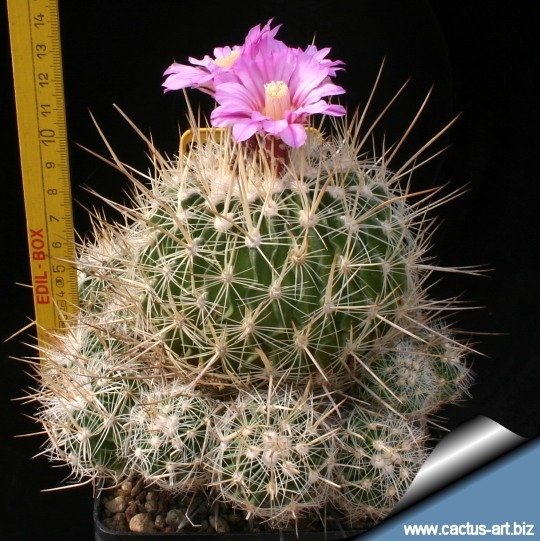
Stems: Up to 8 cm tall, 10 cm in diameter with woolly apex;
Areoles: Young areoles with white hair.
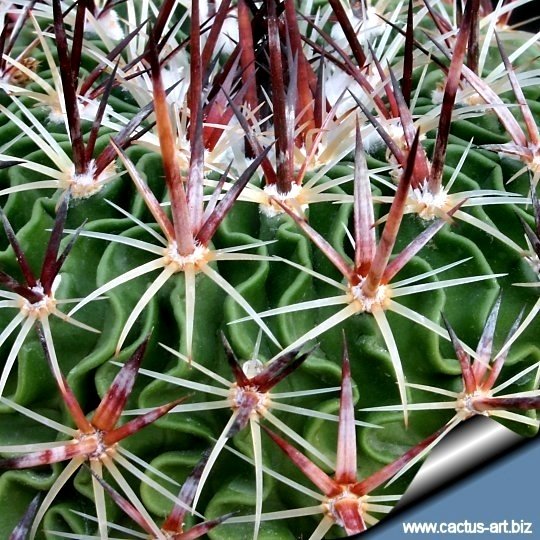
Ribs: Barely visible beneath the numerous white radial spines, thin sometimes wavy, ± 30 (S. ochoterenanus) or 40 to 50 (S. lexarzai) or 30-34 (S. heteracanthus)
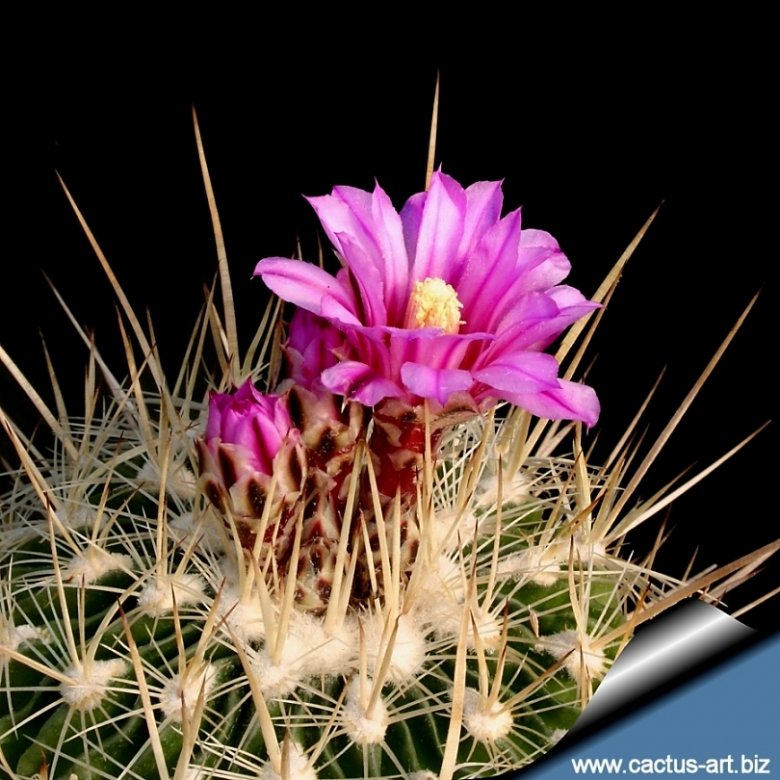
Spines: Radials white numerous 22 or more (S. ochoterenanus) 8 to 10 (S. lexarzai) close to the body, 8-12 mm long. Centrals 4, the superior one up to 6.5 cm long flattened dark-brown that age to tan.
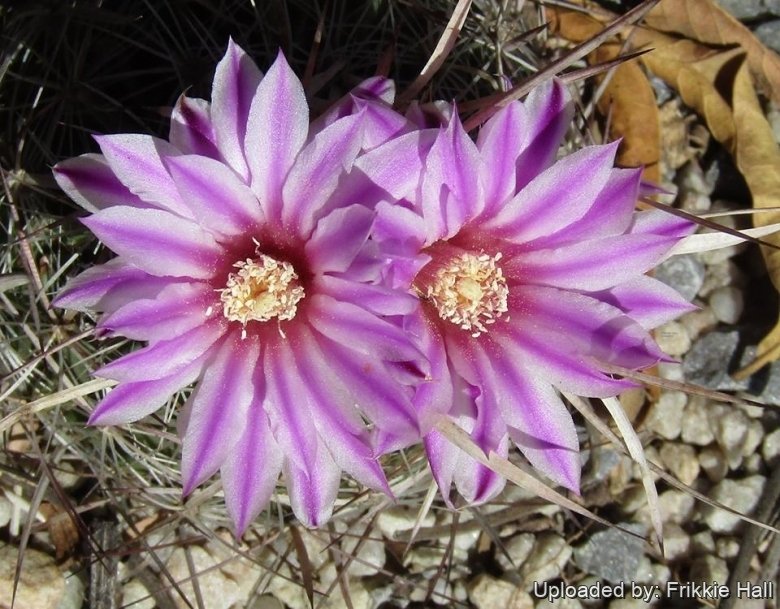
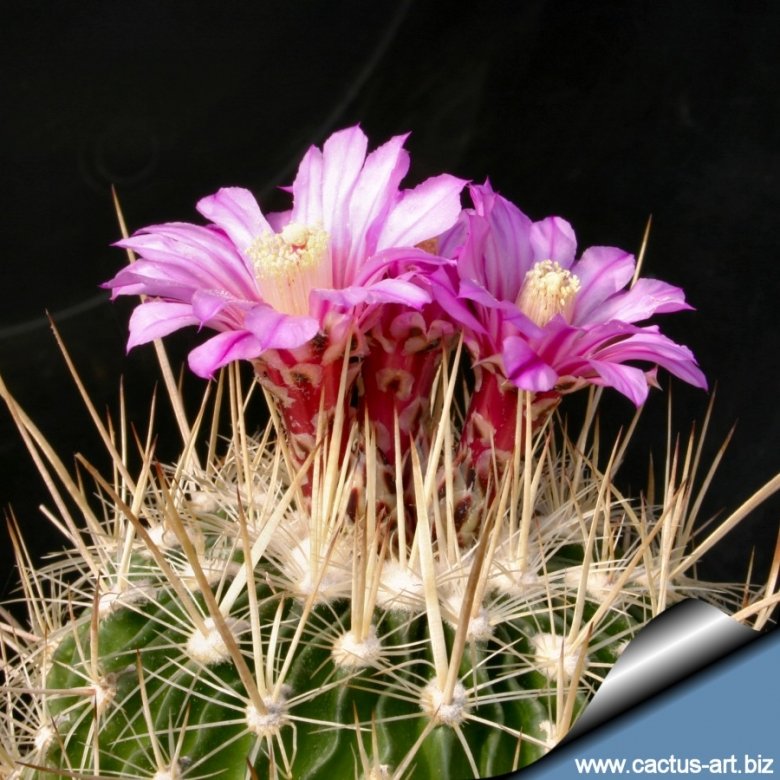
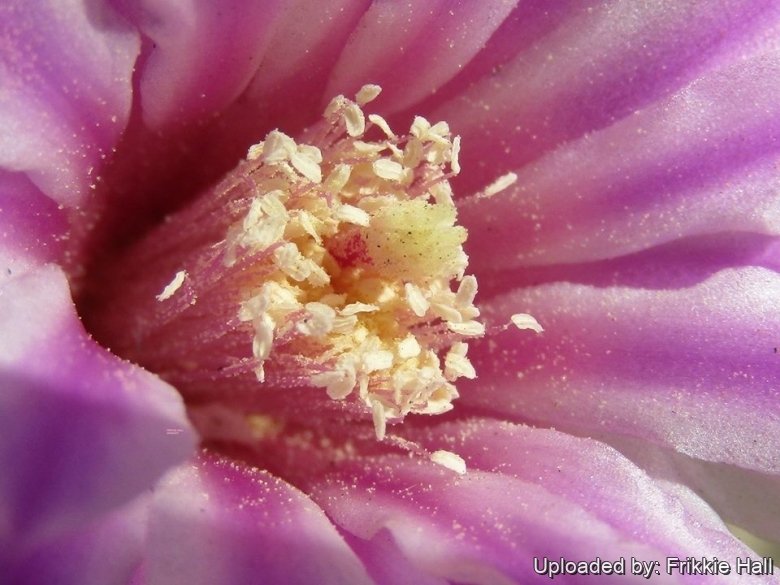
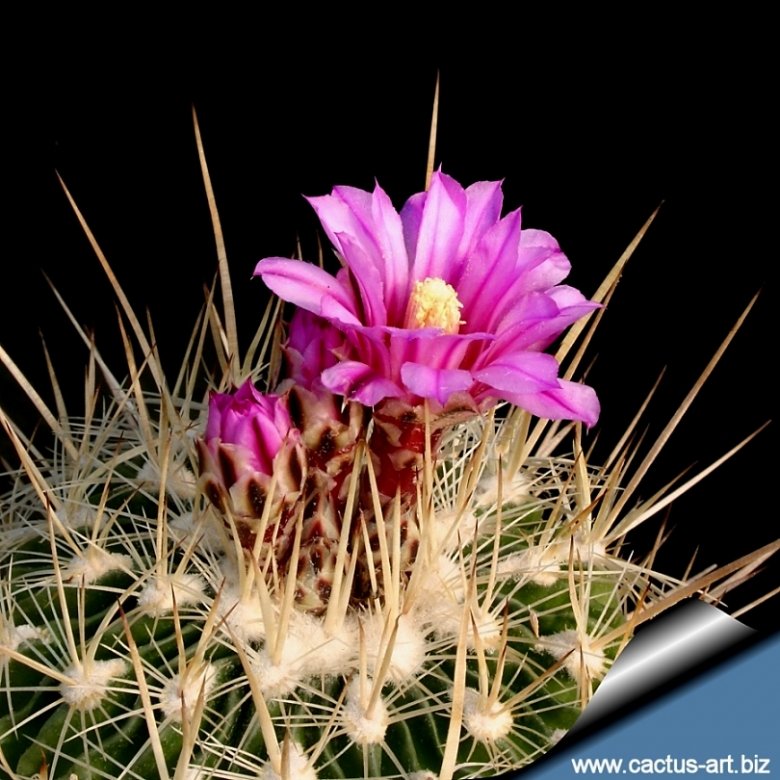
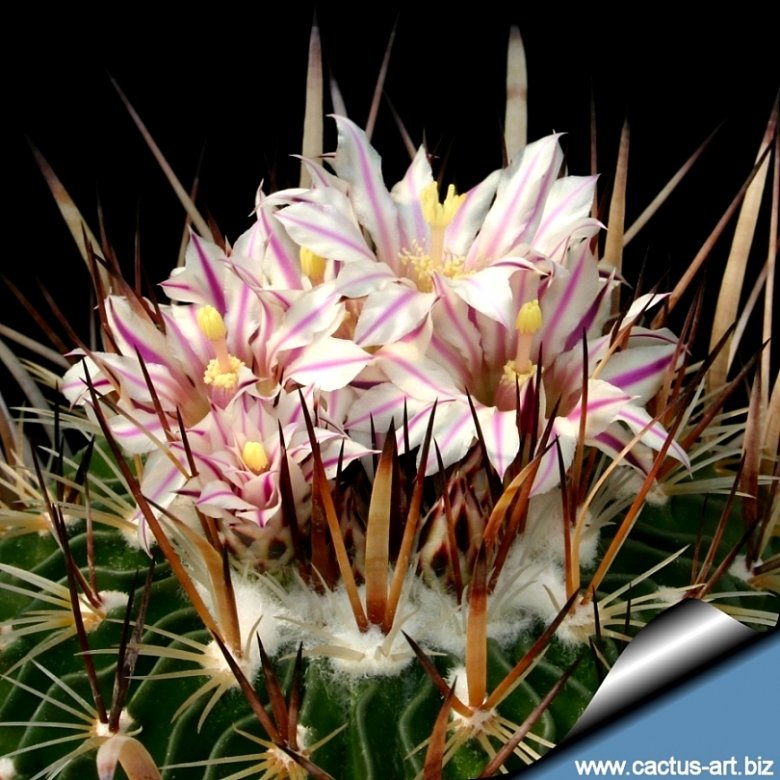
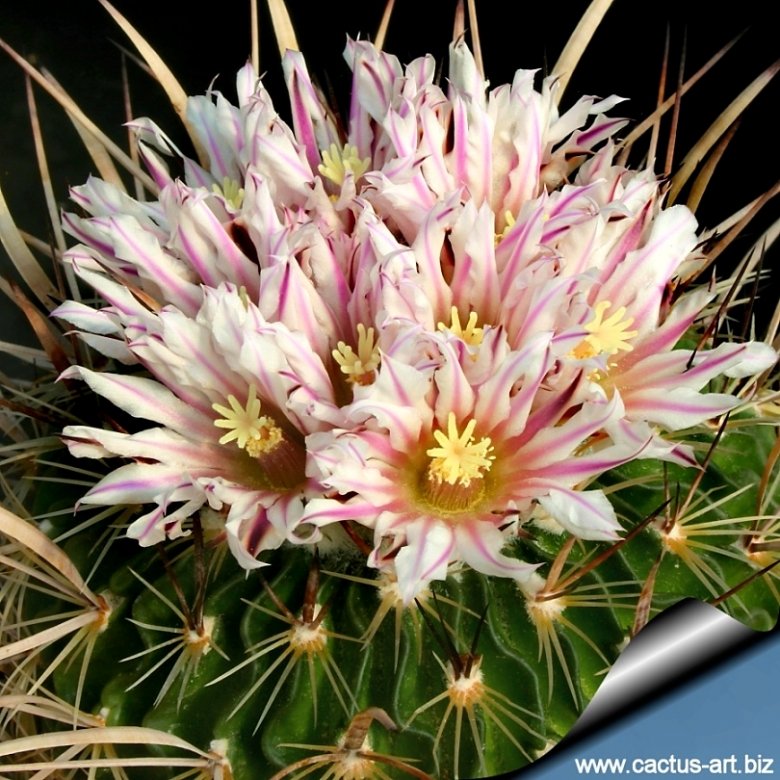
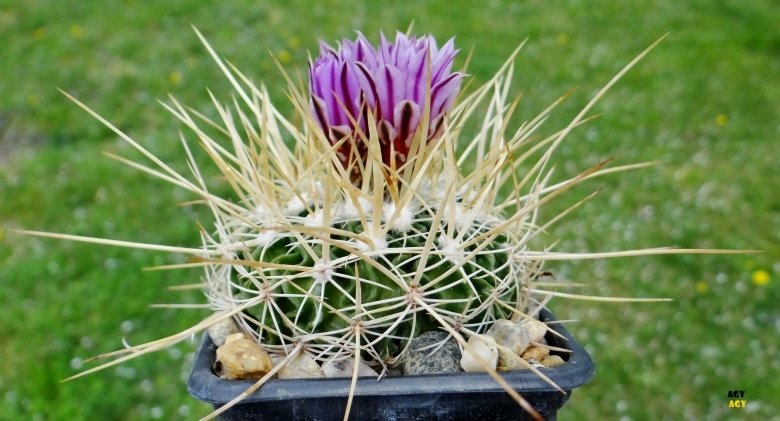
Flowers: Pale pink or pale greenish yellow, 2.5 cm long.
Fruits: Greenish fruit with whitish scales.
Origin and Habitat
Stenocactus ochoterenanus is endemic to Mexico, where it is distributed in the states of Queretaro and Guanajuato (also reported in Hidalgo, Jalisco, Aguascalientes, Zacatecas and San Luis Potosi)
Habitat and Ecology: The species of uncertain taxonomy grows in desert scrub together with Mammillaria bombycina.
Cultivation and Propagation
Easy to to care and flower. No absolute schedule can be given for watering as various factors (Soil mixture, containers, drainage, temperature, size of plant) influence water use, so - as a general rule - the soil should be thoroughly wetted at each watering during the active growing season (spring and summer), water when the top 1,5- 2 cm of soil feels dry to the finger. Do not soak the soil during the dormant period. Be careful, excessive watering can make root and/or stem to rots. Make sure there is good air circulation between plants. Good drainage is essential along good moisture retention properties and adequate nutrients availability. Require bright sunlight to grow well. Dormant plants do best at temperatures from 5-10°C (but will tolerate -5° for short periods). The cooler temperatures develop sturdier plants and encourage the formation of flower buds.
Propagation: By offsets which often are found growing around the base of the plant, Remove the basal offset (if available) in spring or summer and let the cuttings dry for a few days before inserting in compost or (usually) by seed.
Bibliography
Major references and further lectures
-
Edward F. Anderson “The Cactus Family” Timber Press, 2001
-
James Cullen, Sabina G. Knees, H. Suzanne Cubey “The European Garden Flora Flowering Plants: A Manual for the Identification of Plants Cultivated in Europe, Both Out-of-Doors and Under Glass” Cambridge University Press, 11/Aug./2011
-
David Hunt, Nigel Taylor “The New Cactus Lexicon” DH Books, 2006
-
Gómez-Hinostrosa, C., Sánchez , E., Guadalupe Martínez, J. & Bárcenas Luna, R. 2013. Stenocactus ochoterenanus. The IUCN Red List of Threatened Species. Version 2015.1. <www.iucnredlist.org>. Downloaded on 04 June 2015.
From llifle page Echinofossulocactus boedekerianus f. densispinus
Description
Echinofossulocactus densispinus (Stenocactus) is one of the innumerable forms of Stenocactus ochoterenanus which is one of the most widespread and morphologically variable taxon. It is a solitary or clustering cactus distinguished from the type species for its numerous white radial spines (to 22 or more). The name Echinofossulocactus densispinus is an invalid name (nom. subn.) without exact citation of holotype) and is not accepted by many botanists that treat it as synonym, but it still has a value for a collector because they identify plants with particular characters.
Stems: Up to 8 cm tall, 10 cm in diameter with woolly apex;
Areoles: young areoles with white hair.
Ribs: Barely visible beneath the numerous white radial spines, thin sometimes wavy.
Radial spines: Radials white numerous 22 or more.
Central spines: 4, the superior one up to 6.5 cm long flattened dark-brown that age to tan.
Flowers: Pale pink or pale greenish yellow, 2.5 cm long.
Fruits: Greenish fruit with whitish scales.
Origin and Habitat
Mexico, Queretaro, Guanajuato (also reported in Hidalgo Aguascalientes and San Luís Potosí)
Source: Echinofossulocactus boedekerianus f. densispinus, LLIFLE - Encyclopedia of living forms, CC-BY-SA, retrieved 2026-10-25.
From llifle page Echinofossulocactus boedekerianus f. rosasianus
Description
Echinofossulocactus rosasianus (Stenocactus) is a local or morphological form of the widespread and variable Stenocactus ochoterenanus. It has a dark green body with rather thin and undulate ribs, broader at the areoles. The body is covered by numerous, acicular radial spines. The 4 central spines are usually more or less terete and the plant body is generally obscured by the spination. The name Echinofossulocactus rosasianus is an invalid name (nom. nud.) and is not accepted by many botanists that treat it as synonym, but it still has a value for a collector because they identify plants with particular characters.
Stem: Solitary , globose, vivid green with a flat tops up to 8 cm tall, 10 cm in diameter.
Flowers: Pale to bright pink, 2.5 cm long.
Fruit: Greenish with whitish scales.
Origin and Habitat
Homeland these pretty plants are mainly Mexican state of Coahuila, Nuevo Leon, Tamaulipas, Queretaro, San Luis Potosi, Hidalgo and Zacatecas. The relatively large area of occurrence, along with a strong tendency to variability caused significant problems with the generic classification of individual plants of this species, and it is thus not possible to define either the spatial or systematic limits of the taxon (same as Stenocactus ochoterenanus?). There is much variation within the current taxon, some of which may correspond to other species.
Cultivation and Propagation
Small growing and easy to to care and flower. Because of it’s small size makes a great potted plant specimen, great for beginning collectors. It needs regular cacti soil with good drainage.
Propagation: Seeds (usually) or by the shoots of adult plants (if available).
Exposure: need some direct sun but is tolerant and prefers light shade during the hot Summer months.
Whatering: Allow to dry between watering. Watering should be curtailed during the winter months.
Frost Tolerance: -5°C if kept dry.
Notes
Echinofossulocactus rosasianus nowadays is not considered a distinct species or variety but only one of the variable phenotypes of the clinal species Echinofossulocactus ochoterenanus (now Stenocactus).
Bibliography
Major references and further lectures
- Gómez-Hinostrosa, C., Sánchez , E., Guadalupe Martínez, J. & Bárcenas Luna, R. 2013. Stenocactus ochoterenanus. The IUCN Red List of Threatened Species. Version 2015.1. <www.iucnredlist.org>. Downloaded on 04 June 2015.
Source: Echinofossulocactus boedekerianus f. rosasianus, LLIFLE - Encyclopedia of living forms, CC-BY-SA, retrieved 2026-10-25.
Gallery