Publication: Calyx 5(3): 100 (1996)
Description
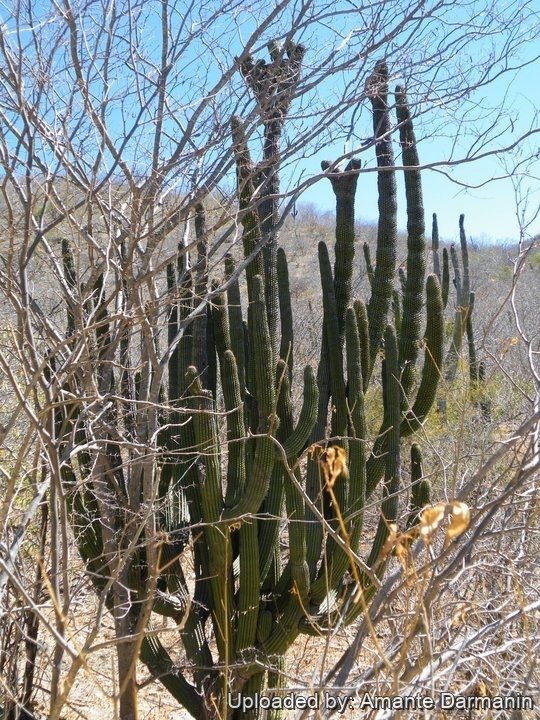
The typical Stenocereus thurberi is a large shrubs or treelike cactus usually without a definite trunk. The branches are erect or ascending, green, 1-8 m high, 15 to 20 cm in diameter.
Crested form: The crested forms are cultivated for their beautiful stem with pronounced sculpture effects. These plants produce monstrous crests, and crests occasionally produce normal shoots. In cultivation crested specimens are often grafted on stronger species, called the stock, that can be any number of different columnar cactus.
Origin and Habitat
The natural species is from south-western Arizona to northern Mexico in the Sonoran desert (Sinaloa, west Chihuahua, southern Baja California and Baja California Sur).
The odd crested forms are extremely rare and may appear both on seedling batches in a very small percentage and in habitat too.
Cultivation and Propagation
It is a fairly easy plant to grow both grafted or in its own roots. During the summer it is best to keep the plants outside where the temperature can rise to over 30 C with no harm to the plant. Furnish good drainage and use a an open and free draining mineral compost that allows therefore roots to breath. They like only a short winter’s rest and should be kept almost completely dry during the winter months, If the soil is allowed to be dry for too long root loss could follow but equally the same result would occur if the plants are both wet and cold. From March onwards the plant will begin to grow and watering should be increased gradually until late May when the plant should be in full growth.
Water regularly during the summer so long as the plant pot is allowed to drain and not sit in a tray of water. During hot weather you may need to water the plants more frequently so long as the plant is actively growing. From late September watering should be reduced to force the plant to go in to a state of semi dormancy, by October you should be back in to the winter watering regime.
Need full sun avoiding only the harshest summer sun, if kept too dark they may become overly lush and greener and could be prone to rotting due to over watering.
Feeding may not be necessary at all if the compost is fresh then, feed in summer only if the plant hasn’t been repotted recently. Do not feed the plants from September onwards as this can cause lush growth which can be fatal during the darker cold months. Grown specimens resist to -4°C for a short time, but it is best to keep above 5° C to avoid ugly spots on the plant epidermis.
Propagation: By vegetative propagation grafting or stem cuttings from adult plants.
Gallery