Publication: Cactus (Paris) No. 38, 249 (1953); cf. Gray Herb. Card Cat.
From llifle page Opuntia diademata
Description
This is one of the easiest and safest cactus to grown. It is very heat tolerant and doesn’t need shade in summer. It is easy to grow but usually couldn’t get very tall as segment kept falling apart. It is fairly cold resistant and hardy to -9°C depending on the clone, Need full sun, (with insufficient illumination stems get thinner as a result of the lack of sun) The main growing period is spring. It might produce some new segments in the autumn too. Needs good drainage. With plenty of water in summer grows a lot faster… Keep dry in winter but tolerates long, wet, sloggy, cold winters.
Propagation: Cuttings (or occasionally seeds) it suckers profusely and is very easy to grow by just knocking off one of the ‘cones’ and stuffing it in the ground.
Origin and Habitat
Western Argentina. It has also been referred to Brazil and Chile, but surely not found in Brazil and almost surely it does not inhabit Chile too.
Habitat: Dry hills
Cultivation and Propagation
Succulent upright shrub, up to 60 cm, 1.2 m spread. The ‘inermis’ form of this species-variety is a nearly spineless form of the species with no spines and without (or with very few) glochids on the new growth. These usually fall off as it ages.
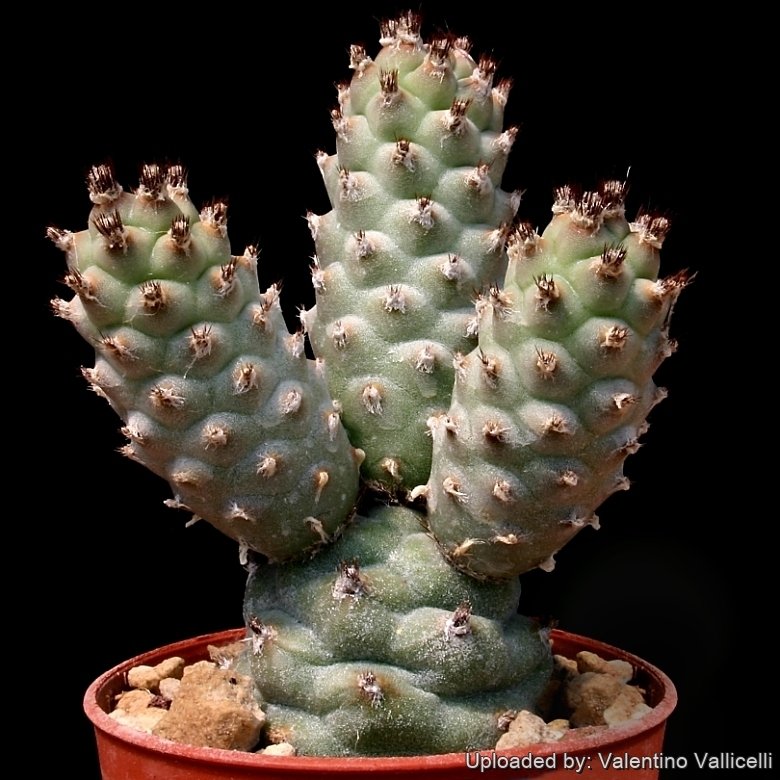
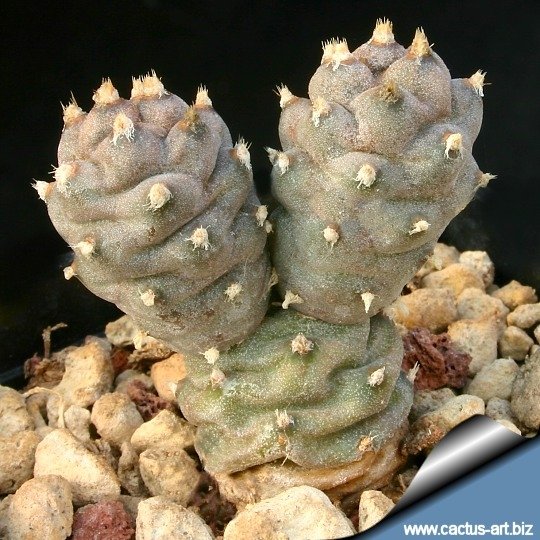
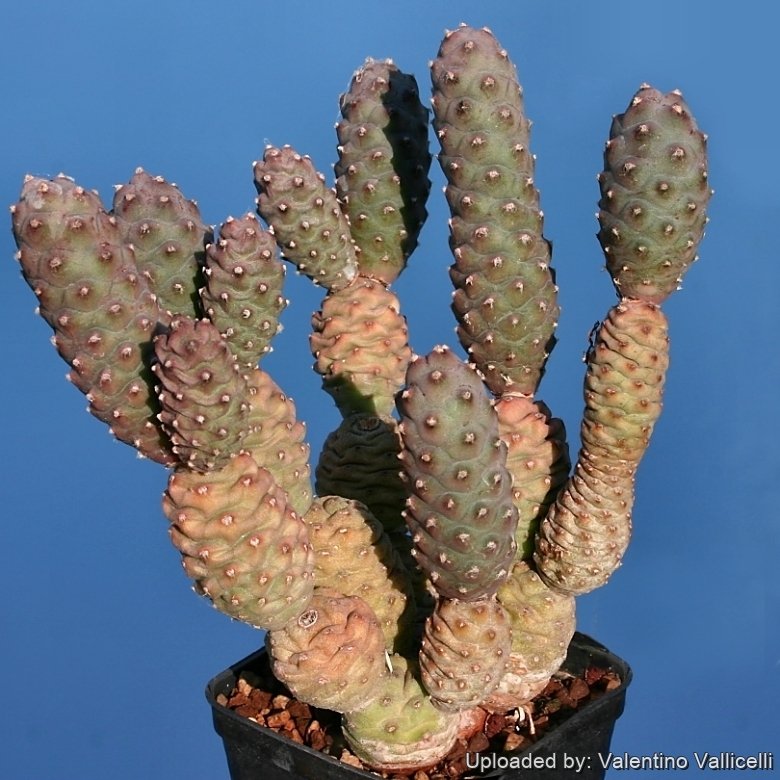
Stem: It produces dull greyish-brown to earth-tone coloured pine-cone-like globular to elongated stem segments 2 to7 cm long. the segment are hardly tuberculate (except in drying) and generally grow longer and narrower than var. papyracanthus. The segments usually grow one or two new segments each year from the stem tips.
Areoles: Large
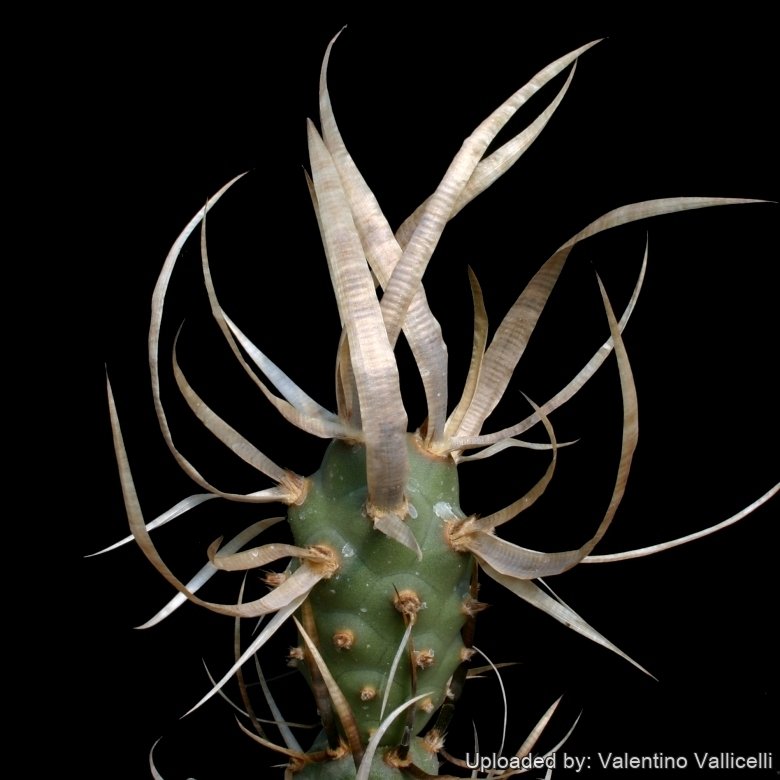
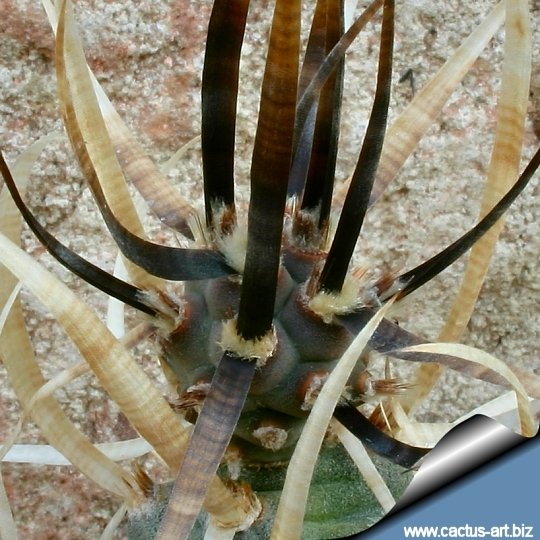
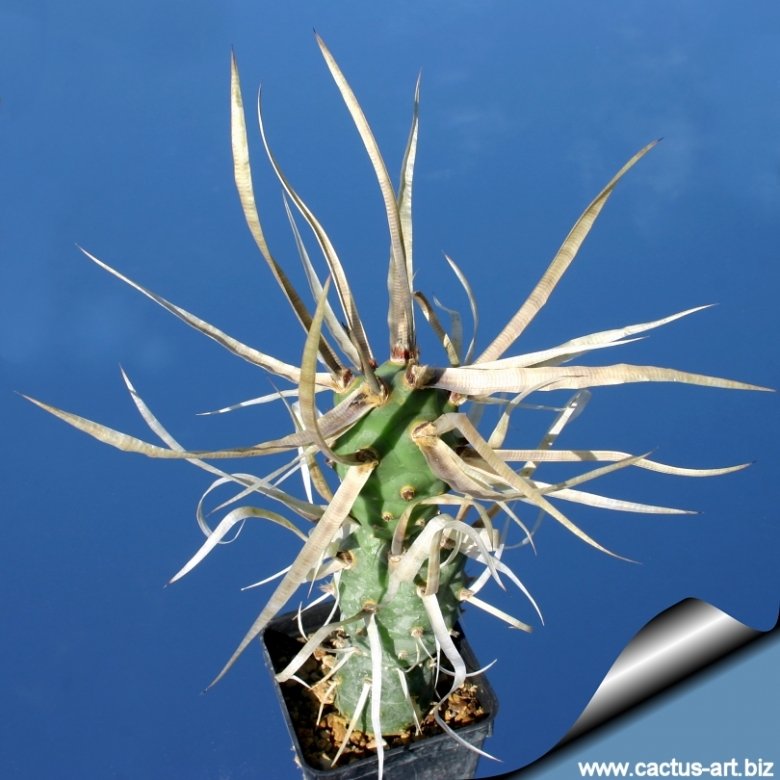
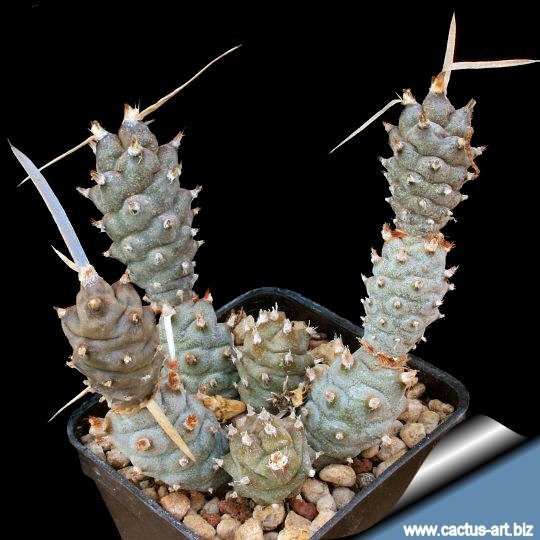
Spines: The typical form has flattened papery spines 2 to 5(-10) cm long and numerose reddish-brown glochids
Flowers: Yellowish-white fading to pink.
Blooming season: Spring.
Fruit: Globose, 1 to 1,5 cm long, dry.
Seed: Corky.
Source: Opuntia diademata, LLIFLE - Encyclopedia of living forms, CC-BY-SA, retrieved 2026-10-25.
From llifle page Opuntia glomerata f. papyracantha
Description
Segmented bushy succulent slowly growing up to up to 30 cm, it is the typical form of a group of variety.
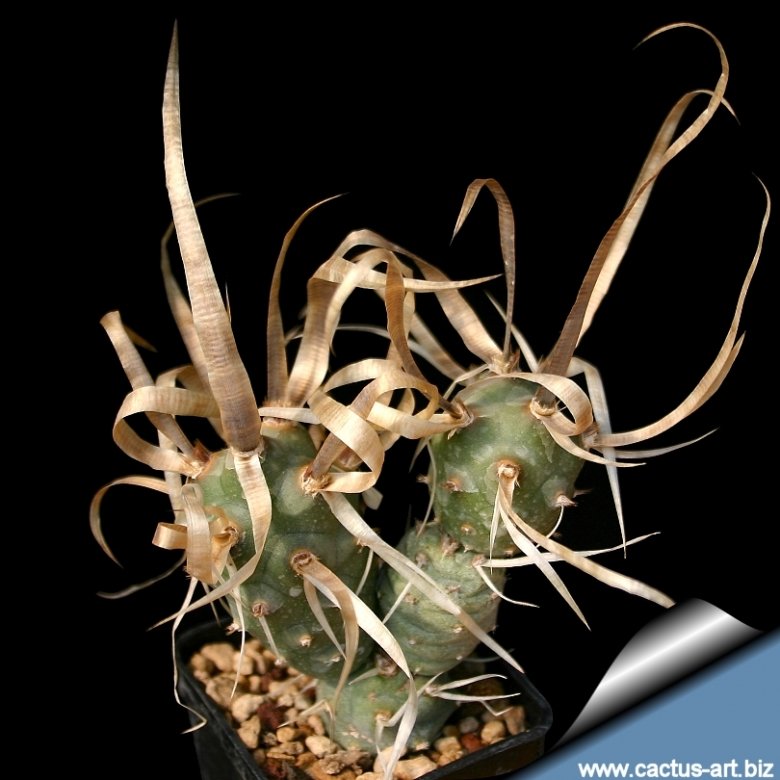
Stems: It develops in little pine-cone shaped segments that are loosely attached to each other and fall easily.
Spines: This species is very variable as to whether it is spine-bearing or not. The spiny form (also known as “papyracanthus”) have broad, raffia like, conspicuous , flattened spines which are not spines but thin ribbon like processes, and vary much as to their colour, markings, and length. This variation are partly the cause of so many synonyms for the species.
Flowers: Blooms are either white or yellow. The white flowers made a nice contrast to the earth-tone colours of the plant.
Fruit: 1 to 5 cm long fruit is brown.
Origin and Habitat
Western Argentina.
Cultivation and Propagation
It is easy to grow but usually couldn’t get very tall as segment kept falling apart. It is fairly cold resistant and hardy to -9°C depending on the clone, Need full sun, (with insufficient illumination stems get thinner as a result of the lack of sun) The main growing period is spring. It might produce some new segments in the autumn too. Needs good drainage. Propagation is through segment cuttings, or occasionally seeds.
Propagation: Cuttings, it suckers profusely and is very easy to grow by just knocking off one of the ‘cones’ and stuffing it in the ground.
Notes
The little glochids at the areoles are quite a nuisance, and it is best to use gloves to handle this plant.
Source: Opuntia glomerata f. papyracantha, LLIFLE - Encyclopedia of living forms, CC-BY-SA, retrieved 2026-10-25.
From llifle page Opuntia strobiliformis
Description
Segmented succulent slowly growing up to up to 30 cm
Segment: Small pine-cone shaped that are loosely attached to each other and fall easily.
Flowers: White, 5cm long.
Fruit: Brown.
RemarksThe white flowers made a nice contrast to the earth-tone colours of the plant.
Cultivation and Propagation
It is easy to grow but usually couldn’t get very tall as segment kept falling apart. It is fairly cold resistant and hardy to -9°C depending on the clone, Need full sun, (with insufficient illumination stems get thinner as a result of the lack of sun) The main growing period is spring. It might produce some new segments in the autumn too. Needs good drainage.
Propagation: Propagation is through segment cuttings, or occasionally seeds. Cuttings, it suckers profusely and is very easy to grow by just knocking off one of the ‘cones’ and stuffing it in the ground.
Note: The little glochids at the areoles are quite a nuisance, and it is best to use gloves to handle this plant.
Source: Opuntia strobiliformis, LLIFLE - Encyclopedia of living forms, CC-BY-SA, retrieved 2026-10-25.
From llifle page Tephrocactus diadematus f. inermis
Description
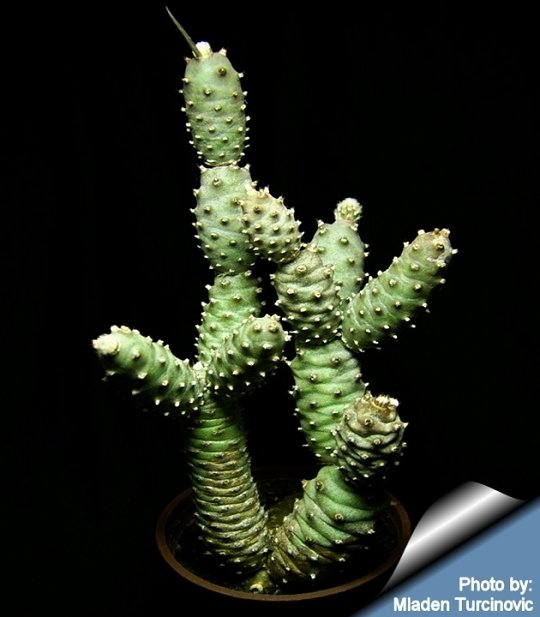
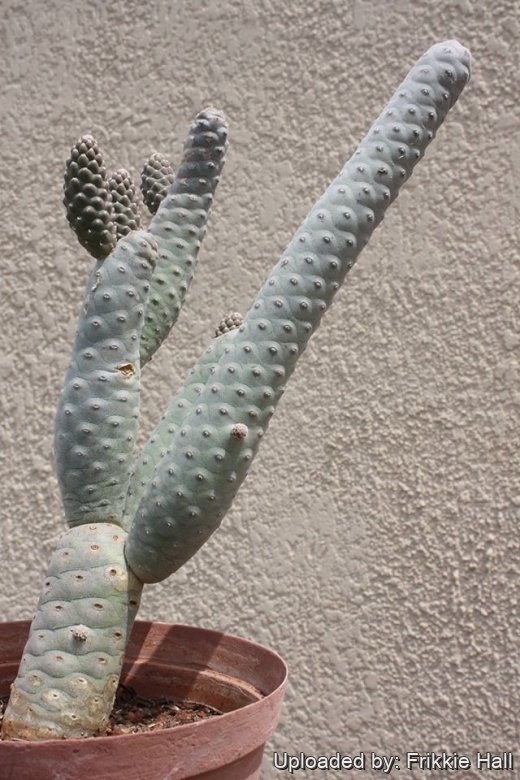
Tephrocactus articulatus var. diadematus, generally included within (as a synonym of)(Tephrocactus articulatus), is a succulent upright shrublet, up to 60 cm tall, 1.2 m spread. The ‘inermis’ form of this species is a nearly spineless form with no spines and without (or with very few) glochids on the new growth. These usually fall off as it ages.
Stem: It produces dull greyish-blue, greyish-brown to earth-tone coloured pine-cone-like globular to elongated stem segments 2 to 20 cm long, the segment are hardly tuberculate (except in drying) and generally grow longer and narrower than the standard Tephrocactus articulatus. The segments usually grow one or two new segments each year from the stem tips.
Areoles: Large
Spines: The typical Tephrocactus articulatus var. diadematus has flattened papery spines 2 to 5(-10) cm long and numerous reddish-brown glochids, both absent in the forma ‘inermis’ ( but a few caduceus glochids are sometime present in the youngest areoles)
Flowers: Yellowish-white fading to pink.
Blooming season: Spring.
Fruit: Globose, 1 to 1,5 cm long, dry.
Seed: Corky.
Origin and Habitat
Cultivated form
Cultivation and Propagation
This is one of the easiest and safest cactus to grown. It is very heat tolerant and doesn’t need shade in summer. It is easy to grow but usually couldn’t get very tall as segment kept falling apart. It is fairly cold resistant and hardy to -9°C depending on the clone, Need full sun, (with insufficient illumination stems get thinner as a result of the lack of sun) The main growing period is spring. It might produce some new segments in the autumn too. Needs good drainage. With plenty of water in summer grows a lot faster… Keep dry in winter but tolerates long, wet, sloggy, cold winters.
Propagation: Cuttings it suckers profusely and is very easy to grow by just knocking off one of the ‘cones’ and stuffing it in the ground.
Source: Tephrocactus diadematus f. inermis, LLIFLE - Encyclopedia of living forms, CC-BY-SA, retrieved 2026-10-25.
Cultivars and forms (5)
Gallery