Publication: Cactus (Paris) no. 38: 249. 1953; cf. Gray Herb. Card Cat.
Description
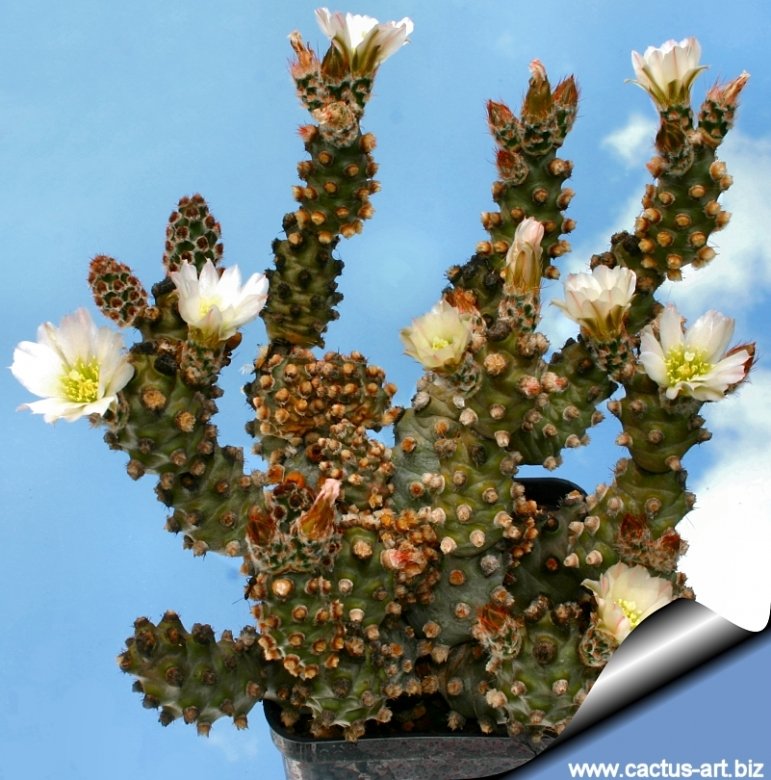
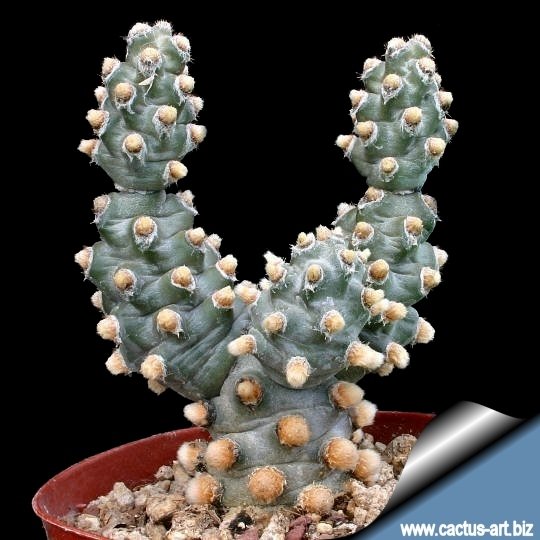
It is a small segmented succulent that grows into mounds of tiny stems or joints. In cultivation grows as a small erect segment chains. In habitat the plants stay smaller because the uppermost segments are detachable and drop easily. It is related to Tephrocactus articulatus and reminds some spineless forms of it.
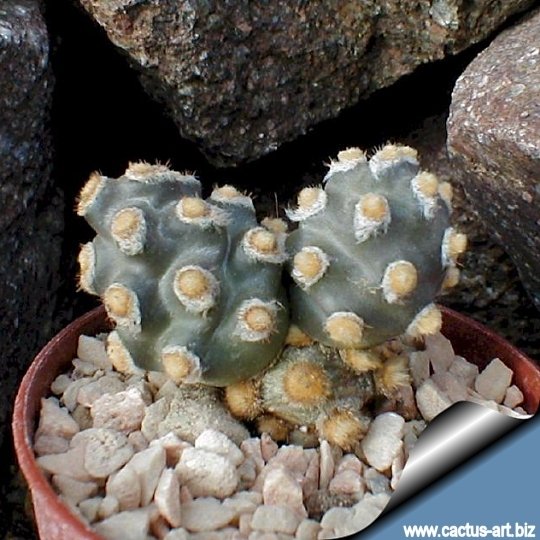
Segments: Grey-green, dark-green or brownish, globose to ovoid, up to 2.5 cm long and wide (but up to 4 cm long or more in cultivation), fragile, spineless with dense glochids. The tubercles are somehow raised but not sharply delimited.
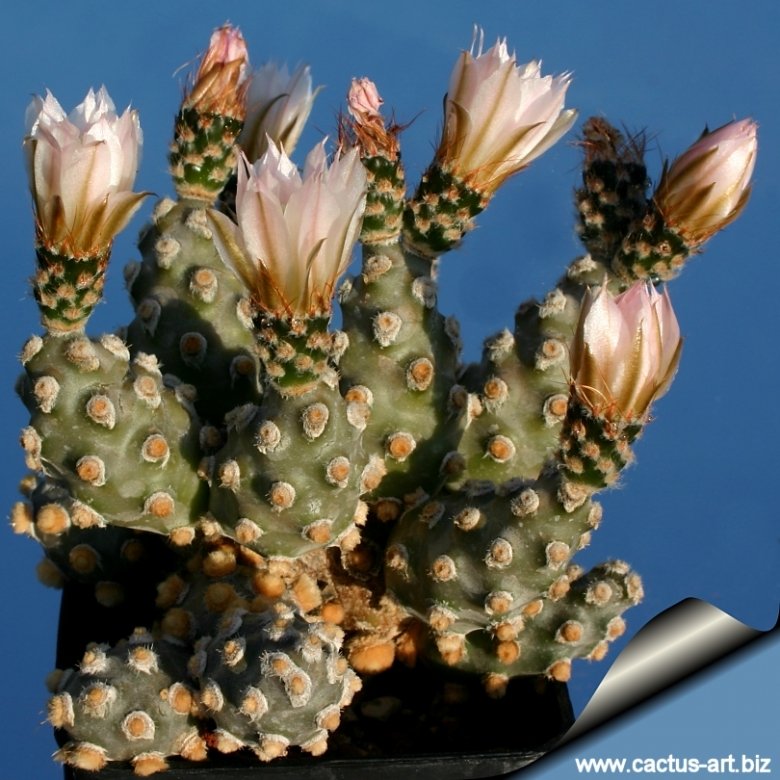
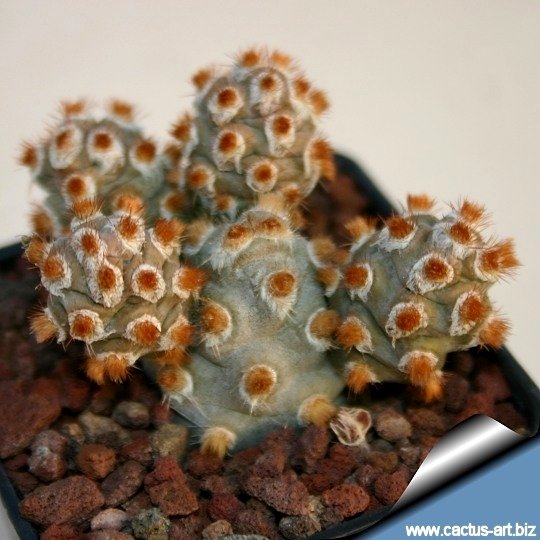
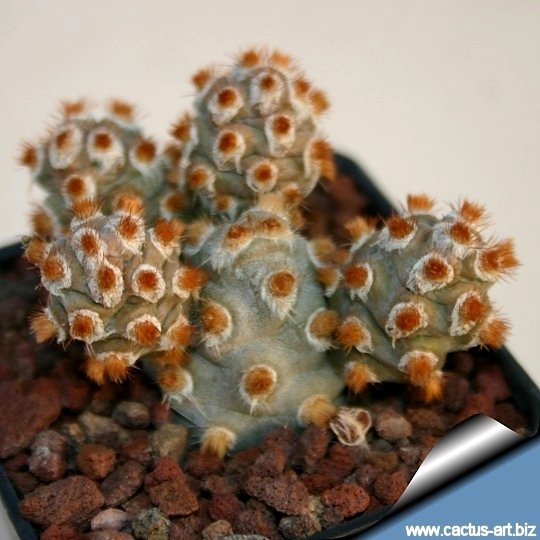
Areoles: 20-25, extending to base, relatively large with white felt and conspicuous tufts of cream, greyish, brownish or reddish-brown glochids not easily detachable. A particularity of this plant is that it seems to be able to completely regrow all the glochids even on old corky basal segments, so the tufts of glochids get denser and denser as the stems age.
Spines: Spineless.
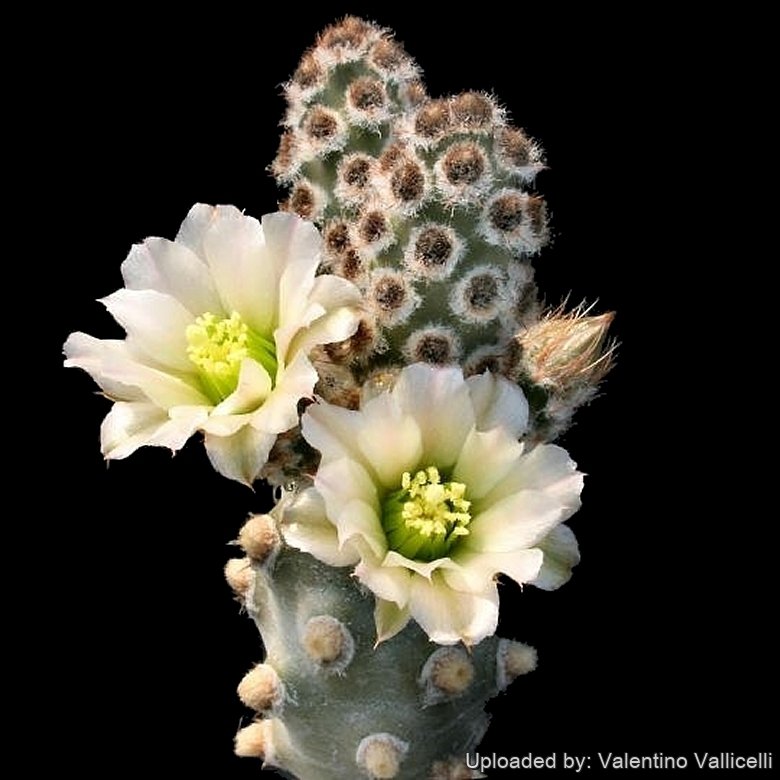
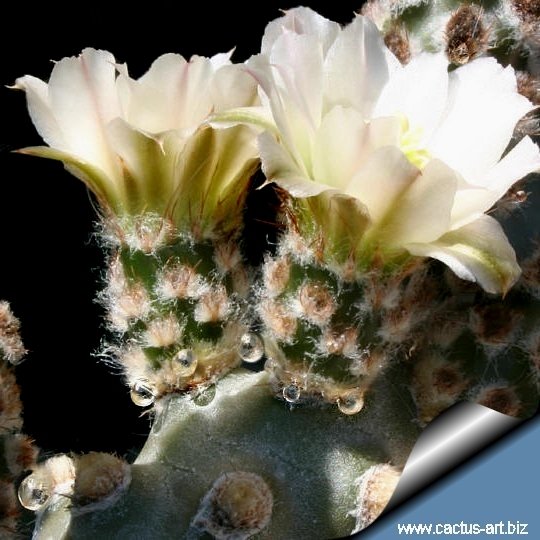
Flower: Up to 3 cm long, dirty white or very pale pink a little hyaline with darker midrib, a green centre and green filaments. Pericarp is comparatively small and has areoles furnished with wool and bristle-like glochids as strong as the one on the young shoots.
Fruit: Dry, thin walled.Small clumping segmented succulent, In cultivation grows as a small erect segment chains. In habitat the plants stay smaller because the uppermost segments are detachable and drop easily.
Areoles: Very ornamental with bright yellow-brown glochids and white felt.
Spines: Spineless.
Flower: Dirty white or very pale pink a little hyaline with a green centre and green filaments. Pericarp is comparatively small and has areoles furnished with bristle-like spines as strong as the one on the young shoots.
Origin and Habitat
Argentina (Province of Salta: Questa de Molinas in the valle Calchaquí)
Habitat: Grows on sandy soils in a open area among wide spread Trichocereus pasacana.
Notes: At the end of the dry season the cladodes are very dehidrated and plants retract almost at soil level.
Cultivation and Propagation
It is easy to grow but usually couldn’t get very tall as segment kept falling apart. It is fairly cold resistant and hardy to -9°C depending on the clone, Need full sun, (with insufficient illumination stems get thinner as a result of the lack of sun) The main growing period is spring. It might produce some new segments in the autumn too. Needs good drainage. Propagation is through segment cuttings, or occasionally seeds The little glochids at the base of these larger spines are quite a nuisance, and it is best to use gloves to handle this plant.
Propagation: Cuttings. It suckers profusely and is very easy to grow by just knocking off one of the ‘cones’ and stuffing it in the ground.
From llifle page Maihueniopsis molinensis cv. Red Glochids
Description
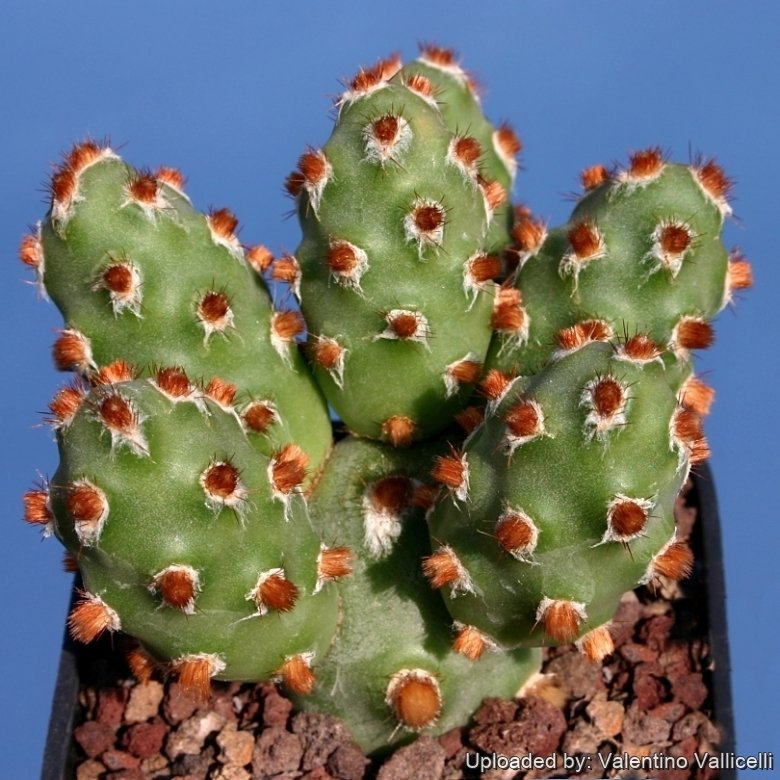
Areoles: Very ornamental with bright Orange-reddish glochids and white felt.
Spines: Spineless.
Flower: Dirty white or very pale pink a little hyaline with a green centre and green filaments. Pericarp is comparatively small and has areoles furnished with bristle-like spines as strong as the one on the young shoots.
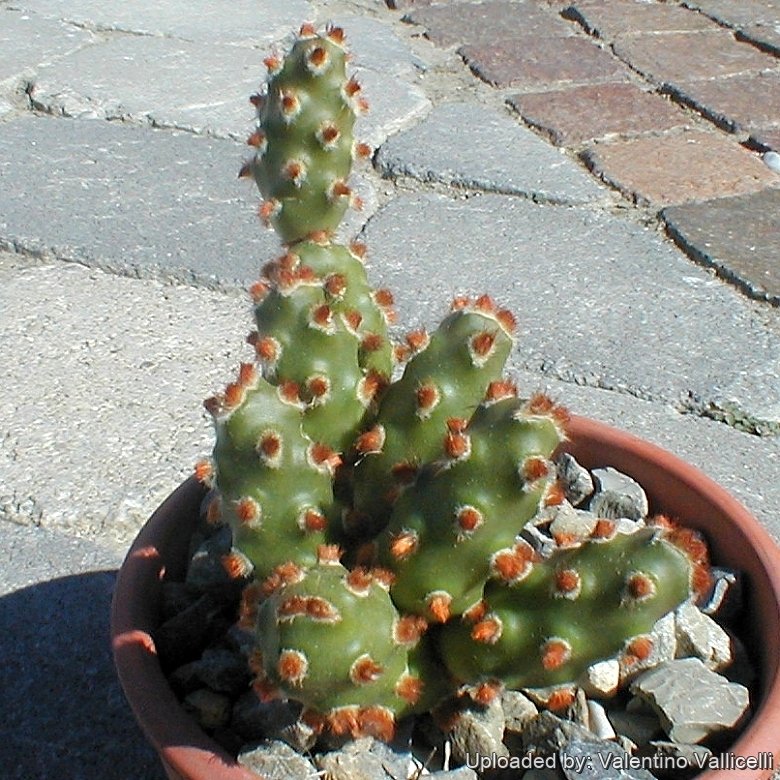
It is a small segmented succulent that grows into mounds of tiny stems or joints. In cultivation grows as a small erect segment chains. In habitat the plants stay smaller because the uppermost segments are detachable and drop easily.
Red glochid form: This is a very ornamental clone with bright Orange-reddish glochids and white felt.
Segments: Green to grey-green as they ages, globose to ovoid, up to 2.5 cm long and wide (but up to 4 cm long or more in cultivation), fragile, spineless with dense glochids. The tubercles are somehow raised but not sharply delimited.
Areoles: 20-25, extending to base, relatively large with white felt and conspicuous tufts of reddish-brown glochids not easily detachable. A particularity of this plant is that it seems to be able to completely regrow all the glochids even on old corky basal segments, so the tufts of glochids get denser and denser as the stems age.
Spines: Spineless.
Flower: Up to 3 cm long, dirty white or very pale pink a little hyaline with darker midrib, a green centre and green filaments. Pericarp is comparatively small and has areoles furnished with wool and bristle-like glochids as strong as the one on the young shoots.
Fruit: Dry, thin walled.Small clumping segmented succulent, In cultivation grows as a small erect segment chains. In habitat the plants stay smaller because the uppermost segments are detachable and drop easily.
Areoles: Very ornamental with bright yellow-brown glochids and white felt.
Spines: Spineless.
Flower: Dirty white or very pale pink a little hyaline with a green centre and green filaments. Pericarp is comparatively small and has areoles furnished with bristle-like spines as strong as the one on the young shoots.
Origin and Habitat
Argentina (Salta, Los Molinos)
Habitat: Grows a open area among wide spread Trichocereus pasacana.
Notes: At the end of the dry season the cladodes are very dehidrated and plants retract almost at soil level.
Cultivation and Propagation
It is very heat tolerant and doesn’t need shade in summer. It is easy to grow but usually couldn’t get very tall as segment kept falling apart. It is fairly cold resistant and hardy to -9°C depending on the clone, Need full sun, (with insufficient illumination stems get thinner as a result of the lack of sun) The main growing period is spring. It might produce some new segments in the autumn too. Needs good drainage. With plenty of water in summer grows a lot faster… Keep dry in winter but tolerates long, wet, sloggy, cold winters.
Propagation: Cuttings (or occasionally seeds) it suckers profusely and is very easy to grow by just knocking off one of the ‘cones’ and stuffing it in the ground.
Source: Maihueniopsis molinensis cv. Red Glochids, LLIFLE - Encyclopedia of living forms, CC-BY-SA, retrieved 2026-10-25.
Cultivars and forms (2)
Gallery