Publication: Bull. Torrey Bot. Club 1922, xlix. 251
Description
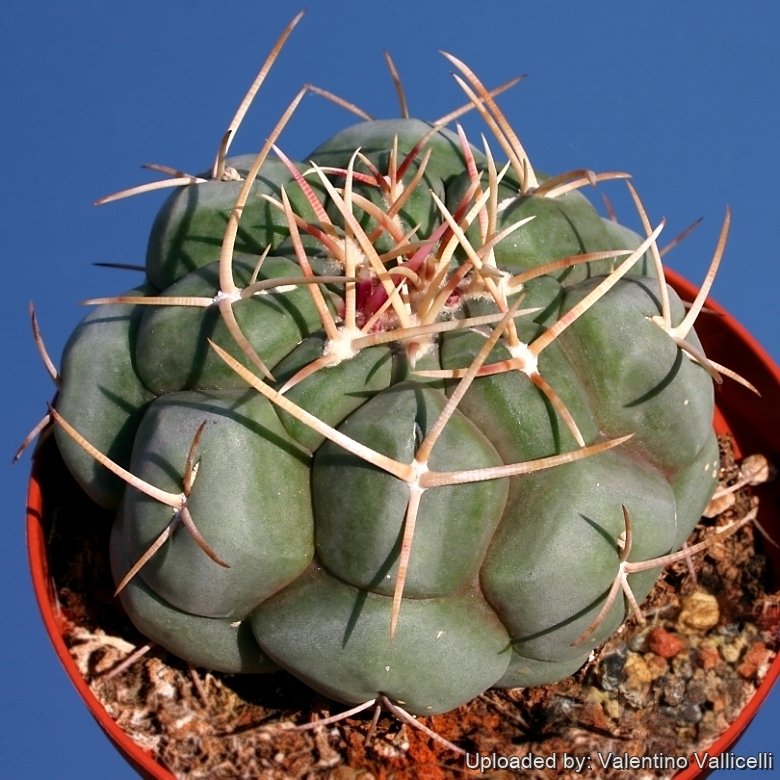
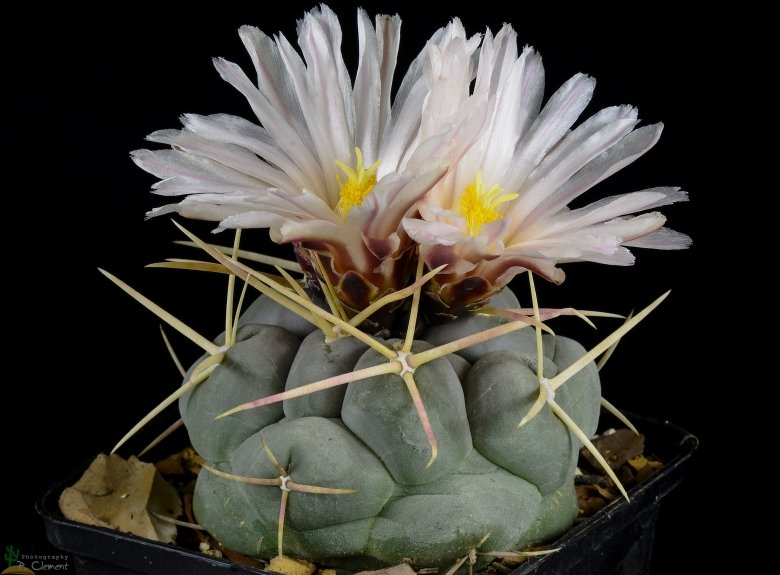
Thelocactus hexaedrophorus is a solitary and quite variable cactus with flattened stems. Many local forms are known, often formally described, that differ in stem, spine or flower morphology. Because of the large variability of the species in the whole distribution area, none of these are recognised today.
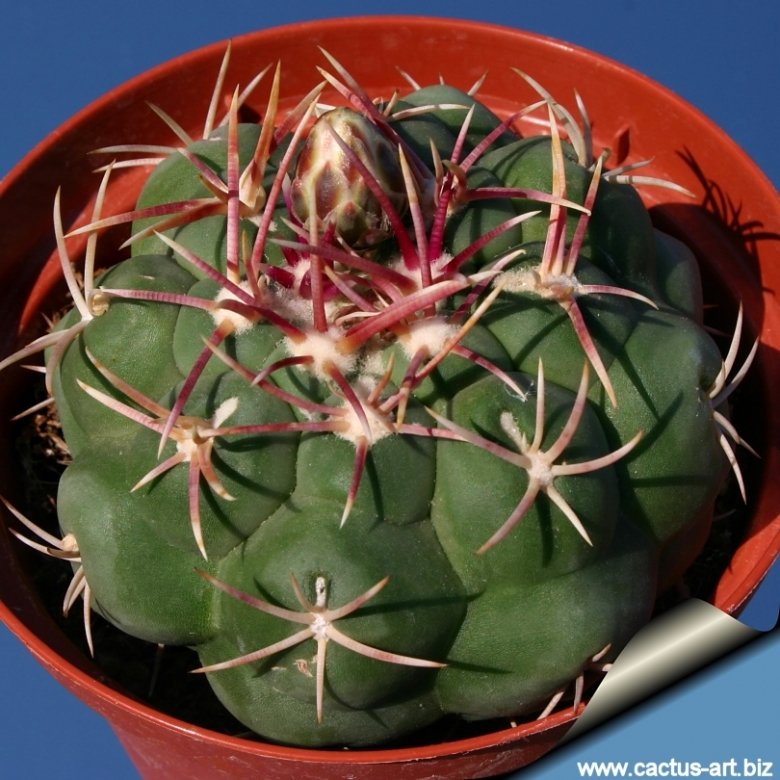
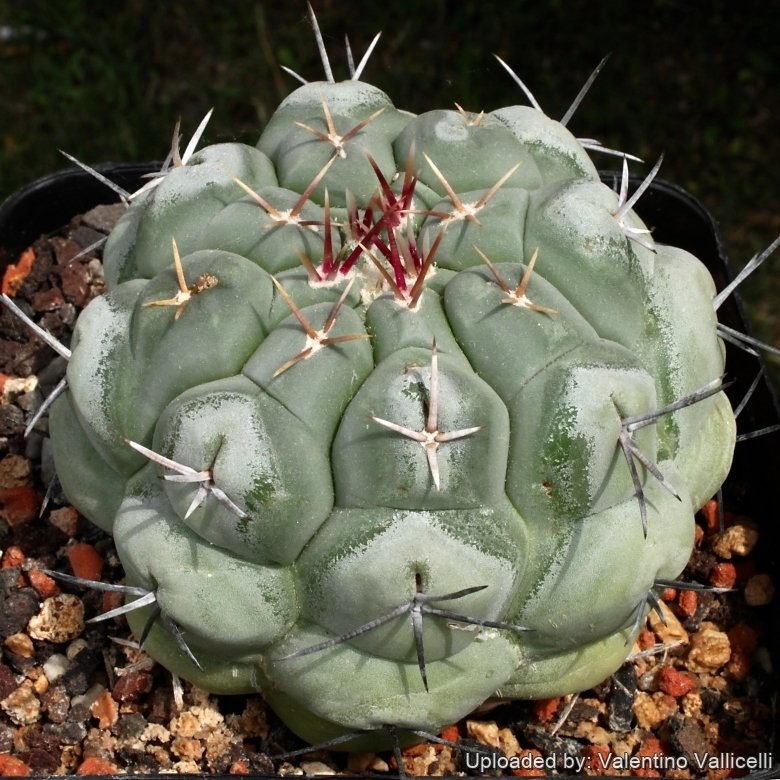
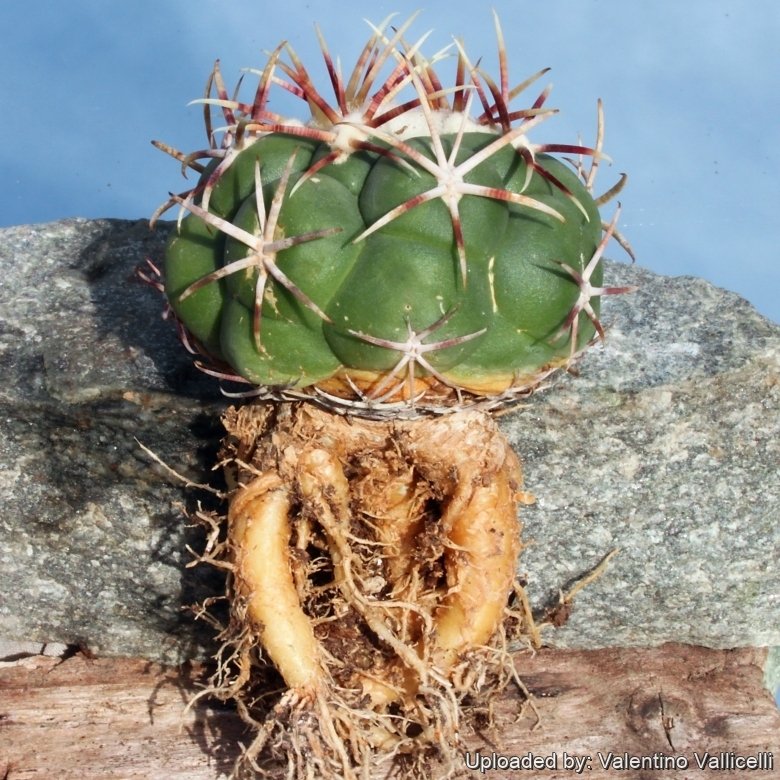
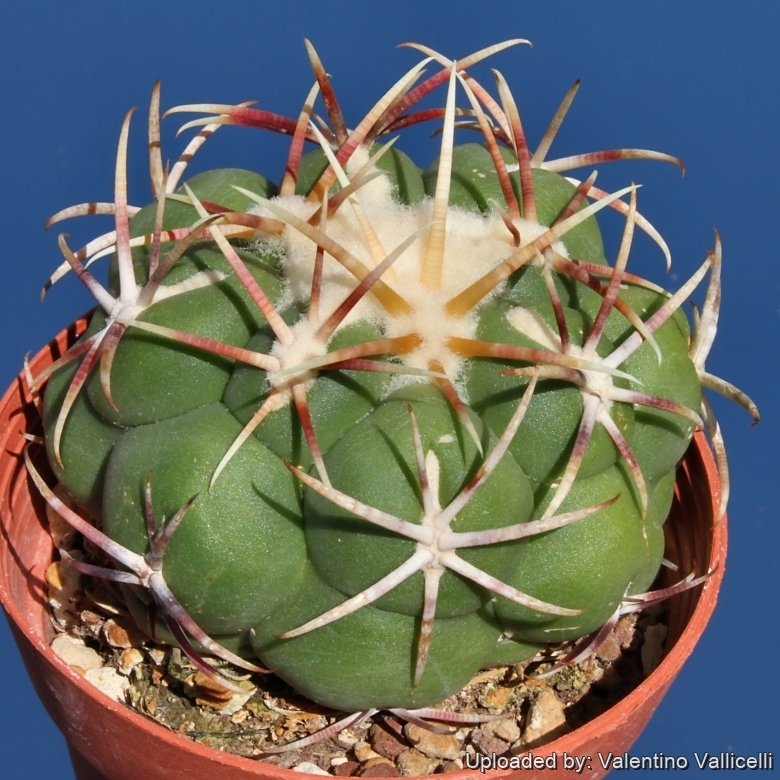
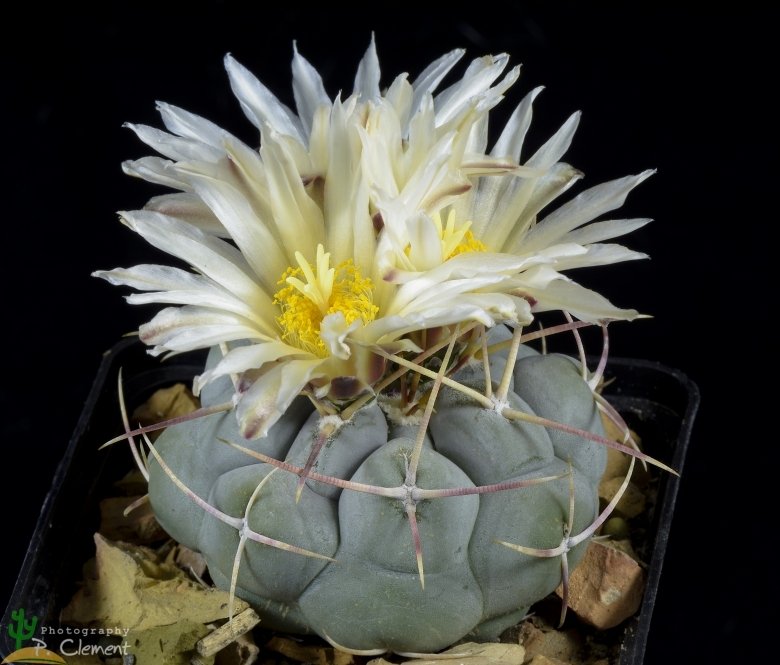
Stem:Globose or somewhat flattened above or umbilicate, glaucous, olive-green, or greyish-green eventually tinged in pink or purple, 3-7,5 cm tall , 8-15(-20) in diameter (eventually grows a little taller in cultivation), strongly tubercled and not ribbed.
Ribs: 8-13 indistinct, but generally evident in adult plants.
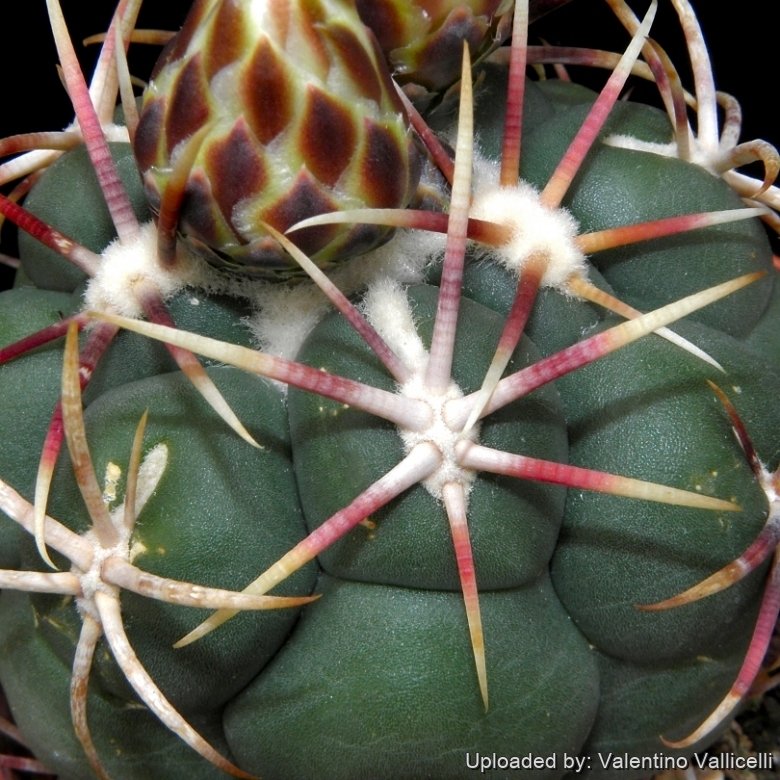
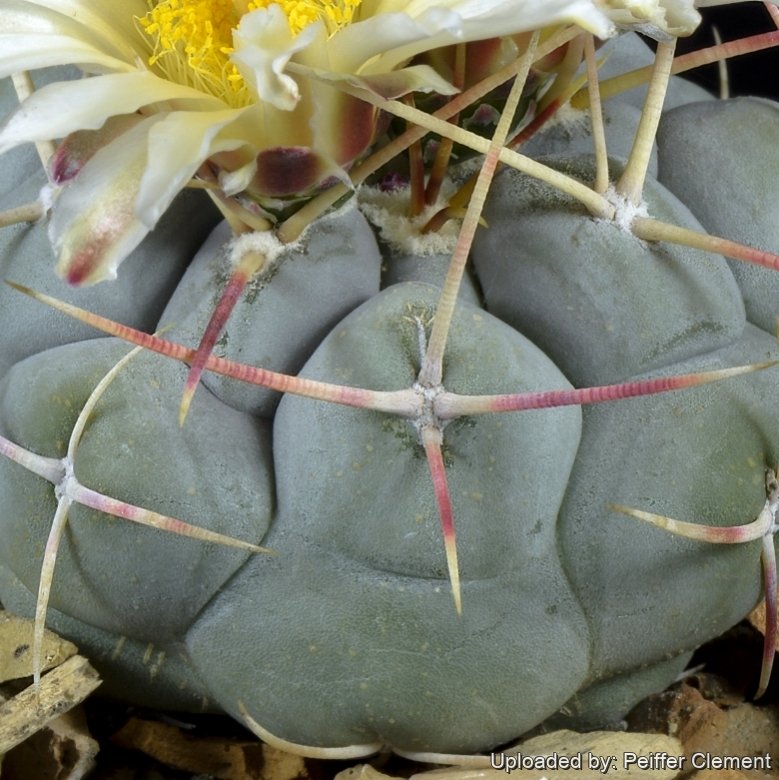
Tubercles: Fat, prominent, polygonal-rounded (hexagonal or pentagonal based), arranged in indefinite spirals, not flattened laterally, sometime compressed at the tip, 8-20 mm long, 13-27 mm large.
Areoles: 4-13 mm long, 12-28 mm apart, on top of the tubercles, elongated into a short groove, without nectar secreting glands.
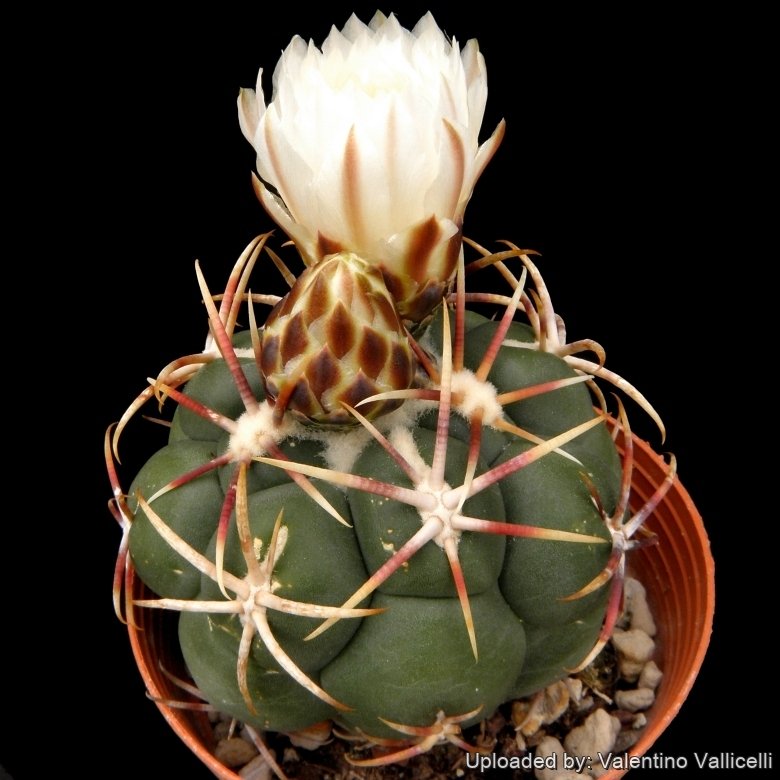
Spines: Usually strong and variable in length depending on the clone often difficult to distinguish as centrals and radials.
Radial spines: 4-6 (6-8 on subsp. lloydii), erect to spreading, unequal, (5-)11-18(-60) mm long, pure white, ochre, reddish to brown, rigid, straight or curved, acicular to subulate and annulate.
Central spines: Almost always absent or sometime 1(-3), erect, much stouter than the radials, 15-18(-30) mm long, ochre, pinkish-grey, reddish, purplish, brow to whitish acicular to subulate.
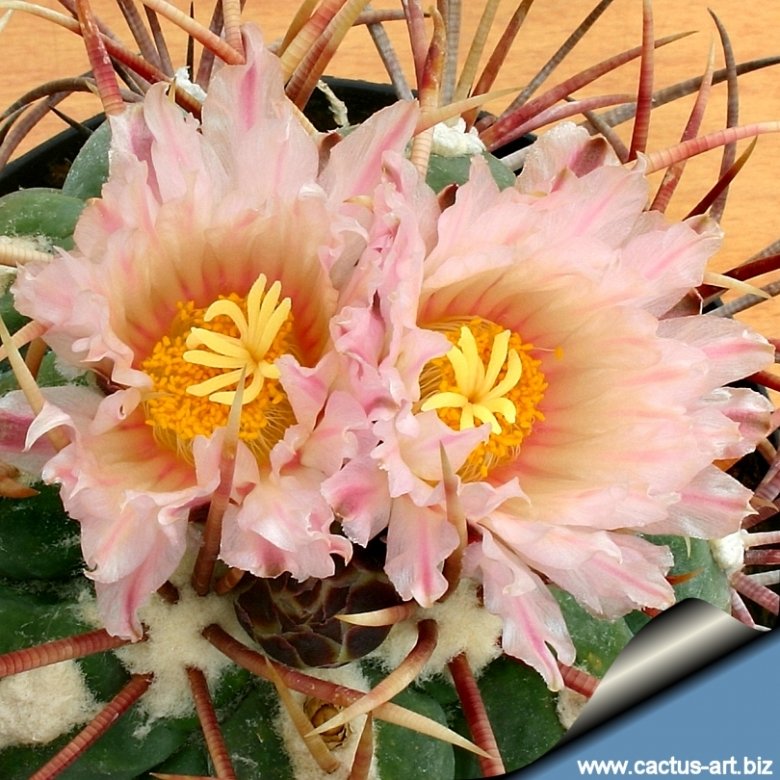
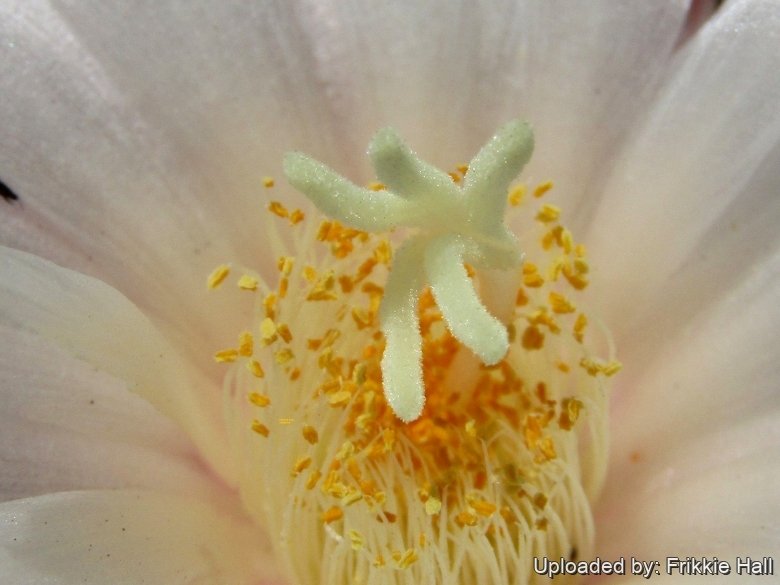
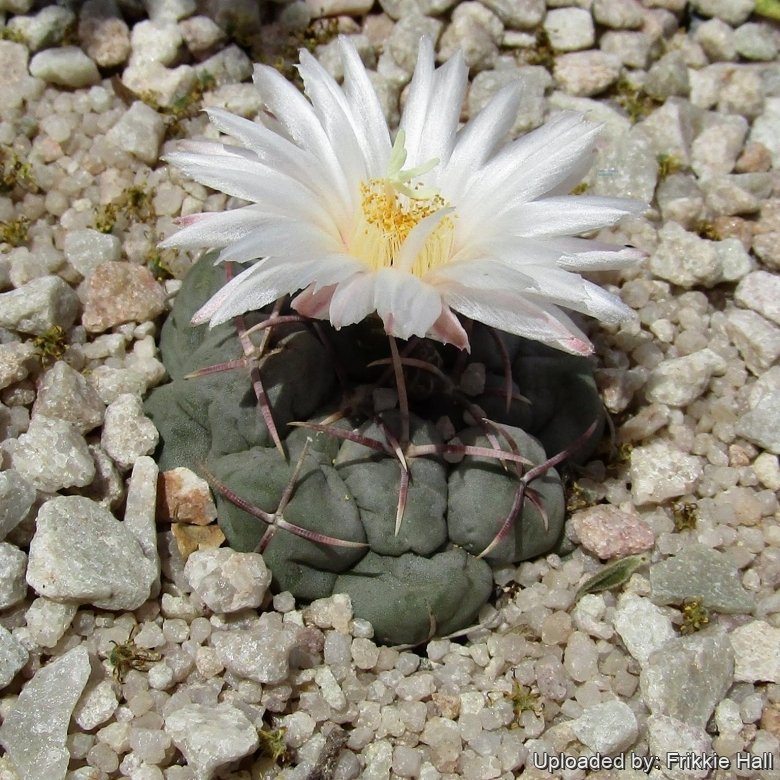
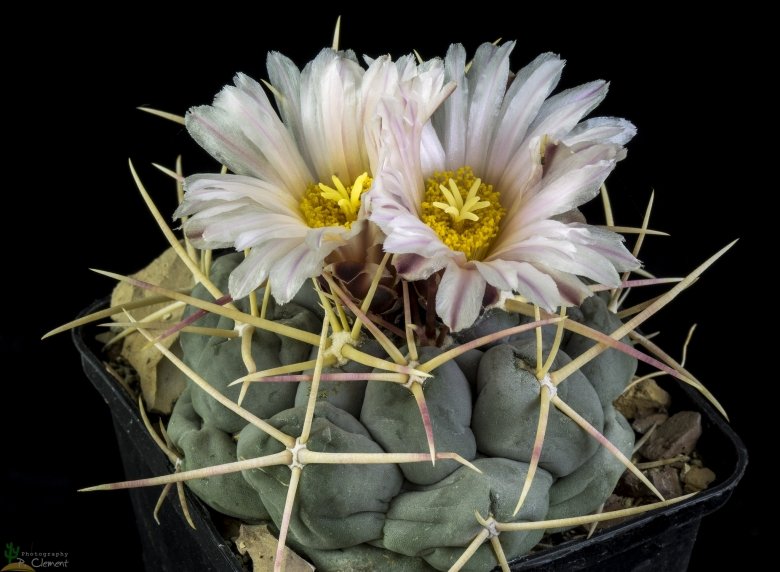
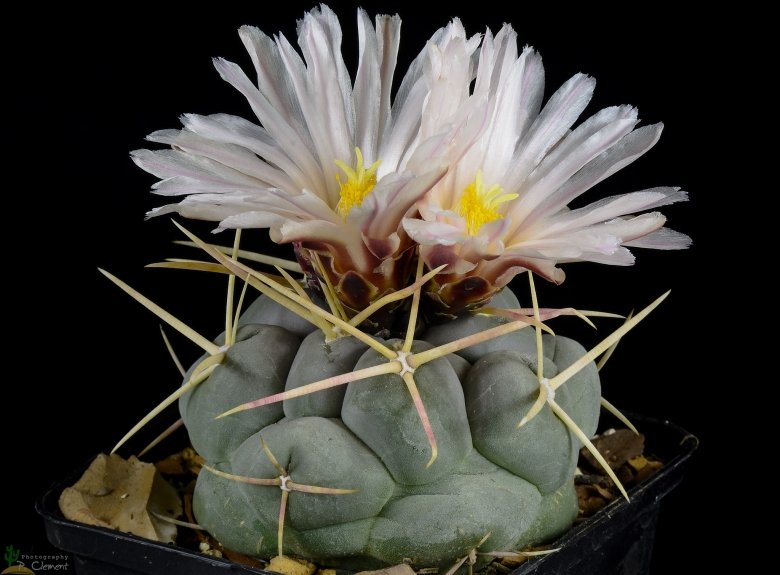
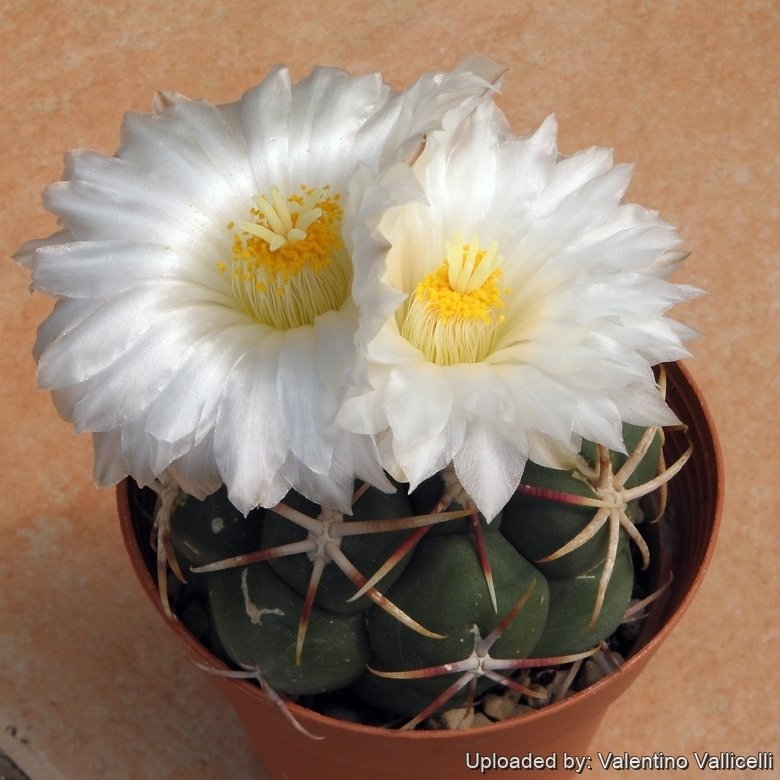
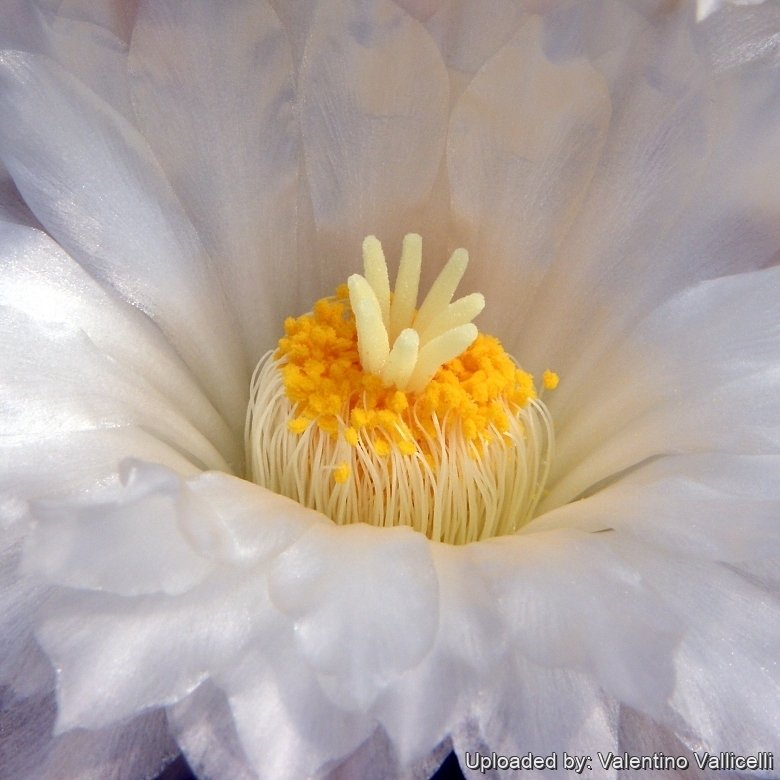
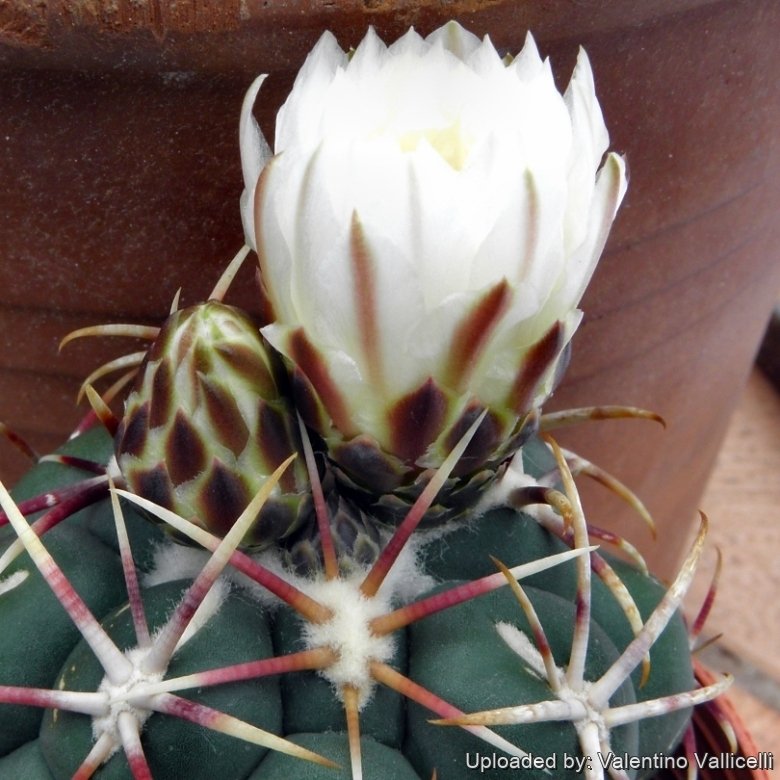
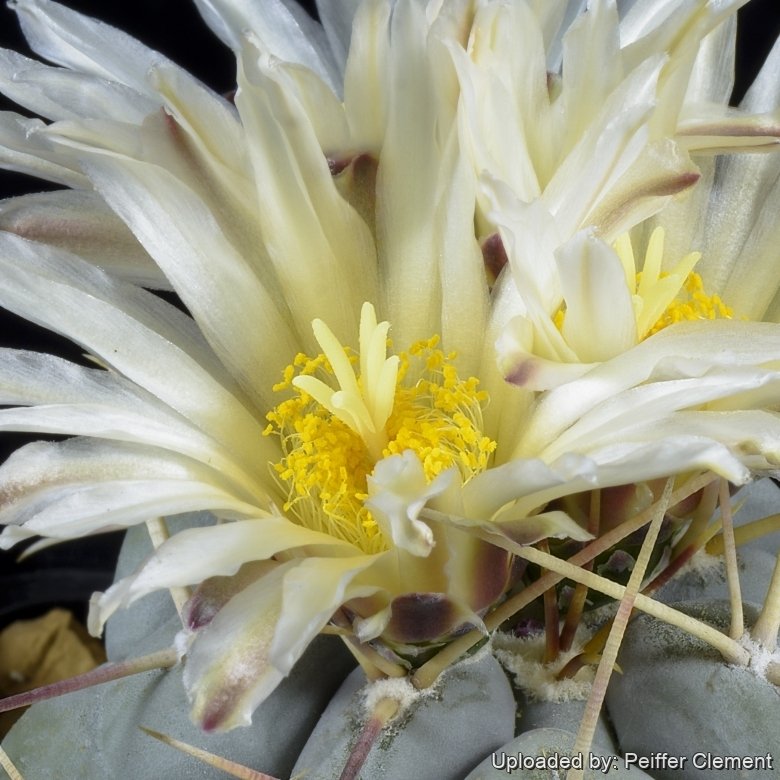
Flowers: Silvery-white or rarely pinkish with more or less magenta midribs, 4,5-5,5(-10) in diameter, broader than long when expanded . Tube very short. Pericarpel covered with scales. Perianth-segments oblong, purplish; stigma-lobes yellowish white.
Fruit: Spherical, with scales, green magenta, 7-12 mm becoming dry at maturity dehiscing by basal pores.
Seeds: 1,5-2 mm long and 1,2-1,5 broad, with testa reticulate, divided into polygonal or square areas.
Origin and Habitat
San Luis Potosi, Zacatecas, Tamaulipas, and Nuevo Leon, Mexico.
Altitude: Subspecies hexaedrophorus grows a lover altitude from 1100 to 2000 metres above sea level. (Subspecies lloydii 2200-2300).
Habitat: It grows in large numbers on gentle limestone hill slopes, plains and terraces in the Chihuahuan Desert, savanna, and grasslands, often in association with other plant species, including Mammillaria parkinsonii, Mammillaria aureilanata, Ariocarpus retusus, Gymnocactus knuthianus, Coryphantha maiz-tablasensis, Astrophytum myriostigma, Echinocactus platyacanthus and Echinocereus blanckii, Coryphantha radians, Ferocactus latispinus, Echinocereus pectinatus, Echinocereus cinerascens, Opuntia rastrera, Opuntia lindheimeri, Opuntia imbricata, Myrtillocactus geometrizans, Heliabravoa chende, Agave salmiana, Yucca filifera, Jatropha spathulata and Fritillaria lanceolata.
Cultivation and Propagation
This cactus is easy to cultivate and recommended for any collection that needs lots of light with ample airflow.
Growth rate: It is a small growing, but easily flowering species. It offset from the base and can fill a 25 cm pot in just a few years given the best conditions.
Soils: It likes very porous standard cactus mix soil with little organic matter (peat, humus).
Repotting: Repotting every 2-3 years. It will need a pot with sufficient depth to allow the tap root. As it is especially prone to rot under-pot in a smaller container filled with very porous compost. Use pot with good drainage.
Watering: Water regularly in summer, but do not overwater (very wet-sensitively, especially in light of its succulent root system). Its roots are easily lost in pots that stay damp for any length of time. Keep dry with ample airflow in winter. In the rest period no high atmospheric humidity!! Care must be taken with watering as they tends to become swollen and untidy in growth habit if given too much water and shade.
Fertilization: During the growing season enrich the soil using a fertilizer rich in potassium and phosphorous, but poor in nitrogen, because this chemical element doesn’t help the development of succulent plants, making them too soft and full of water.
Hardiness: Reputedly sensitive to frost , but less so if kept on the dry side prior to, and during, cold weather (hardy to -7° C for short periods). However some warmth throughout the year will increase the grower’s success (minimum 5° to 8°C during rest season).
Exposition: Outside bright sun, filtered sunlight or afternoon shade, inside it needs bright light, and some direct sun. Subject to sunburn if exposed to direct sun for too long. Tends to bronze in strong light, which encourages flowering and heavy wool and spine production.
Uses: It is an excellent plant for container growing. It always looks good and stays small. It look fine in a cold greenhouse and frame.
Pests & diseases: It may be attractive to a variety of insects, but plants in good condition should be nearly pest-free, particularly if they are grown in a mineral potting-mix, with good exposure and ventilation. Nonetheless, there are several pests to watch for:
- Red spiders: Sensitive to red spider mite. Overhead watering is helpful in controlling mites.
- Mealy bugs: Occasionally mealy bugs they develop aerial into the new growth among the wool with disfiguring results, but the worst types develop underground on the roots and are invisible except by their effects.
- Scales: Scales are rarely a problem.
- Rot: Rot it is only a minor problem with cacti if the plants are watered and “aired” correctly. If they are not, fungicides won’t help all that much.
Reproduction: Nearly always from seed, since the plant rarely produces plantlets.
Notes
Thelocactus hexaedrophorus is an example of hexagonal configurations of stem-segments surface, other plant that show hexagonal tubercles comprises Matucana krahnii and Tephrocactus geometricus.
Bibliography
Majoer references and further lectures
-
N. L. Britton, J. N. Rose “The Cactaceae. Descriptions and Illustrations of Plants of the Cactus Family.” Volume 4, The Carnegie Institution of Washington, Washington 1923
-
Edward Anderson “The Cactus family” Timber Press, Incorporated, 2001
-
James Cullen, Sabina G. Knees, H. Suzanne Cubey “The European Garden Flora Flowering Plants: A Manual for the Identification of Plants Cultivated in Europe, Both Out-of-Doors and Under Glass” Cambridge University Press, 11/Aug/2011
-
David R Hunt; Nigel P Taylor; Graham Charles; International Cactaceae Systematics Group. “The New Cactus Lexicon” dh books, 2006
-
Clive Innes, Charles Glass “Cacti” Portland House, 01/May/1991
-
Hisho Hirao “Colour Encyclopaedia of Cacti” Seibundo Shinkosha Pub. Co., Ltd 1976
-
E Haustein “Der Kosmos Kakteenfuehrer” Balogh Scientific Books, United States, 01/Dec/1998
-
Willy Cullmann, Erich Götz (Dozent Dr.), Gerhard Gröner “The encyclopedia of cacti” Timber Press, 1987
From llifle page Echinocactus droegeanus
Description
Thelocactus hexaedrophorus var. droegeanus is one of the controversial geographical or morphological form of Thelocactus hexaedrophorus. Many variant of Thelocactus hexaedrophorus was early classified as different independent species or varieties, but nowadays all this plants are considered part of a multiform species, where each form is linked to others by populations of plants with intermediate characteristics. The name Thelocactus hexaedrophorus var. droegeanus was used to designate plants with ash-grey compressed tubercles. This variety, according to Glass and Foster (1977) grows near La Bonita, south of Matehulla in San Luis Potosi, have short spines and small flowers.
Origin and Habitat
Thelocactus hexaedrophorus var. droegeanus, according to Glass and Foster (1977) grows near La Bonita, south of Matehulla in San Luis Potosi, Mexico.
Cultivation and Propagation
Easy to cultivate. Water moderately from Spring to Autumn. In Winter, keep dry.
Sun Exposure: Full sun to light shade
Reproduction: Nearly always from seed, since the plant rarely produces plantlets.
Bibliography
Major references and further lectures
-
Curt Backeberg. “Die Cactaceae” Volume V. Gustav Fischer Verlag. Jena, 1961
-
Berger “Kakteen”, p. 253. 1929
-
Pilbeam in “Thelocactus (Cactus File Handbook, 1)” p. 29. 1996
-
Echinocactus hexaedrophorus var. droegeanus in: Schelle in “Handb. Kakteenkult”. 199. 1907
-
????????? ?????. ??? “??????????”
-
Thelocactus hexaedrophorus var. droegeanus (Hildm. ex K. Schum. 1907) Berger 1929 in Cactus Love web: http://www.cactuslove.ru/vid.php?vidid=1369
-
Nathaniel Lord Britton, Joseph Nelson Rose “Cactaceae: Descriptions and Illustrations of Plants of the Cactus Family” volume 4, 1923
Source: Echinocactus droegeanus, LLIFLE - Encyclopedia of living forms, CC-BY-SA, retrieved 2026-10-25.
From llifle page Echinocactus fossulatus
Description
Thelocactus hexaedrophorus var. fossulatus is one of the old controversial geographical forms of the variable Thelocactus hexaedrophorus that distinguishes for the usually longer and brighter coloured spines (red, white and amber coloured). However it look very similar to other varieties of Thelocactus hexaedrophorus which are linked one to each others by populations of plants with intermediate characteristics. Nowadays all them are thought to belong to a unique polymorphic species with some individual covered in fine white hairs spine, while others do not. Such variations has led to establishment of several unnecessary names for this species.
Habit: Usually solitary, clustering only after many years, from the base
Stem: Globoid blue-green up to 20 cm in diameter (or more)
Ribs: Spiralling divided into fat, poligonal-rounded tubercles.
Spines: 1 red central spines and 4-6 reddish-gray-white radial spines per areole They are thick, long and sharp of in length up to 6 cm long. The brightness of the colouration depends on the clone. The best spined specimen are very beautiful and sought after by cactus impassioned.
Flowers: 10 cm in diameter pure white, white/cream or pale pink with yellow throat and centres. Petals may have a darker pink midrib.
Origin and Habitat
San Luis Potosi Nuevo León, Mexico.
Altitude: 1500-1700.
Habitat: It grows on gentle limestone hill slopes and terraces in the Chihuahuan Desert, savanna, and grasslands together with Gymnocactus knuthianus.
Cultivation and Propagation
Thelocactus hexaedrophorus var. fossulatus is easy to cultivate and recommended for any collection that needs lots of light with ample airflow.
Growth rate: It is a small growing, but easily flowering species. It offset from the base and can fill a 25 cm pot in just a few years given the best conditions.
Soils: It likes very porous standard cactus mix soil with little organic matter (peat, humus).
Repotting: Repotting every 2-3 years. It will need a pot with sufficient depth to allow the tap root. As it is especially prone to rot under-pot in a smaller container filled with very porous compost. Use pot with good drainage.
Watering: Water regularly in summer, but do not overwater (very wet-sensitively, especially in light of its succulent root system). Its roots are easily lost in pots that stay damp for any length of time. Keep dry with ample airflow in winter. In the rest period no high atmospheric humidity!! Care must be taken with watering as they tends to become swollen and untidy in growth habit if given too much water and shade.
Fertilization: During the growing season enrich the soil using a fertilizer rich in potassium and phosphorous, but poor in nitrogen, because this chemical element doesn’t help the development of succulent plants, making them too soft and full of water.
Hardiness: Reputedly sensitive to frost , but less so if kept on the dry side prior to, and during, cold weather (hardy to -7° C for short periods). However some warmth throughout the year will increase the grower’s success (minimum 5° to 8°C during rest season).
Exposition: Outside bright sun, filtered sunlight or afternoon shade, inside it needs bright light, and some direct sun. Subject to sunburn if exposed to direct sun for too long. Tends to bronze in strong light, which encourages flowering and heavy wool and spine production.
Uses: It is an excellent plant for container growing. It always looks good and stays small. It look fine in a cold greenhouse and frame.
Pests & diseases: It may be attractive to a variety of insects, but plants in good condition should be nearly pest-free, particularly if they are grown in a mineral potting-mix, with good exposure and ventilation. Nonetheless, there are several pests to watch for:
- Red spiders: Sensitive to red spider mite. Overhead watering is helpful in controlling mites.
- Mealy bugs: Occasionally mealy bugs they develop aerial into the new growth among the wool with disfiguring results, but the worst types develop underground on the roots and are invisible except by their effects.
- Scales: Scales are rarely a problem.
- Rot: Rot it is only a minor problem with cacti if the plants are watered and “aired” correctly. If they are not, fungicides won’t help all that much.
Reproduction: Nearly always from seed, since the plant rarely produces plantlets.
Source: Echinocactus fossulatus, LLIFLE - Encyclopedia of living forms, CC-BY-SA, retrieved 2026-10-25.
From llifle page Echinocactus hexaedrophorus var. labouretianus
Description
Echinocactus labouretianus (Thelocactus hexaedrophorus var. labouretianus) is an undescribed name (nomen nudum - Abbreviation n. n. A title lacking valid description). It was first named by Schumann (Gesamtb. Kakteen 438. 1898) on the basis of a plant shown in the Cels’s Catalogue, probably it was never described, and it should be included within (as a synonym of) Thelocactus hexaedrophorus. In cultivation plants labelled Echinocactus labouretianus or Thelocactus hexaedrophorus var. labouretianus are distinguished by grey stems, beautiful white pink flowers, and nice spination. At first the plants have larger tubercles that may become closely packaged as the plant gets older.
Origin and Habitat
Mexico (?). Cultivated form?.
Bibliography
Major references and further lectures
- Nathaniel Lord Britton, Joseph Nelson Rose “Cactaceae: Descriptions and Illustrations of Plants of the Cactus Family” volume 4, 1923
Source: Echinocactus hexaedrophorus var. labouretianus, LLIFLE - Encyclopedia of living forms, CC-BY-SA, retrieved 2026-10-25.
Cultivars and forms (12)
Subspecies (4)
Varieties (5)
Gallery