Publication: Z. Sukkulentenk. 2: 188 1926.
Description
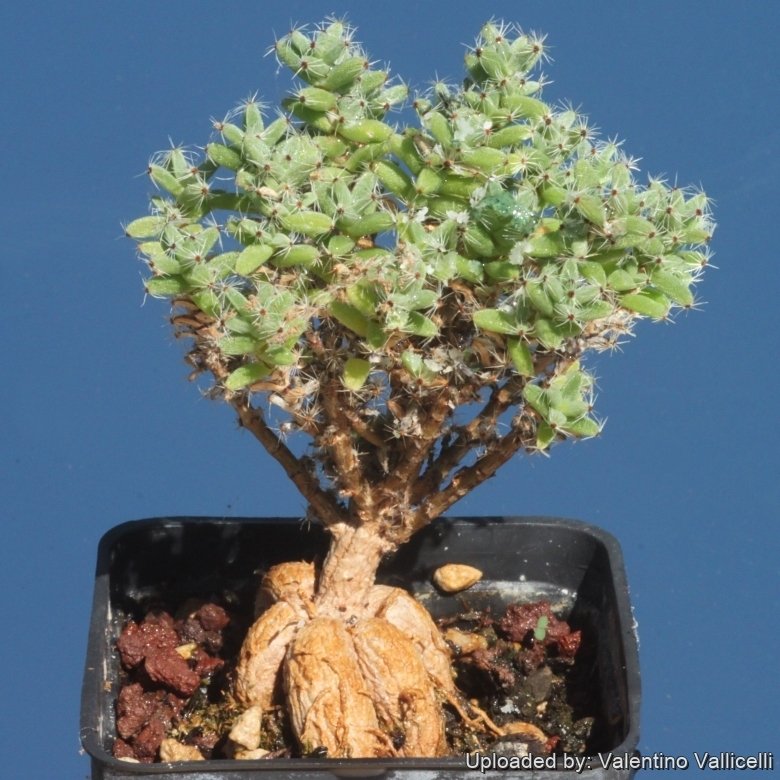
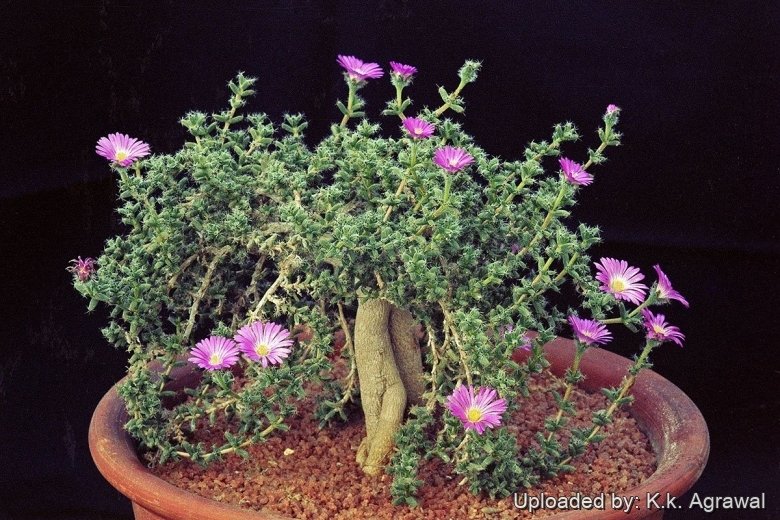
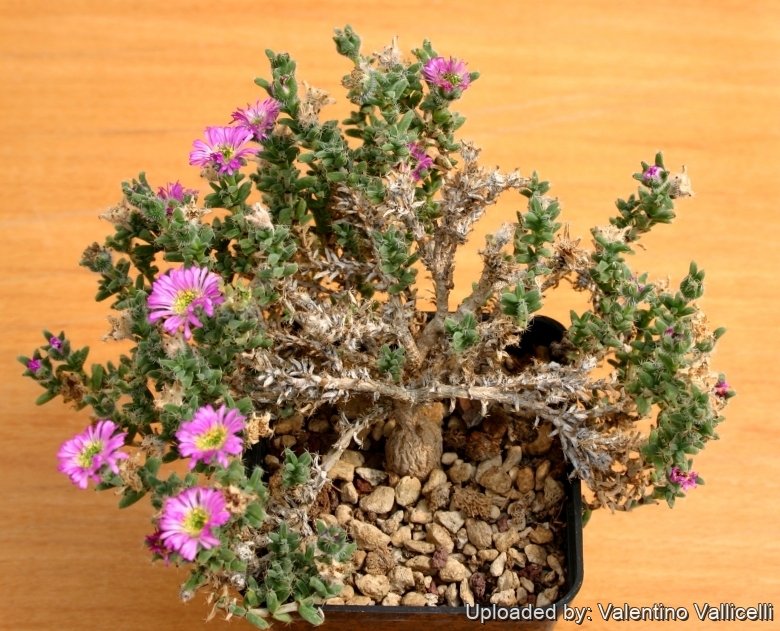
Trichodiadema bulbosum is a caudiciform succulent with long wiry stems. It branches heavily and forms a low, rounded shrub.
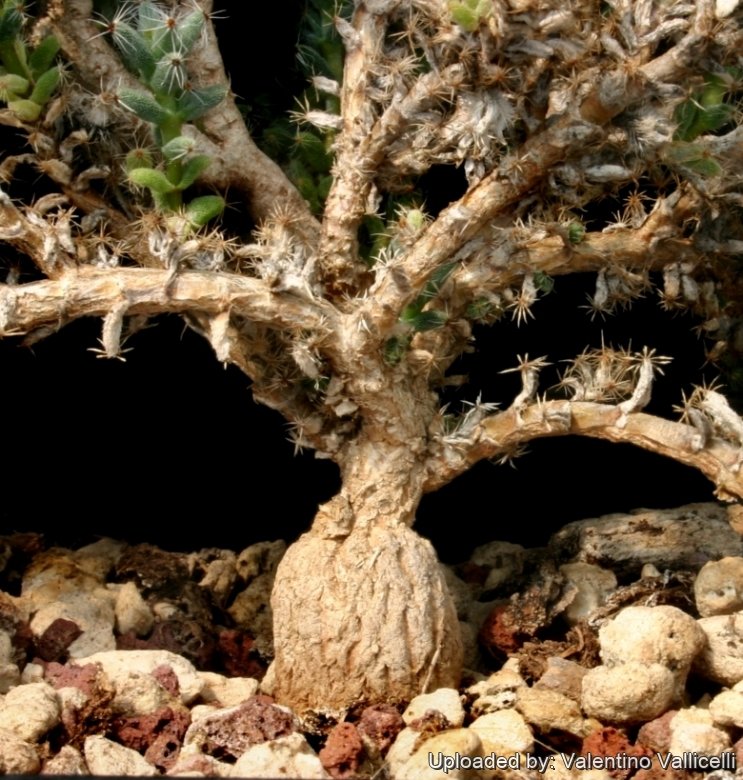
Caudex (enlarged napiform root): Irregular underground up to 20 (30) cm, in plants raised from seeds it is usually solitary but specimens grown from cuttings will form a thick much-branched tuber that have a tan shiny epidermis. The “caudex” can easily be raised above ground level out of the pot for ease of contemplation.
Stems: Wiry, densely branched up to 30(60) cm tall.
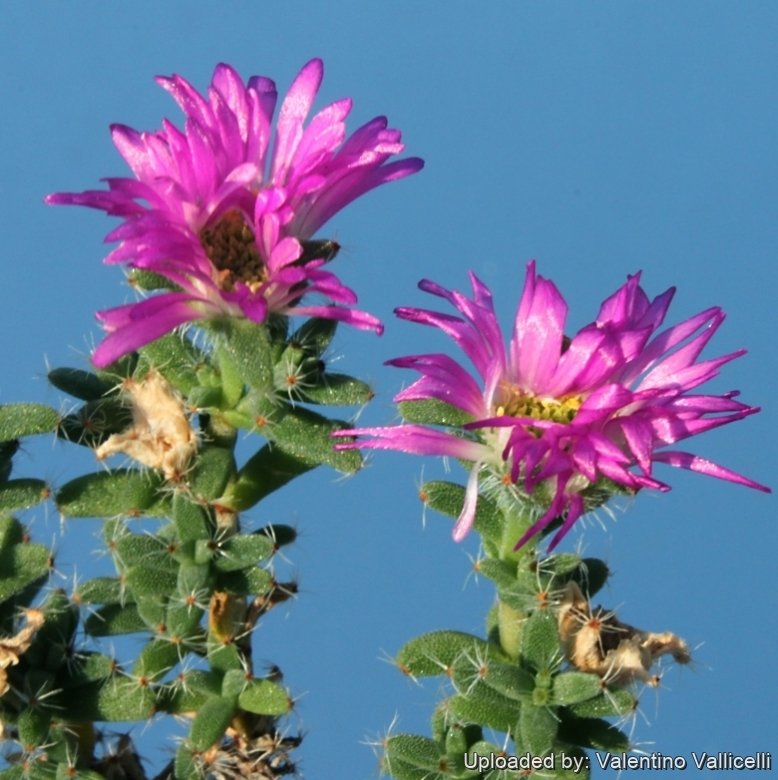
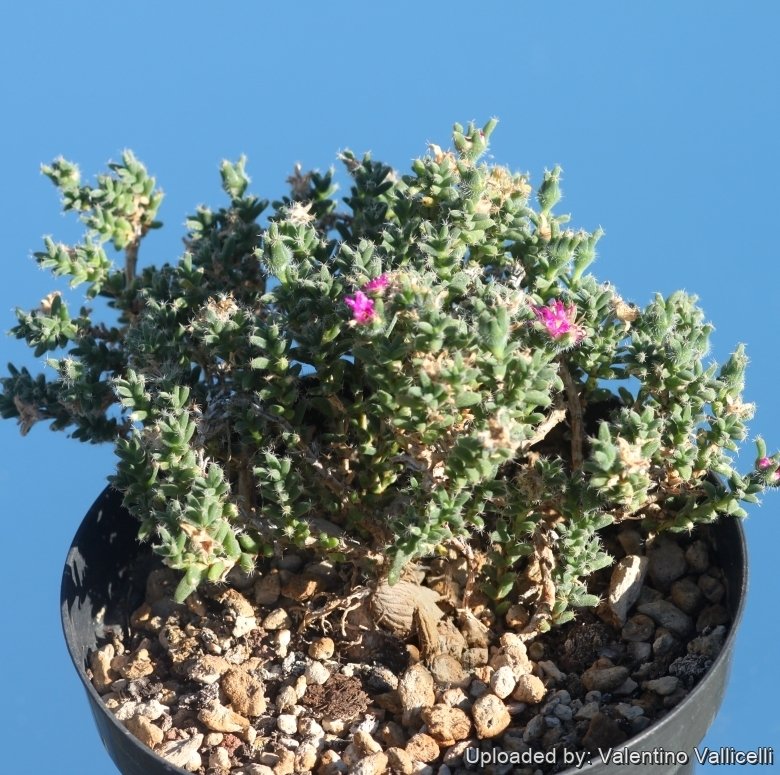
Leaves: 8 mm long succulent, cylindrical, bright green to grey with a crown of soft white bristles, making for a very attractive plant.
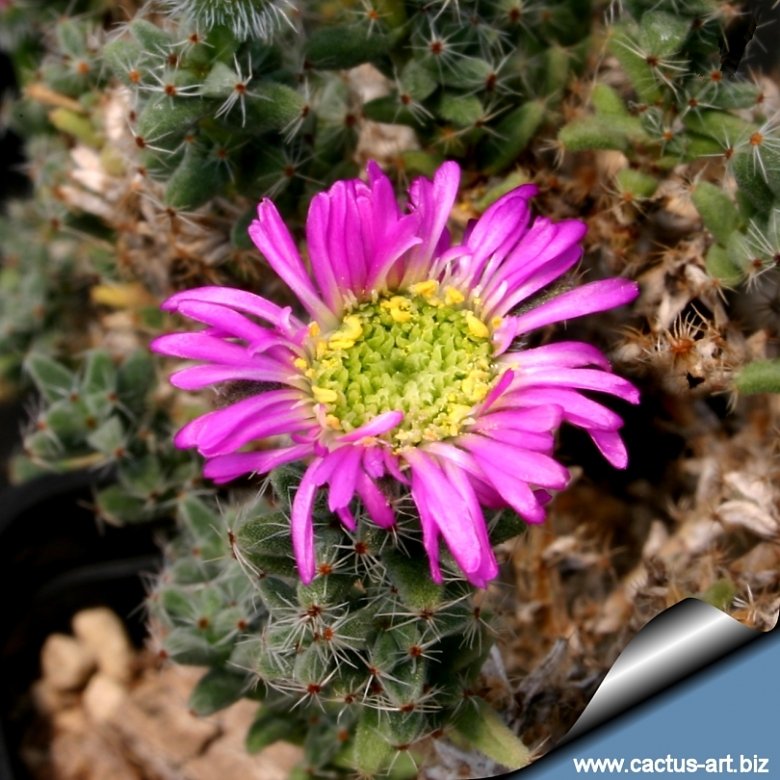
Flowers: Violet to purple-red with a yellow centre (eventually also white or pink) 2 cm wide.
Blooming time: Flowers bloom from spring to autumn.
Origin and Habitat
Western and Eastern Cape Provinces of the Republic of South Africa, (Port Elizabeth)
Cultivation and Propagation
Likes a part-shade position (some early or late sun) but is quite tolerant as regards sun and intense heat. Growing in well-drained soil, Tolerates considerable frost a low as – 4° C (or less) and dry conditions due to its tuberous roots. This species is slow growing and after some years, the roots can be raised for effect, creating a beautiful succulent bonsai. This plants in the first years are usually grown in black nursery containers but if you have a mature specimen with a nice caudex, a bonsai pot or dish seems to make the plant a little more special and helps display the plant well.
Use: Roots of Trichodiadema species have been used in the past for speeding the fermentation of bread, beer, etc. It is presumed they contain either yeast or sugars which increase the rate of fermentation.
Propagation: Seeds, it can be also reproduced by cuttings.
Notes
Trichodiadema bulbosum along with Mestoklema tuberosum are the two more famous succulent mesembs much sought after by the lovers of caudiciform and pachycaul. This species forms many short branches from tan tuberous roots that typically are exposed in cultivation.
Bibliography
Bibliography: Major references and further lectures
-
Heidrun E. K. Hartmann “Aizoaceae F – Z” Springer, 2002
-
James Cullen, Sabina G. Knees, H. Suzanne Cubey “The European Garden Flora Flowering Plants: A Manual for the Identification of Plants Cultivated in Europe, Both Out-of-Doors and Under Glass - Casuarinaceae to Aristolochiaceae” Cambridge University Press, 11/ago/2011
-
Urs Eggli “Illustrated Handbook of Succulent Plants: Dicotyledons” Springer, Heidelberg 2002
-
Werner Rauh “The Wonderful World of Succulents: Cultivation and Description of Selected Succulent Plants Other Than Cacti” Smithsonian Institution Press, 1984
-
Jacobsen “Lexicon of succulent plants” Littlehampton Book Services Ltd. 1974
-
Gordon D. Rowley “Succulent Compositae: A Grower’s Guide to the Succulent Species of Senecio und Othonna” Strawberry Press, California, 1994
-
Hermann Jacobsen “A Handbook of Succulent Plants: Ficus to Zygophyllum” volume 2 Blandford Press, 1960
Gallery