Publication: Notes Mesembryanthemum [H.M.L. Bolus] 3: 214 1950.[25 Aug 1950]
Description
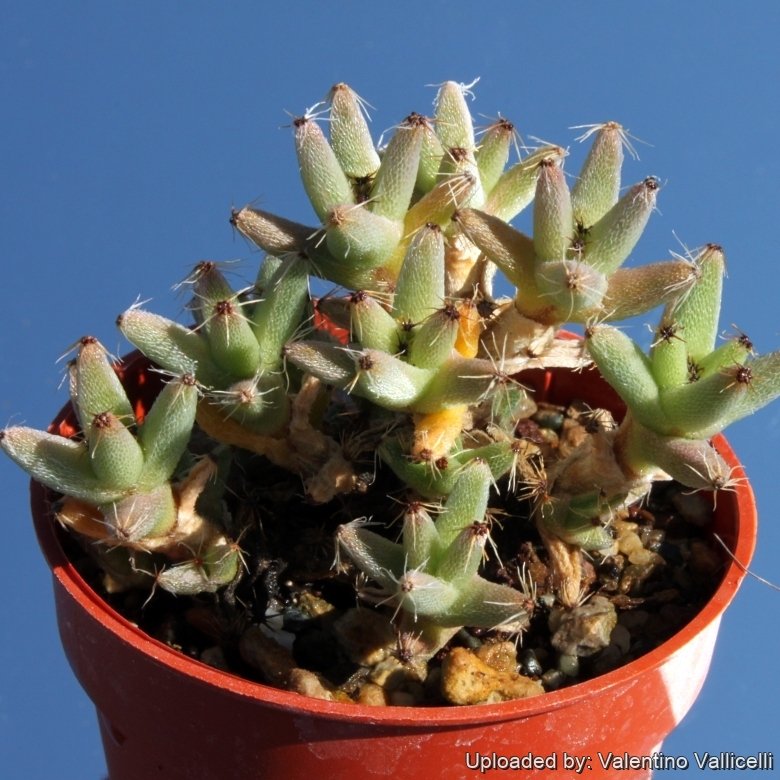
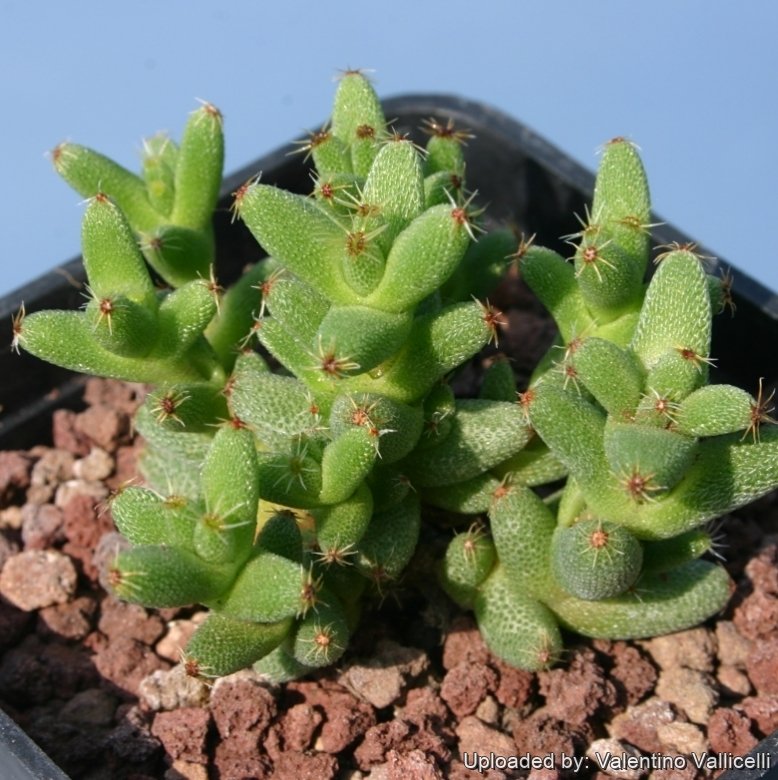
Small erect succulent shrub up to 6 cm tall.
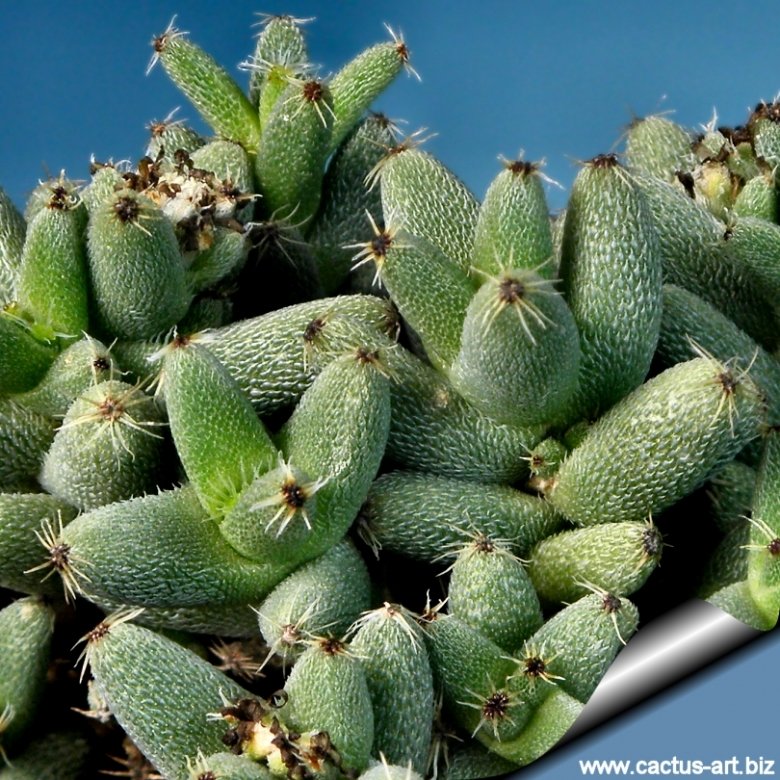
Stems: Compact, wiry, woody, not succulent, that produces short branches from the base and form dense bunch.
Roots: Tuberose, very thick.
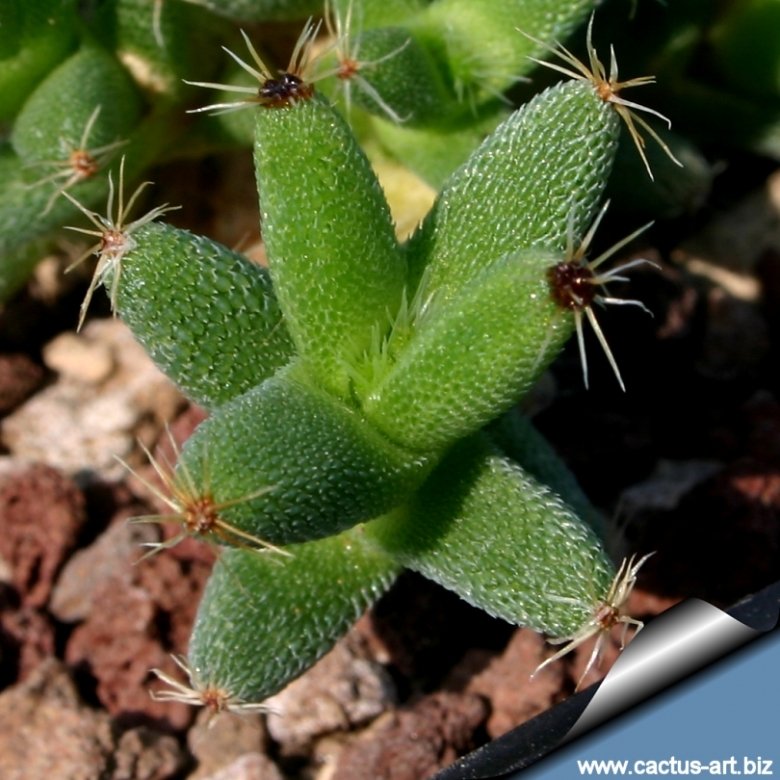
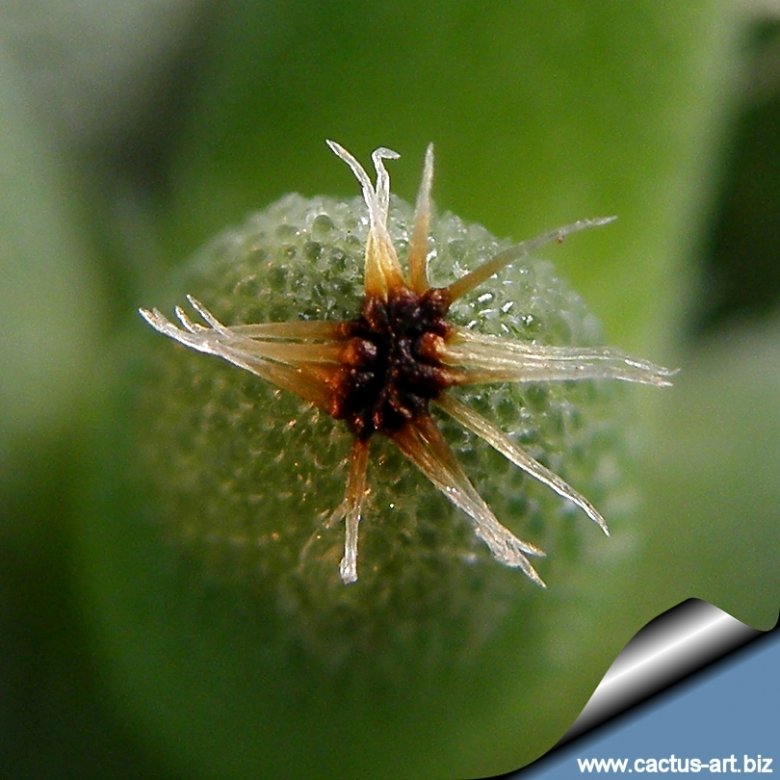
Leaves: 1-1,5 cm long, green, thick, close-set, in four vertical rows, cylindrical, slender with few short white, flexible, spine-like projections that forming a delicate triple crown at the tip.
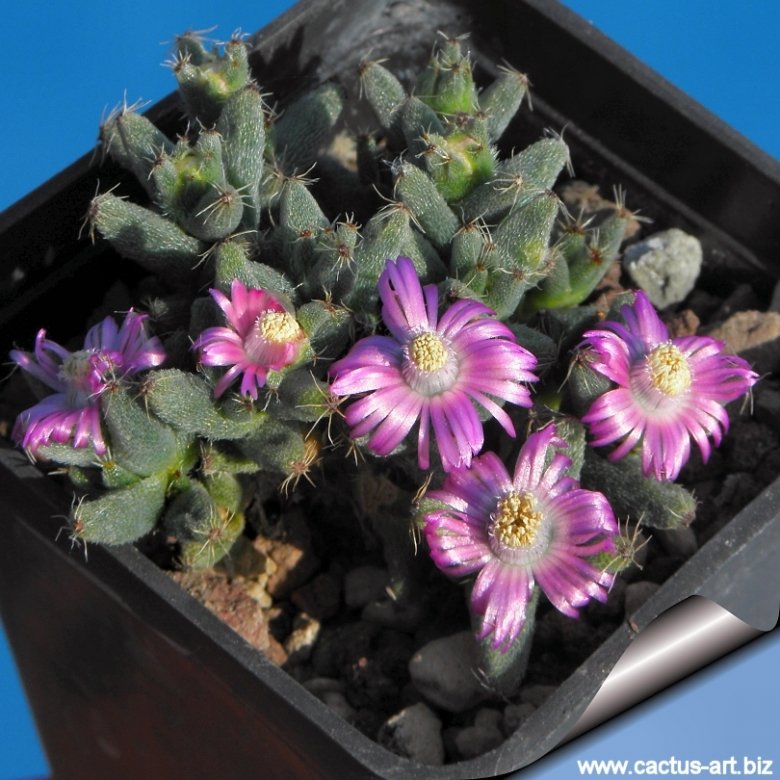
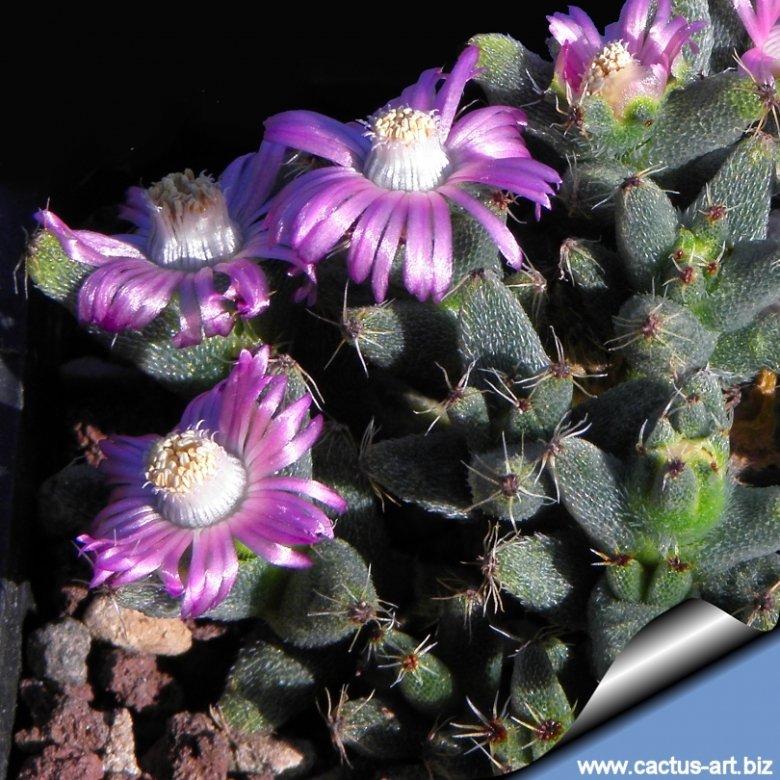
Flowers: Abundant, opening only in sun on the morning, and closing in the afternoon, vivid violet-pink to magenta, up to 3 cm in diameter.
Blooming season: Autumn to Spring. Mainly in late-winter.
Origin and Habitat
South Africa (Cape Province, Kl. Karroo, Ladismith- Distr.)
Habitat: Grows crevice on quartzite rocks.
Cultivation and Propagation
Likes a part-shade position (some early or late sun) but is quite tolerant as regards sun and intense heat. Growing in well-drained soil, Tolerates considerable frost a low as – 4° C (or less) and dry conditions due to its tuberous roots. This species is slow growing and after some years, the roots can be raised for effect, creating a beautiful succulent bonsai. This plants in the first years are usually grown in black nursery containers but if you have a mature specimen with a nice caudex, a bonsai pot or dish seems to make the plant a little more special and helps display the plant well.
Propagation: Seeds, it can be also reproduced by cuttings.
Use: Roots of Trichodiadema species have been used in the past for speeding the fermentation of bread, beer, etc. It is presumed they contain either yeast or sugars which increase the rate of fermentation.
Notes
Trichodiadema looks surprisingly like a cactus, but is not a cactus. Its leaves are succulent and end in a circle of stiff hairs, giving the plant a similar appearance to some species in the cactus genus Mammillaria.
Bibliography
Bibliography: Major references and further lectures
-
Heidrun E. K. Hartmann “Aizoaceae F – Z” Springer, 2002
-
James Cullen, Sabina G. Knees, H. Suzanne Cubey “The European Garden Flora Flowering Plants: A Manual for the Identification of Plants Cultivated in Europe, Both Out-of-Doors and Under Glass - Casuarinaceae to Aristolochiaceae” Cambridge University Press, 11/ago/2011
Gallery