Publication: Kaktusy (Brno) 19: 22. 1983 cf. Repert. Pl. Succ. (I.O.S.) 34: 8 (1985):. 1983
Description
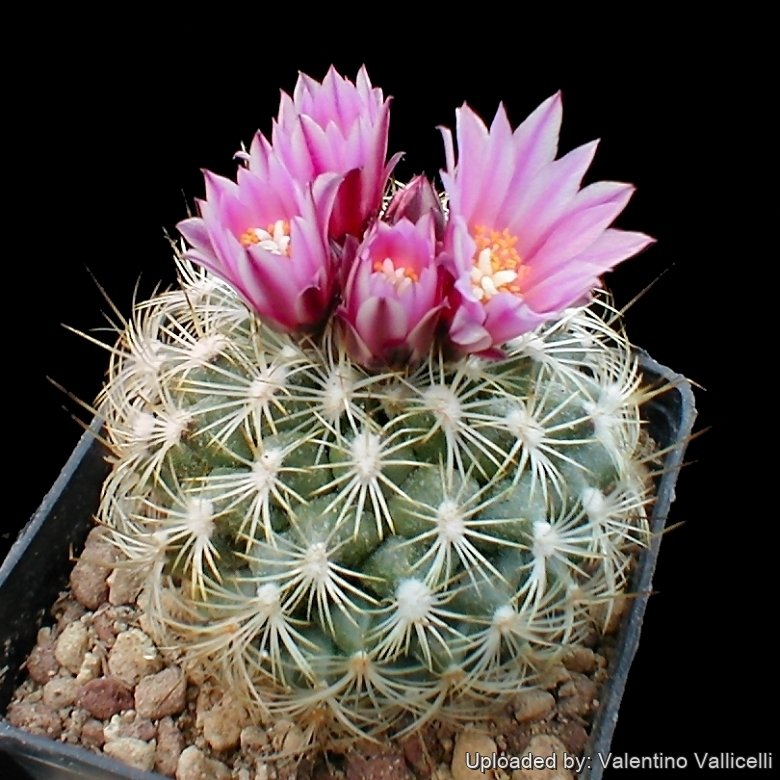
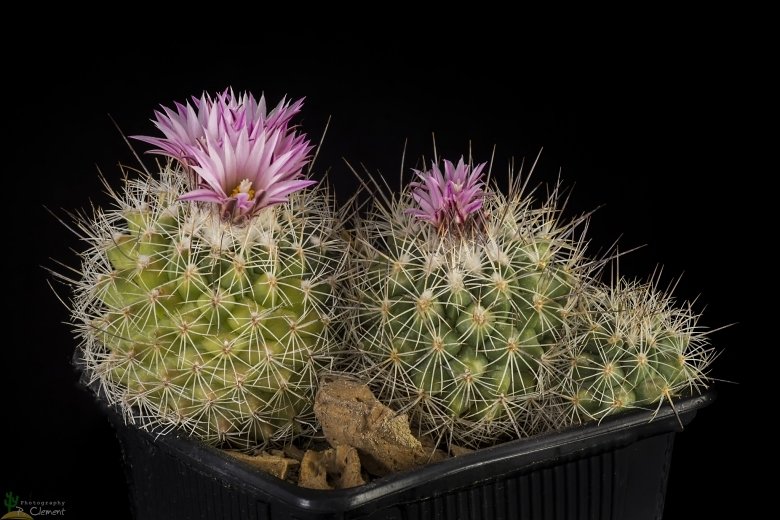
It is a small species usually solitary or partly clumping from the base.
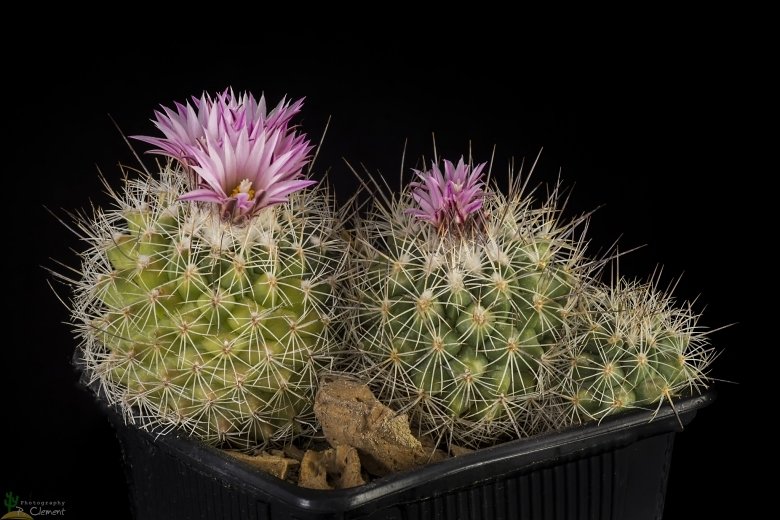
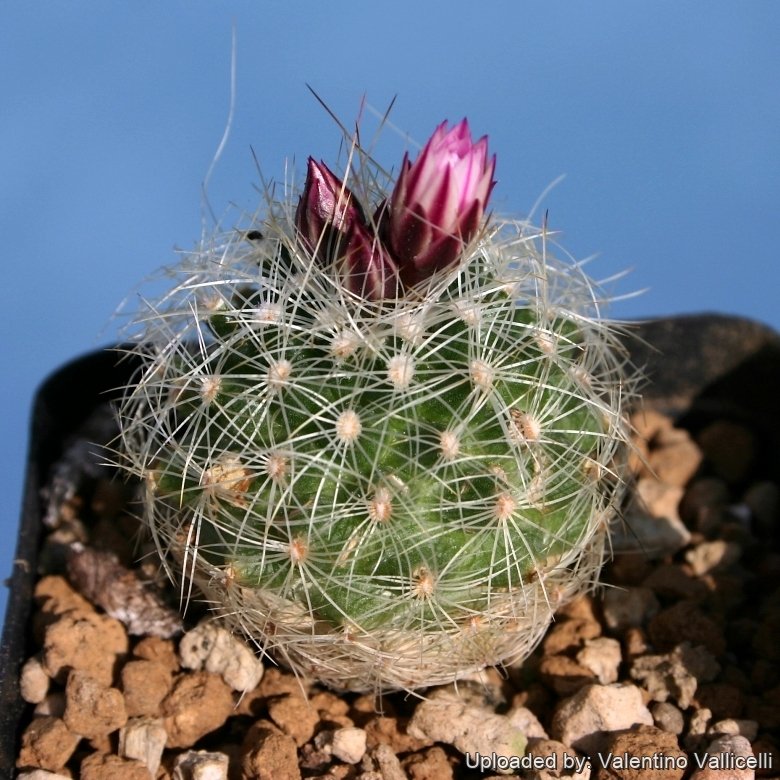
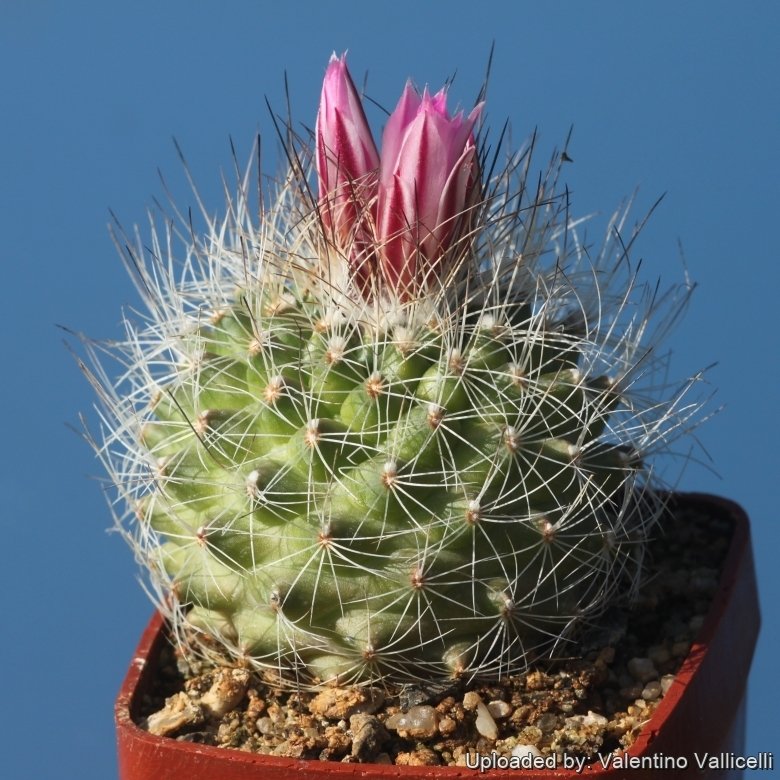
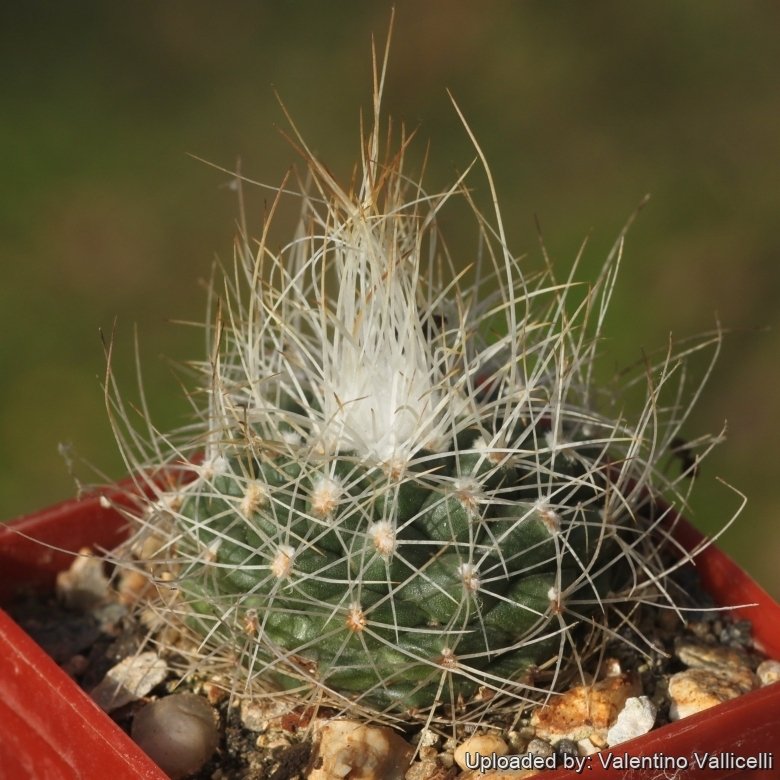
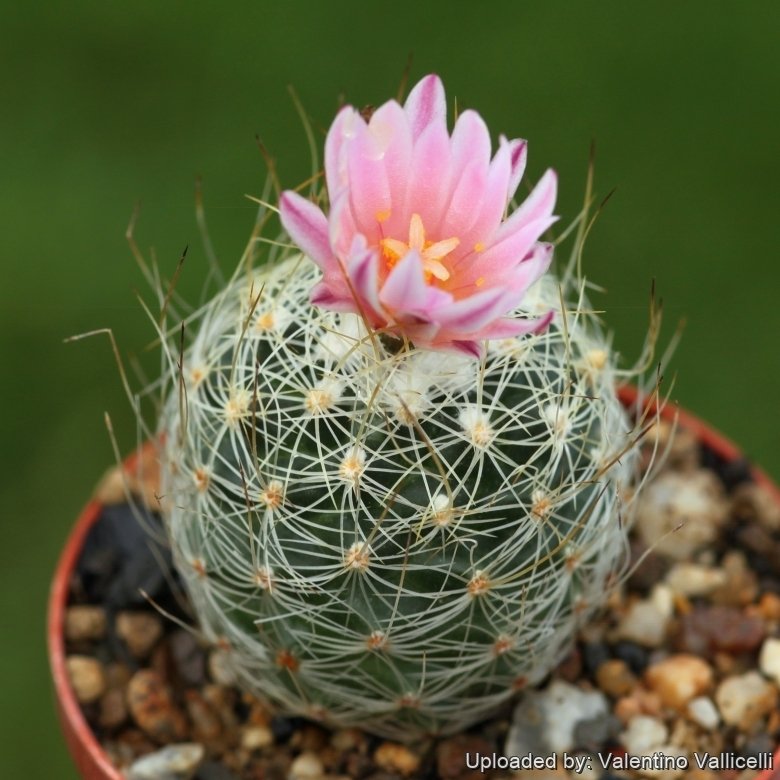
Stem: Depressed-globose to shortly cylindrical, leaf green to bluish-green, 3-6(-7) cm tall, 3,5-7 cm in diameter, apex with some bright wool;
Ribs/Tubercles: It has 13 ribs divided in dainty, conical tubercles about 5-7 mm hight and 4-7 mm wide.
Areoles: Longish wooly
Central spines: One (or two) 1-1,2 cm long or more, curving slightly upwards, withish with a bright to dark tip.
Radial spines: 14-20, 6-8 mm long, radiating, slender, straight or arcuated to the body, whitish, glassy, with yellowish base.
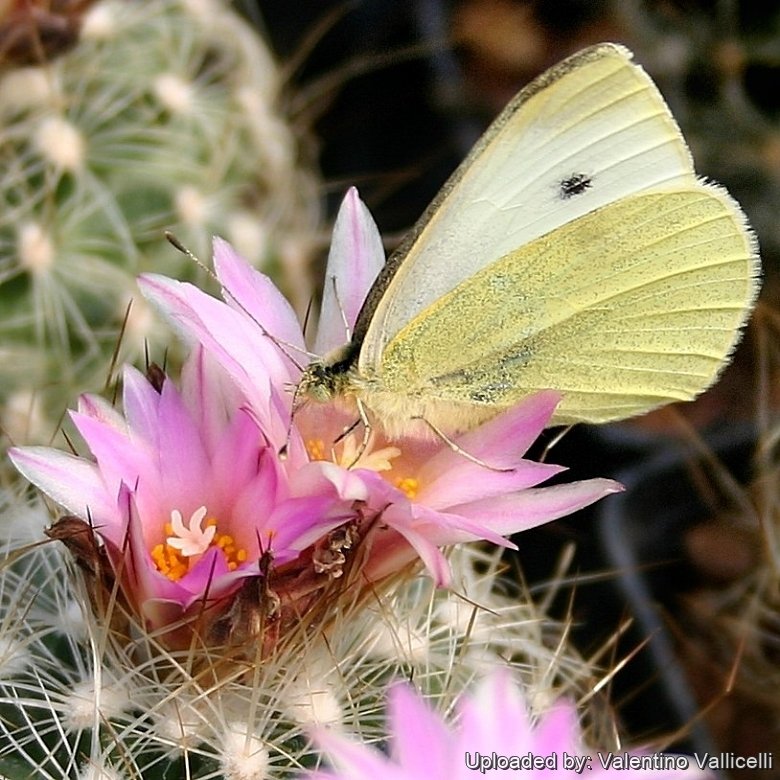
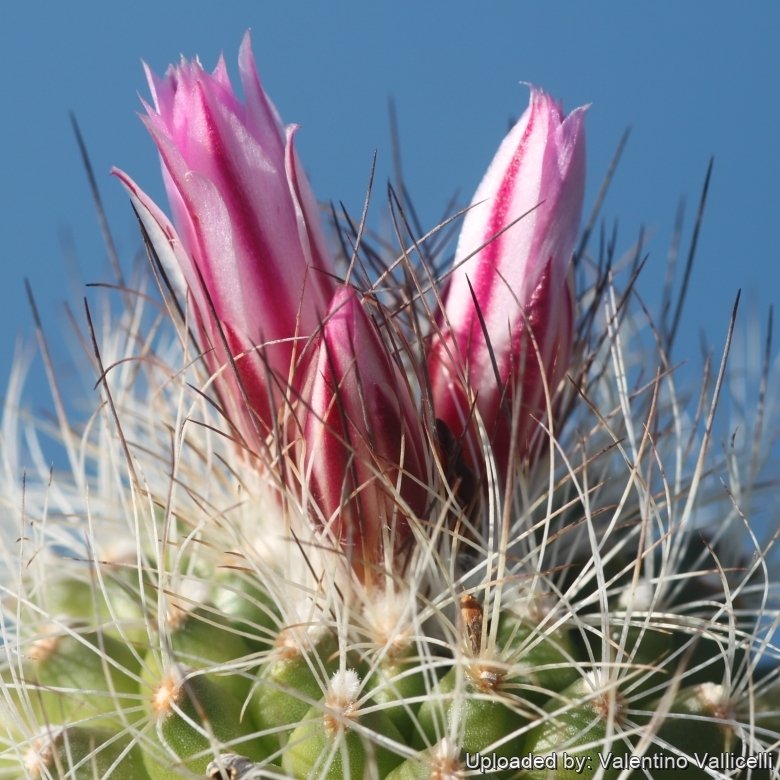
Flowers: Numerous on the crown, diurnal, 2-3 cm long, 1,8-2,5 cm wide, in shades of pink to light magenta with darker midveins. Ovary bare.
Blooming season: January-March (but occasionally later depending on growing conditions)
Fruit: Yellowish-green, green, tan-green or red-brown roundish, 7-9 mm long, 7-8 mm in diameter.
Seeds: Dark brown to dull black.
Origin and Habitat
San Luis Potosi, Mexico. (Villar, Tampico, Guadalcazar) Has a fairly large extent of occurrence (400 km²)
Altitude: About 1,800 m over sea level.
Habitat and Ecology: grows in semi-desert on calcareous soil among pinion and juniper trees, in open meadows or in warm steppes.
Cultivation and Propagation
It’s a fairly easy species to cultivate and relatively fast growing. Need a very well drained soil. Requires strong sun to part sun to develop good spinal growth and waterings should be rather infrequent to keep the plant compact and not to become excessively elongated and unnatural in appearance. Watering should be rather infrequent, but abundant, so that the soil becomes completely soaked, but let dry weel between watering as it’s quite prone to rot, especially after the first flowering. The fact that the plant retracts into the soil, and assumes a grey-green colouring between waterings, is perfectly natural and doesn’t cause any damage. Keep dry in winter or when night temperatures remain below 10° C. It is hardy to -4°C for a short period. Assure a good ventilation.
Propagation: It can be reproduced both by seeds and cuttings. Young seedlings are tiny and they need several years to reach adult size, and require very careful watering.
Notes
Gymnocactus (Turbinicarpus) knuthianus seems to be a transitional species between the lophophoroides aggregate of the “true” Turbinicarpus species, via Turbinicarpus laui, and the species of the saueri aggregate of the Gymnocactus species.
Bibliography
Major references and further lectures
-
Edward Anderson “The Cactus family” Timber Press, Incorporated, 2001
-
Nathaniel Lord Britton, Joseph Nelson Rose “Cactaceae: Descriptions and Illustrations of Plants of the Cactus Family” vol. 4 The Carnegie Institution of Washington, Washington 1923
-
James Cullen, Sabina G. Knees, H. Suzanne Cubey “The European Garden Flora Flowering Plants: A Manual for the Identification of Plants Cultivated in Europe, Both Out-of-Doors and Under Glass” Cambridge University Press, 11/Aug/2011
-
David R Hunt; Nigel P Taylor; Graham Charles; International Cactaceae Systematics Group. “The New Cactus Lexicon” dh books, 2006
Cultivars and forms (1)
Forms (1)
Gallery