Publication: Cact. Succ. J. (Los Angeles) 49: 175. 1977
Description
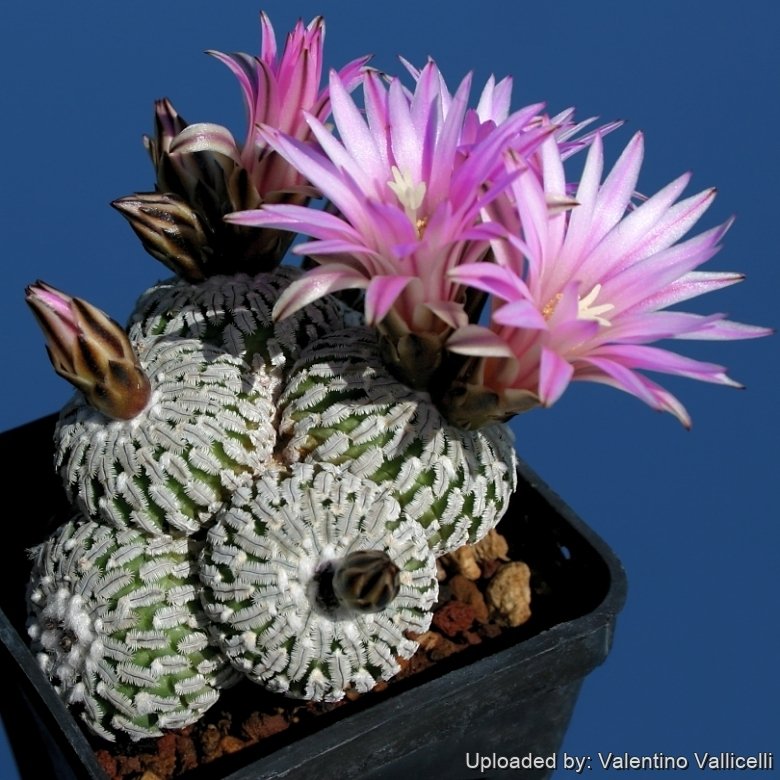
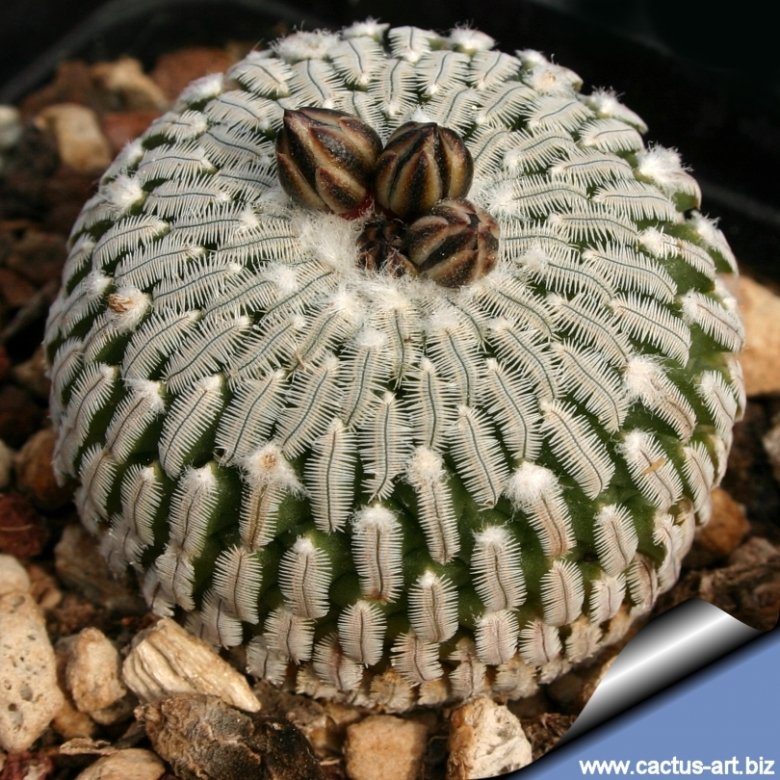
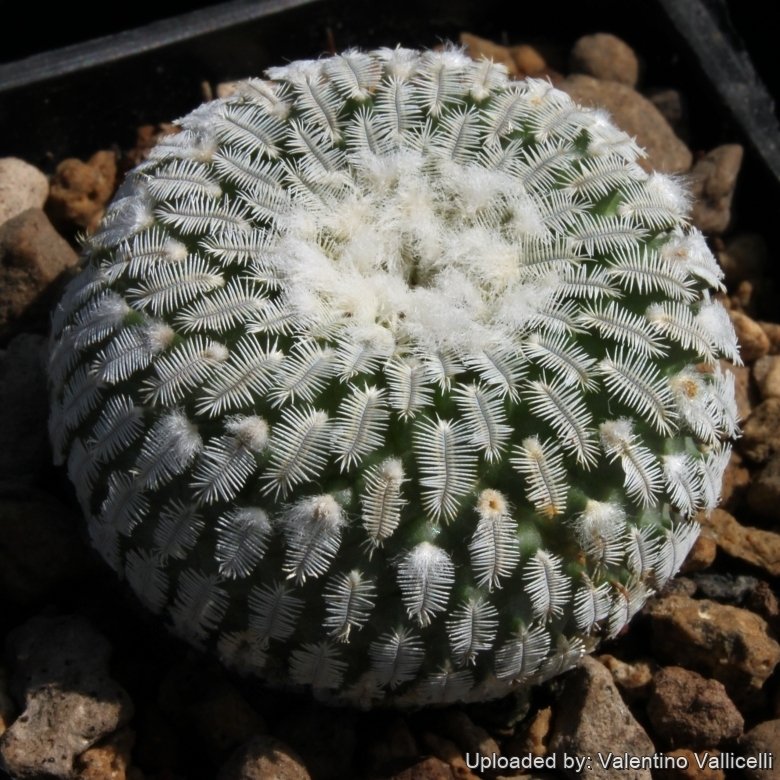
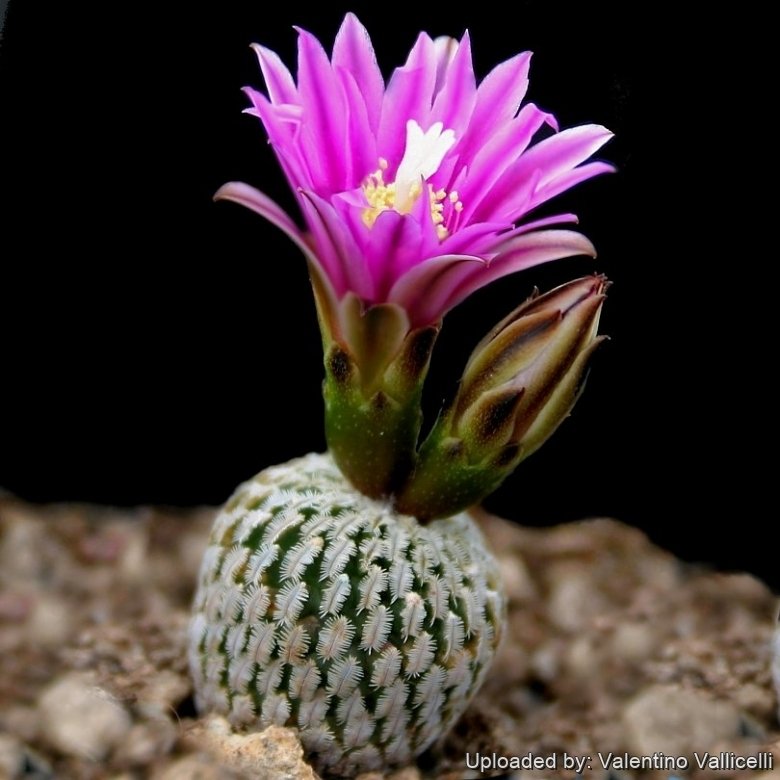
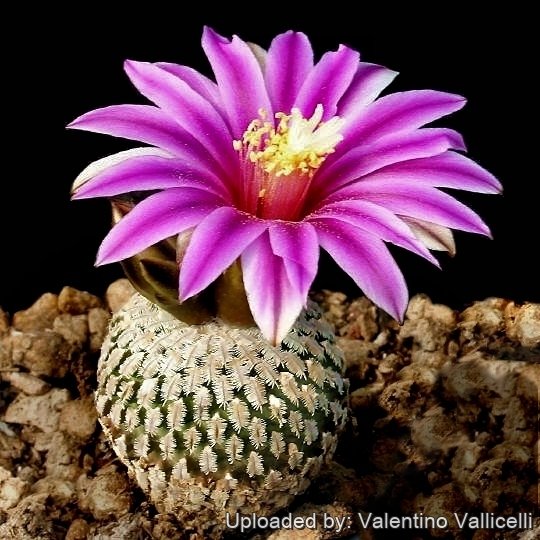
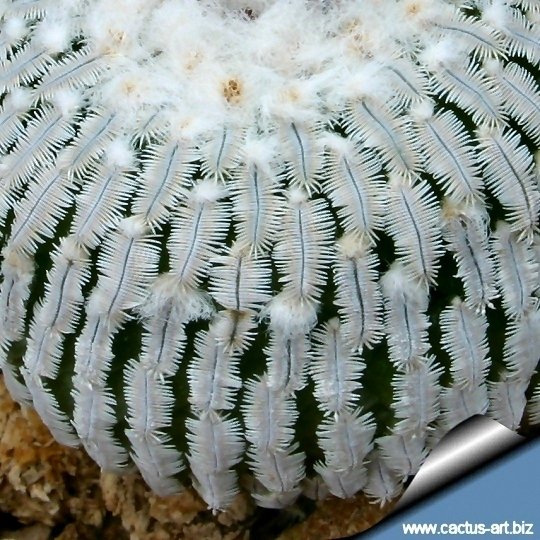
Turbinicarpus pseudopectinatus is (usually) a solitary small geophytic cactus with many small spirally-arranged tubercles tipped with numerous tiny white spines in a comb like formation. The whitish colouring of the the pant is due to spines rather than wool.
Stem: Globular dull green, 3 cm tall, 4 cm in diameter, barely showing above the ground; apex with short white hair; spirally-arranged tubercles.
Spines: Numerous white in a comb like formation (pectinated), 1.2 mm long.
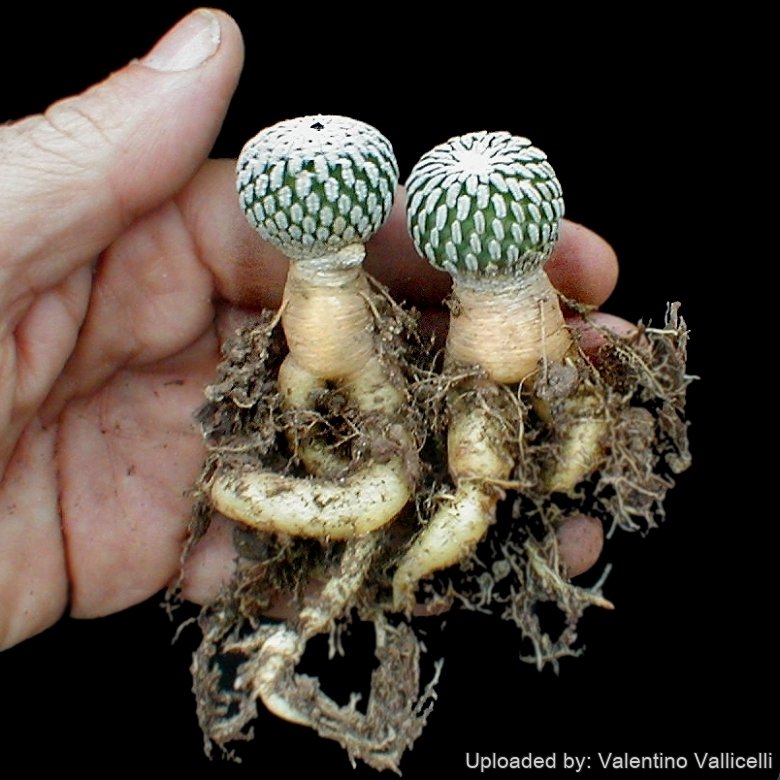
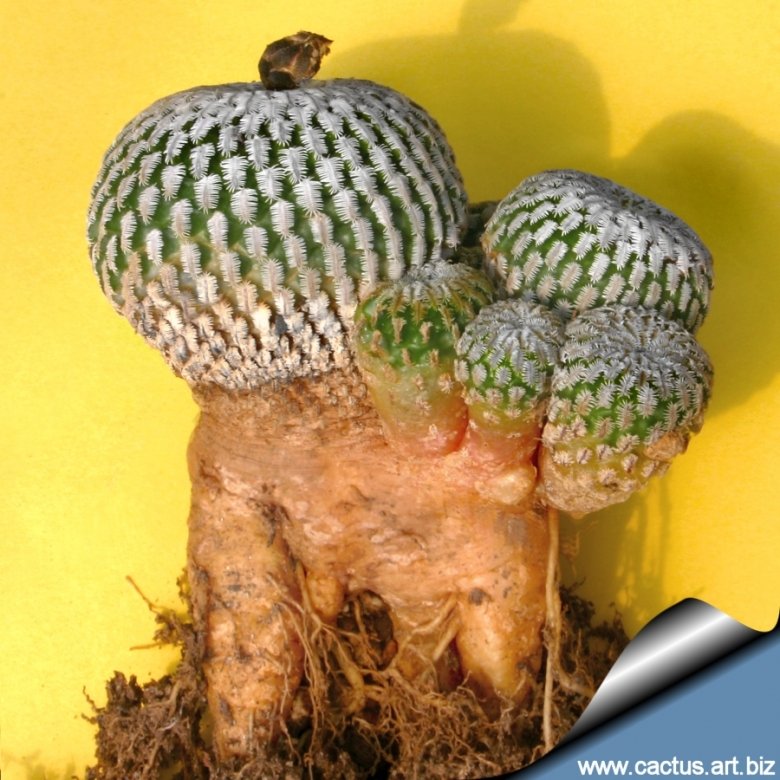
Root: Tuberose and usually bigger than the stem itself.
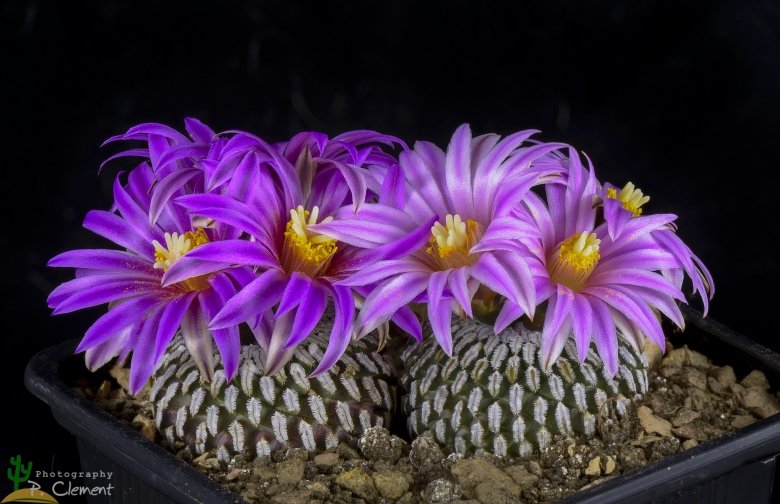
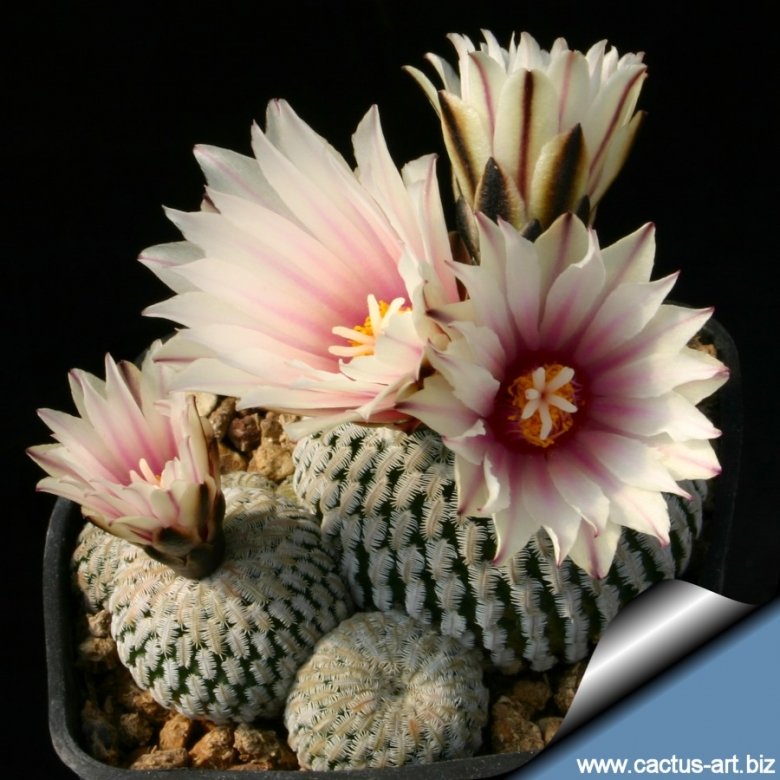
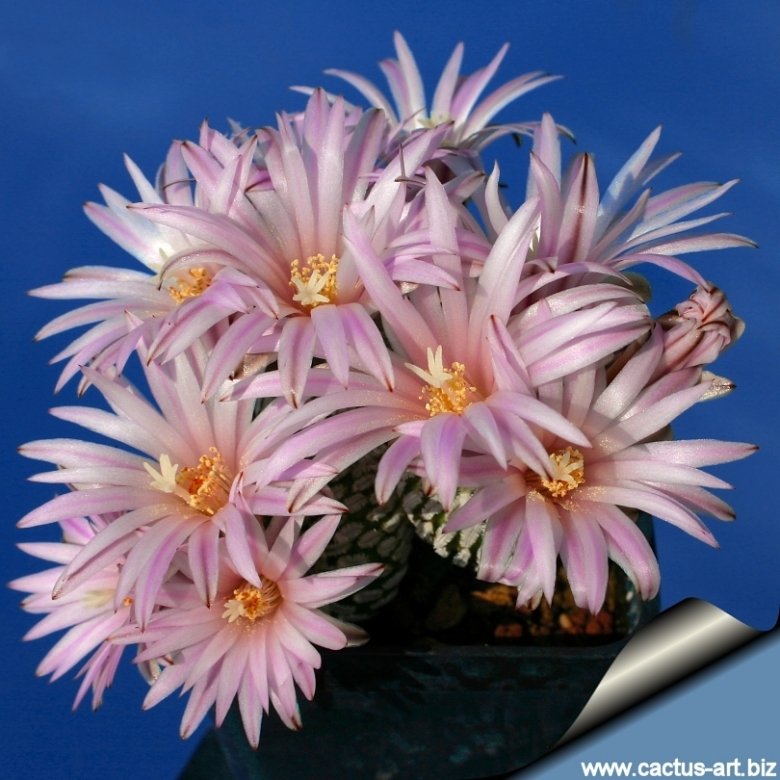
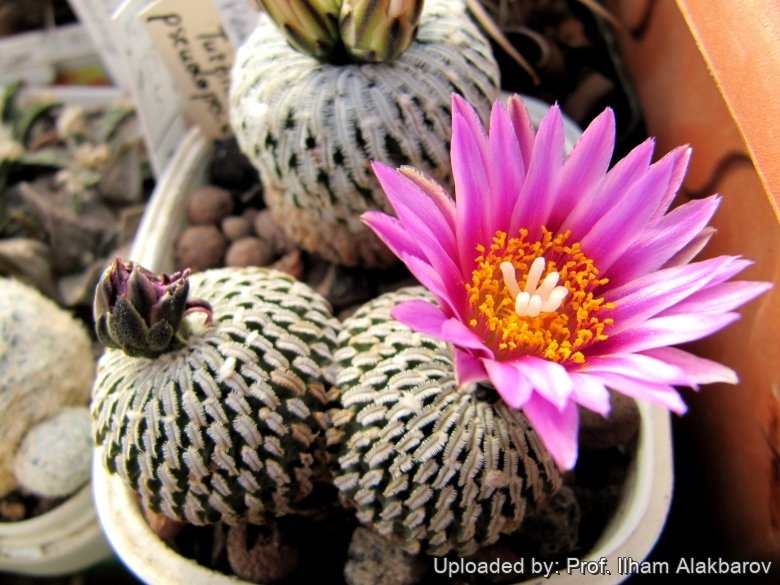
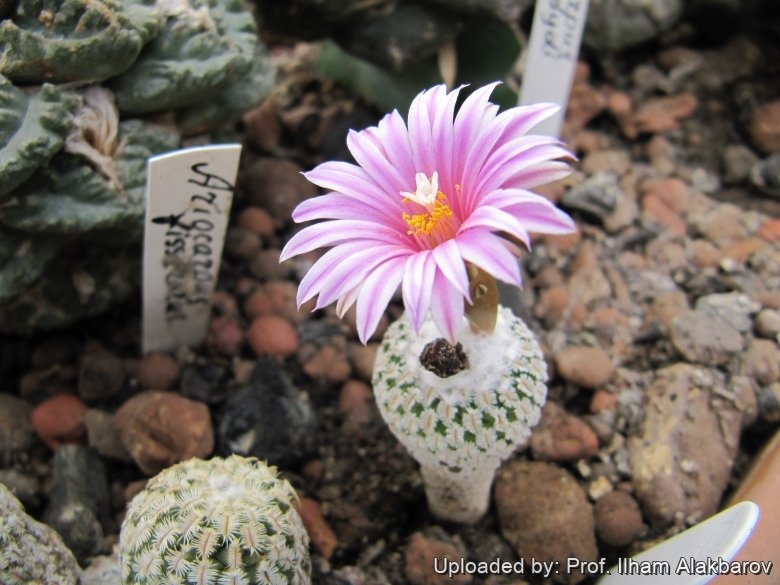
Flowers: One to 5 pinkish white to bright pink with darker magenta or reddish-brown mid-veins.
Blooming season: Blossoms are expected early in spring. Flowers can be expected on T. pseudopectinatus seedlings after perhaps two or three years if they are grown well in plant that are only 1.5 cm in diameter, while the flower is 4cm long.
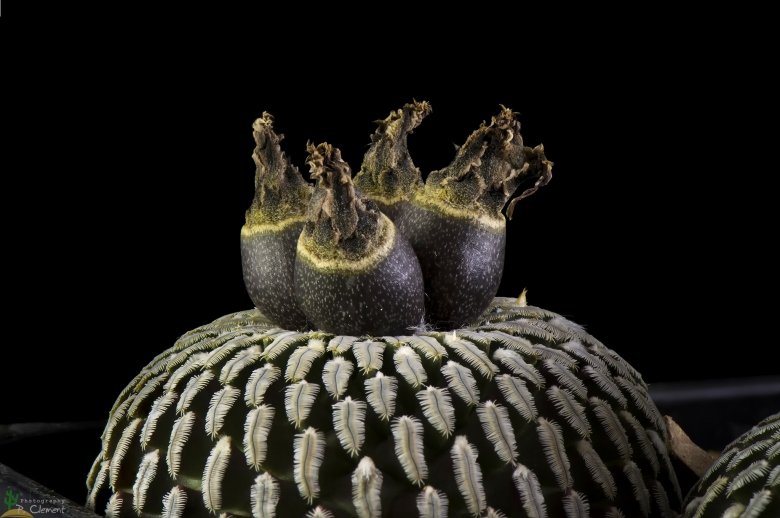
Fruit: Small tannish-green.
Origin and Habitat
Mexico in the states of Coahuila, Nuevo León, San Luis Potosí, and Tamaulipas (extent of occurrence is 30 km²)
Habitat: It grows at a higher altitude than true Chihuahuan Desert in grasslands with virtually no woody vegetation and in pinyon-juniper woodlands. All the sites have gravelly calcareous soils. It also occurs in montane matorral.
This species occurs at about ten locations and is not severely fragmented. Illegal collecting is the main threat however the rate of illegal collection is likely to be lower than the natural recruitment rate.
Cultivation and Propagation
It’s a fairly easy species to cultivate, but very slow growing. It needs a very well-drained soil, and requires strong sun to part sun where it obtains a flat natural look. Waterings should be rather infrequent to keep the plant compact, and avoid its becoming excessively elongated and unnatural in appearance. Furthermore it has a tap root, and watering it properly is often difficult, because it tends to crack open or rot if over-watered. Keep dry in winter, or when night temperatures remain below 10° C. It is hardy to -4°C for a short period. Assure a good ventilation.
Reproduction: From seed, since the plant rarely produces plantlets, or grafted.
Notes
Over the years, T. pseudopectinatus has been placed in six different genera, a process that will probably continue in the future.
Bibliography
Major references and further lectures
-
Edward Anderson “The Cactus family” Timber Press, Incorporated, 2001
-
Nathaniel Lord Britton, Joseph Nelson Rose “Cactaceae: Descriptions and Illustrations of Plants of the Cactus Family” vol. 4 The Carnegie Institution of Washington, Washington 1923
-
James Cullen, Sabina G. Knees, H. Suzanne Cubey “The European Garden Flora Flowering Plants: A Manual for the Identification of Plants Cultivated in Europe, Both Out-of-Doors and Under Glass” Cambridge University Press, 11/Aug/2011
-
David R Hunt; Nigel P Taylor; Graham Charles; International Cactaceae Systematics Group. “The New Cactus Lexicon” dh books, 2006
-
Milan Zachar, Roman Staník, Alexander Lux, Igor Dráb “Rod Turbinicarpus (Gattung Turbinicarpus)” Vydavateľstvo Roman Staník, 1996
-
Davide Donati, Carlo Zanovello “Knowing Understanding and Growing Turbinicarpus-Rapicactus. A trip across the mexican states of Coahuila, Guanajuato, Hidalgo, Nuevo Leon, Queretaro…” Cactus Trentino Südtirol, 2005
-
Fitz Maurice, B, Fitz Maurice, W.A., Sotomayor, M. & Smith, M. 2013. Turbinicarpus pseudopectinatus. In: IUCN 2013. “IUCN Red List of Threatened Species.” Version 2013.2. <www.iucnredlist.org>. Downloaded on 25 February 2014.
From llifle page Neolloydia pseudopectinata var. rubriflora
Description
Turbinicarpus pseudopectinatus is a solitary small geophytic cactus with many small spirally-arranged tubercles tipped with numerous tiny white spines in a comb like formation.
Forma rubriflorus (red flowering form) This peculiar form differs from the standard species for its bright magenta-red blooms. Except for the flowers it is identical in shape and size to the standard species.
Habit: It is a small geophytic solitary cactus with a large tap-root, and only the apical part of the stem exposed at soil level.
Stem: Globular dull green, 3 cm tall, 4 cm in diameter, barely showing above the ground. Apex with short white hair.
Tubercles: Spirally-arranged.
Spines: Numerous white in a comb like formation (pectinated), 1,2 mm long.
Root: Tuberose and usually bigger than the stem itself.
Flowers: One to 5 bright pink to bright magenta with darker magenta or reddish-brown mid-veins.
Blooming season: Blossoms are expected early in spring. Flowers can be expected on Turbinicarpus pseudopectinatus seedlings after perhaps two or three years if they are grown well in plant that are only 1,5 cm in diameter, while the flower is 4 cm long.
Fruit: Small tannish-green.
Origin and Habitat
Nuevo Leon and Guanajuato, Mexico (Northern America).
Type locality: Stony hills near Xichu, Guanajuato.
Habitat: Slightly steep terrain amomg dense bushes.
Cultivation and Propagation
It’s a fairly easy and robust species to cultivate, but very slow growing. It needs a very well-drained soil, and requires strong sun to part sun to keep the plant compact and low and to develop a good spinal growth. Waterings should be rather infrequent to keep the plant compact, and avoid its becoming excessively elongated and unnatural in appearance. Furthermore it has a tap root, and watering it properly is often difficult, because it tends to crack open or rot if over-watered. Careful watering away from the body of the plant will allow the areoles to keep their wool. Keep dry in winter, or when night temperatures remain below 10° C. It is hardy to -4°C for a short period. Assure a good ventilation.
Reproduction: From seed, since the plant rarely produces plantlets, or grafted.
Bibliography
Major references and further lectures
-
Edward Anderson “The Cactus family” Timber Press, Incorporated, 2001
-
Nathaniel Lord Britton, Joseph Nelson Rose “Cactaceae: Descriptions and Illustrations of Plants of the Cactus Family” vol. 4 The Carnegie Institution of Washington, Washington 1923
-
James Cullen, Sabina G. Knees, H. Suzanne Cubey “The European Garden Flora Flowering Plants: A Manual for the Identification of Plants Cultivated in Europe, Both Out-of-Doors and Under Glass” Cambridge University Press, 11/Aug/2011
-
David R Hunt; Nigel P Taylor; Graham Charles; International Cactaceae Systematics Group. “The New Cactus Lexicon” dh books, 2006
-
Milan Zachar, Roman Staník, Alexander Lux, Igor Dráb “Rod Turbinicarpus (Gattung Turbinicarpus)” Vydavateľstvo Roman Staník, 1996
-
Davide Donati, Carlo Zanovello “Knowing Understanding and Growing Turbinicarpus-Rapicactus. A trip across the mexican states of Coahuila, Guanajuato, Hidalgo, Nuevo Leon, Queretaro…” Cactus Trentino Südtirol, 2005
Source: Neolloydia pseudopectinata var. rubriflora, LLIFLE - Encyclopedia of living forms, CC-BY-SA, retrieved 2026-10-25.
From llifle page Pelecyphora pulcherrima
Description
Turbinicarpus pseudopectinatus is a solitary small geophytic cactus with many small spirally-arranged tubercles tipped with numerous tiny white spines in a comb like formation.
The subsp. jarmilae differs from the standard species for its bright pink-violet blooms. Except for the flowers it is identical in shape and size to the standard species.
Stem: Globular dull green, 3 cm tall, 4 cm in diameter, barely showing above the ground. Apex with short white hair; spirally-arranged tubercles.
Spines: Numerous white in a comb like formation (pectinated), 1,2 mm long.
Root: Tuberose and usually bigger than the stem itself.
Flowers: One to 5 bright pink to violet with darker magenta or reddish-brown mid-veins.
Blooming season: Blossoms are expected early in spring. Flowers can be expected on Turbinicarpus pseudopectinatus seedlings after perhaps two or three years if they are grown well in plant that are only 1,5 cm in diameter, while the flower is 4 cm long.
Fruit: Small tannish-green.
Cultivation and Propagation
This is a fairly easy species to cultivate. It needs a very well-drained soil. Strong sun to part sun is required, in order to develop good spinal growth. Waterings should be rather infrequent, to keep the plant compact and not become excessively elongated and unnatural in appearance. Keep dry in winter or when night temperatures remain below 10° C, it is hardy to -4°C for a short period. Assure good ventilation.
Reproduction: From seed, since the plant rarely produces plantlets or grafted.
Source: Pelecyphora pulcherrima, LLIFLE - Encyclopedia of living forms, CC-BY-SA, retrieved 2026-10-25.
Cultivars and forms (8)
Subspecies (1)
Varieties (1)
Gallery