Publication: Descr. Cact. Nov. 3: 15. 1963
Description
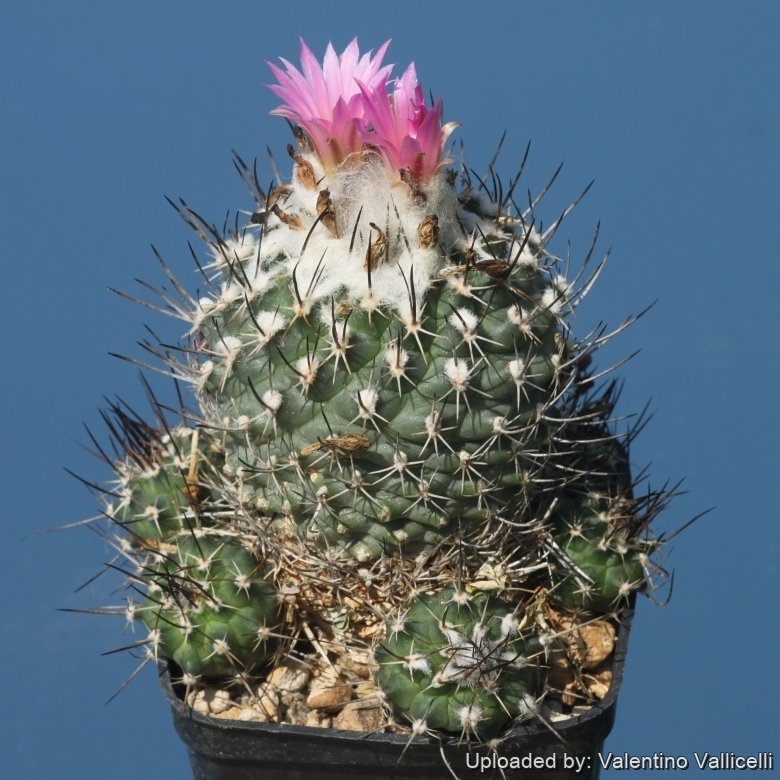
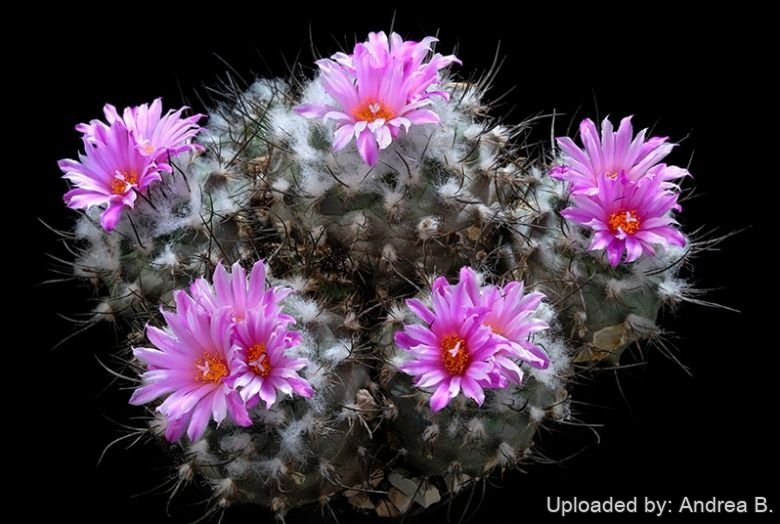
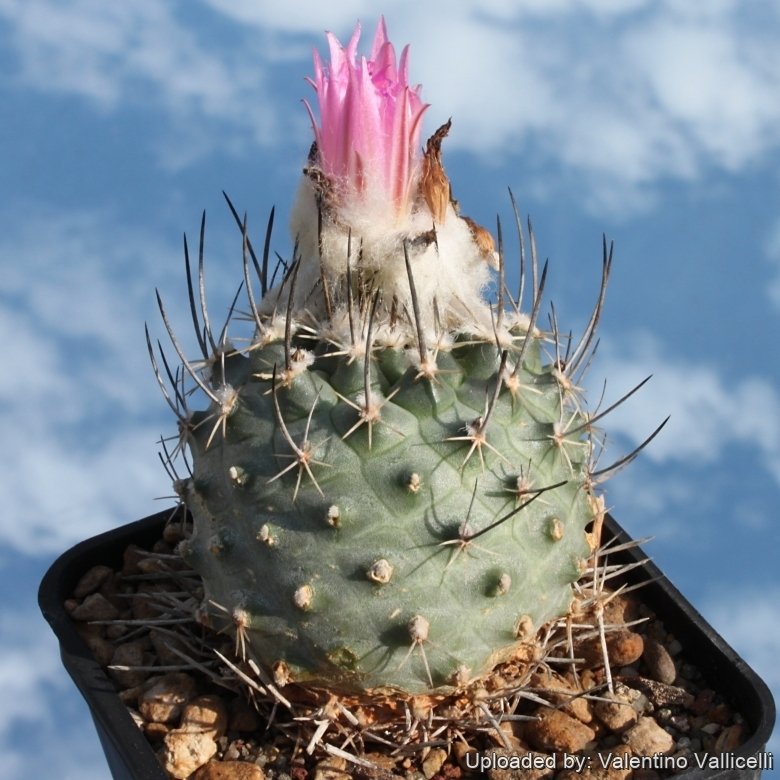
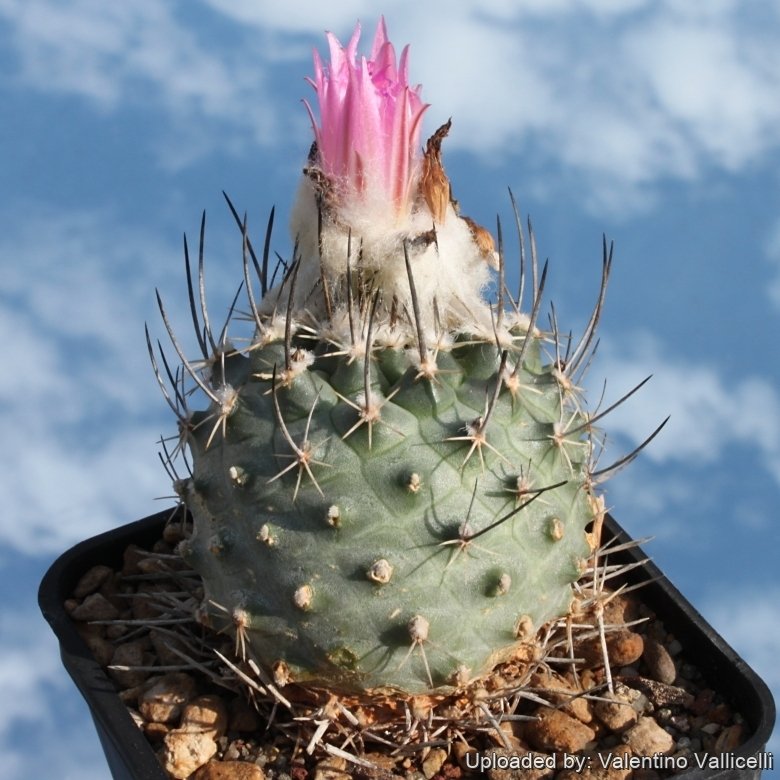
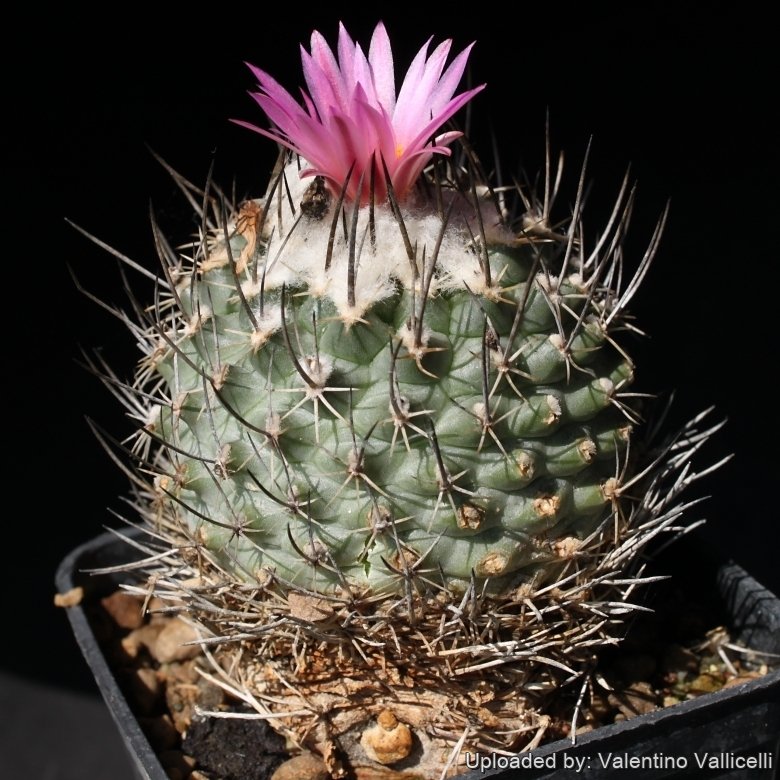
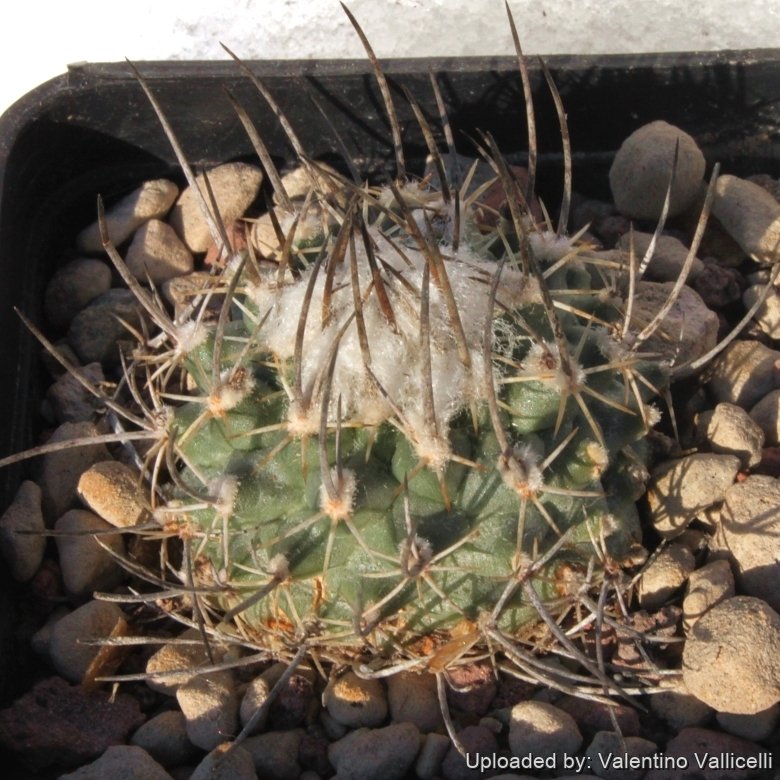
Turbinicarpus roseiflorus is a small solitary or copiously branching cactus with variable spination and also variable amounts of wool in the areoles.
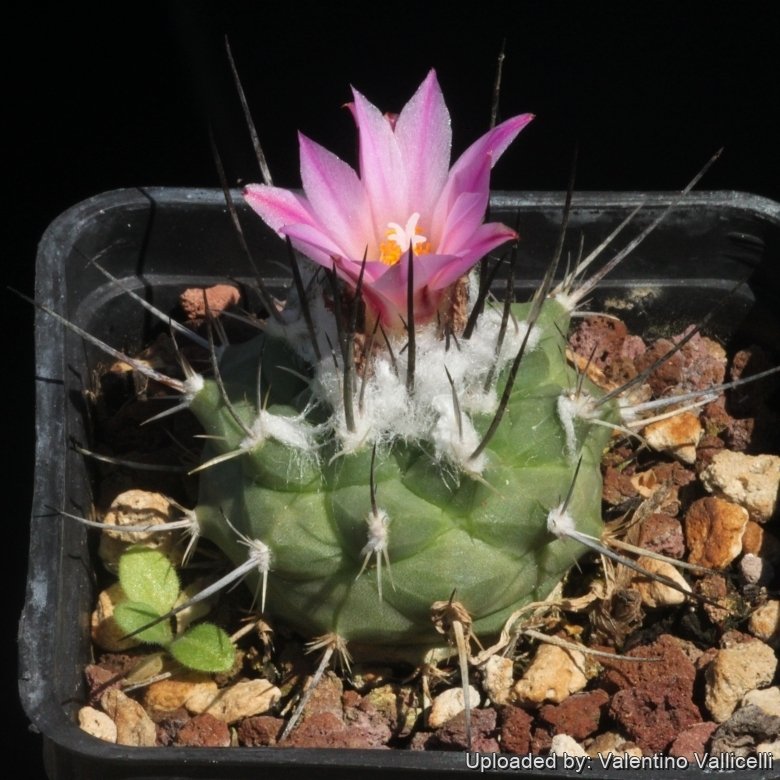
Stem: Dark green, subspherical up to 3 cm tall, 4 cm in diameter. Crown white-woolly.
Tubercles: Rhombic, prominent tubercles, forming anti-clockwise diagonal spirals.
Areoles: Round, with white wool, later becoming naked.
Roots: Fibrous, copiously branching.
Radial spines: 6 to 13, of which the 6-8 lower ones much shorter, white, radiating sideways porrect, dagger-like, 3-5 mm long, while the 3-4 upper ones porrect and curving towards the apex, 10-15 mm long, black.
Central spines: 1 (to 2), porrect, slightly curved towards the apex, the lower part, mostly twice as long as the longest radial spine, black 1,5 mm wide flattened, black.
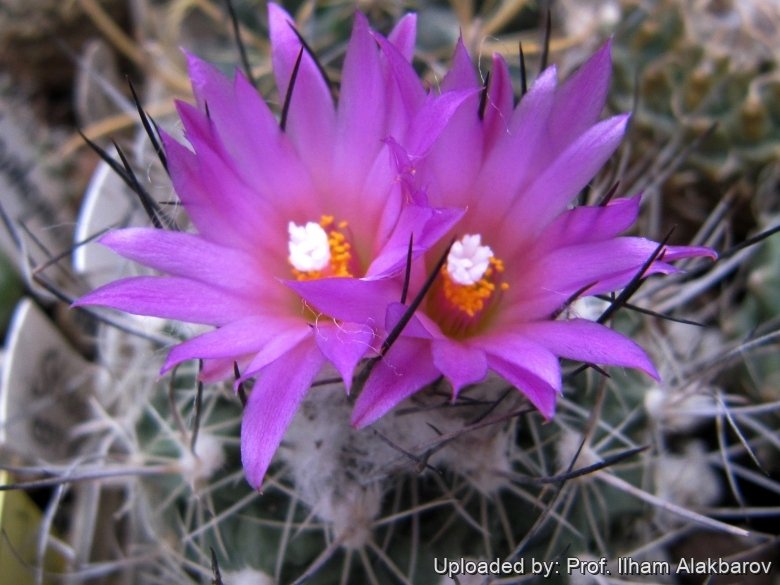
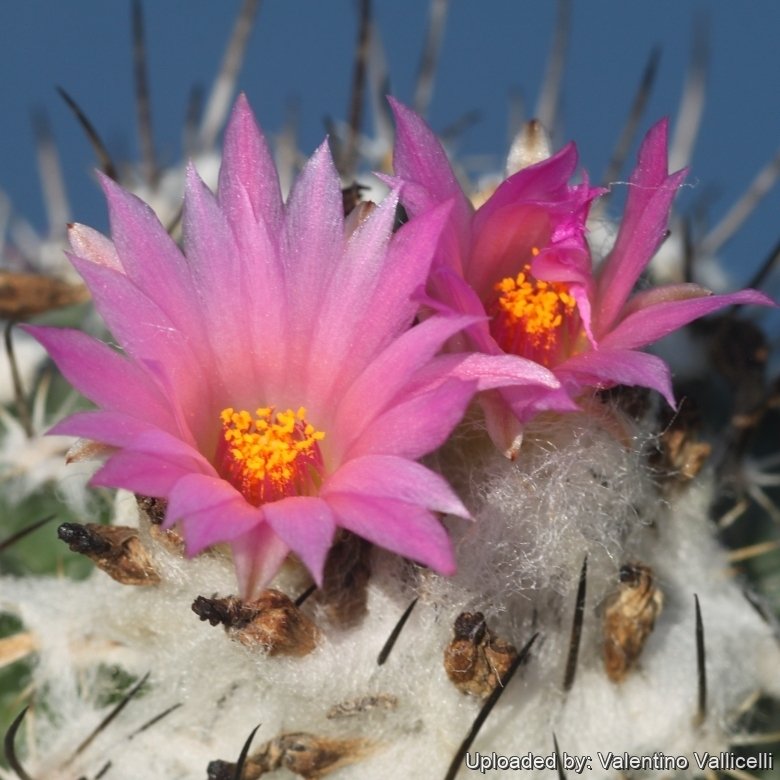
Flowers: Funnel-shaped, 2.5 cm long, 20 mm wide, petals pink, with dark mid-stripe on the reverse. Filaments greenish, anthers yellow. Style white with 4 short white club-shaped lobes. The white flowered form is also very attractive. Turbinicarpus roseiflorus “albiflorus”.
Fruit: Oblong, to 5 mm long, at maturity brownish and dehiscing vertically.
Origin and Habitat
Turbinicarpus roseiflorus is belived to come from Mexico (exact place of discovery unknown). It is closely related to Turbinicarpus lophophoroides, but its spines are more numerous, Flower concolorous pink, opening less widely. However the exact identification of this plant is dubious. The plants sold under this name are probably of hybrid origin. Possibly between Turbinicarpus lophophoroides and one of the dark spined species previously included in Gymnocactus i.e. Turbinicarpus gielsdorfianus or Turbinicarpus viereckii.
Cultivation and Propagation
It’s a fairly easy and robust species to cultivate, but very slow growing. It needs a very well-drained soil, and requires strong sun to part sun to keep the plant compact and low and to develop a good spinal growth. Waterings should be rather infrequent to keep the plant compact, and avoid its becoming excessively elongated and unnatural in appearance. Furthermore it has a tap root, and watering it properly is often difficult, because it tends to crack open or rot if over-watered. Careful watering away from the body of the plant will allow the areoles to keep their wool. Keep dry in winter, or when night temperatures remain below 10° C. It is hardy to -4°C for a short period. Assure a good ventilation.
Reproduction: From seed, since the plant rarely produces plantlets, or grafted.
Cultivars and forms (1)
Forms (1)
Gallery