Publication: Cact. Succ. J. (Los Angeles) 49: 174. 1977
Description
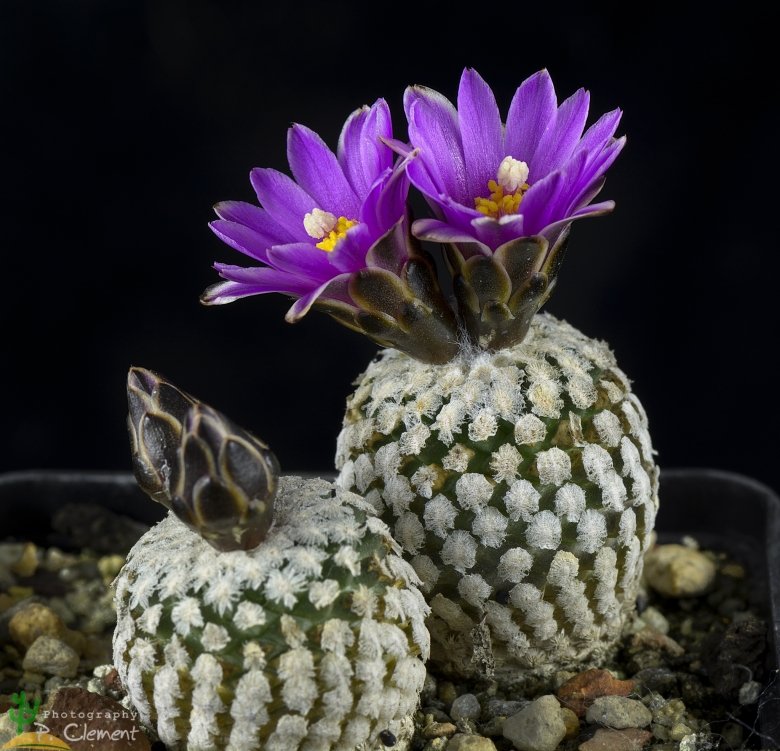
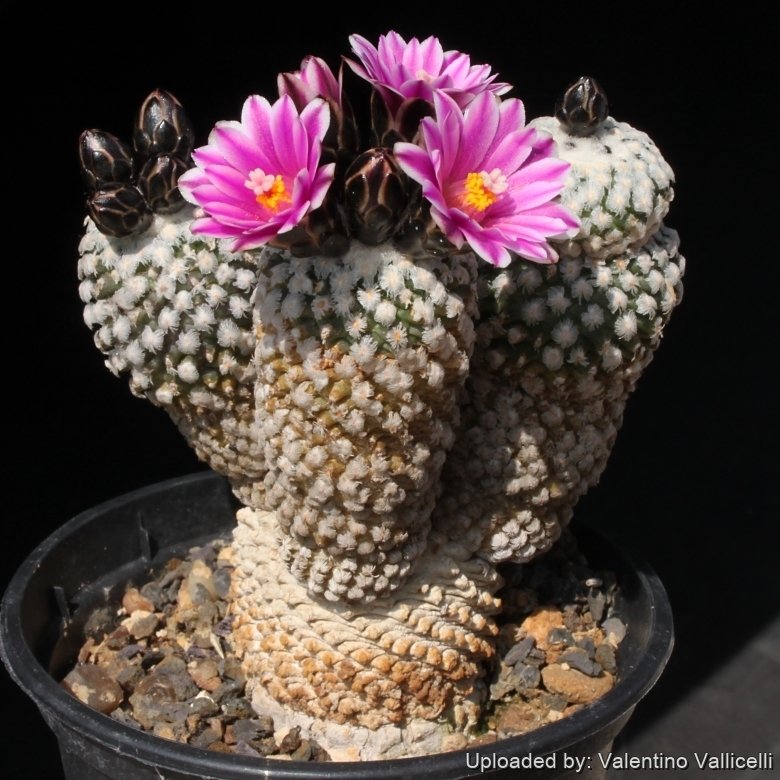
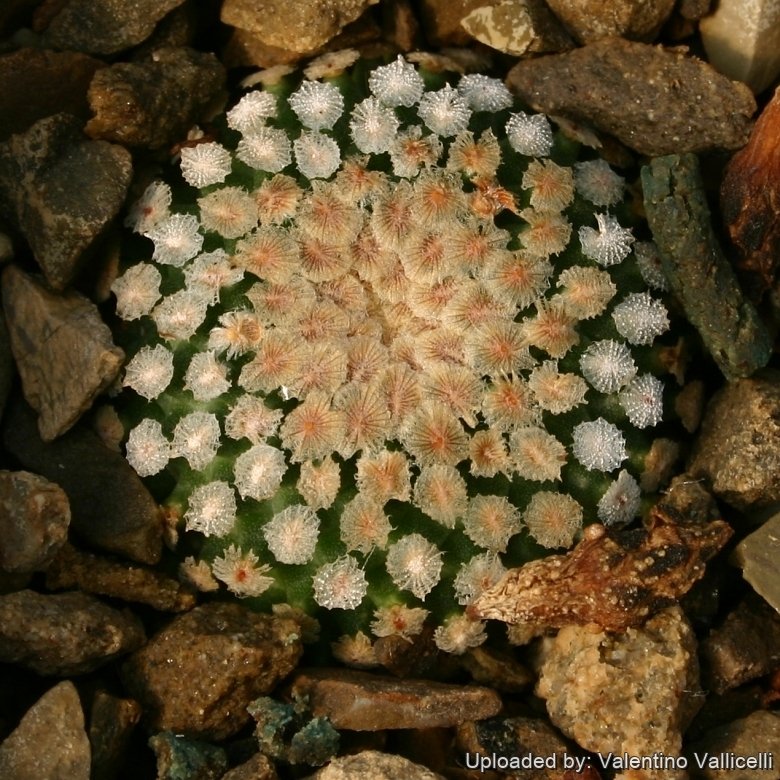
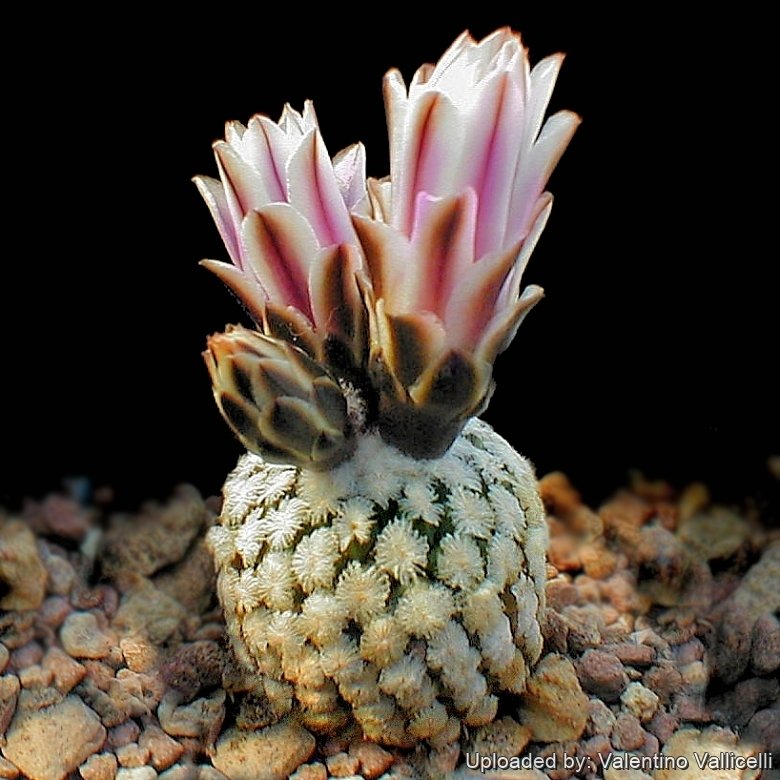
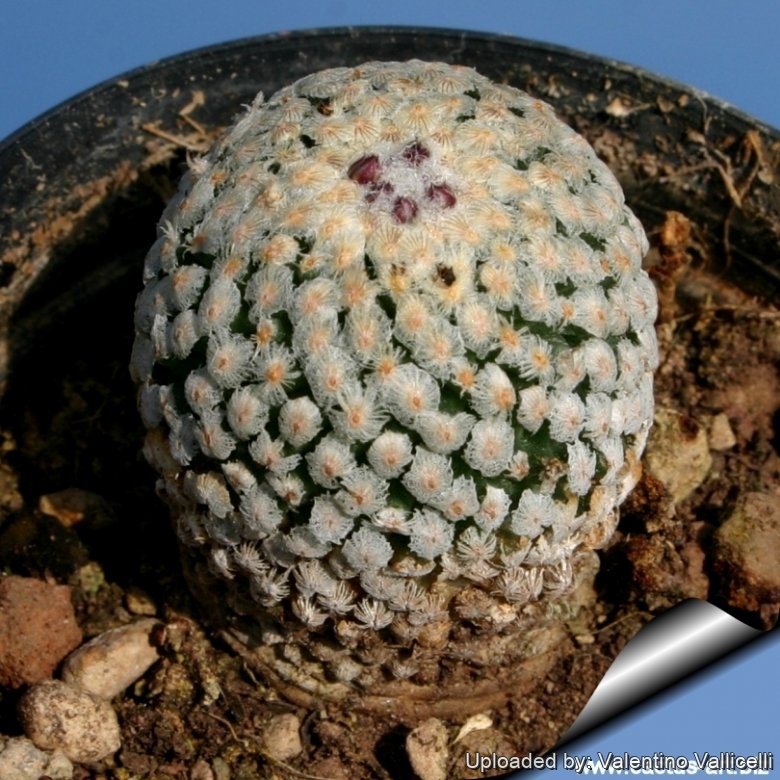
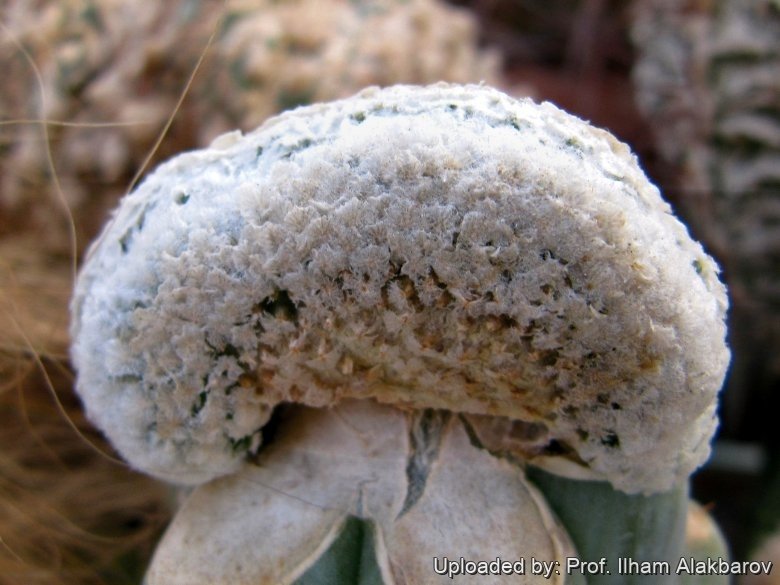
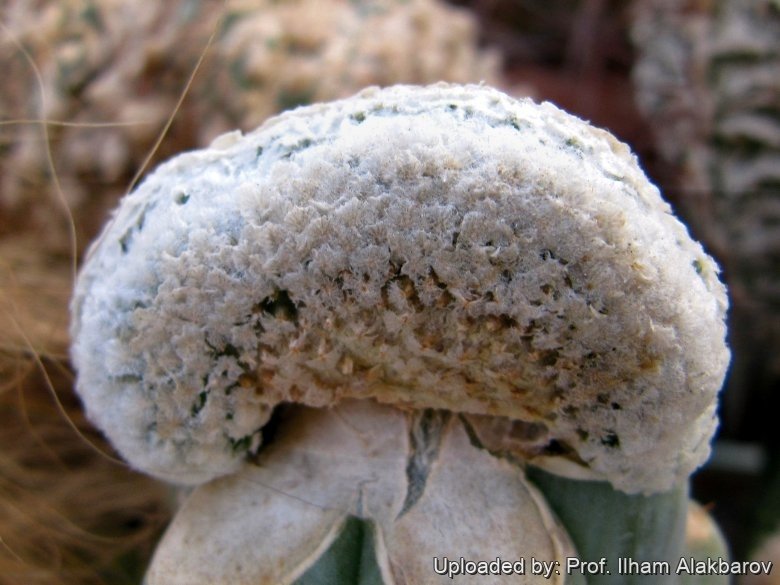
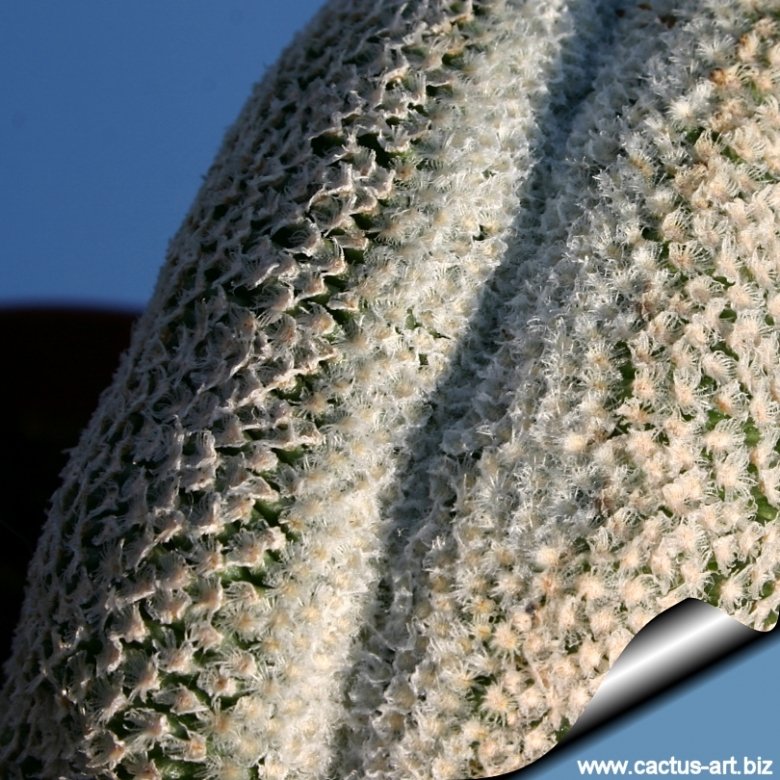
Turbinicarpus valdezianus is one the smallest and slowest growing Turbinicarpus with tiny feathery spines that obscure the body of the plant, it is usually solitary but sometime form clusters of few branches.
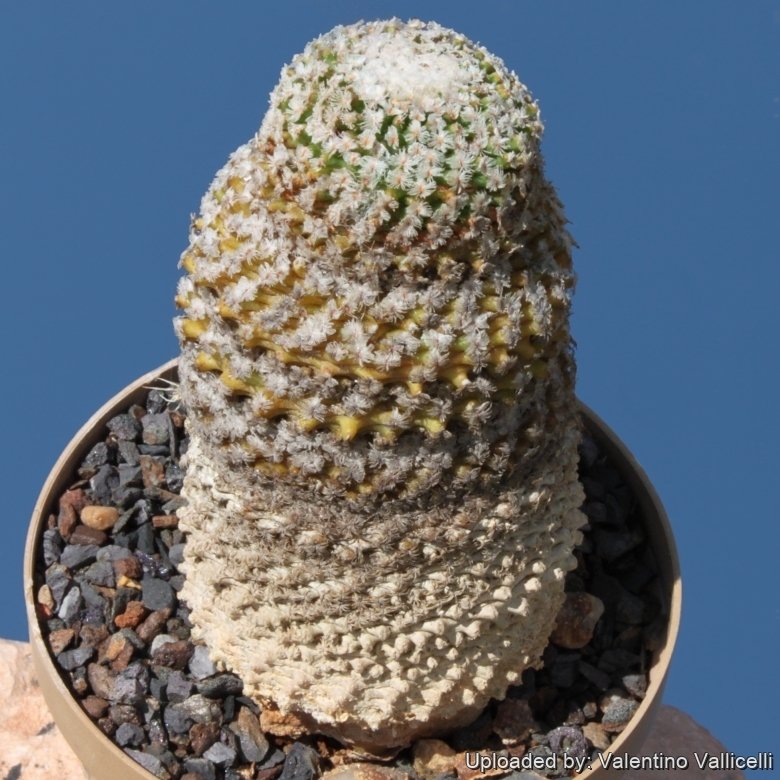
Stem: Young plants are spherical, then cylindrical with a narrower base and short spirally arranged tubercles, the apex is completely covered by the plumose spination. Typically half of it is underground with a big tap root. The plants are about 3-5 cm high and 1-2 cm in diameter.
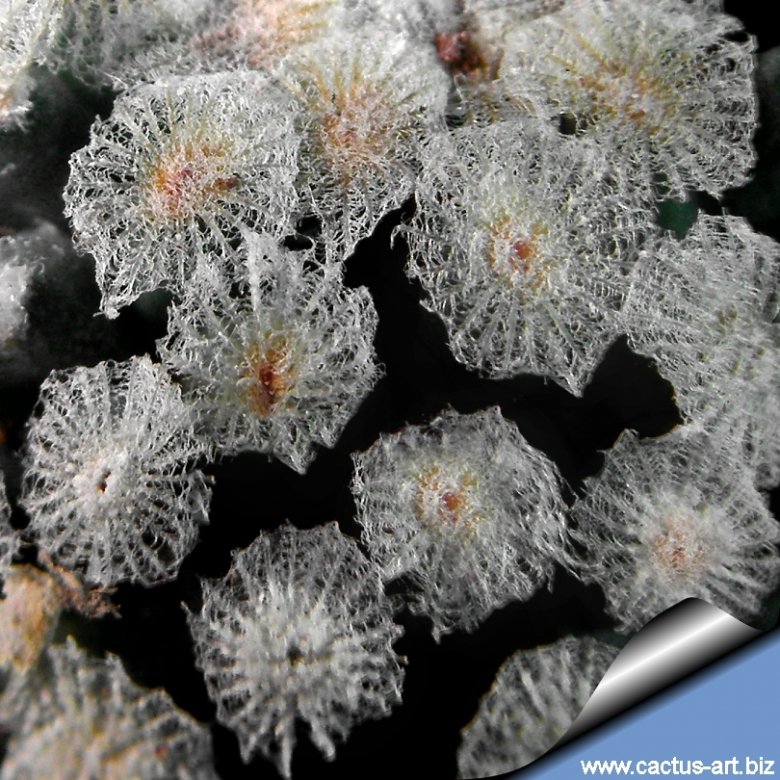
Spines: Turbinicarpus valdezianus is a pectinate-spines species, but the the pectinate spines are not in the two neat rows as in Turbinicarpus pseudopectinatus, the ca. 25-30 spines, are dense, feathery and white, about 0.5 mm long, spreading flat around the areoles.
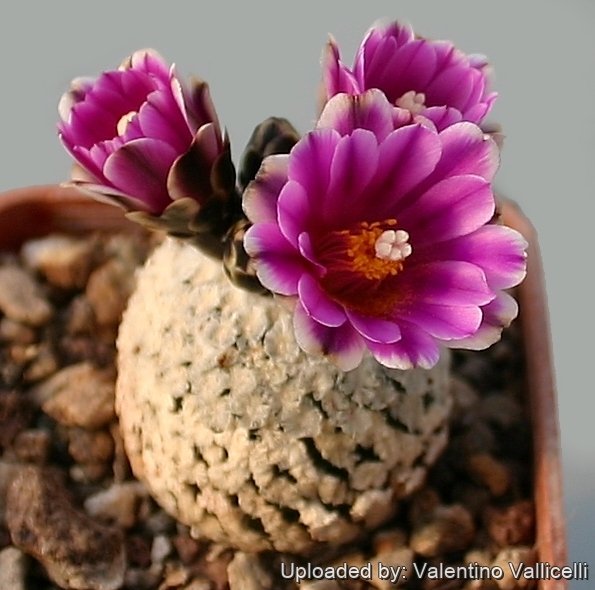
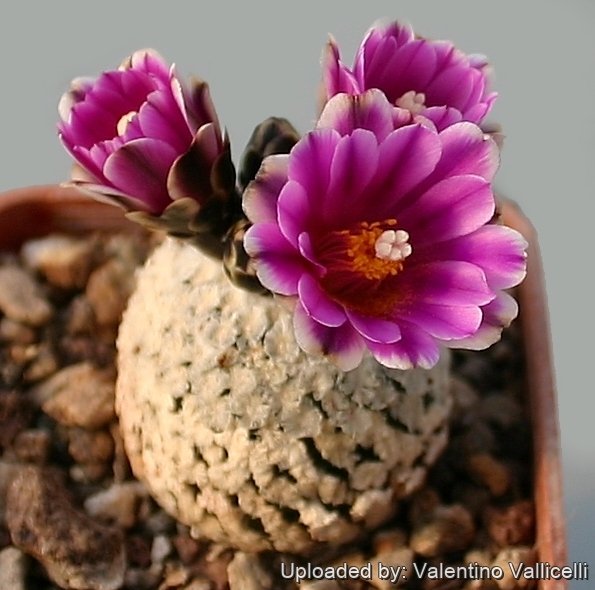
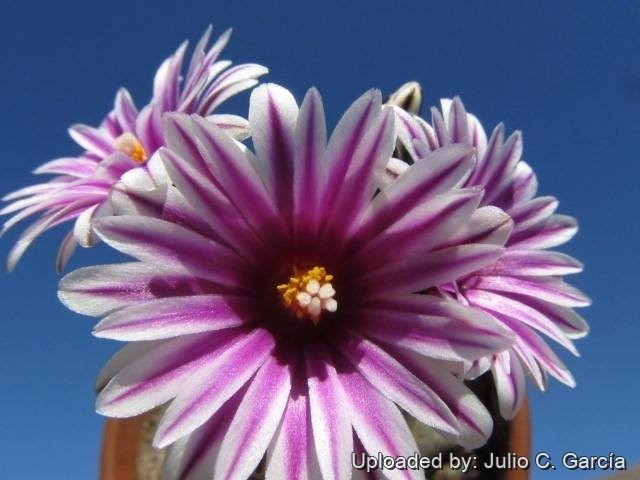
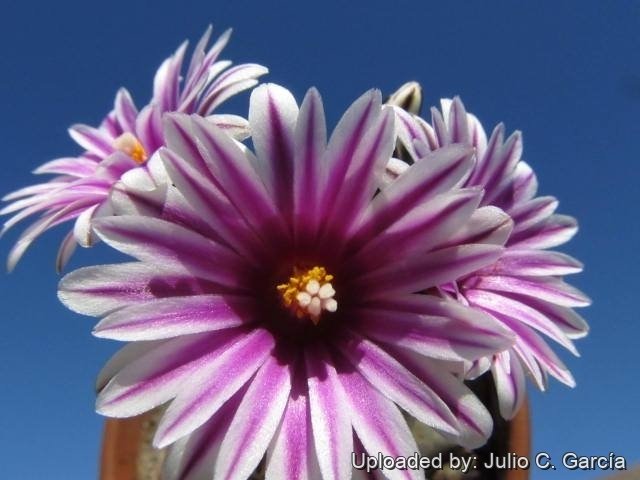
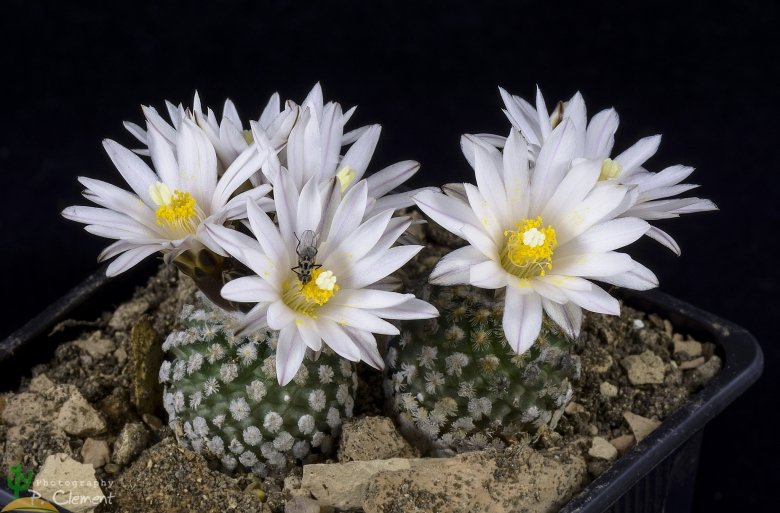
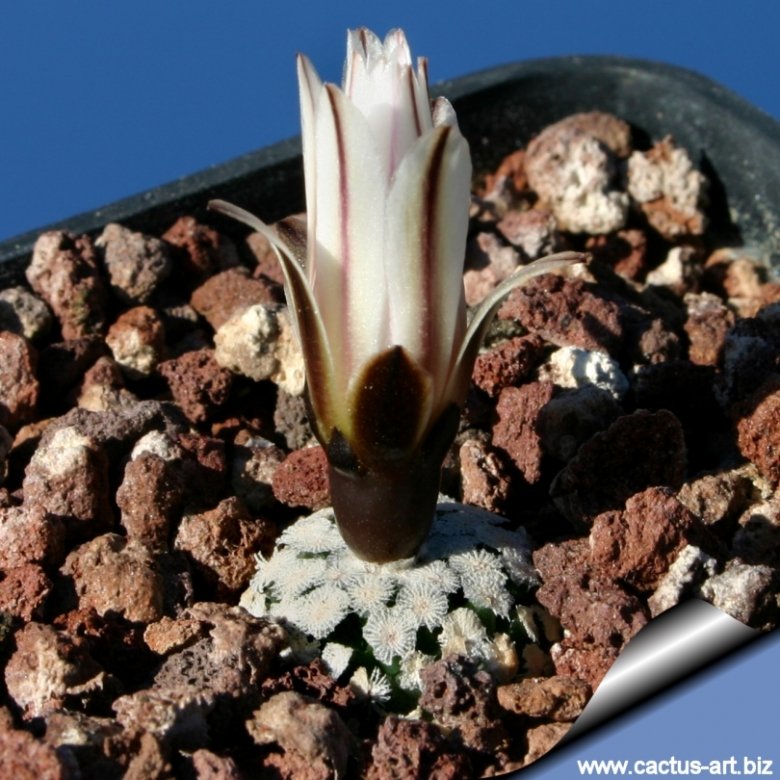
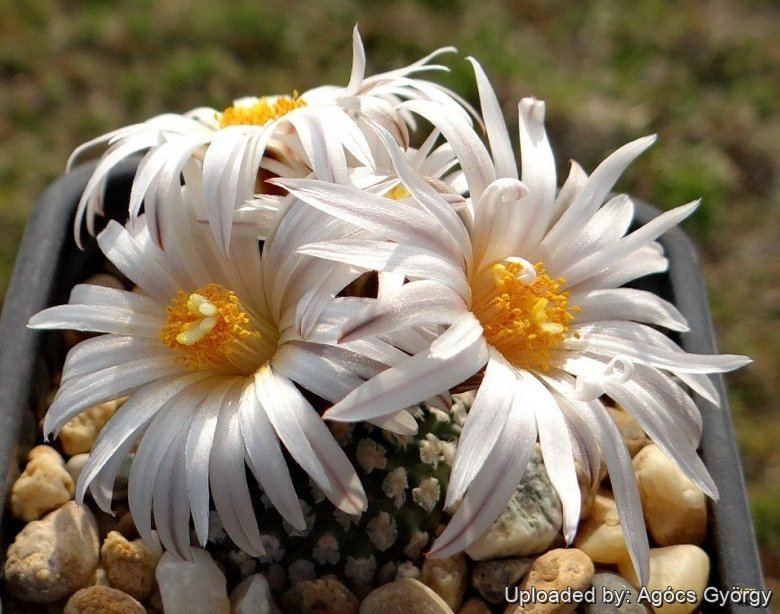
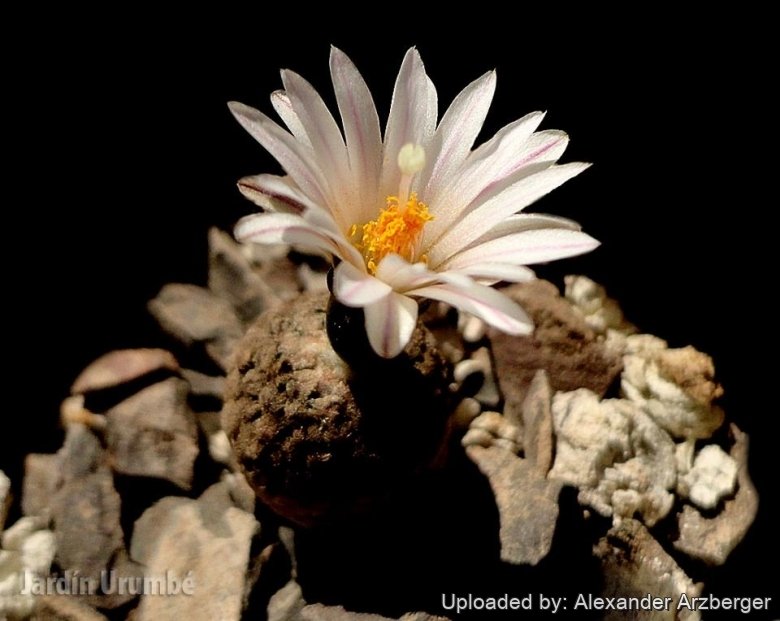
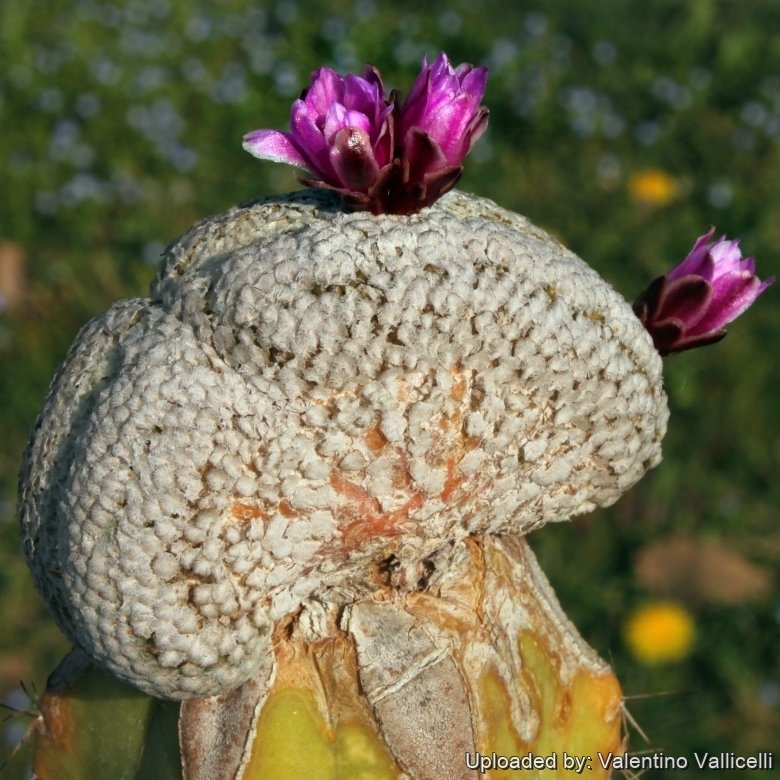
Flowers: One to 5 diurnal, at plant apex. This species is found scattered in small populations in several locations and the colour of the flowers is variable ranging from pinkish-white to bright pink with darker magenta or reddish-brown midveins.
Blooming season (in habitat): T. valdezianus is an early bloomer (February - March).
Origin and Habitat
Mexico (This cactus occurs in Mexico from Saltillo, in Coahuila state southwards nearly to Matehuala in San Luis Potosí in an area of 40,000 km². It is estimated that there are less than 10,000 plants.)
Altitude range: It grows at altitudes ranging from 1,400 to 1,600 metres above sea level.
Habitat and Ecology: This cactus grows in typical Chihuahuan Desert vegetation among calcareous rocks. The major threats for this species are illegal collecting and human activities. The northernmost subpopulations near Saltillo are affected by the construction of an airport and the expanding chicken farms. Large numbers of plants have been and continue to be removed by collectors at known sites.
Cultivation and Propagation
Turbinicarpus valdezianus is not particularly difficult on own roots, but very slow growing.
Soils: It likes very porous standard neutral or slightly alkaline cactus mix soil.
Repotting: Use pot with good drainage.
Watering: It should be watered during the growing season, but waterings should be rather infrequent to keep the plant compact, and avoid it will become excessively elongated and unnatural in appearance. Keep dry in winter or when night temperatures remain below 10° C. Water it less than average if in bigger pots, small pots preferred. Furthermore it has a tap root, and watering it properly is often difficult, because it tends to crack open or rot if over-watered. Careful watering away from the body of the plant will allow the areoles to keep their wool.
Fertilization: Feed with a high potassium fertilizer in summer.
Hardiness: It is hardy to -4°C for a short period if kept on the dry side prior to, and during, cold weather. However warmth throughout the year will increase the grower’s success (8-12°C during rest season). Assure a good ventilation.
Exposition: Outside bright, hot conditions or afternoon shade, inside it needs bright light, and some direct sun. Strong light keep the plant compact and low and encourages flowering and heavy wool and spine production.
Uses: It is an excellent plant for container growing. It always looks good and stays small.
Pests & diseases: It may be attractive to a variety of insects, but plants in good condition should be nearly pest-free, particularly if they are grown in a mineral potting-mix, with good exposure and ventilation. Nonetheless, there are several pests to watch for:
- Red spiders: Red spiders may be effectively rubbed up by watering the plants from above.
- Mealy bugs: Mealy bugs occasionally develop aerial into the new growth among the wool with disfiguring results, but the worst types develop underground on the roots and are invisible except by their effects.
- Scales: Scales are rarely a problem.
- Rot: Rot is only a minor problem with cacti if the plants are watered and “aired” correctly. If they are not, fungicides won’t help all that much.
Propagation: From seed, since the plant rarely produces plantlets, or grafted. Seeds germinate in 7-14 days at 21-27° C in spring, remove the glass cover gradually as the plants develops and keep ventilated, no full sun for young plants!
Bibliography
Major references and further lectures
-
James Cullen, Sabina G. Knees, H. Suzanne Cubey “The European Garden Flora Flowering Plants: A Manual for the Identification of Plants Cultivated in Europe, Both Out-of-Doors and Under Glass” Cambridge University Press, 11/Aug./2011
-
David Hunt, Nigel Taylor “The New Cactus Lexicon” DH Books, 2006
-
Edward F. Anderson “The Cactus Family” Timber Press, 2001
-
Fitz Maurice, W.A. & Fitz Maurice, B 2013. Turbinicarpus valdezianus. The IUCN Red List of Threatened Species. Version 2014.2. <www.iucnredlist.org>. Downloaded on 20 August 2014.
From llifle page Gymnocactus valdezianus var. albiflorus
Description
This is is one the smallest and slowest growing Turbinicarpus with tiny feathery spines that obscure the body of the plant, it is usually solitary but sometime form clusters of few branches.
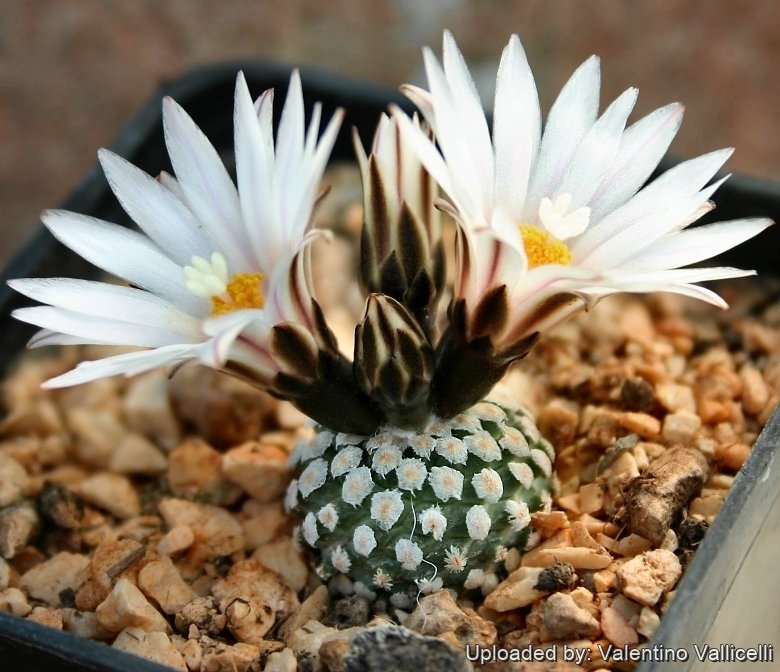
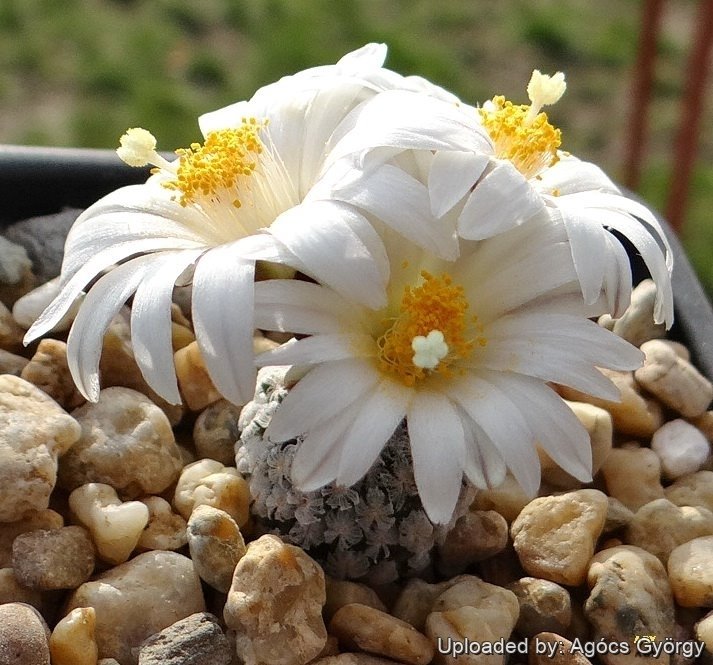
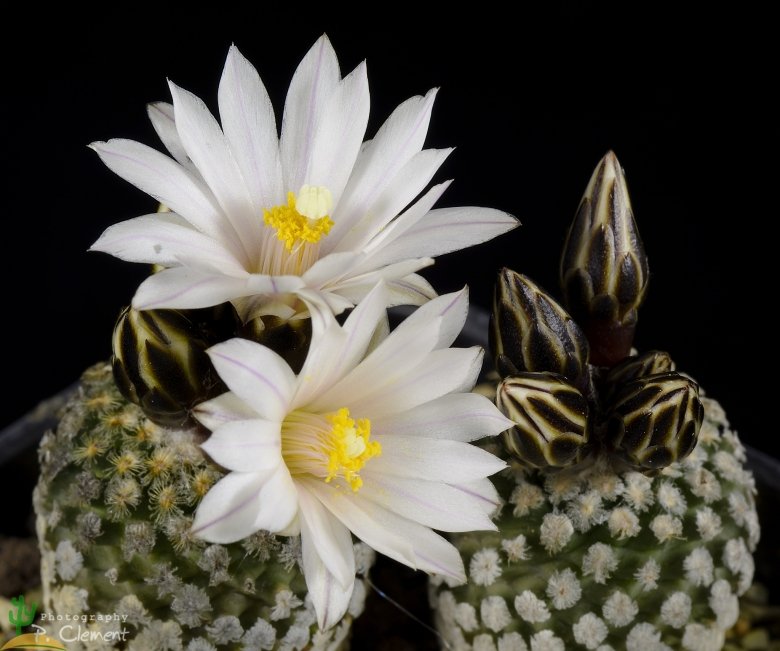
White flowering form: The population from Matehuala (a.k.a. Turbinicarpus valdezianus var. albiflorus) is characterized by pure white flowers, yellow stamen and white stigma.
Stem: Young plants are spherical, then cylindrical with a narrower base and short spirally arranged tubercles, the apex is completely covered by the plumose spination. Typically half of it is underground with a big tap root. The plants are about 3-5 cm high and 1-2 cm in diameter.
Spines: Turbinicarpus valdezianus is a pectinate-spine species, but the the pectinate spines are not in the two neat rows as in Turbinicarpus pseudopectinatus, the ca. 25-30 spines, are dense, feathery and white, about 0.5 mm long, spreading flat around the areoles.
Flowers: One to 5 diurnal, at plant apex, ranging from pure white to very pale pink with pink midveins. Stamen yellow. Stigma white.
Blooming season (northern hemisphere): Early bloomer (February - March).
Origin and Habitat
Matehuala, San Luis Potosí, Mexico.
Cultivation and Propagation
This species is not particularly difficult on own roots, but very slow growing.
Soils: It likes very porous standard neutral or slightly alkaline cactus mix soil.
Repotting: Use pot with good drainage.
Watering: It should be watered during the growing season, but waterings should be rather infrequent to keep the plant compact, and avoid it will become excessively elongated and unnatural in appearance. Keep dry in winter or when night temperatures remain below 10° C. Water it less than average if in bigger pots, small pots preferred. Furthermore it has a tap root, and watering it properly is often difficult, because it tends to crack open or rot if over-watered. Careful watering away from the body of the plant will allow the areoles to keep their wool.
Fertilization: Feed with a high potassium fertilizer in summer.
Hardiness: It is hardy to -4°C for a short period if kept on the dry side prior to, and during, cold weather. However warmth throughout the year will increase the grower’s success (8-12°C during rest season). Assure a good ventilation.
Exposition: Outside bright, hot conditions or afternoon shade, inside it needs bright light, and some direct sun. Strong light keep the plant compact and low and encourages flowering and heavy wool and spine production.
Uses: It is an excellent plant for container growing. It always looks good and stays small.
Pests & diseases: It may be attractive to a variety of insects, but plants in good condition should be nearly pest-free, particularly if they are grown in a mineral potting-mix, with good exposure and ventilation. Nonetheless, there are several pests to watch for:
- Red spiders: Red spiders may be effectively rubbed up by watering the plants from above.
- Mealy bugs: Mealy bugs occasionally develop aerial into the new growth among the wool with disfiguring results, but the worst types develop underground on the roots and are invisible except by their effects.
- Scales: Scales are rarely a problem.
- Rot: Rot is only a minor problem with cacti if the plants are watered and “aired” correctly. If they are not, fungicides won’t help all that much.
Propagation: From seed, since the plant rarely produces plantlets, or grafted. Seeds germinate in 7-14 days at 21-27° C in spring, remove the glass cover gradually as the plants develops and keep ventilated, no full sun for young plants!
Source: Gymnocactus valdezianus var. albiflorus, LLIFLE - Encyclopedia of living forms, CC-BY-SA, retrieved 2026-10-25.
From llifle page Pelecyphora valdeziana f. cristata
Description
The standard Turbinicarpus valdezianus is one the smallest and slowest growing Turbinicarpus with tiny feathery spines that obscure the body of the plant, it is usually solitary but sometime form clusters of few branches. Typically half of it is underground with a big tap root.
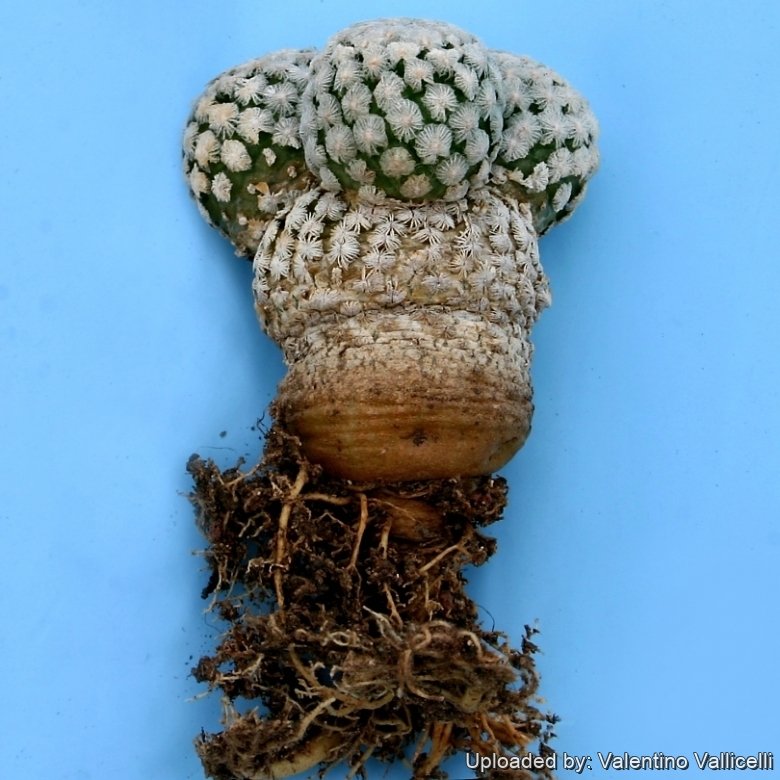
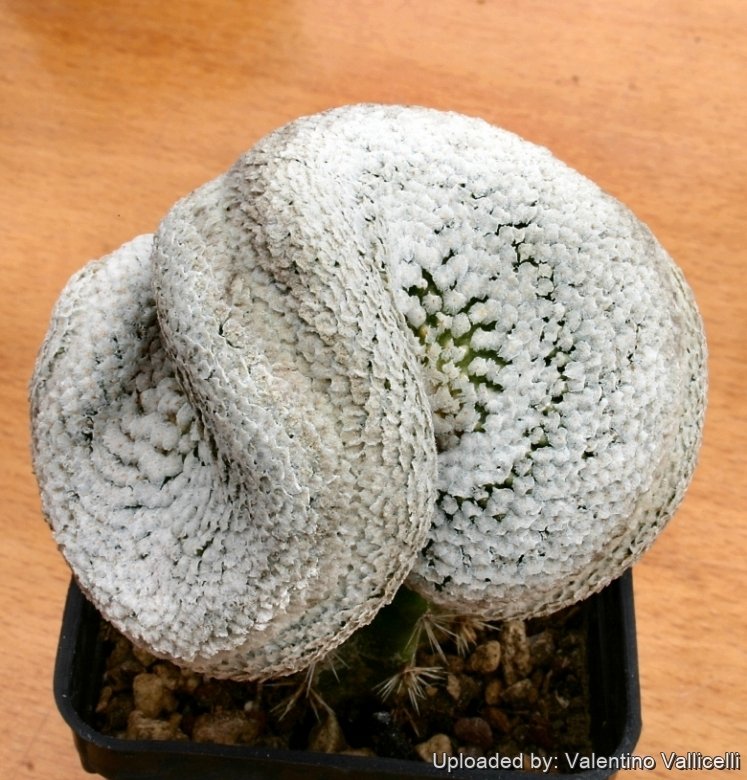
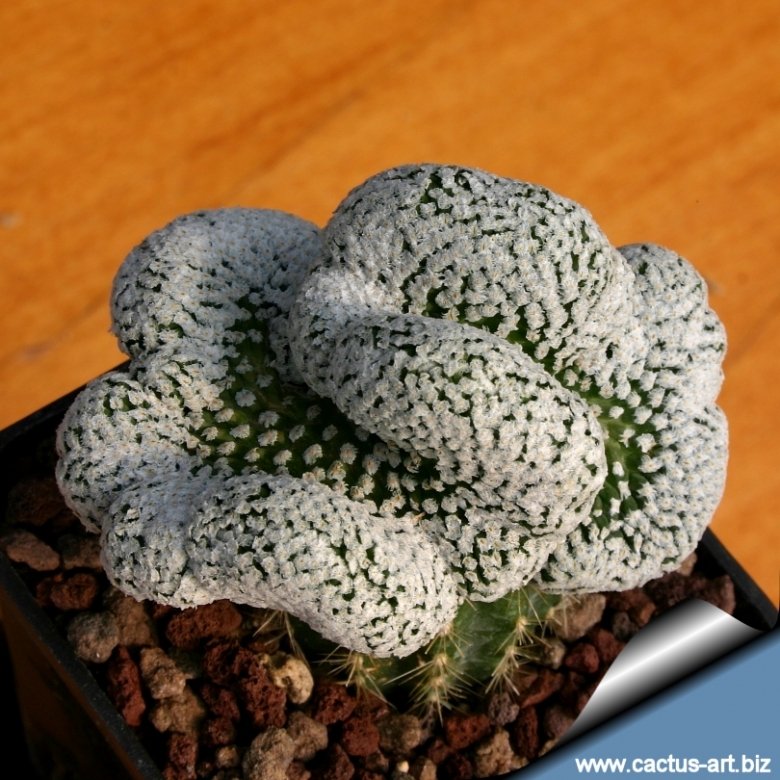
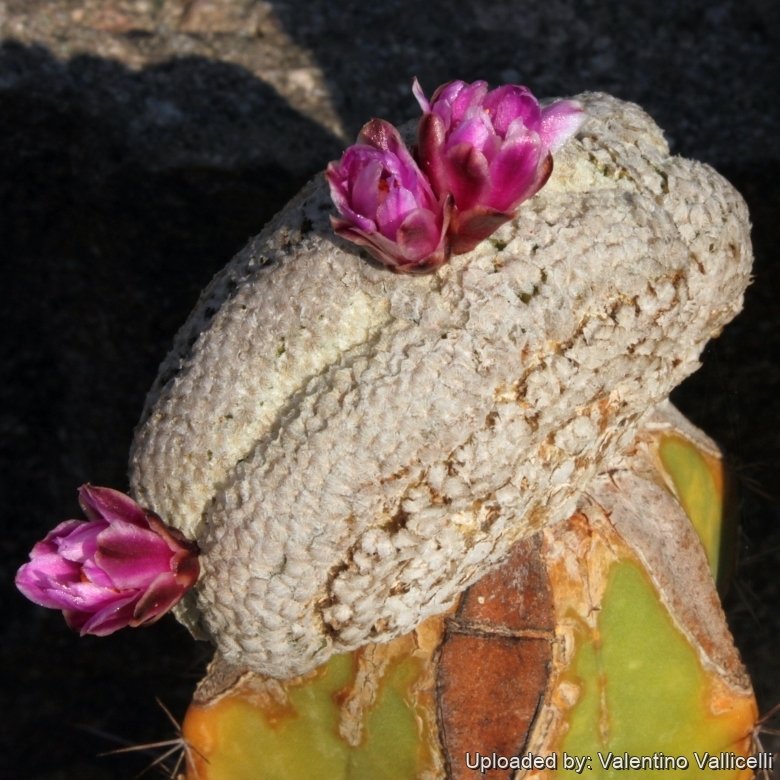
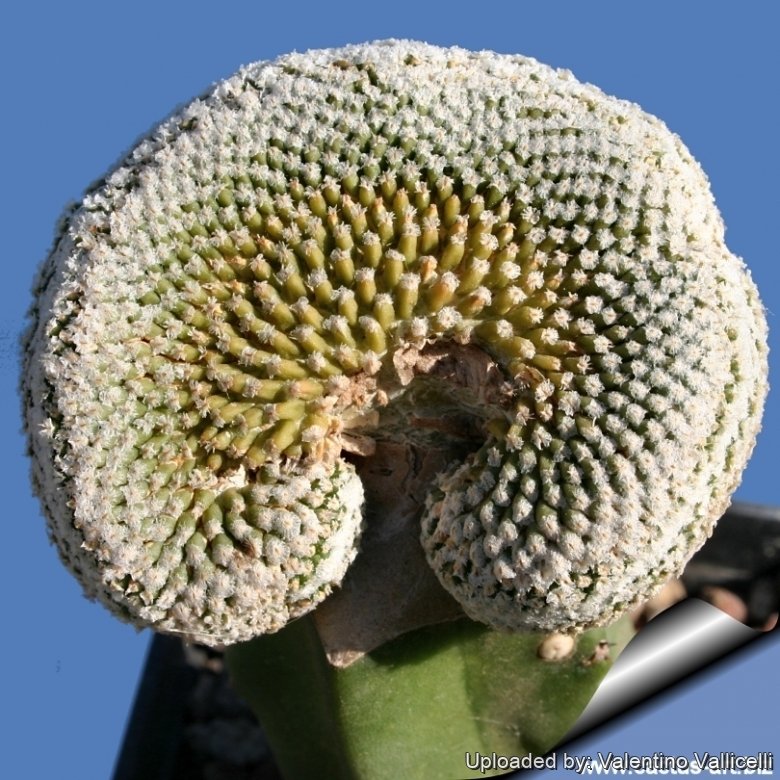
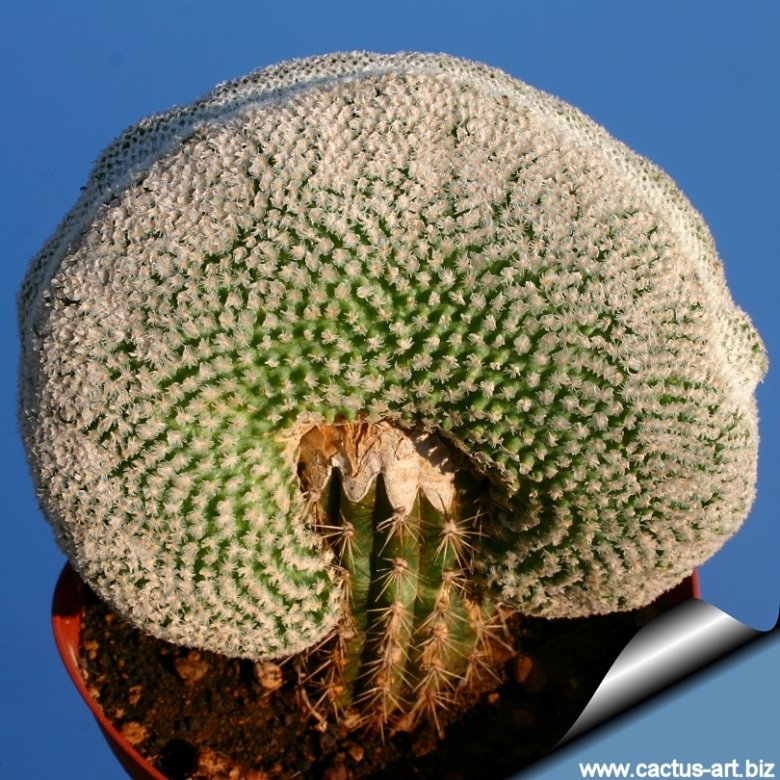
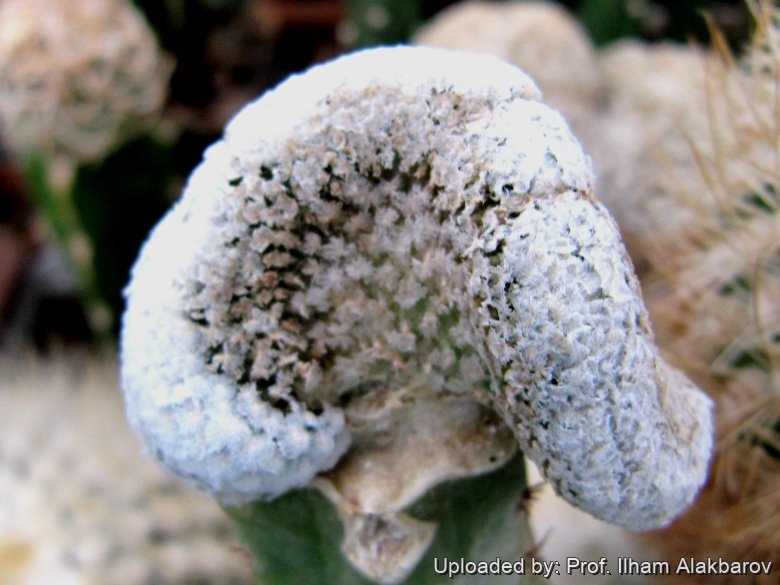
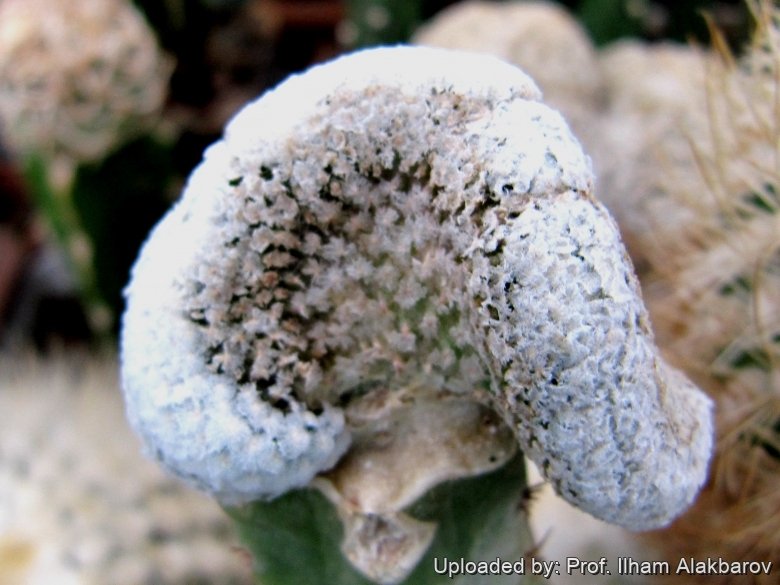
Forma cristata: The crested form is still rare in cultivation. It is covered by dense feathery white spines, spreading flat around the areoles and the apex completely concealed by the plumose spination.
Spines: T. valdezianus is a pectinate-spiene species, but the the pectinate spines are not in the two neat rows as in Turbinicarpus pseudopectinatus, the ca. 25-30 spines, are dense, feathery and white, about 0.5 mm long, spreading flat around the areoles.
Flowers: One to 5 diurnal, at plant apex, this species is found scattered in small populations in several locations and the colour of the flowers is variable ranging from pinkish white to bright pink with darker magenta or reddish-brown midveins.
Blooming season (Northern hemisphere): Early bloomer (February - March).
Origin and Habitat
Garden origin (Nursery produced cultivar)
Cultivation and Propagation
Although regarded as a choice and difficult plant is not too difficult in a greenhouse, although grows quite slowly. It is sometime seen as a grafted plant but grows very well on its own roots too.
Soil: Use mineral well permeable mineral soil with little organic matter (peat, humus).
Exposure: They need a good amount of light shade to full sun this help to keep the plants healthy, although slow growth.
Watering: Water sparingly from March till October (weekly during summertime, if the weather is sunny enough) , with a little fertilizer added. Less or no water during cold winter months to prevent root loss. It is sensitive to overwatering (rot prone).
Hardiness: Keep perfectly dry in winter at temperatures from 5 to 15 degrees centigrade. (but it is relatively cold resistant and hardy to -7° C for short periods) In the rest period no high atmospheric humidity!! (Temperature Zone: USDA 9-11)
Propagation: Grafting or cuttings. Plants are usually grafted onto column-shaped cacti but proved to be able to produce their own roots if degrafted.
Notes
The cause of cresting: The cause of cresting is not fully explained. Biologists disagree as to why some plants grow in this unusual form. Some speculate that it is a genetic mutation. Others say it is the result of a lightning strike or freeze damage. But whatever the stimulus, the growth point of the stem has switched from a geometric point to a line, which folds and undulates as the crest expands. Though these crested cacti are somewhat rare (1 in 50,000 or less), cresting occurs naturally and can be encountered in many other cactus species.
Source: Pelecyphora valdeziana f. cristata, LLIFLE - Encyclopedia of living forms, CC-BY-SA, retrieved 2026-10-25.
Cultivars and forms (2)
Varieties (1)
Forms (1)
Gallery