Publication: Con. Cap. Colt. Turbinicarpus – Rapicactus 184 (figs.). 2004 [29 May 2004]
Description
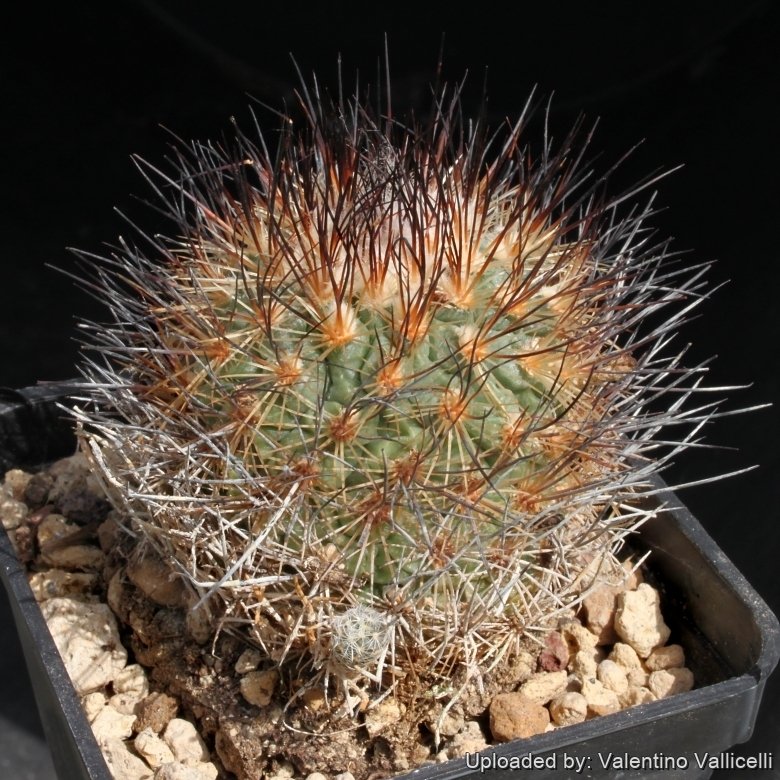
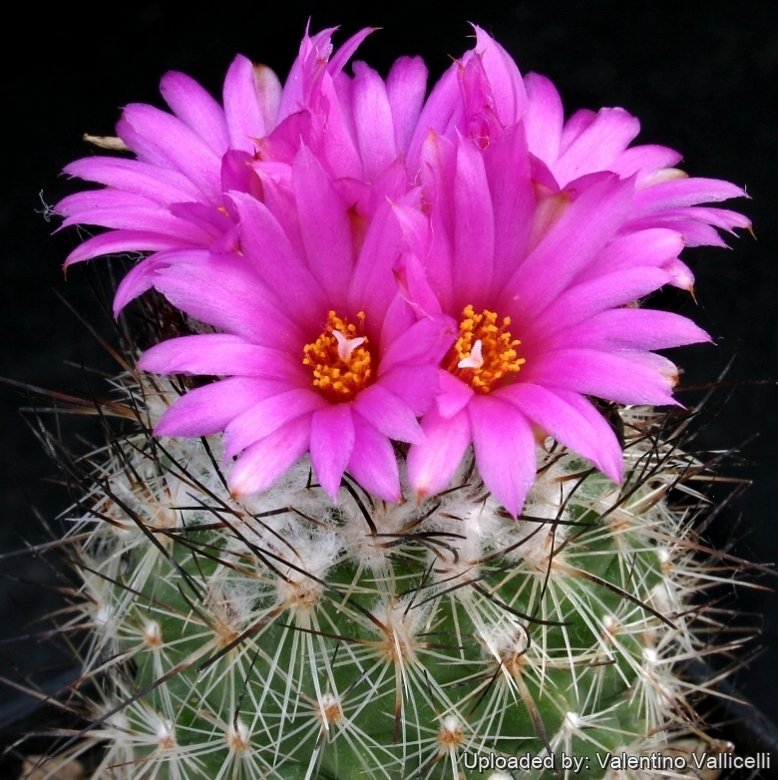
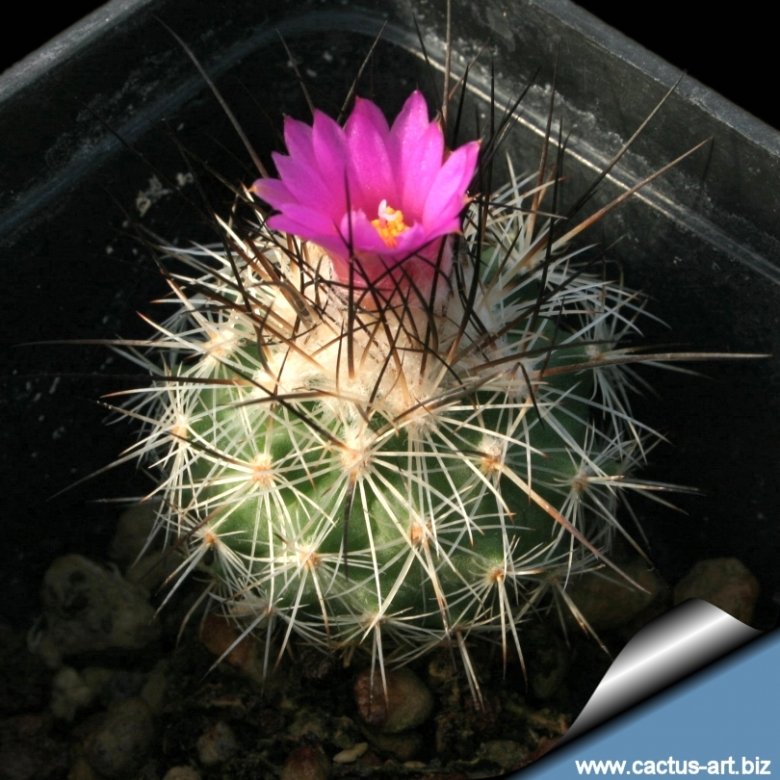
Turbinicarpus viereckii subsp. neglectus is one of the local or morphological form of Turbinicarpus viereckii. It is an attractive dwarf cactus covered with characteristic glassy white and black spines and whitish wool which is distinguished from the type species for having more numerous, but overall thinner and more flexible spines. The blooms are bright purple.
Habit: Contrary to the standard Turbinicarpus viereckii, which often clusters and forms small group with time, subsp. neglectus usually remains solitary (however clumps may be produced in cultivation especially if the plants are grafted).
Stem: Dull green, globose to slightly cylindrical 3-5 (-12) cm tall, 3-5 cm in diameter apex with abundant white wool.
Ribs: 15 to 18 ribs divided in tubercles.
Tubercles: 6 mm long rhomboidal conical.
Central spines: 7 to 9 pale yellowish with black tips rigid to to somewhat flexible, 2-4 cm long thinner than those of other {{viereckii} varieties.
Radial spines: 17 to 22 white translucent, some with brown tips, 0,8-1,3 cm long.
Root: Swollen bundled.
Flowers: Bright magenta or pink and darker mid-ribs, 1,5-2,5 cm long, 12-20 mm broad.
Fruits: Greenish-brown.
Origin and Habitat
Turbinicarpus viereckii subsp. neglectus is extremely rare and the whole population is formed by only a few specimens growing near the town of Jaumave, Sierra Salamanca, Jaumave valley, Tamaulipas.
Altitude: 1000-1300 metres above sea level.
Habitat: This cactus grows in semi-desert (Tamaulipan Shrubland) among calcareous rocks.
Cultivation and Propagation
Turbinicarpus viereckii subs. neglectus is one of the more difficult species to grow long enough to produce clumps, but if grown correctly, it will reward the grower with generous displays of purple flowers. Keep in shallow and smaller pot than normal. Must have very well draining potting soil.
Watering Needs: Need regular water but do not water again until dry as it is specially sensitive to over watering. Also, it is a species that is dormant in the winter and require very little water (maybe even none) during the cold months.
Frost Tolerance: Somewhat frost tolerant. Light frost protection required. Minimum of 5ºC for safe growing (but hardy up to -5°C or less.)
Sun Exposure: High levels of light are needed to flower and for good spine development. Can be sunburned if moved from shade/greenhouse into full sun too quickly. During the spring it may be able to take full sun until the heat arrives at the end of spring. In an area that has hot afternoon sun, it may be able to take full morning sun, but requires afternoon shade or afternoon light shade.
Propagation: Seeds (usually) or offsets that occasionally appear at the base; leave them attached to form a cluster, or wait until they are 1/3 the size of the parent and then detach and plant.
Bibliography
Major references and further lectures
-
Edward Anderson “The Cactus family” Timber Press, Incorporated, 2001
-
James Cullen, Sabina G. Knees, H. Suzanne Cubey “The European Garden Flora Flowering Plants: A Manual for the Identification of Plants Cultivated in Europe, Both Out-of-Doors and Under Glass” Cambridge University Press, 11/Aug/2011
-
David R Hunt; Nigel P Taylor; Graham Charles; International Cactaceae Systematics Group. “The New Cactus Lexicon” dh books, 2006
-
Davide Donati, Carlo Zanovello “Conoscere, capire, coltivare i Turbinicarpus-Rapicactus” Cactus Trentino Sudtirol, 2004