Description
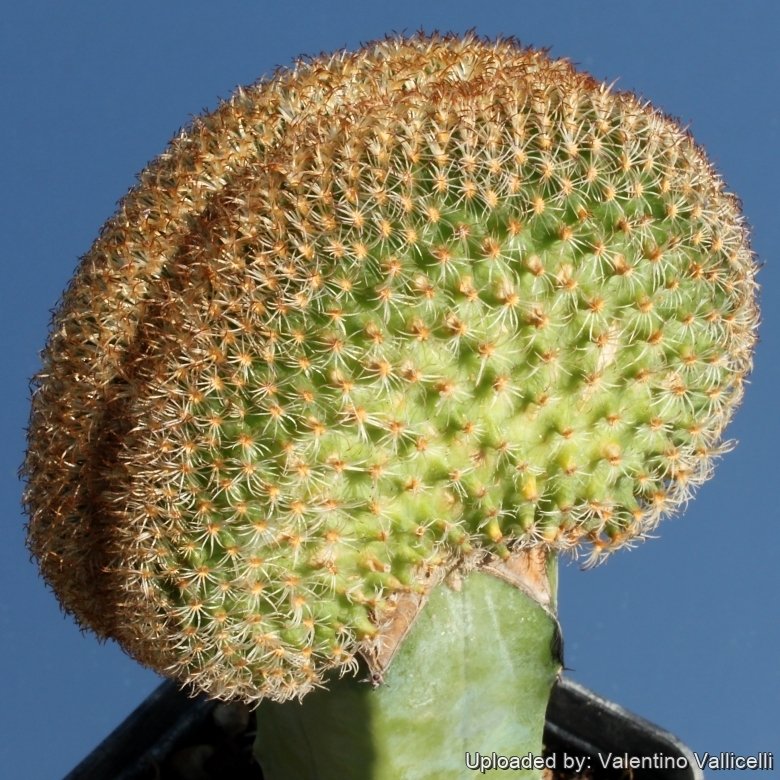
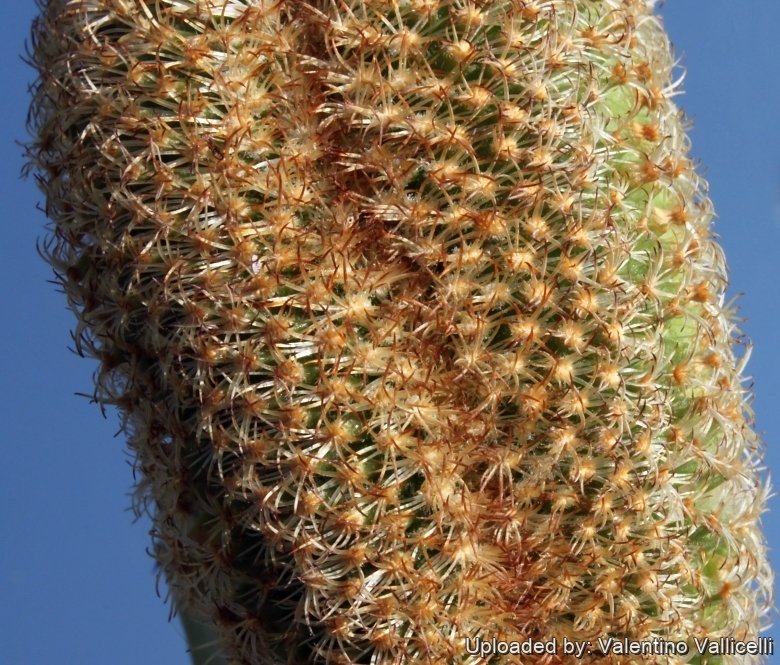
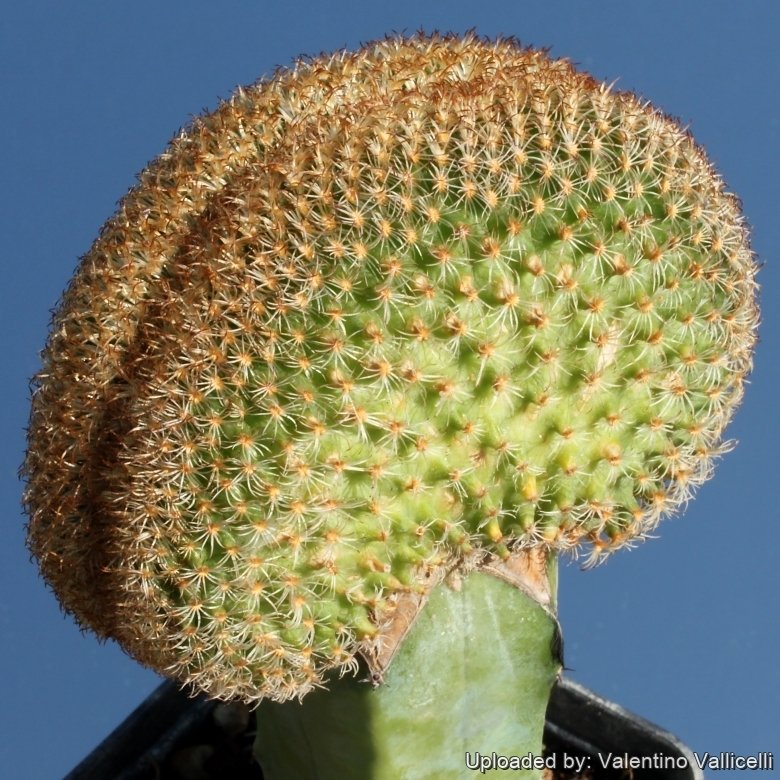
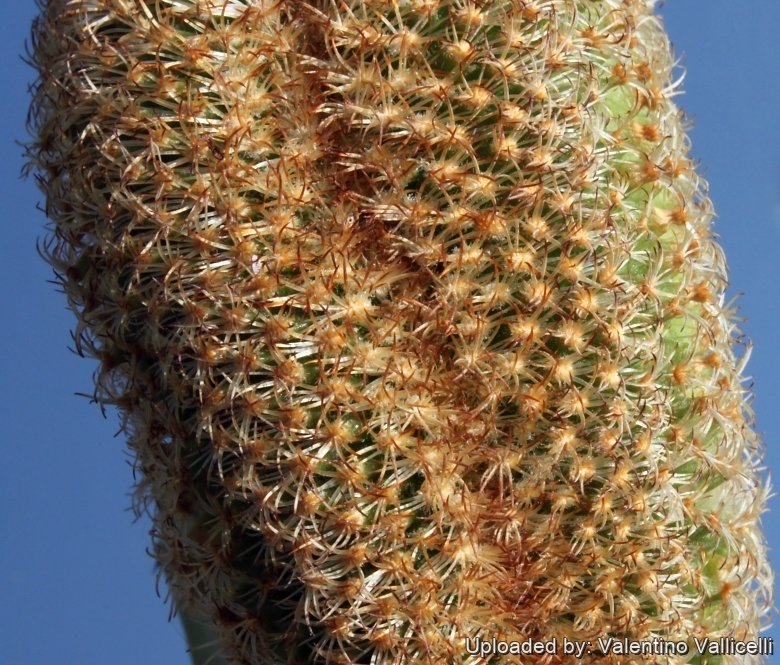
Usually solitary cactus almost completely concealed by spines and wool.
Stem: Globular depressed, 40-160 mm high, 70-200 mm wide, yellowish-green with a very woolly apex.
Ribs: 15-15 tubercled.
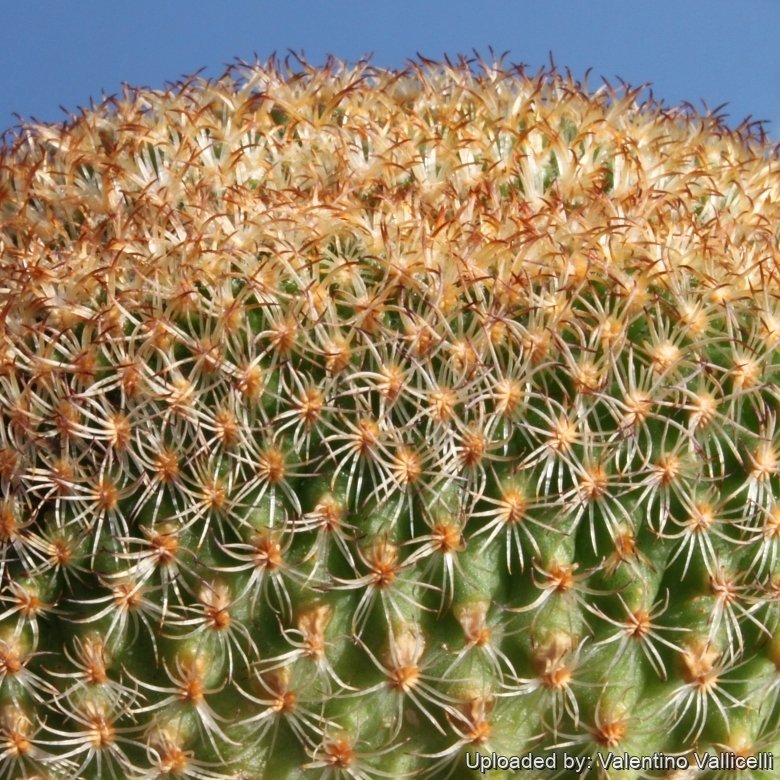
Tubercles: Conical, well-developed, 3-8mm high.
Areoles: Oblong, at first very woolly then almost naked.
Radials spines: 16-20 radiating, partially pectinated, straight, whitish 2-10 mm long. The young spines have a yellow base, a white median zone and a dark brown tip, then they become white and translucent.
Central spines: 1 curved upwards, at first black-bluish that becomes greyish-white with darker tip 7-20mm long. Flowers: White with a greenish base, 10-18 mm long, generally 30 mm wide but can be up to 70 mm wide.
Fruit: Dry, dehising from a lateral fissure.
Seeds: Black.
Origin and Habitat
Garden origin.
Cultivation and Propagation
Although regarded as a choice and difficult plant is not too difficult in a greenhouse, although grows quite slowly. It is sometime seen as a grafted plant but grows very well on its own roots too.
Soil: Use mineral well permeable mineral soil with little organic matter (peat, humus).
Exposure: They need a good amount of light shade to full sun this help to keep the plants healthy, although slow growth.
Watering: Water sparingly from March till October (weekly during summertime, if the weather is sunny enough) , with a little fertilizer added. Less or no water during cold winter months to prevent root loss. It is sensitive to overwatering (rot prone).
Hardiness: Keep perfectly dry in winter at temperatures from 5 to 15 degrees centigrade. (but it is relatively cold resistant and hardy to -5° C for short periods) In the rest period no high atmospheric humidity!! (Temperature Zone: USDA 9-11)
Propagation: Grafting.or cuttings. Plants are usually grafted onto column-shaped cacti but proved to be able to produce their own roots if degrafted.
Bibliography
Major references and further lectures
-
Edward Anderson “The Cactus family” Timber Press, Incorporated, 2001
-
Nathaniel Lord Britton, Joseph Nelson Rose “Cactaceae: Descriptions and Illustrations of Plants of the Cactus Family” vol. 4 The Carnegie Institution of Washington, Washington 1923
-
James Cullen, Sabina G. Knees, H. Suzanne Cubey “The European Garden Flora Flowering Plants: A Manual for the Identification of Plants Cultivated in Europe, Both Out-of-Doors and Under Glass” Cambridge University Press, 11/Aug/2011
-
David R Hunt; Nigel P Taylor; Graham Charles; International Cactaceae Systematics Group. “The New Cactus Lexicon” dh books, 2006