Publication: Succulenta (Netherlands) 161, 1967
Description
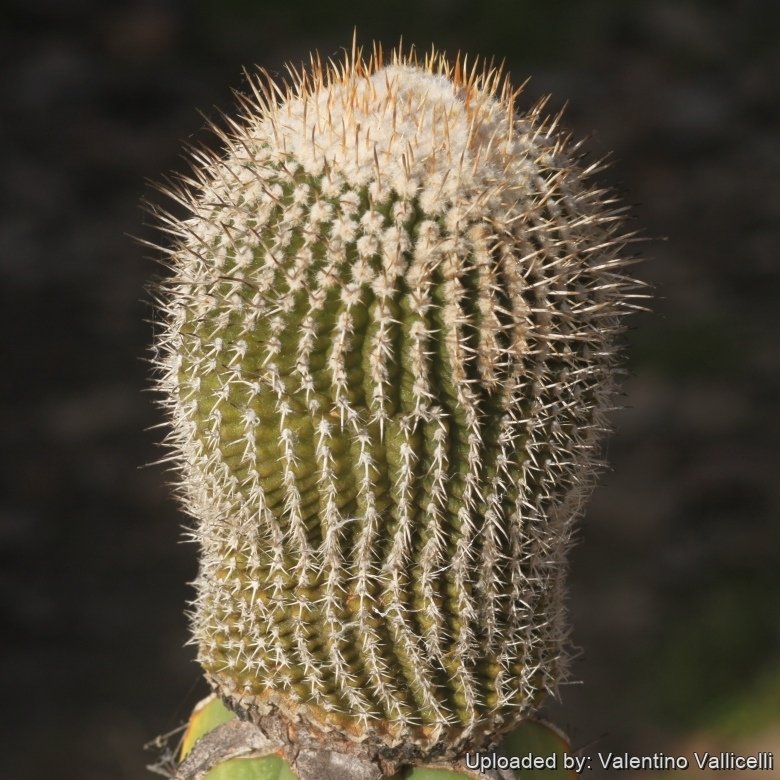
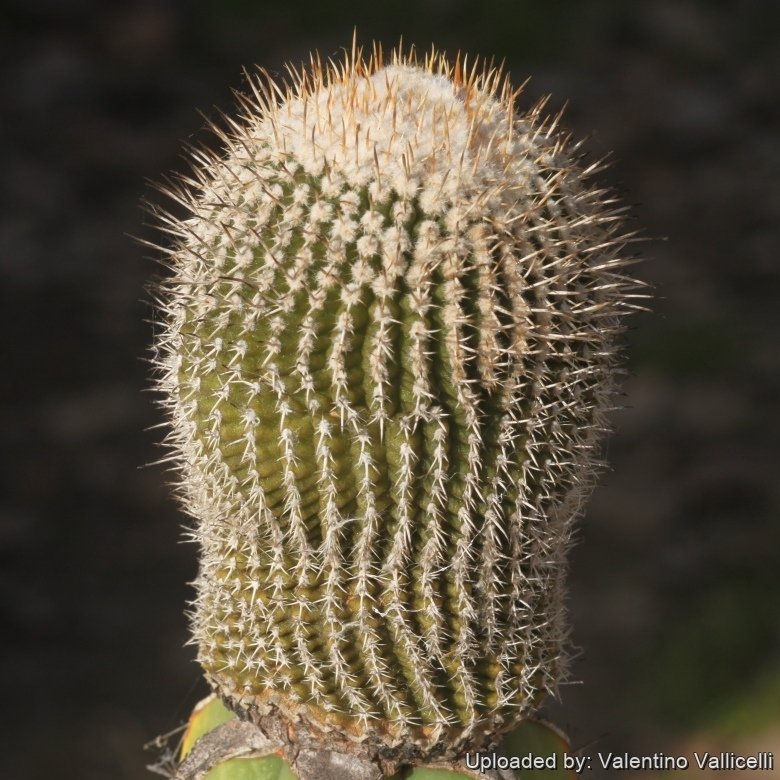
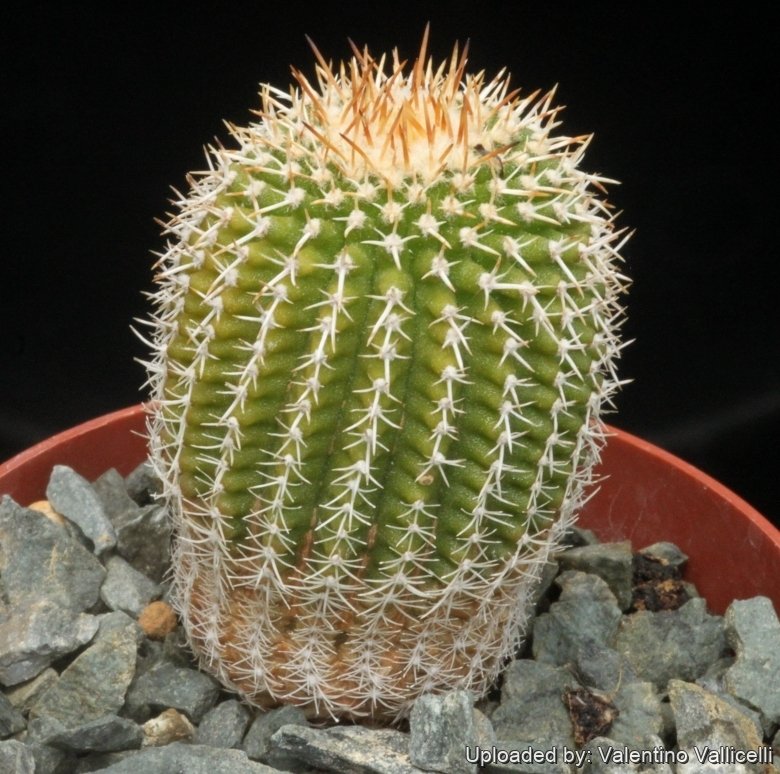
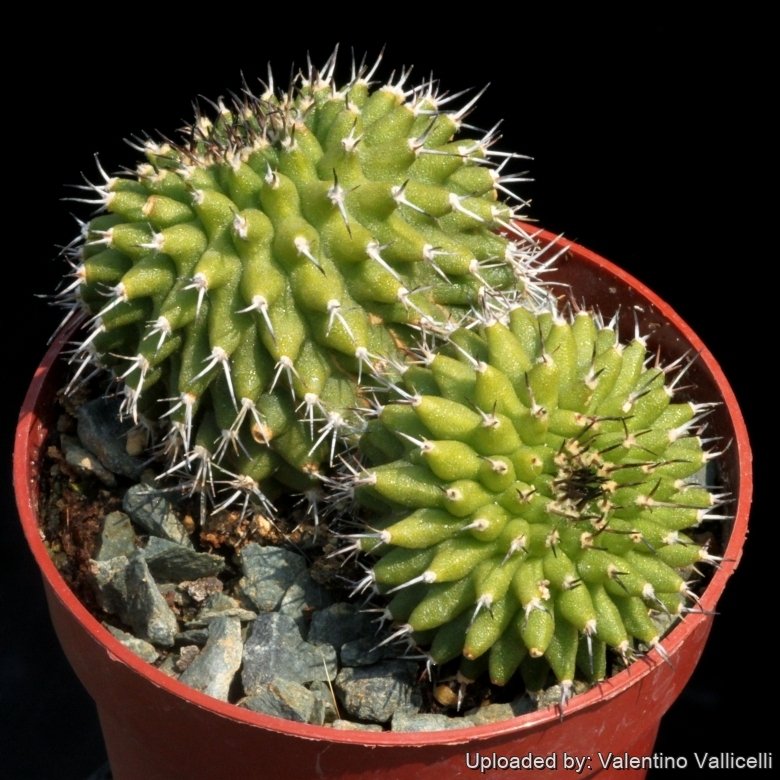
It is a short usually solitary cactus.
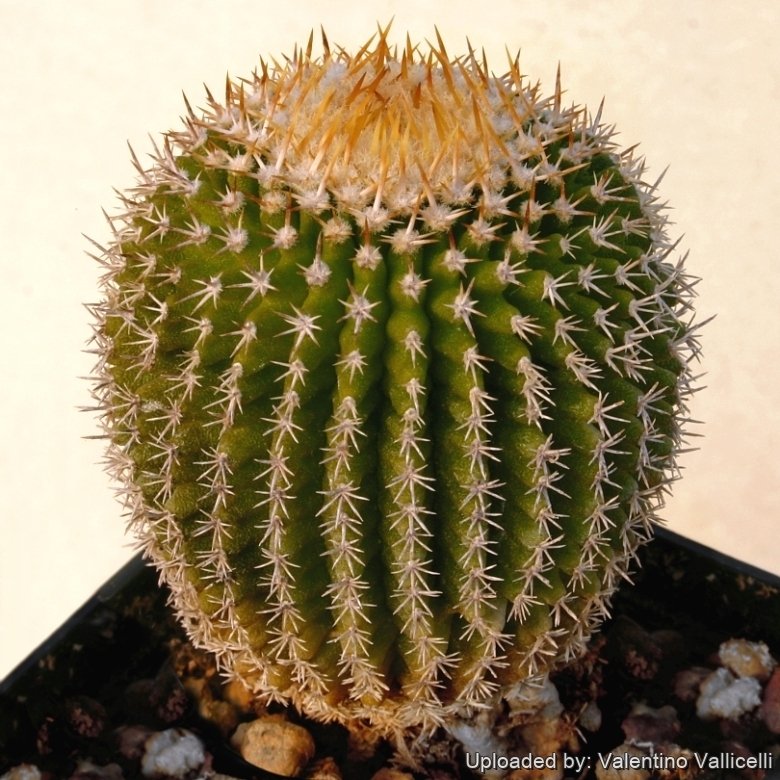
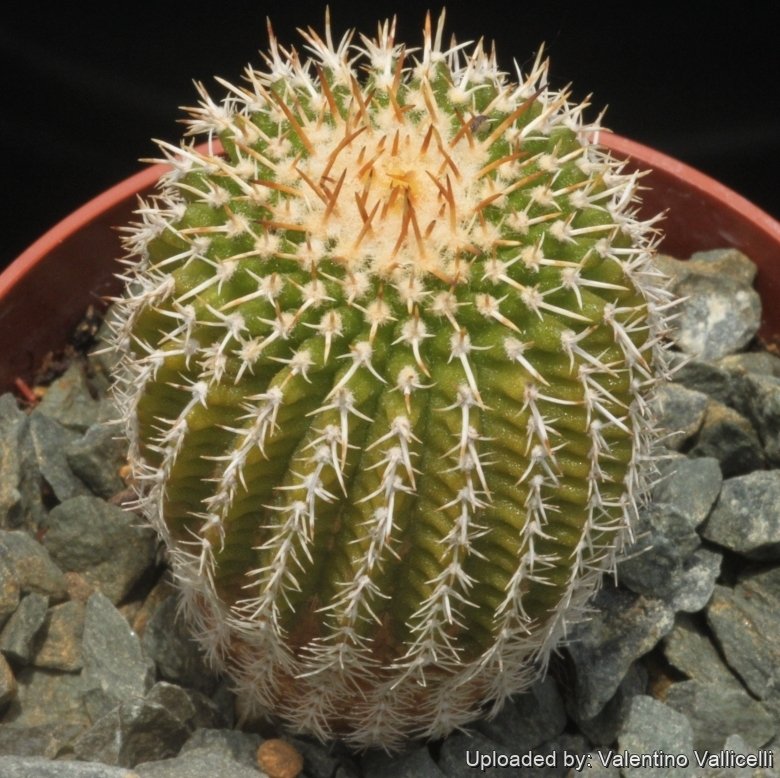
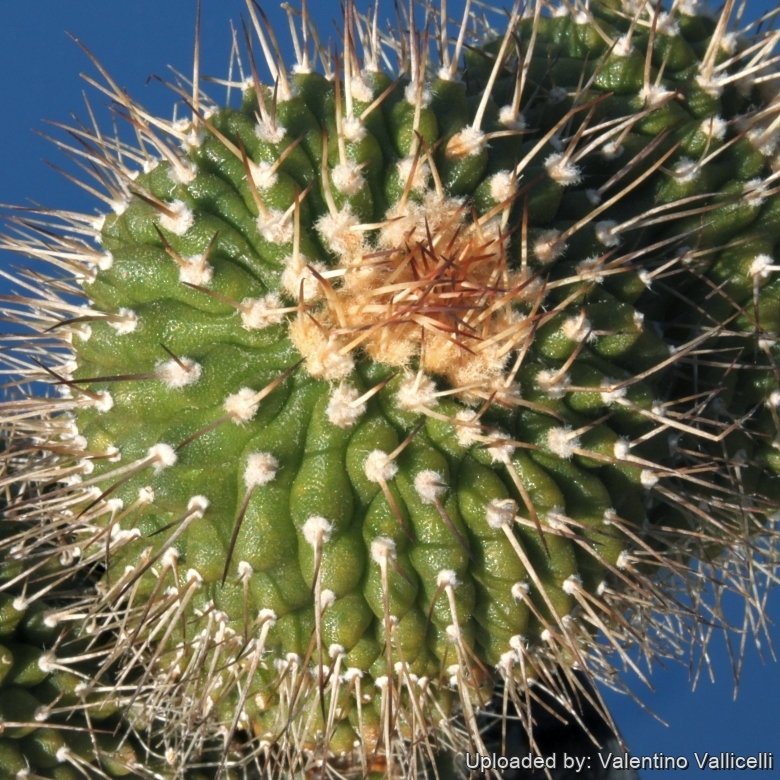
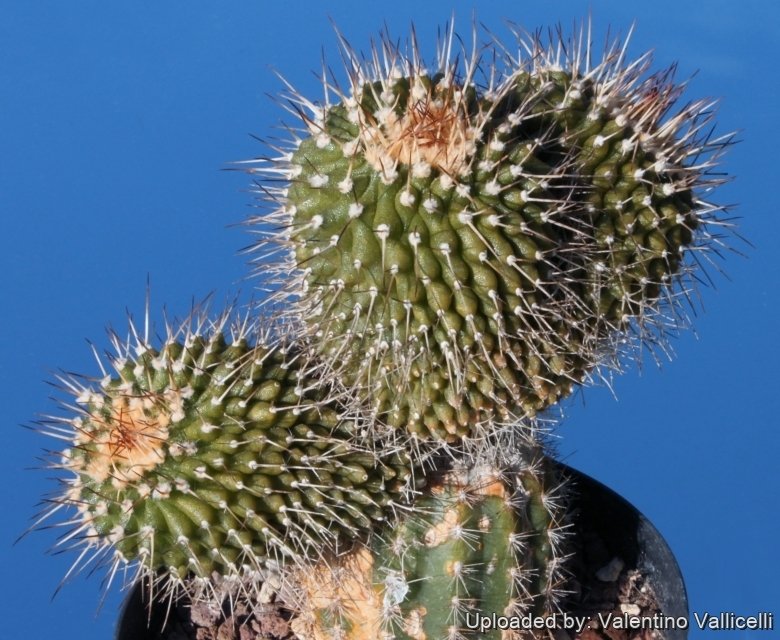
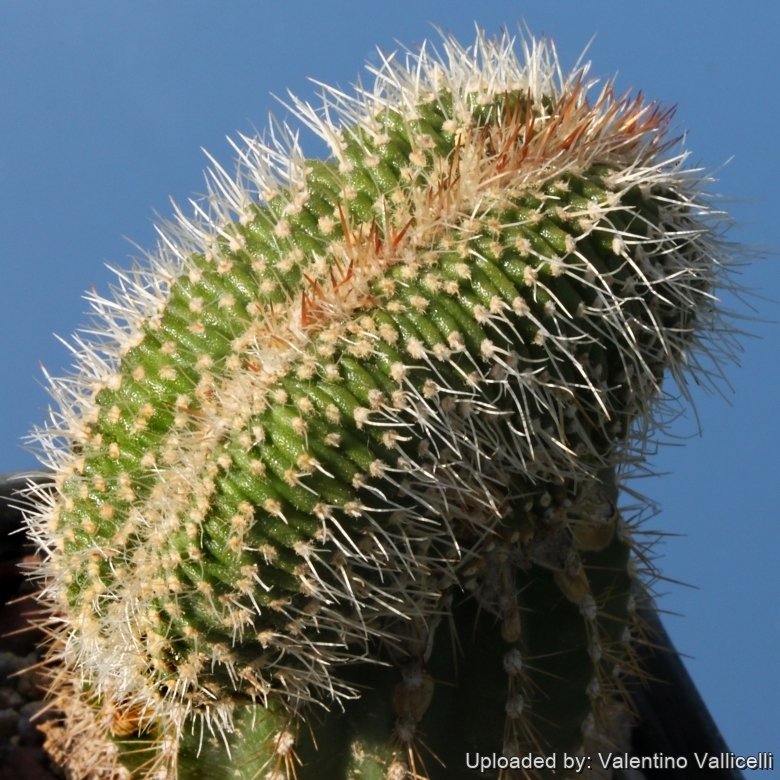
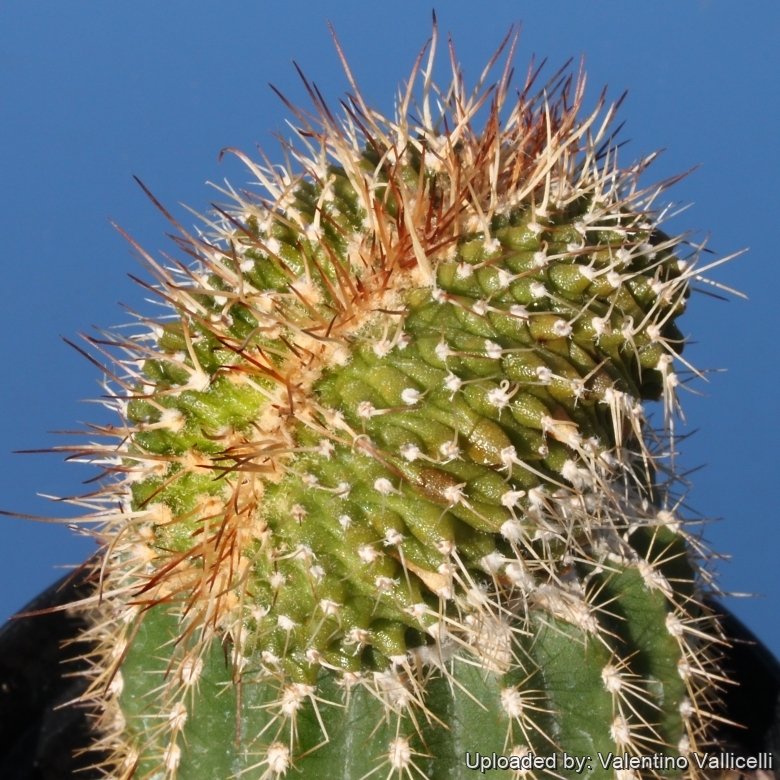
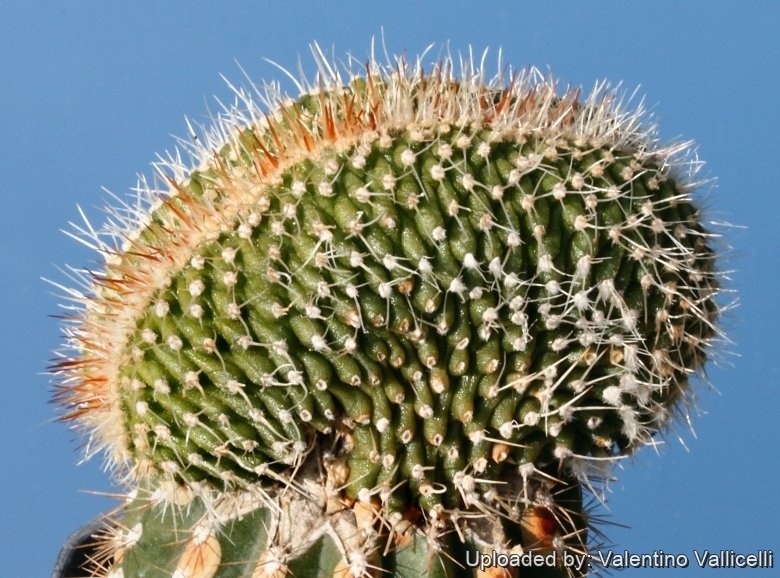
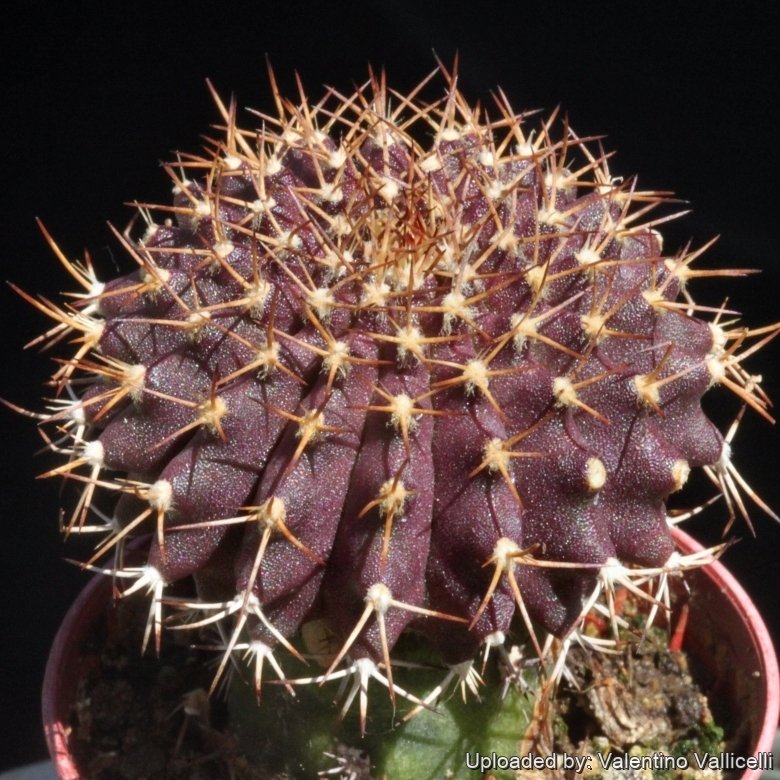
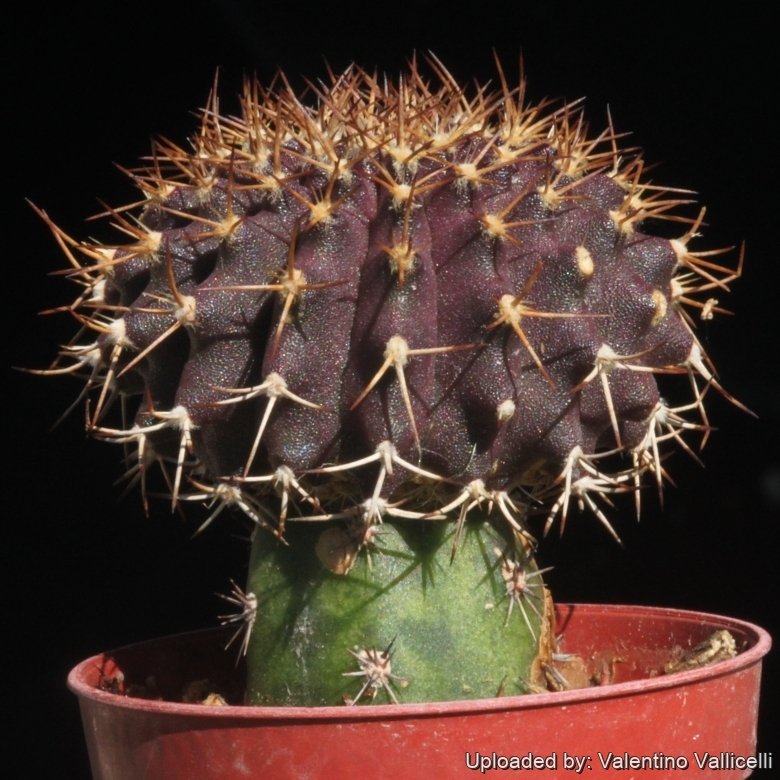
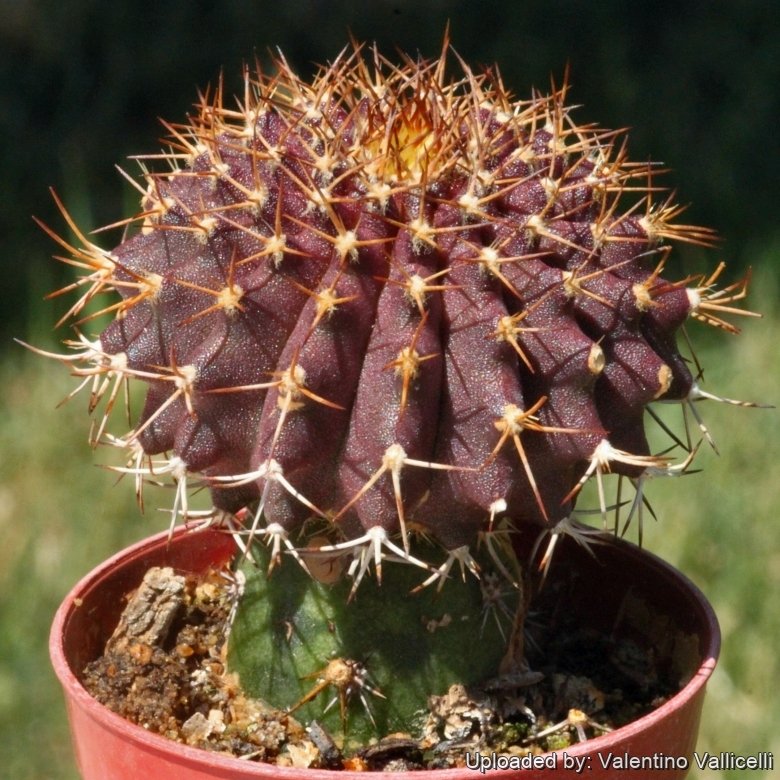
Stem: Spherical to slightly elongated and cylindrical with creamy-white wool in the centre, 6-8(-10) cm wide, becoming 10-12 cm high with age, greyish-green, the plants grown in shadow are greener, while the ones in full sun can take a reddish colour.
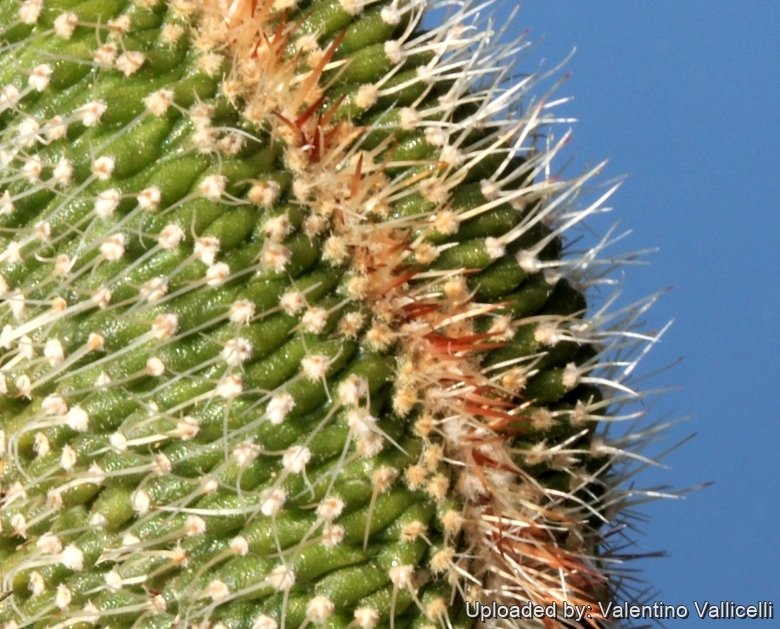
Ribs: When fully mature it has up to 32 ribs, but initially it has considerably fewer. These ribs at first are strongly tuberculate, later narrow and continuous.
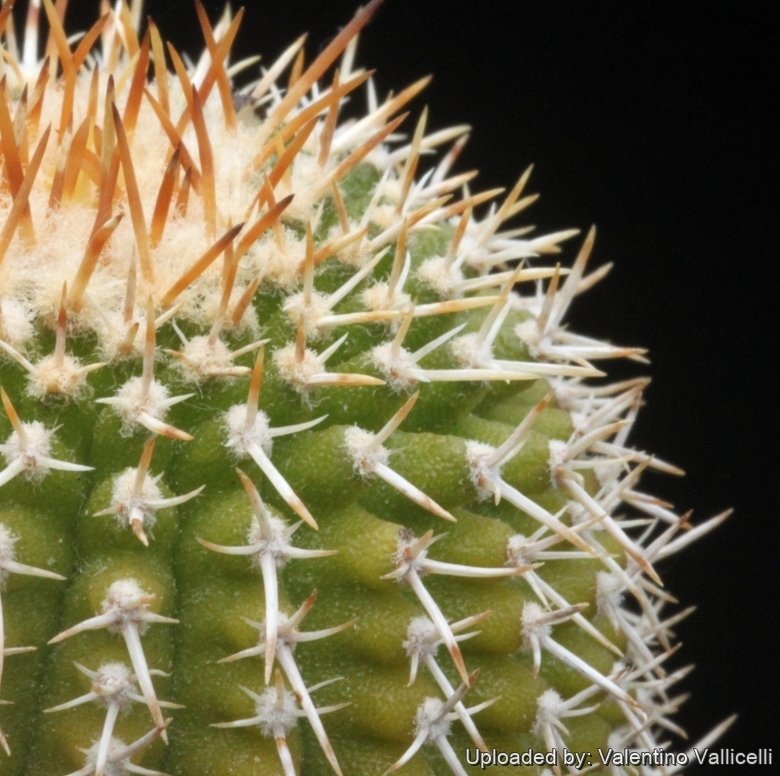
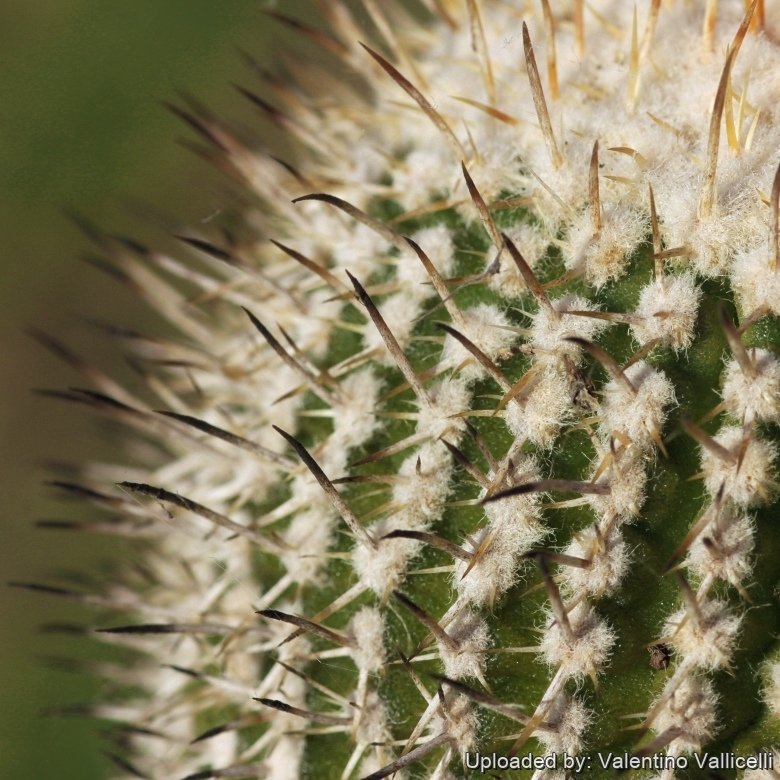
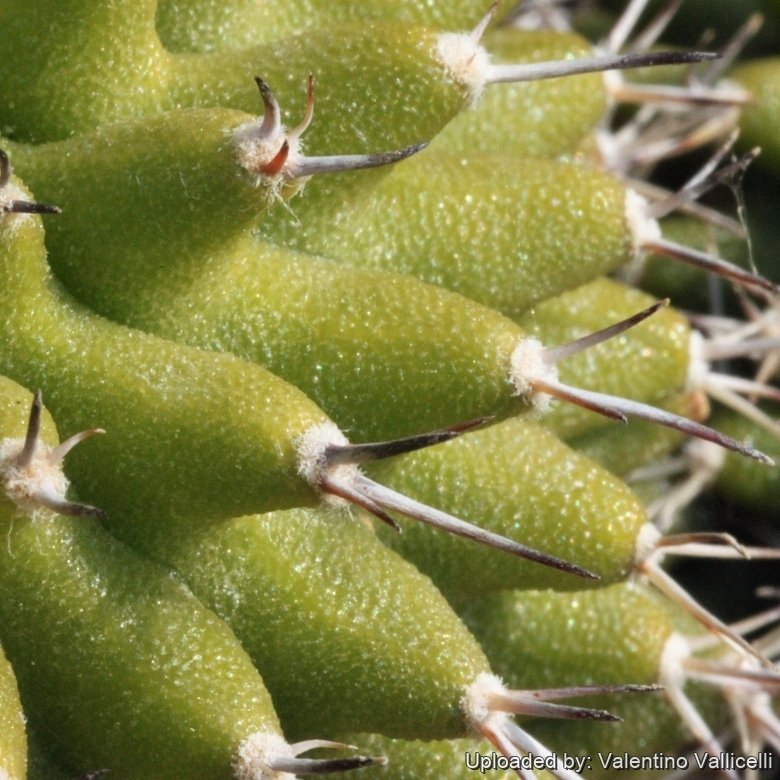
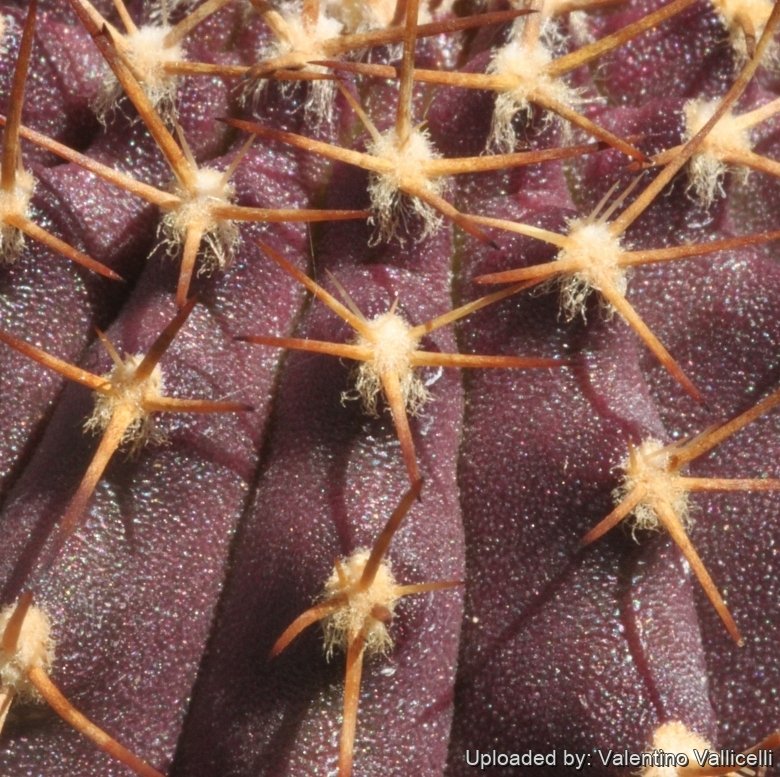
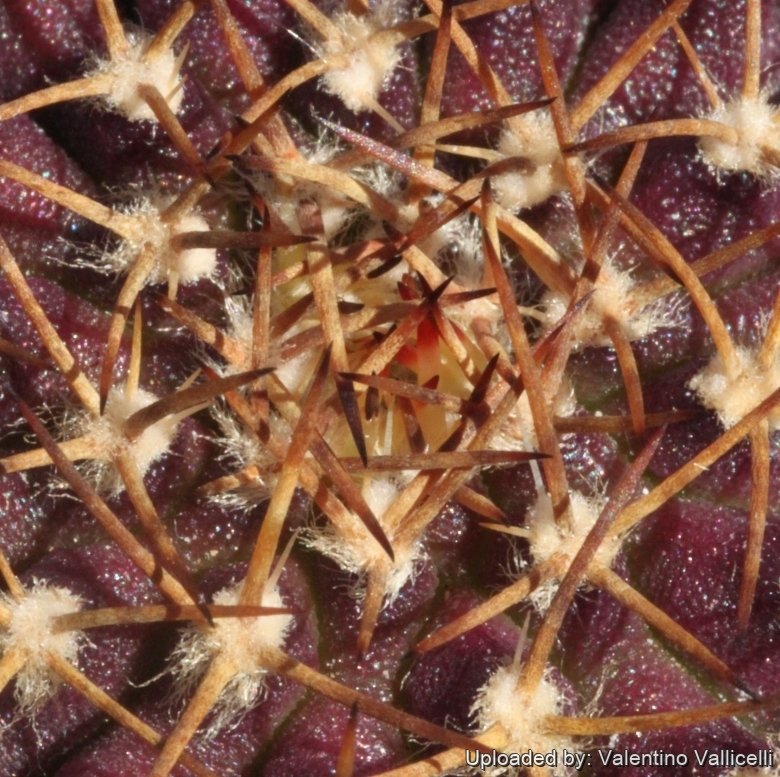
Areoles: Close set, greyish white, at first 3 mm or more apart, then nearly confluent and encompassing the stems.
Central spines: Usually one, straight, gray, pointing slightly upward.
Radial spines: 3 (seldom more ), one longer pointing slightly downward, the other lateral more or less erect, subulate, light to dark grey with darker brownish tips, 3-5 mm long.
Flowers: Diurnal sulfur-yellow about 2 cm long , 1,5 cm in diameter.
Blooming season: Flowers come sporadically from early summer to late summer.
Fruit: 1,8 x 6-8 mm yellowish-green and globular with numerous seeds.
Origin and Habitat
Serra Negra / Serra do Ambrósio, Minas Gerais, Brazil. Uebelmannia gummifera has a very limited extent of occurrence (about 230 square kilometres) and there are three to four locations.
Altitude: 900–1600 metres above sea level.
Habitat and Ecology: Uebelmannia gummifera grows on quartz sand in south-eastern campo rupestre biome. The species is locally very abundant, the population size is probably millions of individuals. The major threats are sand quarrying, cattle ranching, human developments, and collection of plants and seeds. Hence is listed as Endangered.
Cultivation and Propagation
This tropical genus, which is hardly ever cultivated except in very specialized collections, loves warm moist, humid conditions and mist spraying is a must in summer. Water regularly during the growing season (rain water is highly recommended) and use a very draining low pH mineral potting substrate (if possible not limestone) otherwise growth will stop altogether. At the onset of winter, do not water. Uebelmannias need heat all year round and extra winter heat, minimum 10° C is best. Avoid any frost. Keep cool in summer. This plant prove to be root prone if kept too cold in winter. To help stop this a good deep collar of pumice or lava grit is an excellent idea. It prefers a full sun position and possibly afternoon shade in summer. If you can place it so that this occurs the plant will be much happier.
Propagation: Seeds, but plants are often grafted making them easier to grow, particularly through the winter. If possible using a rootstock that is more hardy than the Uebelmannia is the ideal.
Bibliography
Major references and further lectures
-
Edward Anderson “The Cactus family” Timber Press, Incorporated, 2001
-
James Cullen, Sabina G. Knees, H. Suzanne Cubey “The European Garden Flora Flowering Plants: A Manual for the Identification of Plants Cultivated in Europe, Both Out-of-Doors and Under Glass” Cambridge University Press, 11/Aug/2011
-
David R Hunt; Nigel P Taylor; Graham Charles; International Cactaceae Systematics Group. “The New Cactus Lexicon” dh books, 2006Jackie M. Poole, William R. Carr, Dana M. Price, Jason R. Singhurst “Rare plants of Texas: a field guide” Texas A&M University Press, 30/Dec/2007
-
Machado, M., Braun, P. & Taylor, N.P. 2013. Uebelmannia gummifera. In: IUCN 2013. “IUCN Red List of Threatened Species.” Version 2013.2. <www.iucnredlist.org>. Downloaded on 23 December 2013.
From llifle page Uebelmannia meninensis
Description
Uebelmannia meninensis is a short columnar usually solitary cactus.
Stem: Globular when young, later becoming elongated and cylindrical with creamy-white wool in the centre, 10 cm wide, becoming 45-50 cm high with age, but usually much smaller in cultivation, greyish-green, dull green or reddish-green (f. rubra), in cultivation the colour of the plants depends on sun exposure, the plants grown in shadow are greener, wile the ones in full sun take a bright purple colour.
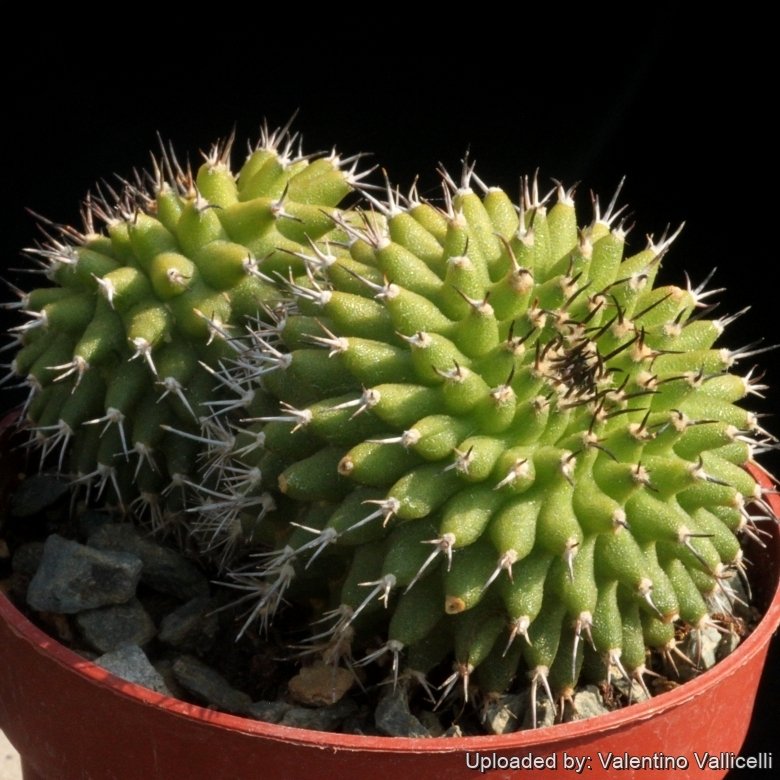
Ribs: When fully mature it has up to 40 prominent markedly tuberculate, but initially it has considerably fewer.
Tubercles: The tubercles protrude about 8 mm, are separated by transverse grooves and have apical areoles.
Areoles: Close set
Central spines: 2 (seldom more ) brown-black or grey with darker tips, up to 2 cm long, pointing downward except for the upper one, which is shorter.
Radial spines: Absent
Flowers: Diurnal yellow. They are up to 2-3,5 cm long , 2-3(-4) cm in diameter.
Blooming season: Flowers come sporadically from early summer to late summer
Fruit: Inconspicuous, 8 x 6 mm yellowish-green to dark red and globular with numerous seeds.
Seeds: 1,3 mm x 0,8 mm
Origin and Habitat
Minas Gerais (Brazil, Southern America)
Bibliography
Major references and further lectures
-
Edward Anderson “The Cactus family” Timber Press, Incorporated, 2001
-
James Cullen, Sabina G. Knees, H. Suzanne Cubey “The European Garden Flora Flowering Plants: A Manual for the Identification of Plants Cultivated in Europe, Both Out-of-Doors and Under Glass” Cambridge University Press, 11/Aug/2011
-
David R Hunt; Nigel P Taylor; Graham Charles; International Cactaceae Systematics Group. “The New Cactus Lexicon” dh books, 2006Jackie M. Poole, William R. Carr, Dana M. Price, Jason R. Singhurst “Rare plants of Texas: a field guide” Texas A&M University Press, 30/Dec/2007
Source: Uebelmannia meninensis, LLIFLE - Encyclopedia of living forms, CC-BY-SA, retrieved 2026-10-25.
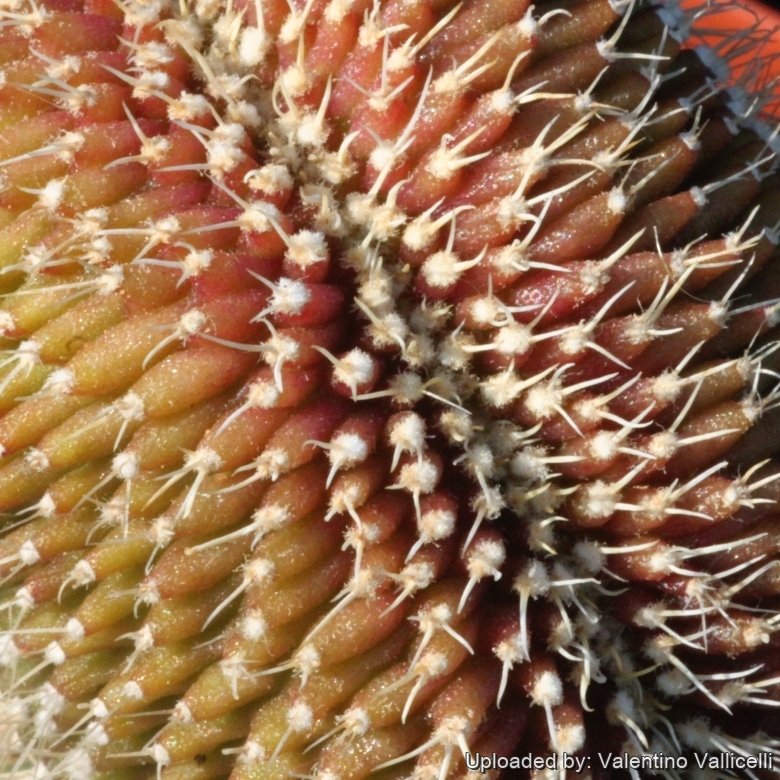
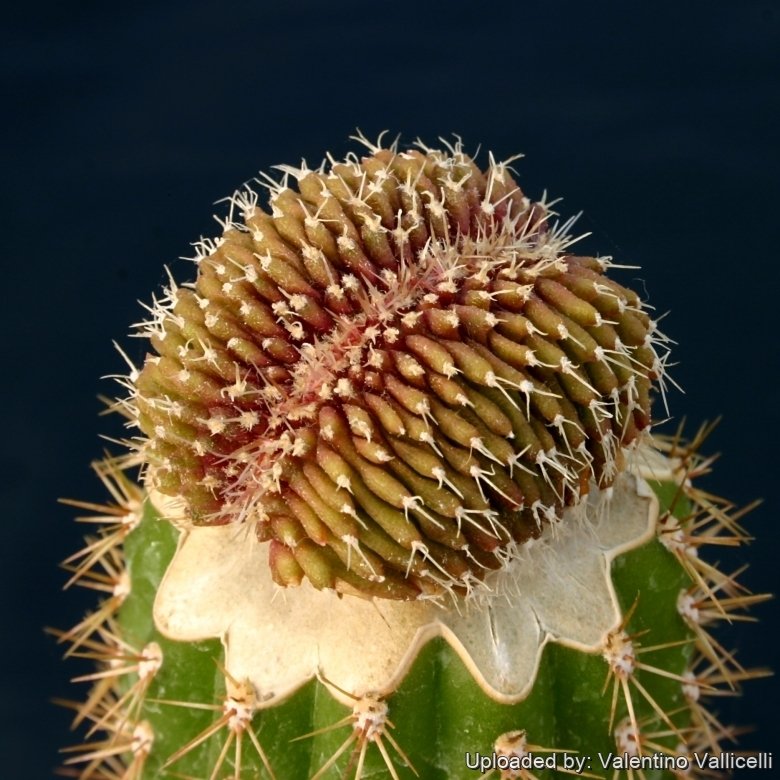
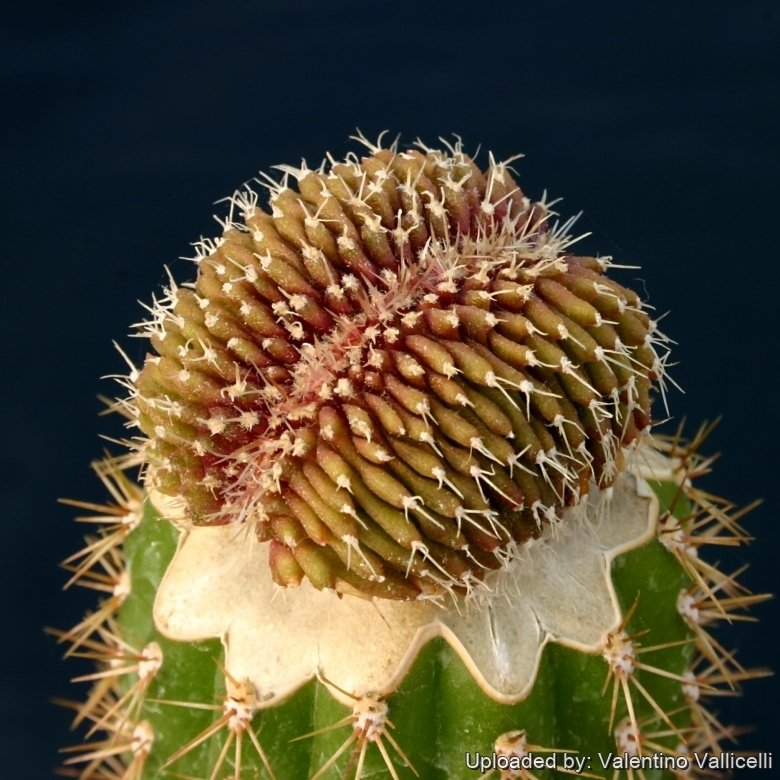
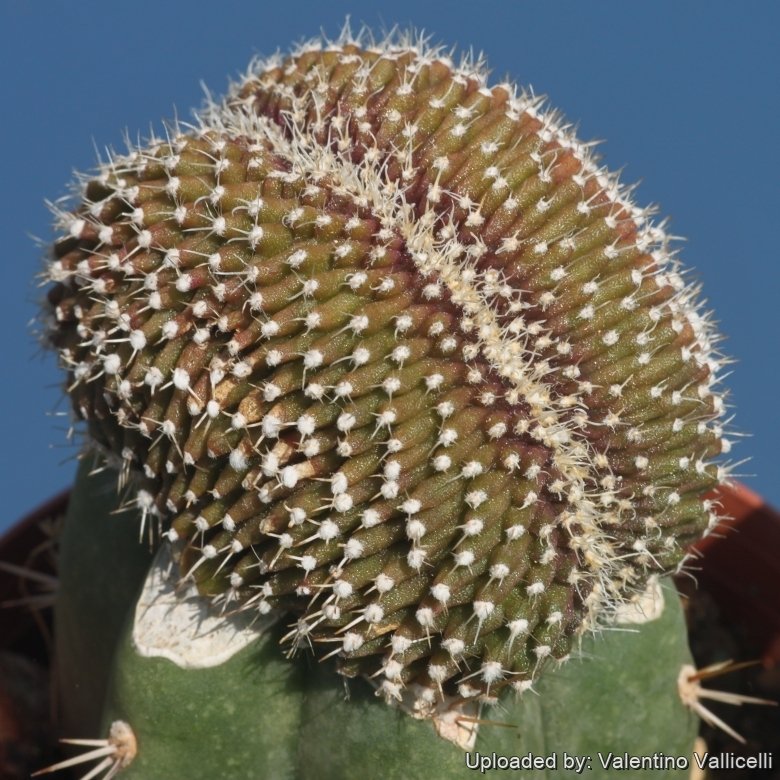
From llifle page Uebelmannia meninensis f. cristata
Description
Uebelmannia meninensis is a short columnar usually solitary cactus.
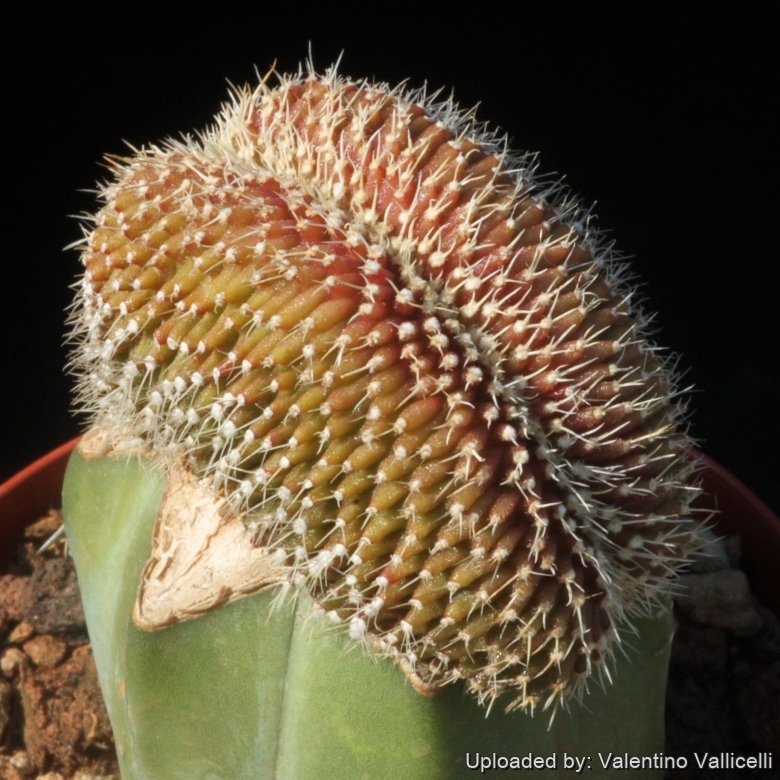
Stem: Globular when young, later becoming elongated and cylindrical, greyish-green or reddish-green (f. rubra), 10 cm wide, 45-50 cm tall (In cultivation the colour of the plants depends on sun exposure, the plants grown in shadow are greener, wile the ones in full sun take a purple color)
Ribs: When fully mature it has up to 40 prominent markedly tuberculate, but initially it has considerably fewer.
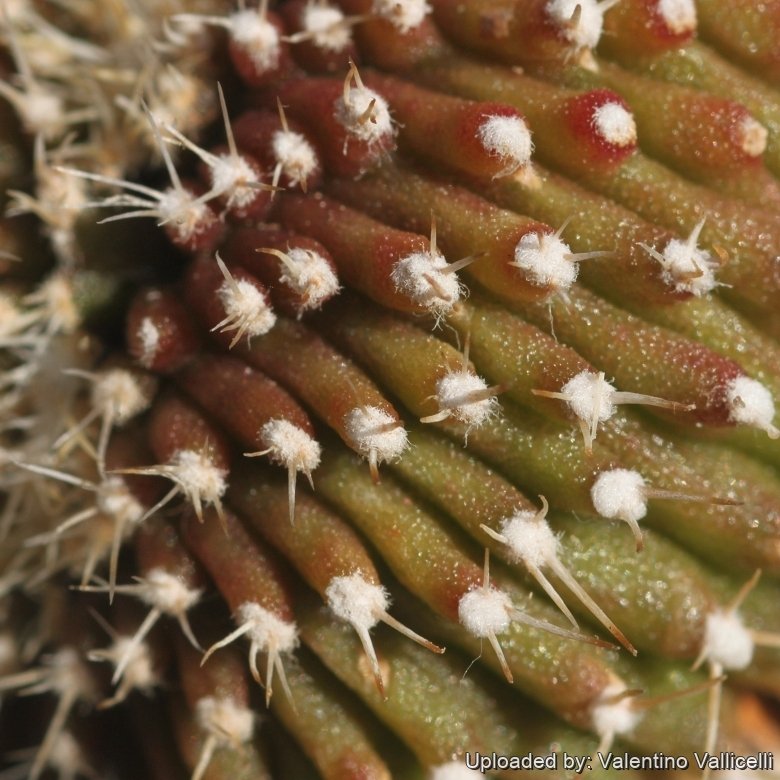
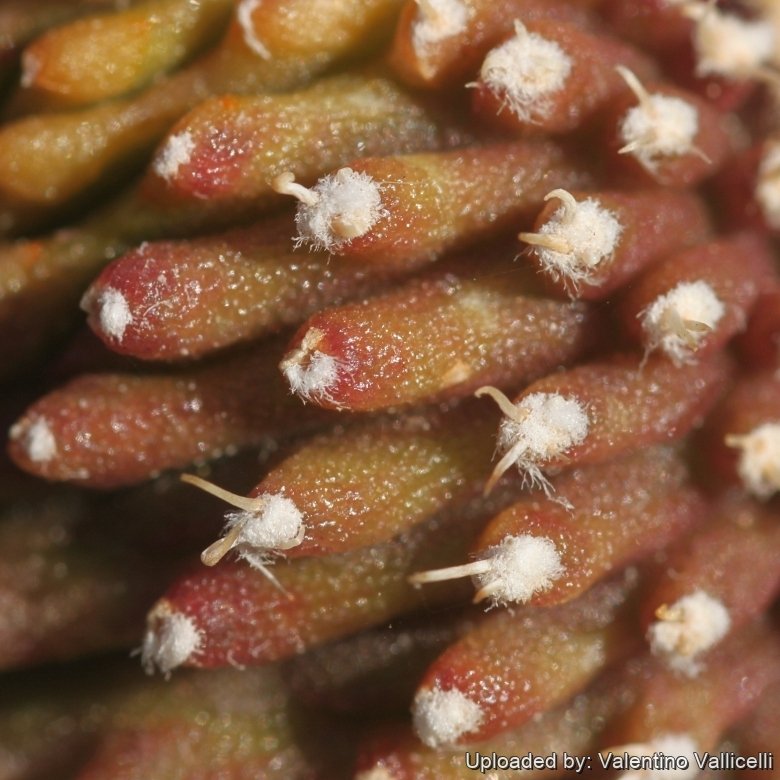
Tubercles: The tubercles protrude about 8 mm, are separated by transverse grooves and have apical areoles.
Areoles: Close set.
Central spines: 2 or 3, 2 cm long, pointing downward except for the upper one, which is shorter.
Radial spines: Absent.
Flowers: Diurnal yellow. They are up to 2-4 cm long , 2-4 cm in diameter.
Blooming season: Flowers come sporadically from early summer to late summer.
Fruit: Inconspicuous, dark red and globular.
Origin and Habitat
Garden origin (Nursery produced cultivar) This plant was originally found in Brazil (mountain of Minas Gerais) where it often grows at very high altitudes.
Habitat: In nature it grows in cracks between rocks or on the rocks themselves, usually where there is a very high degree of atmospheric moisture, which compensates for the fact the soil is perfectly drained. In its natural habitat the plant frequently grows among lichens, which may even cover it.
Cultivation and Propagation
This tropical genus, which is hardly ever cultivated except in very specialized collections, prefers loves warm moist, humid conditions and mist spraying is a must in summer. Water regularly during the growing season and use a very draining mineral potting substrate. At the onset of winter, do not water. Uebelmannias need heat all year round and extra winter heat, minimum 10C is best. Avoid any frost. Keep cool in summer. This plant prove to be root prone if kept too cold in winter. To help stop this a good deep collar of pumice or lava grit is an excellent idea. It prefers a full sun position and possibly afternoon shade in summer. If you can place it so that this occurs the plant will be much happier.
Propagation: Grafting since cutting root hardly. Plants are usually grafted onto column-shaped cacti but proved to be able to produce their own roots if degrafted.
Source: Uebelmannia meninensis f. cristata, LLIFLE - Encyclopedia of living forms, CC-BY-SA, retrieved 2026-10-25.
From llifle page Uebelmannia meninensis var. rubra
Description
Uebelmannia meninensis is a short columnar usually solitary cactus. The var. rubra differs from the standard species only for its more dark-purple body.
Stem: Globular when young, later becoming elongated and cylindrical, greyish-green or reddish-green (rubra), 10 cm wide, 45-50 cm tall (In cultivation the colour of the plants depends on sun exposure, the plants grown in shadow are greener, wile the ones in full sun take a bright purple colour)
Ribs: When fully mature it has up to 40 prominent markedly tuberculate, but initially it has considerably fewer.
Tubercles: The tubercles protrude about 8 mm, are separated by transverse grooves and have apical areoles.
Areoles: Close set.
Central spines: 2 or 3, 2 cm long, pointing downward except for the upper one, which is shorter.
Radial spines: Absent.
Flowers: Diurnal yellow. They are up to 2-4 cm long , 2-4 cm in diameter.
Blooming season: Flowers come sporadically from early summer to late summer.
Fruit: Inconspicuous, dark red and globular.
Origin and Habitat
Mountains of Minas Gerais (Brazil, Southern America) where it often grows at very high altitudes.
Habitat: In nature it grows in cracks between rocks or on the rocks themselves, usually where there is a very high degree of atmospheric moisture, which compensates for the fact the soil is perfectly drained. In its natural habitat the plant frequently grows among lichens, which may even cover it.
Source: Uebelmannia meninensis var. rubra, LLIFLE - Encyclopedia of living forms, CC-BY-SA, retrieved 2026-10-25.
From llifle page Uebelmannia meninensis var. rubra f. cristata
Description
It is a short columnar usually solitary cactus.
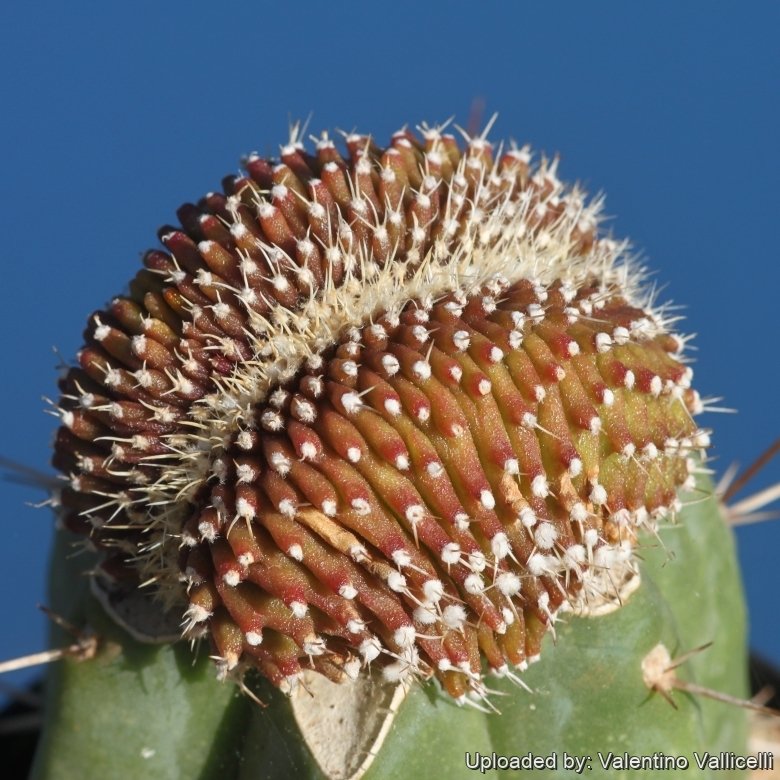
Stem: Globular when young, later becoming elongated and cylindrical, greyish-green or reddish-green (f. rubra), 10 cm wide, 45-50 cm tall (In cultivation the colour of the plants depends on sun exposure, the plants grown in shadow are greener, wile the ones in full sun take a dark frost brown or purple colour)
Ribs: When fully mature it has up to 40 prominent markedly tuberculate, but initially it has considerably fewer.
Tubercles: The tubercles protrude about 8 mm, are separated by transverse grooves and have apical areoles.
Areoles: Close set.
Central spines: 2 or 3, 2 cm long, pointing downward except for the upper one, which is shorter.
Radial spines: Absent.
Flowers: Diurnal yellow. They are up to 2-4 cm long, 2-4 cm in diameter.
Blooming season: Flowers come sporadically from Early Summer to Late Summer
Fruit: Inconspicuous, dark red and globular.
Cultivation and Propagation
This tropical genus, which is hardly ever cultivated except in very specialized collections.
Watering needs: Prefers loves warm moist, humid conditions and mist spraying is a must in summer. Water regularly during the growing season and use a very draining mineral potting substrate. At the onset of winter, do not water.
Hardiness: Uebelmannias need heat all year round and extra winter heat, minimum 10° C if grown on its own roots (8°C if grafted). Avoid any frost. Keep cool in summer.
Soil: It need very drining acidic, mineral soil. This plant prove to be root prone if kept too cold in winter. To help stop this a good deep collar of pumice or lava grit is an excellent idea.
Exposition: It prefers a full sun position and possibly afternoon shade in summer. If you can place it so that this occurs the plant will be much happier.
Propagation: Grafting. If possible using a rootstock that is more hardy than the Uebelmannia is the ideal.
Source: Uebelmannia meninensis var. rubra f. cristata, LLIFLE - Encyclopedia of living forms, CC-BY-SA, retrieved 2026-10-25.
From llifle page Uebelmannia meninensis f. rubra
Description
Uebelmannia gummifera subs. meninensis is a short columnar usually solitary cactus with greyish-green stems with creamy-white wool in the centre, the plants grown in shadow are greener, while the ones in full sun can take a reddish colour.
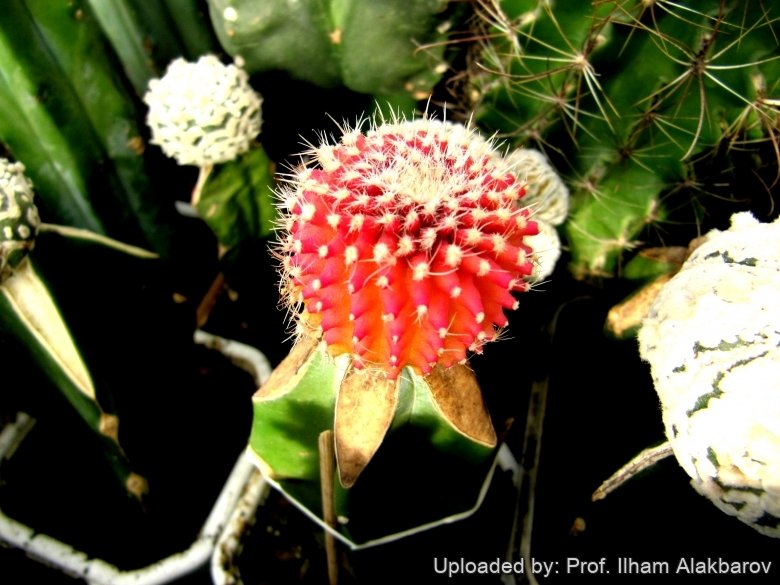
Forma rubra (red form): The red schizochromic form (Uebelmannia gummifera subs. meninensis f. rubra) has bright orange-red stems due to the absence (or reduced production) of chlorophyll pigments: every other pigment is present at normal levels, the dominant green colouration is lost, but will still more than likely have normal other pigments that give the yellow overall appearance of the stem. This form with red stems is very attractive and highly prized. This schizochromic form is almost always seen grafted on stronger columnar species, and cannot can be grown on its own roots. However some clones have enough chlorophyll in their tissues and can be grown on they own roots too, but very slow growing.
Remarks: Do not confound the red schizochromic ‘f. rubra’ with the naturally occurring 14302]|‘var. rubra’] which is a redder non schizochromic variety.
Stem: 6-8(-10) cm wide, becoming 10-12 cm high with age.
Ribs: When fully mature it has up to 32 ribs, but initially it has considerably fewer. These ribs at first are strongly tuberculate, later narrow and continuous.
Areoles: Close set, greyish white, at first 3 mm or more apart, then nearly confluent and encompassing the stems.
Central spines: Usually one, straight, gray, pointing slightly upward.
Radial spines: 3 (seldom more), one longer pointing slightly downward, the other lateral more or less erect, subulate, light to dark grey with darker brownish tips, 3-5 mm long.
Flowers: Diurnal sulphur-yellow about 2 cm long, 1,5 cm in diameter.
Blooming season: Flowers come sporadically from early summer to late summer.
Fruit: 1,8 x 6-8 mm yellowish-green and globular with numerous seeds.
Origin and Habitat
Garden origin (Nursery produced cultivar)
Cultivation and Propagation
Variegated and albinos cacti are regarded as choice and difficult in cultivation, but despite that many of them are relatively easy to grow. But be aware that they cannot tolerate prolonged exposure to direct sun light (especially during the hottest summer days), so grow them in half-shade or under filtered sun. They are sometime seen as grafted plants, but many grow well on their own roots, too.
On the contrary, the albinos can survive only if grafted on a strong green base.
Use mineral well-permeable substratum with little organic matter (peat, humus). Water sparingly from March till October and keep perfectly dry in winter at temperatures from 10 to 15 degrees centigrade. (In general these plants are more tender and cannot endure freezing temperatures ) In the rest period no high atmospheric humidity!!
Propagation: Usually by seed. Plants are often grafted onto column-shaped cacti.
Source: Uebelmannia meninensis f. rubra, LLIFLE - Encyclopedia of living forms, CC-BY-SA, retrieved 2026-10-25.
Cultivars and forms (5)
Gallery