Publication: Labiat. Gen. Spec. 56(5): 261, pl. 20, fig. 3, 4, & 22, fig. 28. 1916
Description
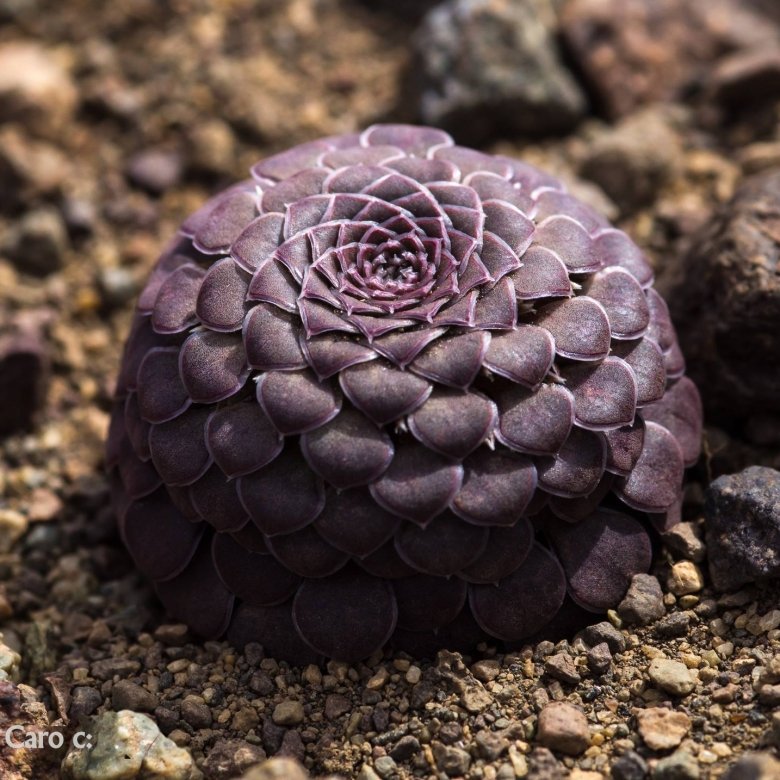
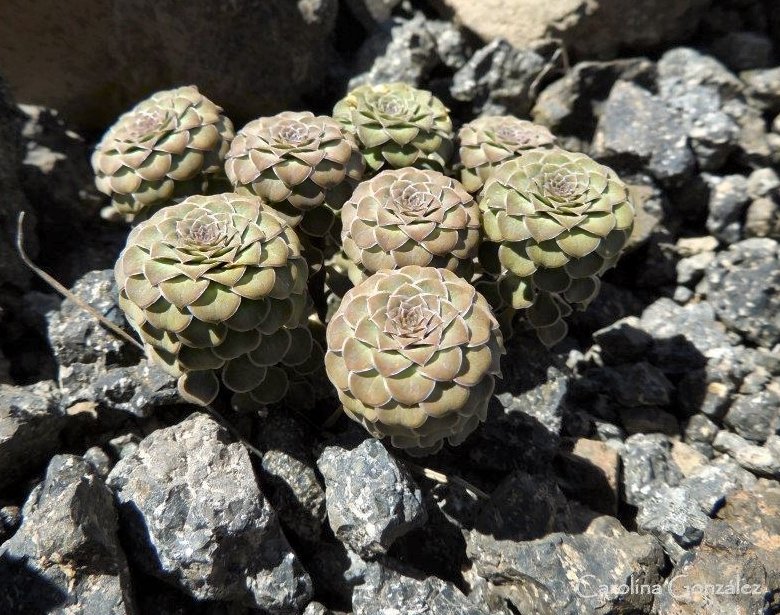
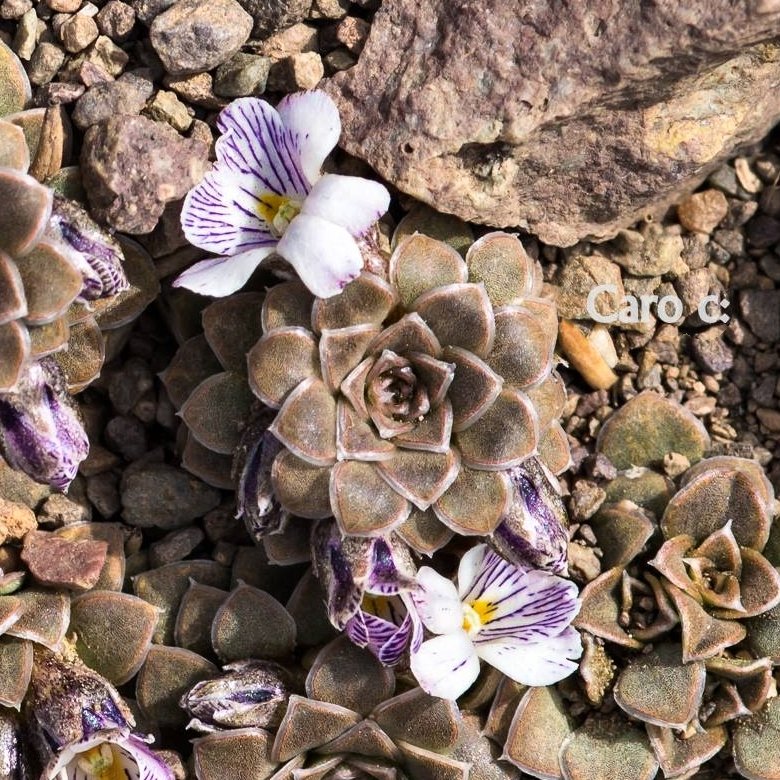
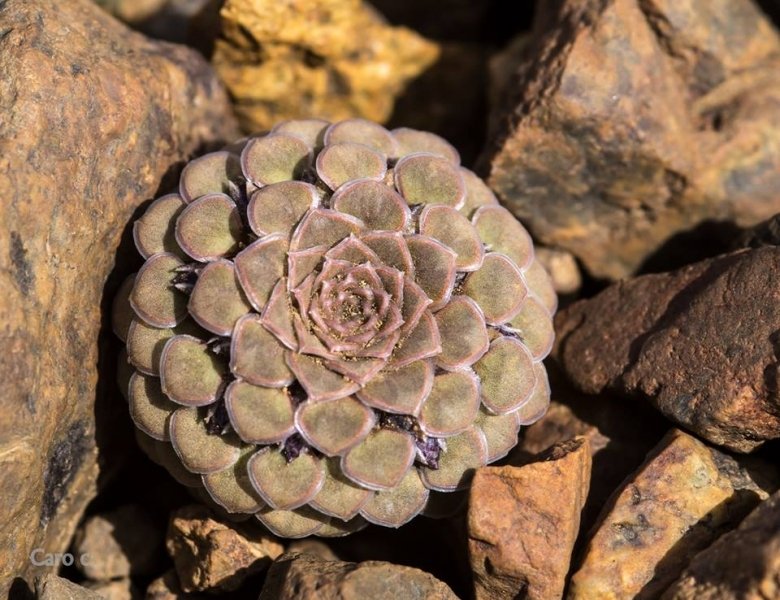
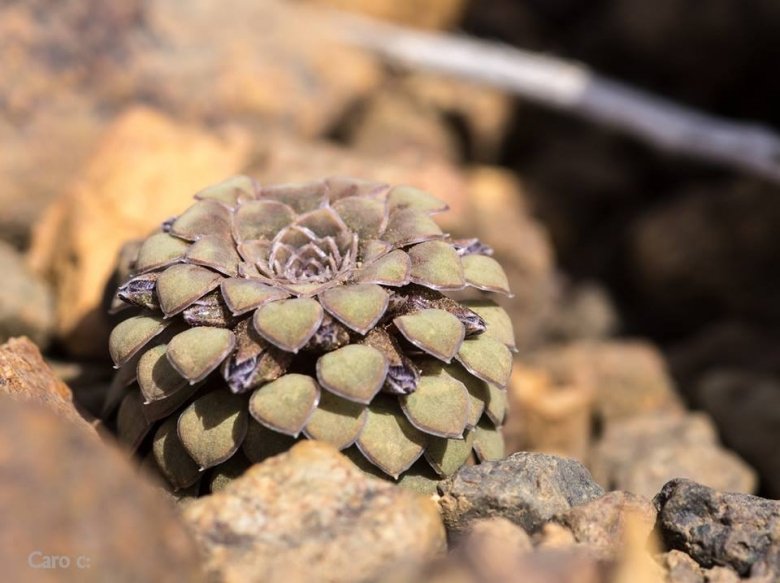
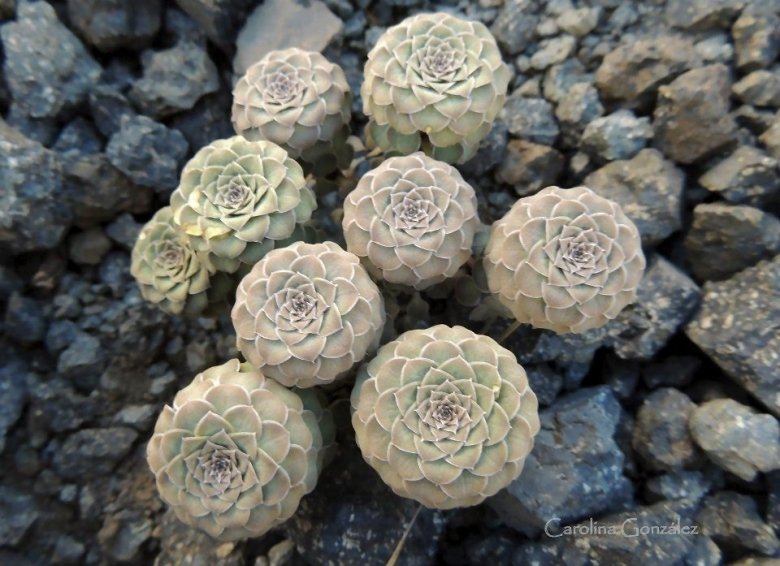
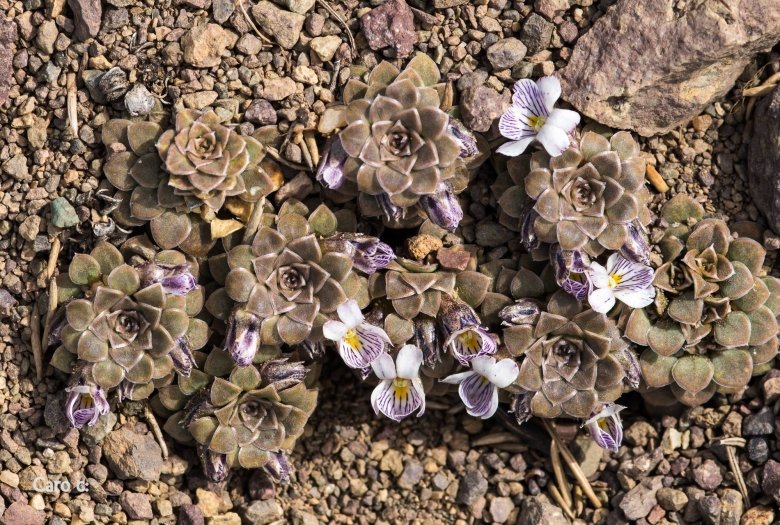
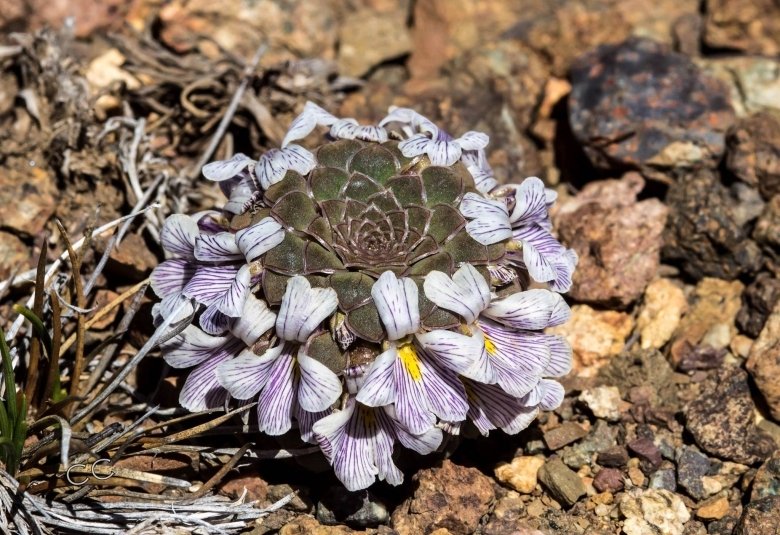
Viola columnaris is a tufted perennial herb that spreads almost horizontally on the ground by means of rhizomes. It is remarkable for its neat, tightly imbricate, tile-like rosette structure, taking the form of raised columns, and it is easy to see how V. columnaris gets its name. Its leaves usually have the same colour of the rocks where its bloom. The flowers, barely emerging from the rosettes, are white with violet veins and appears in spring and in early summer.
Rosette: Columnar densely covered with hard and tight leaves, up to 9 cm above the ground. This structure permits the plant to support the friction of the sand transported by winds.
Leaves: Spathulate-rhobic, at times broader than long, spirally arranged, overlapping, leathery.
Flowers: Zygomorphic, hermaphrodite, white with violet veins to purple
Fruits: Capsules
Similar species: Viola columnaris is similar to Viola dasyphylla, but the latter never form raised columns, as may those of eponymous V. columnaris. Although leaf blades of both species can be near-identical in outline, as a rule those of V. columnaris are notably more spathulate, at times broader than long. V. dasyphylla has a 3-lobed style crest and V. columnaris is 2-lobed. Both have a shiny-sticky calyx but that of V. dasyphylla is usually black, whereas the
calyx of V. columnaris is light green or a dull, pale, straw-yellow, but the differences can be subtle.
Origin and Habitat
Argentina, (Chubut, Mendoza, Neuquen, Río Negro provinces) and Chile (Region XI - Aysén)
Altitude range 1400-3500 metres above sea level.
Habitat and ecology: It is a perennial plant that grows in the highlands of the Andes mountains. It grows in rocky terrain with high sun exposure together with other compact Alpine species such as: Nassauvia pygmaea and Azorella ameghinoi. The leaves of Viola columnaris show a striking similarity in colour to their background rocks and the plants are difficult to detect when not in flower.
Cultivation and Propagation
These plants are often intractable in cultivation and often seemingly impossible to propagate. It is not easy to get seed of these plants.
Hardiness: USDA Hardiness Zone 7, even 6b. The plant tolerates low temperatures (-15° C even -20° C).
Bibliography
Major references and further lectures
-
J. Rabassa “The Late Cenozoic of Patagonia and Tierra del Fuego” Elsevier, 22 September 2011
-
“International Rock Gardener” International Rock Gardener. Number 9 page 7 The Scottish Rock Garden Club September 2010
-
Catálogo de las Plantas Vasculares “Viola columnaris Skottsb.” Instituto de Botánica Darwinion - IBODA 2014 web <http://www2.darwin.edu.ar\>
Gallery