Publication: Bull. Misc. Inform. Kew 1928(4): 139. [7 May 1928]
Description
Viola tectiflora W.Becker 31214], but with longer stems.
Origin and Habitat
Argentina (Mendoza, Neuquen) and adjacent areas in Chile.
Type locality: Zapala to Palau Mahuida, Argentina.
Altitude range: 500-2000 metres above sea level.
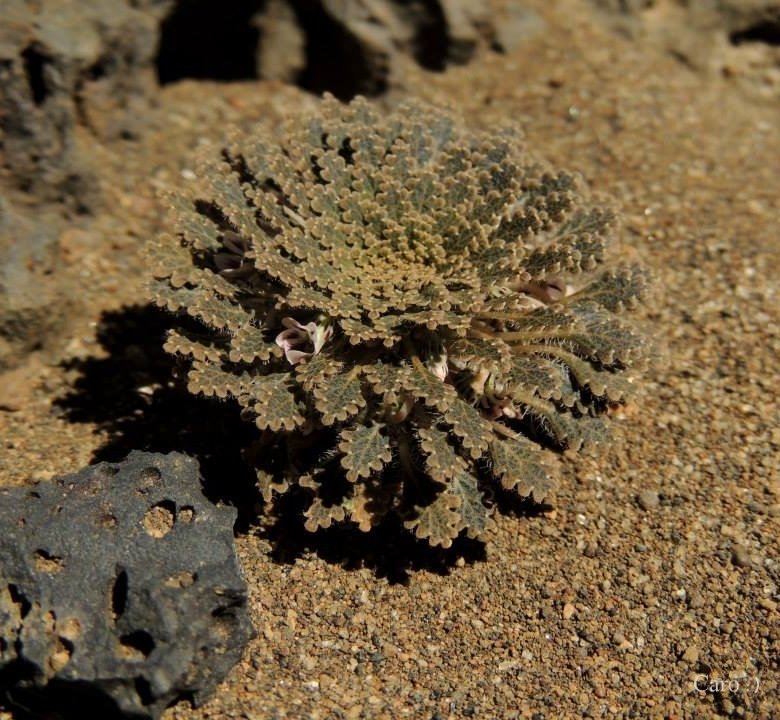
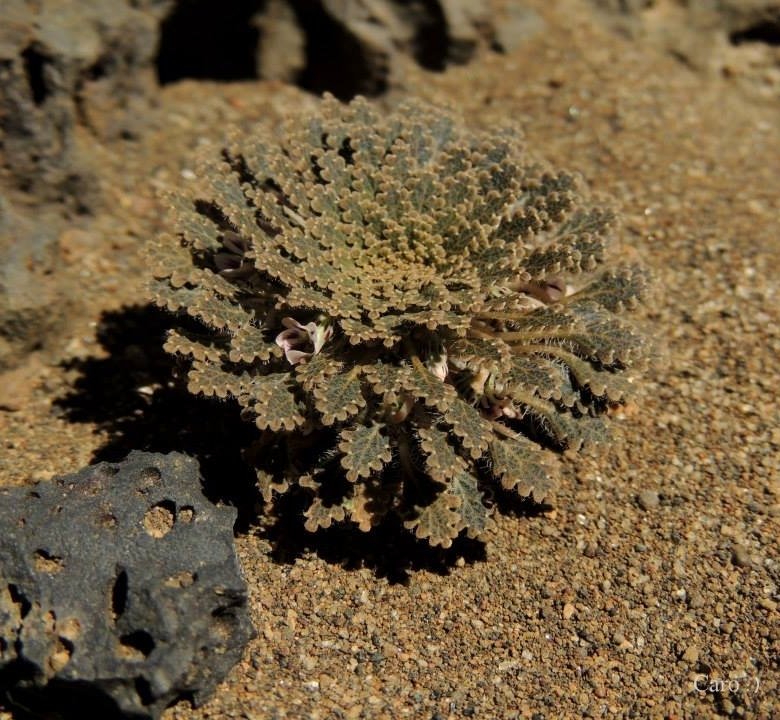
Habitat: Viola tectiflora grows plentiful in volcanic sand . This species is well adapted to blended in with the sand and rock where it grows between the grassy tussocks. The colour of the leaves and of the sand is very similar, and the small rosettes are very difficult to spot, this could be an adaptation to herbivores. The steppe flora here is rich and interesting with a number of local endemics comprising several species of Pterocactus .
Cultivation and Propagation
These plants are often intractable in cultivation and often seemingly impossible to propagate. It is not easy to get seed of these plants.
Hardiness: USDA Hardiness Zone 7, even 6b. The plant tolerates low temperatures (-15° C even -20° C).
Bibliography
Major references and further lectures
-
Rossow, R. A. 1988. Violaceae, en M. N. Correa (ed.), “Flora Patagónica.” Colecc. Ci. Inst. Nac. Tecnol. Agropecu. 8 (5): 170-189.
-
Xifreda, C. C. & A. M. Sanso. 1999. Violaceae, en F. O. Zuloaga & O. Morrone (eds.). “Catálogo de las Plantas Vasculares de la República Argentina. II. Dicotyledoneae.” Monogr. Syst. Bot. Missouri Bot. Gard. 74: 1170-1177, 1246.
Gallery