Description
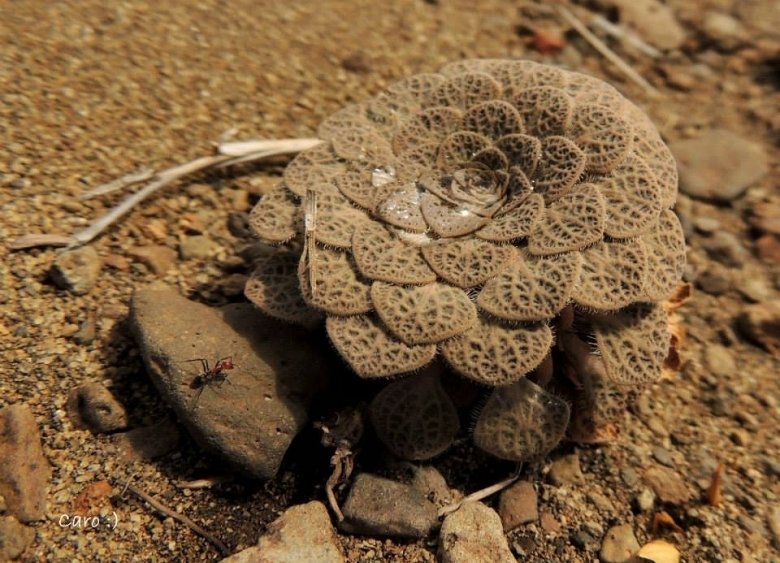
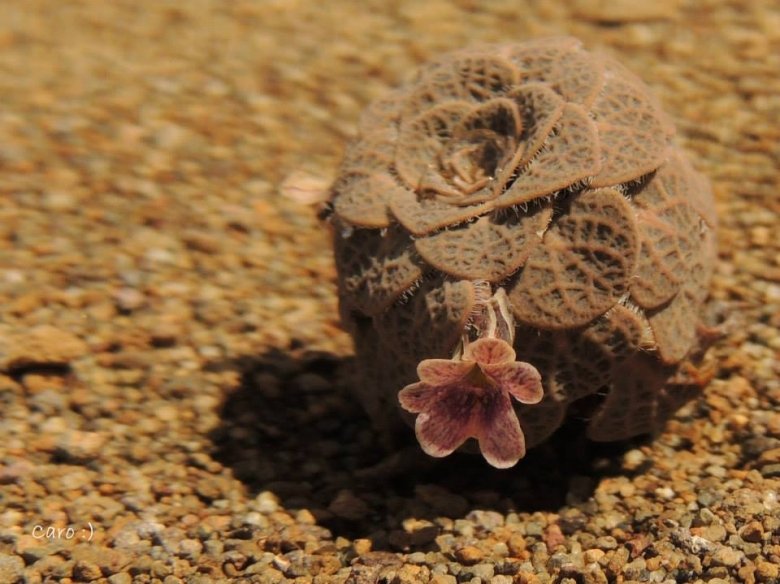
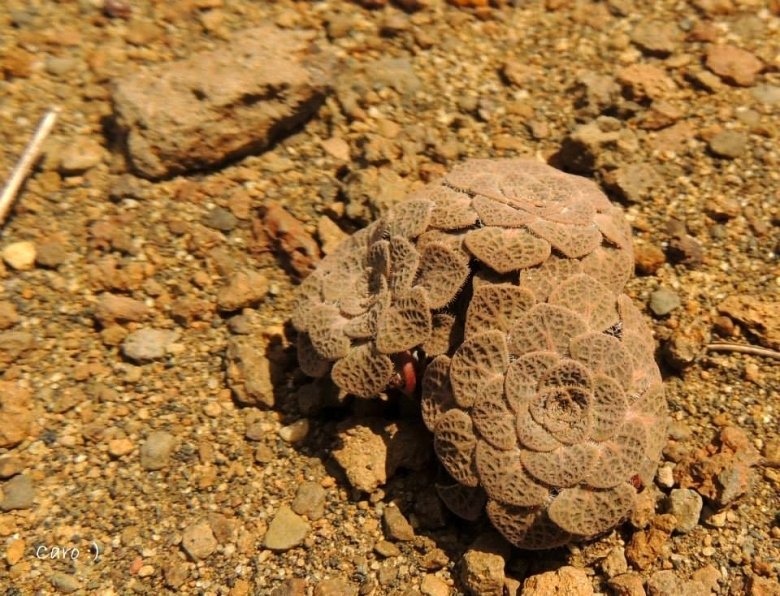
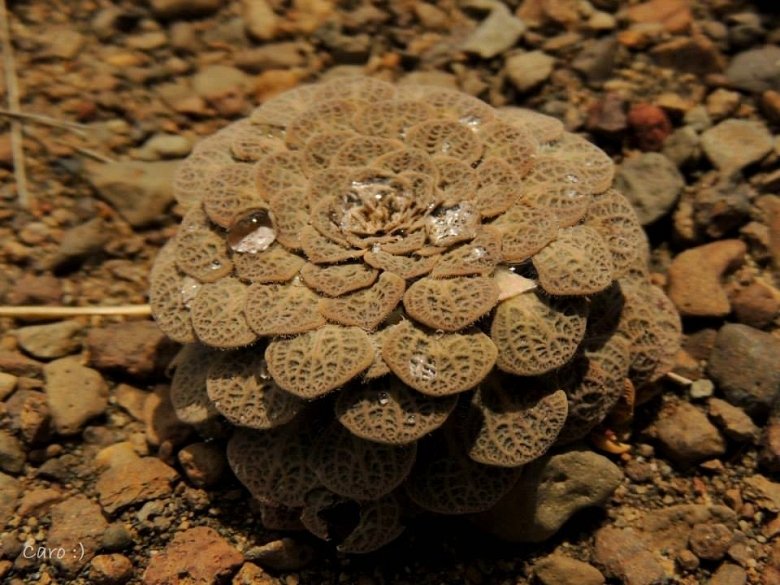
Viola trochlearis is a rosulate viola belonging to the so called “Viola volcanica group”; in this case the leaves are beautifully textured, the leaf margins are entire and the flowers have pink veins. It is a perennial which lives for a few years and can be flowered in cultivation. The flowers are rather small, so this really is primarily a foliage plant as far as a gardener’s eye is concerned.
Rosette: Dome shaped, often larger than the other volcanica violas, up to 80 mm diameter.
Leaves: Soft, semi-succulent, sand-coloured and finely textured . The thin hairs round the margins presumably help reduce transpiration by slowing down the movement of air around the plant, a very necessary adaptation to its windy environment.
Flowers: White to sand coloured with a beautifully mottled purple centre fading to the petal edges and a yellow throat leading from the lower petal.
Origin and Habitat
Primeros Pinos, Northern Patagonia, Argentina.
Altitude range: Around 1600 metres above sea level.
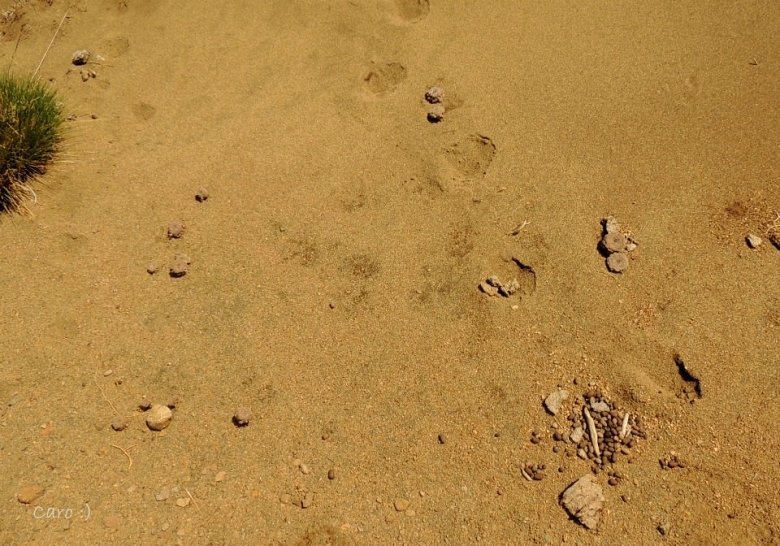
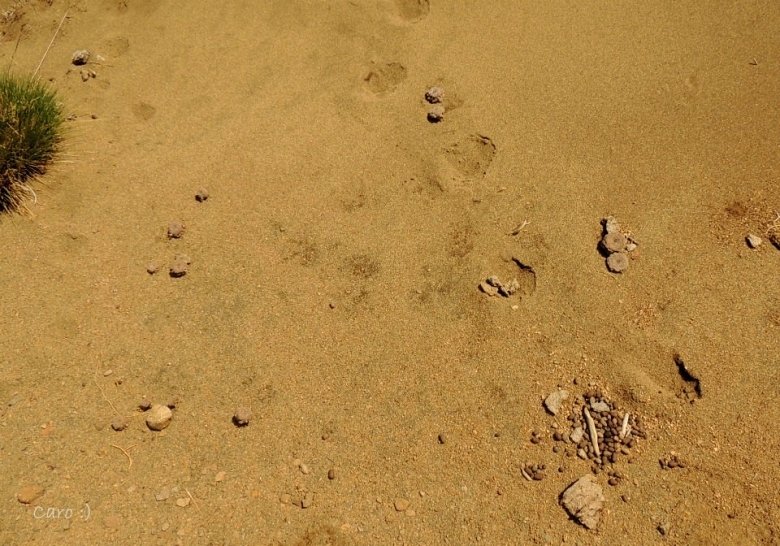
Habitat and ecology: Viola trochlearis grows in dry steppe and sand dunes dotted with Araucaria araucana. Together with some of its close relatives, this species is well adapted to blended in with the sand and stony ground where it grows between the grassy tussocks. The colour of the leaves and of the sand is very similar, and it seems that this could be an adaptation to herbivores.
Cultivation and Propagation
These plants are often intractable in cultivation and often seemingly impossible to propagate. It is not easy to get seed of these plants.
Hardiness: USDA Hardiness Zone 7, even 6b. The plant tolerates low temperatures (-15° C even -20° C).