Publication: Bull. Soc. Bot. France 91: 168. 1945
Description
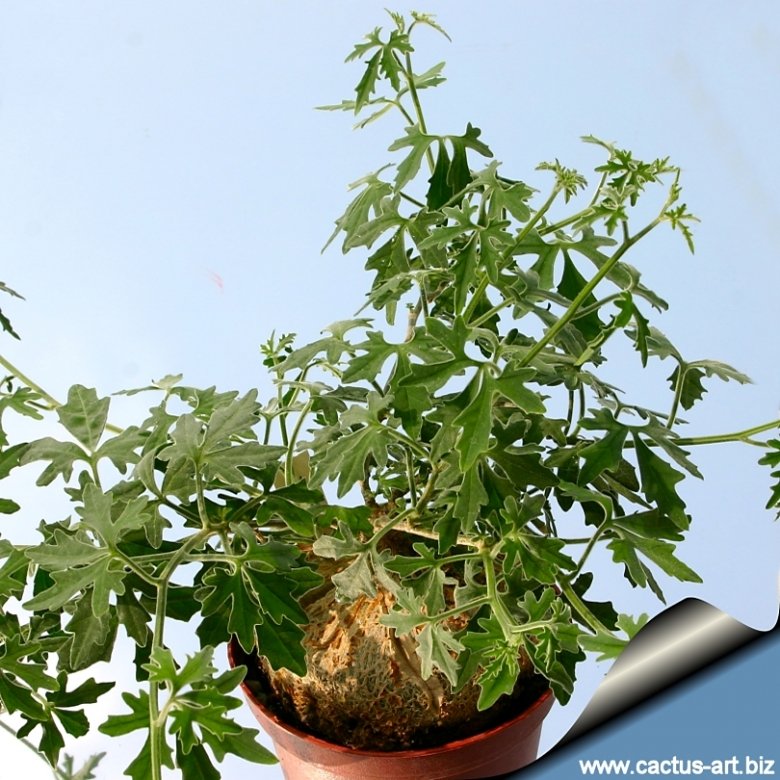
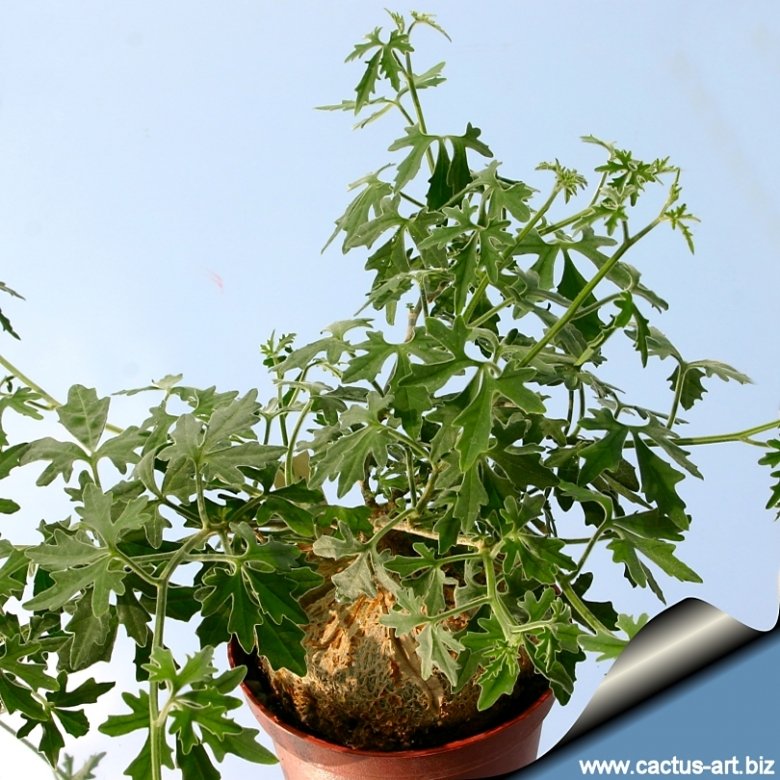
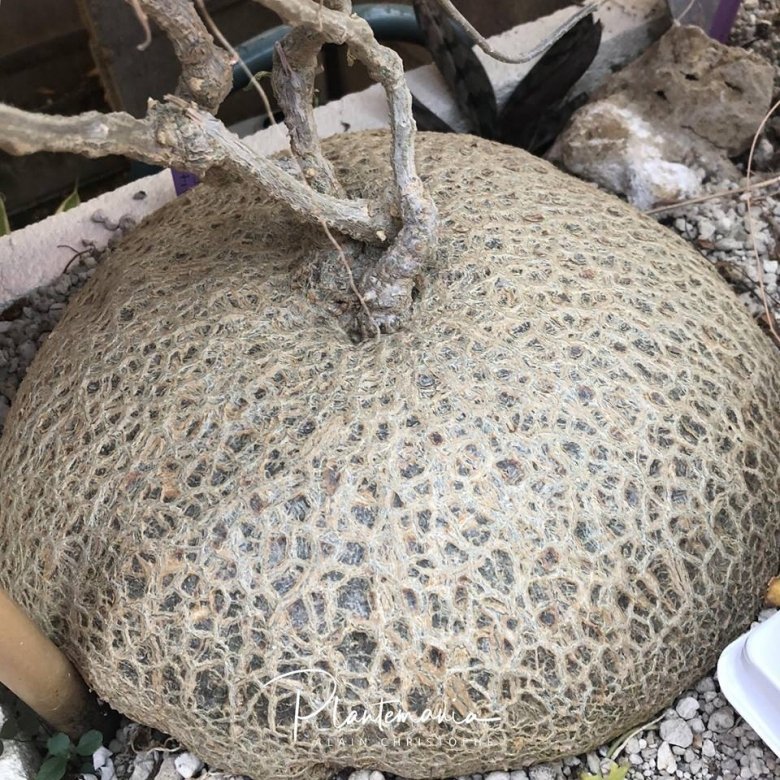
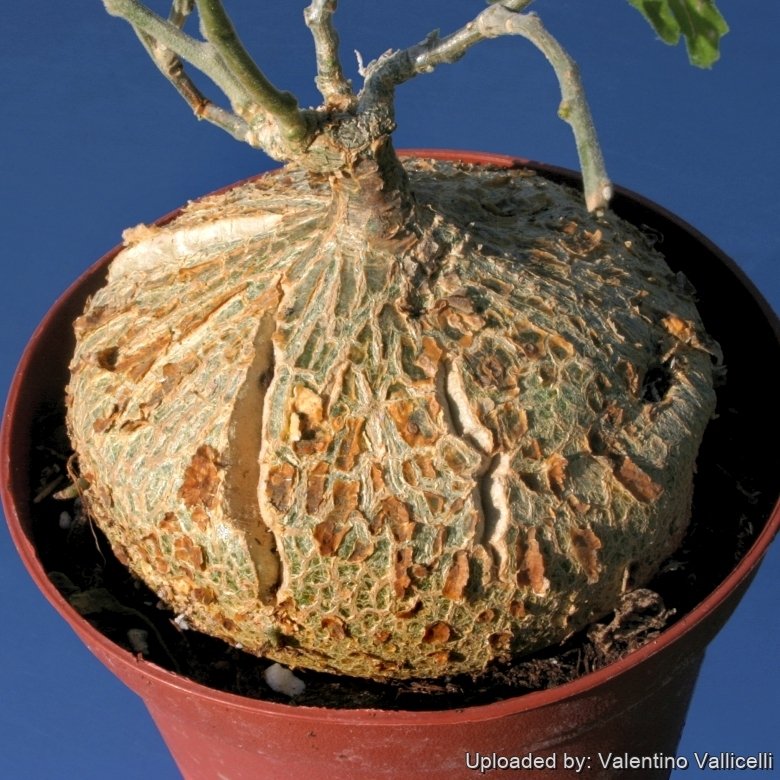
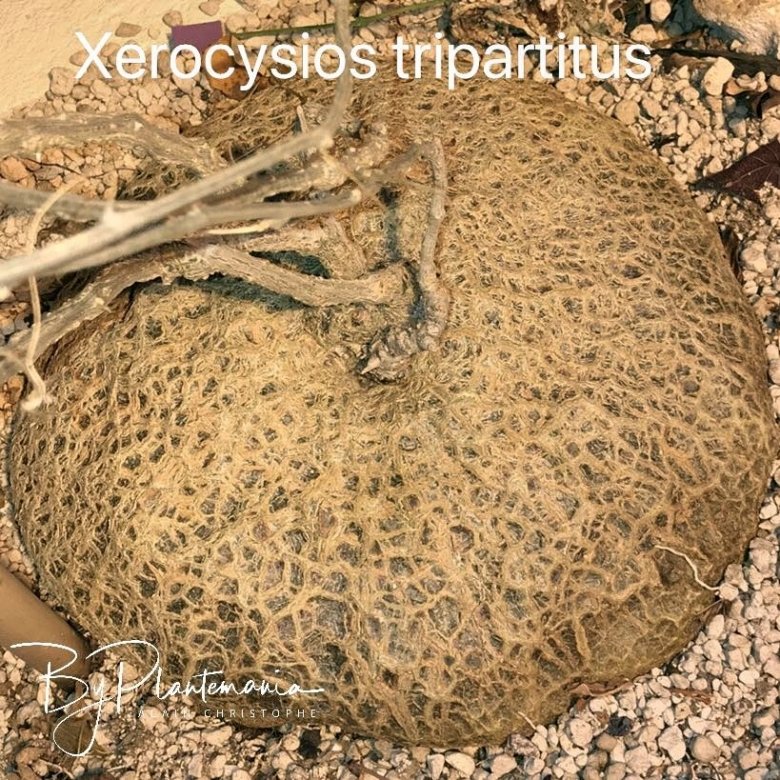
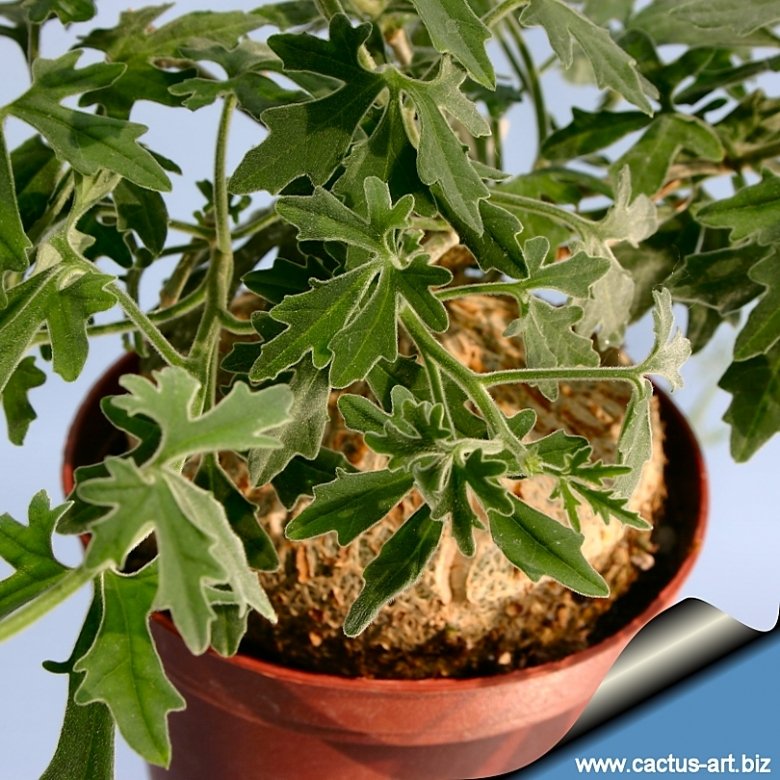
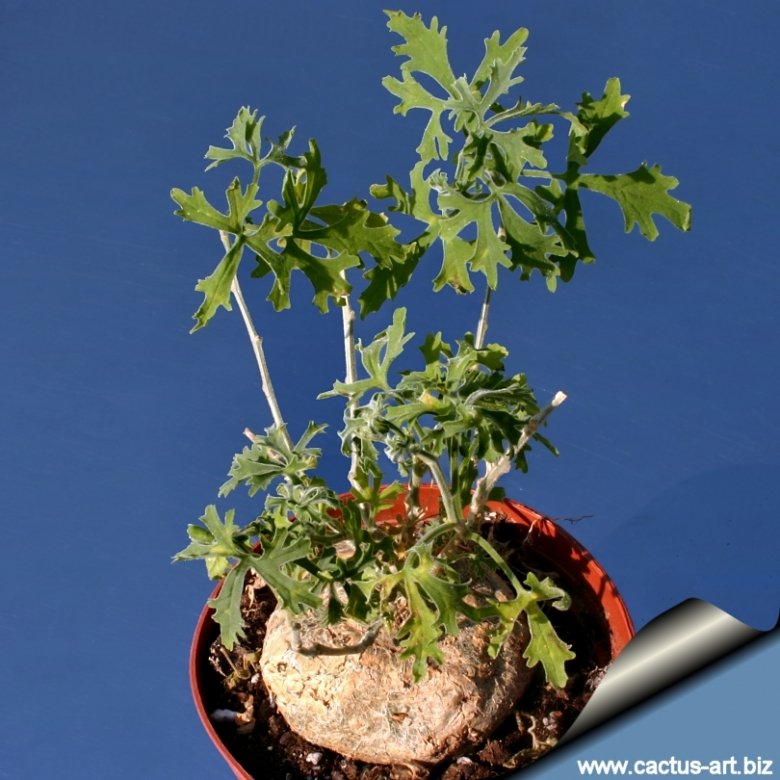
Zygosicyos tripartitus (Xerosicyos tripartitus) is an edangered Madagascan perennial, caudiciform plant, with creeper vines characterized by tendrils. It produces a bun-shaped caudex covered in a much fissured corky rind. This species produces stems bearing 3-lobed leaves with distinctive wavy margins but variable in shape, as is typical for the Cucurbitaceae (cucurbit family). The plants are dioecious (Male/Female) and the flowers generally are small and greenish-yellow. This is perhaps the best of the geophytic cucurbits. This member of the Cucurbitaceae was described by Jean-Henri Humbert in 1945.
Derivation of specific name: ‘tripartitus’ Latin ‘tri-’, three; and ‘partitus’, partite; i.e. with three parts, for the three-foliolate leaves.
Caudex: Spherical to globose-flattened, with silver-grey corky bark, 15-30 centimetres thick. During the growing season the caudex plumps and fills out, in contrast to its shrunken appearance in the Spring.
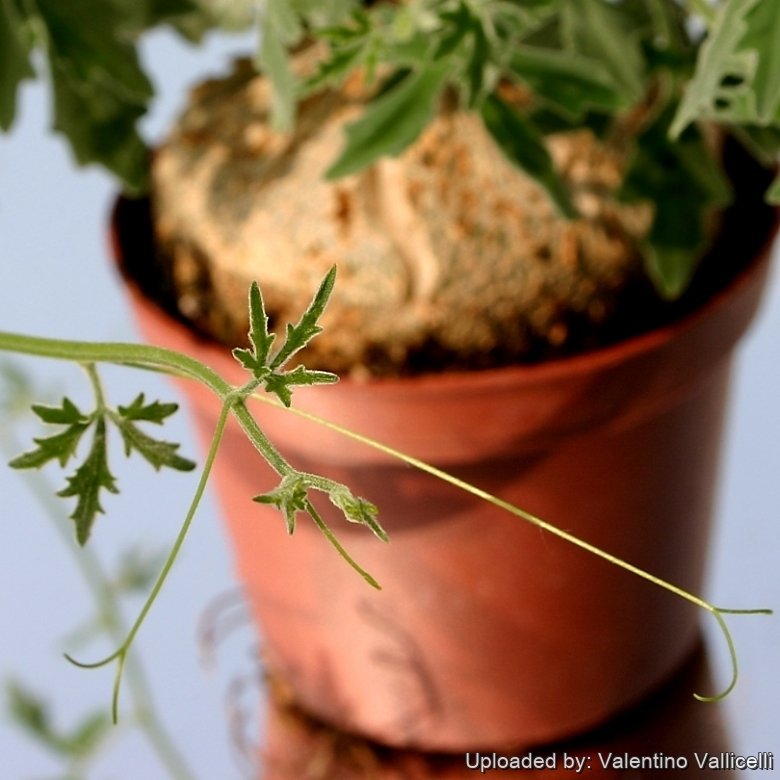
Annual stems: Z. tripartitus produces several annual vines, that are green, slightly woody, scarcely succulent, more or less 5-angled, thin, pubescent which stay leafy at least in mild areas. Hairs on the stem simple, glandular. Internodes 4-6 cm long. Tendrils thin, opposite leaf base, up to 10 cm long, tip often bifurcate. The vine can scramble into a ruffled shrub, the vines are about 1 metre long.
Leaves: Tiny, membranous, 3-lobed or 3-foliate, axly arranged, variable in shape, grey-green to green, pubescent, median segment 25-30 mm long, 8 - 10 mm wide, lateral segments with 2-3 lobes. Petiole 5-20 mm long. Petiole base articulated. The leaves are semideciduous, and may look quite spindly in spring when the plants emerge from dormancy.
Flower: Solitary or few on short axillary lax racemes, zygomorphic, about 4-6 mm across, green-yellow, and not very large or significant. Bracts absent.
Male flowers: Pendulous. Sepals ca. 2 mm long. Petals 4, narrowly lanceolate, 10-14 mm long, 1-1.5 mm wide, pale green, glabrous. Stamens 4, fused for half or all their length: Pedicels 2-3 cm long.
Female flowers: Pendulous, solitary or 2 per peduncle. Hypanthium obconical, slightly compressed. Petals shorter than in male. Staminodes 4. Styles 2, short, erect, slightly divergent.
Fruits: Pendulous, obconical, about 2 cm clong, glabrous, pale yellow at maturity, apex broadly emarginate
Seeds: 2.
Origin and Habitat
Endemic to Anosys (Toliara Province), south west Madagascar (West Indian Ocean). Zygosicyos tripartitus is known only from 2-5 localities.
Altitude range: 200-800 metres above sea level.
Habitat: Zygosicyos tripartitus grows in rich soil in subarid mountain slopes among gneissic rocks. It get little water and not much sun.
Cultivation and Propagation
This plant can take a good deal of water during active growth, and should be watered only when not dormant. Keep dryish in winter. This plant should be over-wintered in the greenhouse at temperatures over 12°C (avoid letting temperatures drop lower than 5° C). Use a very draining but rich soil, and not too much sun. Errors in cultivation may produce unsightly holes in the tuber.
Reproduction: Can be reproduced both by cuttings and seeds. Cuttings don’t normally grow caudexes (but sometimes do!)
Bibliography
Major references and further lectures
-
Urs Eggli “Illustrated Handbook of Succulent Plants: Dicotyledons” Springer Science & Business Media, 2002
-
Rauh, W. “Succulent and Xerophytic plants of Madagascar.” Vol II. Strawberry Press, Mill Valley 1998
-
“The New Plantsman” Royal Horticultural Society, 1998
-
Urs Eggli, Leonard E. Newton “Etymological Dictionary of Succulent Plant Names” Springer Science & Business Media, 29 June 2013
-
Tropicos.org. Missouri Botanical Garden. 28 Aug 2015 <http://www.tropicos.org/Name/100367779\> © 2015 Missouri Botanical Garden - 4344 Shaw Boulevard - Saint Louis, Missouri 63110
Gallery