Description
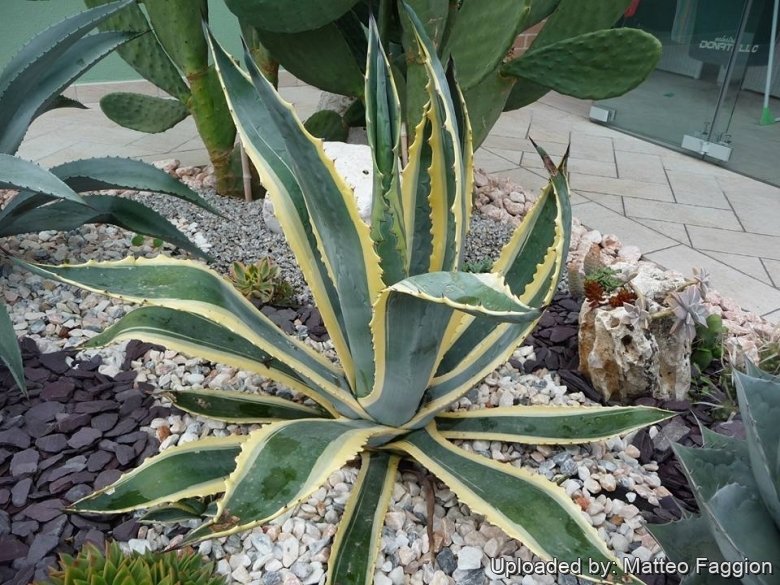
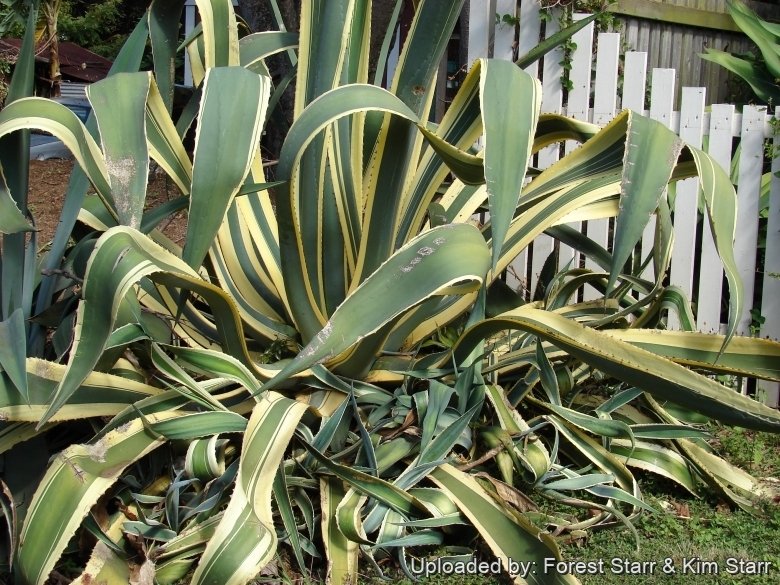
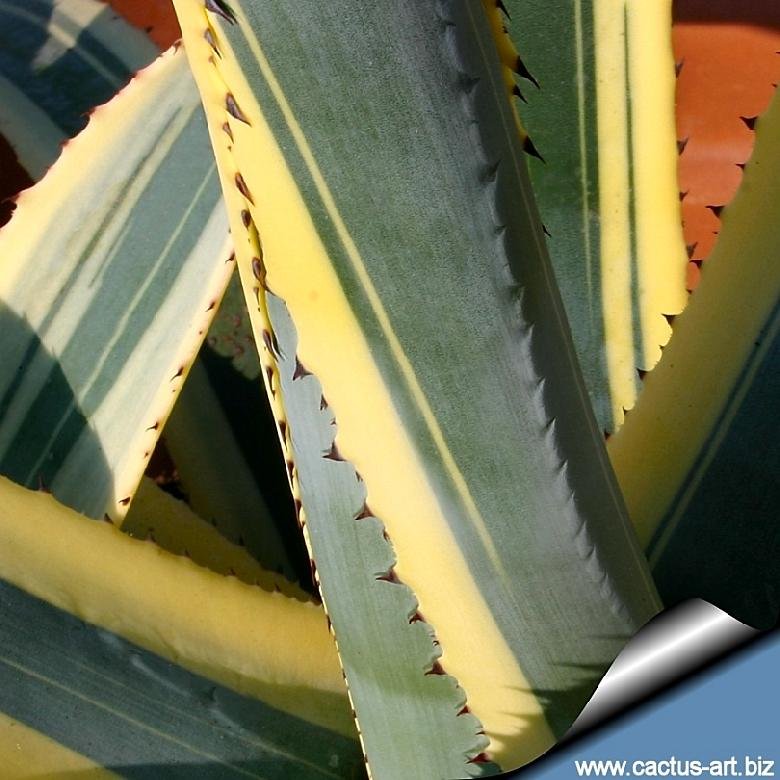
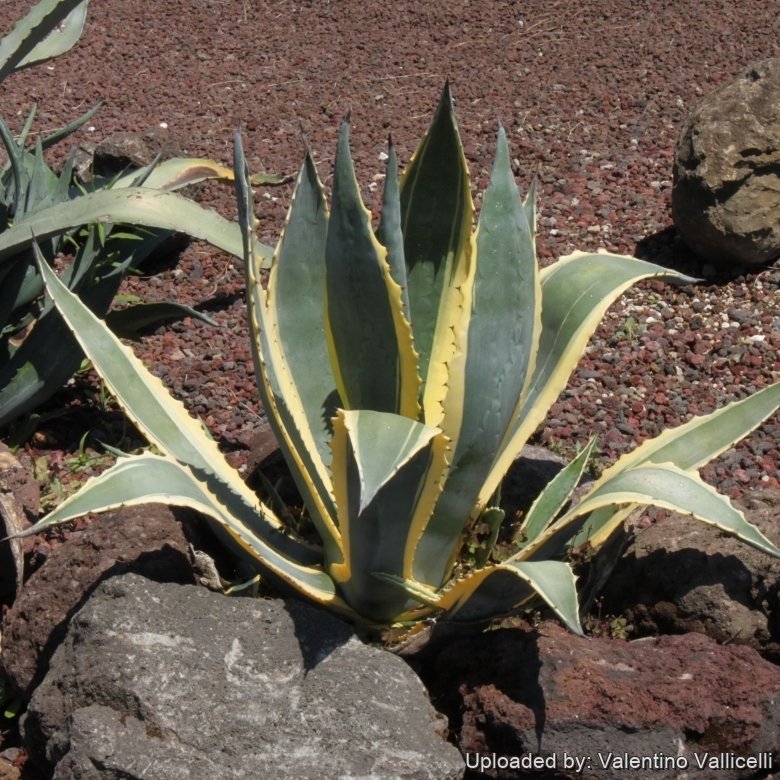
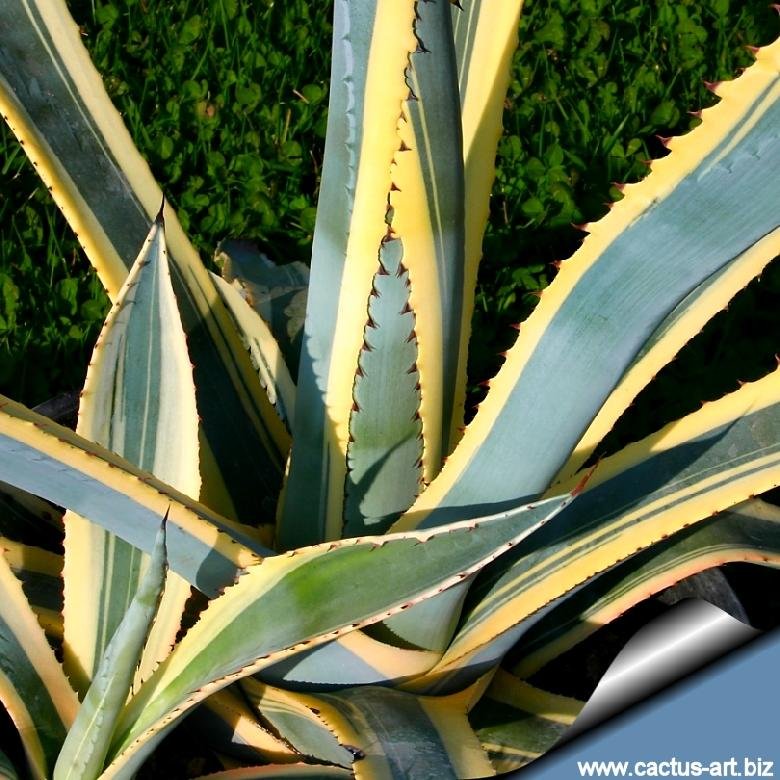
Solitary or slowly clumping succulent rosette that will grow to a height of 90-120 (150). The arching leaves are characteristically variegated and have a broad creamy yellow band down the sharp-spined margins of each leaf, with grey-blue centres.
Origin and Habitat
Garden form known only in cultivation.
Cultivation and Propagation
This is a very popular cultivar but it is relatively slow to grow and propagate, it tend to do less well than the standard blue-grey species plant, hence the price. They do well in full sun or a lightly shaded area.
In winter watering this plant can be done once every 1-2 months, there is no need to mist the leaves. Agave americana is theoretically hardy to -9° C , particularly when dry but this cultivar is more tender and it is best to avoid severe freezing temperatures.
Propagation: Exclusively by suckers Remove the basal suckers (if available) in spring or summer and let the cuttings dry for a few days before inserting in compost.
Use:: These striking plants are wonderful when used for accent or simply to provide some all year round foliage colour and often used in a pot as a patio plant, they make an eye-catching statement and along with other evergreen plants in pots, can be moved around to change the scenery or position to give more shelter.
Bibliography
Major references and further lectures
-
Urs Eggli, Leonard E. Newton “Etymological Dictionary of Succulent Plant Names” Springer Science & Business Media, 29 June 2013
-
Irish, Gary “Agaves, Yuccas, and Related Plants: A Gardener’s Guide”. Timber Press 2000.
-
Howard Scott Gentry “Agaves of Continental North America” University of Arizona Press, 01 February 2004
-
M. D. Dassanayake “A Revised Handbook of the Flora of Ceylon”, Volume 14 CRC Press, 01 June 2000
-
Wikipedia contributors. “Agave americana.” Wikipedia, The Free Encyclopedia. Wikipedia, The Free Encyclopedia, 4 Jun. 2016. Web. 19 June 2016.
Gallery