Description
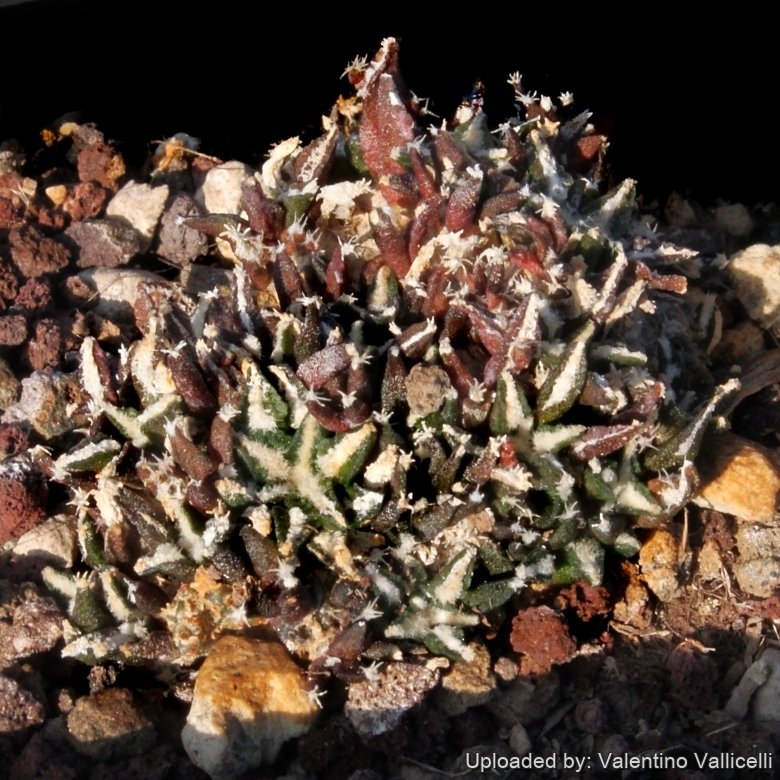
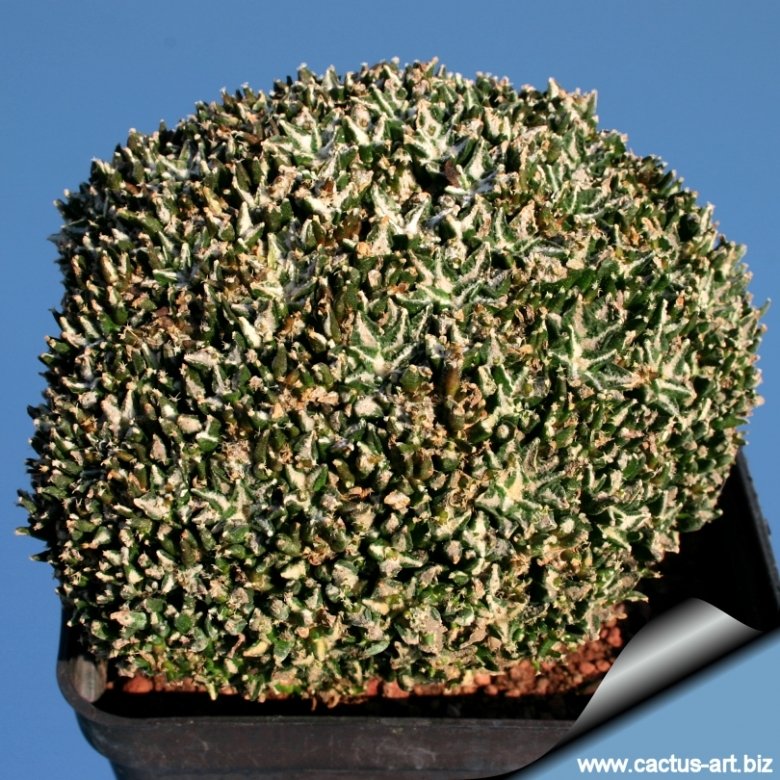
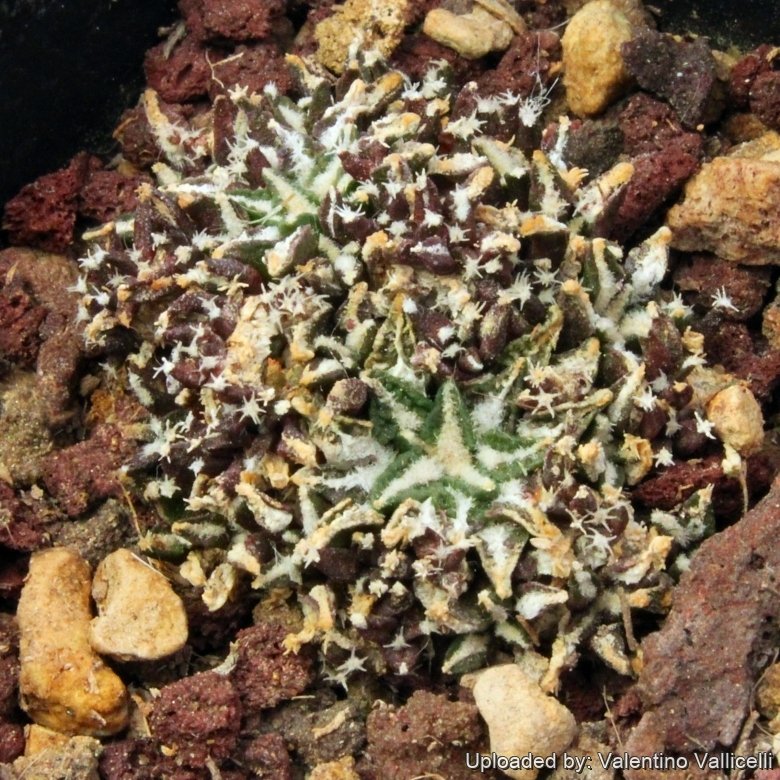
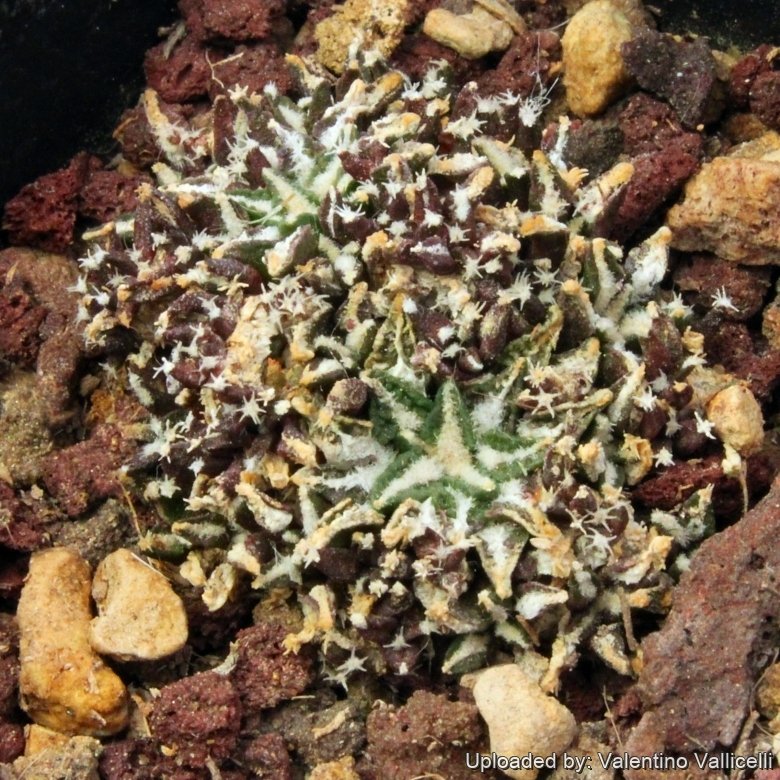
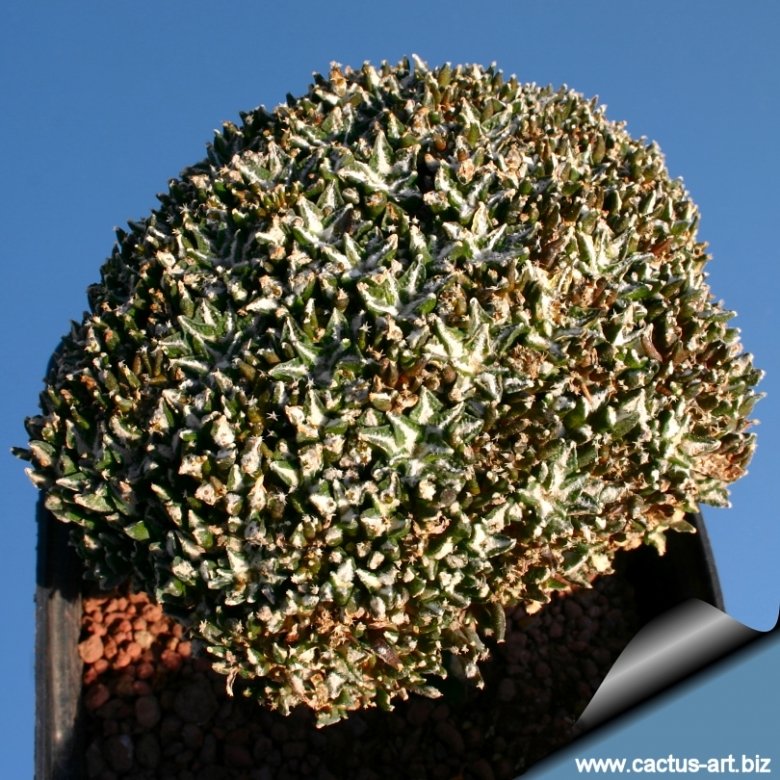
This is an heavy clumping (monstrous) cultivar, with very small and densely branched heads. The cluster of heads never get much larger but can slowly fill a 10 cm bowl.
Stems: Basally branching from 0,5 to 1,5 cm in diameter that turns a dark green in direct sunlight.
Tubercles: The tubercles are thin deltoid dark olive green with no spines. They are more long than wide, closely packed and divergent, sharply angled apically.
Areoles: Forms a central longitudinal areolar groove extending to the tips on the adaxial surfaces of the tubercles, woolly, 1-3 mm wide, 4-7 mm long.
Roots: The cuttings form large swollen tuberose.
Origin and Habitat
Garden origin (Nursery produced cultivar)
Cultivation and Propagation
The plants need deep pots to accommodate the napiform unit formed by the stem base and the rootstock , and a loose mineral soil with a well-drained substrate. They need a good amount of light, a place near the roof of the greenhouse helps drying the pot after watering. This can be done weekly during summertime, if the weather is sunny enough, with a little fertilizer added. Kept this way, plants will show a healthy, although slow growth. They are frost hardy to -10°C.
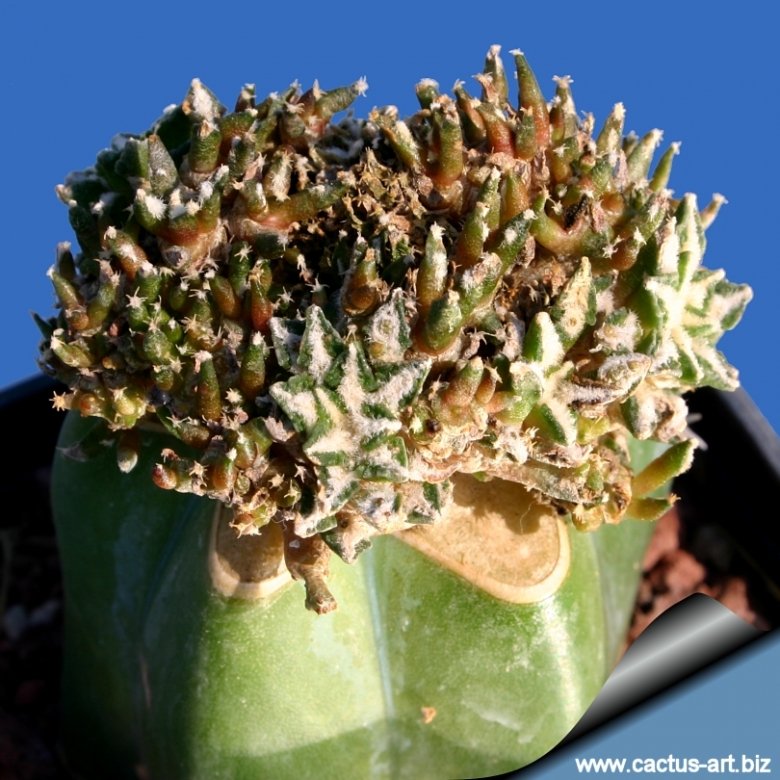
Propagation: Cuttings but plants are often grafted to accelerate growth as they would generally take at least a decade to reach maturity on their own roots, but the grafted plants are typical rather tall growing, compared with plants on their own roots that are usually very flat to the ground.
Gallery