Publication: Bot. Jahrb. Syst. 24: 550. 1898 [ et: Nat. Pflanzenfam. Nachtr. [Engler & Prantl] 1: 259. 1897 ]
Description
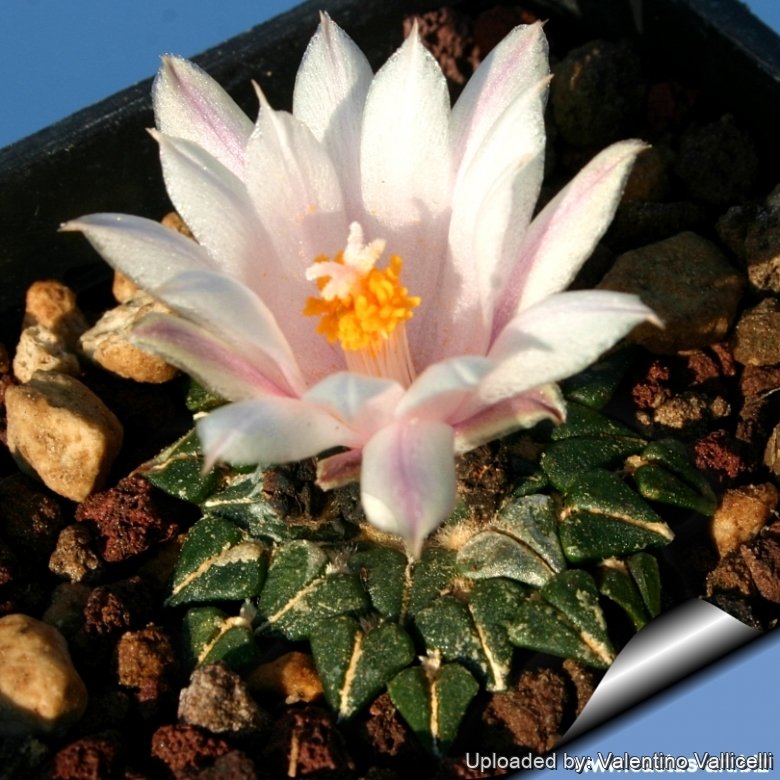
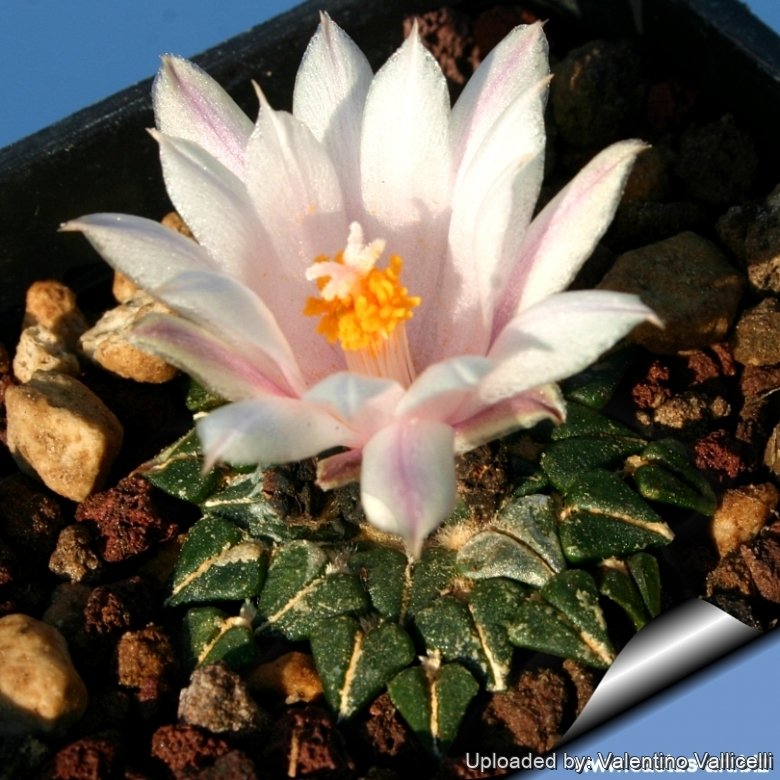
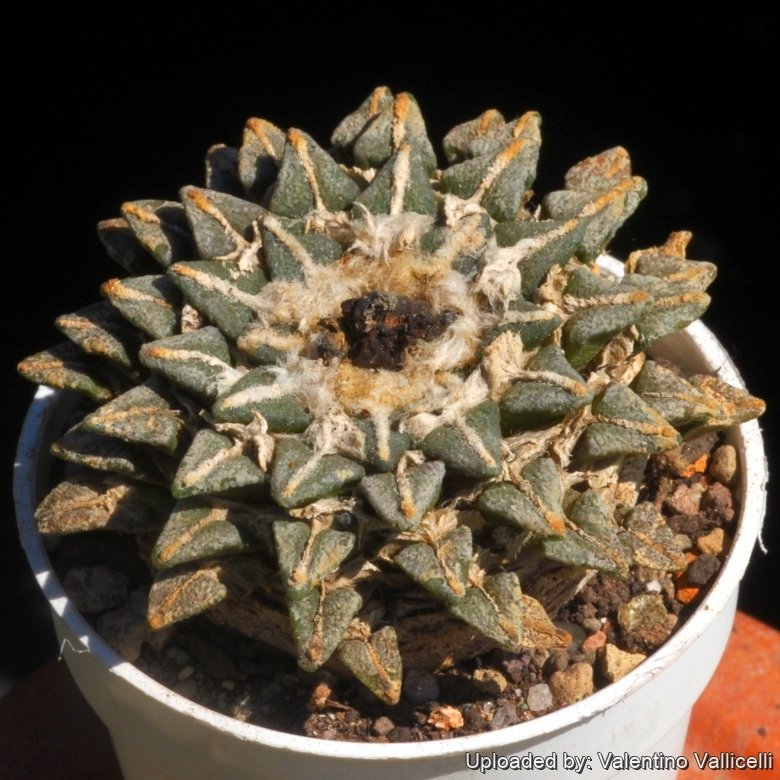
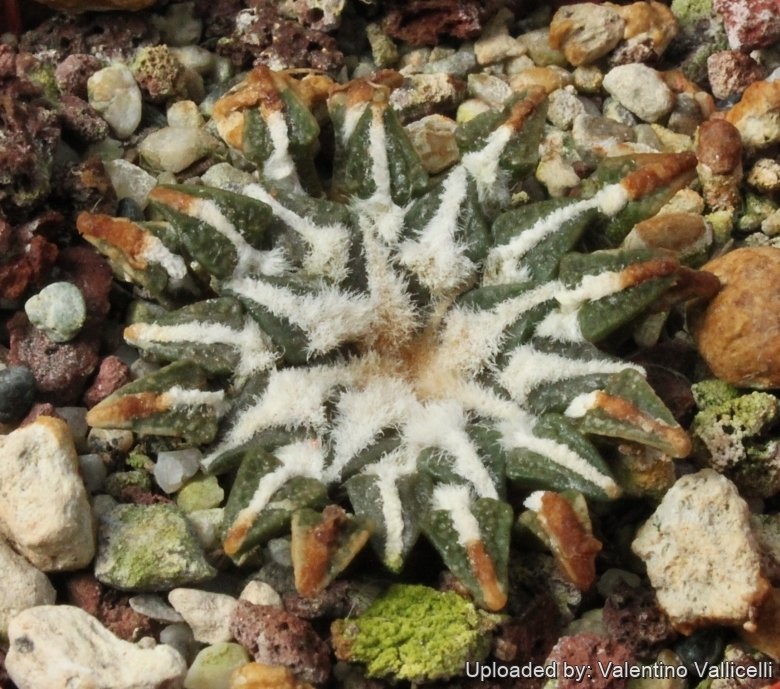
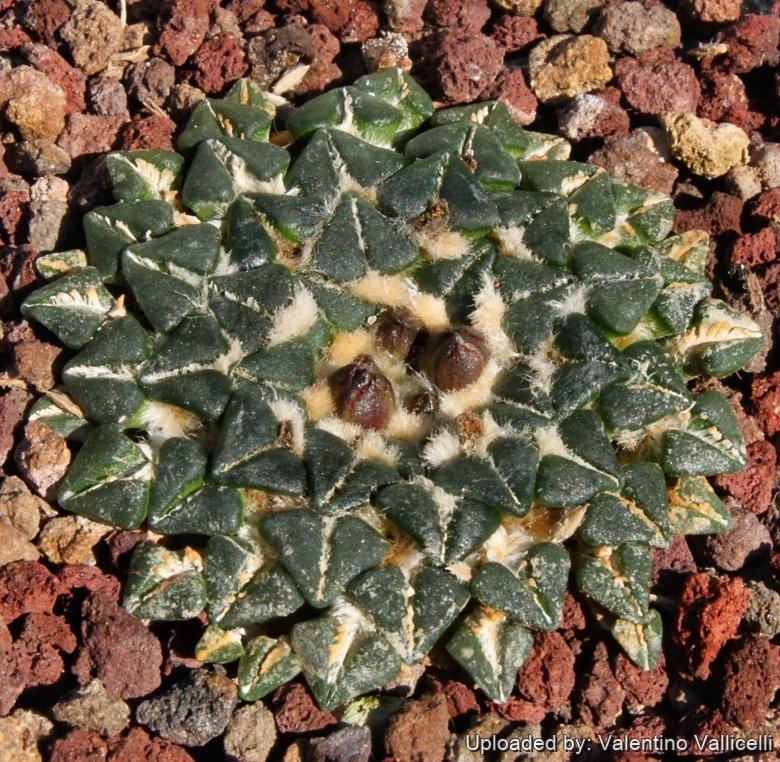
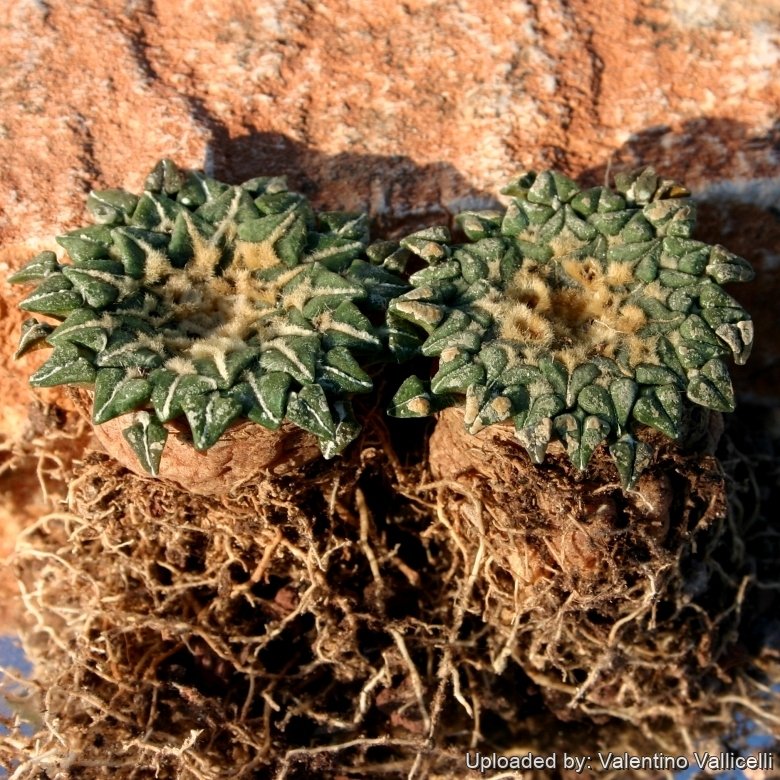
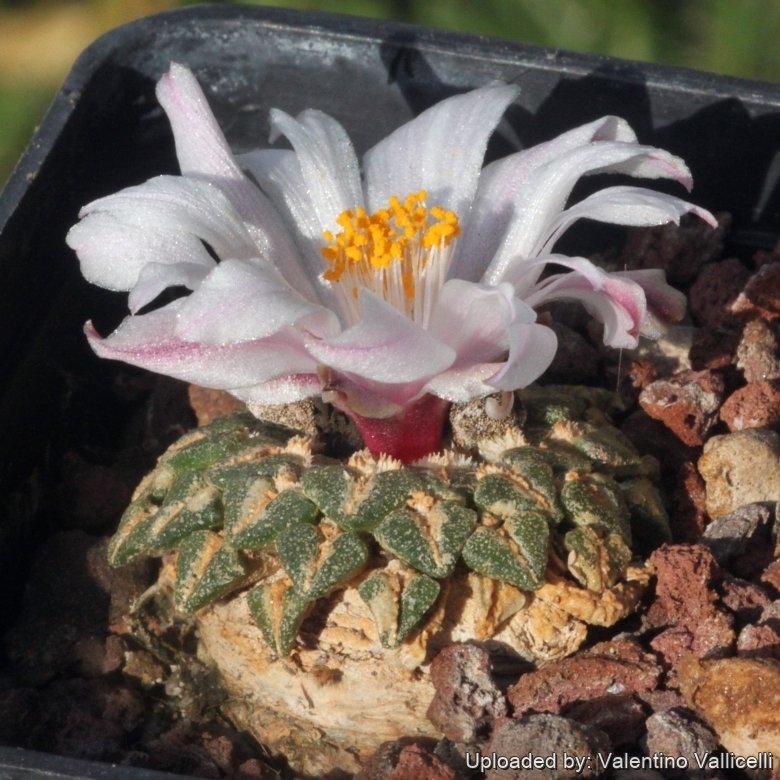
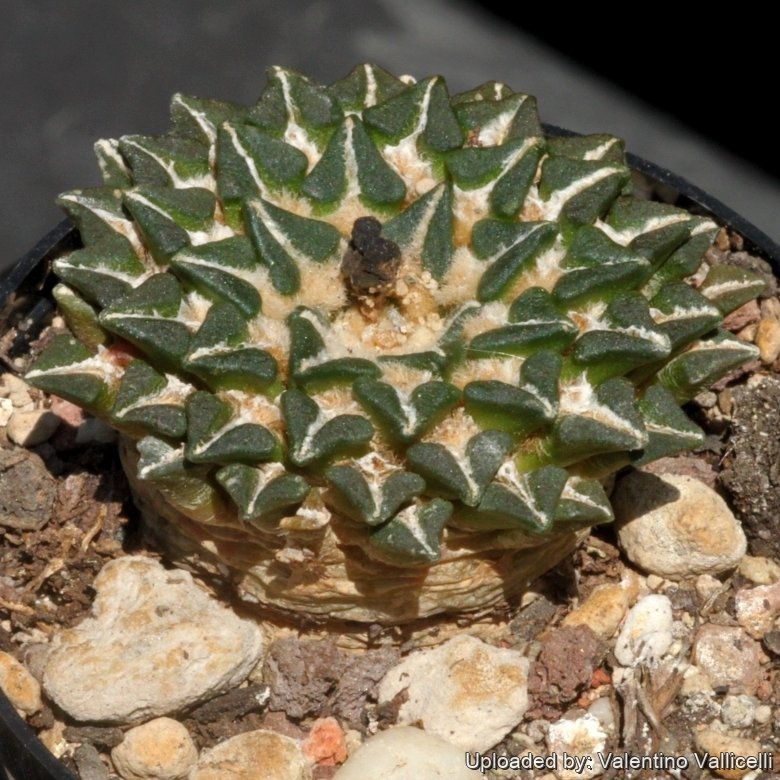
Ariocarpus kotschoubeyanus are very flat geophyte cacti that produce small star-shaped rosettes. They in most cases don’t reach more than only a few centimetres above the ground. Although they can form clumps, often only a small disc of tubercles can be seen flat at the soil surface, however these plants grow a large tap root below the surface of the compost.
Stem: Usually solitary, rarely giving rise to side shoots from old areoles, flattened on top, depressed centrally.
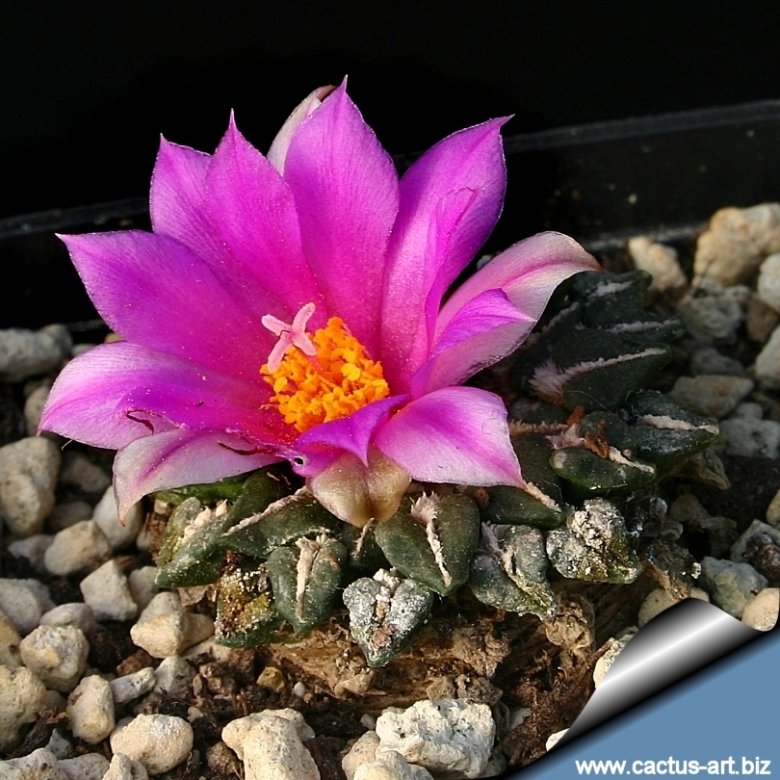
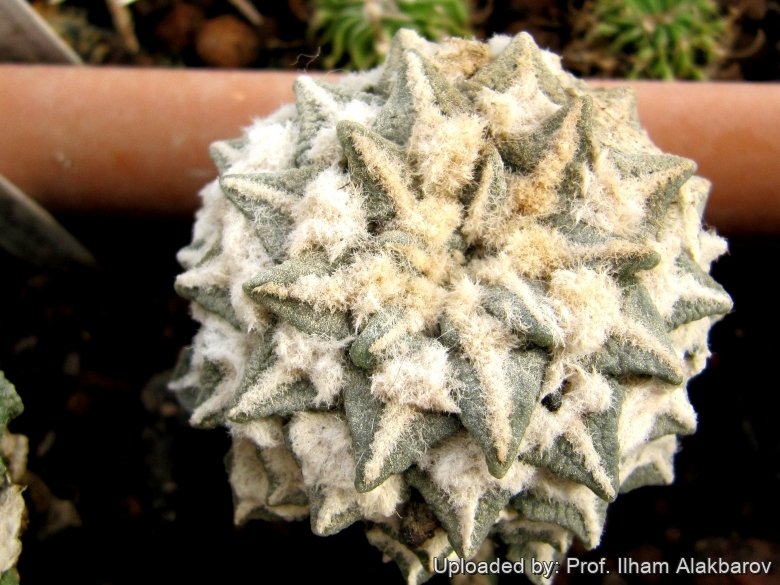
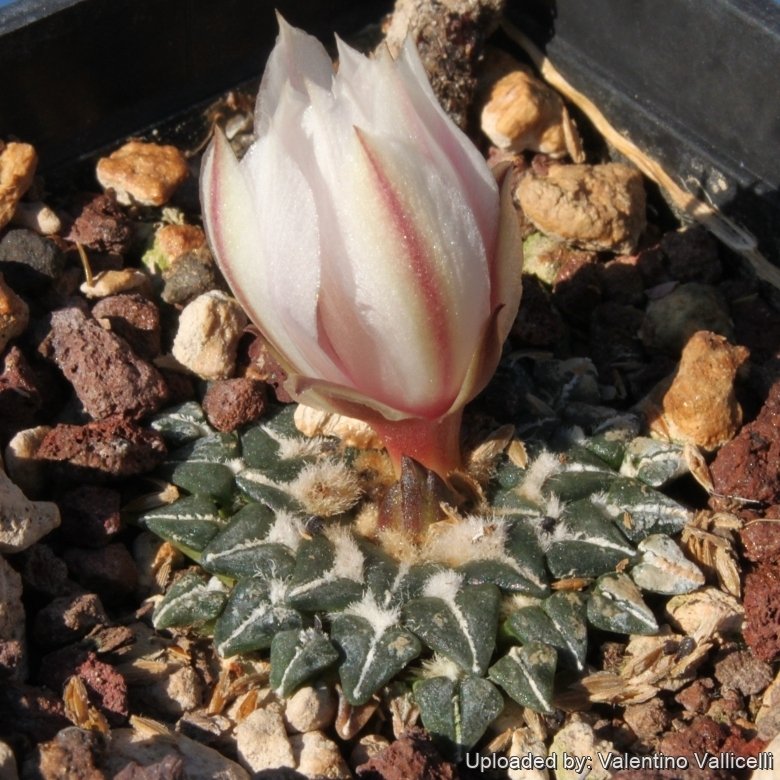
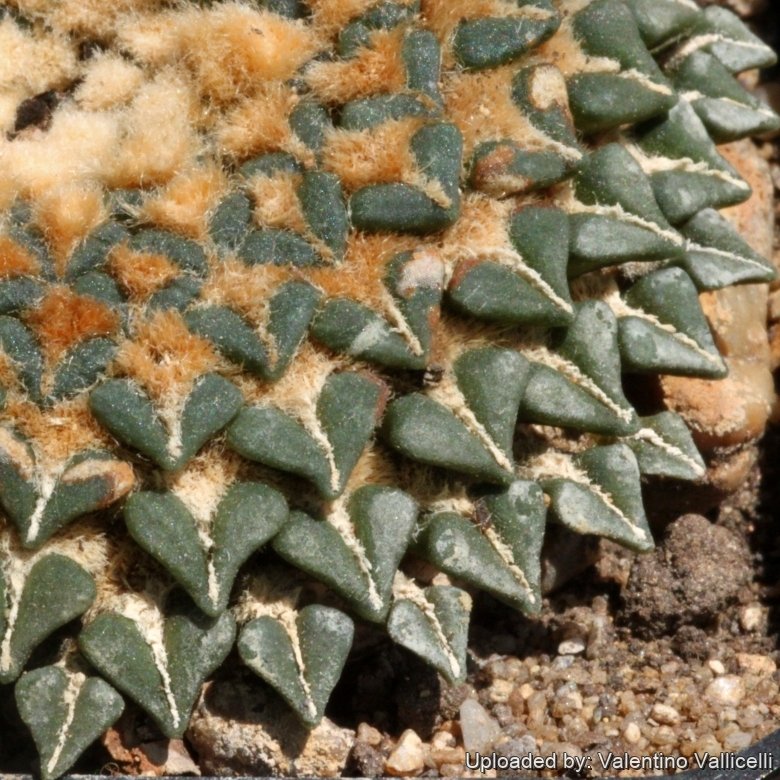
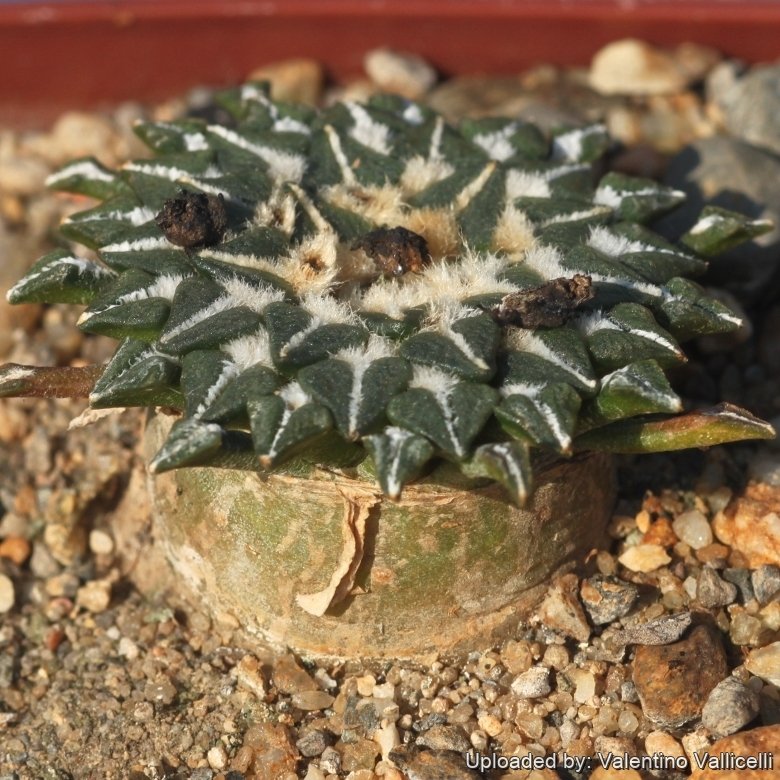
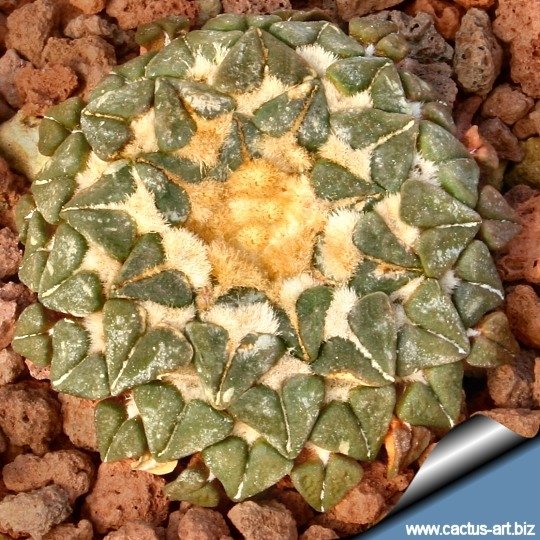
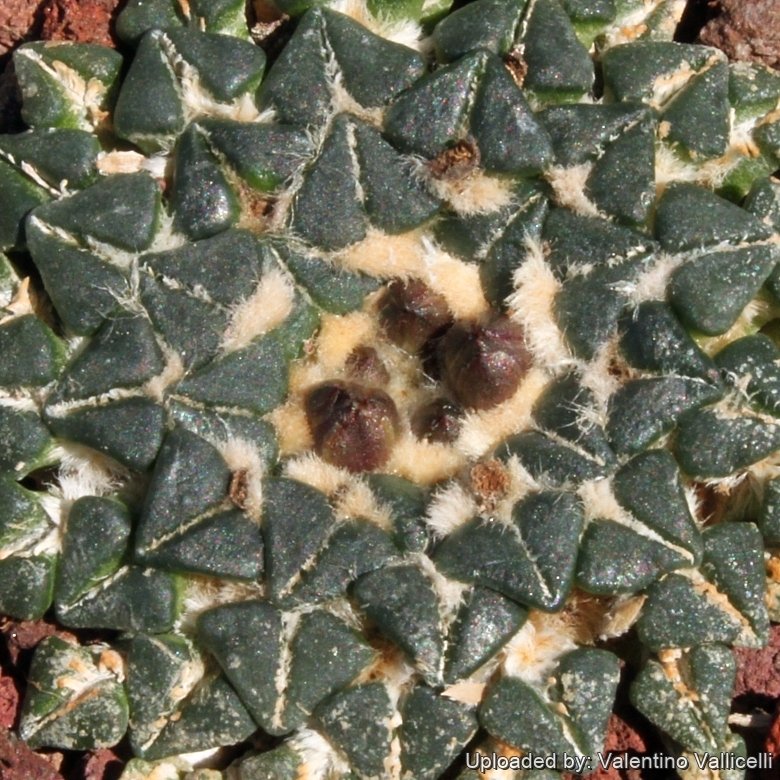
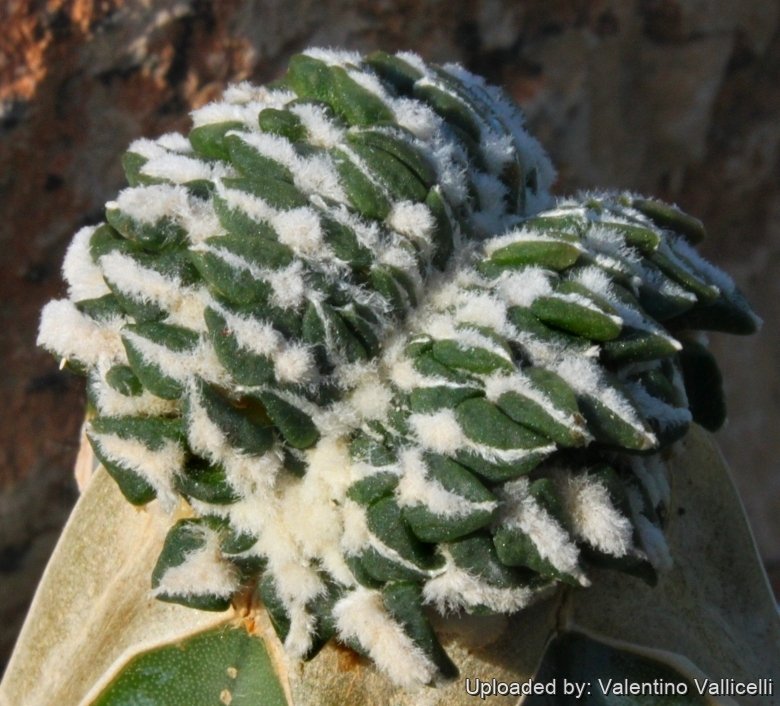
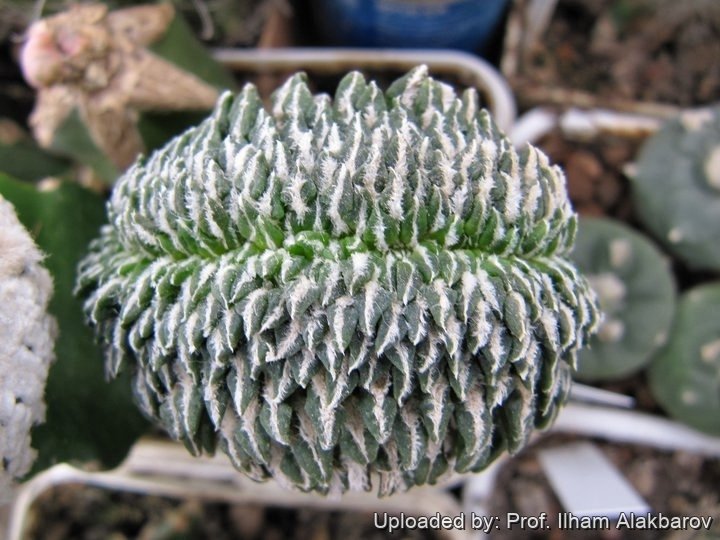
Tubercles: The tubercles are deltoid dark olive green with no spines and lie flat on the soil surface. They are more long than wide, closely packed and divergent, sharply angled apically.
Areoles: The tubecles forms a central longitudinal areolar groove extending to the tips on the adaxial surfaces of the tubercles, woolly, 1-3 mm wide, 5-10 mm long.
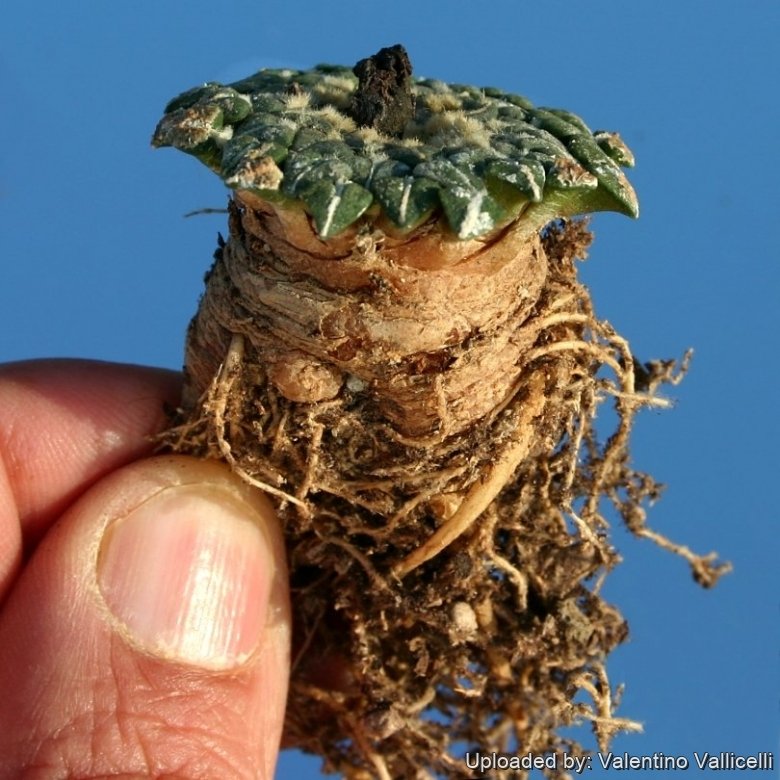
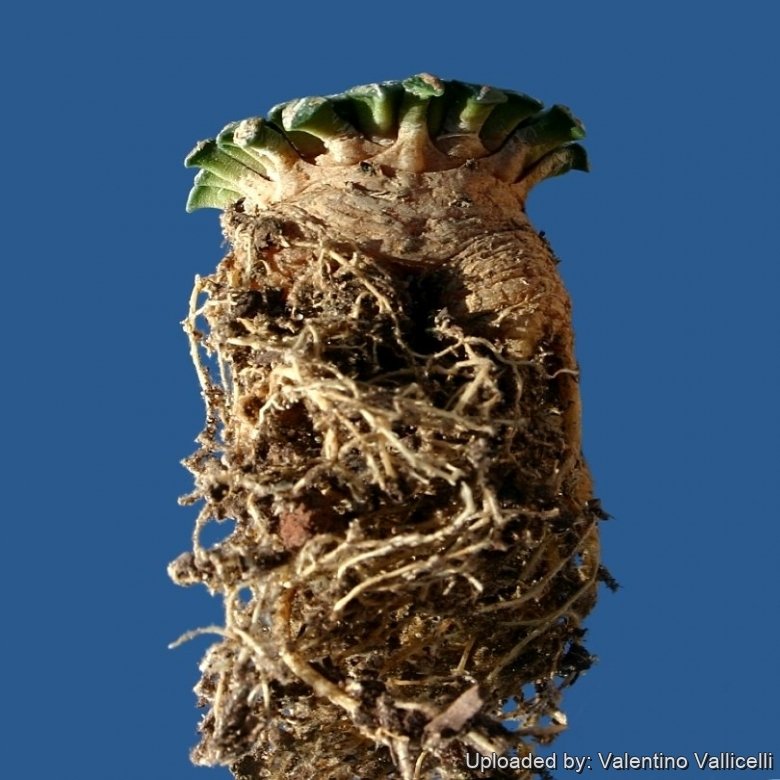
Roots: Each plant has a large turnip-like taproot, which lies below the soil surface and serves for water storage.
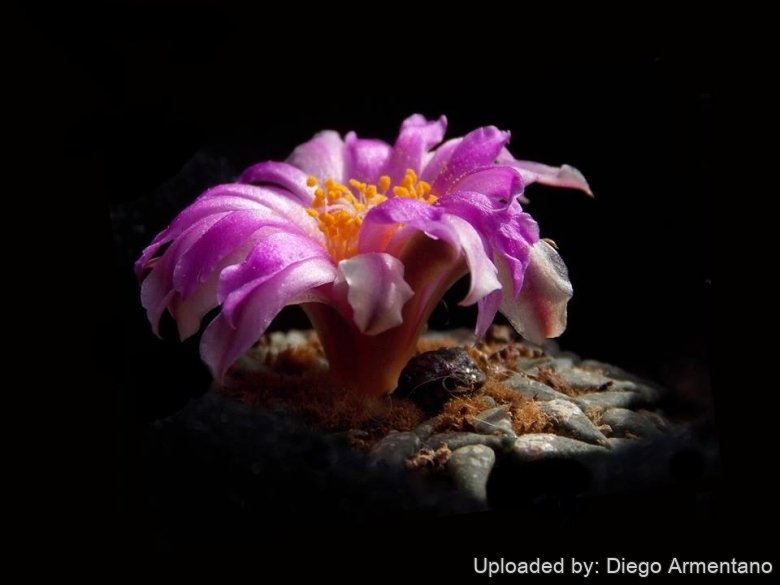
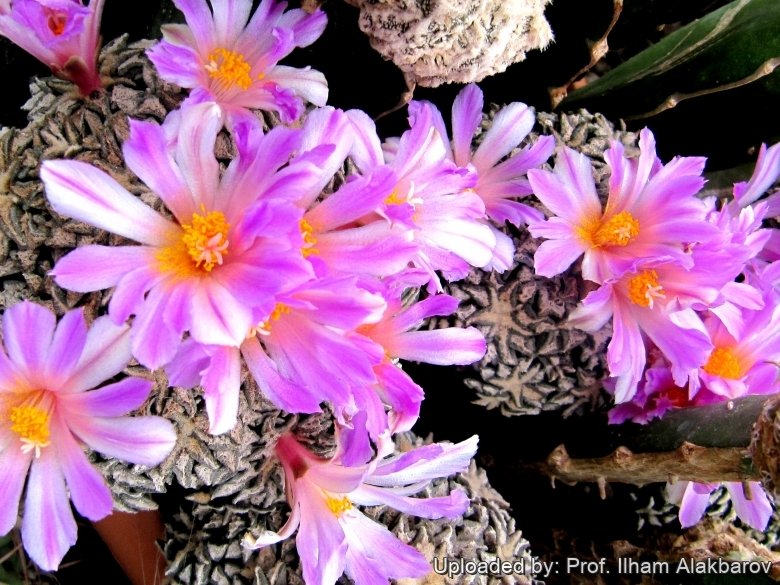
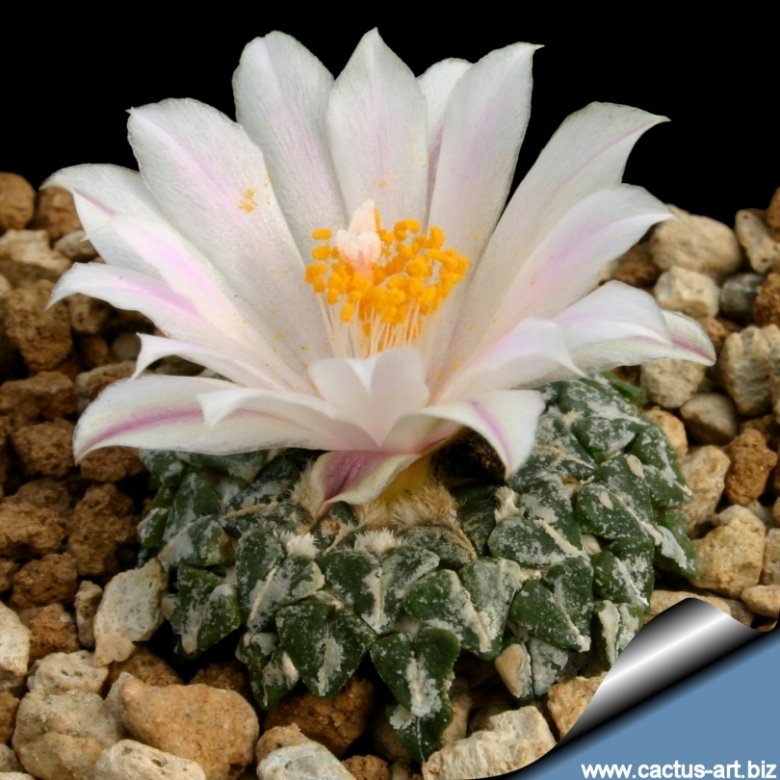
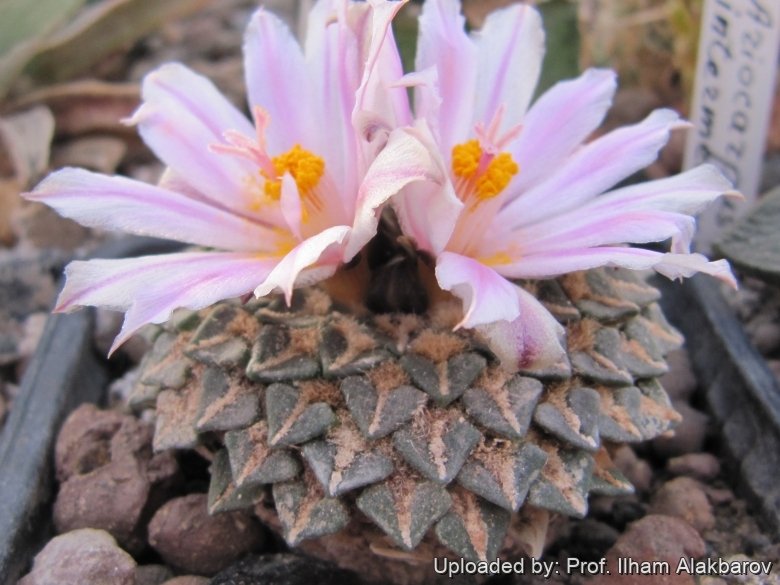
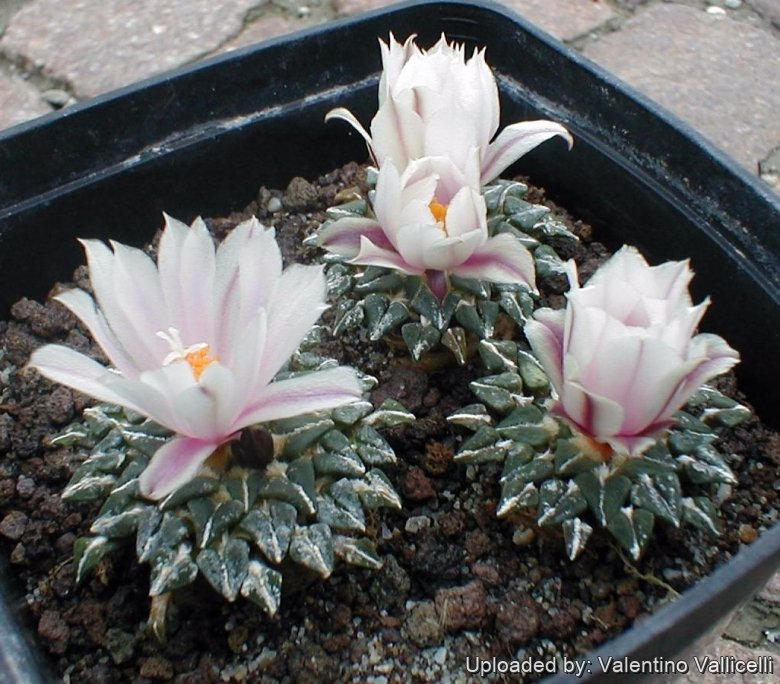
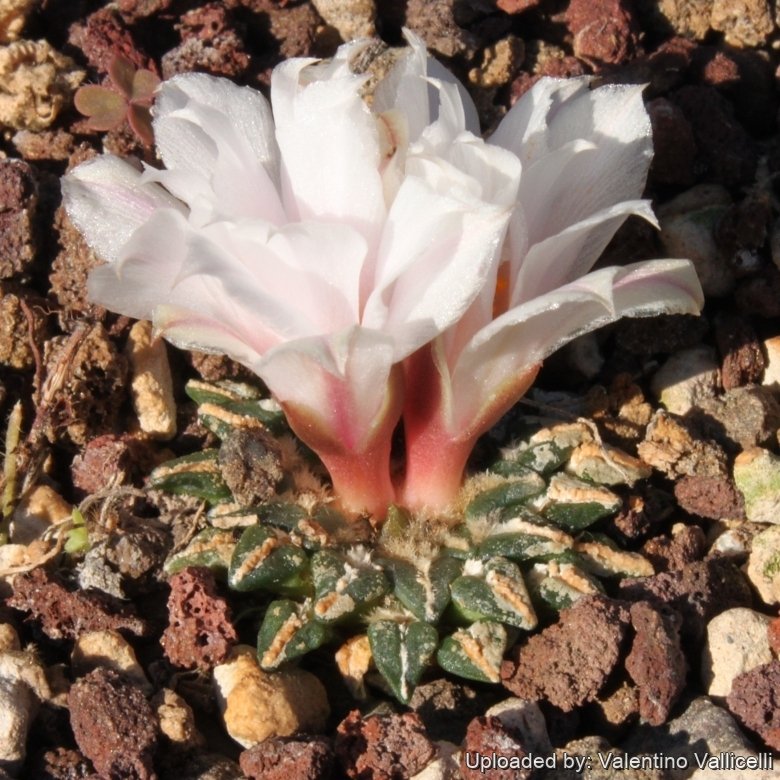
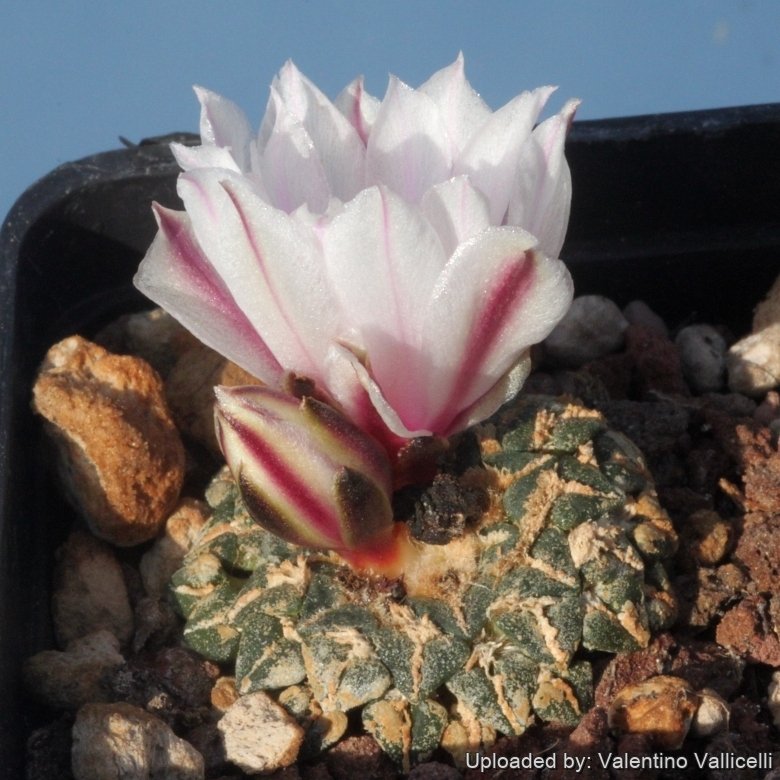
Flowers: These plants have a woolly crown, from which emerge bright pink-violet flowers up to 2.5-5 cm, 2 times wider than long when fully expanded. Flowers are diurnal and last for 3 to 4 days. The white-flowered variety was described as var. albiflorus.
Blooming time: Mid-September onwards.
Fruits: White or green with lots of seed.
Origin and Habitat
Mexico, This species is widely distributed as a large number of small, isolated populations in a big area extending over 600 km, from central Coahuila in the north to Queretaro in the south, and the species is also found in the states of Coahuila, Nuevo León, Querétaro, San Luis Potosí, Tamaulipas, and Zacatecas (its extent of occurrence is about 60,000 km²) and has a very large population (ca 100,000 mature individuals).
Altitude: It grows at elevations of around 1000-1900 metres.
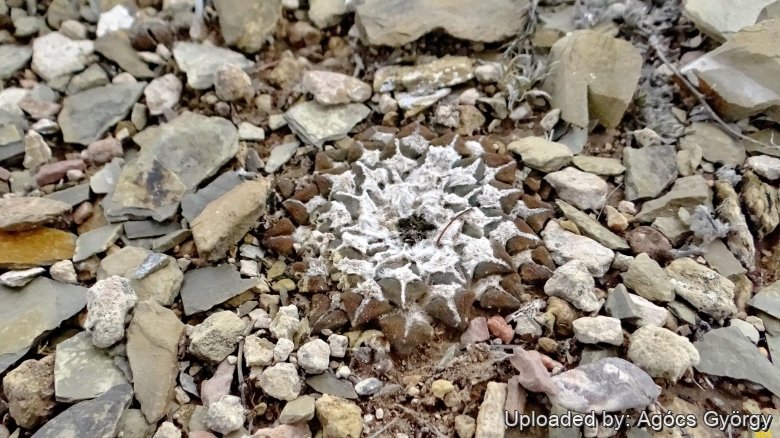
Habitat: Commonly called “living rocks,” they are edaphic specialist plants widely distributed in and around the edges of the Chihuahuan Desert (The habitat is locally classified as matorral desértico micrófilo and mezquital extradesértico). They are scattered in a large number of small, isolated populations, generally on limestone derived gypsum silt plains and on hills. The area where they grow must be quite wet during the rainy season (Summer). Some of these areas become flooded periodically during the summer rainy season. In the same area it is possible to find several plant species like: Dasylirium longissimus, Thelocactus bicolor, Mammillaria echinata, Agave stricta, Lophophora williamsii, Glandulicactus uncinatus, and Wilcoxia schmollii.
Ecology: This plants are extremely cryptic and are very difficult to spot as they blend in well with the terrain around them resembling dried mud. When they are found, it is usually due to their pinkish flowers. In times of severe drought the whole above-ground portion of these plants can shrink and be covered by mould, but the taproot remains alive. The main threats to this species are human settlements, waste dumps, illegal collecting, and local medicinal uses. Some localities have been partly depleted by illegal collectors.
Cultivation and Propagation
The plants need deep pots to accommodate the napiform unit formed by the stem base and the rootstock, and a loose mineral soil with a well-drained substrate. They need a good amount of light, a place near the roof of the greenhouse helps drying the pot after watering. This can be done weekly during summertime, if the weather is sunny enough, with a little fertilizer added. Kept this way, plants will show a healthy, although slow growth. They are frost hardy to -10°C.
Propagation: By seeds, remembering that seedlings dislike strong light and dry conditions and need to be repotted frequently. Eventually, as they become mature, they attain a maximum size of 5 to 9 cm. But plants are often grafted to accelerate growth as they would generally take at least a decade to reach maturity on their own, but the grafted plants are typical rather tall growing, compared with plants on their own roots that are usually very flat to the ground.
Bibliography
Major references and further lectures
-
James Cullen, Sabina G. Knees, H. Suzanne Cubey “The European Garden Flora Flowering Plants: A Manual for the Identification of Plants Cultivated in Europe, Both Out-of-Doors and Under Glass” Cambridge University Press, 11/Aug./2011
-
David Hunt, Nigel Taylor “The New Cactus Lexicon” DH Books, 2006
-
Edward F. Anderson “The Cactus Family” Timber Press, 2001
-
Nathaniel Lord Britton, Joseph Nelson Rose “Cactaceae: Descriptions and Illustrations of Plants of the Cactus Family” Volume 3, 1922
-
Gómez-Hinostrosa, C., Sotomayor, M., Hernández, H.M. & Smith, M. 2013. Ariocarpus kotschoubeyanus. In: IUCN 2013. IUCN Red List of Threatened Species. Version 2013.2. <www.iucnredlist.org>. Downloaded on 18 February 2014.
From llifle page Roseocactus kotschoubeyanus var. albiflorus
Description
Ariocarpus kotschoubeyanus subs. albiflorus is a dwarf cactus with unique and remarkably beautiful shape. It is a small growing form of the variable Ariocarpus kotschoubeyanus and is distinguished for the white or pale pink flowers.
Habit: They are very flat geophyte cactus that produce small star-shaped rosettes. They in most cases don’t reach more than only a few centimetres above the ground. Although they can form clumps, often only a small disc of tubercles can be seen flat at the soil surface, however these plants grow a large tap root below the surface of the compost.
Stem: Usually solitary, rarely giving rise to side shoots from old areoles, flattened on top, depressed centrally.
Tubercles: The tubercles are deltoid dark olive green with no spines and lie flat on the soil surface. They are more long than wide, closely packed and divergent, sharply angled apically.
Areoles: The tubercles forms a central longitudinal areolar groove extending to the tips on the adaxial surfaces of the tubercles, woolly, 1-3 mm wide, 5-10 mm long.
Roots: Each plant has a large turnip-like taproot, which lies below the soil surface and serves for water storage.
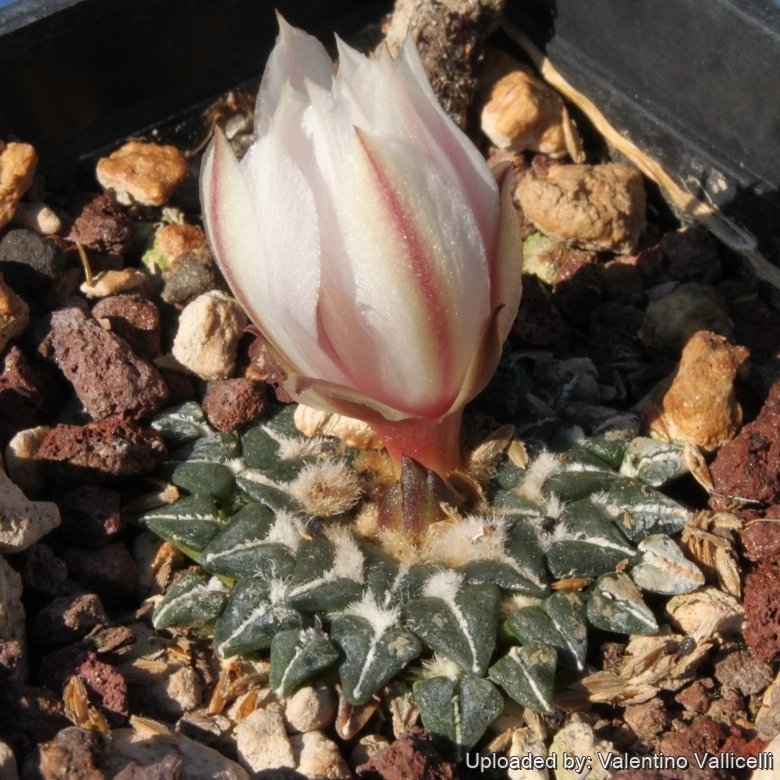
Flowers: These plants have a woolly crown, from which emerge white or very pale pink (never magenta-violet), 2,5-5 cm, 2 times wider than long when fully expanded.
Blooming time: Mid-September onwards. Flowers are diurnal and last for 3 to 4 days.
Fruits: White or green with lots of seed.
Origin and Habitat
Around Tula, Tamaulipas, Mexico.
Altitude: It grows at elevations of around 1200-2000 metres.
Habitat: Commonly called “living rocks,” they are edaphic specialist plants that generally grows on limestone derived gypsum silt plains and on hills. The area where they grow must be quite wet during the rainy season (Summer).
Ecology: This plants are extremely cryptic and are very difficult to spot as they blend in well with the terrain around them resembling dried mud. When they are found, it is usually due to their white flowers. In times of severe drought the whole above-ground portion of these plants can shrink and be covered by mould, but the taproot remains alive. The main threats to this species are human settlements, illegal collecting, and local medicinal uses. Some localities have been partly depleted by illegal collectors.
Cultivation and Propagation
The plants need deep pots to accommodate the napiform unit formed by the stem base and the rootstock , and a loose mineral soil with a well-drained substrate. They need a good amount of light, a place near the roof of the greenhouse helps drying the pot after watering. This can be done weekly during summertime, if the weather is sunny enough, with a little fertilizer added. Kept this way, plants will show a healthy, although slow growth. They are frost hardy to -10°C.
Propagation: By seeds, remembering that seedlings dislike strong light and dry conditions and need to be repotted frequently. Eventually, as they become mature, they attain a maximum size of 5 cm.
Bibliography
Major references and further lectures
-
James Cullen, Sabina G. Knees, H. Suzanne Cubey “The European Garden Flora Flowering Plants: A Manual for the Identification of Plants Cultivated in Europe, Both Out-of-Doors and Under Glass” Cambridge University Press, 11/Aug./2011
-
David Hunt, Nigel Taylor “The New Cactus Lexicon” DH Books, 2006
-
Edward F. Anderson “The Cactus Family” Timber Press, 2001
-
Nathaniel Lord Britton, Joseph Nelson Rose “Cactaceae: Descriptions and Illustrations of Plants of the Cactus Family” Volume 3, 1922
Gómez-Hinostrosa, C., Sotomayor, M., Hernández, H.M. & Smith, M. 2013. Ariocarpus kotschoubeyanus. In: IUCN 2013. “IUCN Red List of Threatened Species.” Version 2013.2. <www.iucnredlist.org>. Downloaded on 18 February 2014.
Source: Roseocactus kotschoubeyanus var. albiflorus, LLIFLE - Encyclopedia of living forms, CC-BY-SA, retrieved 2026-10-25.
From llifle page Roseocactus kotschoubeyanus subs. macdowellii
Description
Ariocarpus kotschoubeyanus are very flat geophyte cactus that produce small star-shaped rosettes. They in most cases don’t reach more than only a few centimetres above the ground. Although they can form clumps, often only a small disc of tubercles can be seen flat at the soil surface, however these plants grow a large tap root below the surface of the compost.
Stem: Usually solitary, rarely giving rise to side shoots from old areoles, flattened on top, depressed centrally.
Tubercles: The tubercles are deltoid dark olive green with no spines and lie flat on the soil surface. They are more long than wide, closely packed and divergent, sharply angled apically.
Areoles: The tubecles forms a central longitudinal areolar groove extending to the tips on the adaxial surfaces of the tubercles, woolly, 1-3 mm wide, 5-10 mm long.
Root: Each plant has a large turnip-like taproot, which lies below the soil surface and serves for water storage.
Flowers: These plants have a woolly crown, from which emerge bright pink-violet flowers up to 2.5-5 cm, 2 times wider than long when fully expanded. Flowers are diurnal and last for 3 to 4 days. The white-flowered variety was described as var. albiflorus.
Blooming time: Mid-September onwards.
Fruits: White or green with lots of seed.
Remarks: The plants in northern populations (known as Ariocarpus kotschoubeyanus. var. macdowellii) are smaller than the type, with small beak-like tubercles and pale mauve flowers, often with a high white content in the outer petals.
Origin and Habitat
Mexico, A. scapharostrus is widely distributed as a large number of small, isolated populations in a big area extending over 600 km, from central Coahuila in the north to Queretaro in the south, and the species is also found in the states of Zacatecas, San Luis Potosi, Nuevo Leon and Tamaulipas. The “macdowellii” is the northern population of the species
Cultivation and Propagation
The plants need deep pots to accommodate the napiform unit formed by the stem base and the rootstock , and a loose mineral soil with a well-drained substrate. They need a good amount of light. A place near the roof of the greenhouse helps, drying the pot after watering. This can be done weekly during the summertime, if the weather is sunny enough, with a little fertilizer added. Kept this way, plants will show a healthy, although slow growth. They are frost hardy to -10°C.
Propagation: By seeds, remembering that seedlings dislike strong light and dry conditions and need to be repotted frequently. Eventually, as they become mature, they attain a maximum size of 5 to 9 cm. But plants are often grafted to accelerate growth as they would generally take at least a decade to reach maturity on their own, but the grafted plants are typical rather tall growing, compared with plants on their own roots, that are usually very flat to the ground.
Bibliography
Major references and further lectures
-
James Cullen, Sabina G. Knees, H. Suzanne Cubey “The European Garden Flora Flowering Plants: A Manual for the Identification of Plants Cultivated in Europe, Both Out-of-Doors and Under Glass” Cambridge University Press, 11/Aug./2011
-
David Hunt, Nigel Taylor “The New Cactus Lexicon” DH Books, 2006
-
Edward F. Anderson “The Cactus Family” Timber Press, 2001
-
Nathaniel Lord Britton, Joseph Nelson Rose “Cactaceae: Descriptions and Illustrations of Plants of the Cactus Family” Volume 3, 1922
Source: Roseocactus kotschoubeyanus subs. macdowellii, LLIFLE - Encyclopedia of living forms, CC-BY-SA, retrieved 2026-10-25.
From llifle page Roseocactus kotschoubeyanus f. cristata
Description
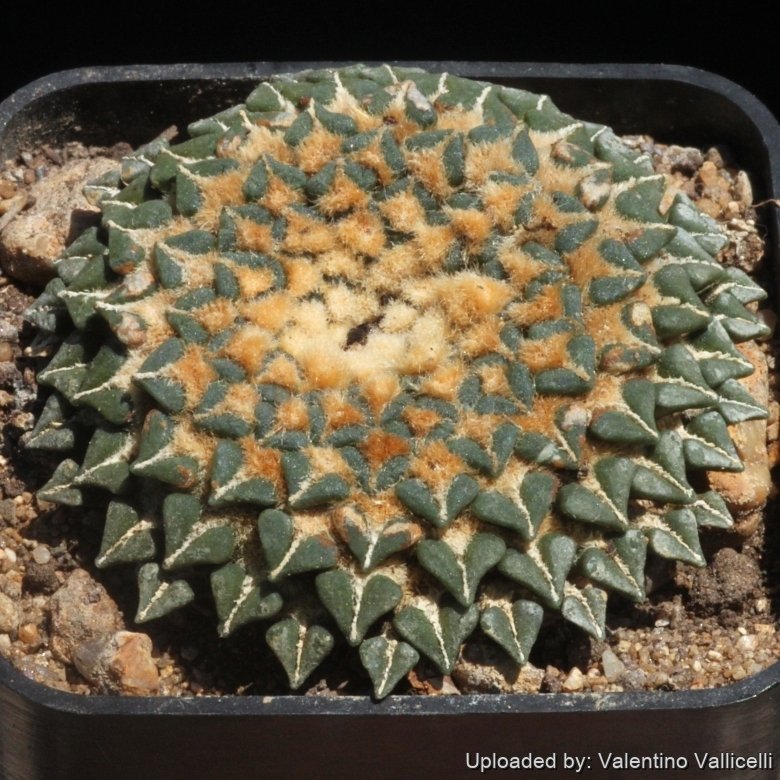
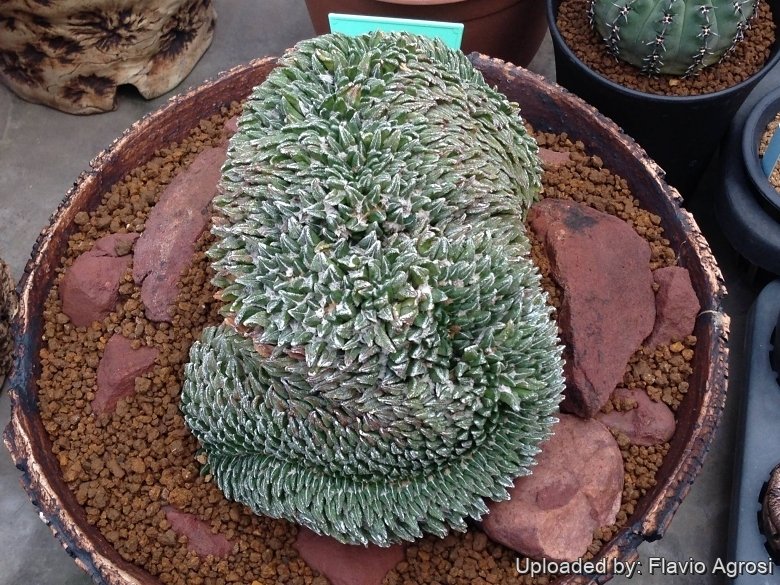
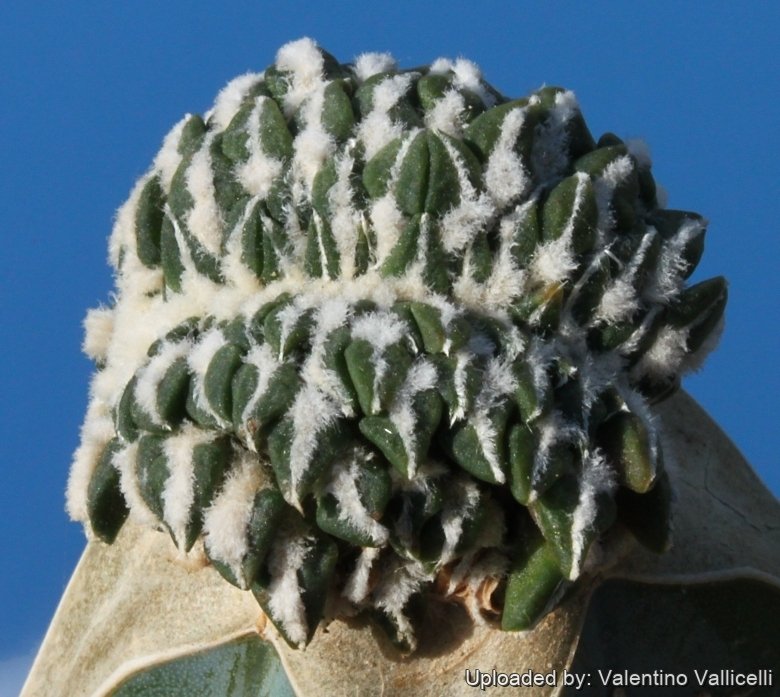
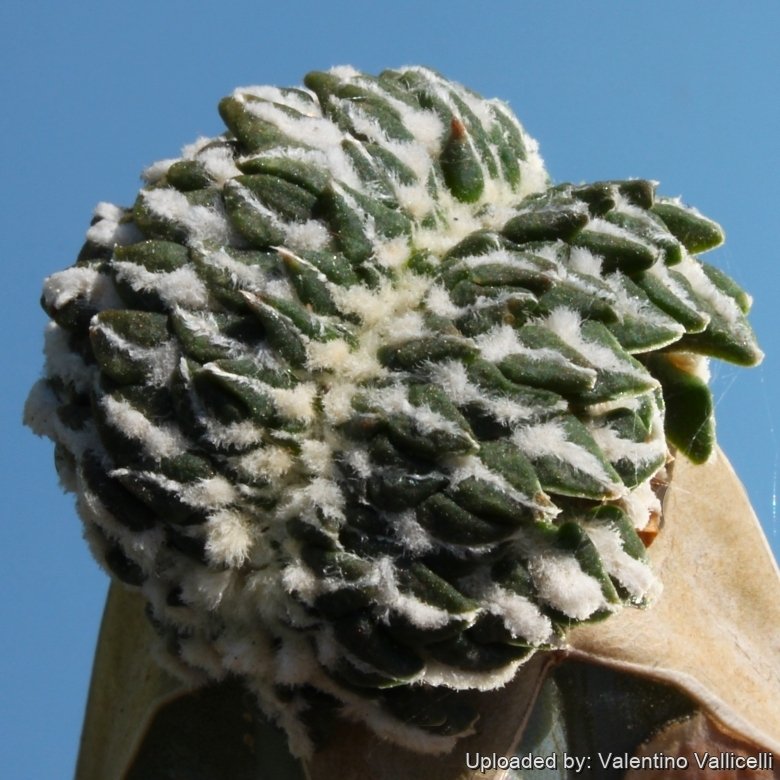
Ariocarpus kotschoubeyanus (a.k.a. Star Rock) is a well known flat geophytic cactus that produce small star-shaped rosettes. They in most cases don’t reach more than only a few centimetres above the ground. The crested form Ariocarpus kotschoubeyanus f. cristatus - despite to its beauty - is still very rare and sought after by collectors, for its unique features.
Root: Has a large tap root below the surface of the compost.
Stem: Fan shaped, flattened on top, depressed centrally.
Tubercles: The tubercles are deltoid dark olive green with no spines and lie flat on the soil surface. They are more long than wide, closely packed and divergent, sharply angled apically.
Areoles: The tubercles forms a central longitudinal areolar groove extending to the tips on the adaxial surfaces of the tubercles, woolly, 1-3 mm wide, 5-10 mm long.
Flowers: These plants have a woolly crown, from which emerge bright pink-violet flowers up to 2,5-5 cm, 2 times wider than long when fully expanded. Flowers are diurnal and last for 3 to 4 days.
Blooming time: Mid-September onwards.
Origin and Habitat
Garden origin (Nursery produced cultivar)
Cultivation and Propagation
It is not too difficult in a greenhouse, although grows quite slowly. It is usually seen as a grafted plant but can grow on its own roots too.
Soil: Use a mineral well permeable soil with little organic matter (peat, humus).
Exposure: They need a good amount of light shade to full sun this help to keep the plants healthy, although slow growth.
Watering: Water sparingly from March till October (weekly during summertime, if the weather is sunny enough), with a little fertilizer added. Less or no water during cold winter months, or when night temperatures remain below 10° to prevent root loss. It is sensitive to overwatering (rot prone).
Fertilization: Feeding may not be necessary at all if the compost is fresh then, feed in summer only if the plant hasn’t been repotted recently. Do not feed the plants from September onwards as this can cause lush growth which can be fatal during the darker cold months.
Hardiness: Keep perfectly dry in winter at temperatures from 5 to 15 degrees centigrade. (but it is relatively cold resistant and hardy to -5° C, or possibly colder for short periods) In the rest period no high atmospheric humidity!! (Temperature Zone: USDA 9-11)
Crested growth: Unlike ‘monstrose’ varieties of plants, where the variation from normal growth is due to genetic mutation, crested growth can occur on normal plants. Sometimes it’s due to variances in light intensity, or damage, but generally the causes are unknown. A crested plant may have some areas growing normally, and a cresting plant that looks like a brain, may revert to normal growth for no apparent reason. If you have any of the crested part left you need to remove the normal growth and leave the crested part behind this will need to be done regularly.
Propagation: Grafting or cuttings. Plants are usually grafted onto column-shaped cacti but proved to be able to produce their own roots if degrafted. Cuttings will take root in a minimum temperature of 20° C (but better in hot weather). Cuttings of healthy shoots can be taken in the spring and summer. Cut the stem with a sharp, sterile knife, leave the cutting in a warm, dry place for a week or weeks (depending on how thick the cutting is) until a callus forms over the wound. Once the callus forms, the cutting may be inserted in a container filled with firmed cactus potting mix topped with a surface layer of coarse grit. They should be placed in the coarse grit only; this prevents the cut end from becoming too wet and allows the roots to penetrate the rich compost underneath. The cuttings should root in 2 to 6 weeks. Large crested piece must be placed on the soil surface without burying the plant base down in the soil.
Source: Roseocactus kotschoubeyanus f. cristata, LLIFLE - Encyclopedia of living forms, CC-BY-SA, retrieved 2026-10-25.
Cultivars and forms (13)
Subspecies (6)
Varieties (2)
Gallery