Publication: in Kakteen, 63: CVIIIb (1975). without basionym date
Description
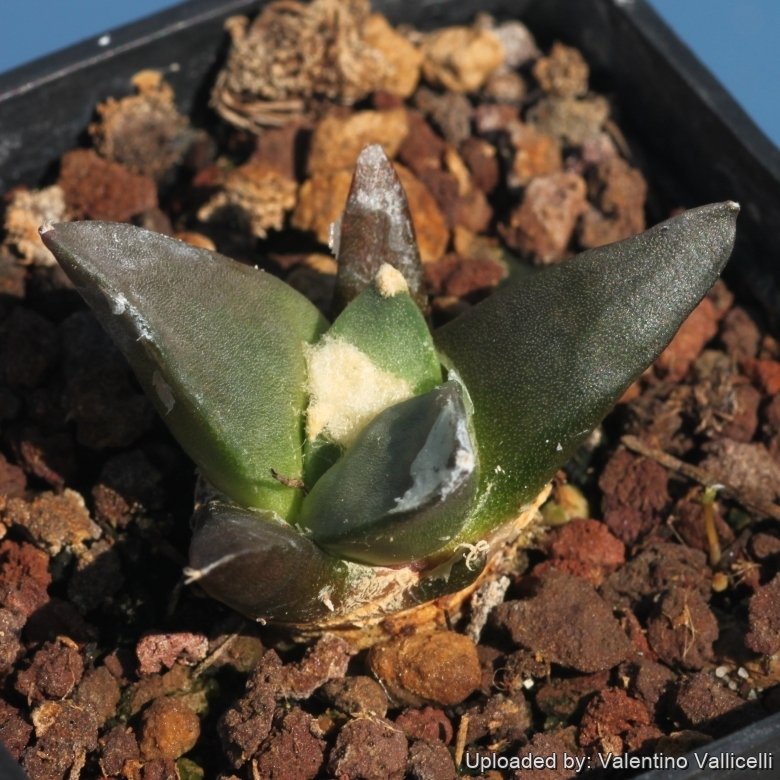
Ariocarpus furfuraceus differs from the standard Ariocarpus retusus only for its equilaterally triangular tubercles, all the other characteristics clearly show that they are conspecific. Ariocarpus retusus is quite variable and has received numerous unnecessary names of no botanical value, representing no more than local phenotypes: Ariocarpus furfuraceus is one of them.
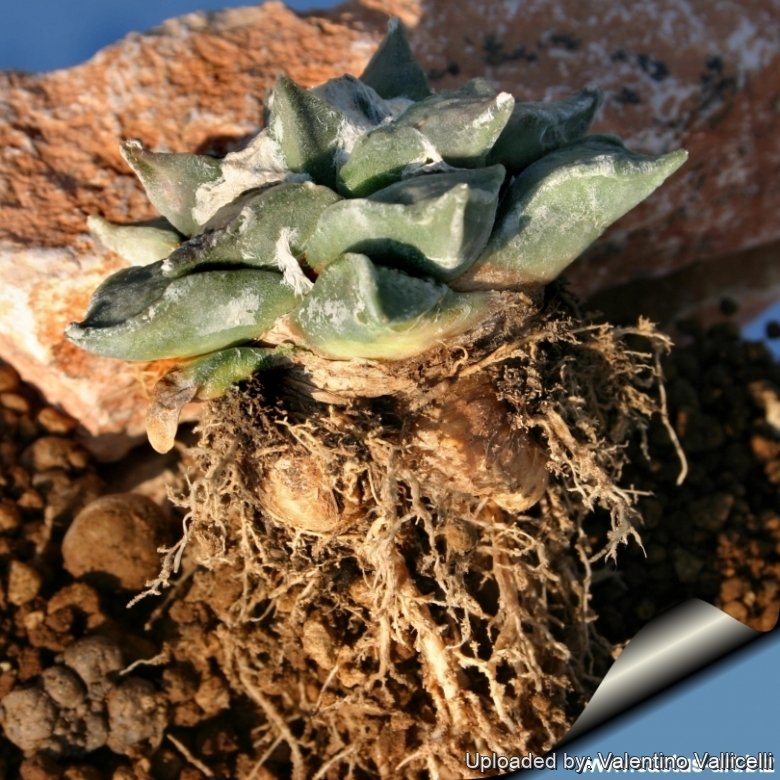
Habit: Solitary, slow-growing geophyte cactus, with tubercles slightly projecting above ground level. The large tuberous body is below the soil.
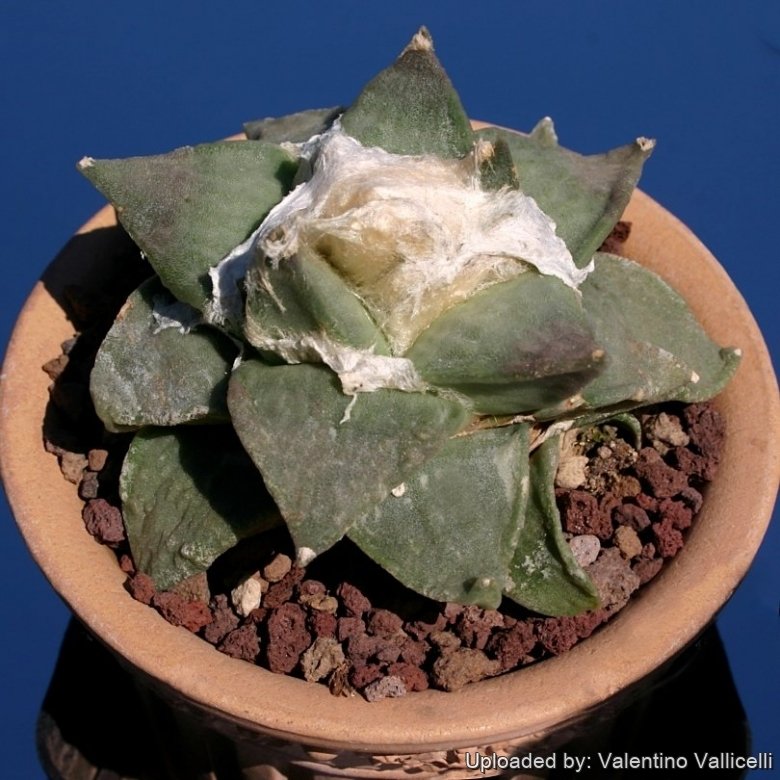
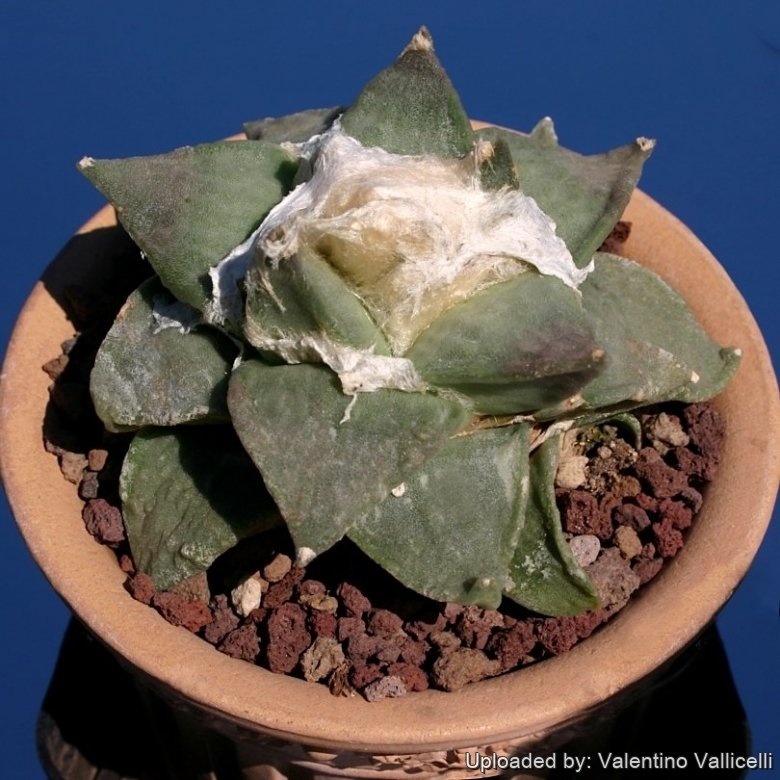
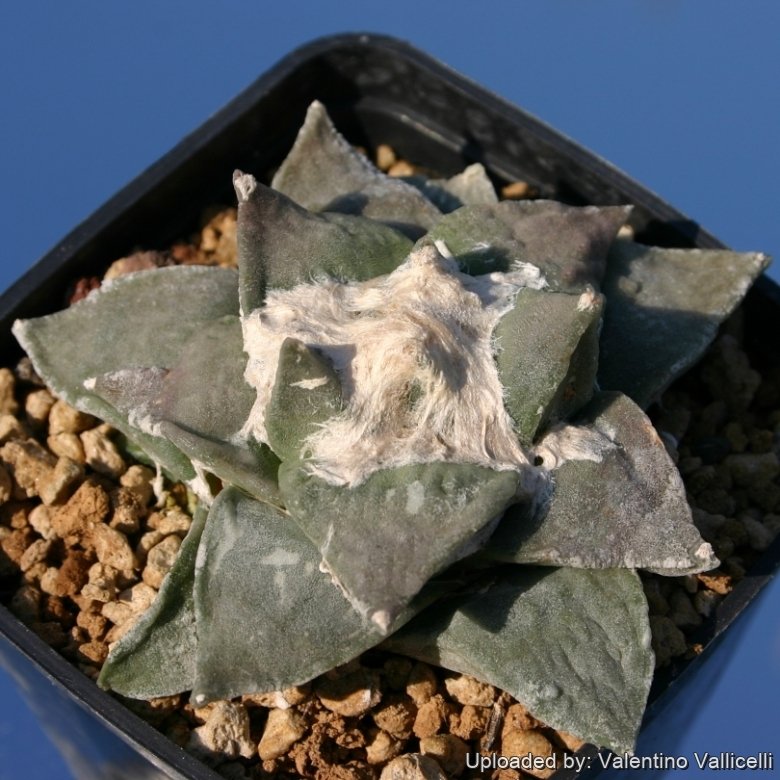
Stem: Grey-green, flattened, globose, rounded on top, 3-12 cm high, 10-25cm in diameter.
Tubercles: The distinctive characteristic of Ariocarpus furfuaraceus are the tubercles, which are equilaterally triangular shaped, divergent, convex or nearly flattened adaxially and often with shallow adaxial undulations or wrinkling, not fissured, 1,5-4 cm long, 1-3,5 cm wide, nearly as wide as long.
Areoles: At the tips of the tubercles, rounded, 1-5 mm in diameter.
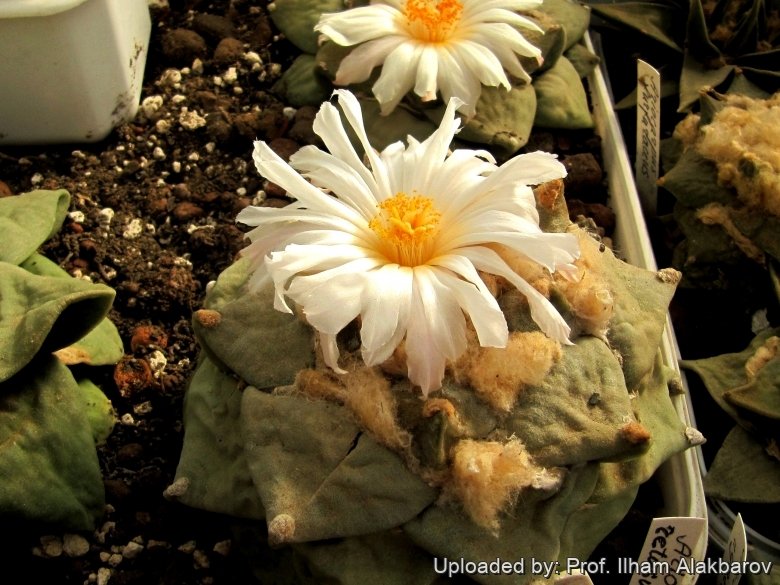
Flowers: Diurnal, 4-5 cm in diameter, 2-4 2cm long, white to clear pink.
Root: Tap root.
Flowering time: Autumn.
Remarks: All of the Ariocarpus seedlings are spiny and quite different from adult specimens, though the spines are feather-like.
Fruit: White, green, or rarely pinkish, 10-25 mm long, 3-10 mm in diameter.
Origin and Habitat
Widely distributed in Coahuila, San Luis Potosi, Tamaulipas , Zacatecas and Nuevo Leon.
Cultivation and Propagation
This species is slow-growing, but certainly not as slow as some other types of cacti. It is of easy cultivation in a well-drained, non-organic, free-draining soil compost, with ample water during the growing season. Use of a weak low-nitrogen fertilizer during the growing season can encourage growth. The main threat to their development is root rot. Ariocarpus should be kept dry whenever there is a threat of cold. The appearance of Ariocarpus can benefit greatly by watering the plants from the bottom. This practice will help to keep the “wool” on the top of the plant from becoming matted or discoloured. It needs light shade to full sun.
Frost Tolerance: Hardy to -10° C
Propagation: It is probably the easiest species of the genus to raise from seed, but will generally take about 6-10 years to reach flowering size, occasionally grafted.
Bibliography
Major references and further lectures
-
Edward F. Anderson “The Cactus Family” Timber Press, 2001
-
Curt Backeberg “Cactus Lexicon” Sterling Publishing Company, Incorporated, 1978
-
Hiroshi Hirao “Colour encyclopaedia of cacti” Japan 1979 (Japanese language and script)
-
Willy Cullmann, Erich Götz (Dozent Dr.), Gerhard Gröner “The encyclopedia of cacti” Portland, OR: Timber Press, 1986
-
David Hunt, Nigel Taylor “The New Cactus Lexicon” DH Books, 2006 ISBN 0953813444, 9780953813445
-
James Cullen, Sabina G. Knees, H. Suzanne Cubey “The European Garden Flora Flowering Plants: A Manual for the Identification of Plants Cultivated in Europe, Both Out-of-Doors and Under Glass” Cambridge University Press, 11/Aug./2011
Gallery