Publication: Bull. Acad. Roy. Sci. Bruxelles 5: 492 (t. 1). 1838
Description
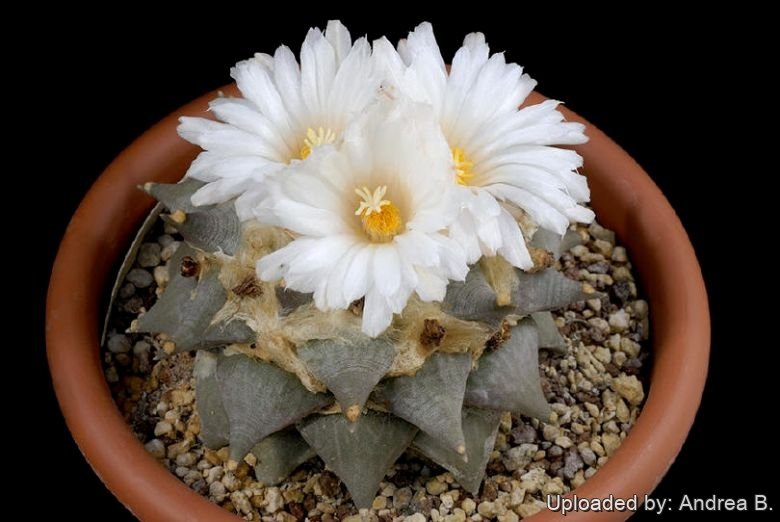
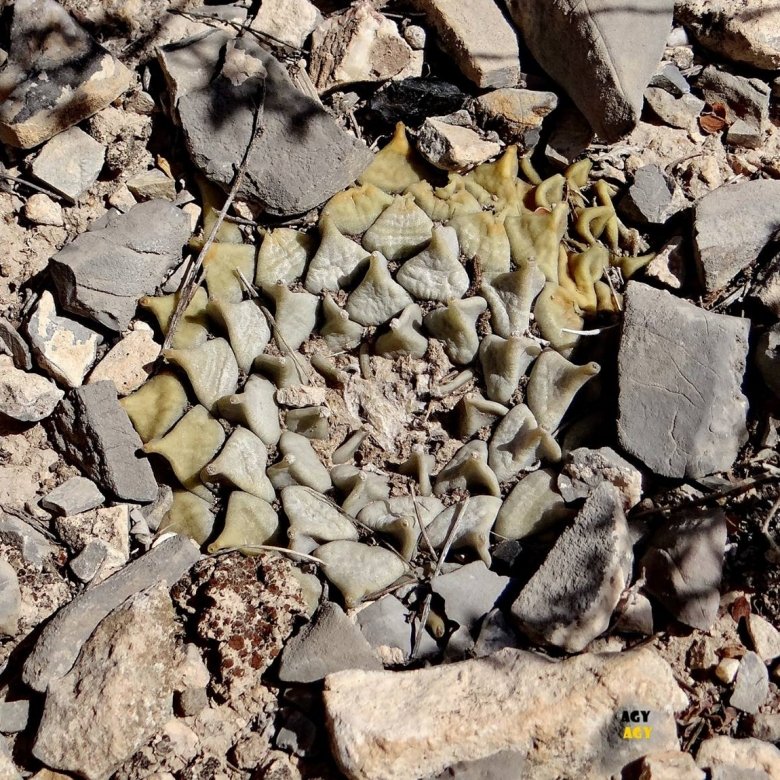
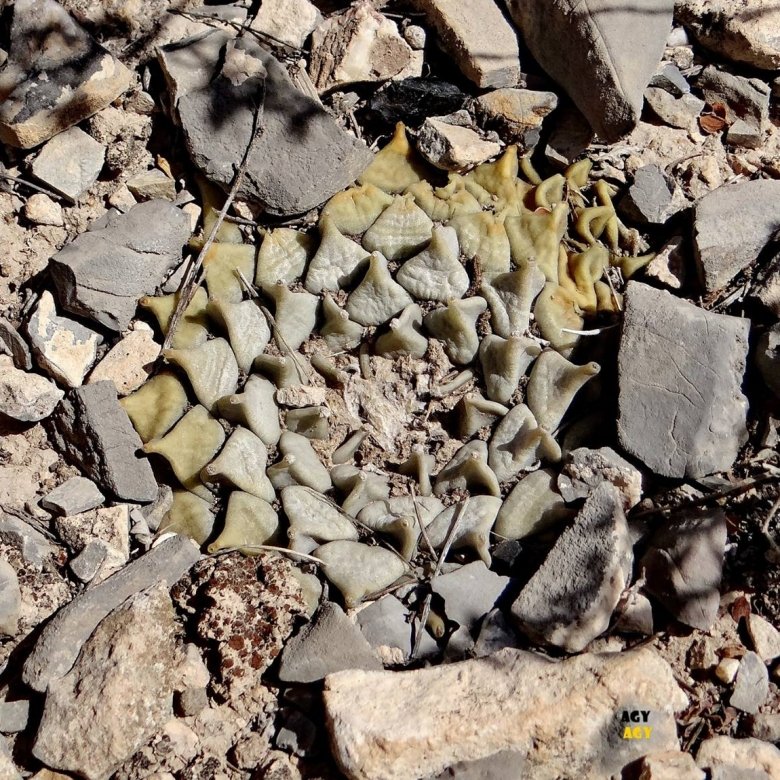
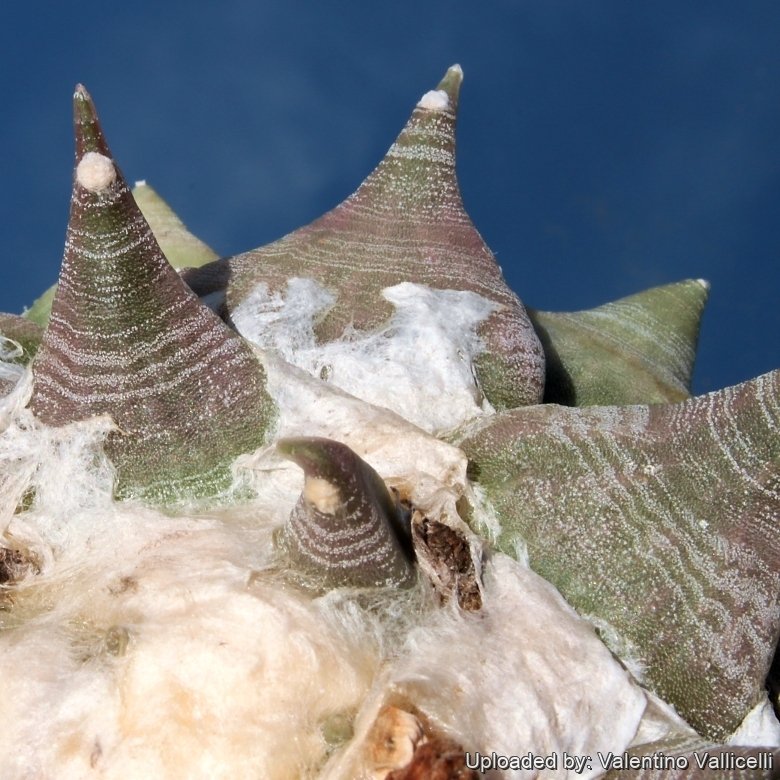
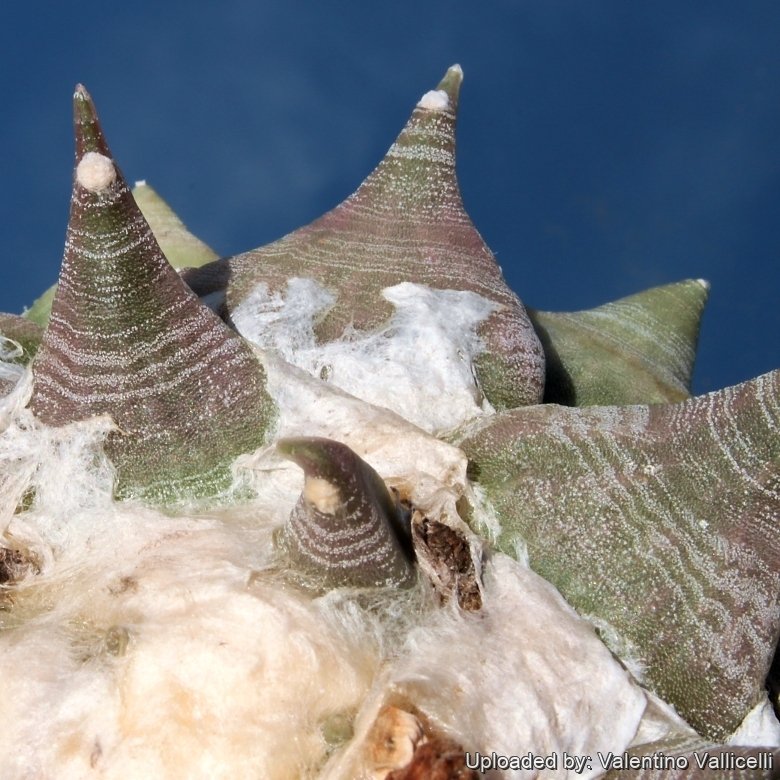
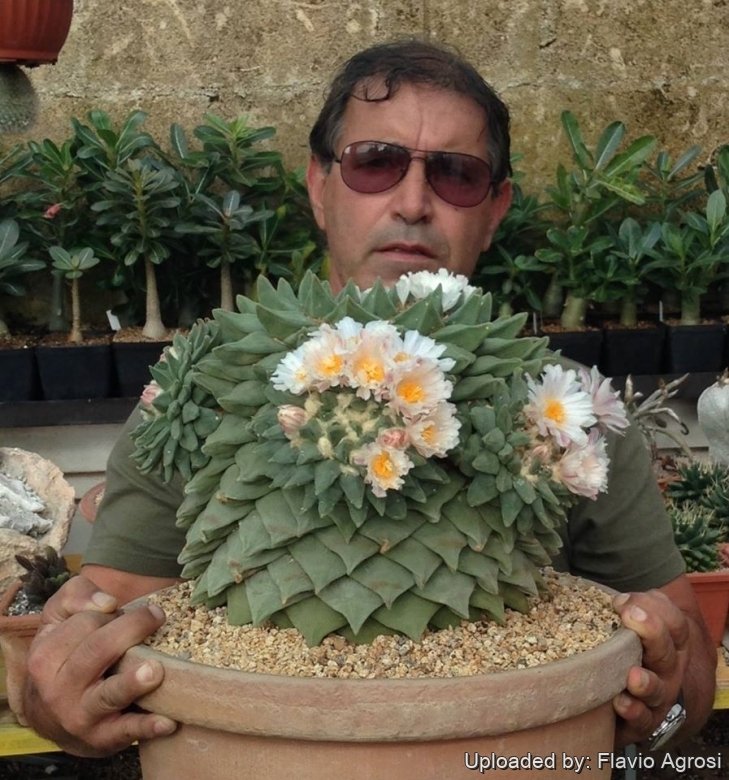
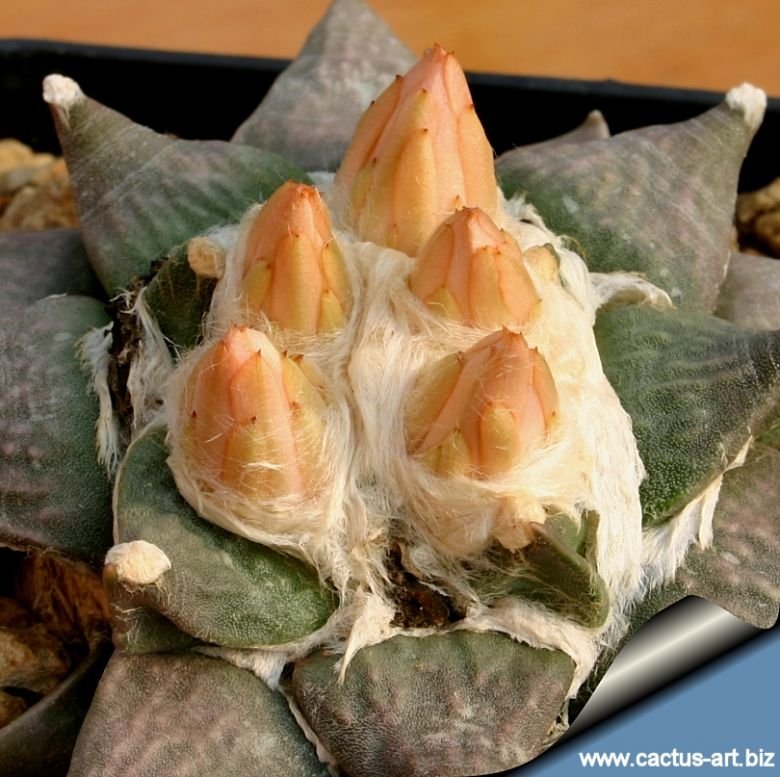
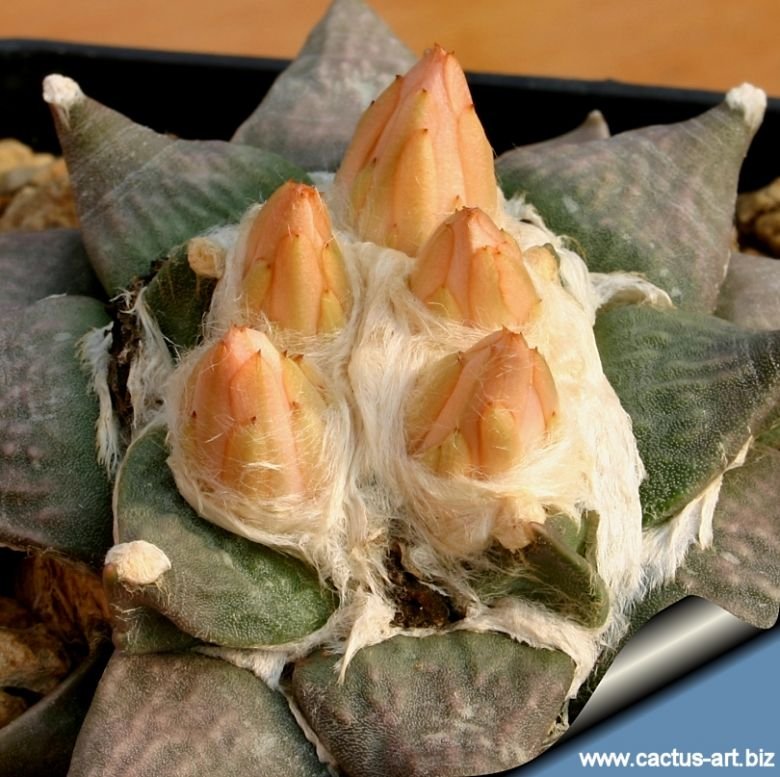
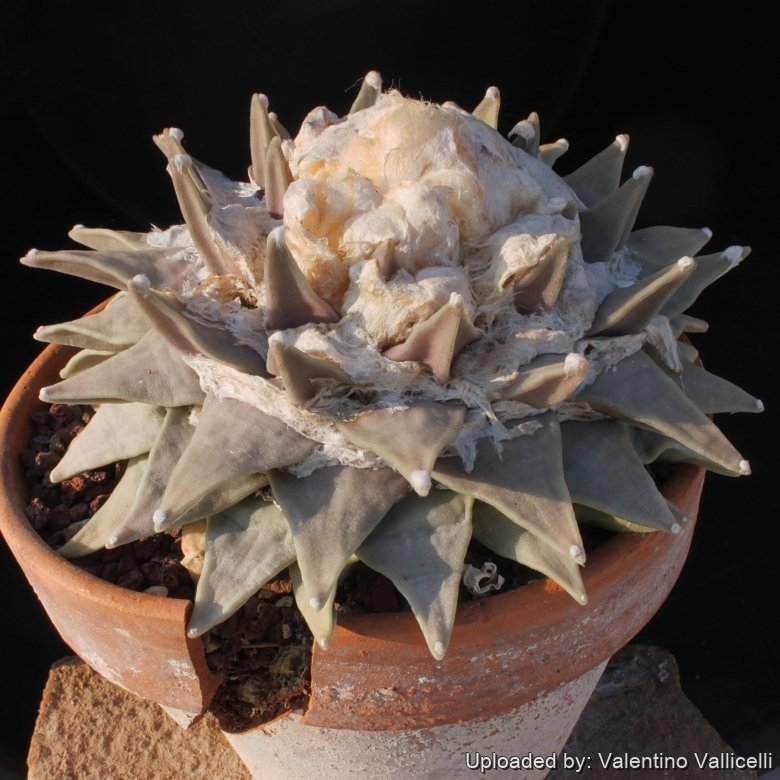
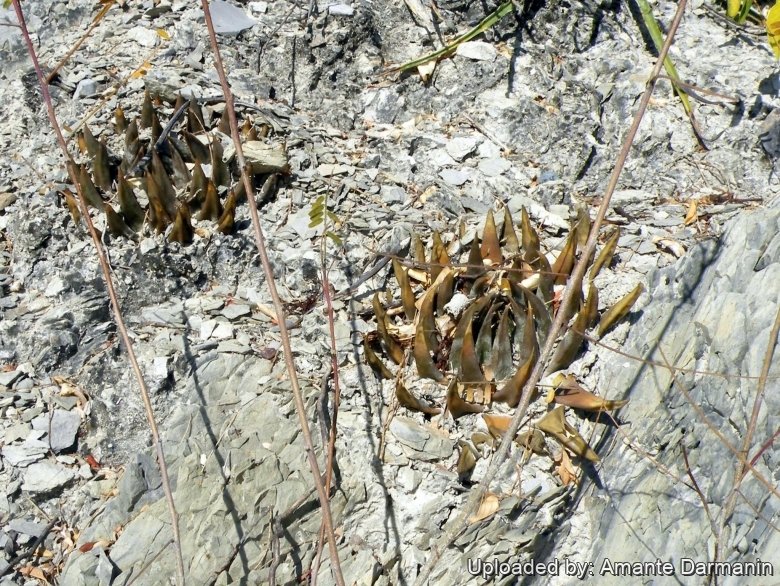
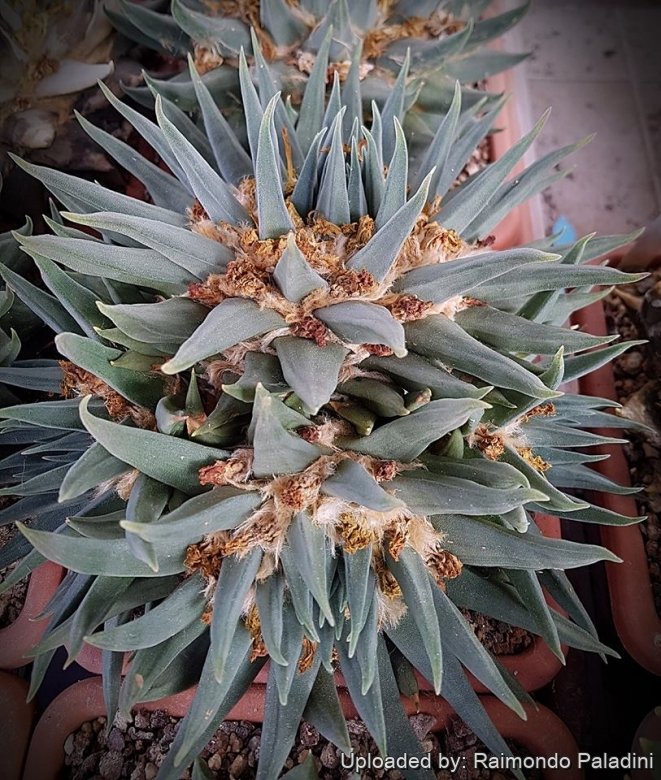
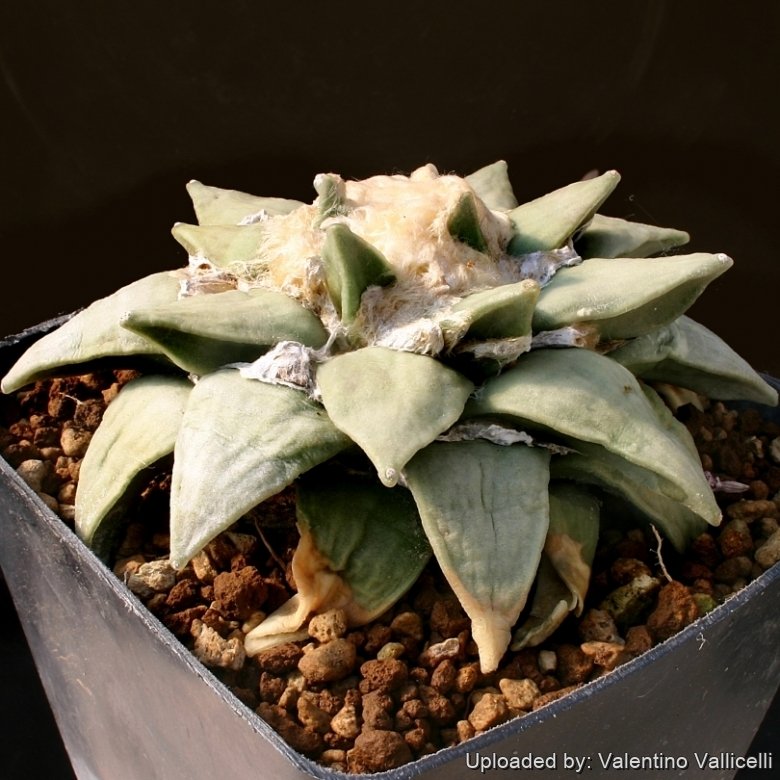
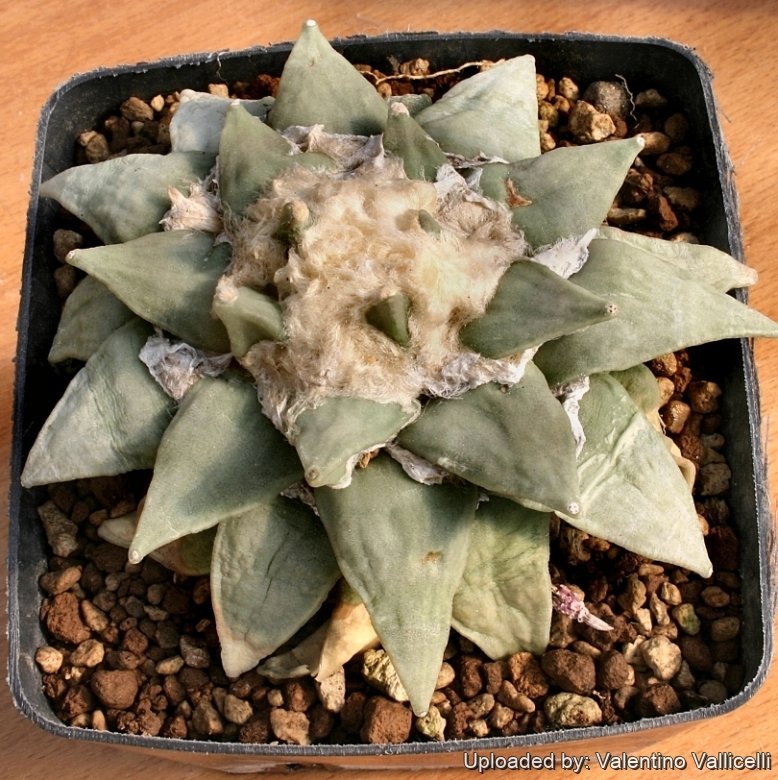
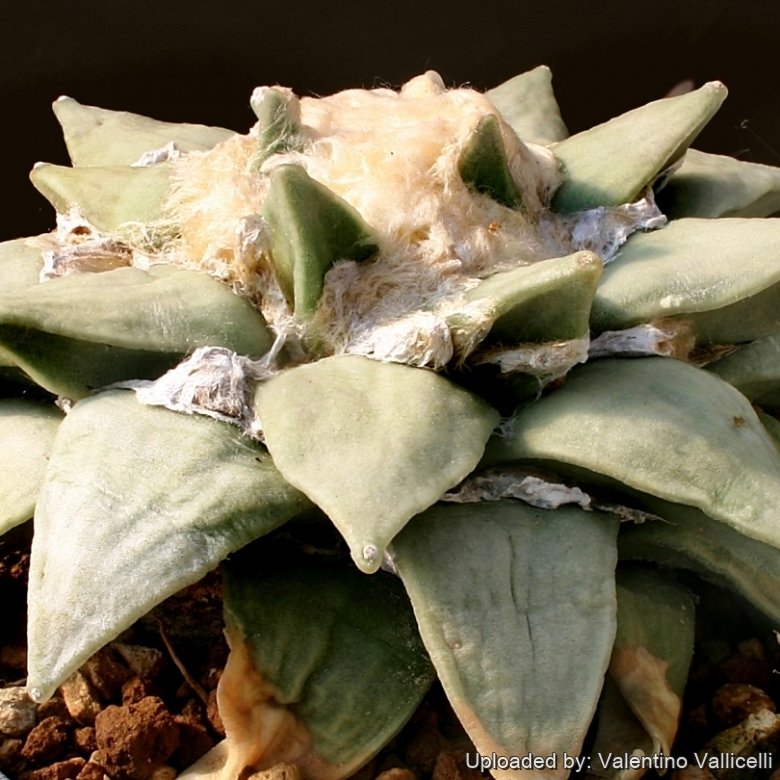
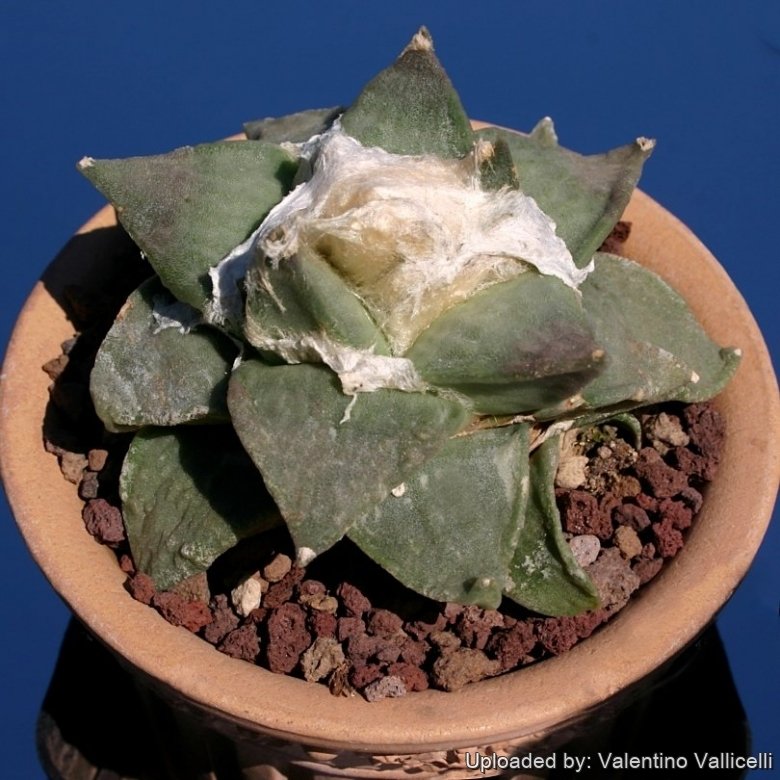
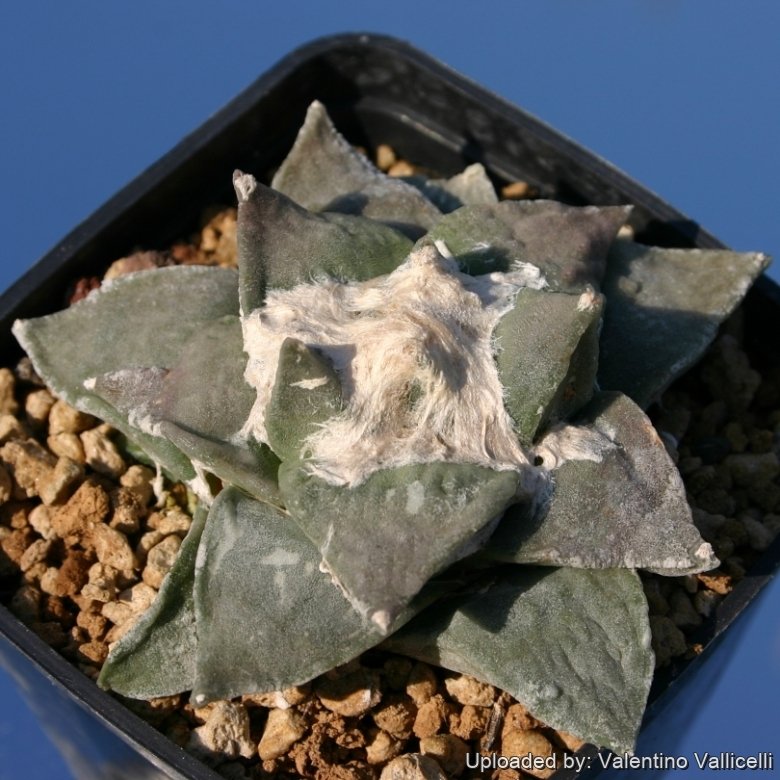
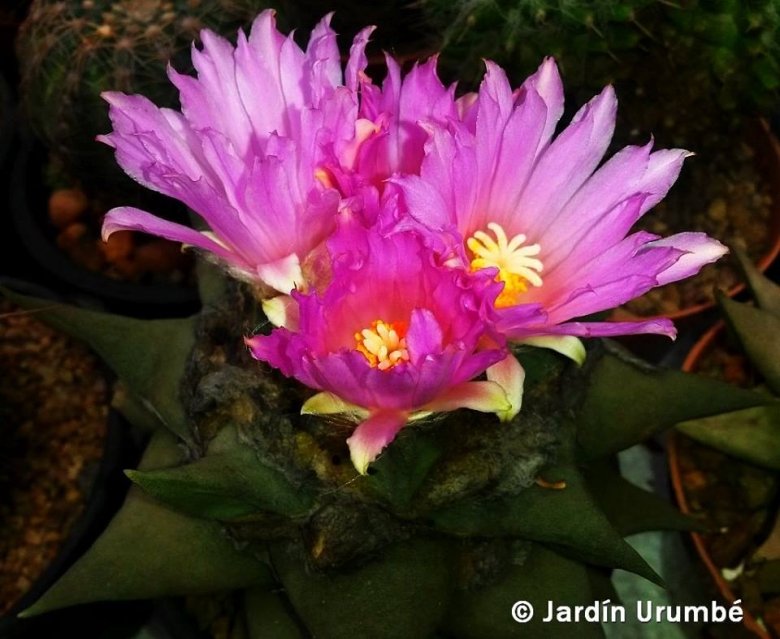
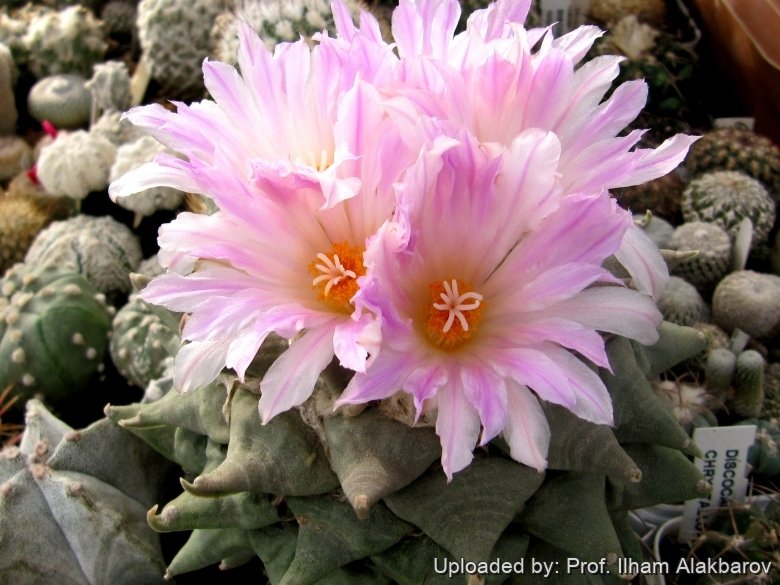
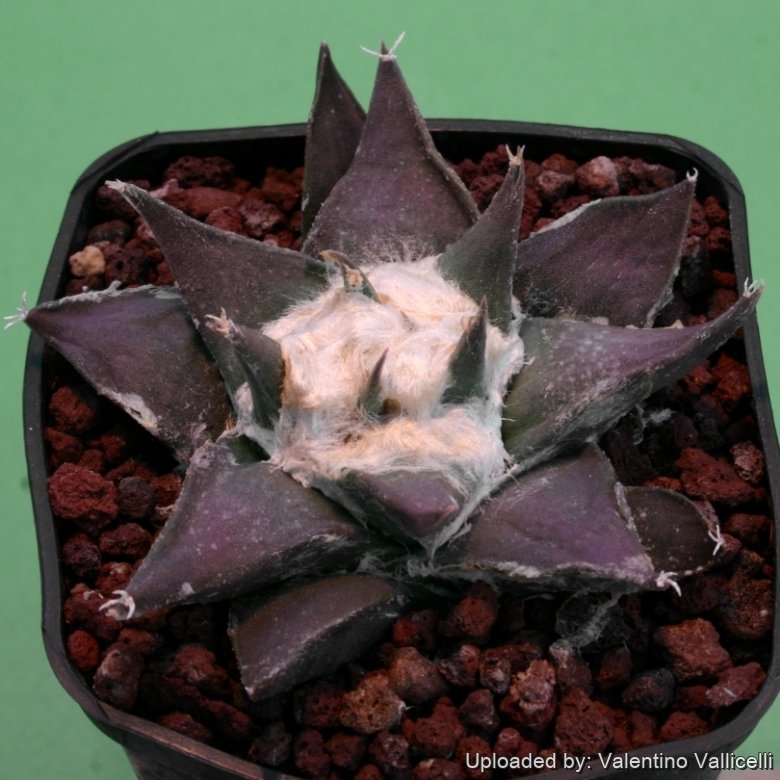
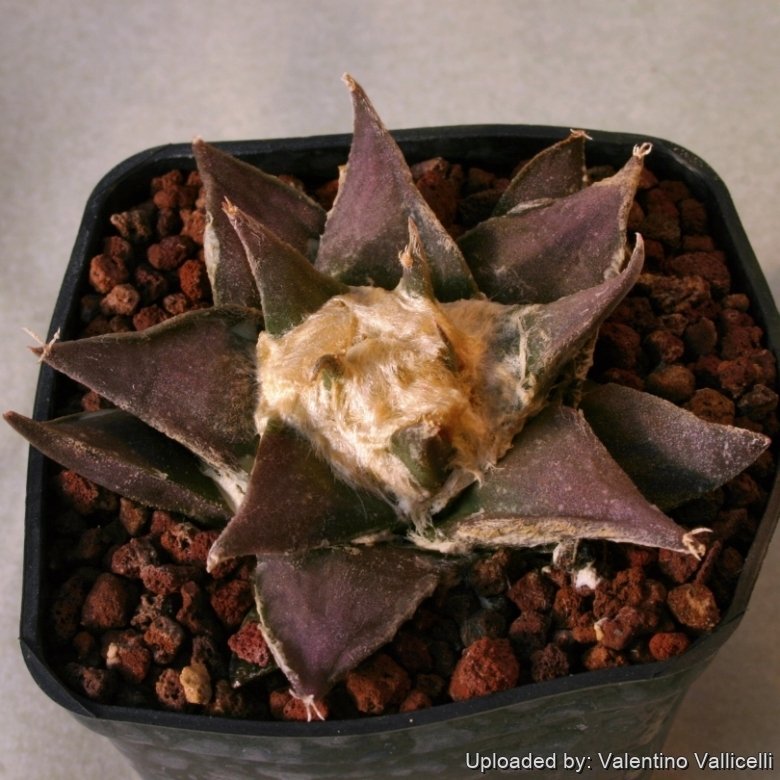
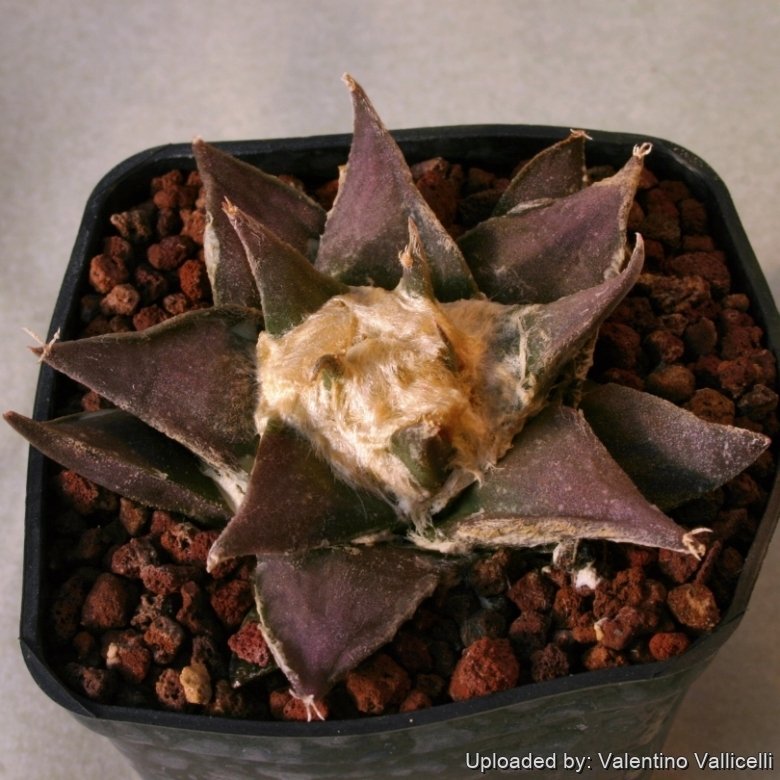
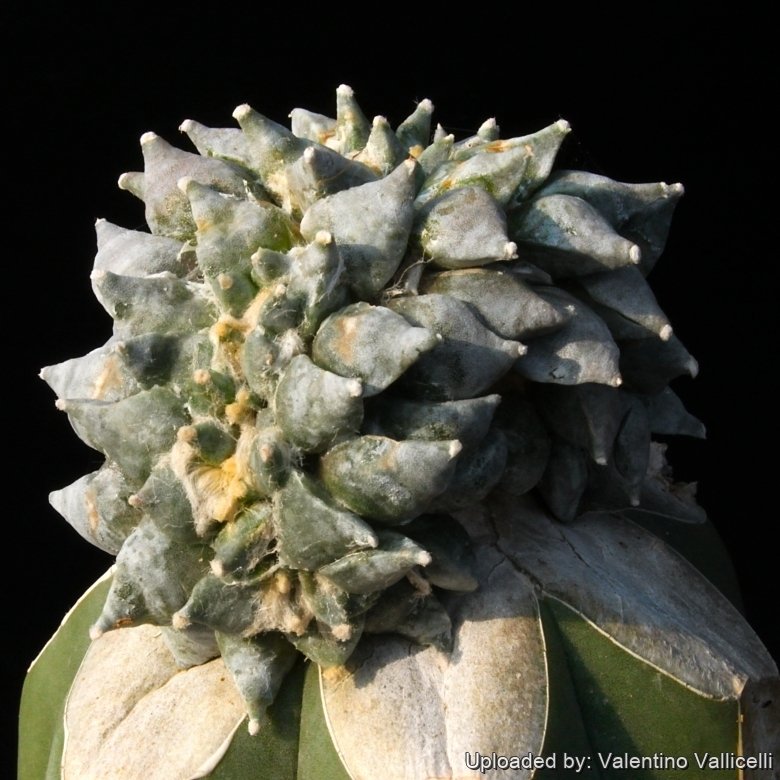
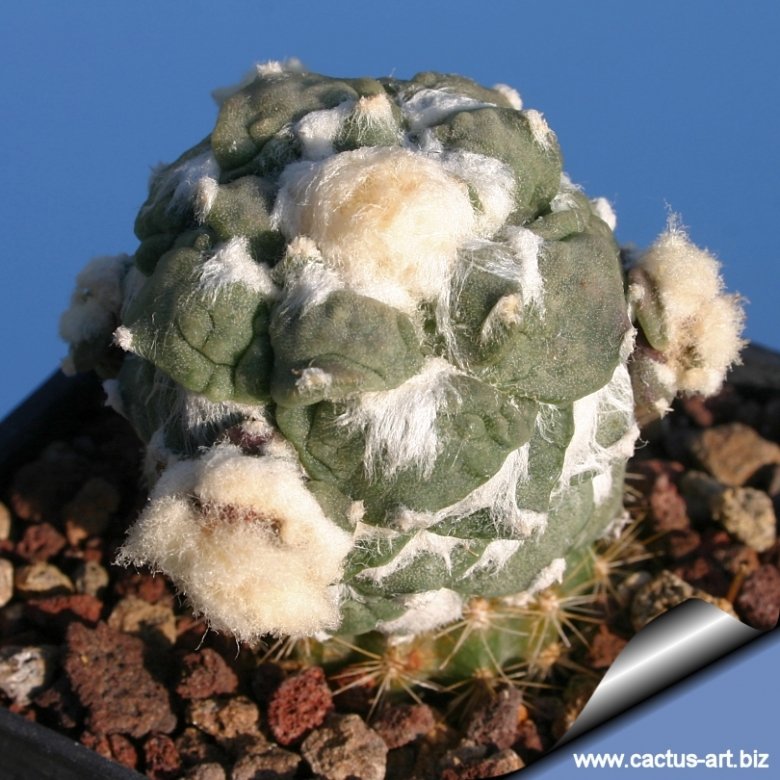
Ariocarpus retususus commonly known as the “Star Rock” is one of the largest species that distinguishes for the fat triangular tubercles forming a starry rosette. It is a widespread and extremely variable plant. Tubercle size and shape vary widely, a terminal areole is sometimes present at the tip. The vast amount of phenotypic variation in the species has led to the erection of several variants and has received numerous unnecessary names of no botanical value.
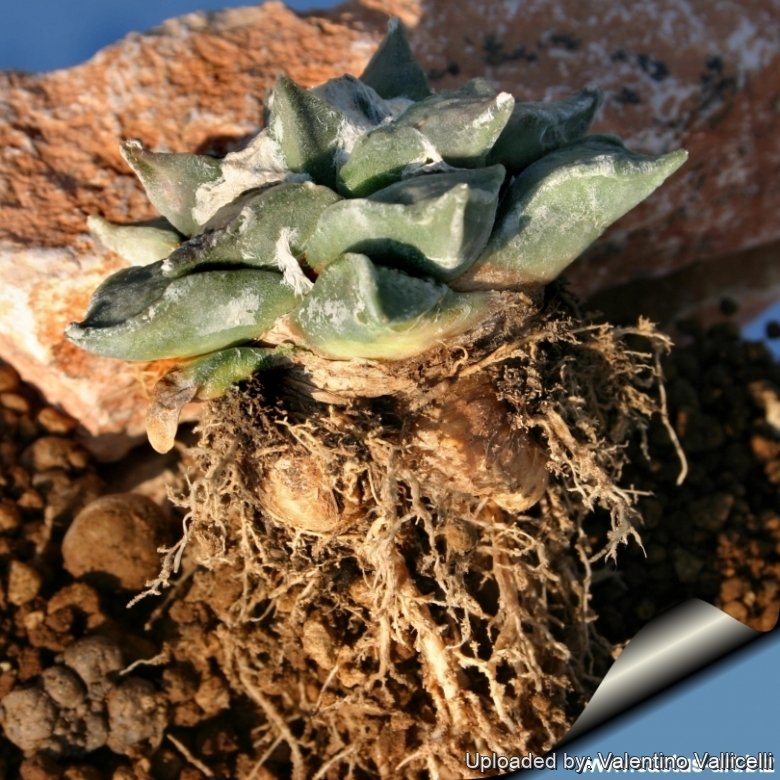
Habit: Solitary, slow growing geophyte cactus with tubercles slightly projecting above ground level. The flat tuberous body is below the soil.
Stem: Grey, or blue-green, flattened, globose, rounded on top, 3-12 cm high, 10-25 cm in diameter.
Tubercles: Leaf-like, divergent, erect, basally compressed, usually becoming attenuate at the apices, convex or nearly flattened adaxially and often with shallow adaxial undulations or wrinkling, not fissured, 1,5-4 cm long, 1-3,5 cm wide, nearly as wide as long.
Areoles: At the tips of the tubercles, rounded, 1-5 mm in diameter often only on younger specimens.
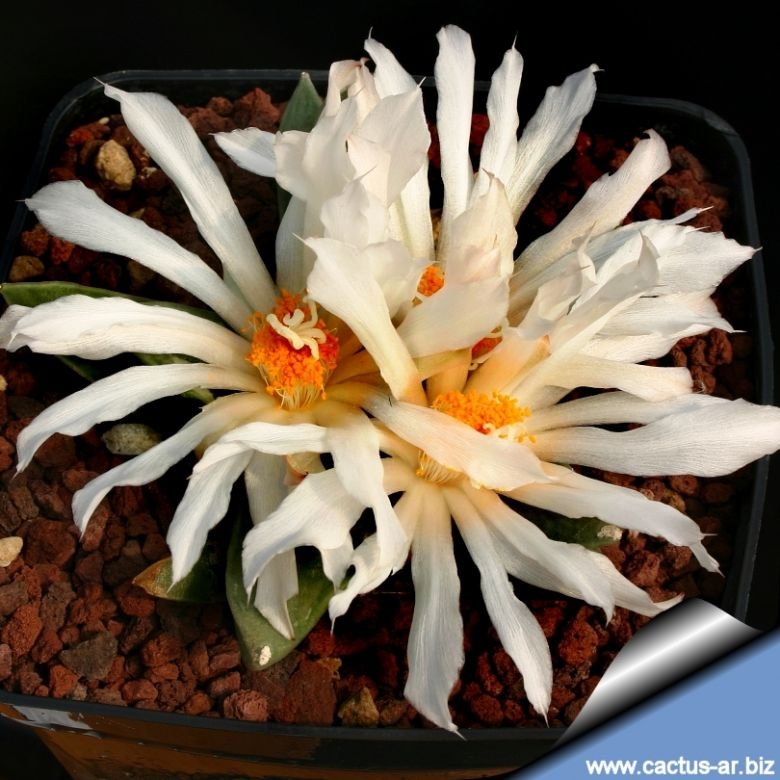
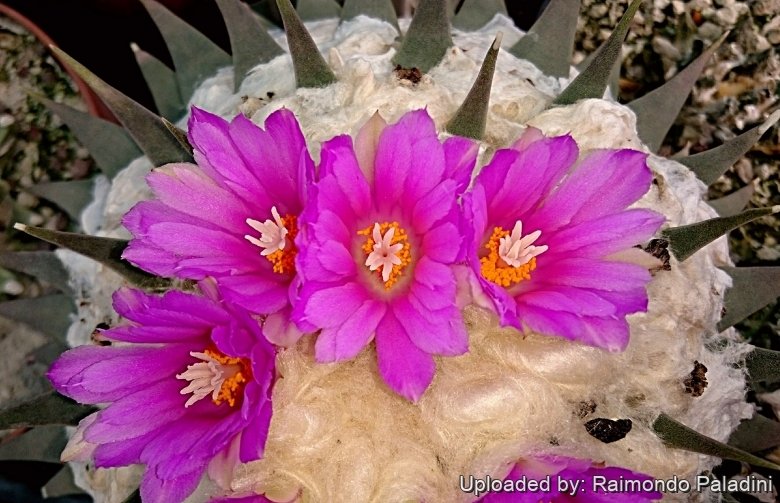
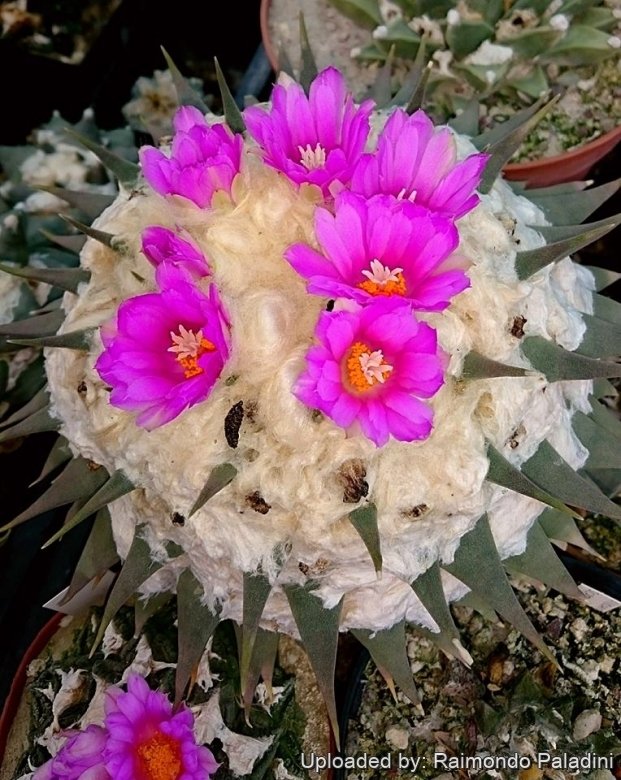
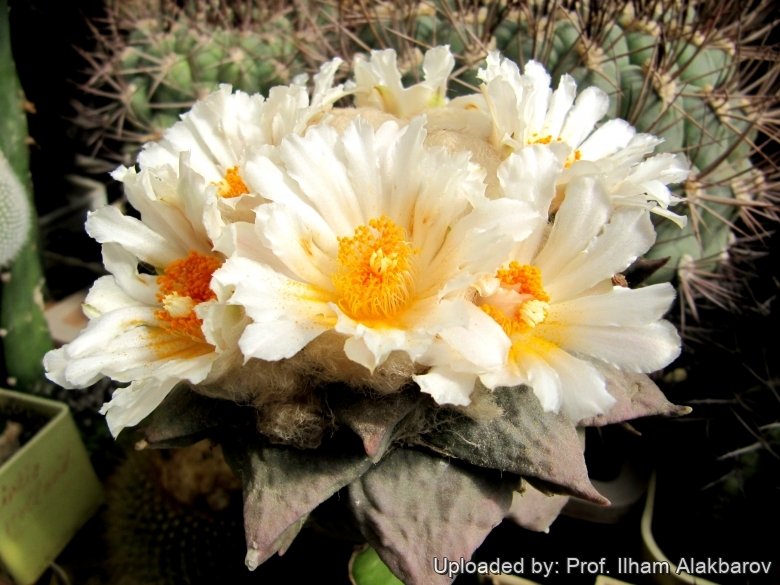
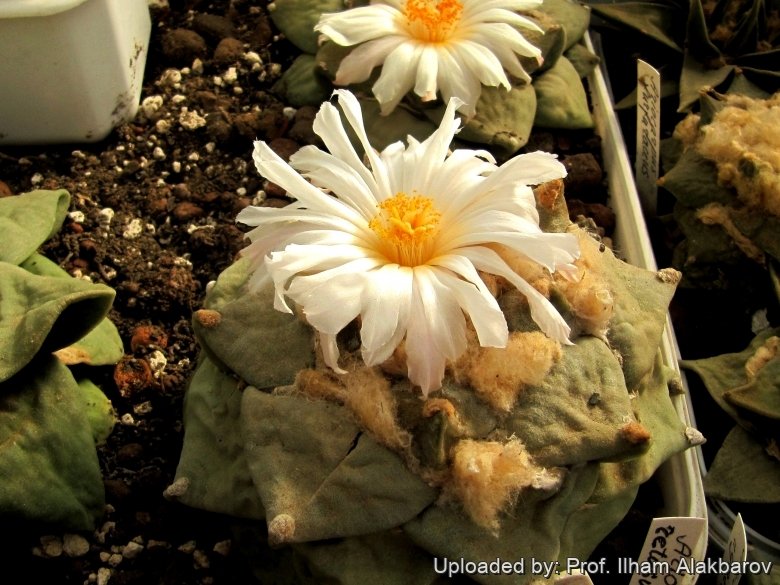
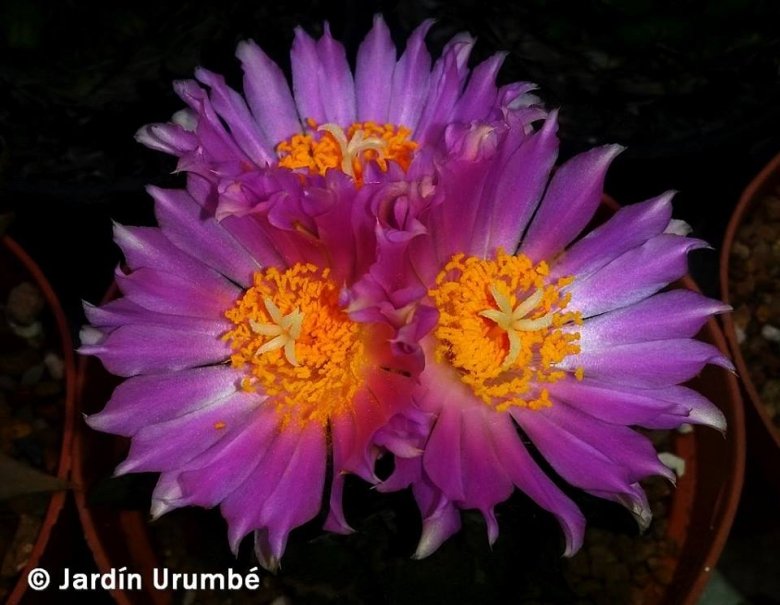
Flowers: Diurnal 4-5cm in diameter, 2-4,2 cm long, white to pink (or magenta), occasionally with reddish midribs.
Roots: Tap root.
Flowering time: Autumn.
Fruits: White, green, or rarely pinkish, 10-25 mm long, 3-10 mm in diameter.
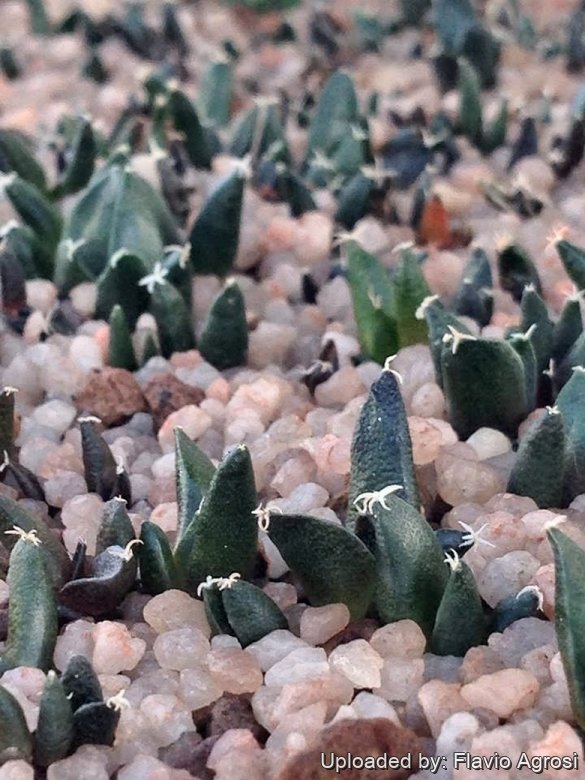
Remarks: All of the Ariocarpus seedlings are spiny and quite different from adult specimens, though the spines are feather-like.
Origin and Habitat
Ariocarpus retusus is widely distributed from north of Saltillo, Coahuila southwards to San Luis Potosi. Also found occur in Tamaulipas and Zacatecas.
Altitude range: High Chihuahuan desert at altitudes of between 1300 and 2000 metres above sea level. This species grows at lower altitudes (around 200 - 800 metres) of the Sierra Madre Oriental it is replaced by Ariocarpus retusus ssp. trigonus.
Habitat: The species tends to favour limestone and rocky slopes in semi-desert vegetation. The original range of this species extended from Coahuila and Nuevo León in the north to San Luis Potosí in the south. However, much of this range has been modified by agricultural development. A. retusus is a perennial and obligate gypsophile, occurring regularly in Muhlenbergia grassland and Bouteloua grassland in Central Mexico. Ariocarpus species are the only succulents present in the Muhlenbergia grassland. Although A. retusus has a relatively extensive area of distribution and a large population, it has a very low density. It is a slow growing species. This species is threatened by illegal collecting and agricultural development, however, they do not represent major threats. It is found in commercial cultivation.
Cultivation and Propagation
This species is slow growing but certainly not as slow as some other types of cacti, it is of easy culture in a well drained, non-organic, free-draining soil compost, with ample water during the growing season. Use of a weak low-nitrogen fertilizer during the growing season can encourage growth. The main threat to their development is root rot. Ariocarpus should be kept dry whenever there is a threat of cold. The appearance of Ariocarpus can benefit greatly by watering the plants from the bottom. This practice will help to keep the “wool” on the top of the plant from becoming matted or discoloured. Need light shade to full sun. Frost Tolerance: Hardy to -10° C.
Propagation: It is probably the easiest species of the genus to raise from seed, but will generally take about 6-10 years to reach flowering size, occasionally grafted.
Bibliography
Major references and further lectures
-
Edward F. Anderson “The Cactus Family” Timber Press, 2001
-
Curt Backeberg “Cactus Lexicon” Sterling Publishing Company, Incorporated, 1978
-
Hiroshi Hirao “Colour encyclopaedia of cacti” Japan 1979 (Japanese language and script)
-
Willy Cullmann, Erich Götz (Dozent Dr.), Gerhard Gröner “The encyclopedia of cacti” Portland, OR: Timber Press, 1986
-
David Hunt, Nigel Taylor “The New Cactus Lexicon” DH Books, 2006
-
James Cullen, Sabina G. Knees, H. Suzanne Cubey “The European Garden Flora Flowering Plants: A Manual for the Identification of Plants Cultivated in Europe, Both Out-of-Doors and Under Glass” Cambridge University Press, 11/Aug./2011
-
Fitz Maurice, B & Fitz Maurice, W.A. 2013. “Ariocarpus retusus.” The IUCN Red List of Threatened Species. Version 2014.3. <www.iucnredlist.org>. Downloaded on 12 December 2014.
From llifle page Anhalonium elongatum
Description
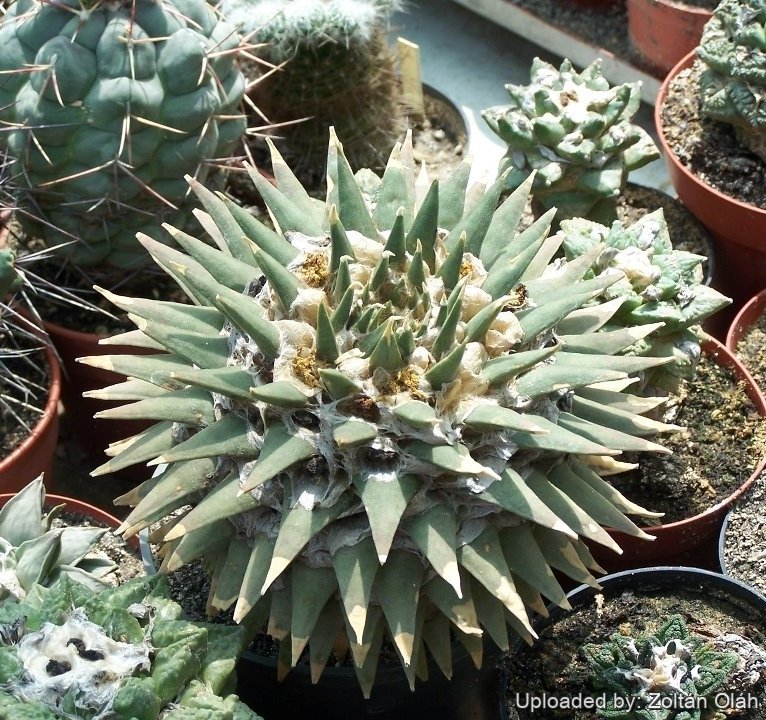
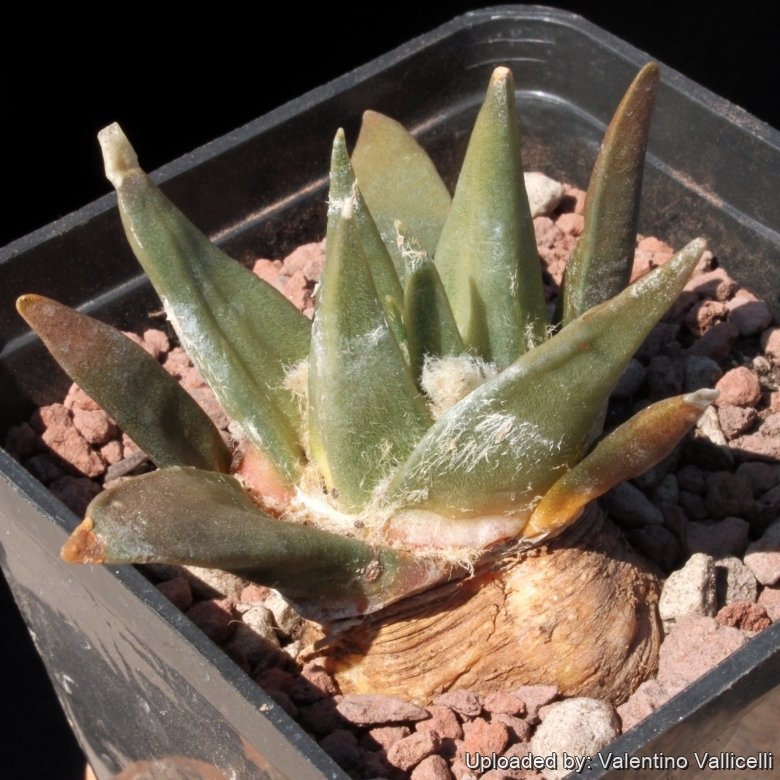
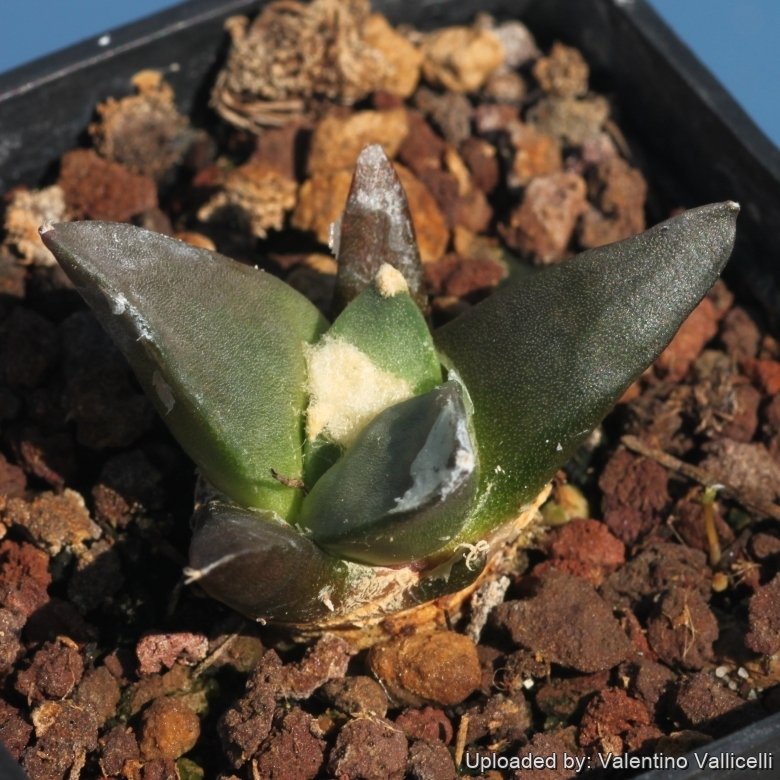
Ariocarpus elongatus differs from the standard Ariocarpus retusus only for its longer and thinner tubercles, all the other characteristics clearly show that they are conspecific.
Taxonomy notes: Ariocarpus retusus is quite variable and has received numerous unnecessary names of no botanical value, representing no more than local phenotypes: Ariocarpus elongatus is one of them. Ariocarpus retusus is one of the largest species that distinguishes for the fat triangular tubercles forming a starry rosette. It is a widespread and extremely variable plant. Tubercle size and shape vary widely, a terminal areole is sometimes present at the tip. The vast amount of phenotypic variation in the species has led to the erection of several variants and has received numerous unnecessary names of controversial botanical value: Ariocarpus elongatus is one of them, but it still has a value for a collector because they identify plants with particular characters.
Habit: Solitary, slow growing geophyte cactus with tubercles slightly projecting above ground level. The flat tuberous body is below the soil.
Stem: Grey, or blue-green, flattened, globose, rounded on top, 3-12 cm high, 10-25 (or more) cm in diameter.
Tubercles: Leaf-like, divergent, becoming attenuate at the apices, not fissured, to 4 cm long, usually 2-2.5 times long than wide.
Areoles: At the tips of the tubercles, rounded, 1-5 mm in diameter only on younger specimens.
Origin and Habitat
Entronque El Huizache, San Luis Potosí, México.
Altitude range: Around 1400-1500 metres above sea level.
Cultivation and Propagation
This species is slow-growing, but certainly not as slow as some other types of cacti. It is of easy cultivation in a well-drained, non-organic, free-draining soil compost, with ample water during the growing season. Use of a weak low-nitrogen fertilizer during the growing season can encourage growth. The main threat to their development is root rot. Ariocarpus should be kept dry whenever there is a threat of cold. The appearance of Ariocarpus can benefit greatly by watering the plants from the bottom. This practice will help to keep the “wool” on the top of the plant from becoming matted or discoloured. It needs light shade to full sun.
Frost Tolerance: Hardy to -10° C
Propagation: It is probably the easiest species of the genus to raise from seed, but will generally take about 6-10 years to reach flowering size, occasionally grafted.
Bibliography
Major references and further lectures
-
Edward F. Anderson “The Cactus Family” Timber Press, 2001
-
Curt Backeberg “Cactus Lexicon” Sterling Publishing Company, Incorporated, 1978
-
Hiroshi Hirao “Colour encyclopaedia of cacti” Japan 1979 (Japanese language and script)
-
Willy Cullmann, Erich Götz (Dozent Dr.), Gerhard Gröner “The encyclopedia of cacti” Portland, OR: Timber Press, 1986
-
David Hunt, Nigel Taylor “The New Cactus Lexicon” DH Books, 2006 ISBN 0953813444, 9780953813445
-
James Cullen, Sabina G. Knees, H. Suzanne Cubey “The European Garden Flora Flowering Plants: A Manual for the Identification of Plants Cultivated in Europe, Both Out-of-Doors and Under Glass” Cambridge University Press, 11/Aug./2011
Source: Anhalonium elongatum, LLIFLE - Encyclopedia of living forms, CC-BY-SA, retrieved 2026-10-25.
From llifle page Anhalonium furfuraceum
Description
Ariocarpus furfuraceus differs from the standard Ariocarpus retusus only for its equilaterally triangular tubercles, all the other characteristics clearly show that they are conspecific. Ariocarpus retusus is quite variable and has received numerous unnecessary names of no botanical value, representing no more than local phenotypes: Ariocarpus furfuraceus is one of them.
Habit: Solitary, slow-growing geophyte cactus, with tubercles slightly projecting above ground level. The large tuberous body is below the soil.
Stem: Grey-green, flattened, globose, rounded on top, 3-12 cm high, 10-25cm in diameter.
Tubercles: The distinctive characteristic of Ariocarpus furfuaraceus are the tubercles, which are equilaterally triangular shaped, divergent, convex or nearly flattened adaxially and often with shallow adaxial undulations or wrinkling, not fissured, 1,5-4 cm long, 1-3,5 cm wide, nearly as wide as long.
Areoles: At the tips of the tubercles, rounded, 1-5 mm in diameter.
Flowers: Diurnal, 4-5 cm in diameter, 2-4 2cm long, white to clear pink.
Root: Tap root.
Flowering time: Autumn.
Remarks: All of the Ariocarpus seedlings are spiny and quite different from adult specimens, though the spines are feather-like.
Fruit: White, green, or rarely pinkish, 10-25 mm long, 3-10 mm in diameter.
Origin and Habitat
Widely distributed in Coahuila, San Luis Potosi, Tamaulipas , Zacatecas and Nuevo Leon.
Source: Anhalonium furfuraceum, LLIFLE - Encyclopedia of living forms, CC-BY-SA, retrieved 2026-10-25.
From llifle page Ariocarpus confusus
Description
Ariocarpus confusus is a peculiar local form somewhat intermediate between Ariocarpus retusus and Ariocarpus trigonus. This two taxa intergrade in the area adjacent to Aramberri (a natural hybrid?). The peculiarity of Ariocarpus confusus is that it usually develops deep magenta flowers (a color not found in any other populations of A. retusus/trigonus), however white or pink flower or variations of the two or even bicoloured flowers in the same plant are not uncommon.
Habit: Solitary globose plant, rising slightly above ground level, rounded on top
Stem: 10 to 20 cm in diameter, 4 to 10 cm tall.
Tubercles: Upright tan brownish/green to magenta/green divergent, not crowded or basally compressed, acute at the apices, flattened and smooth adaxially, not fissured, incurved strongly, 3-8 cm long, 1-2,5 cm broad, usually more long than wide.
Root: Tap root.
Flowers: Extremely variable from Cream-white to rich magenta, 3 to 5 cm in diameter up to 4 cm long.
Blooming season: They come in late autumn or early winter.
Remarks: Ariocarpus confusus is an extremely variable species.
Origin and Habitat
Aramberri area of Nuevo Leon, Mexico
Cultivation and Propagation
This species is slow growing if compared with other retusus forms, but of easy culture in a well drained non-organic free draining soil compost, with ample water during the growing season. Use of a weak low-nitrogen fertilizer during the growing season can encourage growth. The main threat to their development is root rot. Ariocarpus should be kept dry whenever there is a threat of cold. The appearance of Ariocarpus can benefit greatly by watering the plants from the bottom. This practice will help to keep the “wool” on the top of the plant from becoming matted or discoloured. Need light shade to full sun. Frost Tolerance: Hardy to -10°
Propagation: Seed, but will generally take about 6-10 years to reach flowering size, occasionally grafted.
Notes
Ariocarpus confusus is a controversial taxon erected by Halda & Horacek in 1998 to indicate the plants of the Ariocarpus retusus/trigonus complex found in several locations around in the Aramberri region. This Ariocarpus are extremely variable in body form, and also in flower colour. Aramberri is located in a valley between two mountain slopes. On either side of the valley one may find population that looks like the typical Ariocarpus retusus while other resembles the typical Ariocarpus trigonus, with a range of intermediates between the two. Morphologically, plants belonging to the confusus species resemble either the retusus ssp or the trigonus ssp. However, they are easily distinguished from either of these retusus sub-species by their interesting variation is in the flower color, which can range from white through to magenta, a color not found in any other populations of A. retusus/trigonus. Bicoloured flowers also occur.
Source: Ariocarpus confusus, LLIFLE - Encyclopedia of living forms, CC-BY-SA, retrieved 2026-10-25.
From llifle page Ariocarpus furfuraceus f. cristata
Description
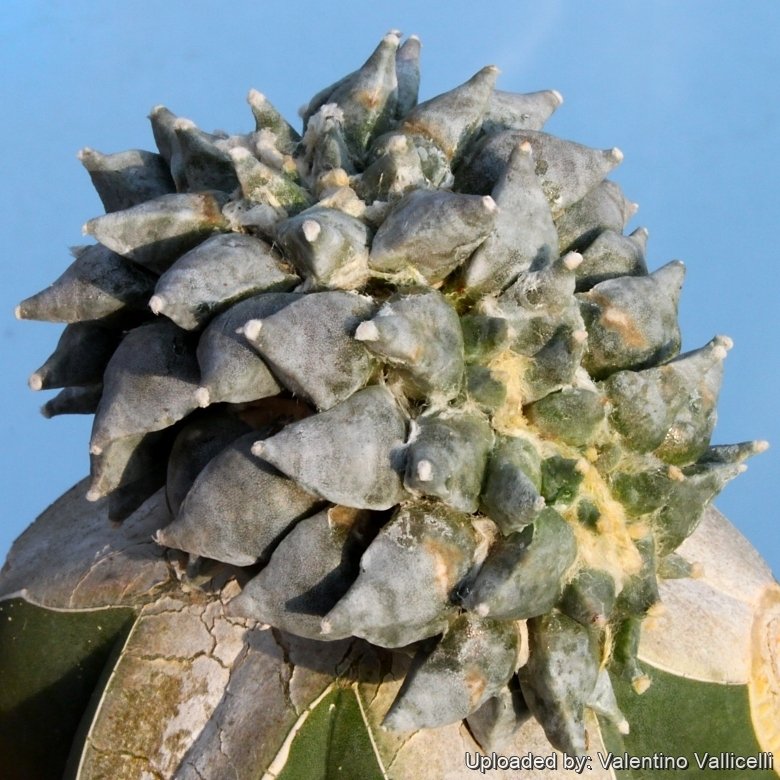
Ariocarpus furfuraceus f. cristata (crested form), only deviate from the standard species for the stem which is fan shaped up to 30 cm (or more) long with age. The typical Ariocarpus furfuraceus (commonly known as the “Living Rock Cactus”) is a solitary, slow-growing geophyte cactus, with tubercles slightly projecting above ground level. The large tuberous body is below the soil. It differs from the standard Ariocarpus retusus only for its equilaterally triangular tubercles, all the other characteristics clearly show that they are conspecific.
Stem: fan shaped Grey-green, flattened, rounded on top, 10-25 cm in width and up to 30 cm or more in spread.
Tubercles: The distinctive characteristic of Ariocarpus furfuaraceus are the tubercles, which are equilaterally triangular shaped, divergent, convex or nearly flattened adaxially and often with shallow adaxial undulations or wrinkling, not fissured, 1,5-4 cm long, 1-3,5 cm wide, nearly as wide as long.
Areoles: At the tips of the tubercles, rounded, 1-5 mm in diameter.
Flowers: Diurnal, 4-5 cm in diameter, 2-4 2cm long, white to clear pink.
Root: Tap root.
Flowering time: Autumn.
Fruit: White, green, or rarely pinkish, 10-25 mm long, 3-10 mm in diameter.
Origin and Habitat
Garden origin (Nursery produced cultivar)
Cultivation and Propagation
It is not too difficult in a greenhouse, although grows slowly. It is often seen as a grafted plant but can grow on its own roots too.
Soil: Use mineral well permeable mineral soil with little organic matter (peat, humus).
Exposure: They need a good amount of light shade to full sun this help to keep the plants healthy, although slow growth.
Watering: Water sparingly from March till October (weekly during summertime, if the weather is sunny enough), with a little fertilizer added. Less or no water during cold winter months, or when night temperatures remain below 10° to prevent root loss. It is sensitive to overwatering (rot prone).
Fertilization: Feeding may not be necessary at all if the compost is fresh then, feed in summer only if the plant hasn’t been repotted recently. Do not feed the plants from September onwards as this can cause lush growth which can be fatal during the darker cold months.
Hardiness: Keep perfectly dry in winter at temperatures from 5 to 15 degrees centigrade. (but it is relatively cold resistant and hardy to -10° C, or possibly colder for short periods) In the rest period no high atmospheric humidity!! (Temperature Zone: USDA 9-11)
Crested growth: Unlike ‘monstrose’ varieties of plants, where the variation from normal growth is due to genetic mutation, crested growth can occur on normal plants. Sometimes it’s due to variances in light intensity, or damage, but generally the causes are unknown. A crested plant may have some areas growing normally, and a cresting plant that looks like a brain, may revert to normal growth for no apparent reason. If you have any of the crested part left you need to remove the normal growth and leave the crested part behind this will need to be done regularly.
Propagation: Grafting or cuttings. Plants are usually grafted onto column-shaped cacti but proved to be able to produce their own roots if degrafted. Cuttings will take root in a minimum temperature of 20° C (but better in hot weather). Cuttings of healthy shoots can be taken in the spring and summer. Cut the stem with a sharp, sterile knife, leave the cutting in a warm, dry place for a week or weeks (depending on how thick the cutting is) until a callus forms over the wound. Once the callus forms, the cutting may be inserted in a container filled with firmed cactus potting mix topped with a surface layer of coarse grit. They should be placed in the coarse grit only; this prevents the cut end from becoming too wet and allows the roots to penetrate the rich compost underneath. The cuttings should root in 2 to 6 weeks. Large crested piece must be placed on the soil surface without burying the plant base down in the soil.
Bibliography
Major references and further lectures
-
Edward F. Anderson “The Cactus Family” Timber Press, 2001
-
Curt Backeberg “Cactus Lexicon” Sterling Publishing Company, Incorporated, 1978
-
David Hunt, Nigel Taylor “The New Cactus Lexicon” DH Books, 2006 ISBN 0953813444, 9780953813445
-
James Cullen, Sabina G. Knees, H. Suzanne Cubey “The European Garden Flora Flowering Plants: A Manual for the Identification of Plants Cultivated in Europe, Both Out-of-Doors and Under Glass” Cambridge University Press, 11/Aug./2011
Source: Ariocarpus furfuraceus f. cristata, LLIFLE - Encyclopedia of living forms, CC-BY-SA, retrieved 2026-10-25.
From llifle page Ariocarpus prismaticus
Description
Solitary, slow growing geophyte cactus with tubercles slightly projecting above ground level. The flat tuberous body is below the soil.
Stem: Grey, or blue-green, flattened, globose, rounded on top, 3-12cm high, 10-25cm in diameter.
Tubercles: Leaflike, divergent, erect, basally compressed, usually becoming attenuate at the apices, convex or nearly flattened adaxially and often with shallow adaxial undulations or wrinkling, not fissured, 1.5-4cm long, 1-3.5cm wide, nearly as wide as long;
Areoles: At the tips of the tubercles, rounded, 1-5mm in diameter often only on younger specimens
Flowers: Diurnal 4-5cm in diameter., 2-4 2cm long; white to pink (or magenta), occasionally with reddish midribs,
Roots: Tap root
Flowering time: October
Fruits: White, green, or rarely pinkish, 10-25mm long, 3-10mm in diameter.
Remarks: Ariocarpus retusus is an extremely variable species,. Tubercle size and shape vary widely, a terminal areole is sometimes present at the tip. The vast amount of phenotypic variation in the species has led to the erection of several variants:
Origin and Habitat
Widely distributed from north of Saltillo, Coahuila southwards to San Luis Potosi, SLP, Also found occur in Tamaulipas , Zacatecas and Nuevo Leon.
Habitat: High Chihuahuan desert at altitudes of between 1300 and 2000 metres, on calcareous hillsides and occasionally gypsum plains. At lower altitudes (200 - 800m) of the Sierra Madre Oriental it is replaced by A. retusus ssp. trigonus.
Source: Ariocarpus prismaticus, LLIFLE - Encyclopedia of living forms, CC-BY-SA, retrieved 2026-10-25.
From llifle page Ariocarpus furfuraceus f. monstruosus
Description
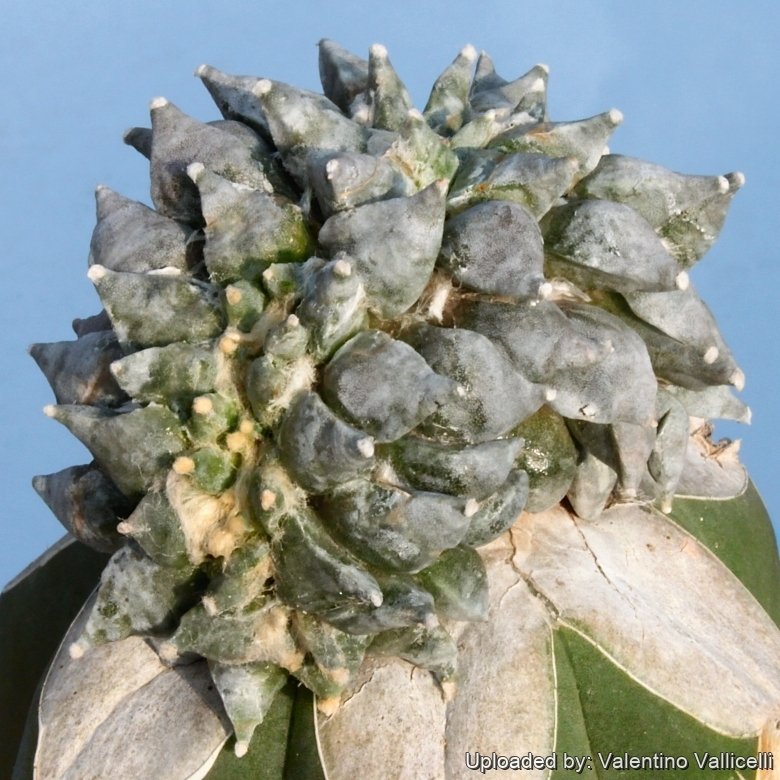
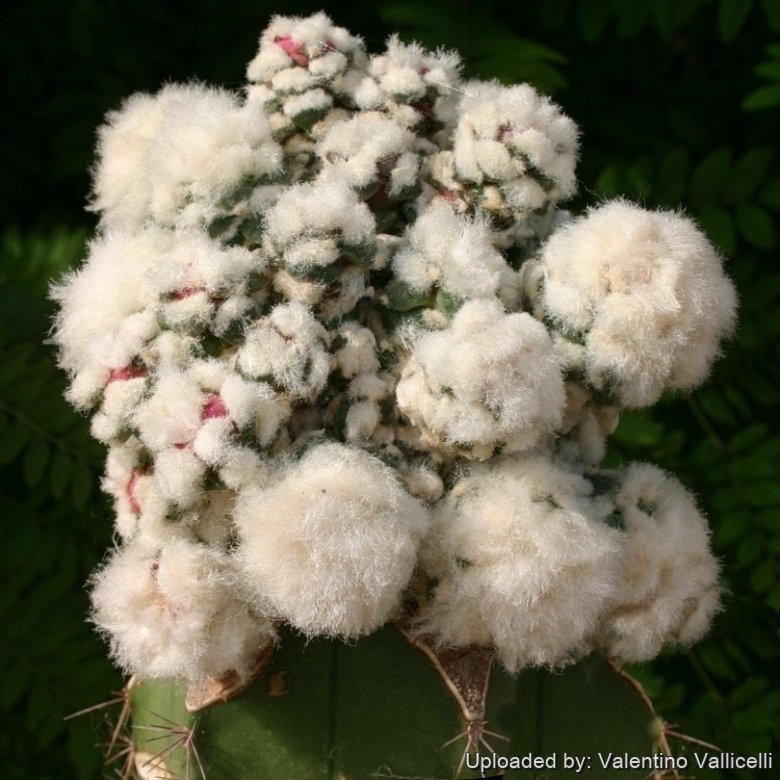
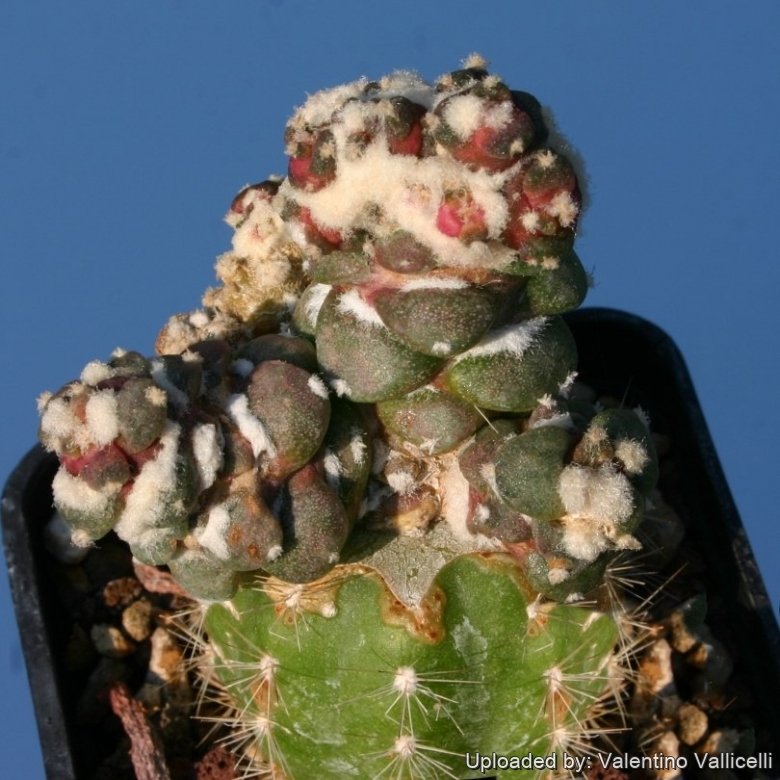
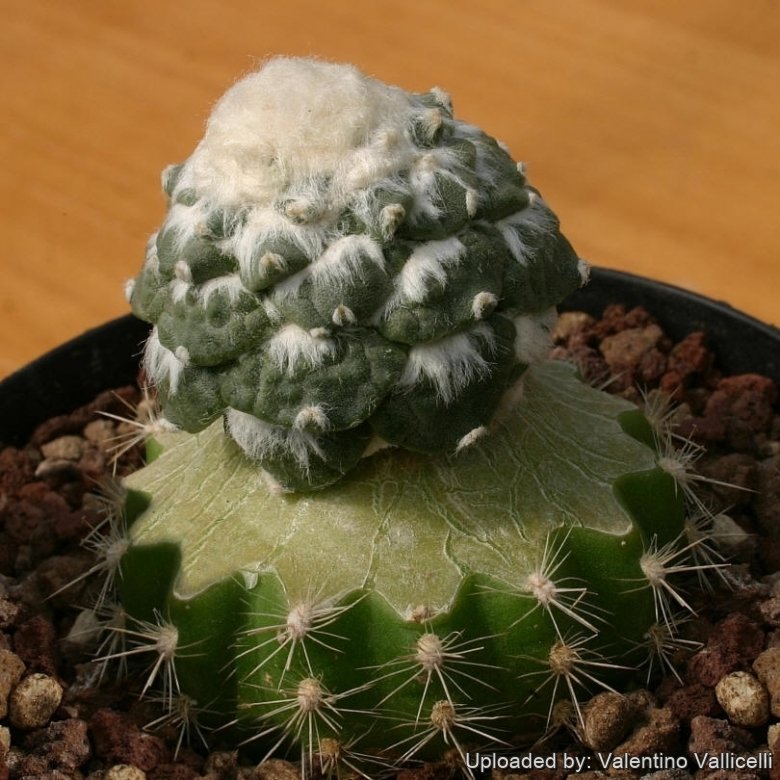
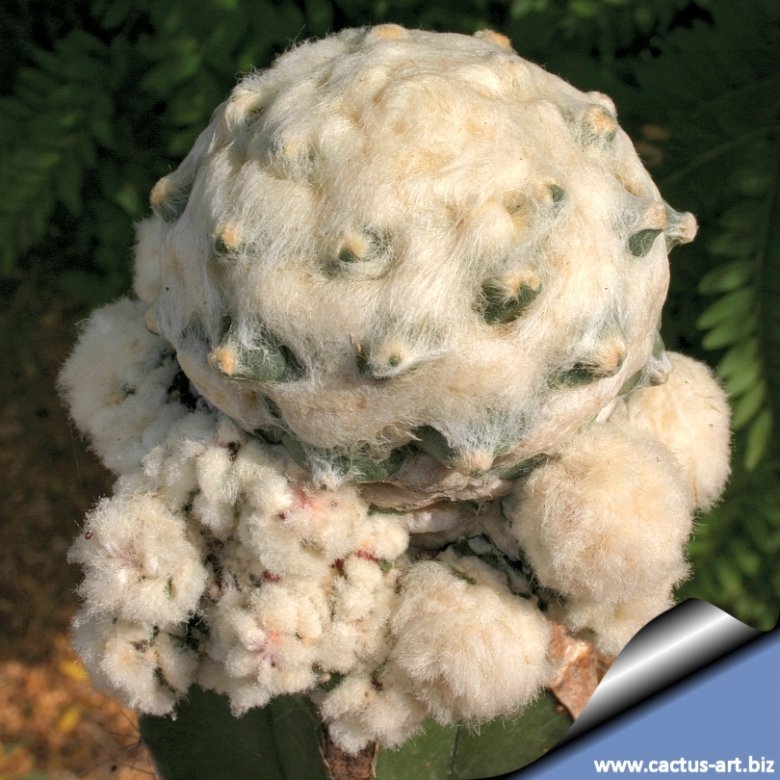
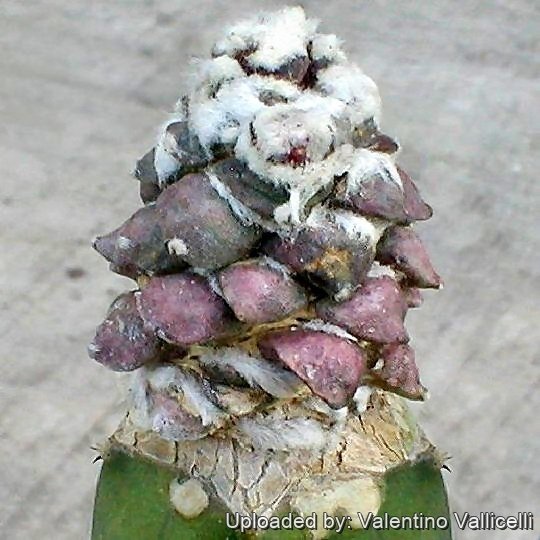
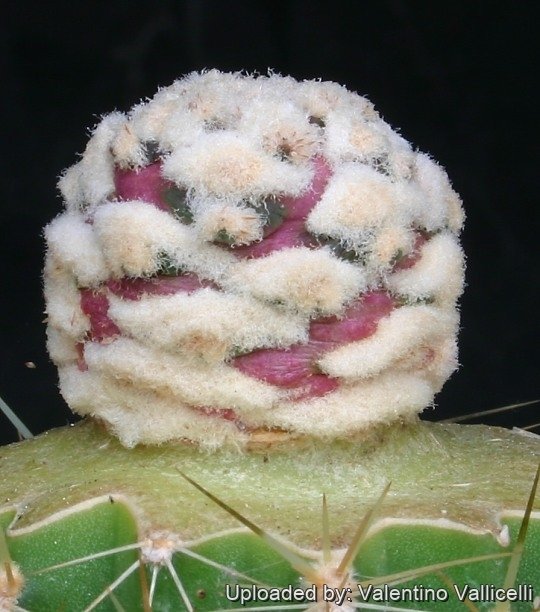
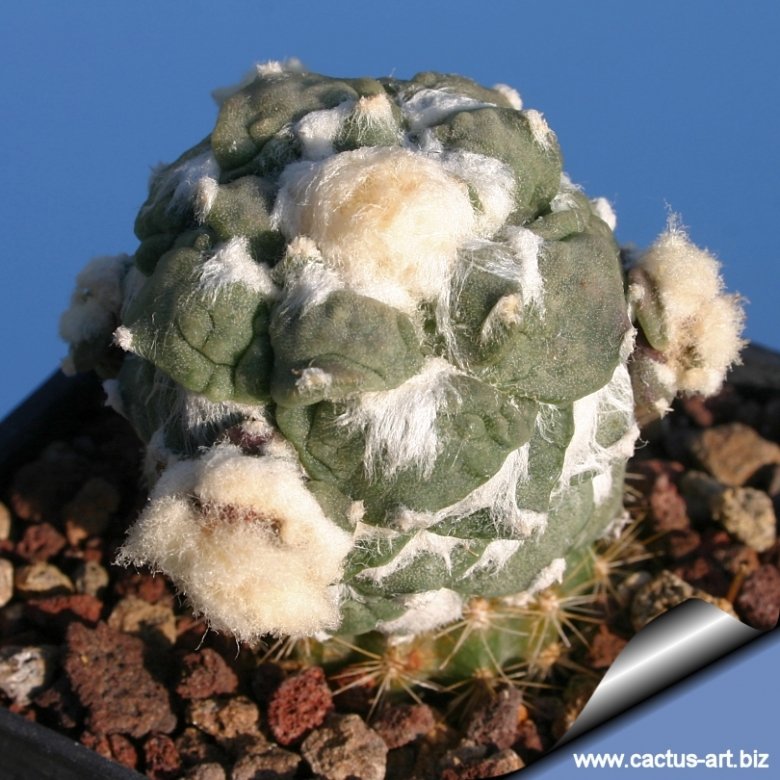
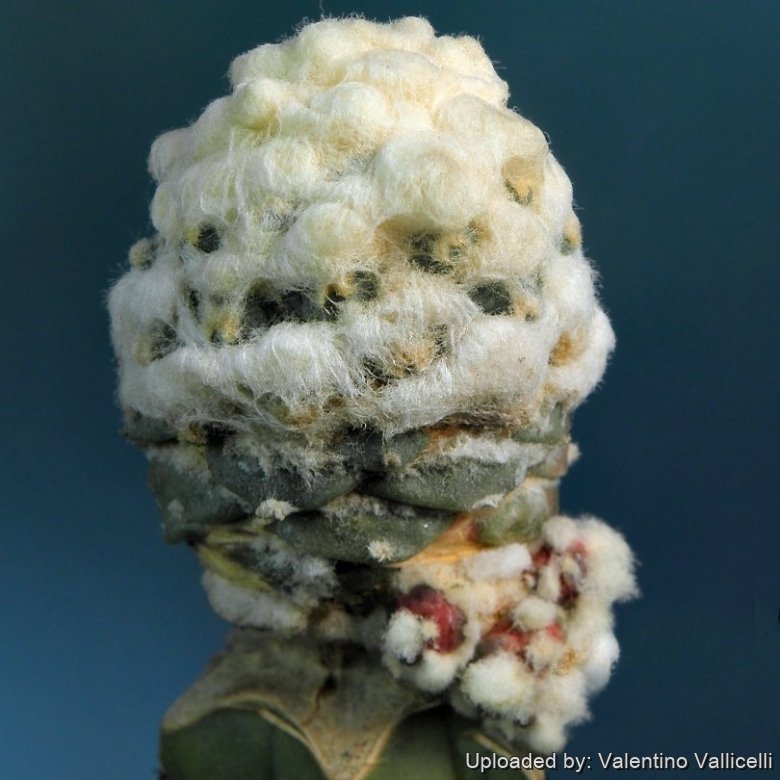
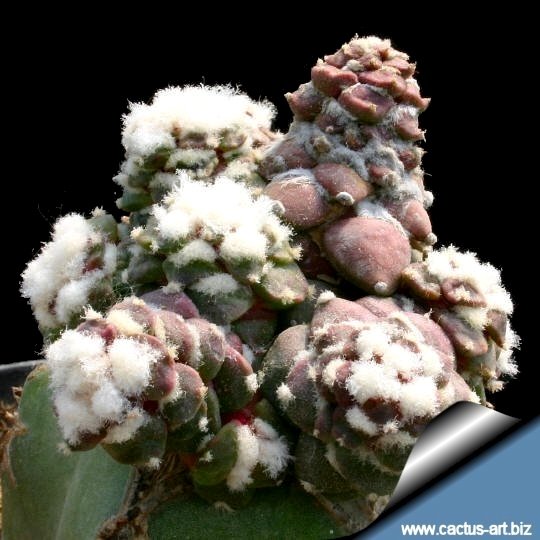
There are several sligtly different monstrous cultivars that differ from the standard solitary Ariocarpus furfuraceus for the free branching habit, for the thinner elongated stems and for the copious production of wool. The distinctive characteristic of this plants are the tubercles, which are stubby, large or equilaterally triangular shaped, divergent, convex or nearly flattened with shallow adaxial undulations or wrinkling, not fissured, 1.5-2 cm long, 1-3 cm wide.
Stem: Globose to elongated, rounded on top, about 3-10 cm high, 3-6 cm in diameter (Often grafted specimens grows much more larger depending on grafting stock). The stems are grey, or blue-green often flushed in violet in full sun and, typically, the new growth (especially if grafted) take a pink colouring.
Areoles: At the tips of the tubercles, rounded, 1-5 mm in diameter with abundant white wool in the axil.
Flowers: Not known
Root: Tap root
Cultivation and Propagation
The plants of this cultivars are often grafted to accelerate growth as they are extremely slow growing on their own roots, but the grafted plants are typical rather tall growing, compared with plants on their own roots that are usually more flat to the ground. The plants need deep pots to accommodate the napiform unit formed by the stem base and the rootstock (or they will often simply crack your pots), and a loose mineral soil with a well-drained substrate. They need a good amount of light. Watering can be done weekly during summertime, if the weather is sunny enough, with a little fertilizer added. Kept this way, plants will show a healthy, although slow growth.
Propagation: Usually by grafting or occasionally by cuttings in late spring to summer, just take a cutting of the plant let it dry for 1 or 2 weeks and stuff it in the ground (preferably dry, loose, extremely well draining soil).
Source: Ariocarpus furfuraceus f. monstruosus, LLIFLE - Encyclopedia of living forms, CC-BY-SA, retrieved 2026-10-25.
Cultivars and forms (19)
Subspecies (4)
Cultivars (11)
- Ariocarpus retusus cv. Cauliflower
- Ariocarpus retusus cv. Frumdosus
- Ariocarpus retusus cv. Frumdosus brevituberosus
- Ariocarpus retusus cv. Frumdosus f. variegata
- Ariocarpus retusus cv. Maruibo
- Ariocarpus retusus cv. Maruibo Cauliflower
- Ariocarpus retusus cv. Maruibo Pectinatus
- Ariocarpus retusus cv. Mituibo
- Ariocarpus retusus cv. Tama Botan
- Ariocarpus retusus cv. Three Finger
- Ariocarpus retusus cv. Trefinger
Gallery