Description
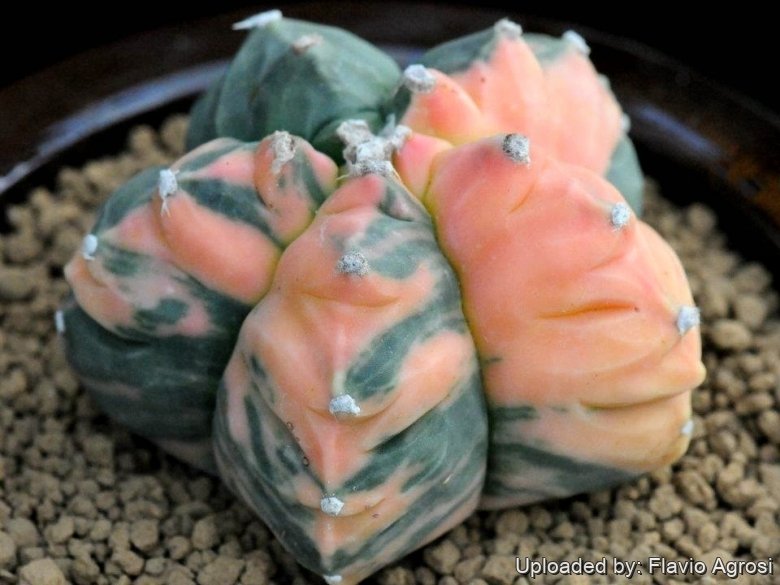
“Kikko” is a rare unmistakable Japanese cultivar distinguished by its pointed tubercles along the ribs edges, in fact its areoles stick out with large notches between them, giving them a saw tooth look. The furrows which appear transversely on the ribs cuts the continuity of the ribs and the plants appears decorated with a geometrical design which is raised above the surface. When viewed from above these plants resemble a tortoise-shell hence the Japanese word ‘Kitsu-kow’ that means “Turtle shell” but at a first glace (especially the nude form) resembles some chinned cacti particularly some Gymocalycium. Usually the young seedlings appears nothing special and looks like normal myriostigma, and barely shows any trace of saw teeth, but they start to produce the distinguishing indentation and turn into an amazing adult as they get 3 to 7 years old. In general the bigger the “saw teeth” are and the rounder and flatter they are, the better.
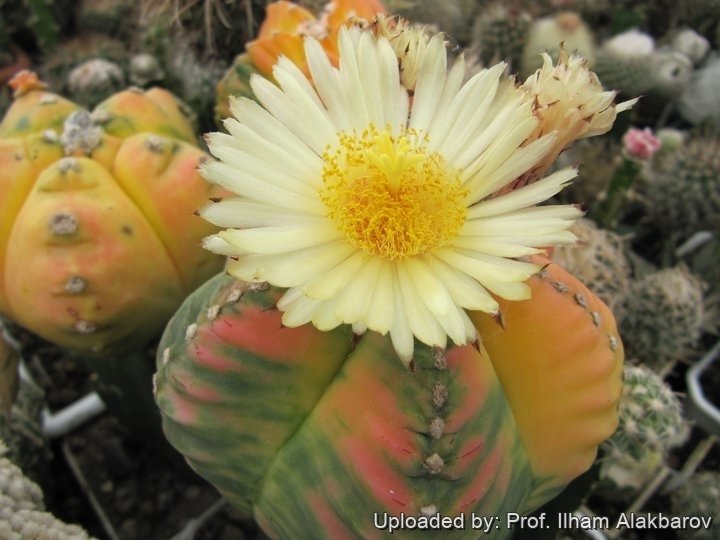
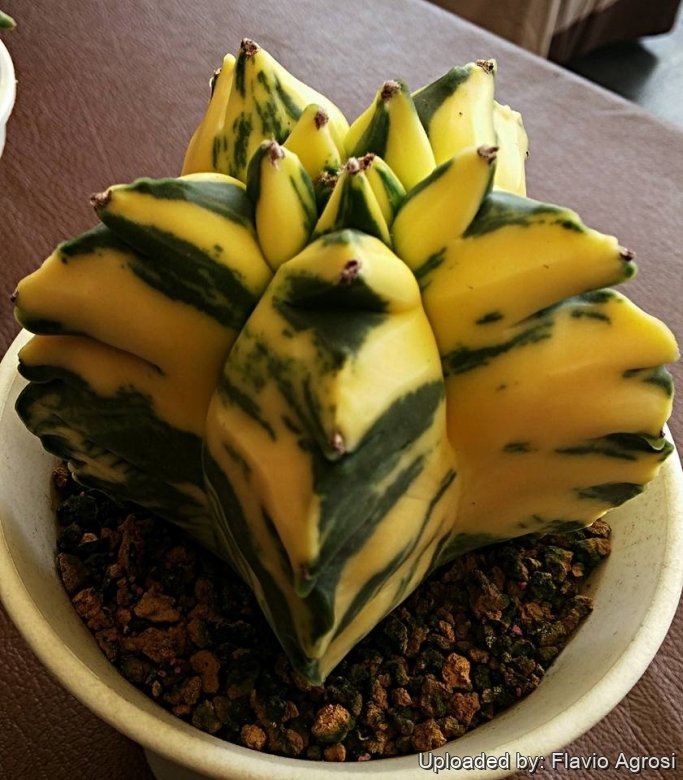
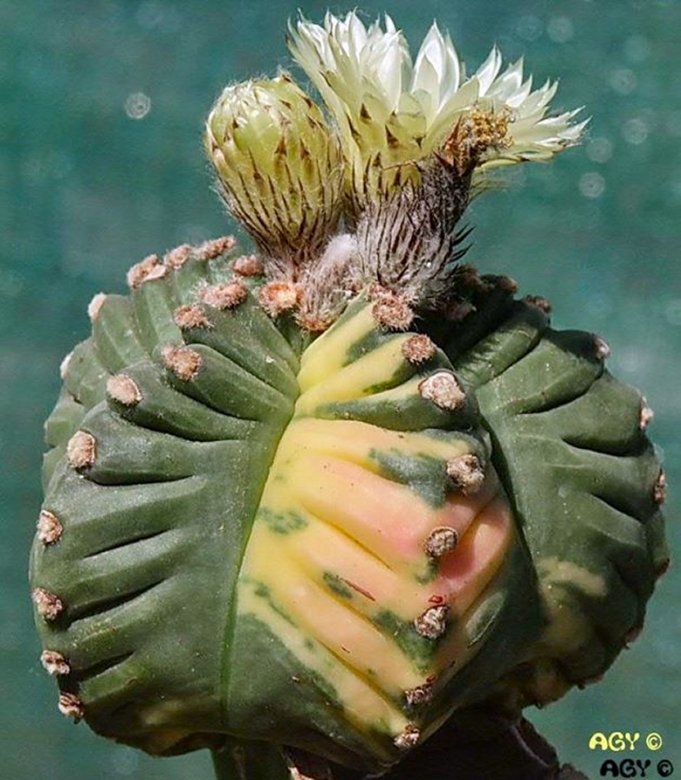
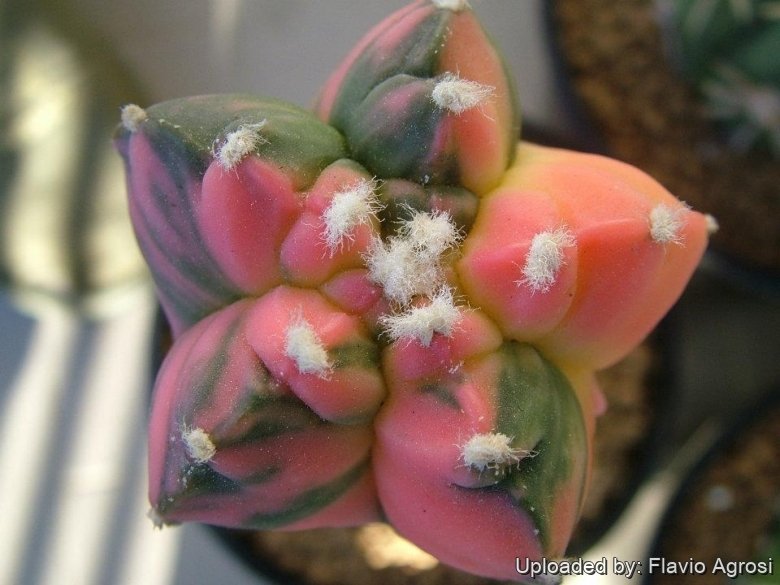
Variegate form: The beautiful variegate form has sectors, patches or stripes with distinct shades of yellow, orange or pink and green.
Stem: Pentagonal to almost spherical, dimension 22-40 cm tall, 5-10 cm in diameter.
Spines: None.
Ribs: Usually 5.
Flowers: Like those of the well known A. myriostigma, pale-yellow, shining-silk.
Blooming season: Spring to summer.
Origin and Habitat
Japan, Garden origin (Nursery produced cultivar)
Cultivation and Propagation
Variegated and albinous cacti are regarded as choice and difficult in cultivation, but despite that many of them are relatively easy to grow. But be aware that they cannot tolerate prolonged exposure to direct sun light (especially during the hottest summer days), so grow them in half-shade or under filtered sun. They are sometime seen as grafted plants, but many grow well on their own roots, too.
On the contrary, the albinos can survive only if grafted on a strong green base.
Use mineral well-permeable substratum with little organic matter (peat, humus). Water sparingly from March till October and keep perfectly dry in winter at temperatures from 5 to 15 degrees centigrade. (In general these plants are more tender and cannot endure freezing temperatures ) In the rest period no high atmospheric humidity!!
Propagation: Usually by seed. Plants are often grafted onto column-shaped cacti.
Gallery