Description
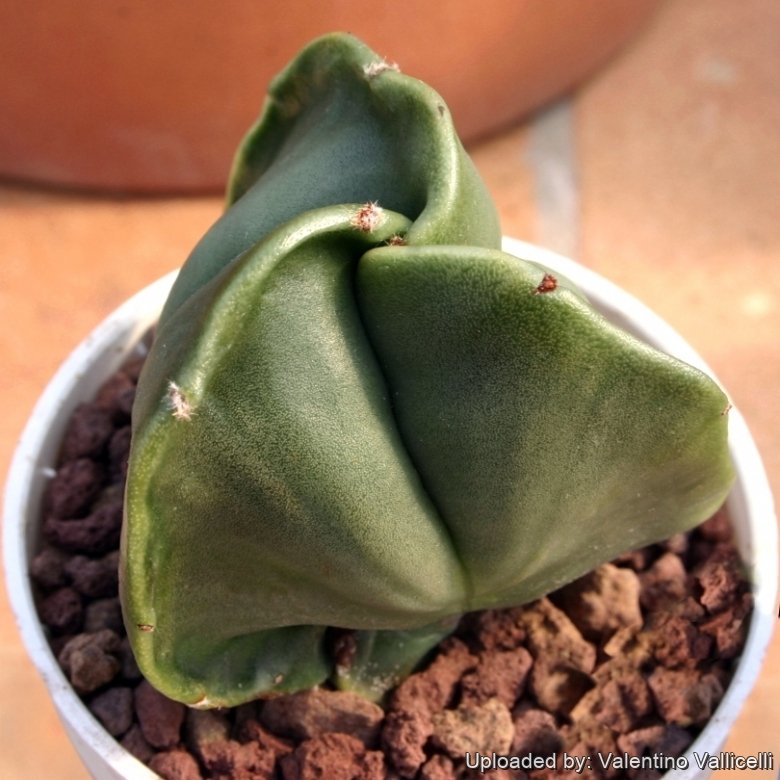
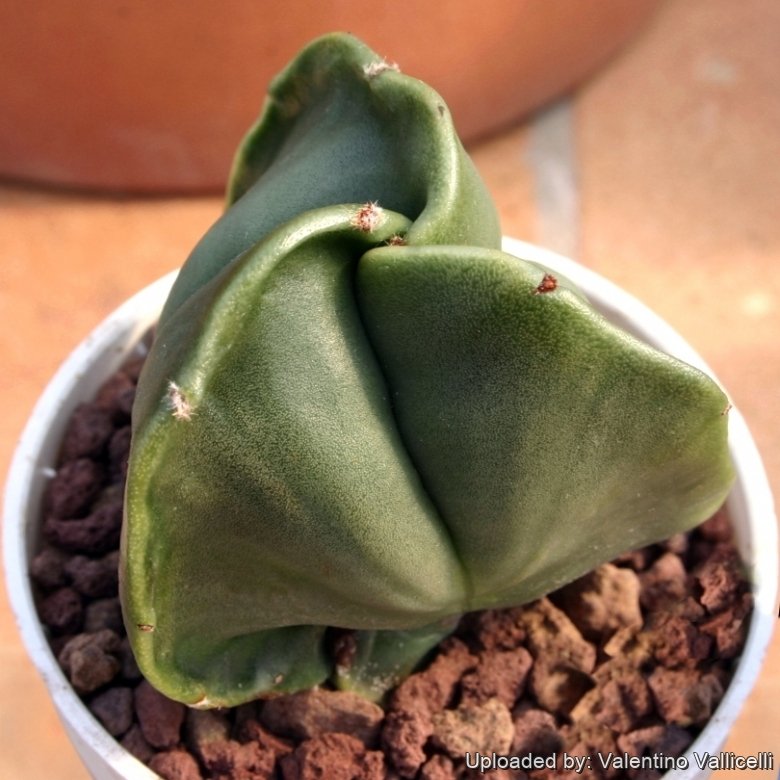
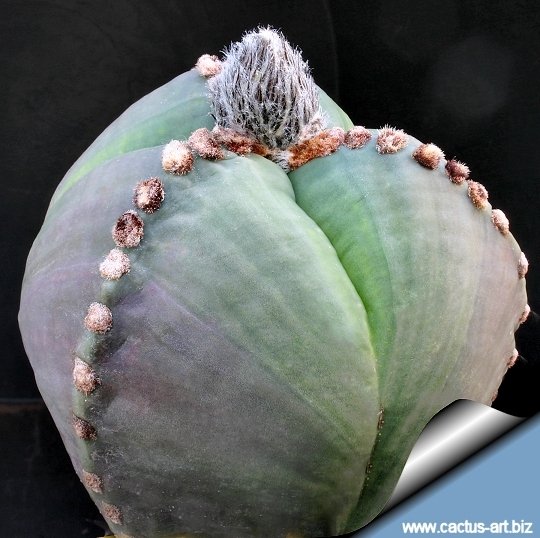
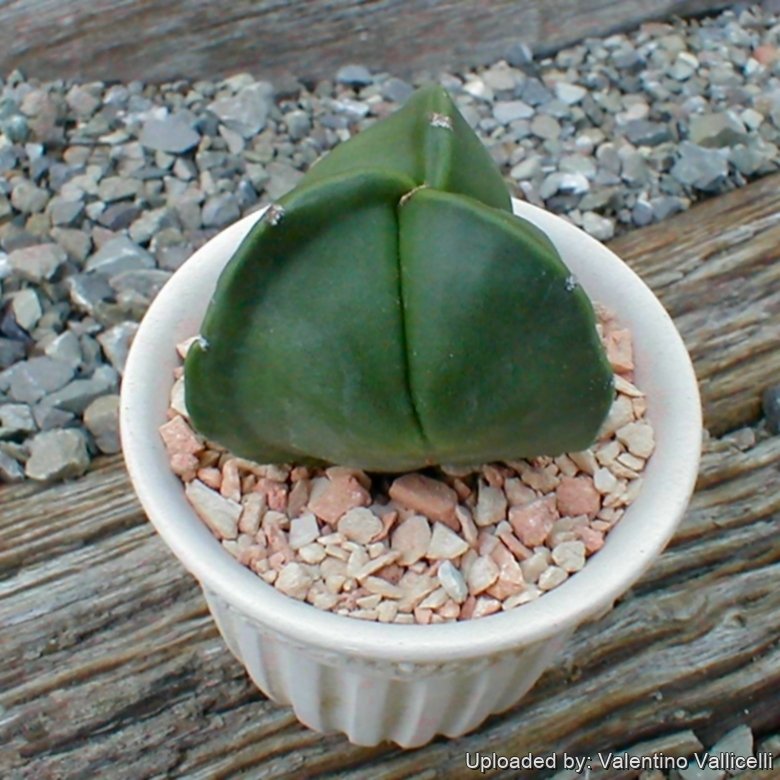
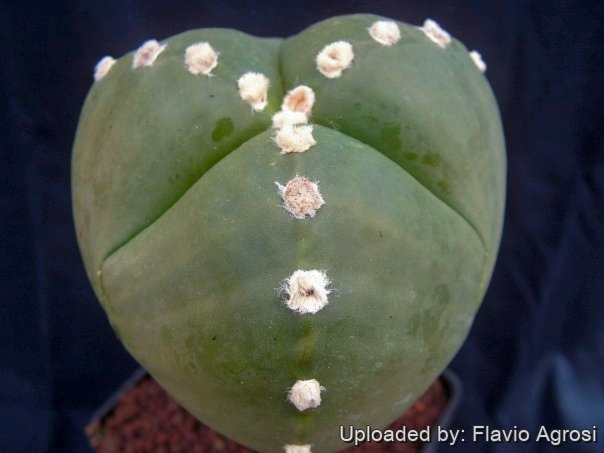
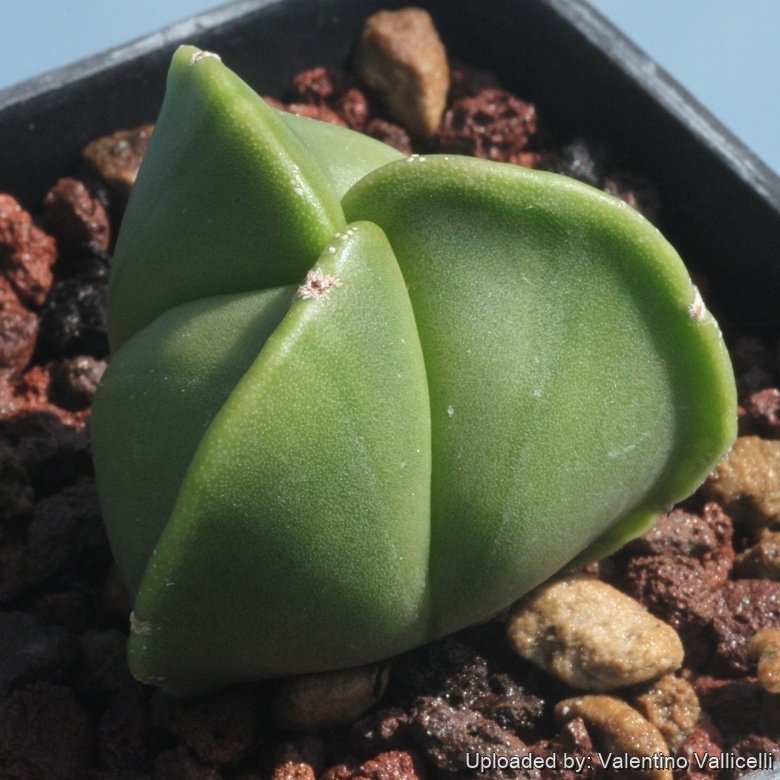
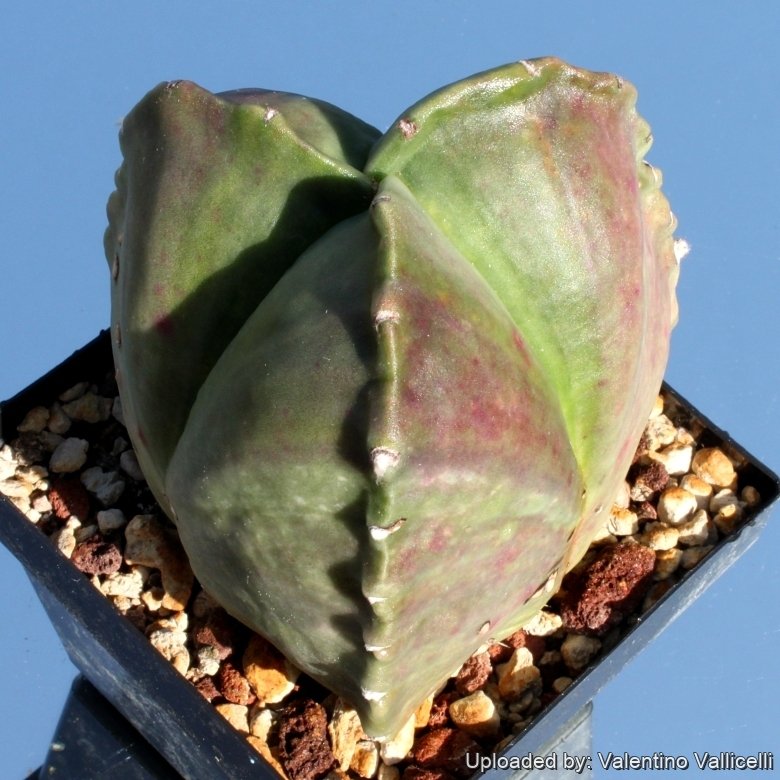
It is a strikingly pretty cultivar with only three ribs lacking or mostly lacking the white flecks that cover the epidermis of the standard myriostigma, giving it a bright green, blue-green, gray-green or mauve-green color overall depending on clones.
Stem: Spherical to shortly columnar with age. The stems is smooth and can be over 50 cm tall and 5-10 cm in diameter.
Spines: None.
Ribs: 3. This cultivar tends to be unstable, and some of the three ribbed specimens develop additional ribs as they age. Old and big plants which maintain the typical three ribbed shape are very very prized.
Flowers: 5 cm in length, pale-yellow, silk-shining unlike the white-spotted plant, occasionally with an orange gloom.
Blooming season: Spring or early summer, They take up to 6 years to bloom.
Fruit: Dry, dehisces towards the apex forming about 5 star shaped lobes. With few seeds.
Origin and Habitat
Japan, Garden origin (Nursery produced cultivar)
Cultivation and Propagation
Although regarded as a choice and difficult plant is not too difficult in a greenhouse. It is sometime seen as a grafted plant but grows very well on its own roots too.
Growth rate: This cultivar tends to be slower growing.
Soil: Use mineral well permeable mineral soil with little organic matter (peat, humus).
Watering: Water sparingly from March till October (weekly during summertime, if the weather is sunny enoughand) , with a little fertilizer added.
Hardyness: keep perfectly dry in winter at temperatures from 5 to 15 degrees centigrade. (but it is relatively cold resistant and hardy to -7° (-10°)C for short periods) In the rest period no high atmospheric humidity!!
Exposure: They need light shade to full sun this help to keep the plants healthy, although slow growth.
Propagation: Almost exclusively by seed that germinate rapidly. Plants are sometimes grafted onto column-shaped cacti. Seed Collecting: Allow unblemished fruit to ripen; clean and dry seeds. Properly cleaned, seed can be successfully stored.
Gallery