Publication: Cact. Fl. Silvestre Chile 116. 1989
Description
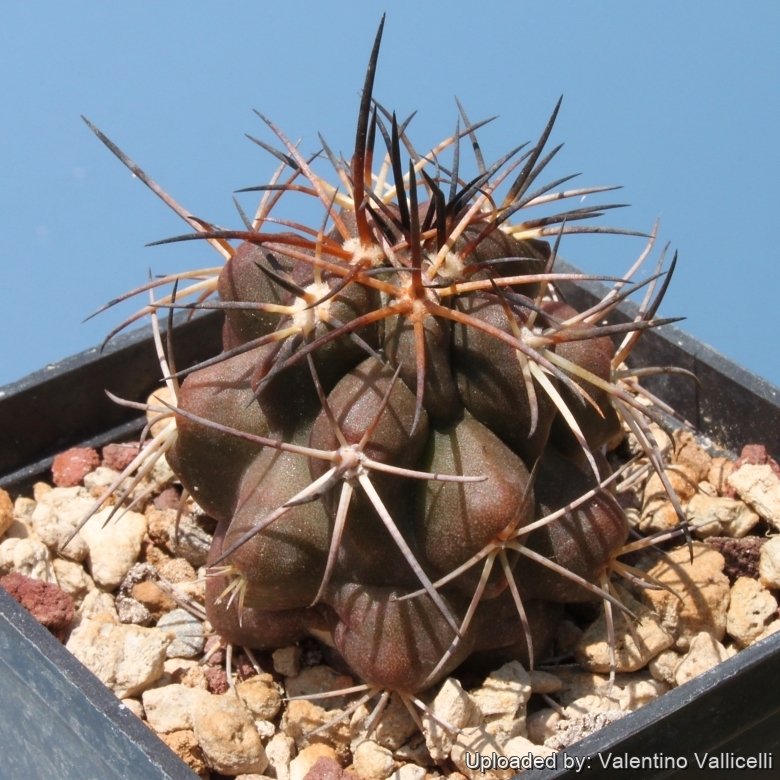
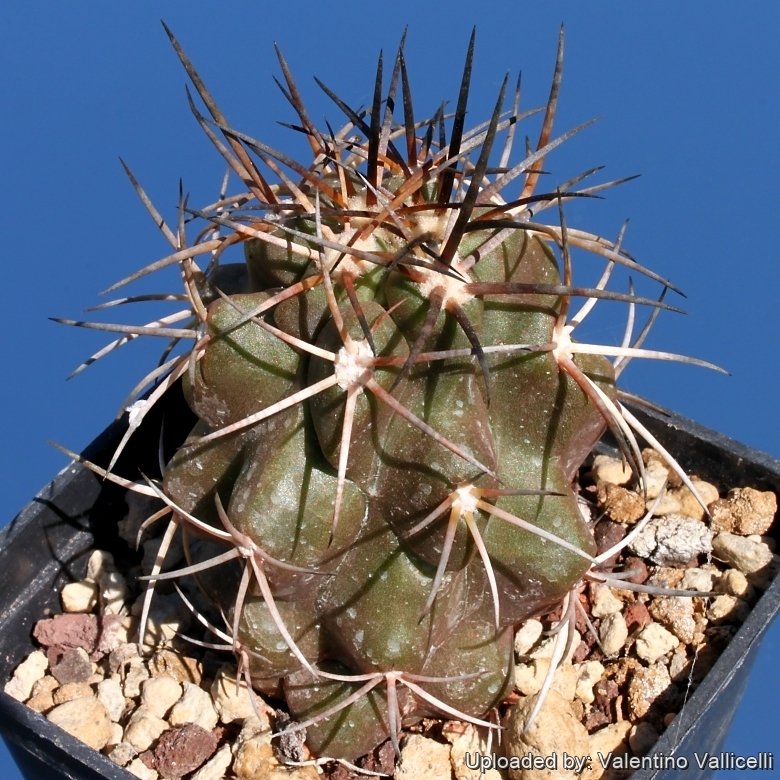
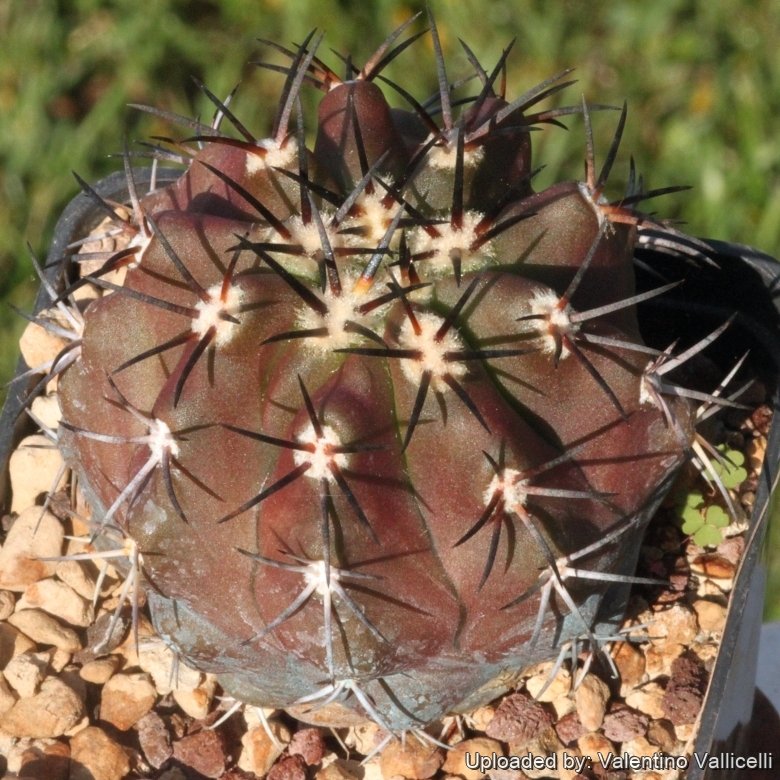
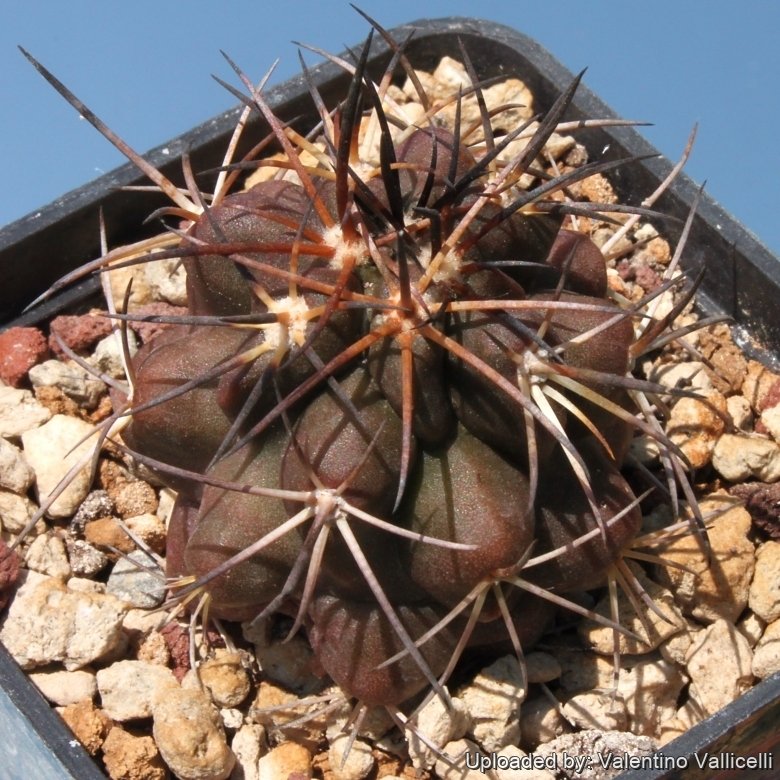
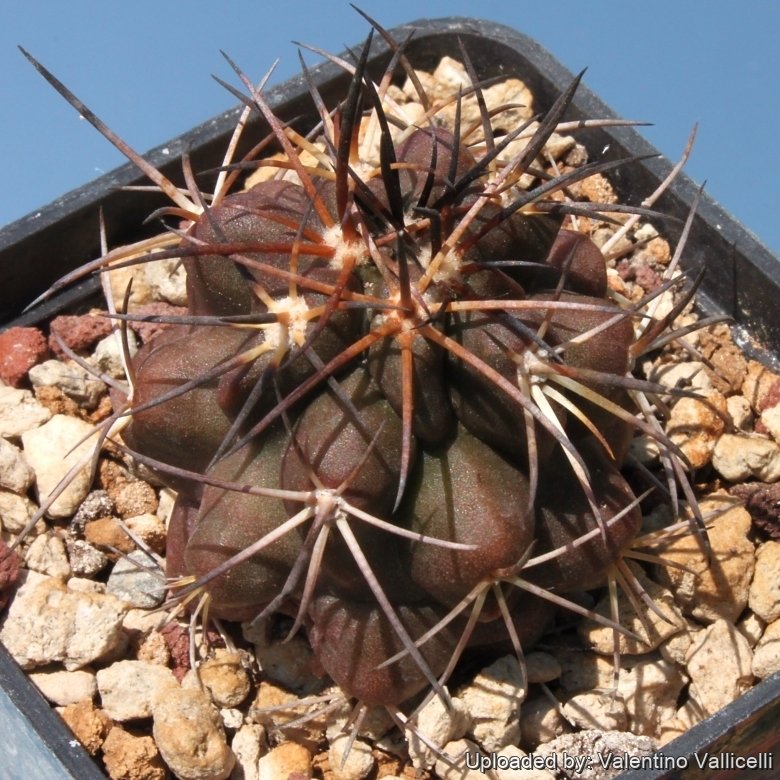
Copiapoa echinoides var. cuprea, originally described as Copiapoa cuprea by F.Ritter in 1959 is a solitary or clumping cactus species, often forming dense clumps or cushion. There exist many populations with different characteristics.
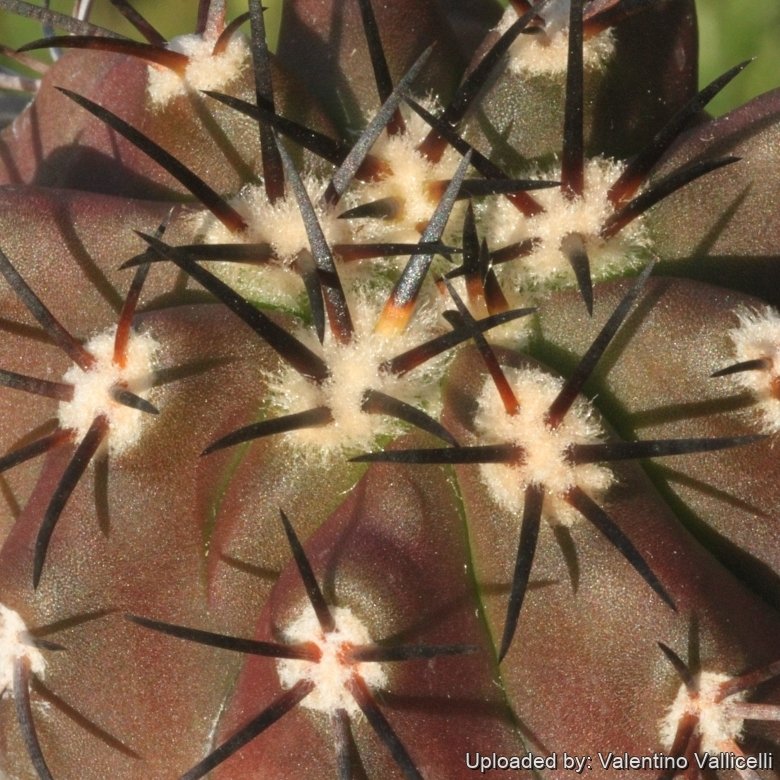
Stem: Spherical, firm, dark tannish-green, cupper-red to very dark-purple and woolly apically,12 to 20 cm tall, 18 cm in diameter.
Ribs: 11 to 17, truncated.
Roots: Fibrous.
Areoles: Yellowish, becoming grey with age.
Spines: Maroon-reddish to pure black, straight or (usually) somewhat curved upward.
Central spines: 0 to 3, 1 to 3(-5) cm long.
Radial spines: 5 to 10, 2.5 cm long.
Flowers: Scented, pale yellow, 4 cm in diameter.
Fruit: Brownish-red, round with a few scales 2.5 cm long.
Seeds: Black.
Remarks: This appears to be a very variable species.
Origin and Habitat
Northern Chile (Near Totoral, Atacama)
Cultivation and Propagation
Watering Needs: The location has to be warm and bright, and it has to be in direct sun. Otherwise the bodies tend to elongate in cultivation, but they should be protected from excessive heat and sun in summer. In the spring and late summer, water moderately. Between these times there are dry rest periods. In the winter keep the plant absolutely dry. The roots need a lot of room, so make sure that the pot is large enough. Use regular cacti soil with very good drainage.
Propagation: Seeds (offsets rarely), Grafting is often used to speed growth rate and to create a back-up to plants in collection.
Gallery