Description
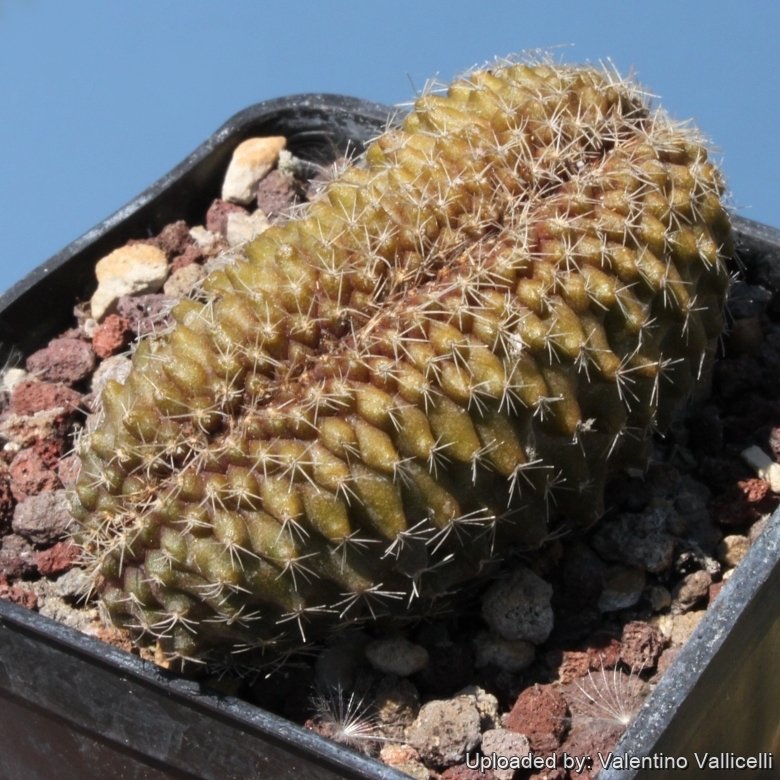
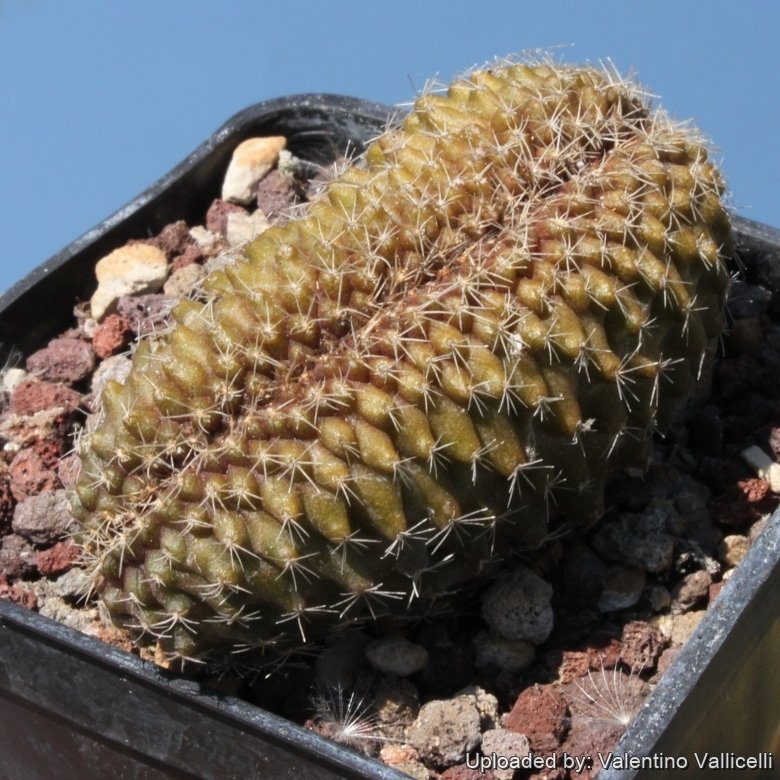
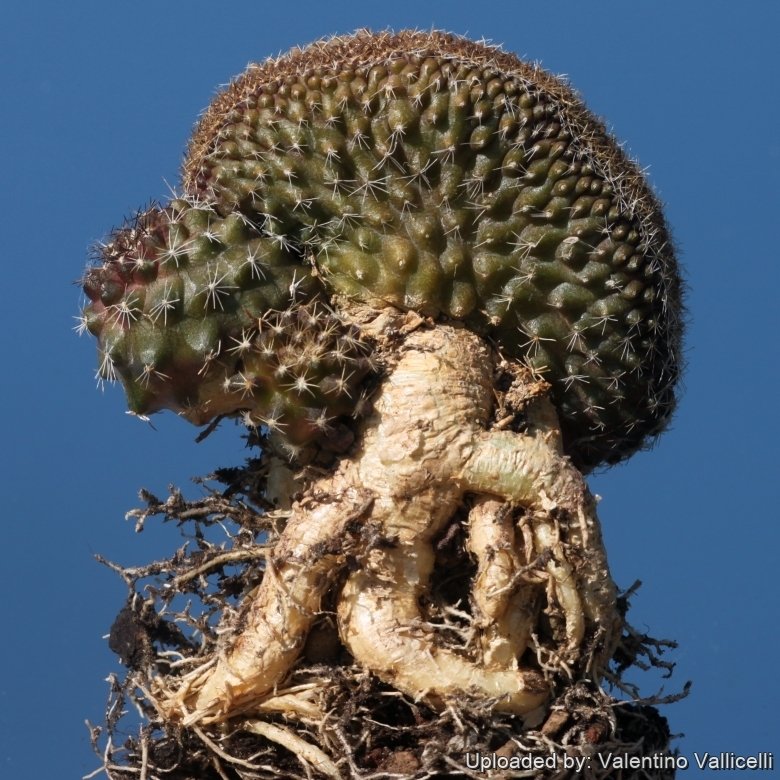
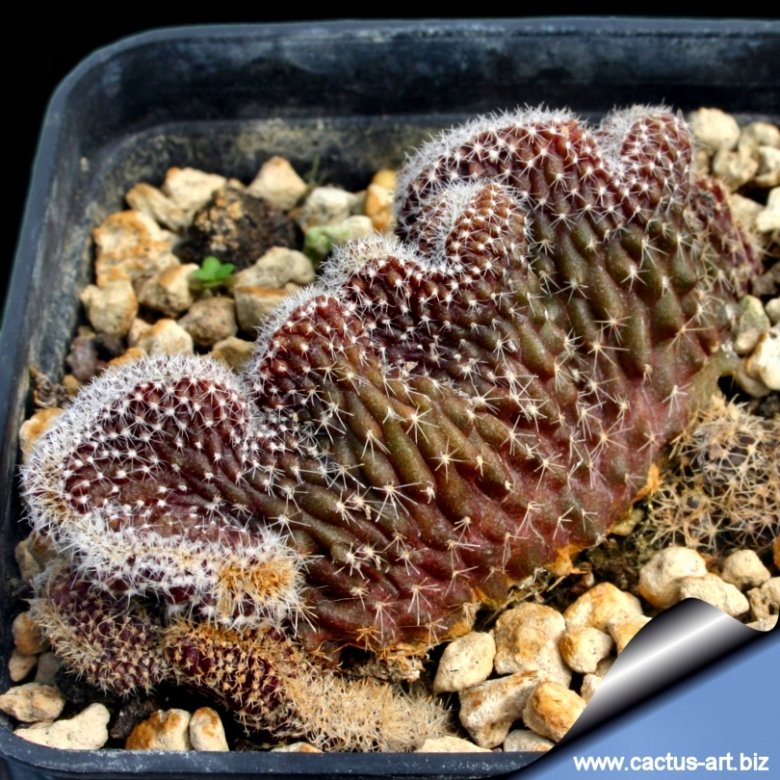
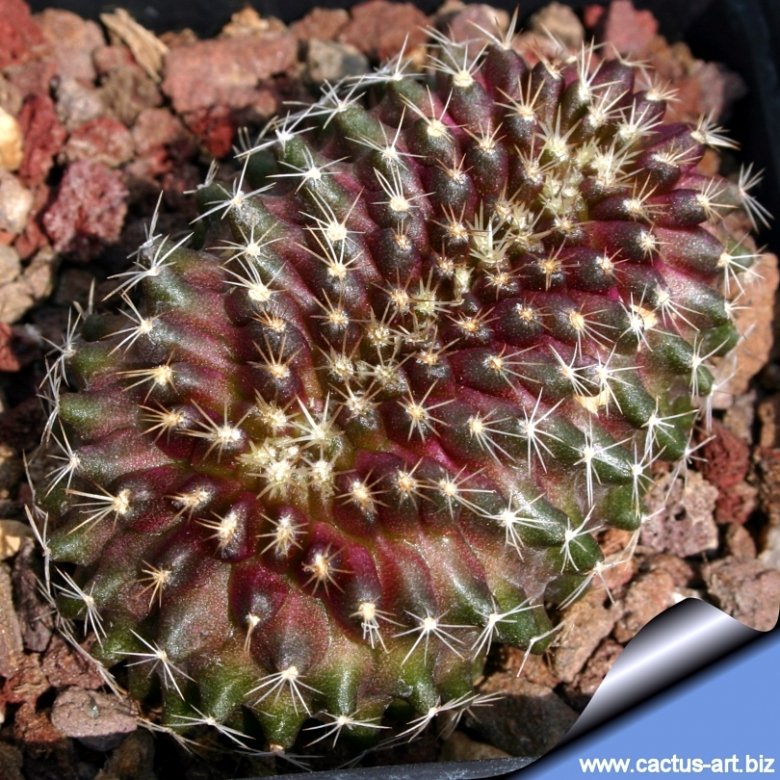
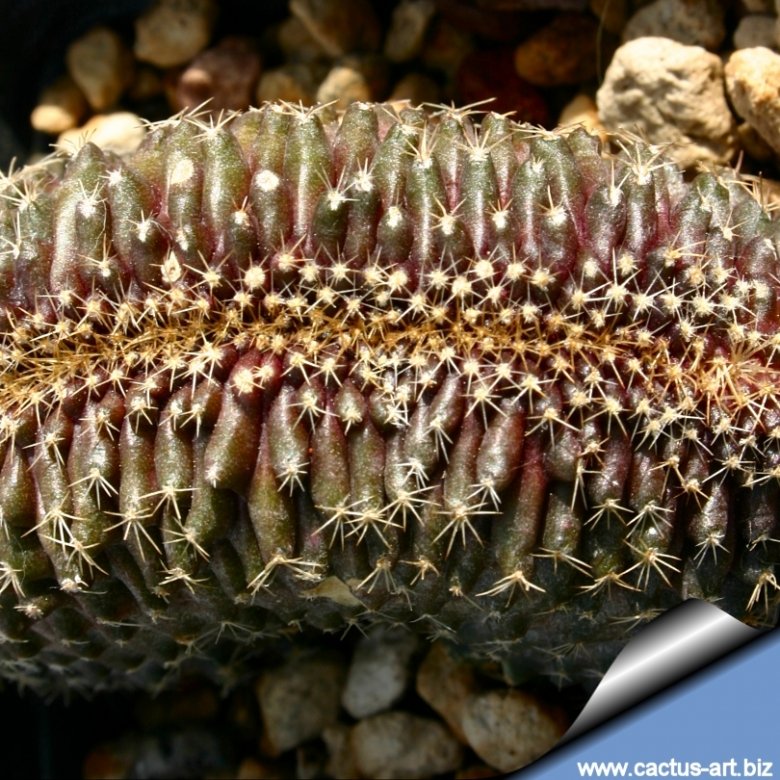
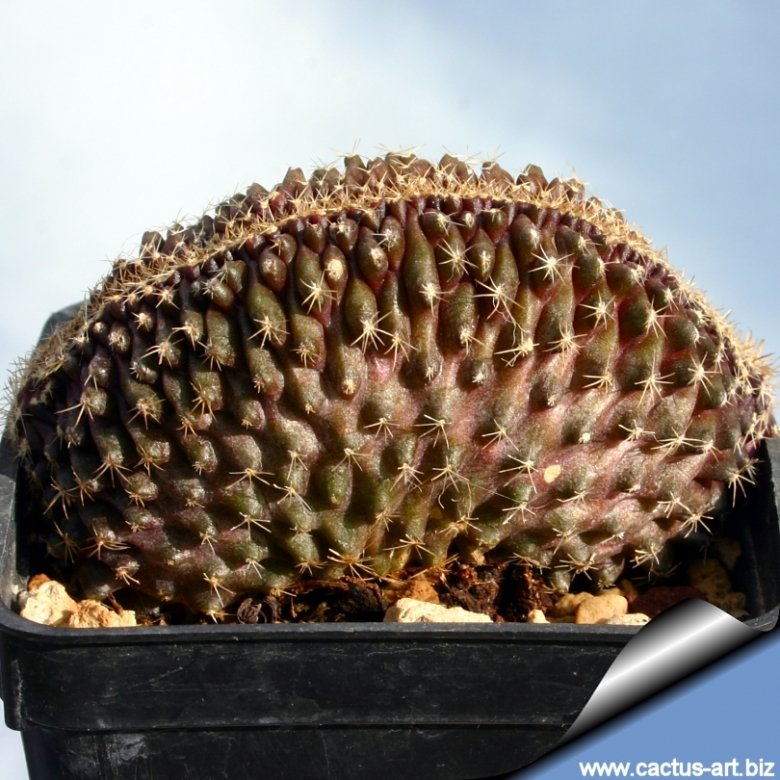
This is the crested clone of Copiapoa tenuissima. It is s fascinating crested Copiapoa sought after by cactus impassioned. This cultivar is stable and remain crested. The standard species is a geophytic cactus arising from a large tuberose root that can slowly branch from the base to form small clumps.
Habit: The standarCopiapoa tenuissima is a single or clustered succulent plant, usually at or slightly below soil level.
Stems: Fun shaped, up to 5 cm in width, dull-green, dark olive green, to almost purplish-black. The stem is tubercled rather than ribbed stem and the slightly felted apex can be regarded as persistent juvenile characters.
Roots: Large tuberose connected to the stem by long slender neck. Seedlings naturally produce the huge tap root, starting from germination.
Areoles: White abundantly woolly.
Radial spines: Very thin (almost hairy), acicular, usually straight 8-14, 3-6 mm long, yellowish to blackish.
Central spines: 0-1 (-2) 4-10 mm long.
Flowers: Pretty, yellow diurnal, up to 2,5 cm long. The flowers are supposedly to be sweet scented. (The hairy ovary and fruit are a link with Ritter’s PiloSN’>9787’ alt=‘1138’>Copiapoa solaris#SN#9786’>Pilo[[Copiapoa solarisSN’ style=‘border:none;’>)
Blooming season: Spring and summer.
Fruit: Globose, green to maroon unusual for the genus by being woolly, a primitive characteristic.
Origin and Habitat
Garden origin (Nursery produced cultivar)
Cultivation and Propagation
Need full sun otherwise the bodies tended to elongate in cultivation, but should be protected from excessive heat and sun in summer, Require light watering, good drainage, and deep pot to accommodate tap root. . Keep warm and dry in winter to avoid rot. Frost tolerance 0°C
Propagation: Heads can be used as cuttings. They grow slowly at first until they develop the large tuberous root. Grafting is also used to speed growth rate and to create a back-up to plants in collection.
Bibliography
Major references and further lectures
-
Edward Anderson “The Cactus family” Timber Press, Incorporated, 2001
-
James Cullen, Sabina G. Knees, H. Suzanne Cubey “The European Garden Flora Flowering Plants: A Manual for the Identification of Plants Cultivated in Europe, Both Out-of-Doors and Under Glass” Cambridge University Press, 11/Aug/2011
-
David R Hunt; Nigel P Taylor; Graham Charles; International Cactaceae Systematics Group. “The New Cactus Lexicon” dh books, 2006
-
N. L. Britton, J. N. Rose “The Cactaceae. Descriptions and Illustrations of Plants of the Cactus Family.” Volume 4, The Carnegie Institution of Washington, Washington 1923
-
Urs Eggli, Leonard E. Newton “Etymological Dictionary of Succulent Plant Names” Birkhäuser 2004.
-
F.Ritter “Kakteen Südamerika” 3: 1072 1980.
-
Graham Charles “Copiapoa” Cirio Pub. Services, 1999
-
Adriana Hoffmann “Cactáceas en la Flora Silvestre de Chile” 1st edition, 1989
-
Cullmann W., Götz E., Gröner G.”Kakteen: Kultur, Vermehrung und Pflege - Lexikon der Gattungen und Arten” Ulmer, Stuttgart, 1984
Gallery