Publication: Cact. Succ. J. (Los Angeles) 25: 34. 1953
Description
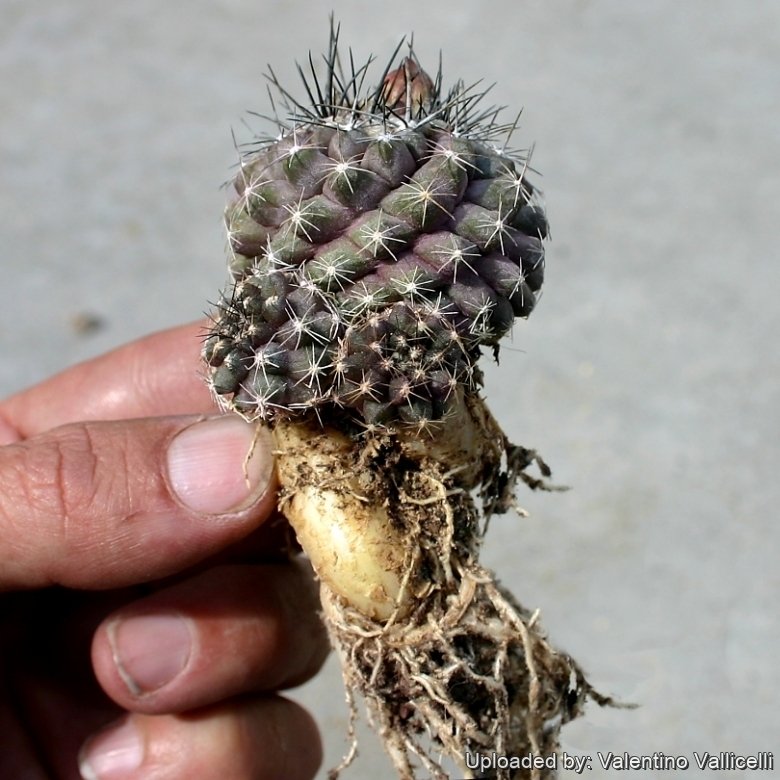
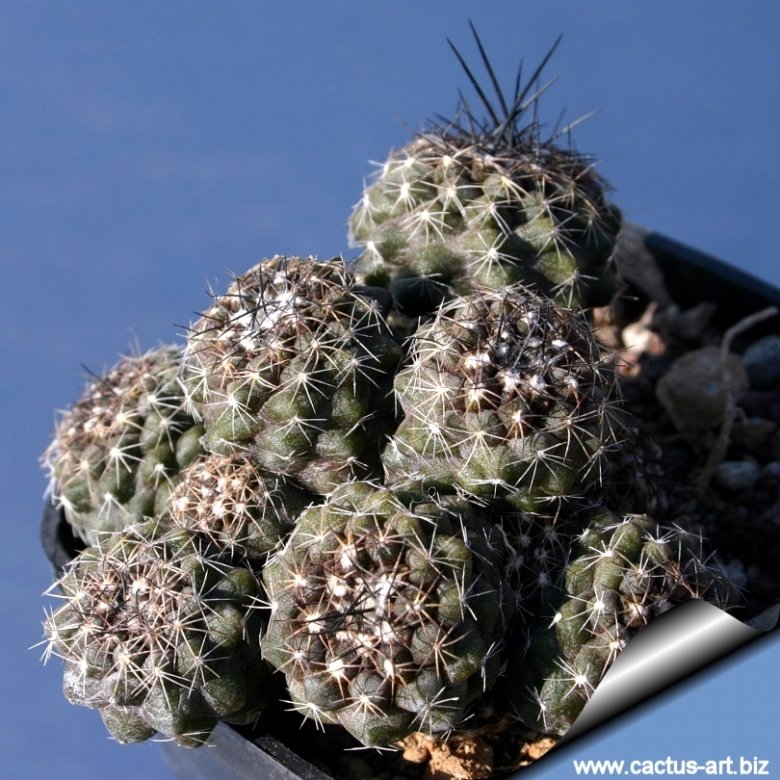
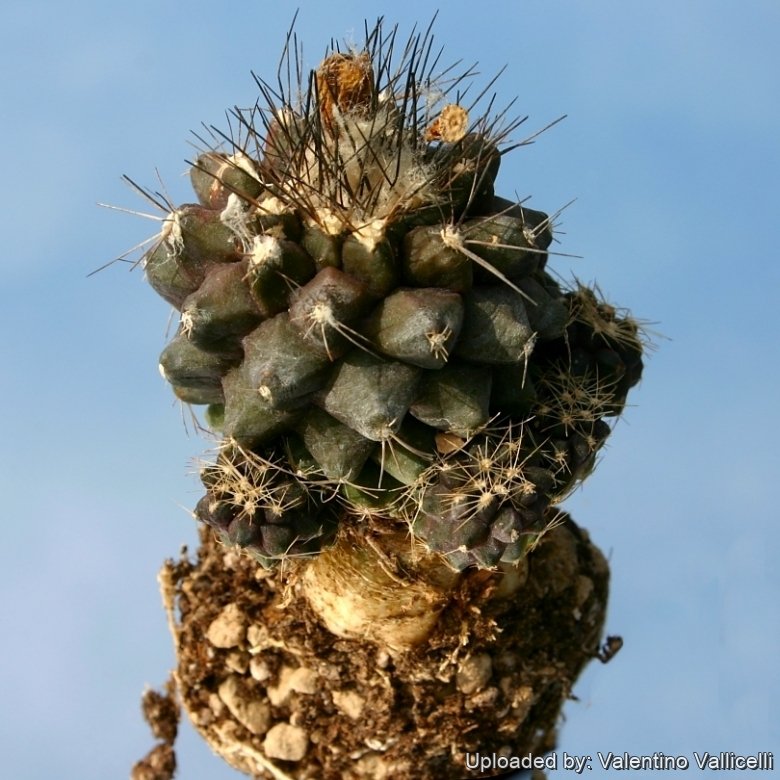
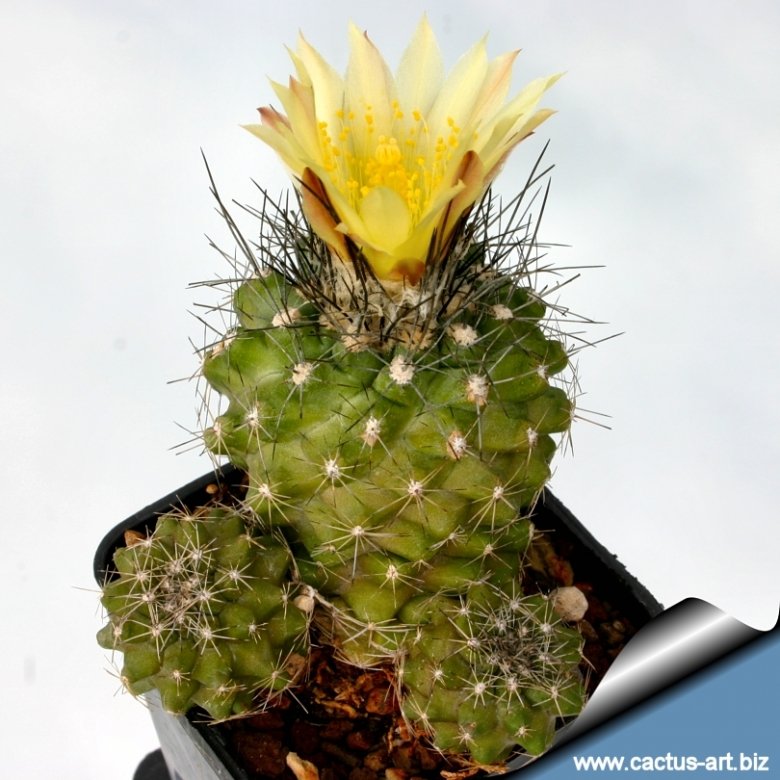
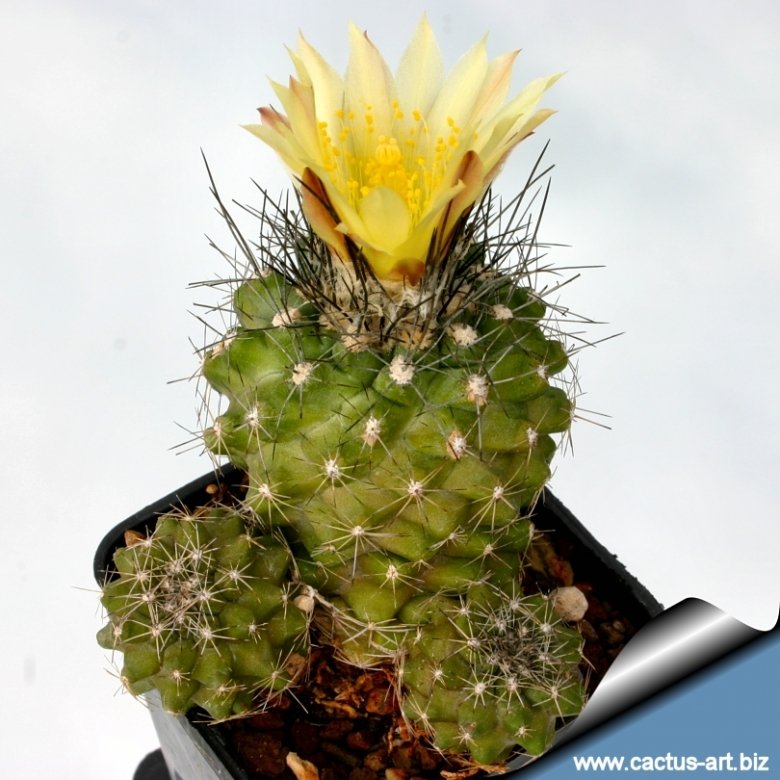
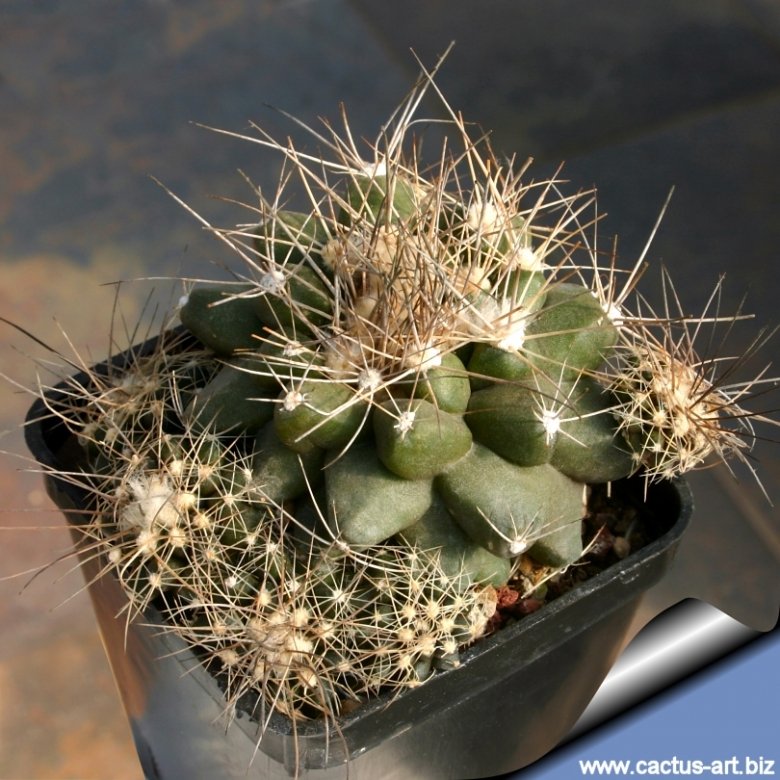
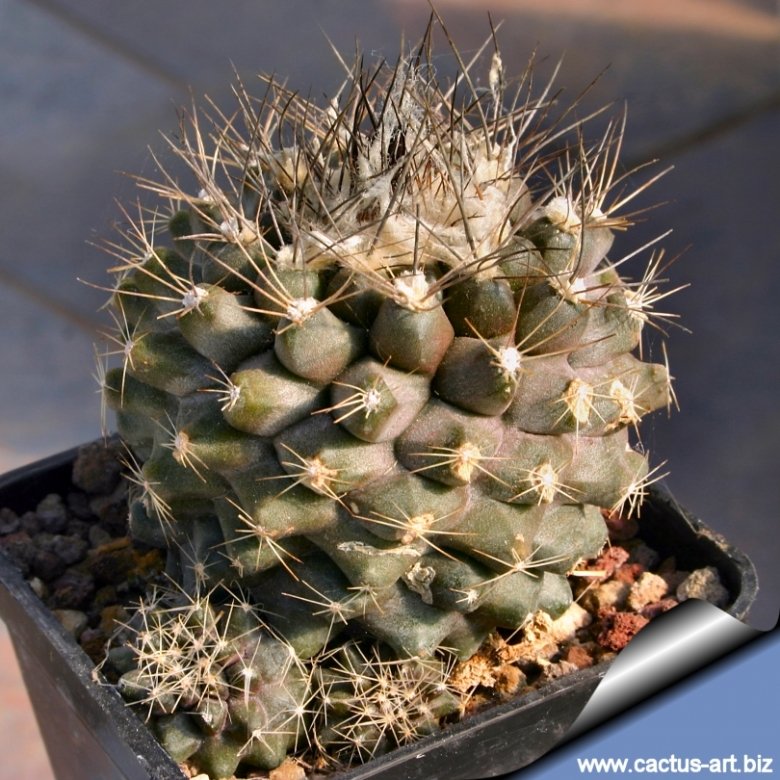
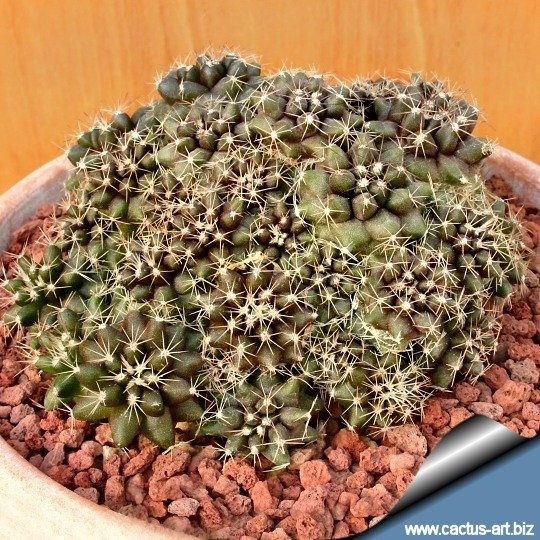
Copiapoa humilis is a very small, low growing cactus with roots like turnips, sometime solitary but usually clumping at the base. It’s a highly variable taxon with several more or less similar forms that could be described as local varieties. Taylor suggests that this is a very complex species or species aggregate, perhaps representing geographical varieties or, in some cases, critical species, listed here in sequence from north to south: Copiapoa tocopillana, Copiapoa tenuissima, Copiapoa variispinata, Copiapoa paposoensis, Copiapoa taltalensis, Copiapoa longispina and possibly Copiapoa chaniaralensis and Copiapoa esmeraldana. In considering Copiapoa humilis species, we need to bear in mind the remarkable differences between young plants, with short, thin spination and the darker coloration of the body compared to the more robust adults with longer and sturdy, flexible spines.
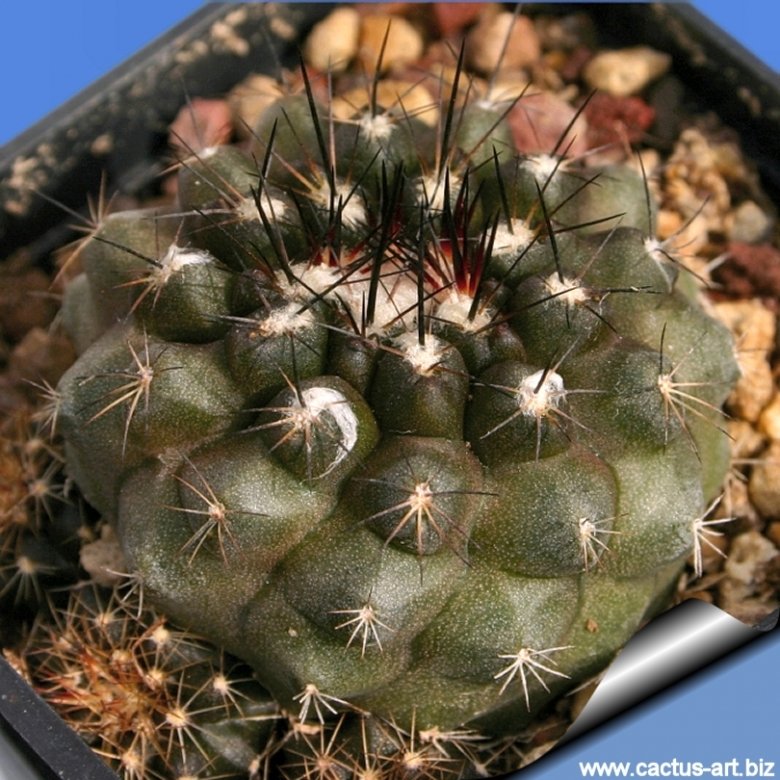
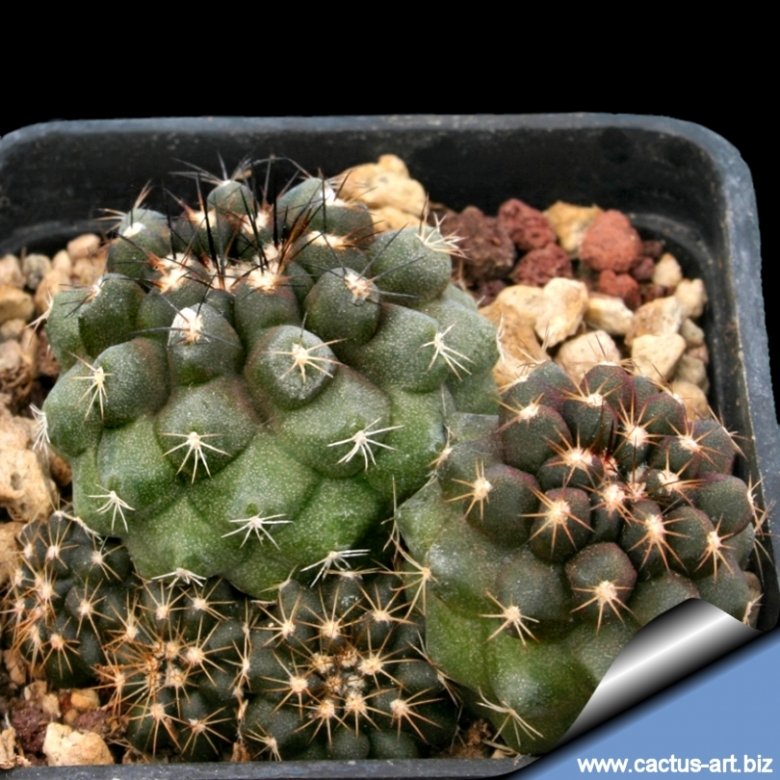
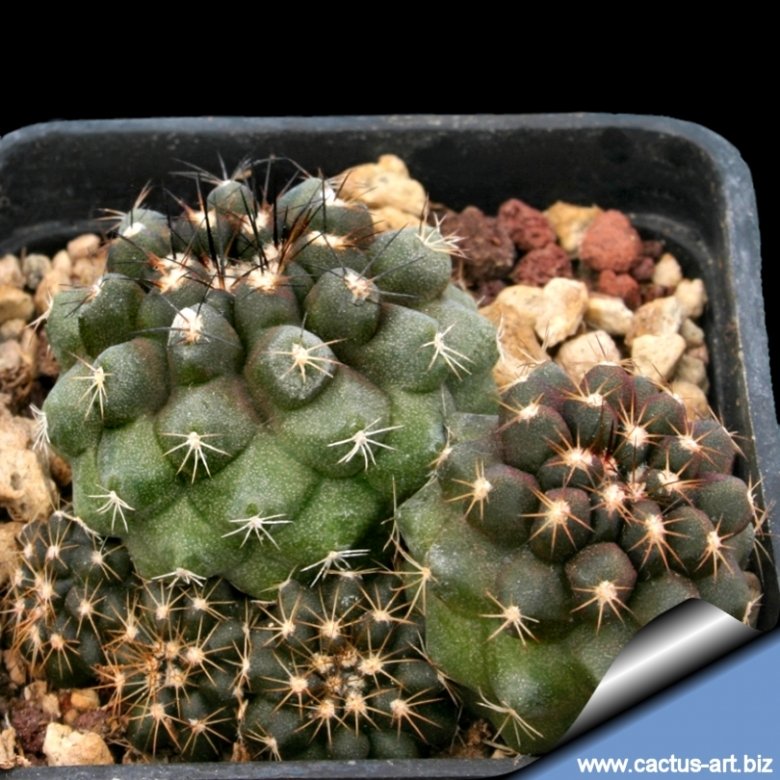
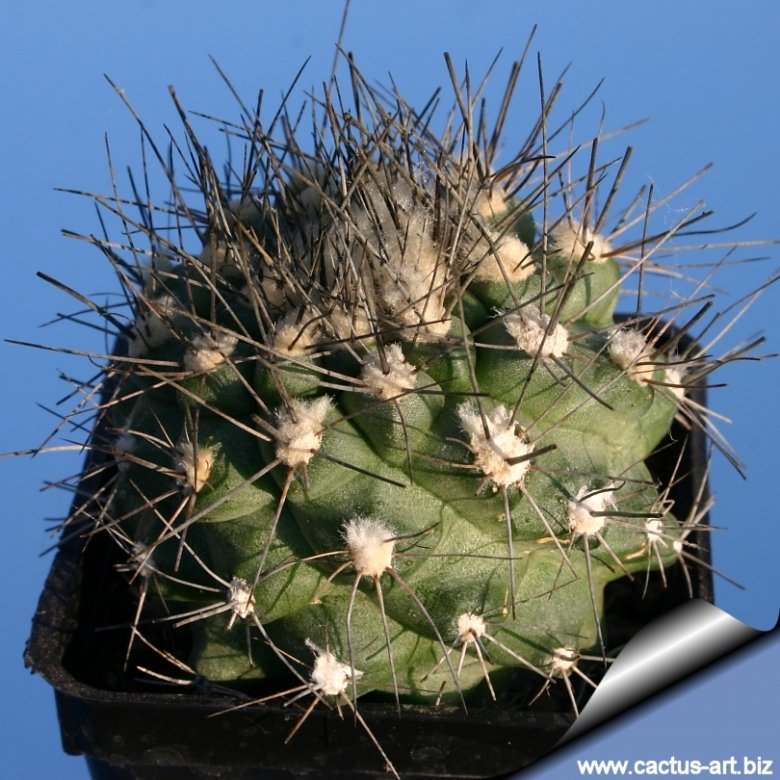
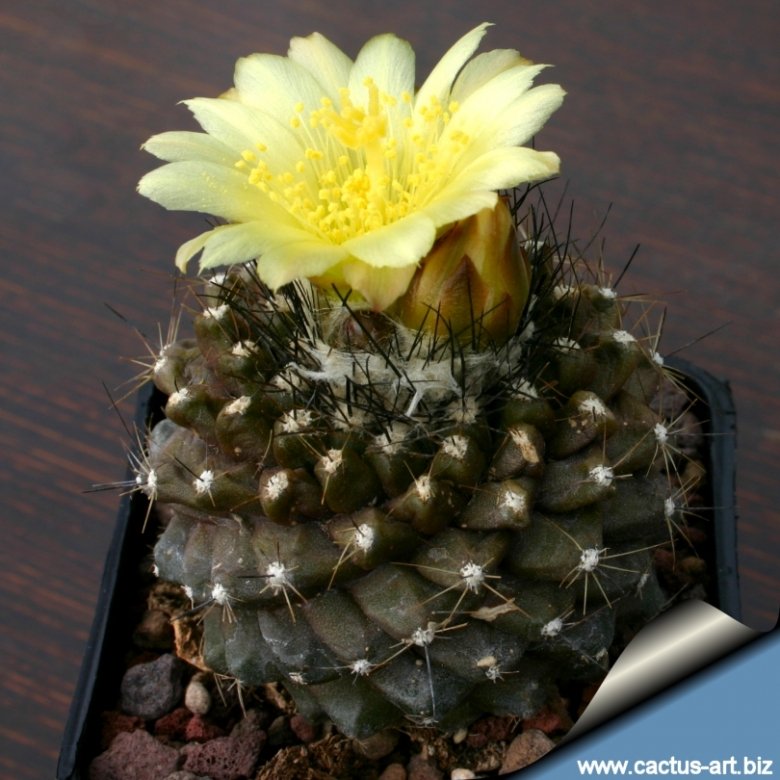
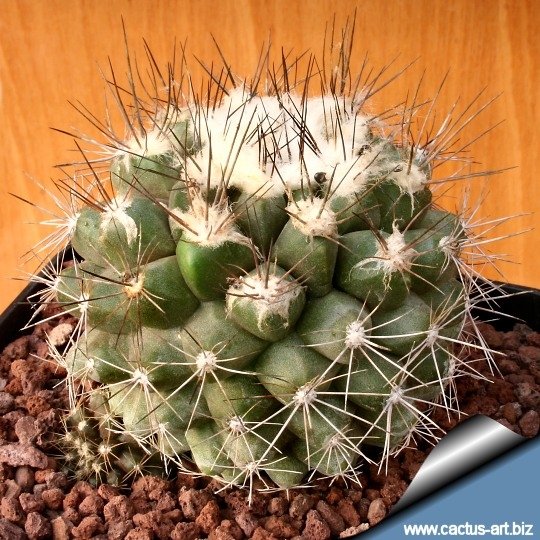
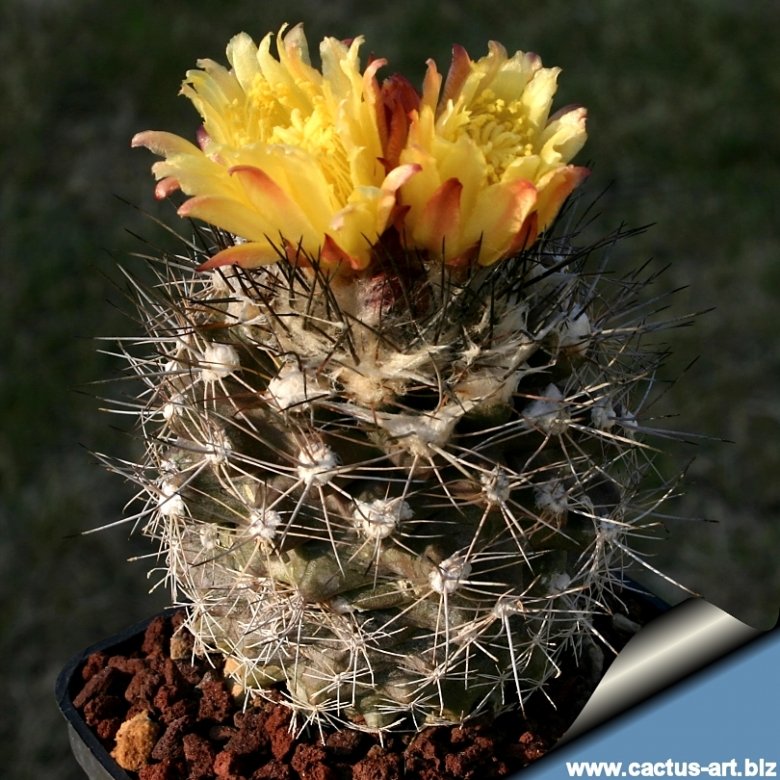
Stem: Subglobular, depressed, somewhat soft, producing copious wool in the apex. 2,5-9 cm broad by 2-6 cm high pale olive-green to tan. Juvenile stems are darker purple-red to almost black.
Ribs: About 8-14 slightly spiralling forming distinct elevated tubercles.
Areoles: Well separated, with white wool.
Root: Large tap-root, connected to the stem by long slender neck. Seedlings naturally produce the huge tap root, starting from germination, i.e. before the plant stem becomes mature.
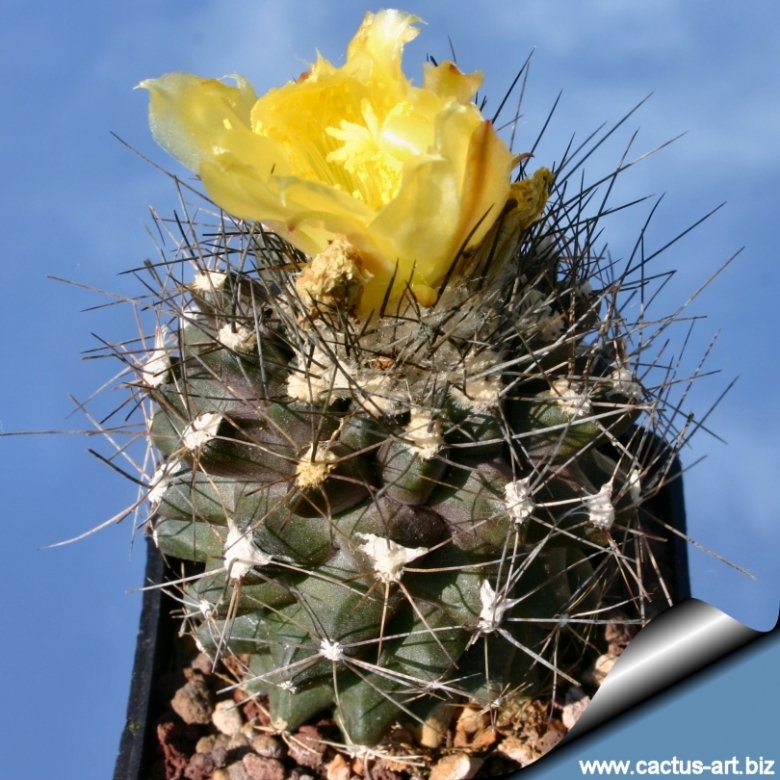
Spines: 10-14 greyish-white to yellowish (in youth) to black (adults).
Radial spines: About 7-13, thin, needle-like, setaceous, open wide on sides, marginal, somewhat bent, 2-25 mm long.
Central spine: 1 to 4, sometime absent on juvenile specimen, fairly slender, erect, straight or curved 10-35 mm long.
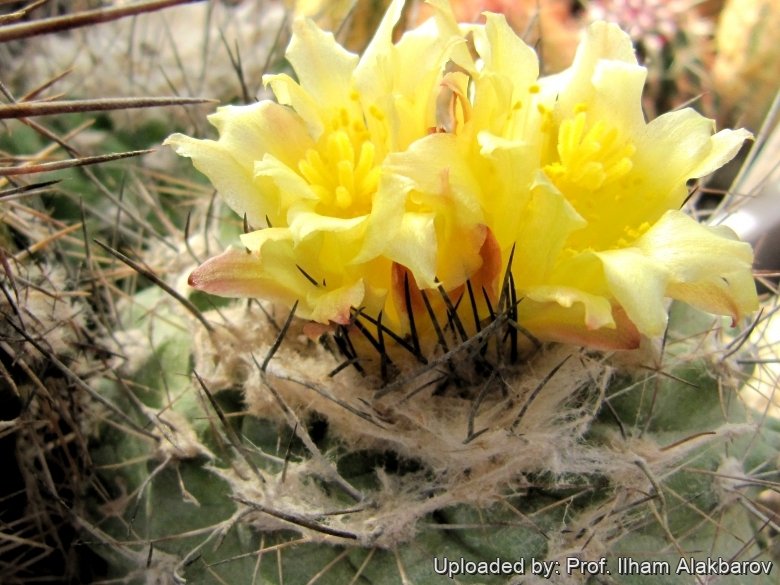
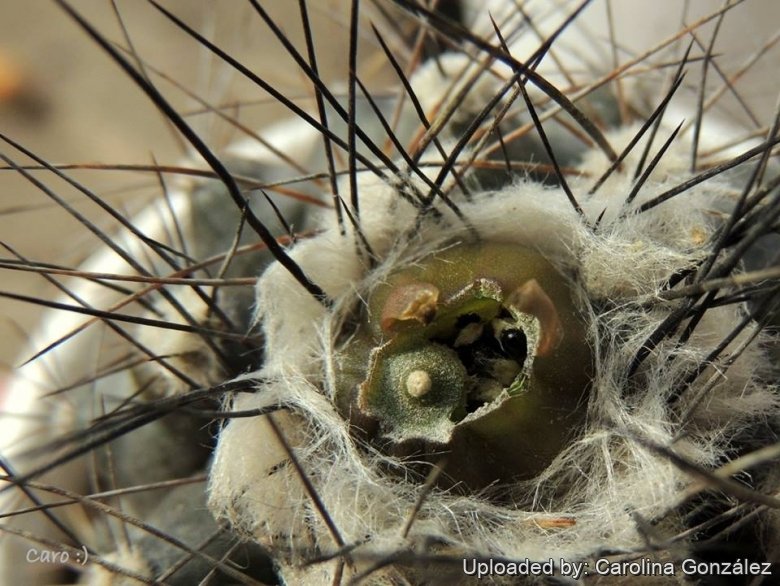
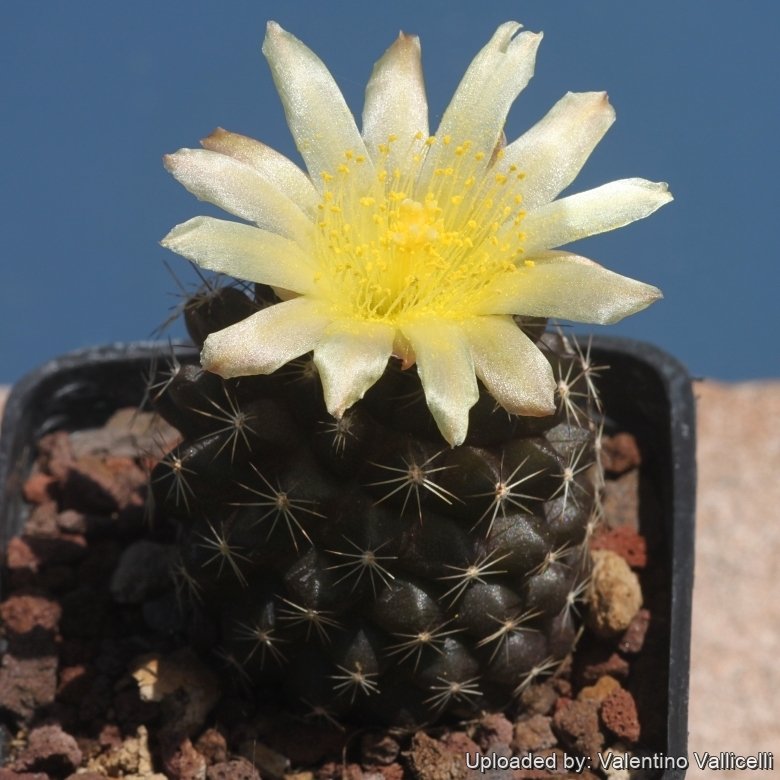
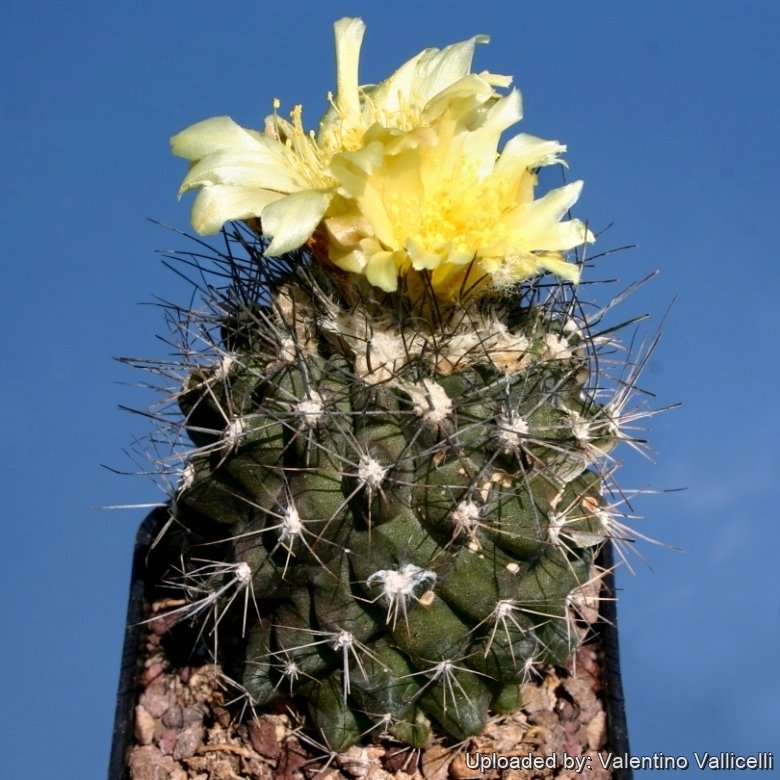
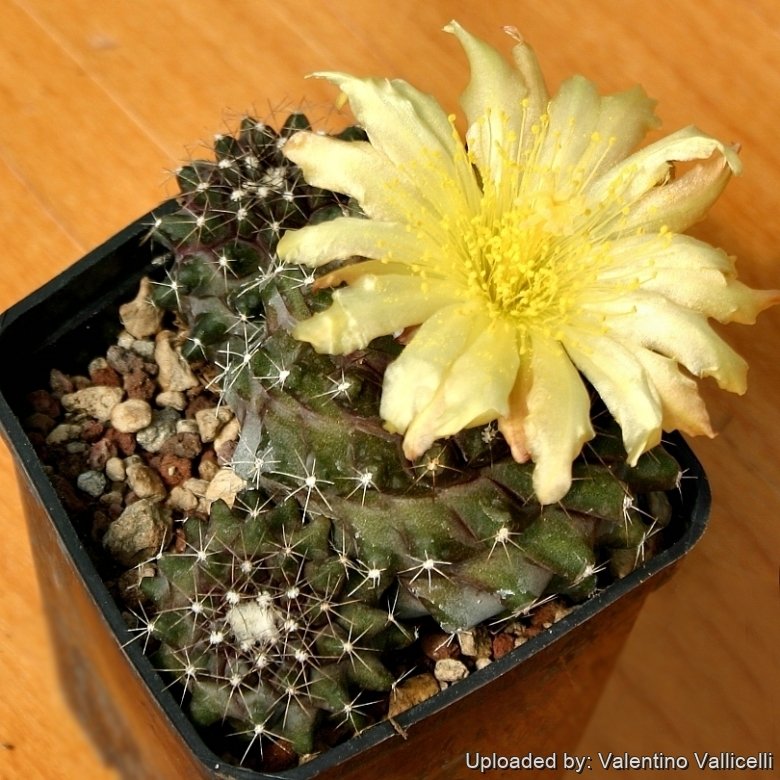
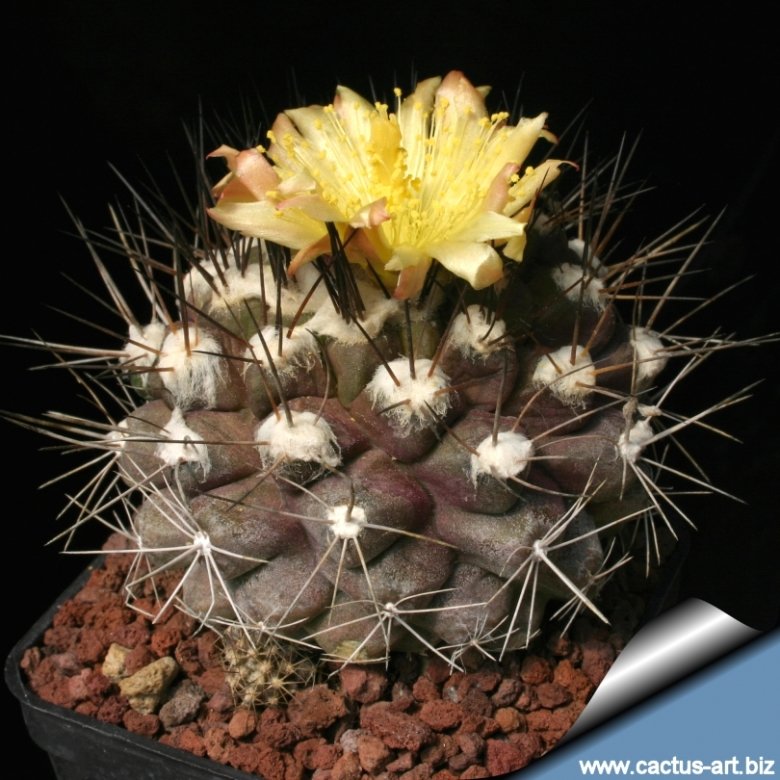
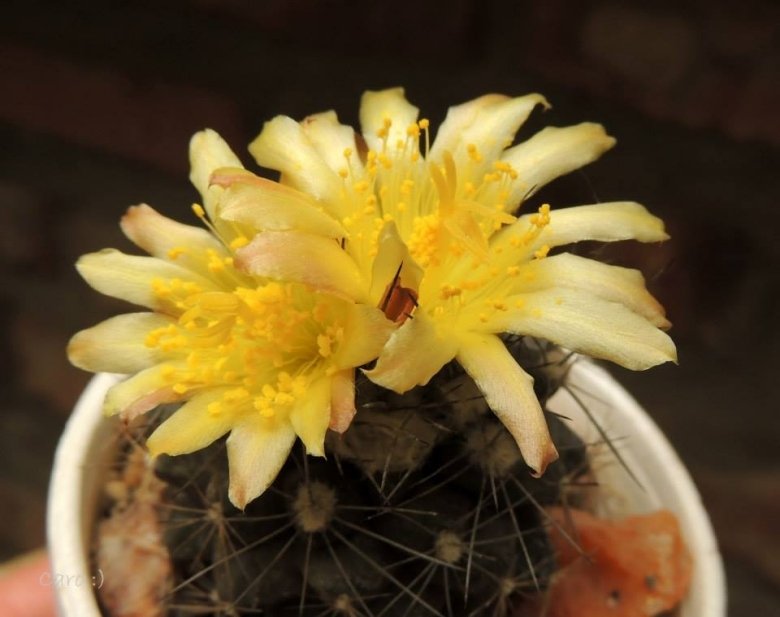
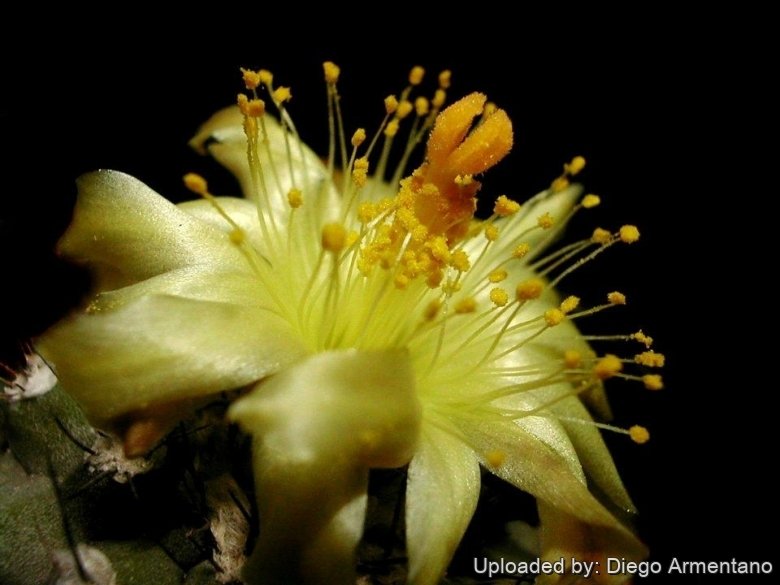
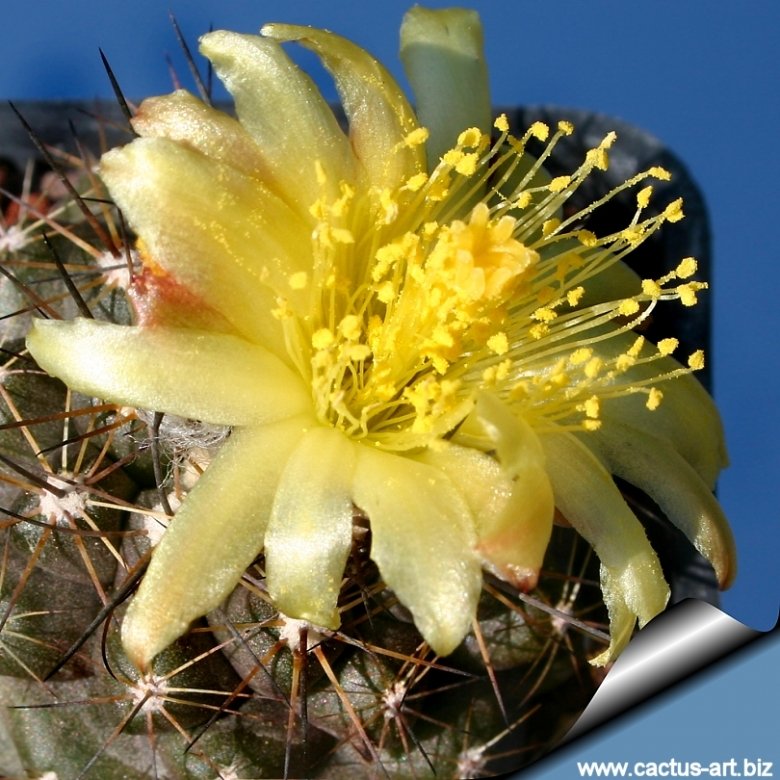
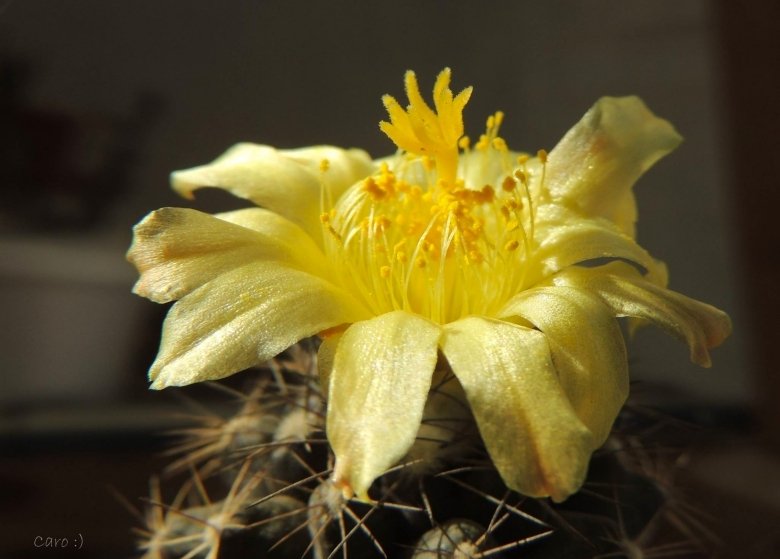
Flowers: At the apex, 2-4 cm long, corolla sulphur yellow, strongly scented. In cultivation Copiapoa humilis are able to flower from immature stems at an early age (about 2 years from germination) and set viable seed. Ovary always glabrous, with smaller scales inserted only above the peripheral ring.
Fruits: Round, naked, bright red, up to 8 mm long.
Seeds: Black.
Origin and Habitat
north of Paposo, towards Blanco Encalada south along the coast to Barquito just south of Chanaral (in the regions of Atacama and Antofagasta) Chile. Copiapoa humilis has a relatively wide range , but it is severely fragmented (extent of occurrence 24,000 km2).
Type locality: Paposo, Antofagasta, Chile.
Altitude: 0-1200 m above sea level.
Habitat: It grows in patches and in crevices in the coastal deserts on the steep mountain base among fragmented stones. The long tuberous root of this copiapoa is buried deeply in these soils which are very poor in organic matter. In the area where this plants grow there is very little rain but frequent coastal fog, which provides a significant part of their water needs. The common presence in habitat of plants with juvenile spination forms on old taproots is due to the frequent grazing damage inflicted by donkeys. Overall the population seems to be stable, the major threats are mining activity within its area of distribution, illegal collection, and to a lesser extent road construction. Goat grazing used to be a threat but this activity is decreasing in the area. The population south of Copiapó is affected by drought.
Cultivation and Propagation
Considering that Copiapoa humilis comes from a habitat with an extremely arid climate, they are remarkably tolerant of pot culture. These plants have thick taproots and are susceptible to overwatering. They requires also an appropriate air circulation. Copiapoas are summer grower species easy to cultivate
Growth rate: It is a relatively rapidly growing and easily flowering species that will make clumps given the best conditions.
Soils: It likes very coarse mineral cactus mix soil, but can become too elongated if compost is too rich.
Repotting: Use pot with good drainage.
Watering: Water moderately from Spring to Autumn, but do not overwater (Rot prone), it must be strictly kept dry throughout the winter quiescent period since it is very sensitive to any moisture excesses keep dry in winter.
Fertilization: Feed with a high potassium fertilizer in summer.
Hardiness: They need to be kept in a cool place during winter rest and are resistant to light frost if kept on the dry side prior to, and during, cold weather ( they are hardy to -4 C ° C short periods). However some warmth throughout the year will increase the grower’s success (minimum 5° to 8°C during rest season).
Exposition: Requires full sun or light shade and careful watering to keep plant compact with strong coloured spines. Tends to bronze in strong light, which encourages flowering and heavy spine production. Light shadow my be useful in the hottest summer days.
Uses: It is an excellent plant for container growing. It always looks good and stays small. It look fine in a cold greenhouse and frame or outdoor in a rockery.
Pests & diseases: It may be attractive to a variety of insects, but plants in good condition should be nearly pest-free, particularly if they are grown in a mineral potting-mix, with good exposure and ventilation. Nonetheless, there are several pests to watch for:
- Red spiders: Red spiders may be effectively rubbed up by watering the infested plants from above.
- Mealy bugs: Mealy bugs occasionally develop aerial into the new growth among the wool with disfiguring results, but the worst types develop underground on the roots and are invisible except by their effects.
- Sciara Flies: Sciara flies are one of the major problems for seedlings. It is a good practice to mulch your seedlings with a layer of grit, which will strongly discourage the flies.
- Scales: Scales are rarely a problem. It is wise to treat your whole collection with a systemic insecticide twice a year in spring and autumn.
- Rot: Rot is only a minor problem with cacti if the plants are watered and “aired” correctly. If they are not, fungicides won’t help all that much. To prevent rottenness it is also advisable to surround its root neck by very rough sand or grit, this help a fast water drainage.
Propagation: Seed, cutting, grafting. Seeds germinate in 7-14 days at 21-27° C in spring, remove gradually the glass cover as soon the plants will be well rooted (ca 1-2 weeks) and keep ventilated, no full sun for young plants!
Bibliography
Major references and further lectures
-
Guerrero, P., Walter, H.E., Faundez, L. & Saldivia, P. 2013. Copiapoa humilis. In: IUCN 2013. IUCN Red List of Threatened Species. Version 2013.2. <www.iucnredlist.org>. Downloaded on 06 March 2014.
-
Edward Anderson “The Cactus family” Timber Press, Incorporated, 2001
-
James Cullen, Sabina G. Knees, H. Suzanne Cubey “The European Garden Flora Flowering Plants: A Manual for the Identification of Plants Cultivated in Europe, Both Out-of-Doors and Under Glass” Cambridge University Press, 11/Aug/2011
-
David R Hunt; Nigel P Taylor; Graham Charles; International Cactaceae Systematics Group. “The New Cactus Lexicon” dh books, 2006
-
Urs Eggli, Leonard E. Newton: “Etymological Dictionary of Succulent Plant Names.” Birkhäuser 2004
From llifle page Copiapoa paposoensis
Description
Copiapoa paposoensis is one of the controversial geographical forms of the very variable Copiapoa humilis ssp.humilis with grass-green, bluish-green, or somewhat grey-green, or rarely red-brown stems, as is common for the tender-bodied Copiapoa humilis, but in this form the stem is harder than that of the Copiapoa humilis. However this plant looks very similar to other forms of Copiapoa humilis which are linked one to each others by populations of plants with intermediate characteristics. Nowadays all them are thought to belong to a unique polymorphic species. Such variations has led to establishment of several unnecessary names for this species.
Habit: Solitary, rarely offsetting of its own.
Stem: Hemispherical, 6-12 cm in diameter, grass-green, bluish-green, or somewhat grey-green, or rarely red-brown. The stem is also harder than that of the Copiapoa humilis. The crown is somewhat depressed, with white woolly felt.
Root: Massive, thickened rootstock going well down into the ground, with a long narrow neck.
Ribs: 9-16.
Flowers: Yellow, campanulate, scented, about 30 mm long, growing from the center of the white wool at the apex.
Seeds: 1,5 mm wide, black.
Origin and Habitat
Atacama desert in Northern Chile, Depart. Taltal, restricted to a relatively small area from near Paposo to the north near Blanco Encalada. (Type locality: about 20 km north of Paposo)
Habitat: Copiapoa paposoensis grows at about 1100 m altitude where constantly sunny weather prevails, together with a great aridity over the misty zone, while in the misty zone lying at a lower level in the same place the Copiapoa humilis grows. From there it extends up to 1300 m where the complete desert begins. No hybrids are found between the two sorts, although the distribution area for both sorts overlap slightly.
Cultivation and Propagation
Slow growing, it need full sun but should be protected from excessive heat and sun in summer. Requires light watering and good drainage. Keep warm and dry in winter to avoid rot. It needs mild heat in winter; avoid any frost.
Propagation: Seeds or stems planted as cuttings. Grafting is often used to speed growth rate and to create a back-up to plants in collection.
Notes
The identification of the true ‘paposoensis’ may concern a degree of uncertainty as to what this plant is, and many plants found in cultivation are Copiapoa humilis ssp. humilis.
Bibliography
Major references and further lectures
-
Robert Silverberg “The Palace at Midnight: The Collected Stories, Volume 5“ Hachette UK, 29/Sep/2011
-
Graham Charles “Copiapoa” Cirio Pub. Services, 1999
-
Riha & Subik. “The illustrated encyclopedia of cacti and other succulents” (edited by G. & K.A. Beckett) 1981
-
James Cullen, Sabina G. Knees, H. Suzanne Cubey “The European Garden Flora Flowering Plants: A Manual for the Identification of Plants Cultivated in Europe, Both Out-of-Doors and Under Glass” Cambridge University Press, 11/ago/2011
-
Clive Innes “Complete Handbook of Cacti and Succulents” Van Nostrand Reinhold Company, 01/Dec/1981
-
Edward Anderson “The Cactus family” Timber Press, Incorporated, 2001
-
David R Hunt; Nigel P Taylor; Graham Charles; International Cactaceae Systematics Group. “The New Cactus Lexicon” dh books, 2006
-
N. L. Britton, J. N. Rose “The Cactaceae. Descriptions and Illustrations of Plants of the Cactus Family.” Volume 4, The Carnegie Institution of Washington, Washington 1923
-
F.Ritter “Kakteen Südamerika” 3: 1072 1980
Source: Copiapoa paposoensis, LLIFLE - Encyclopedia of living forms, CC-BY-SA, retrieved 2026-10-25.
From llifle page Copiapoa maritima
Description
Copiapoa maritima is a provisional name, invented by the the Czech cactus trader Karel Knize (field number KK1709), in fact this plant corresponds to Copiapoa humilis (subsp. humilis), and the town of collection mentioned (Paposo 50-100 meters above sea level) is the type locality of this species. It has been said that Knize gave most of the plants he collected/sold new names to increase sales. Knize never properly described his plants, he just gave them names and sold them. In fact this plant looks very similar to other forms of Copiapoa humilis which are linked one to each others by populations of plants with intermediate characteristics. Nowadays all them are thought to belong to a unique polymorphic species. Such variations has led to establishment of several unnecessary names for this species.
Habit: It branches basally and forms big clumps. The branching degree however is very different in different specimens: some plants stay solitary for a long time, while others form dense clusters of small heads.
Stem: Subglobular, depressed, somewhat soft, producing copious wool in the apex. 2,5-9 cm broad by 2-6 cm high pale olive-green to tan. Juvenile stems are darker purple-red to almost black.
Ribs: About 8-14 slightly spiralling forming distinct elevated tubercles.
Areoles: Well separated, with white wool.
Root: Large tap-root, connected to the stem by long slender neck. Seedlings naturally produce the huge tap root, starting from germination, i.e. before the plant stem becomes mature.
Spines: 10-14 greyish-white to yellowish (in youth) to black (adults).
Radial spines: About 7-13, thin, needle-like, setaceous, open wide on sides, marginal, somewhat bent, 2-25 mm long.
Central spine: 1 to 4, sometime absent on juvenile specimen, fairly slender, erect, straight or curved 10-35 mm long.
Flowers: At the apex, 2-4 cm long, corolla sulphur yellow, strongly scented. In cultivation Copiapoa humilis are able to flower from immature stems at an early age (about 2 years from germination) and set viable seed. Ovary always glabrous, with smaller scales inserted only above the peripheral ring.
Fruits: Round, naked, bright red, up to 8 mm long.
Seeds: Black.
Origin and Habitat
Paposo, Chile
Altitude: 50-100 metres above sea level.
Cultivation and Propagation
Considering that Copiapoa maritima = Copiapoa humilis comes from a habitat with an extremely arid climate, they are remarkably tolerant of pot culture. These plants have thick taproots and are susceptible to overwatering. They requires also an appropriate air circulation. Copiapoas are summer grower species easy to cultivate
Growth rate: It is a relatively rapidly growing and easily flowering species that will make clumps given the best conditions.
Soils: It likes very coarse mineral cactus mix soil, but can become too elongated if compost is too rich.
Repotting: Use pot with good drainage.
Watering: Water moderately from Spring to Autumn, but do not overwater (Rot prone), it must be strictly kept dry throughout the winter quiescent period since it is very sensitive to any moisture excesses keep dry in winter.
Fertilization: Feed with a high potassium fertilizer in summer.
Hardiness: They need to be kept in a cool place during winter rest and are resistant to light frost if kept on the dry side prior to, and during, cold weather ( they are hardy to -4 C ° C short periods). However some warmth throughout the year will increase the grower’s success (minimum 5° to 8°C during rest season).
Exposition: Requires full sun or light shade and careful watering to keep plant compact with strong coloured spines. Tends to bronze in strong light, which encourages flowering and heavy spine production. Light shadow my be useful in the hottest summer days.
Uses: It is an excellent plant for container growing. It always looks good and stays small. It look fine in a cold greenhouse and frame or outdoor in a rockery.
Pests & diseases: It may be attractive to a variety of insects, but plants in good condition should be nearly pest-free, particularly if they are grown in a mineral potting-mix, with good exposure and ventilation. Nonetheless, there are several pests to watch for:
- Red spiders: Red spiders may be effectively rubbed up by watering the infested plants from above.
- Mealy bugs: Mealy bugs occasionally develop aerial into the new growth among the wool with disfiguring results, but the worst types develop underground on the roots and are invisible except by their effects.
- Sciara Flies: Sciara flies are one of the major problems for seedlings. It is a good practice to mulch your seedlings with a layer of grit, which will strongly discourage the flies.
- Scales: Scales are rarely a problem. It is wise to treat your whole collection with a systemic insecticide twice a year in spring and autumn.
- Rot: Rot is only a minor problem with cacti if the plants are watered and “aired” correctly. If they are not, fungicides won’t help all that much. To prevent rottenness it is also advisable to surround its root neck by very rough sand or grit, this help a fast water drainage.
Propagation: Seed, cutting, grafting. Seeds germinate in 7-14 days at 21-27° C in spring, remove gradually the glass cover as soon the plants will be well rooted (ca 1-2 weeks) and keep ventilated, no full sun for young plants!
Source: Copiapoa maritima, LLIFLE - Encyclopedia of living forms, CC-BY-SA, retrieved 2026-10-25.
Cultivars and forms (13)
Subspecies (4)
Varieties (5)
Gallery