Publication: Cactaceae Syst. Init. 16: 6 (11 Oct. 2003).
Description
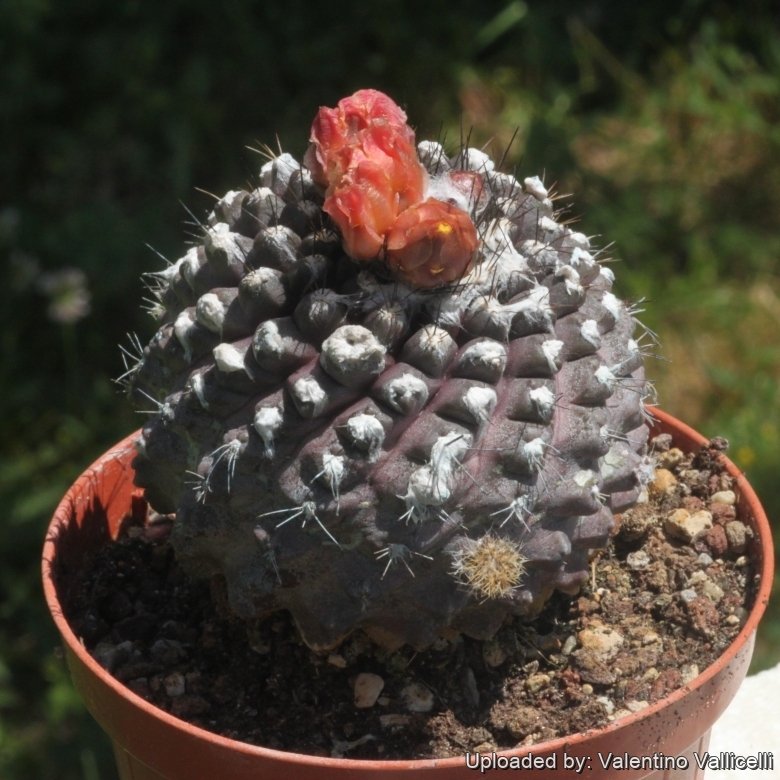
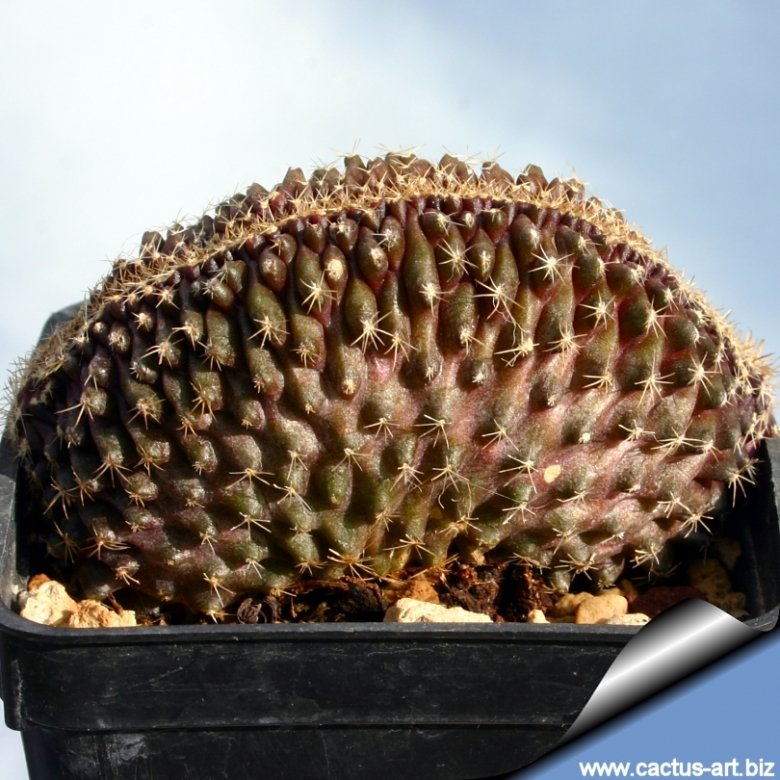
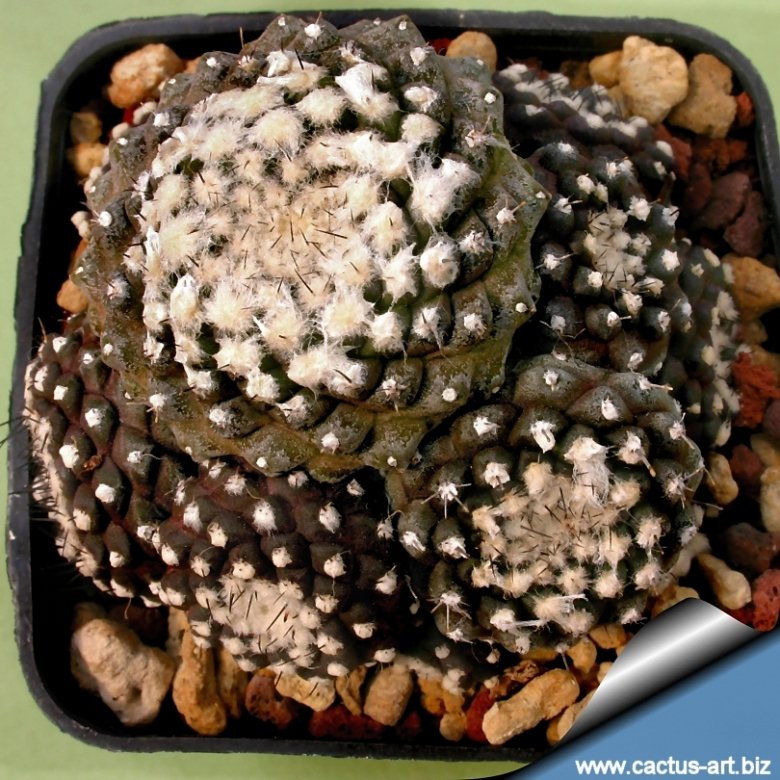
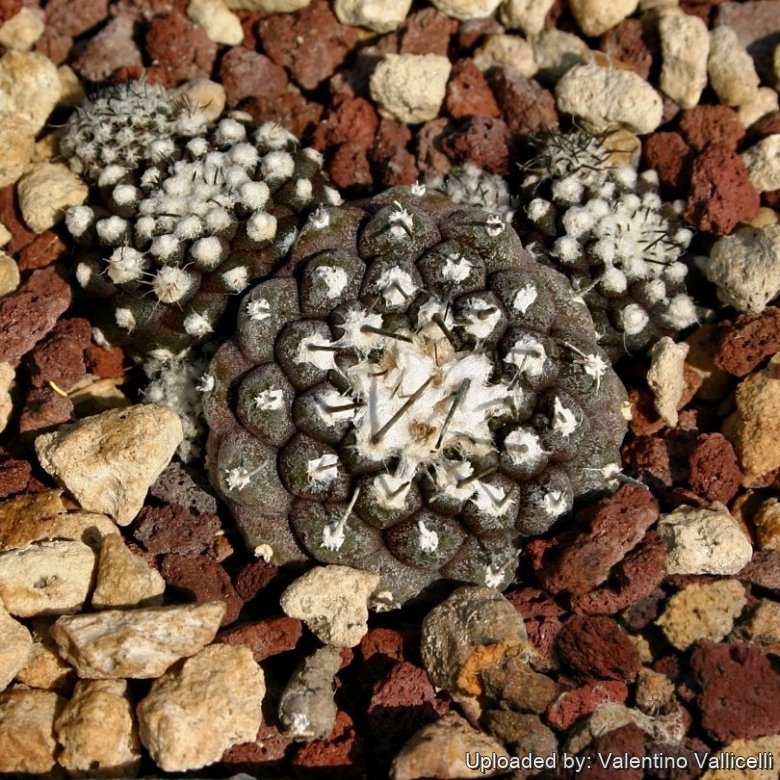
Copiapoa tenuissima is a geophytic cactus arising from a large tuberose root that can slowly branch from the base to form small clumps. It differs from Copiapoa humilis for its smaller stems, and its taxonomic status is controversial. It is not clear whether it should be treated as a species or as some lower rank.
Habit: It is a single headed or slowly clumping cactus, usually at or slightly below soil level.
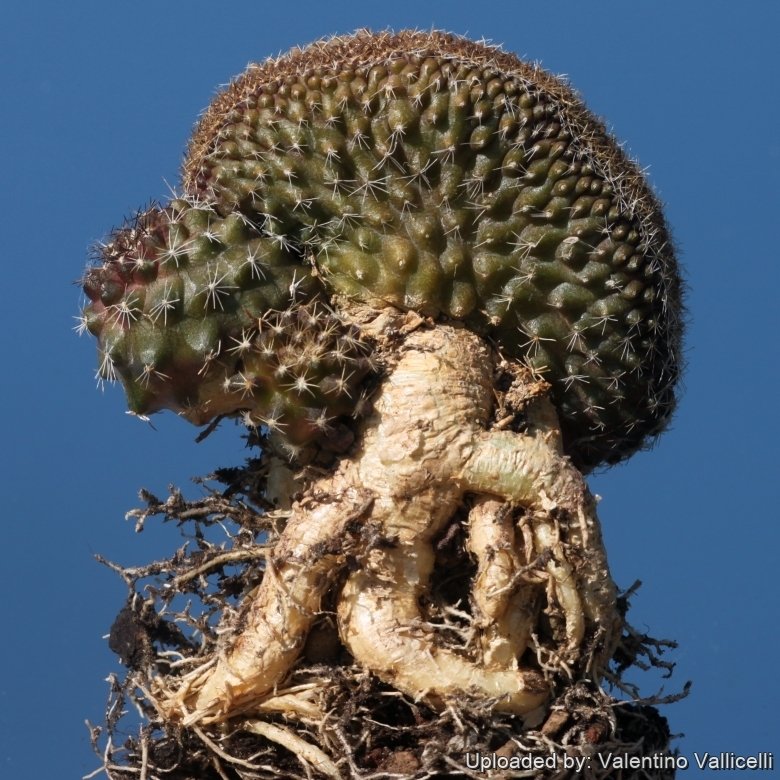
Roots: Large tuberose, connected to the stem by long slender neck. The main root may be several times the length of the above-ground body, and serves for storing water. Seedlings naturally produce the huge tap root, starting from germination, i.e. before the plant stem becomes mature.
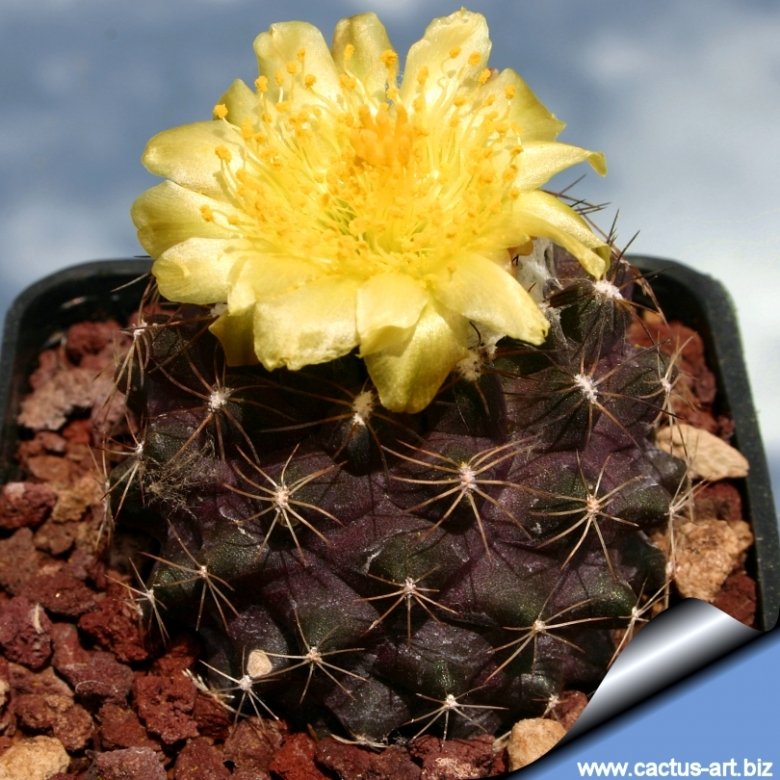
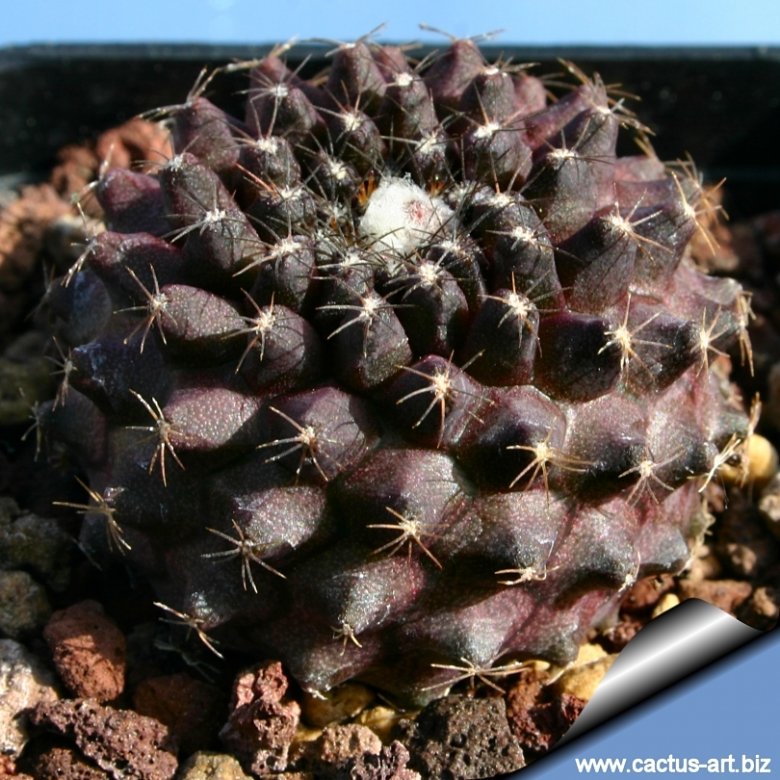
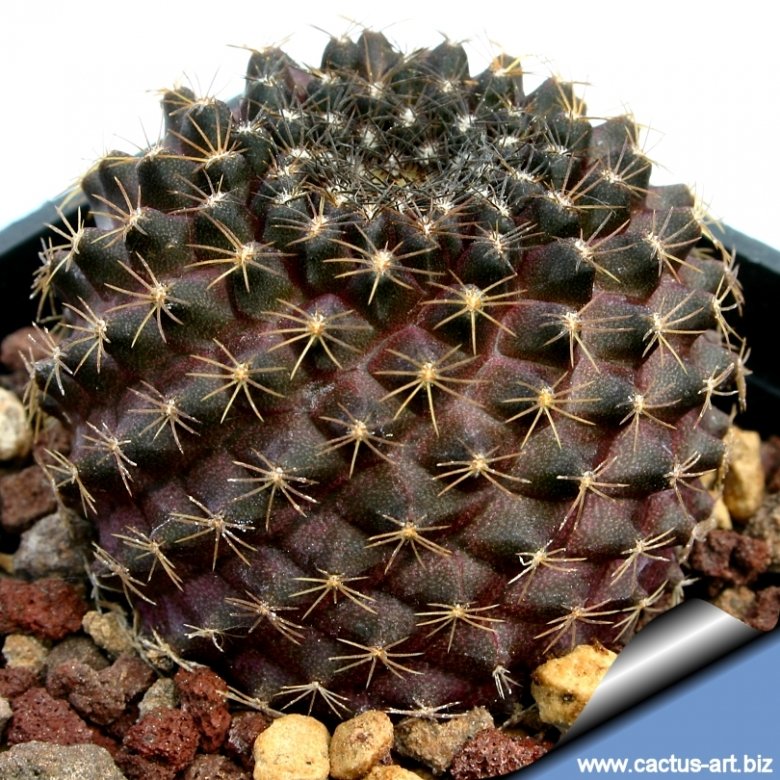
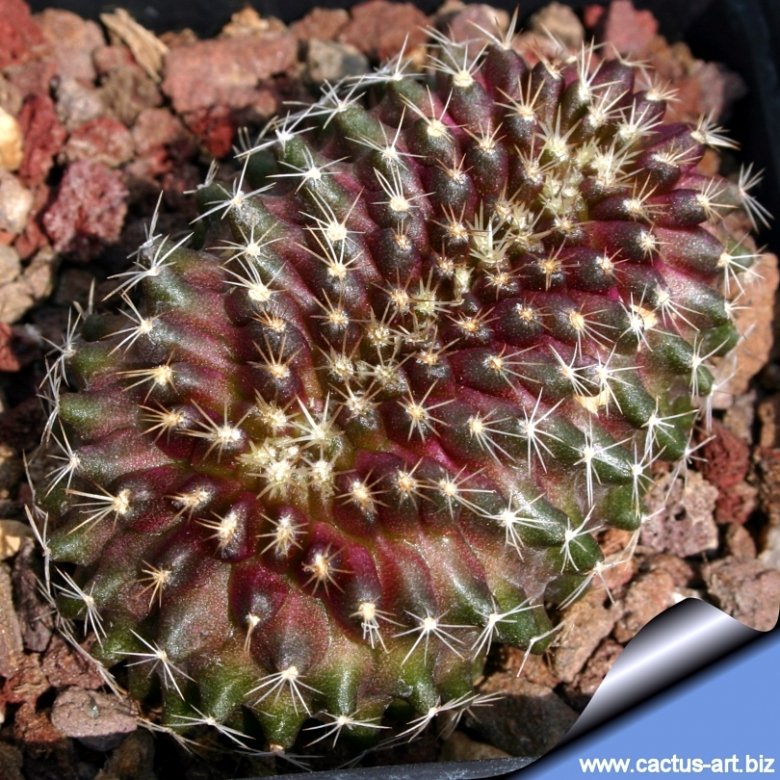
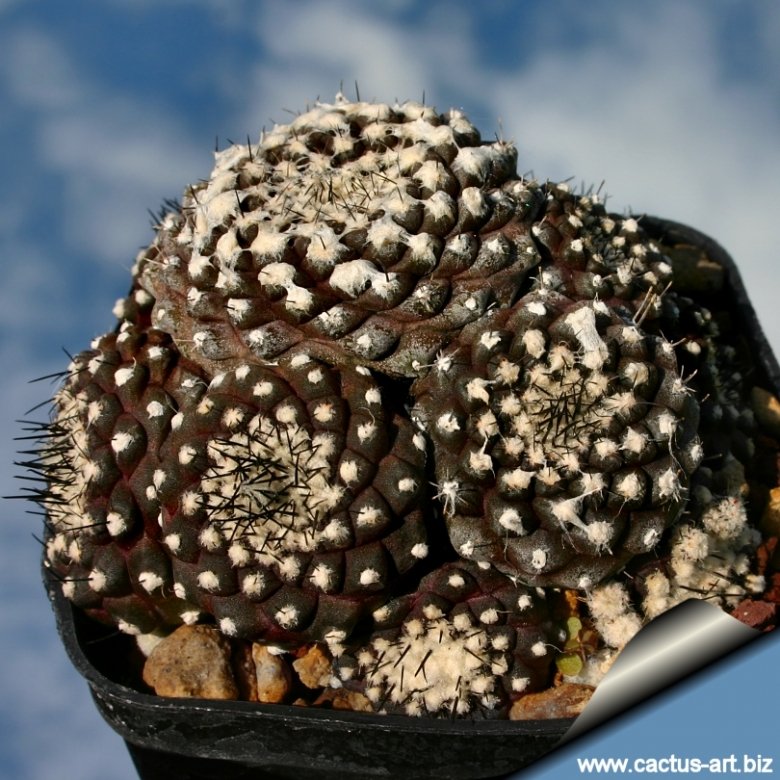
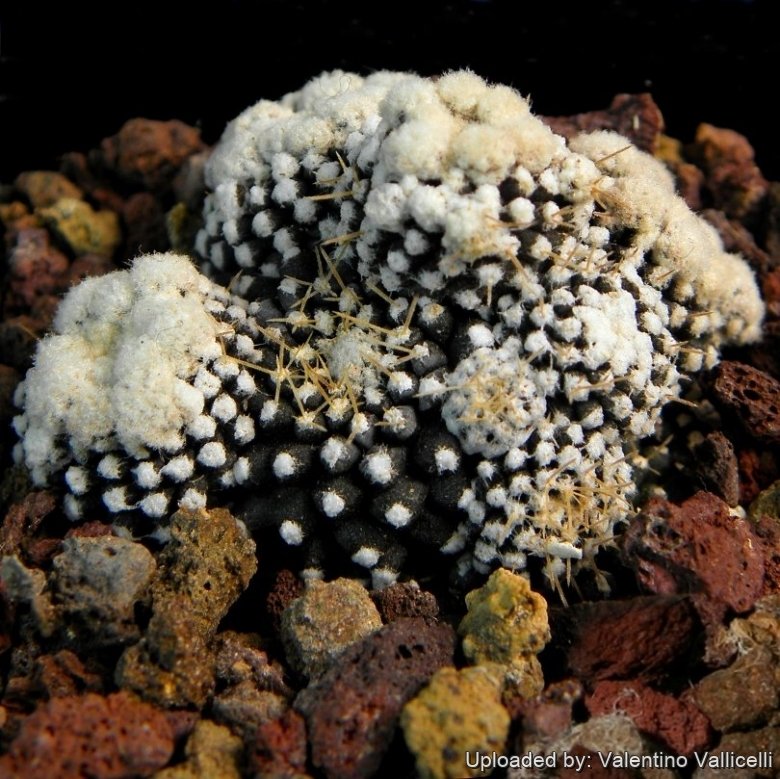
Stems: Flattened to spherical, 2-5 cm in diameter, dull-green, dark olive green, to almost purplish-black, outer skin rough with fine warts. The slightly felted apex can be regarded as a persistent juvenile characters, which can be explained by the need for the plant to multiply as early as possible, before they fall victim to the Guanacos.
Ribs: 13-16, developing into tubercles, often spiraling, 3-4 mm tall.
Areoles: White abundantly woolly.
Radial spines: 8-14 very thin (almost hairy), acicular, usually straight 3-6 mm long, yellowish to blackish, falling off later.
Central spines: 0-2 (mostly absent) 4-10 mm long.
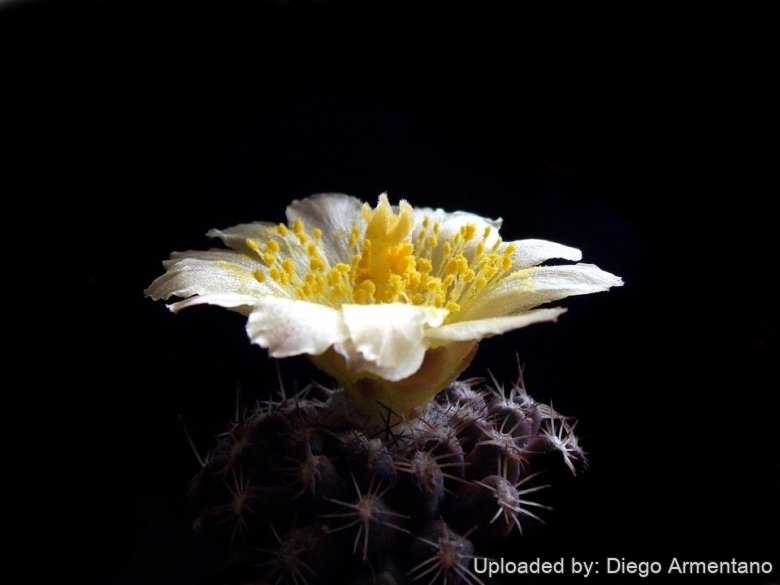
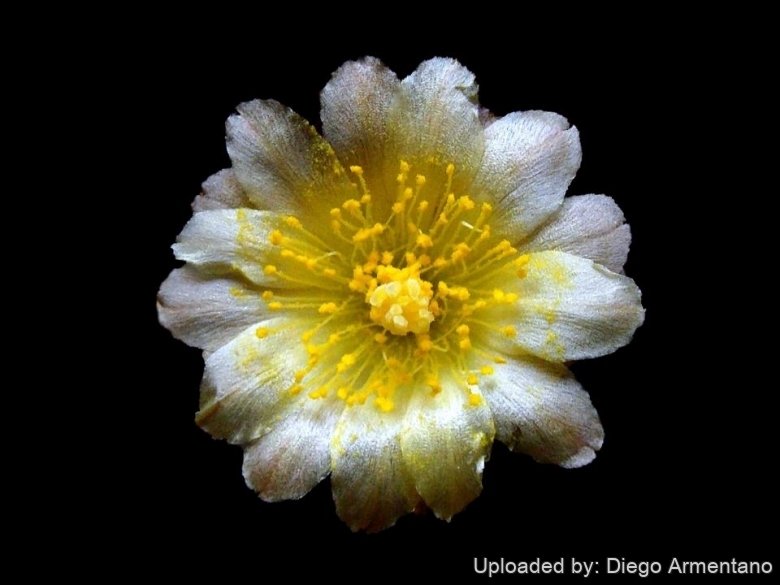
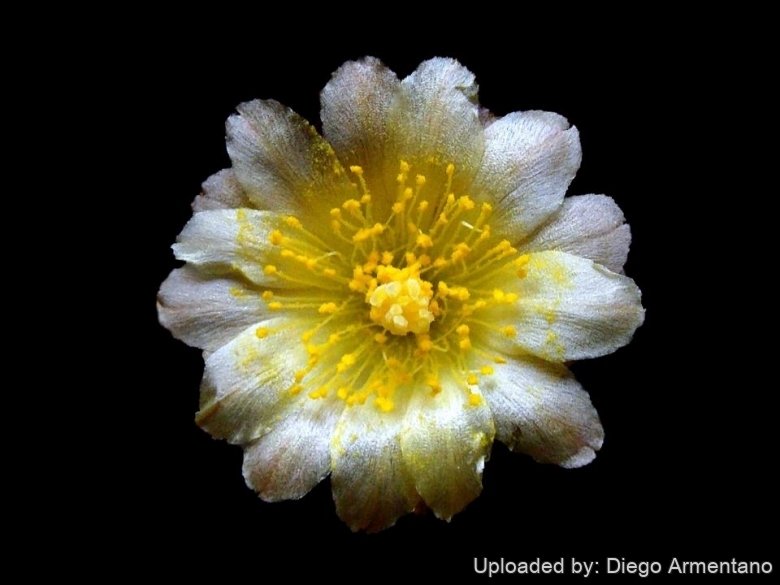
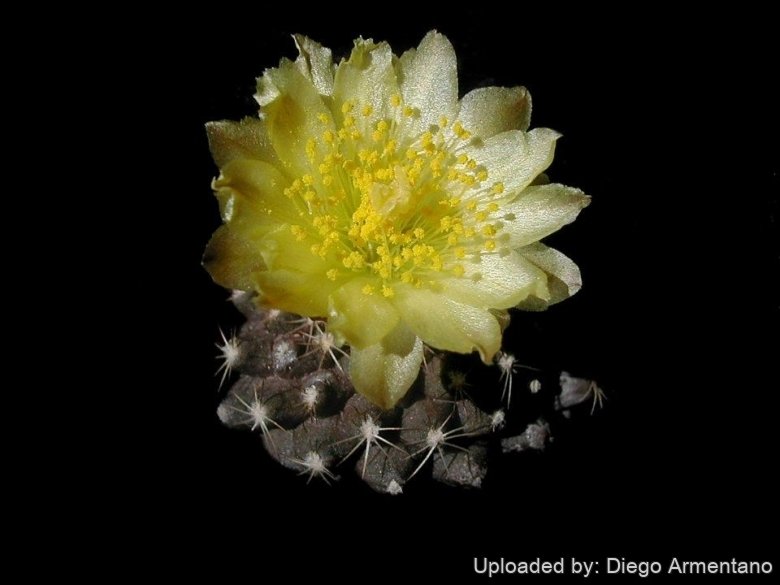
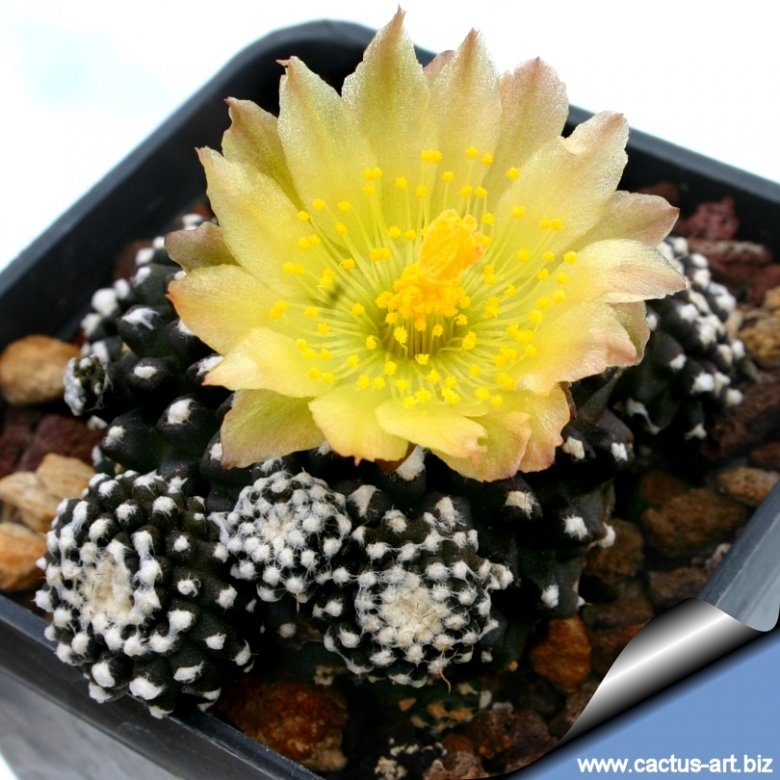
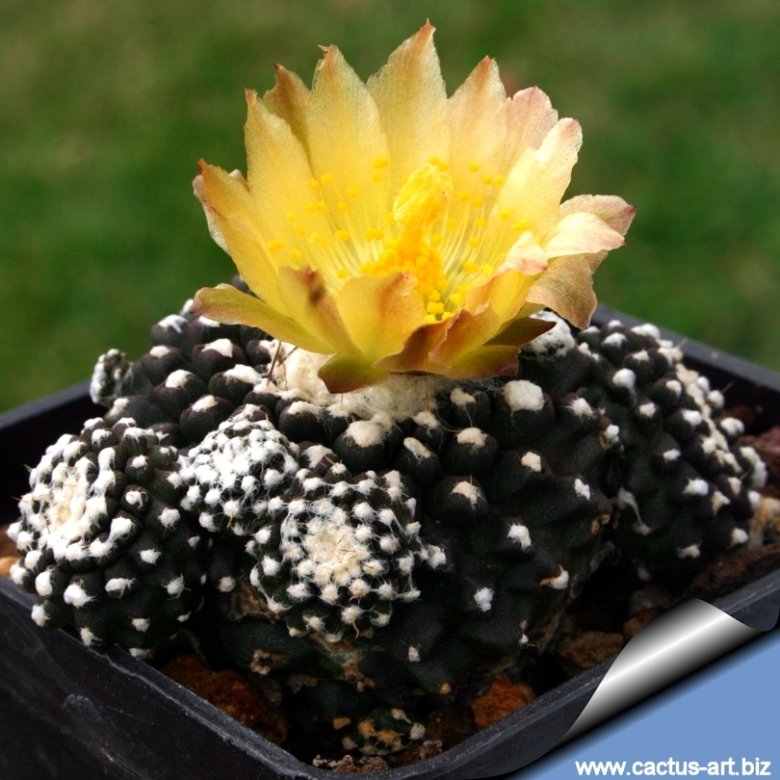
Flowers: Pretty, yellow diurnal, only 2-2,5 cm long. Tepals up to 15 mm long 5-7 mm wide. Ovary with pubescent scales, floral tube 4-7 mm long. The flowers are supposedly to be sweet scented. (The hairy ovary and fruit are a link with Ritter’s PiloSN’>9787’ alt=‘1138’>Copiapoa solaris#SN#9786’>Pilo[[Copiapoa solarisSN’ style=‘border:none;’>)
Blooming season: Spring and summer. In cultivation in the Copipoa tenuissima are able to flower from immature stems at an early age (c. 2 years from germination) and set viable seed.
Fruit: Globose, green to maroon unusual for the genus by being woolly, a primitive characteristic.
Origin and Habitat
South of Antofagasta. Northern Chile.
Habitat: Native to the coastal deserts on the steep mountain base among fragmented stones. The long tuberous root of this Copiapoa is buried deeply in these soils which are very poor in organic matter. In the area where this plants grows there is very little rain but frequent coastal fog, which provides a significant part of their water needs. The common presence in habitat of plants with juvenile spination forms on old taproots is due to the frequent grazing damage inflicted by donkeys and Guanacos.
Cultivation and Propagation
It is not too difficult in a greenhouse, although grows quite slowly. It is usually seen as a grafted plant but can grow on its own roots too.
Soil: Use a mineral well permeable soil with little organic matter (peat, humus).
Exposure: They need a good amount of light shade to full sun this help to keep the plants healthy, although slow growth.
Watering: Water sparingly from March till October (weekly during summertime, if the weather is sunny enough), with a little fertilizer added. Less or no water during cold winter months, or when night temperatures remain below 10° to prevent root loss. It is sensitive to overwatering (rot prone).
Fertilization: Feeding may not be necessary at all if the compost is fresh then, feed in summer only if the plant hasn’t been repotted recently. Do not feed the plants from September onwards as this can cause lush growth which can be fatal during the darker cold months.
Hardiness: Keep perfectly dry in winter at temperatures from 5 to 15 degrees centigrade. (but it is relatively cold resistant and hardy to -5° C, or possibly colder for short periods) In the rest period no high atmospheric humidity!! (Temperature Zone: USDA 9-11)
Uses: It is an excellent plant for container growing. It always looks good and stays small. It look fine in a cold greenhouse and frame or outdoor in a rockery.
Pests & diseases: It may be attractive to a variety of insects, but plants in good condition should be nearly pest-free, particularly if they are grown in a mineral potting-mix, with good exposure and ventilation. Nonetheless, there are several pests to watch for:
- Red spiders: Red spiders may be effectively rubbed up by watering the infested plants from above.
- Mealy bugs: Mealy bugs occasionally develop aerial into the new growth among the wool with disfiguring results, but the worst types develop underground on the roots and are invisible except by their effects.
- Scales: Scales are rarely a problem. It is wise to treat your whole collection with a systemic insecticide twice a year in spring and autumn.
- Rot: Rot is only a minor problem with cacti if the plants are watered and “aired” correctly. If they are not, fungicides won’t help all that much. To prevent rottenness it is also advisable to surround its root neck by very rough sand or grit, this help a fast water drainage.
Propagation: Seeds (or offsets if available), Grafting is often used to speed growth rate and to create a back-up to plants in collection. Seeds germinate in 7-14 days at 21-27° C in spring, remove gradually the glass cover as soon the plants will be well rooted (ca 1-2 weeks) and keep ventilated, no full sun for young plants! Cuttings will take root in a minimum temperature of 20° C (but better in hot weather). Cuttings of healthy shoots can be taken in the spring and summer. Cut the stem with a sharp, sterile knife, leave the cutting in a warm, dry place for a week or weeks (depending on how thick the cutting is) until a callus forms over the wound. Once the callus forms, the cutting may be inserted in a container filled with firmed cactus potting mix topped with a surface layer of coarse grit. They should be placed in the coarse grit only; this prevents the cut end from becoming too wet and allows the roots to penetrate the rich compost underneath. The cuttings should root in 2 to 6 weeks.
Bibliography
Major references and further lectures
-
Edward Anderson “The Cactus family” Timber Press, Incorporated, 2001
-
James Cullen, Sabina G. Knees, H. Suzanne Cubey “The European Garden Flora Flowering Plants: A Manual for the Identification of Plants Cultivated in Europe, Both Out-of-Doors and Under Glass” Cambridge University Press, 11/Aug/2011
-
David R Hunt; Nigel P Taylor; Graham Charles; International Cactaceae Systematics Group. “The New Cactus Lexicon” dh books, 2006
-
N. L. Britton, J. N. Rose “The Cactaceae. Descriptions and Illustrations of Plants of the Cactus Family.” Volume 4, The Carnegie Institution of Washington, Washington 1923
-
Urs Eggli, Leonard E. Newton “Etymological Dictionary of Succulent Plant Names” Birkhäuser 2004.
-
F.Ritter “Kakteen Südamerika” 3: 1072 1980.
-
Graham Charles “Copiapoa” Cirio Pub. Services, 1999
-
Adriana Hoffmann “Cactáceas en la Flora Silvestre de Chile” 1st edition, 1989
-
Cullmann W., Götz E., Gröner G.”Kakteen: Kultur, Vermehrung und Pflege - Lexikon der Gattungen und Arten” Ulmer, Stuttgart, 1984
From llifle page Copiapoa tenuissima f. cristata
Description
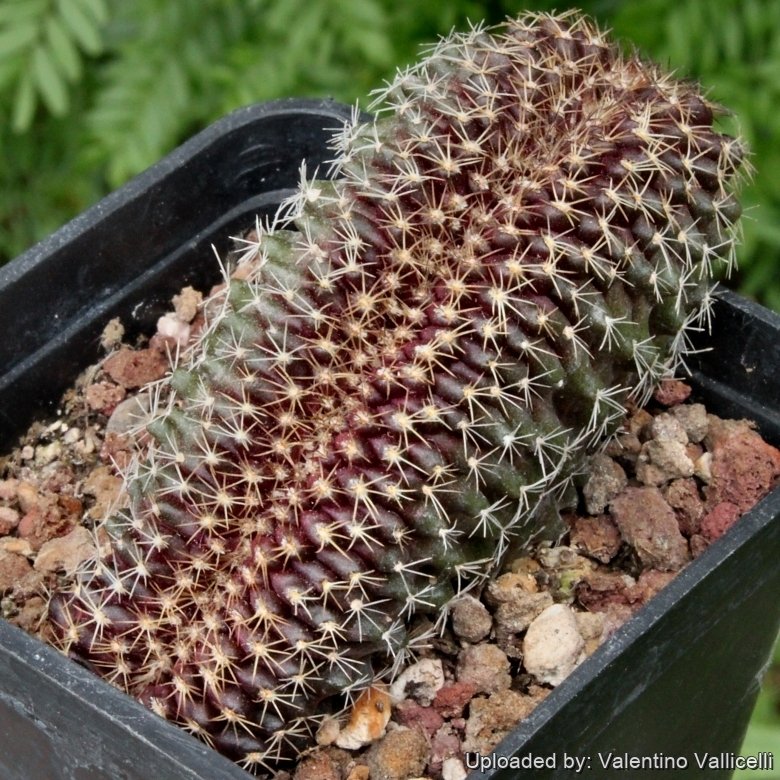
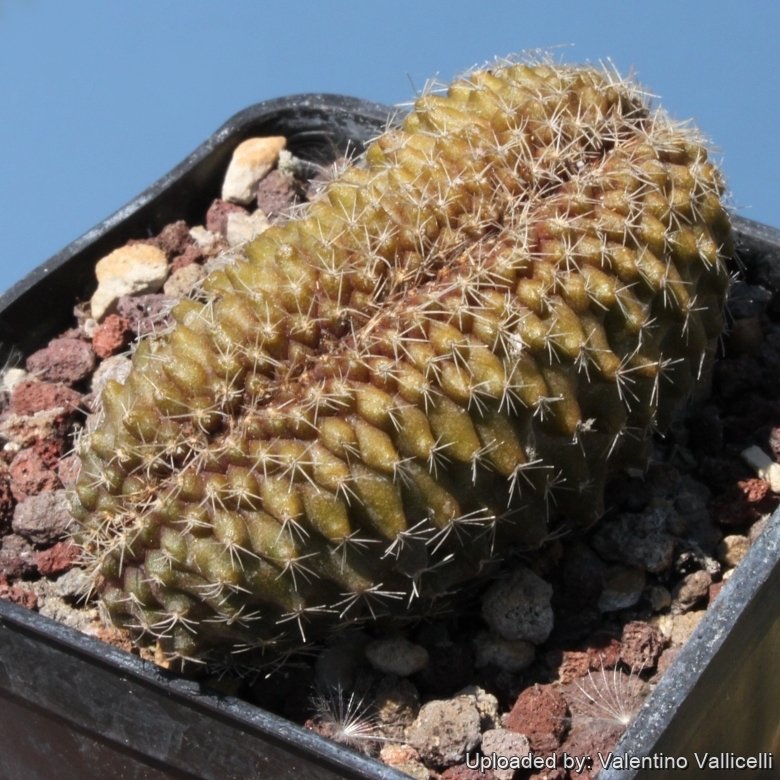
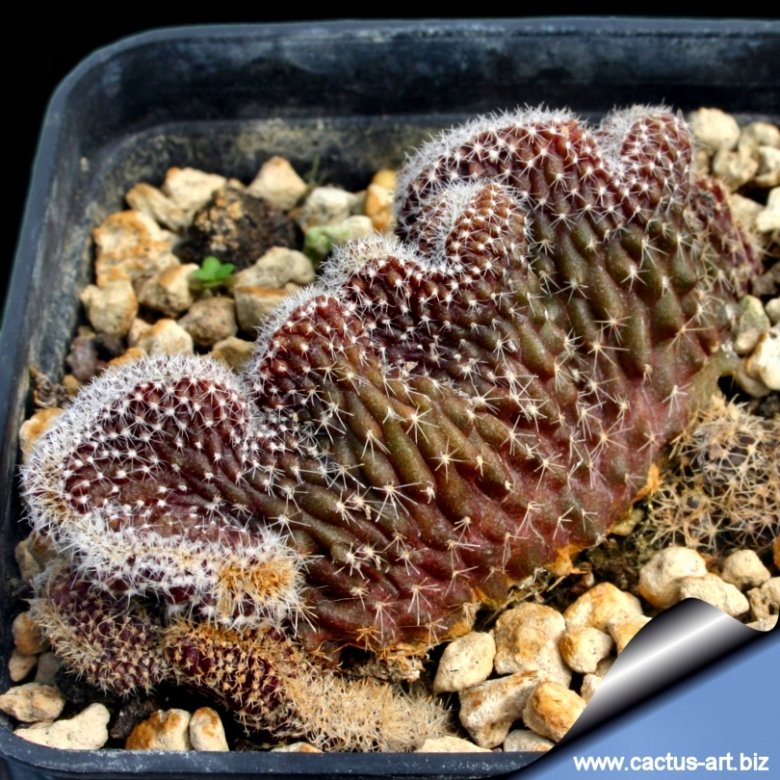
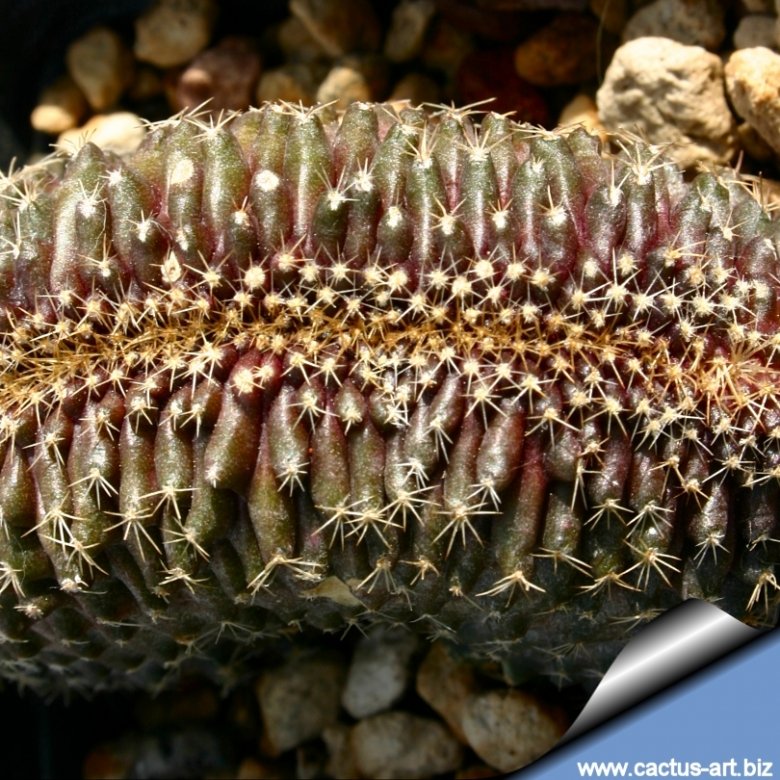
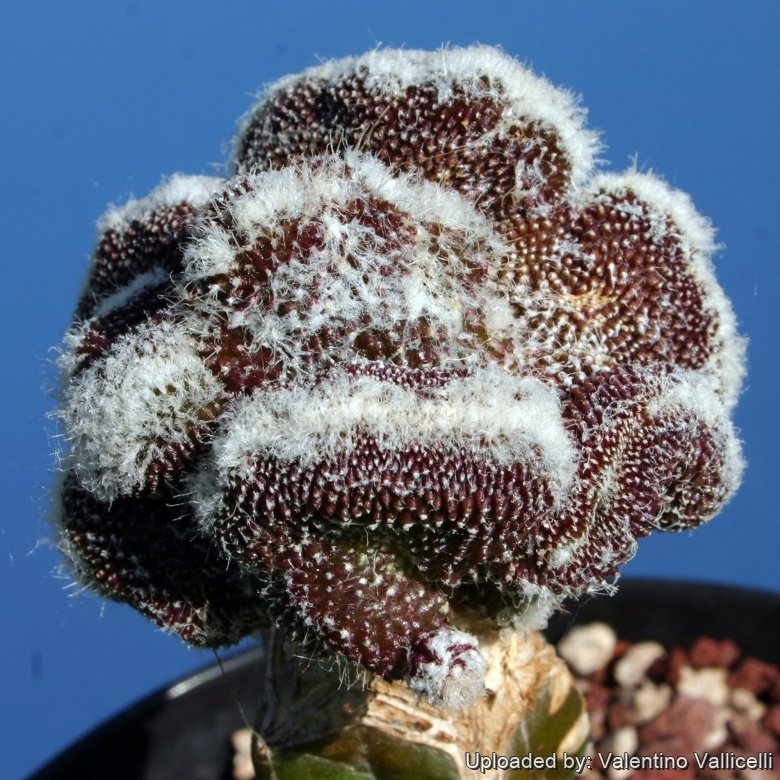
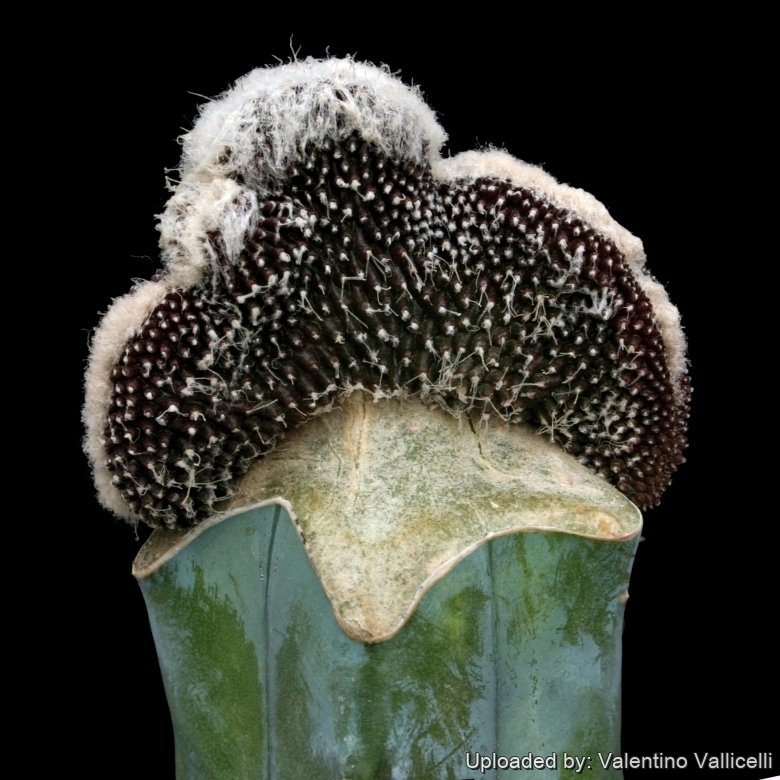
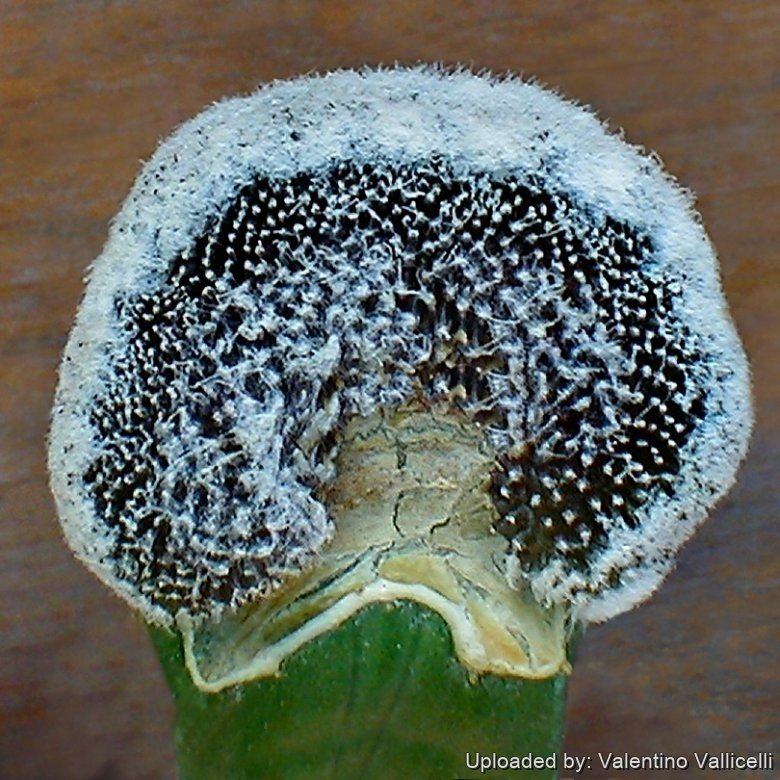
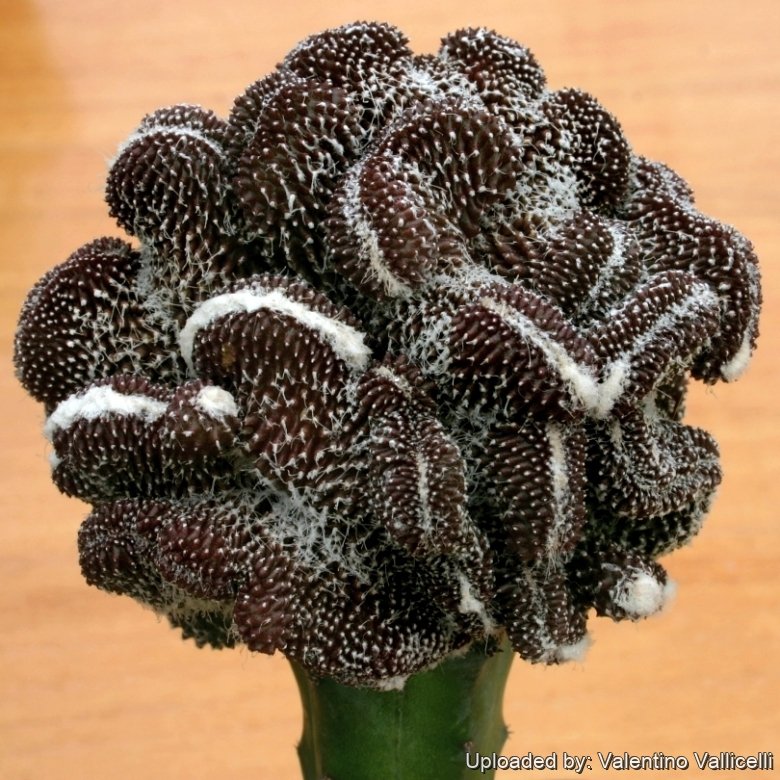
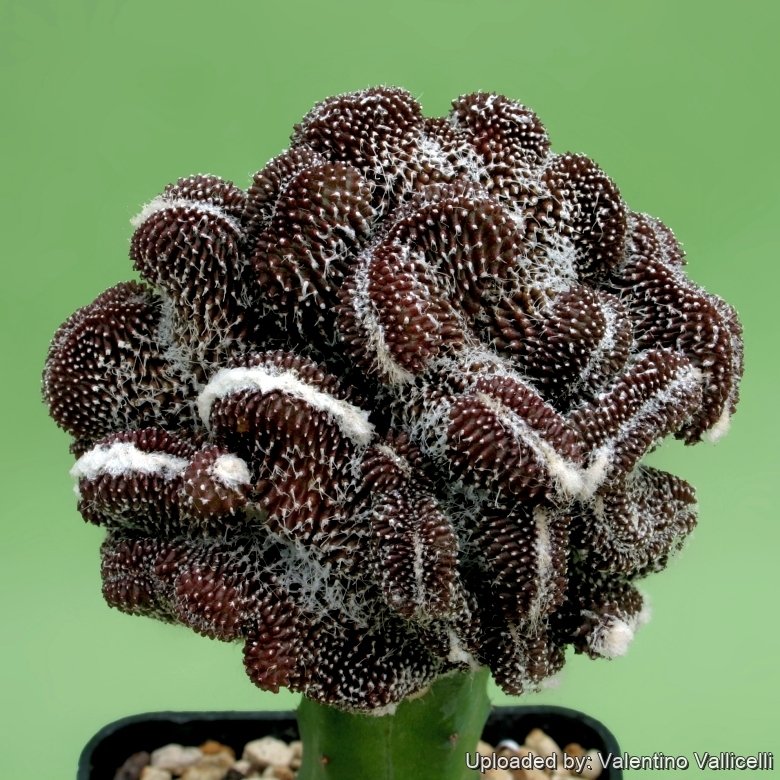
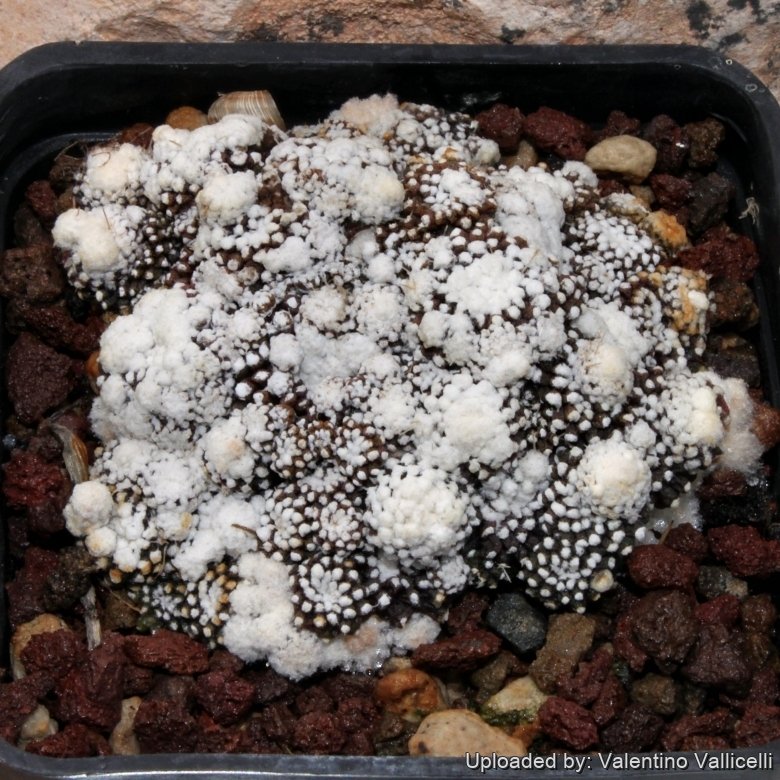
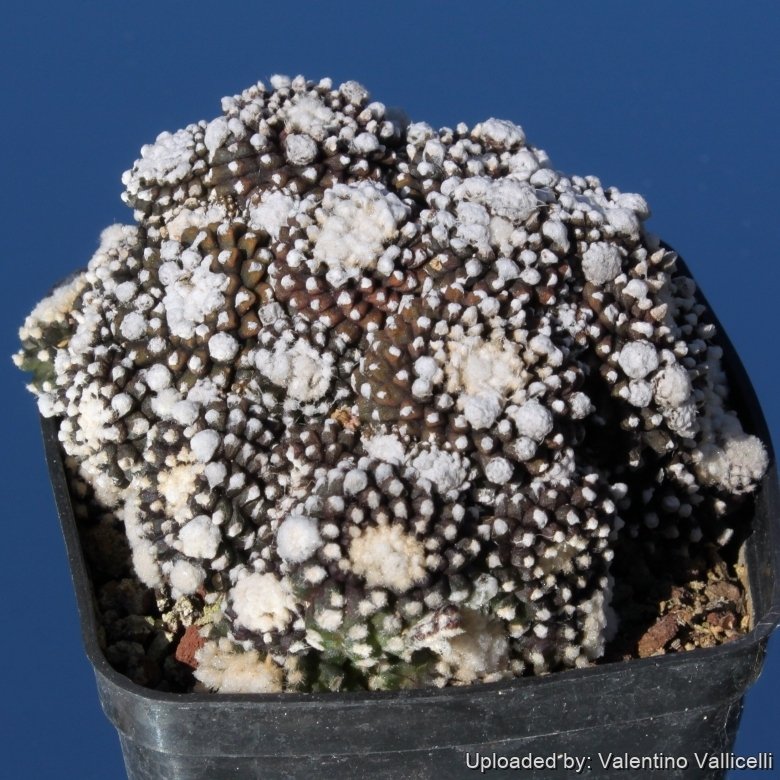
This is the crested clone of Copiapoa tenuissima. It is s fascinating crested Copiapoa sought after by cactus impassioned. This cultivar is stable and remain crested. The standard species is a geophytic cactus arising from a large tuberose root that can slowly branch from the base to form small clumps.
Habit: The standarCopiapoa tenuissima is a single or clustered succulent plant, usually at or slightly below soil level.
Stems: Fun shaped, up to 5 cm in width, dull-green, dark olive green, to almost purplish-black. The stem is tubercled rather than ribbed stem and the slightly felted apex can be regarded as persistent juvenile characters.
Roots: Large tuberose connected to the stem by long slender neck. Seedlings naturally produce the huge tap root, starting from germination.
Areoles: White abundantly woolly.
Radial spines: Very thin (almost hairy), acicular, usually straight 8-14, 3-6 mm long, yellowish to blackish.
Central spines: 0-1 (-2) 4-10 mm long.
Flowers: Pretty, yellow diurnal, up to 2,5 cm long. The flowers are supposedly to be sweet scented. (The hairy ovary and fruit are a link with Ritter’s PiloSN’>9787’ alt=‘1138’>Copiapoa solaris#SN#9786’>Pilo[[Copiapoa solarisSN’ style=‘border:none;’>)
Blooming season: Spring and summer.
Fruit: Globose, green to maroon unusual for the genus by being woolly, a primitive characteristic.
Origin and Habitat
Garden origin (Nursery produced cultivar)
Cultivation and Propagation
Need full sun otherwise the bodies tended to elongate in cultivation, but should be protected from excessive heat and sun in summer, Require light watering, good drainage, and deep pot to accommodate tap root. . Keep warm and dry in winter to avoid rot. Frost tolerance 0°C
Propagation: Heads can be used as cuttings. They grow slowly at first until they develop the large tuberous root. Grafting is also used to speed growth rate and to create a back-up to plants in collection.
Source: Copiapoa tenuissima f. cristata, LLIFLE - Encyclopedia of living forms, CC-BY-SA, retrieved 2026-10-25.
From llifle page Copiapoa tenuissima f. monstruosa cristata
Description
Copiapoa tenuissima mostruosa forma cristata is not a fast spreader like others but forms nice plants pretty quickly, water it moderately in summer and keep fairly dry in winter. Prefers a light shade or a full sun exposure, should be protected from excessive heat and sun in summer.
Propagation: Usually grafted but the cuttings root without a problem. They grow slowly at first until develop the large tuberous root system.
Cultivation and Propagation
It is not too difficult in a greenhouse, although grows quite slowly. It is usually seen as a grafted plant but can grow on its own roots too.
Soil: Use a mineral well permeable soil with little organic matter (peat, humus).
Exposure: They need a good amount of light shade to full sun this help to keep the plants healthy, although slow growth.
Watering: Water sparingly from March till October (weekly during summertime, if the weather is sunny enough), with a little fertilizer added. Less or no water during cold winter months, or when night temperatures remain below 10° to prevent root loss. It is sensitive to overwatering (rot prone).
Fertilization: Feeding may not be necessary at all if the compost is fresh then, feed in summer only if the plant hasn’t been repotted recently. Do not feed the plants from September onwards as this can cause lush growth which can be fatal during the darker cold months.
Hardiness: Keep perfectly dry in winter at temperatures from 5 to 15 degrees centigrade. (but it is relatively cold resistant and hardy to -5° C, or possibly colder for short periods) In the rest period no high atmospheric humidity!! (Temperature Zone: USDA 9-11)
Crested growth: Unlike ‘monstrose’ varieties of plants, where the variation from normal growth is due to genetic mutation, crested growth can occur on normal plants. Sometimes it’s due to variances in light intensity, or damage, but generally the causes are unknown. A crested plant may have some areas growing normally, and a cresting plant that looks like a brain, may revert to normal growth for no apparent reason. If you have any of the crested part left you need to remove the normal growth and leave the crested part behind this will need to be done regularly.
Propagation: Grafting or cuttings. Plants are usually grafted onto column-shaped cacti but proved to be able to produce their own roots if degrafted. Cuttings will take root in a minimum temperature of 20° C (but better in hot weather). Cuttings of healthy shoots can be taken in the spring and summer. Cut the stem with a sharp, sterile knife, leave the cutting in a warm, dry place for a week or weeks (depending on how thick the cutting is) until a callus forms over the wound. Once the callus forms, the cutting may be inserted in a container filled with firmed cactus potting mix topped with a surface layer of coarse grit. They should be placed in the coarse grit only; this prevents the cut end from becoming too wet and allows the roots to penetrate the rich compost underneath. The cuttings should root in 2 to 6 weeks. Large crested piece must be placed on the soil surface without burying the plant base down in the soil.
Source: Copiapoa tenuissima f. monstruosa cristata, LLIFLE - Encyclopedia of living forms, CC-BY-SA, retrieved 2026-10-25.
From llifle page Copiapoa tenuissima f. monstruosa
Description
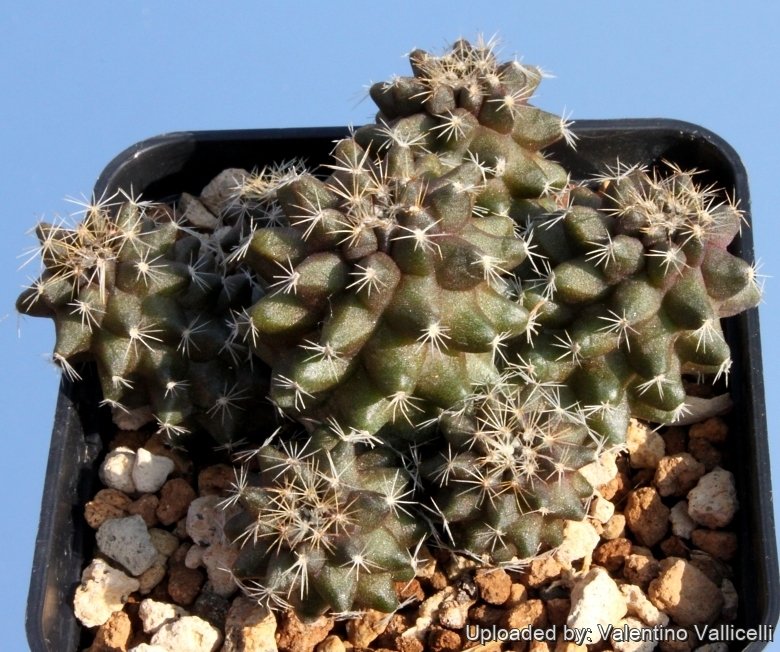
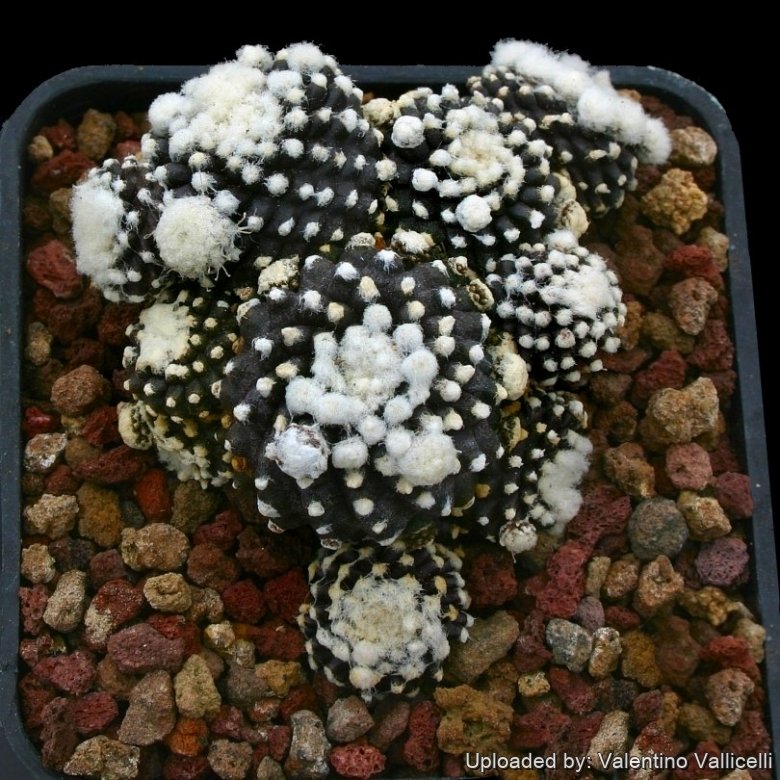
There are some different clones of this heavy clumping cultivar, some of which very small and densely branched and some (the more common forms) with larger stems and fewer basal shoots. The cluster of heads never get much larger but can slowly fill a 10 cm bowl.
Stems: Basally branching from 1 to 5 cm in diameter (depending on clone) that turns almost black in direct sunlight.
Flowers: Pretty, yellow up to 2.5 cm long and supposedly are sweet scented.
Blooming season: Spring and summer.
Cultivation and Propagation
Copiapoa tenuissima mostruosa is not a fast spreader like others but forms nice plants pretty quickly, water it moderately in summer and keep fairly dry in winter. Prefers a light shade or a full sun exposure, should be protected from excessive heat and sun in summer.
Propagation: Usually grafted but the offsets can be used as cuttings, they root without a problem. They grow slowly at first until they develop the large tuberous root system. It is also possible to reproduce it by seeds as the plant produces flowers and viable seeds.
Source: Copiapoa tenuissima f. monstruosa, LLIFLE - Encyclopedia of living forms, CC-BY-SA, retrieved 2026-10-25.
Gallery