Publication: Cact. Fl. Silvestre Chile 118, basionym invalid. 1989
Description
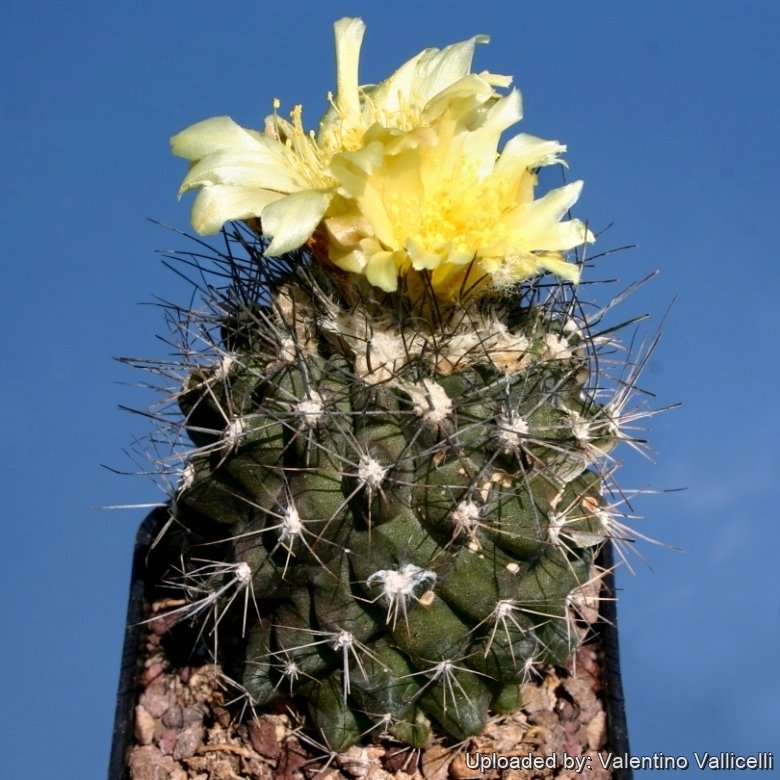
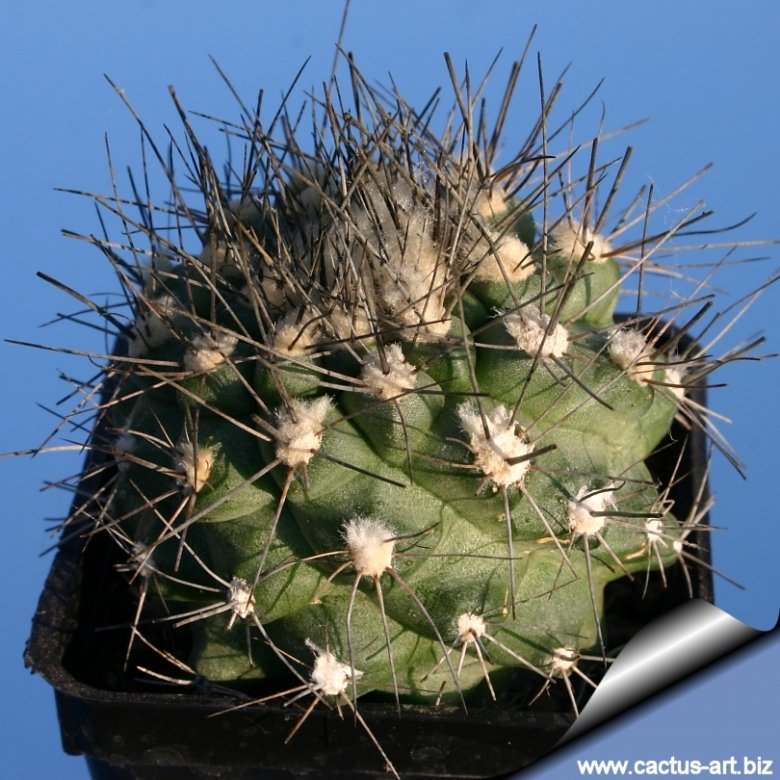
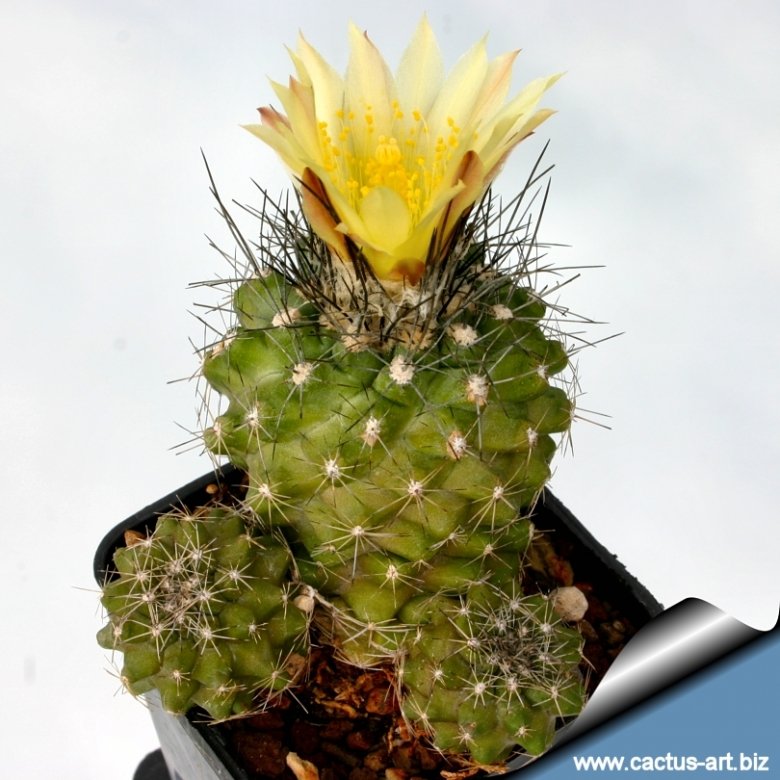
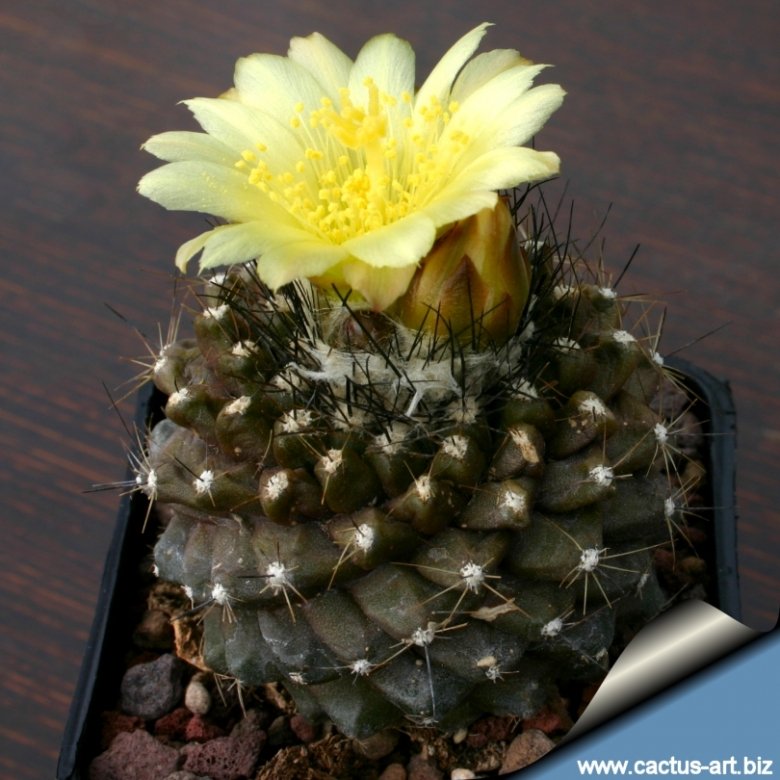
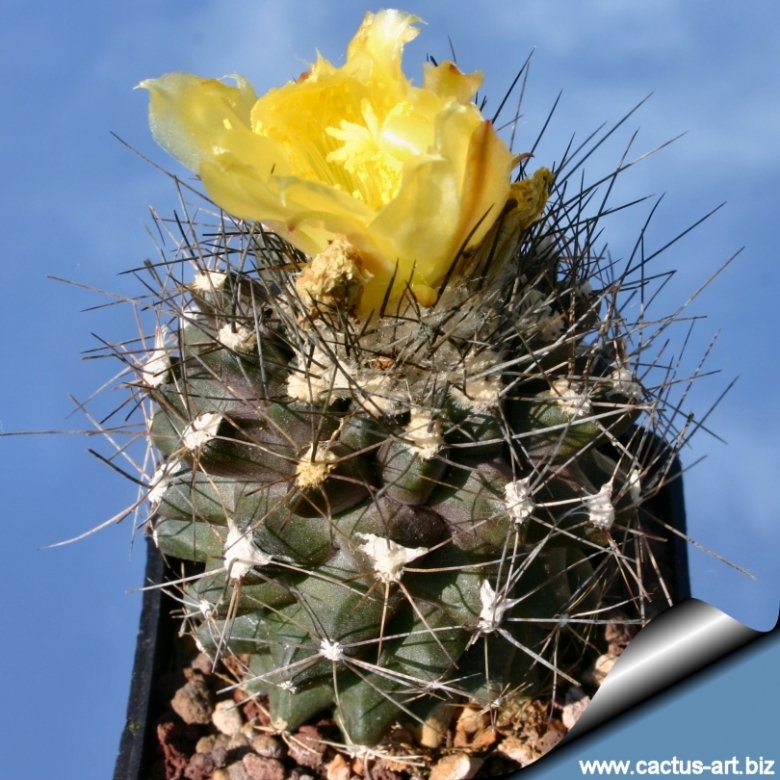
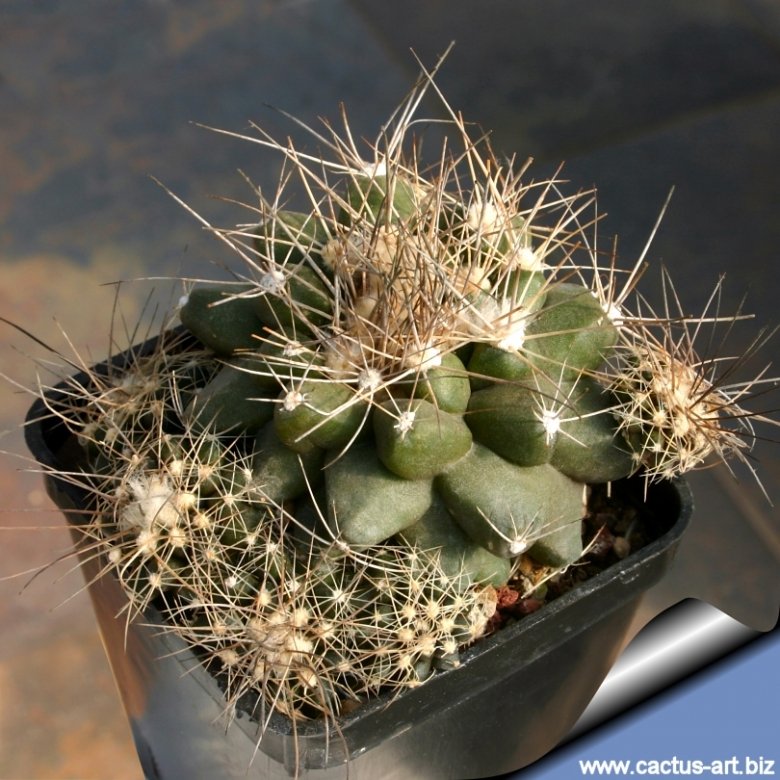
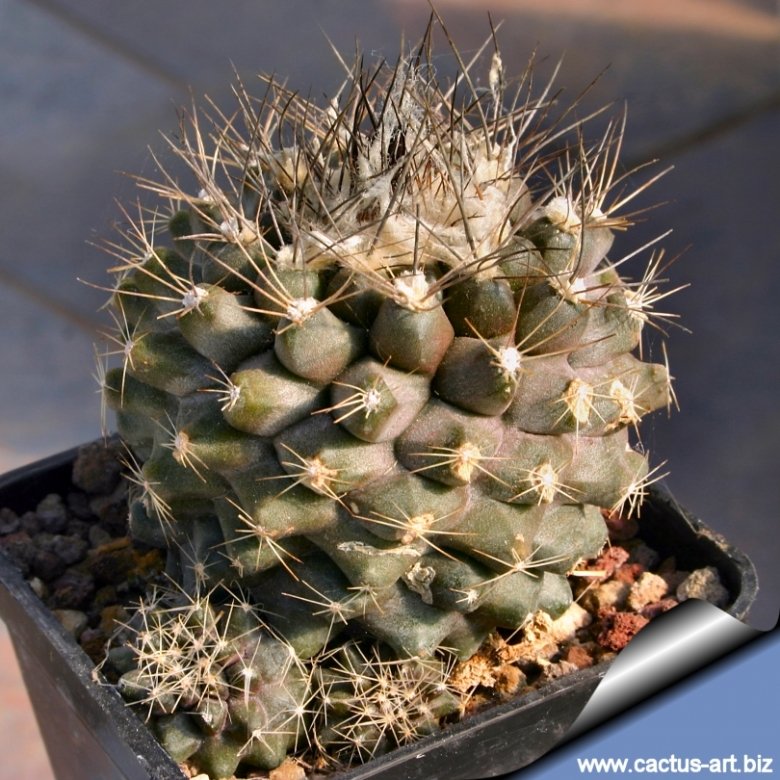
Copiapoa paposoensis is one of the controversial geographical forms of the very variable Copiapoa humilis ssp.humilis with grass-green, bluish-green, or somewhat grey-green, or rarely red-brown stems, as is common for the tender-bodied Copiapoa humilis, but in this form the stem is harder than that of the Copiapoa humilis. However this plant looks very similar to other forms of Copiapoa humilis which are linked one to each others by populations of plants with intermediate characteristics. Nowadays all them are thought to belong to a unique polymorphic species. Such variations has led to establishment of several unnecessary names for this species.
Habit: Solitary, rarely offsetting of its own.
Stem: Hemispherical, 6-12 cm in diameter, grass-green, bluish-green, or somewhat grey-green, or rarely red-brown. The stem is also harder than that of the Copiapoa humilis. The crown is somewhat depressed, with white woolly felt.
Root: Massive, thickened rootstock going well down into the ground, with a long narrow neck.
Ribs: 9-16.
Flowers: Yellow, campanulate, scented, about 30 mm long, growing from the center of the white wool at the apex.
Seeds: 1,5 mm wide, black.
Origin and Habitat
Atacama desert in Northern Chile, Depart. Taltal, restricted to a relatively small area from near Paposo to the north near Blanco Encalada. (Type locality: about 20 km north of Paposo)
Habitat: Copiapoa paposoensis grows at about 1100 m altitude where constantly sunny weather prevails, together with a great aridity over the misty zone, while in the misty zone lying at a lower level in the same place the Copiapoa humilis grows. From there it extends up to 1300 m where the complete desert begins. No hybrids are found between the two sorts, although the distribution area for both sorts overlap slightly.
Cultivation and Propagation
Slow growing, it need full sun but should be protected from excessive heat and sun in summer. Requires light watering and good drainage. Keep warm and dry in winter to avoid rot. It needs mild heat in winter; avoid any frost.
Propagation: Seeds or stems planted as cuttings. Grafting is often used to speed growth rate and to create a back-up to plants in collection.
Notes
The identification of the true ‘paposoensis’ may concern a degree of uncertainty as to what this plant is, and many plants found in cultivation are Copiapoa humilis ssp. humilis.
Bibliography
Major references and further lectures
-
Robert Silverberg “The Palace at Midnight: The Collected Stories, Volume 5“ Hachette UK, 29/Sep/2011
-
Graham Charles “Copiapoa” Cirio Pub. Services, 1999
-
Riha & Subik. “The illustrated encyclopedia of cacti and other succulents” (edited by G. & K.A. Beckett) 1981
-
James Cullen, Sabina G. Knees, H. Suzanne Cubey “The European Garden Flora Flowering Plants: A Manual for the Identification of Plants Cultivated in Europe, Both Out-of-Doors and Under Glass” Cambridge University Press, 11/ago/2011
-
Clive Innes “Complete Handbook of Cacti and Succulents” Van Nostrand Reinhold Company, 01/Dec/1981
-
Edward Anderson “The Cactus family” Timber Press, Incorporated, 2001
-
David R Hunt; Nigel P Taylor; Graham Charles; International Cactaceae Systematics Group. “The New Cactus Lexicon” dh books, 2006
-
N. L. Britton, J. N. Rose “The Cactaceae. Descriptions and Illustrations of Plants of the Cactus Family.” Volume 4, The Carnegie Institution of Washington, Washington 1923
-
F.Ritter “Kakteen Südamerika” 3: 1072 1980
Gallery