Description
Large, depressed-globular cactus, often clumping and group-forming
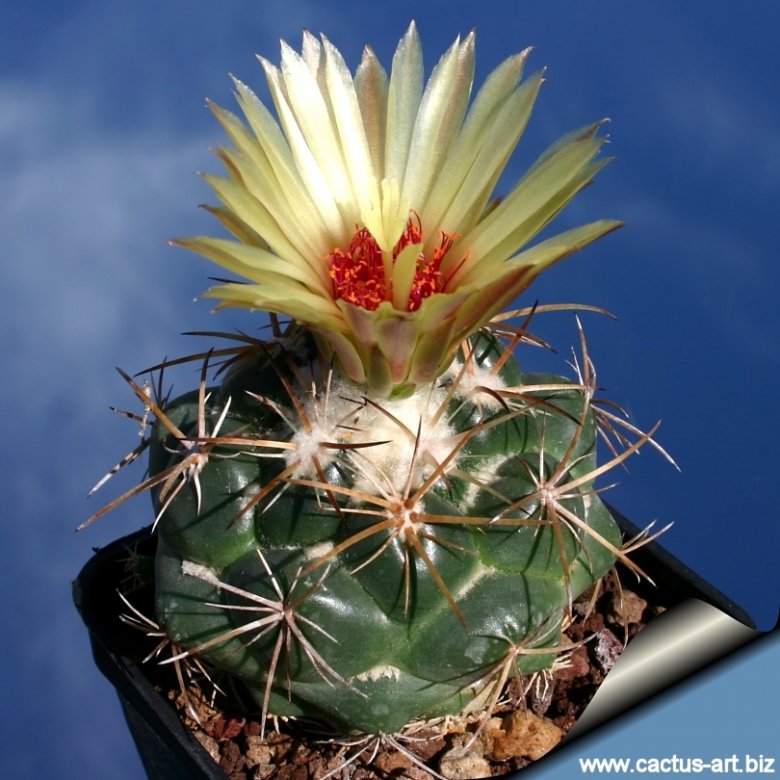
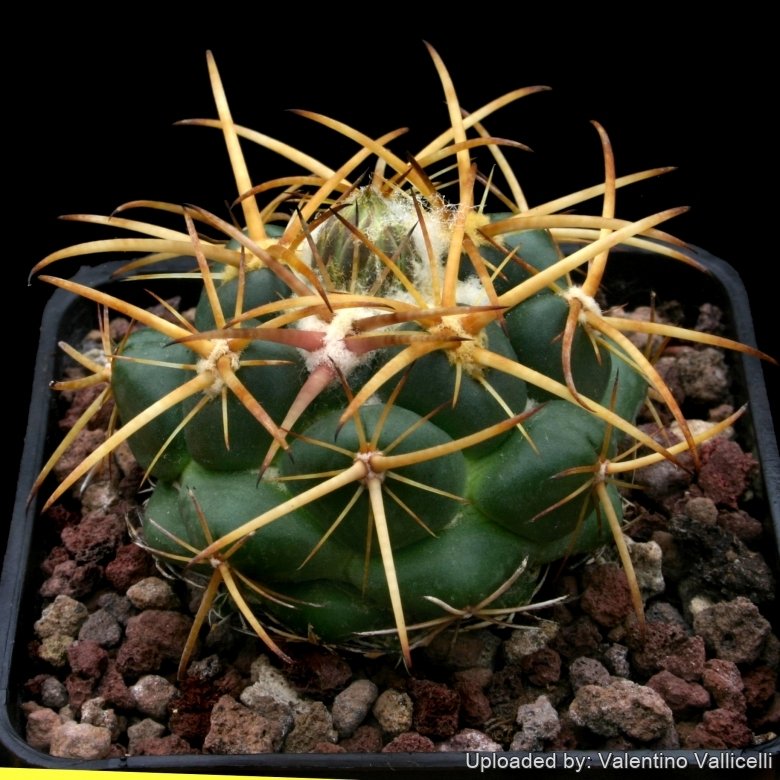
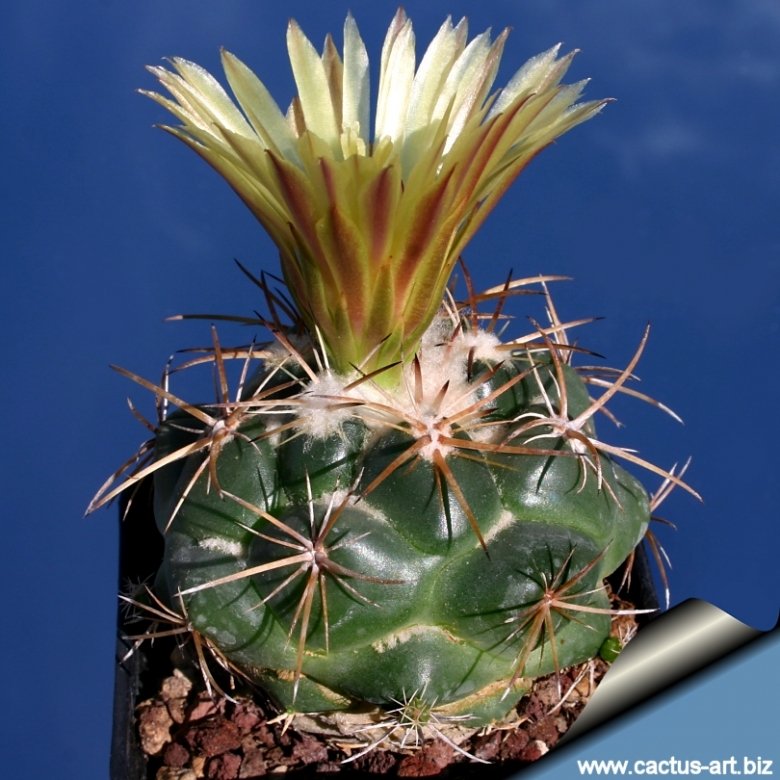
Stem: Each head is 5-8 cm tall and 6 to 10(-18) cm in diameter depressed globose often flattened apically.
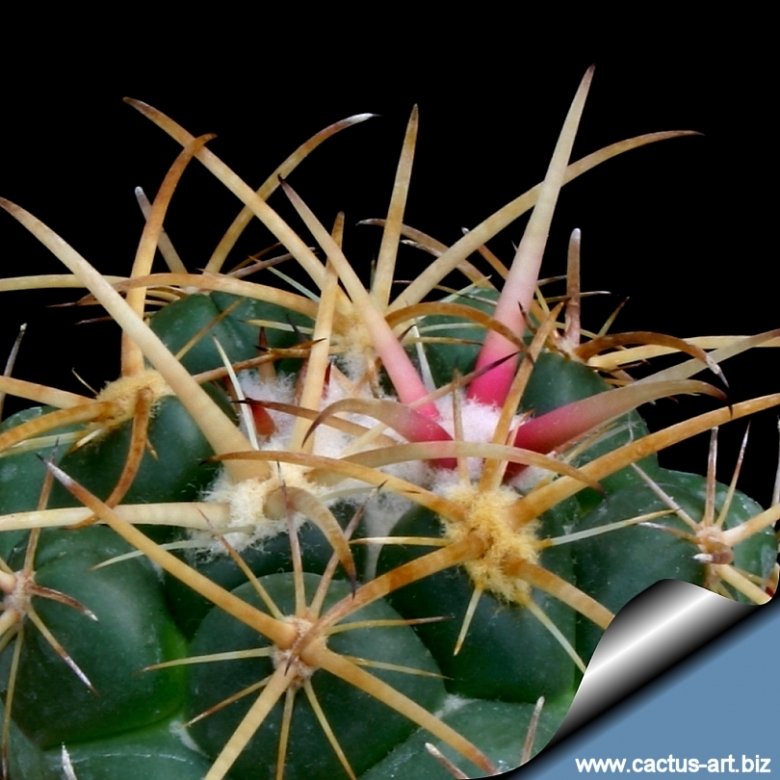
Tubercles: Very large, shiny green, 20-30 (60) mm wide, rounded on top, pentaedrical at the base, always broader than rounded , without glands, the tubercles axil and furrow is densely woolly.
Central spines: Absent.
Radial spines: 5 to 9 unequal, upper and lower one short, laterals longer, stout, reflexed, 12-26 mm long never porrect, but adpressed to the body. Yellowish white with dark tips at first, later darker.
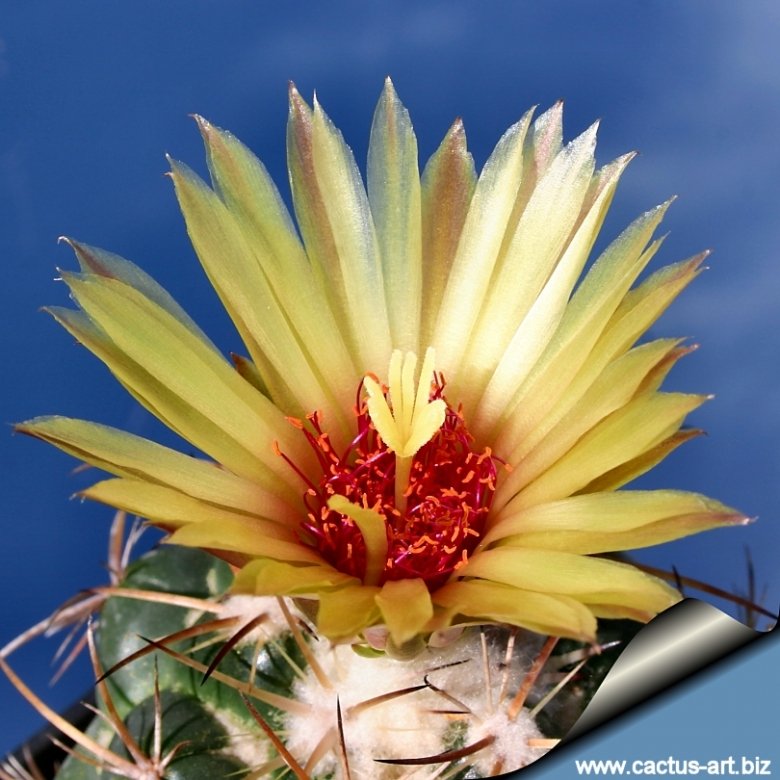
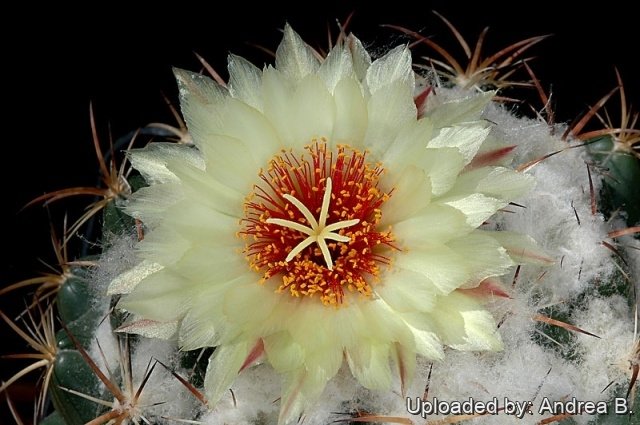
Flowers: Sweet smelling large 4 to 8 cm creamy- yellow, Stamens yellow to purple.
Blooming season: Produced in late summer to autumn.
Fruits: Very big, oblong, opaque green, juicy, (ca. 4 cm long, 1 cm diameter)
Origin and Habitat
Mexico (Hidalgo, Vera Cruz, and Oaxaca)
Cultivation and Propagation
Full sun to light shade in summer. Water sparingly, keep drier in winter. Needs good drainage. Frost Tolerance: Hardy to -3°C.
Propagation: Offsets as it is a suckering cactus or by seeds.
Bibliography
Major references and further lectures
-
Edward Anderson “The Cactus family” Timber Press, Incorporated, 2001
-
James Cullen, Sabina G. Knees, H. Suzanne Cubey “The European Garden Flora Flowering Plants: A Manual for the Identification of Plants Cultivated in Europe, Both Out-of-Doors and Under Glass” Cambridge University Press, 11/Aug/2011
-
David R Hunt; Nigel P Taylor; Graham Charles; International Cactaceae Systematics Group. “The New Cactus Lexicon” dh books, 2006
-
Hernández, H.M., Gómez-Hinostrosa, C., Guadalupe Martínez, J., Sánchez , E., Dicht, R.F. & Lüthy, A.D. 2013. Coryphantha elephantidens. In: IUCN 2013. “IUCN Red List of Threatened Species.” Version 2013.2. <www.iucnredlist.org>. Downloaded on 17 February 2014.
Gallery