Publication: Cactées 35. 1868
Description
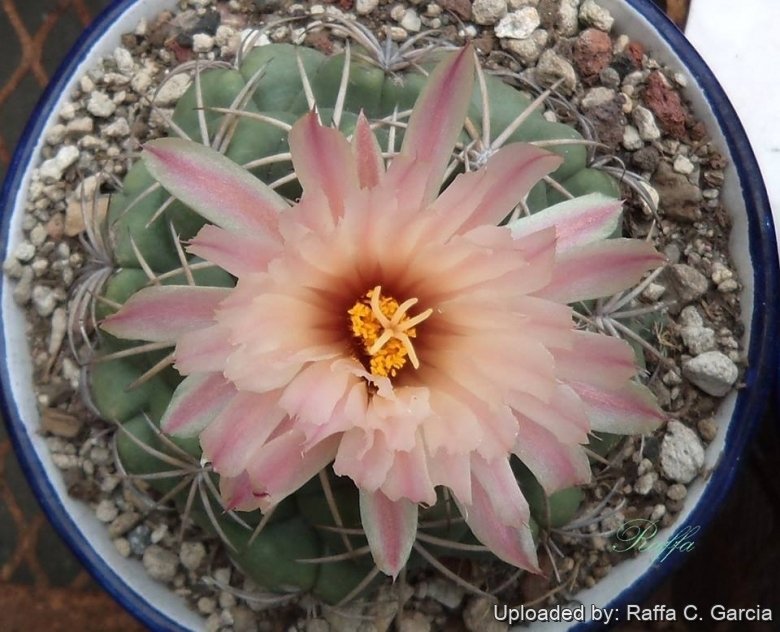
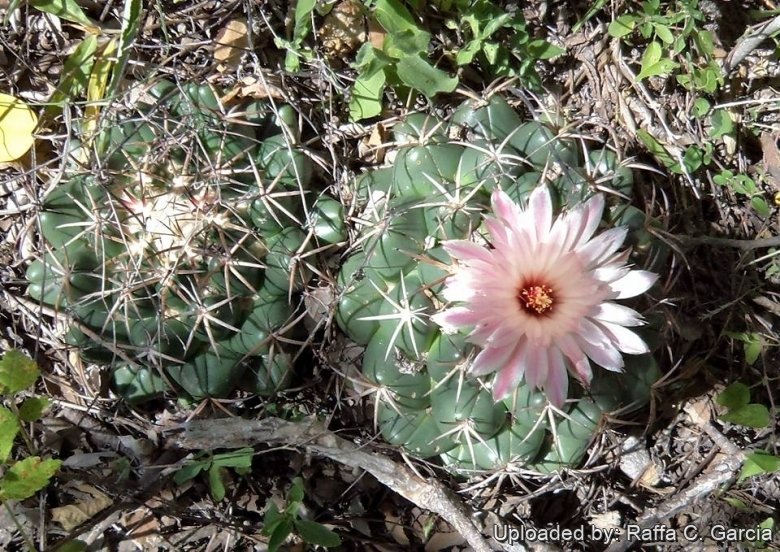
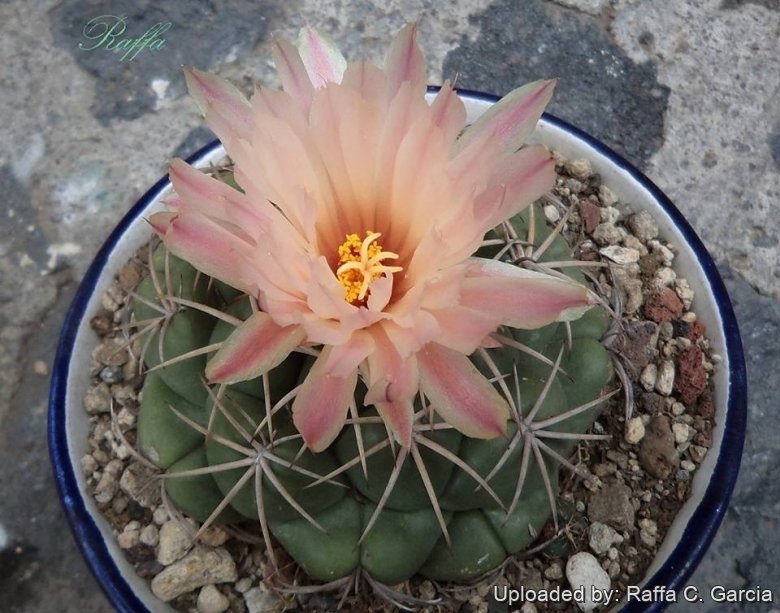
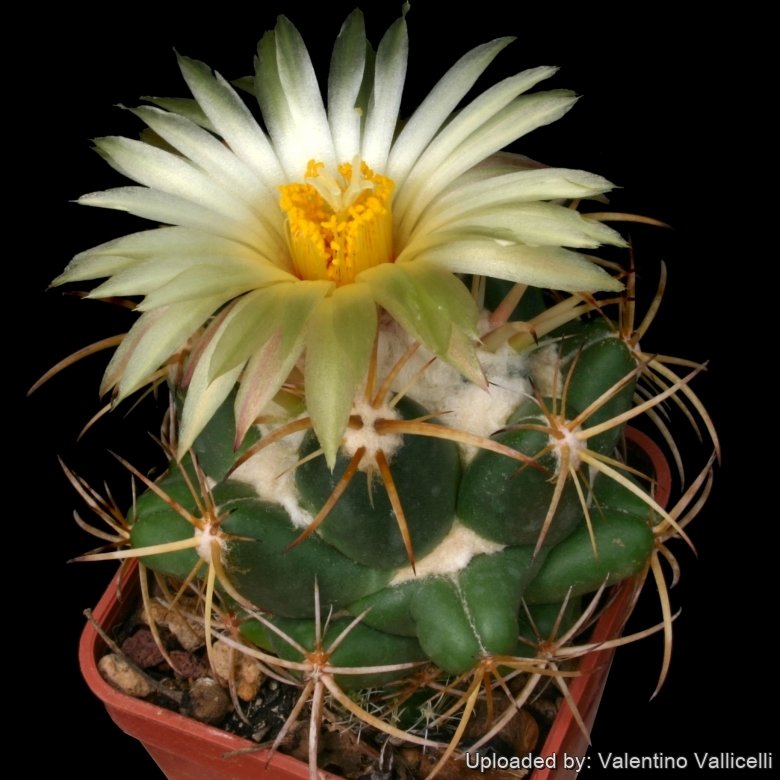
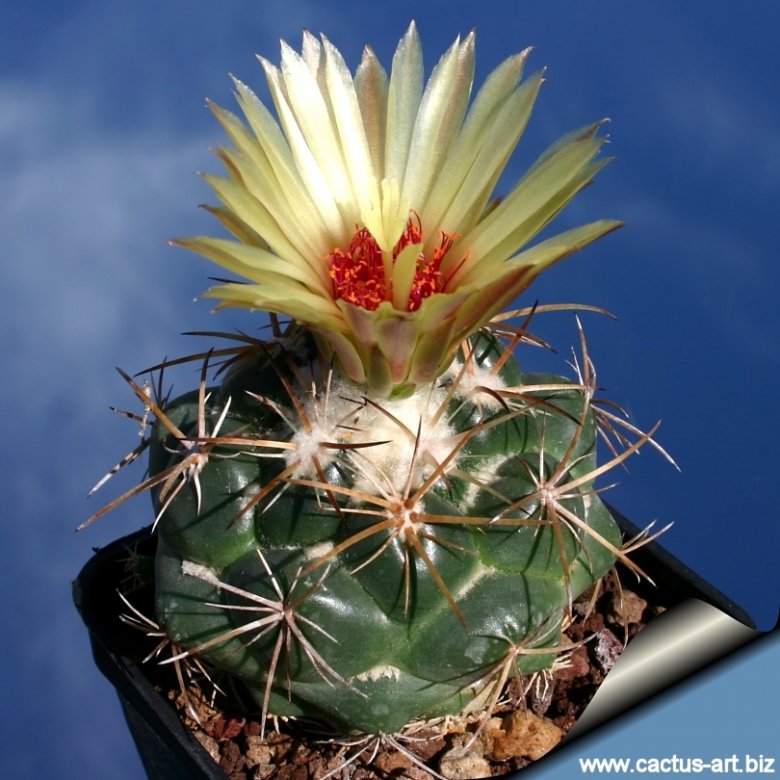
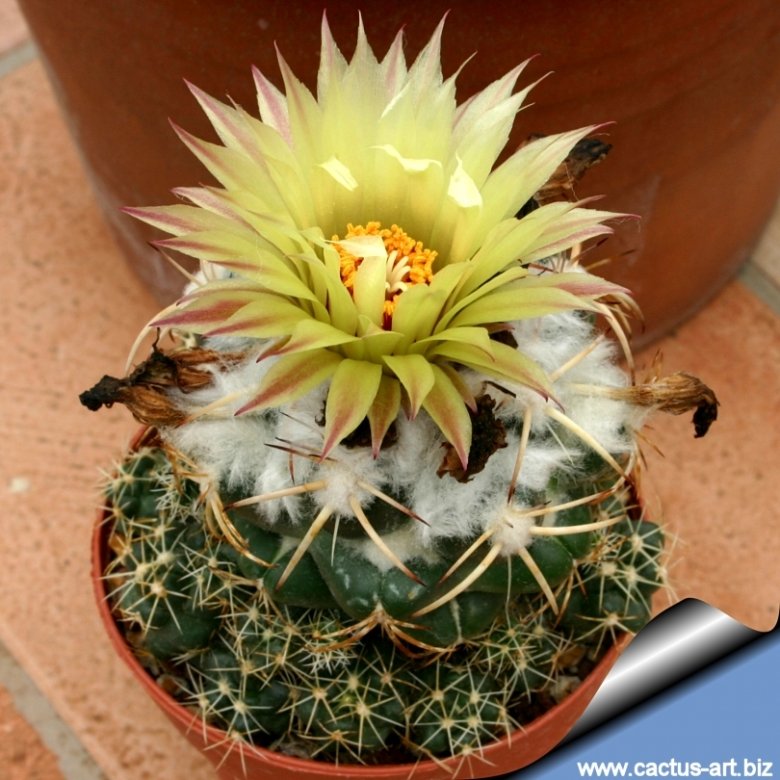
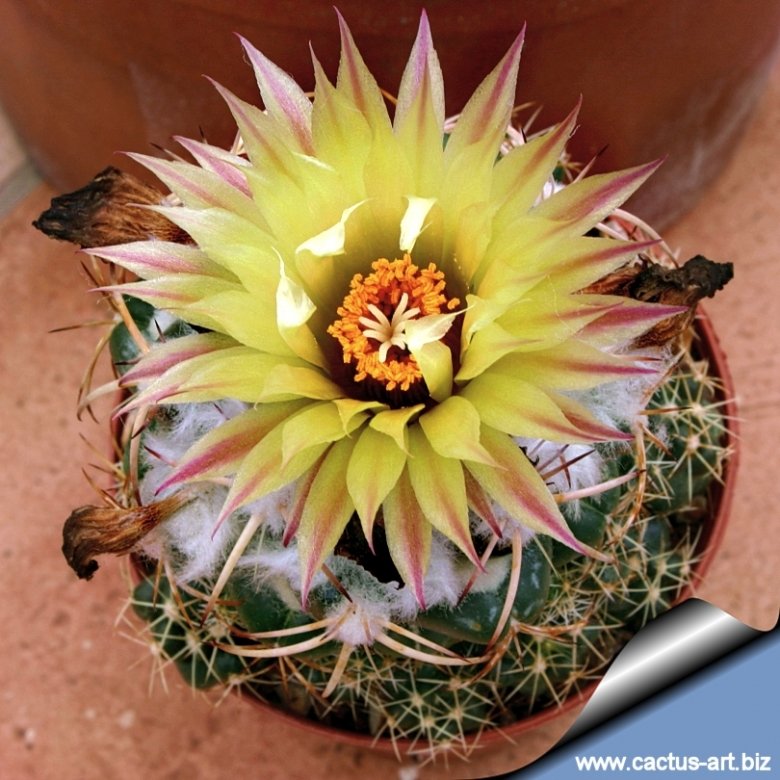
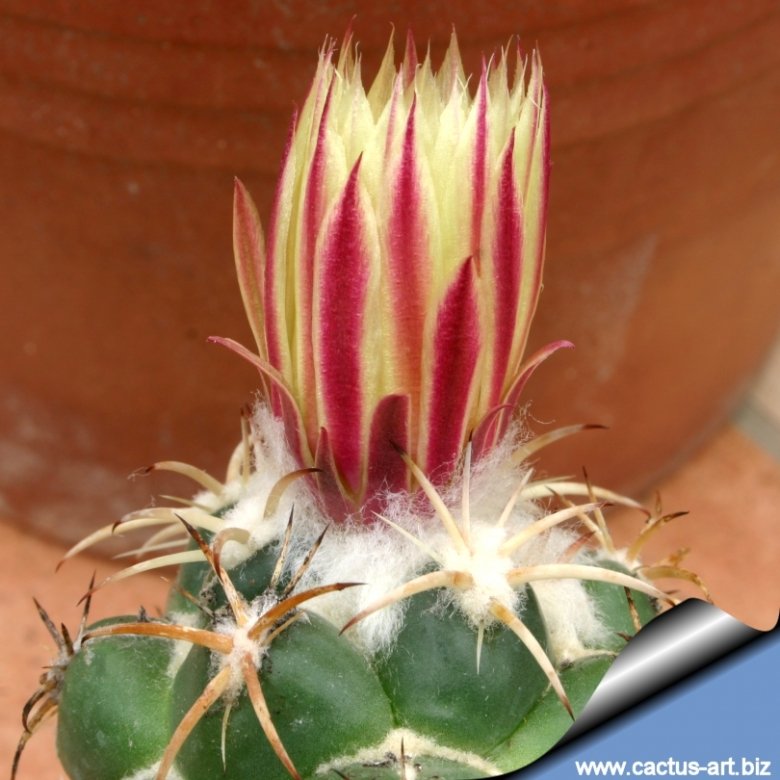
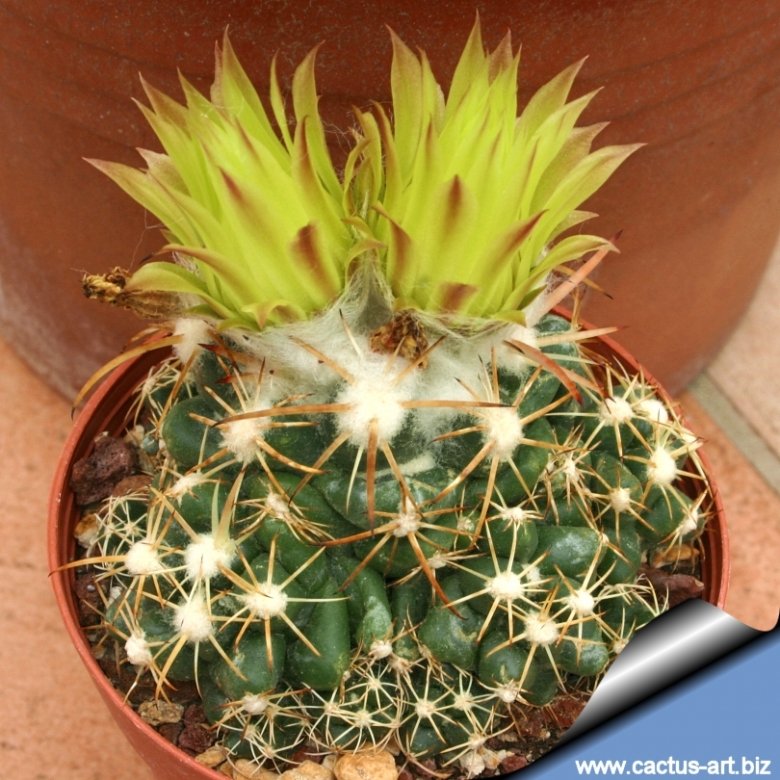
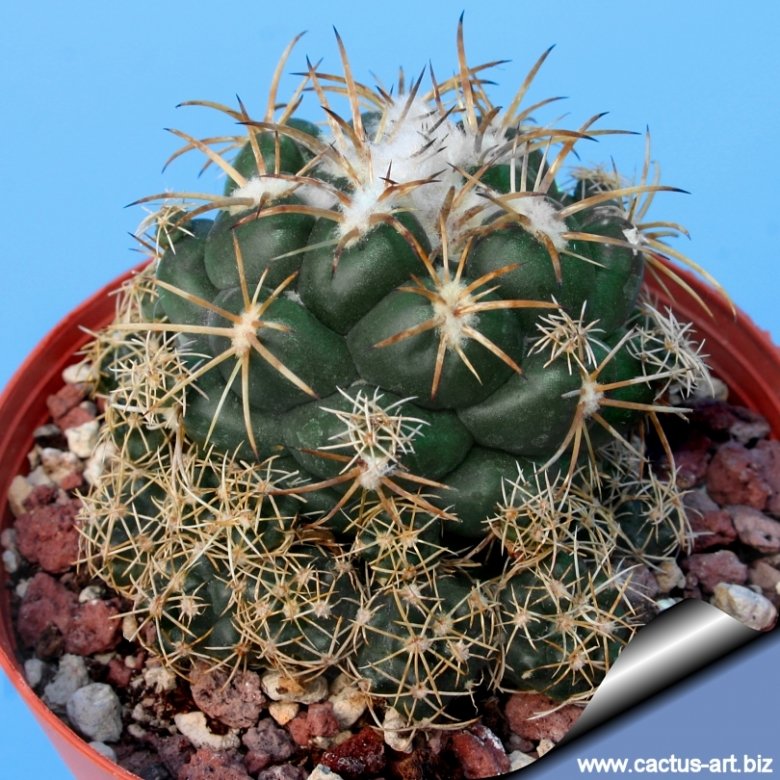
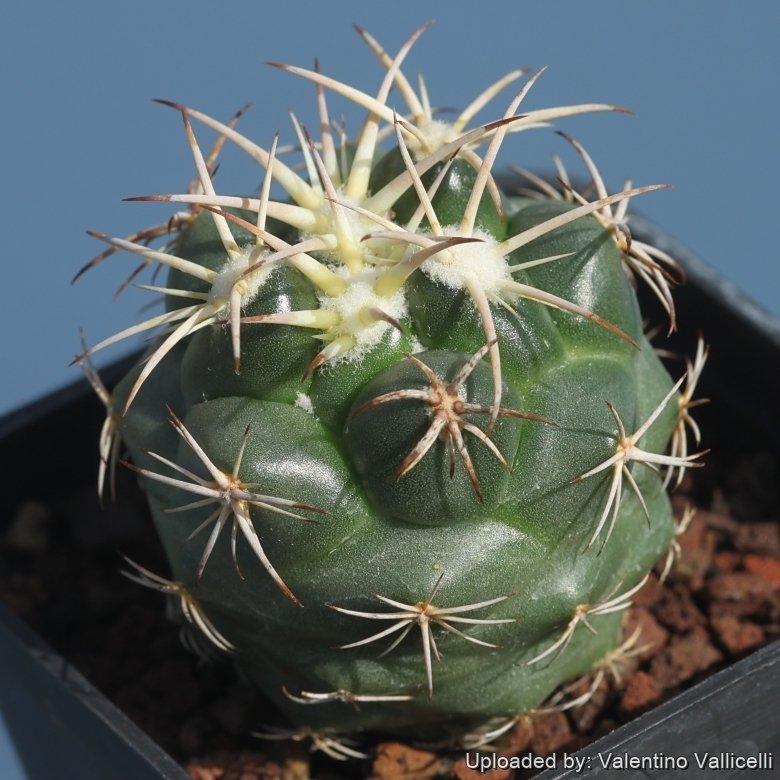
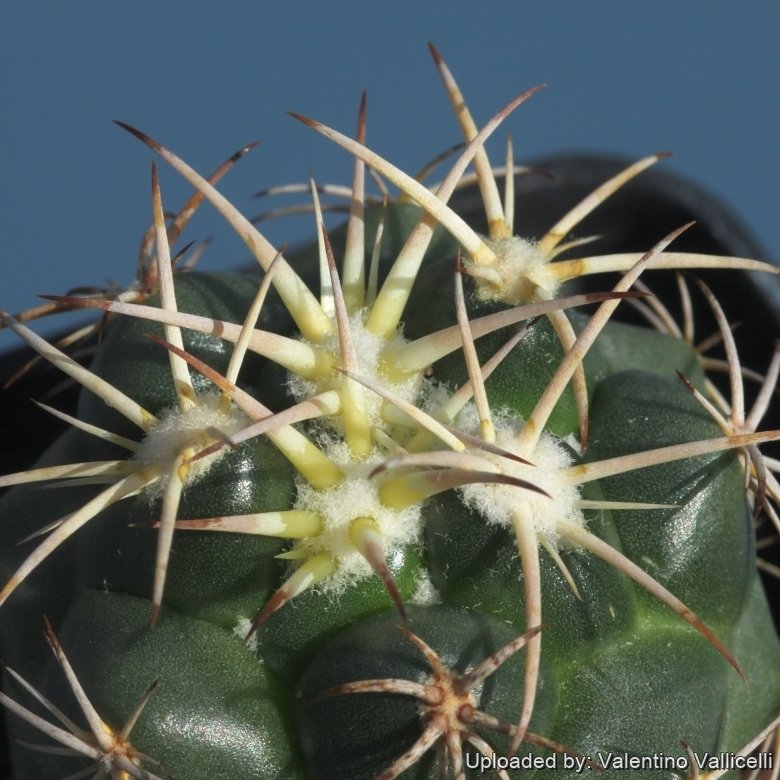
Coryphantha elephantidens is a large, depressed-globular cactus, simple or occasionally clumping and group-forming. C. elephantidens usually has pink flowers but they can sometimes be yellow. This species comprises three subspecies - the typical form, subsp. bumamma (Ehrenb.) Dicht & A.Lüthy, and subsp. greenwoodii (Bravo) Dicht & A.Lüthy.
Derivation of specific name: The epithet ‘elephantidens’ comes from Latin and means ‘elephant tooth’ and describes the fang-like spines of this species.
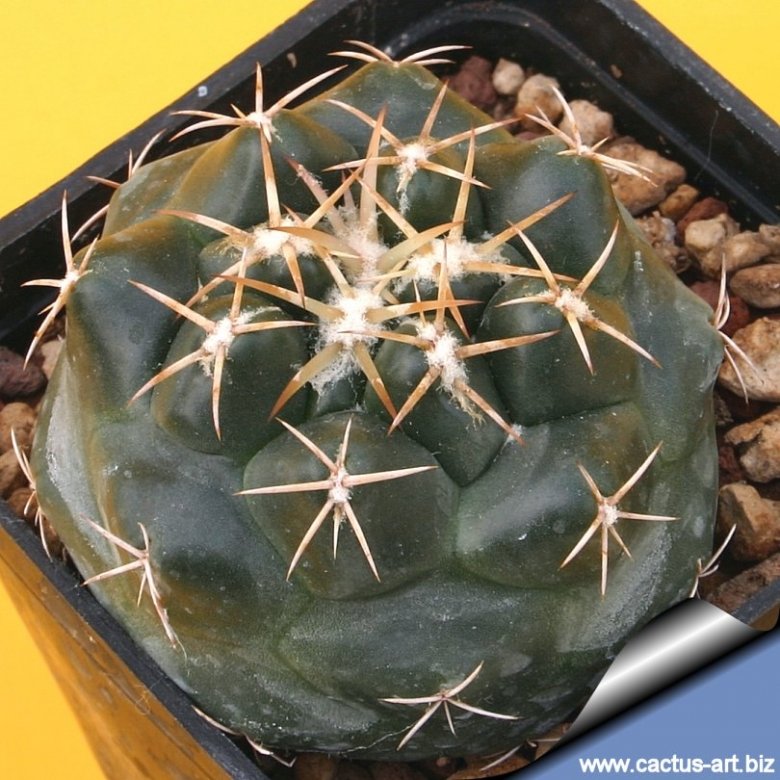
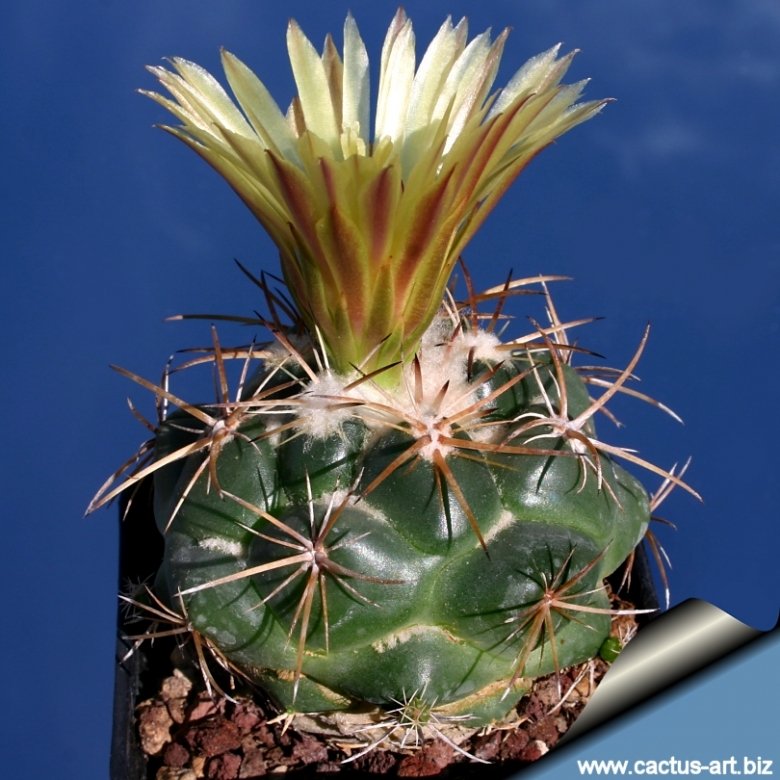
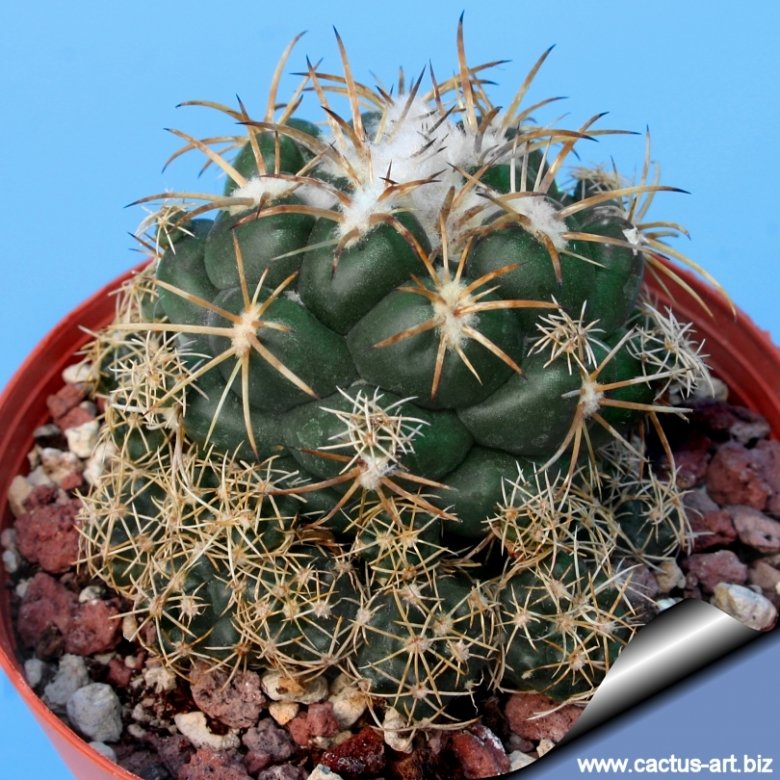
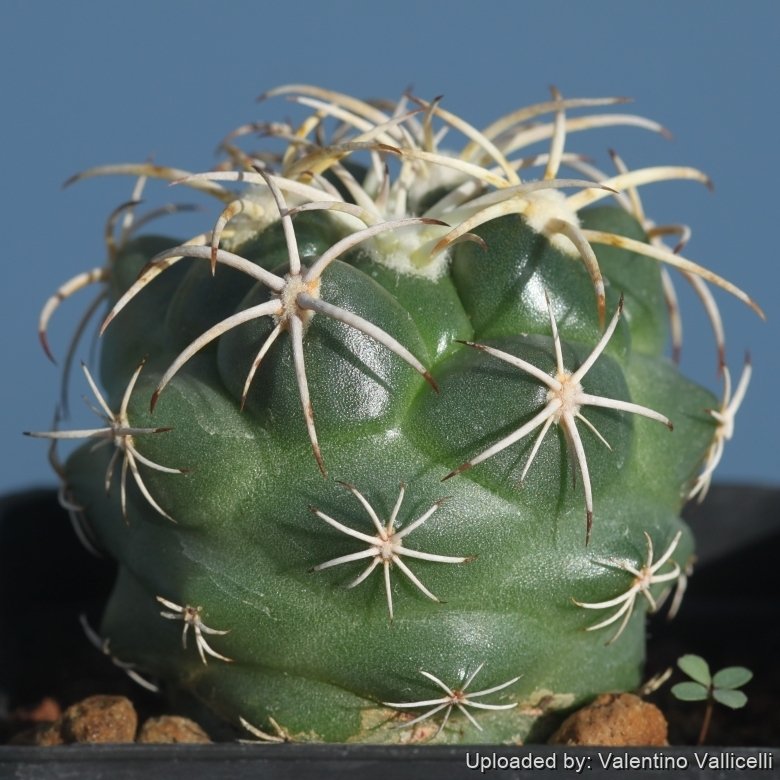
Stems: Simple, flattened globular to subglobose, up to 14(-19) cm in diameter and 14 cm high, glossy dark green, subglaucous.
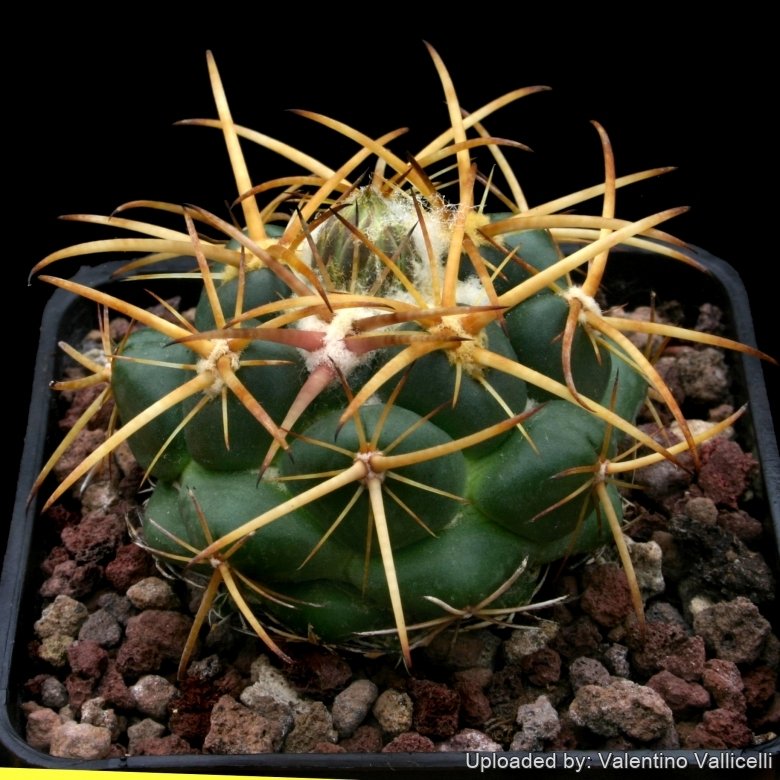
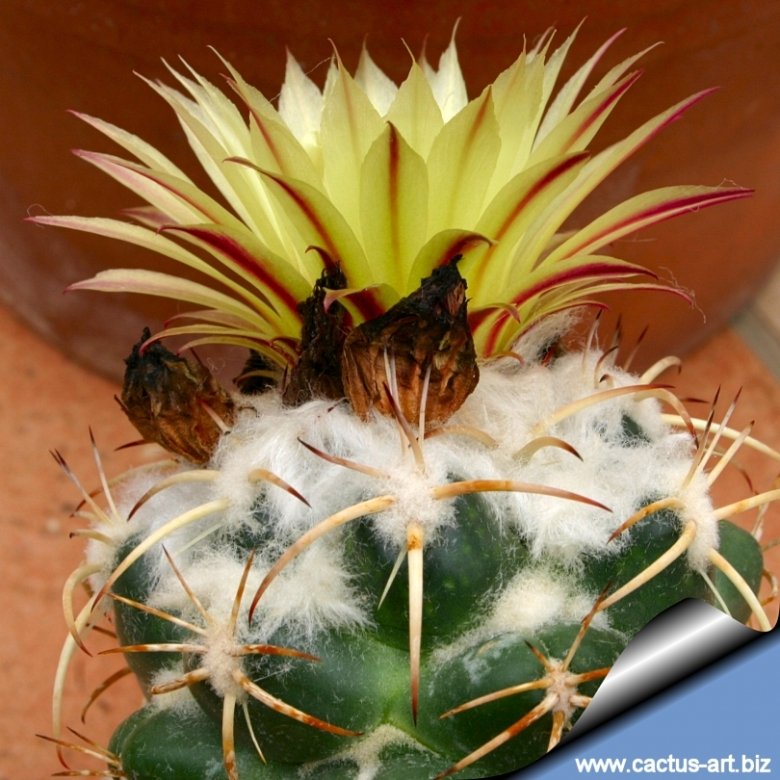
Tubercles; Very large, , somewhat flattened, 20-30 (60) mm wide, obtuse, rounded on top, pentaedrical at the base, 4 to 5 cm wide, always broader than rounded, without glands, the tubercles axil is densely woolly.
Areoles: Elliptic, when young woolly, in age naked.
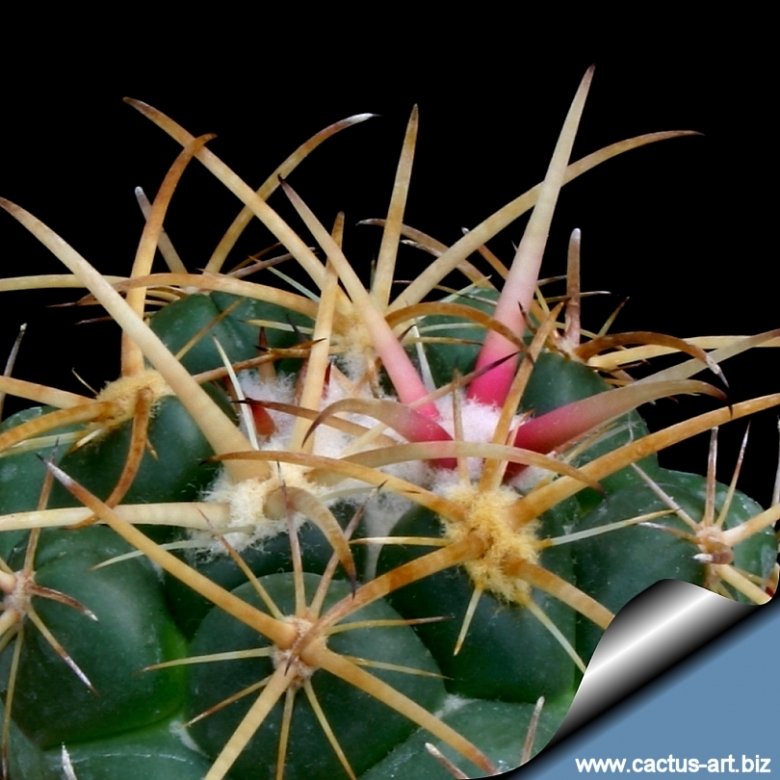
Spines: The tubercles are capped with a 5-8 of stout reflexed radial spines, spreading, somewhat unequal, 18-26 mm long, strong, subulate, curved, never porrect, but adpressed to the body, when young brownish with yellowish bases, black at apex. Central spines are absent.
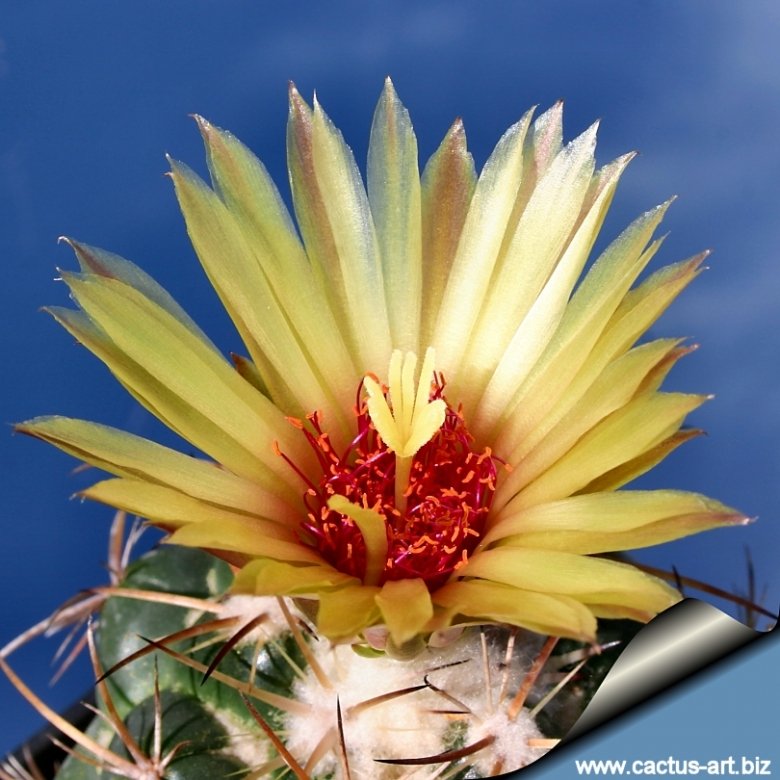
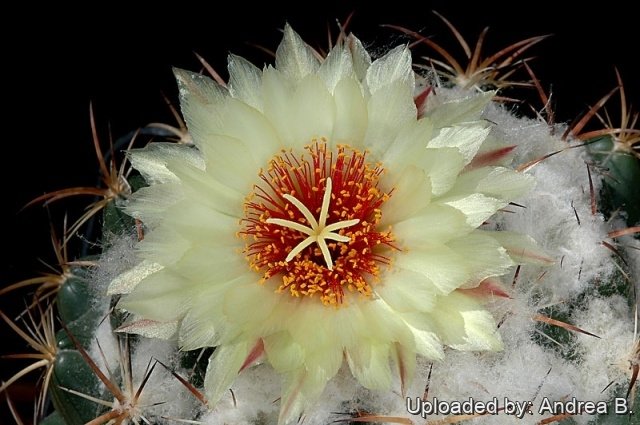
Flowers: Sweet smelling large 6 to 11 cm whitish broad, perianth-segments numerous, narrowly oblong, apiculate rose-colored to purple pink or white with a reddish throat and reddish median strip, (rarely yellow).
Blooming season:: Late summer to autumn.
Fruits: Very big, ca. 4 cm long and 1 cm in diameter.
Origin and Habitat
Coryphantha elephantidens is endemic to Mexico where it is known to occur in the states of Aguascalientes, Guerrero, Guanajuato, Hidalgo, Jalisco, México, Michoacán, Morelos, Oaxaca, Puebla, Querétaro, Veracruz and Zacatecas. The subsp. greenwoodii has a restricted range near Piedras Blancas, Veracruz. Subsp.bumamma is recorded from the States of Oaxaca and Michoacán.
Altitude: 1100-2000 metres above sea level.
Habitat and Ecology: Coryphantha elephantidens is found in grasslands and xerophyllous scrub. It is widespread and relatively common and is threatened by deforestation from small-holder agriculture and cattle ranching. In the same area it is possible to find several cactus and succulent species like: together with Mammillaria elegans, Mammillaria uncinata, Mammillaria hubertmulleri, Stenocereus dumortieri, Stenocereus stellatus, Stenocereus beneckei, Opuntia pumila, Opuntia tomentosa, Myrtillocactus geometrizans and the palm Brahea dulcis.
Cultivation and Propagation
Full sun to light shade in summer. Water sparingly, keep drier in winter. Needs good drainage. Frost Tolerance: Hardy to -3°C.
Propagation:: Offsets as it is a suckering cactus or by seeds.
Notes
Coryphantha elephantidens is the centre of a complex of closely related species and it is quite difficult to decide about what is the valid names or eventual subspecies of the different taxon at present time. The complex comprises: Coryphantha elephantidens (Lemaire 1838) Lemaire 1868 Coryphantha sulcolanata (Lemaire 1838) Lemaire 1868, Coryphantha recurvispina (De Vriese 1839) Bremer 1976 Coryphantha bumamma (Ehrenberg 1849) Britton & Rose 1923 Coryphantha greenwoodii Bravo 1970 and Coryphantha garessii Bremer 1980.
Bibliography
Major references and further lectures
-
Edward Anderson “The Cactus family” Timber Press, Incorporated, 2001
-
James Cullen, Sabina G. Knees, H. Suzanne Cubey “The European Garden Flora Flowering Plants: A Manual for the Identification of Plants Cultivated in Europe, Both Out-of-Doors and Under Glass” Cambridge University Press, 11/Aug/2011
-
David R Hunt; Nigel P Taylor; Graham Charles; International Cactaceae Systematics Group. “The New Cactus Lexicon” dh books, 2006
-
Hernández, H.M., Gómez-Hinostrosa, C., Guadalupe Martínez, J., Sánchez , E., Dicht, R.F. & Lüthy, A.D. 2013. Coryphantha elephantidens. In: IUCN 2013. “IUCN Red List of Threatened Species.” Version 2013.2. <www.iucnredlist.org>. Downloaded on 17 February 2014.
-
Nathaniel Lord Britton, Joseph Nelson Rose “Cactaceae: Descriptions and Illustrations of Plants of the Cactus Family” vol. 4 The Carnegie Institution of Washington, Washington 1923
-
Graham Charles “Cacti and Succulents: An illustrated guide to the plants and their cultivation” Crowood, 30 Apr 2014
-
Paul Carpenter Standley, United States National Museum “Trees and Shrubs of Mexico: Passifloraceae-Scrophulariaceae” U.S. Government Printing Office, 1924
-
CONABIO. “Catálogo taxonómico de especies de México.” 1. In Capital Nat. México. CONABIO, Mexico City. 2009
-
Urs Eggli, Leonard E. Newton “Etymological Dictionary of Succulent Plant Names. Birkhäuser” 2004
-
Charles Antoine Lemaire “Cactearum aliquot novarum ac insuetarum in Horto monvilliano cultarum accurata descriptio.” 1838.
From llifle page Aulacothele sulcolanata
Description
Large, depressed-globular cactus, often clumping and group-forming
Stem: Each head is 5-8 cm tall and 6 to 10(-18) cm in diameter depressed globose often flattened apically.
Tubercles: Very large, shiny green, 20-30 (60) mm wide, rounded on top, pentaedrical at the base, always broader than rounded , without glands, the tubercles axil and furrow is densely woolly.
Central spines: Absent.
Radial spines: 5 to 9 unequal, upper and lower one short, laterals longer, stout, reflexed, 12-26 mm long never porrect, but adpressed to the body. Yellowish white with dark tips at first, later darker.
Flowers: Sweet smelling large 4 to 8 cm creamy- yellow, Stamens yellow to purple.
Blooming season: Produced in late summer to autumn.
Fruits: Very big, oblong, opaque green, juicy, (ca. 4 cm long, 1 cm diameter)
Origin and Habitat
Mexico (Hidalgo, Vera Cruz, and Oaxaca)
Cultivation and Propagation
Full sun to light shade in summer. Water sparingly, keep drier in winter. Needs good drainage. Frost Tolerance: Hardy to -3°C.
Propagation: Offsets as it is a suckering cactus or by seeds.
Bibliography
Major references and further lectures
-
Edward Anderson “The Cactus family” Timber Press, Incorporated, 2001
-
James Cullen, Sabina G. Knees, H. Suzanne Cubey “The European Garden Flora Flowering Plants: A Manual for the Identification of Plants Cultivated in Europe, Both Out-of-Doors and Under Glass” Cambridge University Press, 11/Aug/2011
-
David R Hunt; Nigel P Taylor; Graham Charles; International Cactaceae Systematics Group. “The New Cactus Lexicon” dh books, 2006
-
Hernández, H.M., Gómez-Hinostrosa, C., Guadalupe Martínez, J., Sánchez , E., Dicht, R.F. & Lüthy, A.D. 2013. Coryphantha elephantidens. In: IUCN 2013. “IUCN Red List of Threatened Species.” Version 2013.2. <www.iucnredlist.org>. Downloaded on 17 February 2014.
Source: Aulacothele sulcolanata, LLIFLE - Encyclopedia of living forms, CC-BY-SA, retrieved 2026-10-25.
From llifle page Coryphantha bumamma
Description
Coryphantha bumamma is a flattened globular cactus with few, very large, rounded tubercles, bluish green. In adulthood it produces an abundant amount of attractive wool that covers its body. This will wash off if watered from above but will re-grow again. It is very similar to Coryphantha elephantidens but the flower are smaller and nearly yellow.
Roots: It has a stout carrot-like root, almost equal in diameter to that of the stem itself.
Stem: Flattened globular, broader than high, often (in habitat) arising only a little above the surface of ground, and are firmly anchored in the soil by a thick root, almost equal in diameter to that of the stem itself, up to 13 cm in diameter.
Tubercles: Few, very large up to 27 mm wide and 16 mm tall, glossy green to bluish-green always broader than rounded, in 8-13 series, conical flattened, rounded on top, slightly pentaedrical at the base, with a woolly groove on the upper side. The axil in youth is very woolly, later naked. Without glands.
Areoles: Elongate up to 4 mm long.
Central spines: Absent.
Radial spines: The tubercles are capped with a 5-8 of stout, stiff, evenly spreading, reflexed radial spines, 16-26 mm long, subulated, curved, never porrect, but adpressed to the body, usually 3 more strong are on the sides greyish or brownish with darker tips
Flowers: Sweet smelling large 5- 6 cm broad, yellow with reddish midstripe dorsally or bright rose with a dark stripe, inner perianth segments narrowly oblong to lanceolate, margin entire, acute, 5 mm wide, filament reddishat the base, lobes greenish, stigma longer then filaments.
Blooming season: The flowers generally appear mid to late summer.
Fruits: Claviform, very big, ca. 4 cm long, 10-13 mm diameter, whitish green with a reddish tinge.
Seeds: About 4 mm long and 1 mm in diameter, light brown.
Remarks: At the moment there are a number of strongly offsetting plants in circulation labeled as Coryphantha bumamma; whilst being attractive plants these are not natural plants but mutant clones also known as caespitosa or prolifera. This plants may form large groups up to 50 cm in diameter.
Origin and Habitat
South western Mexico (Morelos and Guerrero).
Cultivation and Propagation
It is without problems, and regularly shows its large yellow flowers. It does best in slight shade, but does well in full sun too. It is sensitive to overwatering (rot prone), and needs a very porous soil with good drainage. It flowers quite early, but needs about 8-12 years to reach the typical, definite outlook. It tolerates fairly low temperatures as long as it is kept dry (hardy to -5° C or less for short periods of time).
Propagation:: Propagation is by seed.
Bibliography
Major references and further lectures
-
Edward Anderson “The Cactus family” Timber Press, Incorporated, 2001
-
James Cullen, Sabina G. Knees, H. Suzanne Cubey “The European Garden Flora Flowering Plants: A Manual for the Identification of Plants Cultivated in Europe, Both Out-of-Doors and Under Glass” Cambridge University Press, 11/Aug/2011
-
David R Hunt; Nigel P Taylor; Graham Charles; International Cactaceae Systematics Group. “The New Cactus Lexicon” dh books, 2006
-
Edward Anderson “The Cactus family” Timber Press, Incorporated, 2001
-
Nathaniel Lord Britton, Joseph Nelson Rose “Cactaceae: Descriptions and Illustrations of Plants of the Cactus Family” vol. 4 The Carnegie Institution of Washington, Washington 1923
Source: Coryphantha bumamma, LLIFLE - Encyclopedia of living forms, CC-BY-SA, retrieved 2026-10-25.
From llifle page Coryphantha garessii
Description
Probable synonym of Coryphantha elephantides.
Origin and Habitat
Tepetongo, Zacatecas, Mexico (Northern America)
Altitude: 1800 m.
Habitat: Grows together with Mammillaria jaliscana.
Cultivation and Propagation
It is easy to grow. Use mineral well permeable substratum (rot prone). Needs good drainage. Water sparingly from March till October and keep perfectly dry in winter at temperatures from 5 to 15 degrees centigrade but tolerates mild frost without a problem (hardy to -3° C or less for short periods). In the rest period no high atmospheric humidity!!
Sun Exposure: Full sun to light shade in summer.
Propagation: They can be propagated easily from seed or by offsets (if available).
Source: Coryphantha garessii, LLIFLE - Encyclopedia of living forms, CC-BY-SA, retrieved 2026-10-25.
Cultivars and forms (6)
Gallery