Publication: Cactaceae Syst. Init. 11: 20. 2001
Description
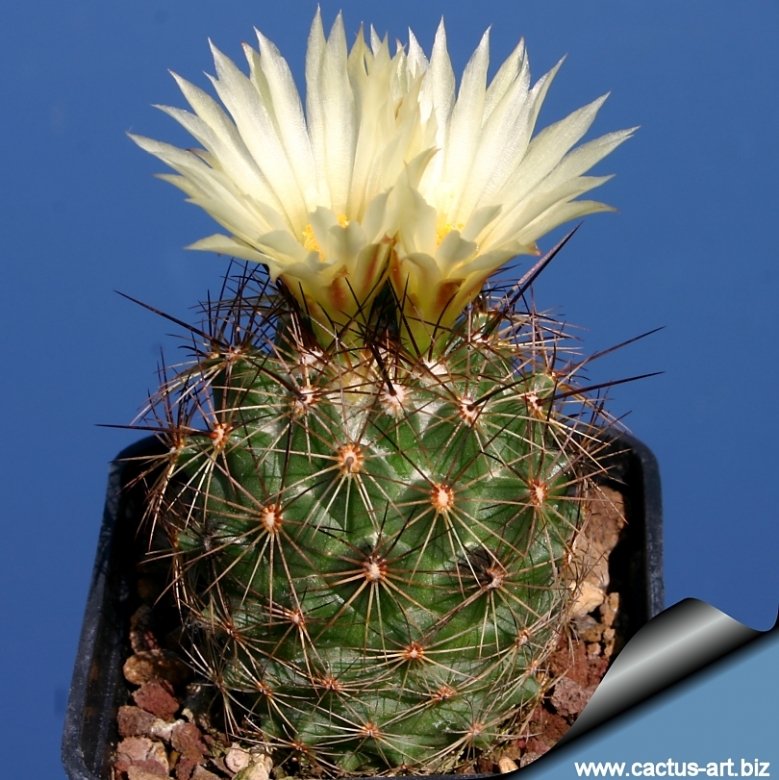
Coryphantha pseudoechinus subsp. laui (Bremer) Dicht & A. Liithy is very similar to the standard Coryphantha echinus, with the exception of yellow flowers and slightly different skin and spination colour.
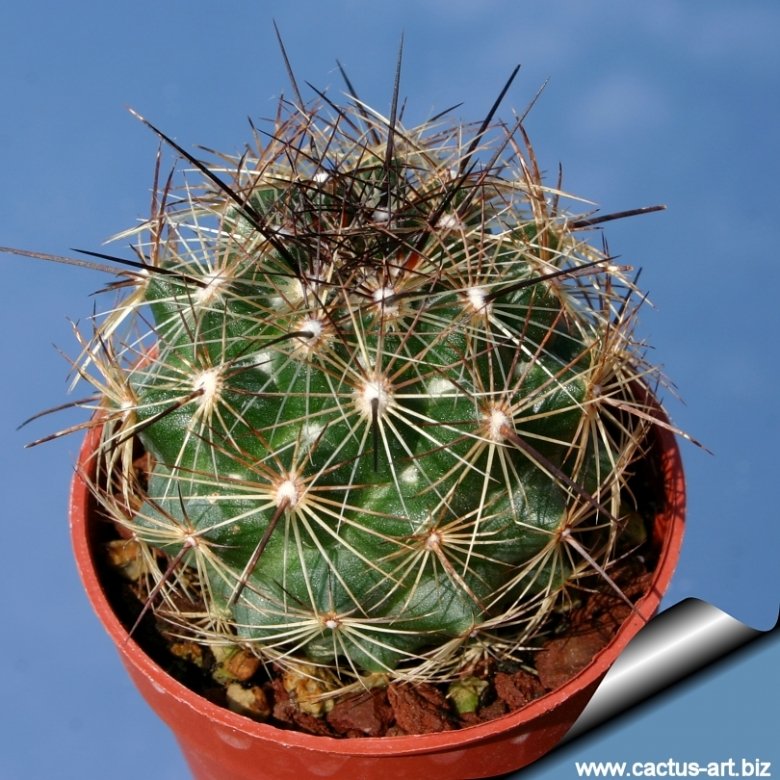
Stem: Solitary or group-forming, globose to ovoid, apex slightly depressed, white woolly, 5.5 cm across and up to 5 cm tall, grass-green.
Tubercles: Conical, somewhat flattened on the upper side, up to 13 mm long, with narrow groove on upper surface, sometimes with yellowish glands near the areoles. Axils woolly in youth.
Areoles: Round, 2 mm diameter at fist woolly soon naked.
Radial spines: 18-20, needle-like, often bristly, flexible, 10-14 mm long, yellowish-horn-coloured.
*Central spine: 0-1, straight, stright or slightly curved downwards, thick, 14-16 mm long, reddish-brown to dark mahogany, becoming grey.
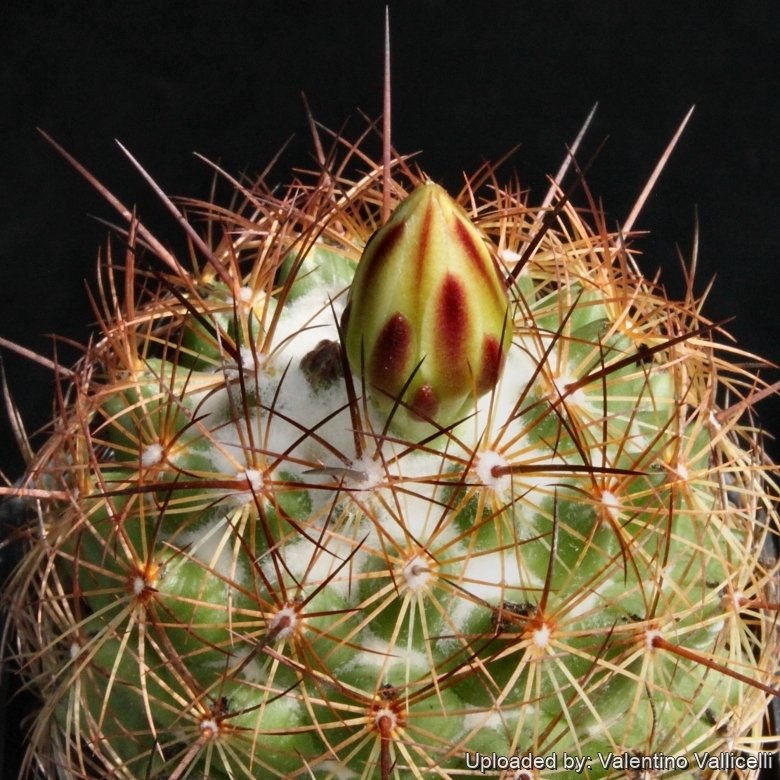
Flowers: funnelform,Pale yellow, 3.5 cm long, 3 cm diameter. Outer perianth segments linear lanceolate, light yellow with green near the tip, and reddish-brown dorsal midstripe.Onner perianth segments linear lanceolate, light yellow. Flaments glassy white, anthers light orange. Style pale green with 5-7 cream-white stigma lobes.
*Fruit (berries): Egg-shaped, up to 18 mm long and 8 mm wide, jade-green, succulent, with attached flower remnants.
Seeds: 1 x 1.2 mm, brownish, reniform, smooth, shiny, reticulate.
Origin and Habitat
Mexico, Coahuila, Sierra de la Paila.
Altitude range: 1600-2200 metres above sea level.
Type locality: Mexico, Coahuila, 48 km N of El Marte, 2000-2200 metres, a railway station on the railroad parallel to route 40, the Saltillo-Torreon road.
Habitat and ecology: Coryphantha pseudoechinus subsp. laui grows on hilltops with limestone gravel and rocks.
Cultivation and Propagation
In cultivation it is quite sensitive to over-watering (rot prone), and needs good drainage. Keep drier in winter. Like other species from the USA. it blooms quite early, but needs about 8-10 years to reach the typical, definite outlook. It needs full sun; and is hardy to -16° C or less for short periods of time
Propagation: Offsets (seldom available) or by seeds.
Bibliography
Major references and further lectures
-
Edward Anderson “The Cactus family” Timber Press, Incorporated, 2001
-
James Cullen, Sabina G. Knees, H. Suzanne Cubey “The European Garden Flora Flowering Plants: A Manual for the Identification of Plants Cultivated in Europe, Both Out-of-Doors and Under Glass” Cambridge University Press, 11/Aug/2011
-
David R Hunt; Nigel P Taylor; Graham Charles; International Cactaceae Systematics Group. “The New Cactus Lexicon” dh books, 2006
From llifle page Coryphantha magentae
Description
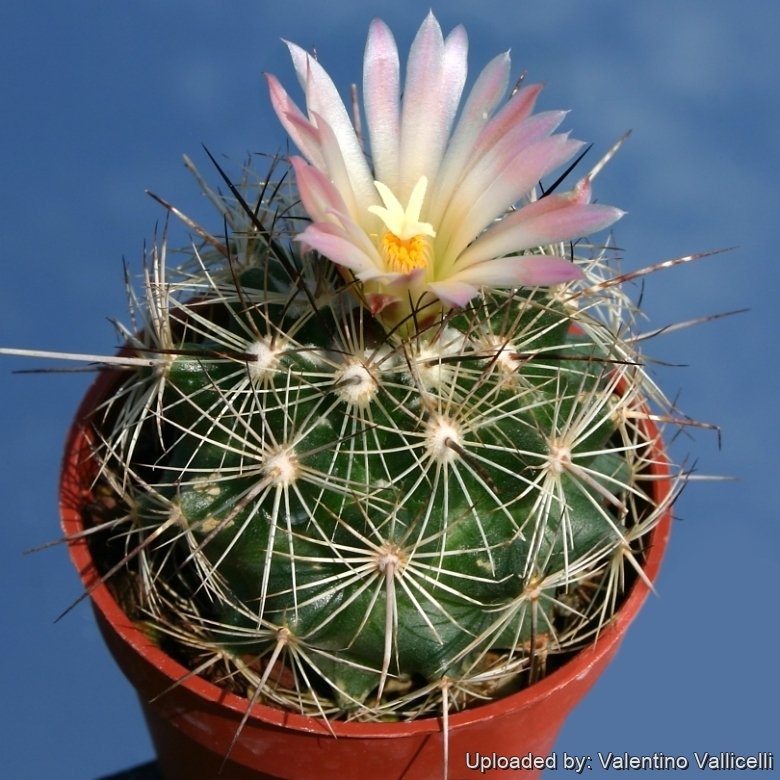
This variety is very similar to the standard Coryphantha echinus, with the exception of magenta (Hence the name) flowers and slightly different skin and spination colour.
Flowers: Ranging from pale pink to rich magenta-red.
Origin and Habitat
Mexico (Coahuila, Sierra de la Paila, 1600-2200 m. )
Field number: Lau 1244
Source: Coryphantha magentae, LLIFLE - Encyclopedia of living forms, CC-BY-SA, retrieved 2026-10-25.
Gallery