Publication: Cact. Succ. J. (Los Angeles) 41: 33. 1969
Description
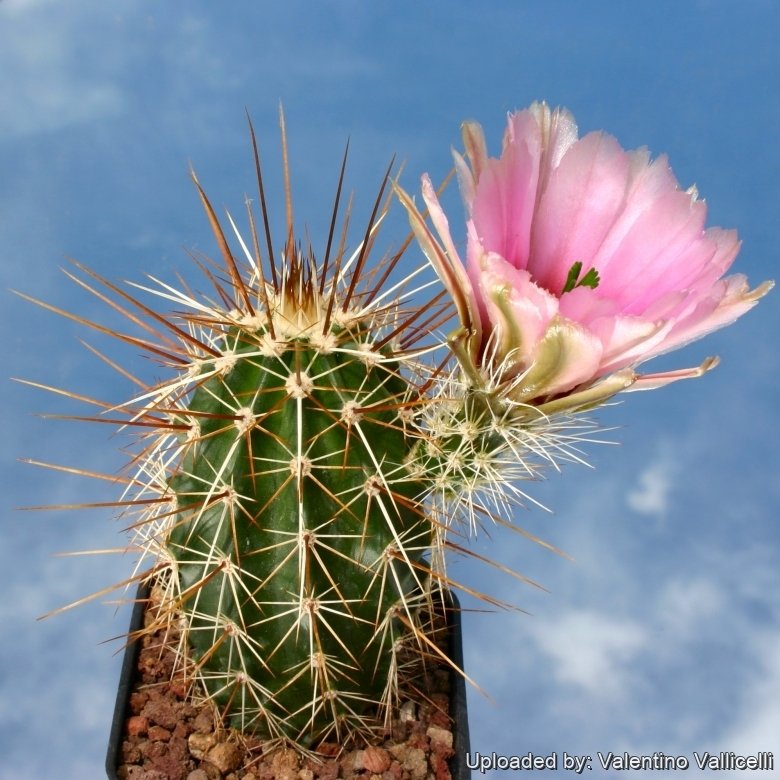
Echinocereus engelmanni var armatus is the most formidably spiny extreme of the species.
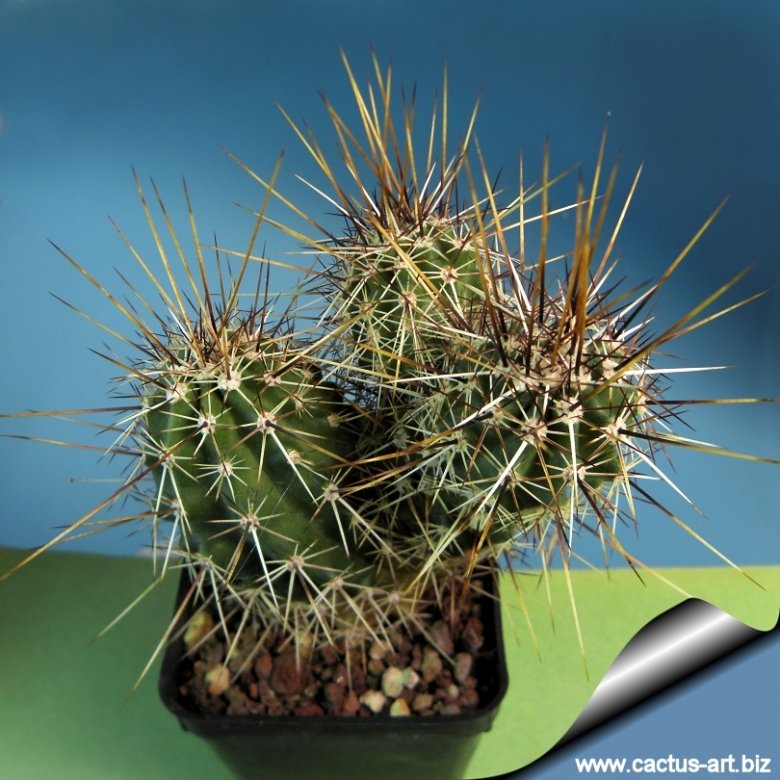
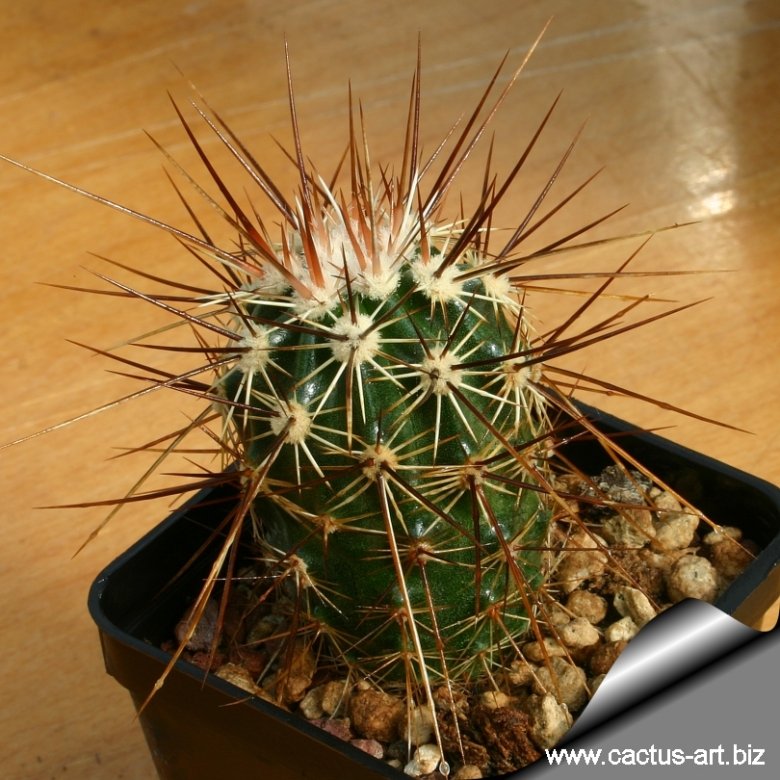
Habit: It is a clumping columnar cactus, 6-25-branched, ultimately forming somewhat open clumps of stems.
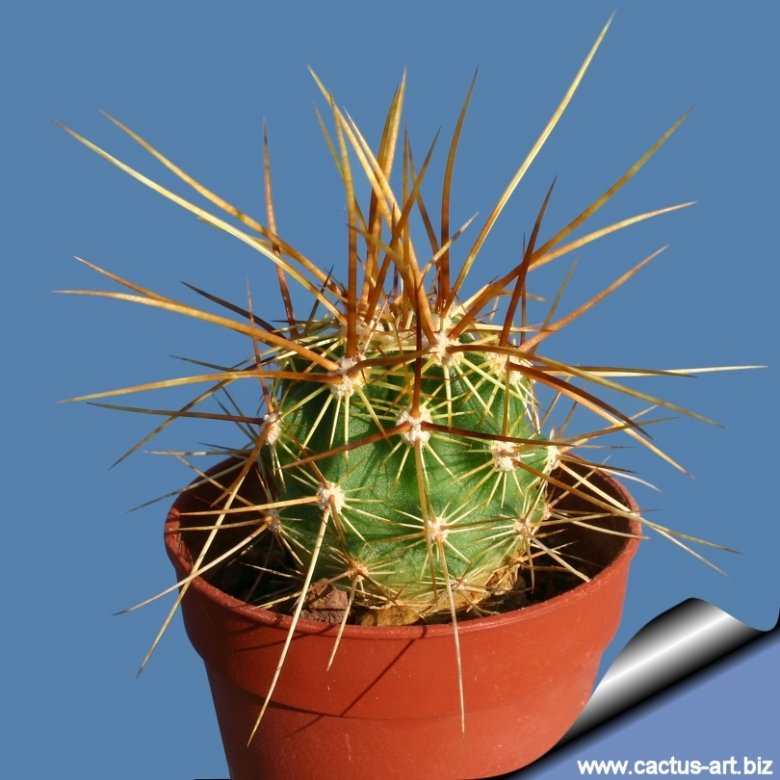
Stems: Suberect or erect light green, cylindrical or somewhat tapering distally, usually 15-20 cm tall, and about 5 cm in diameter, branching freely from the base;
Ribs: 11 to 14 low obtuse, tubercles indistinct, crests slightly undulate.
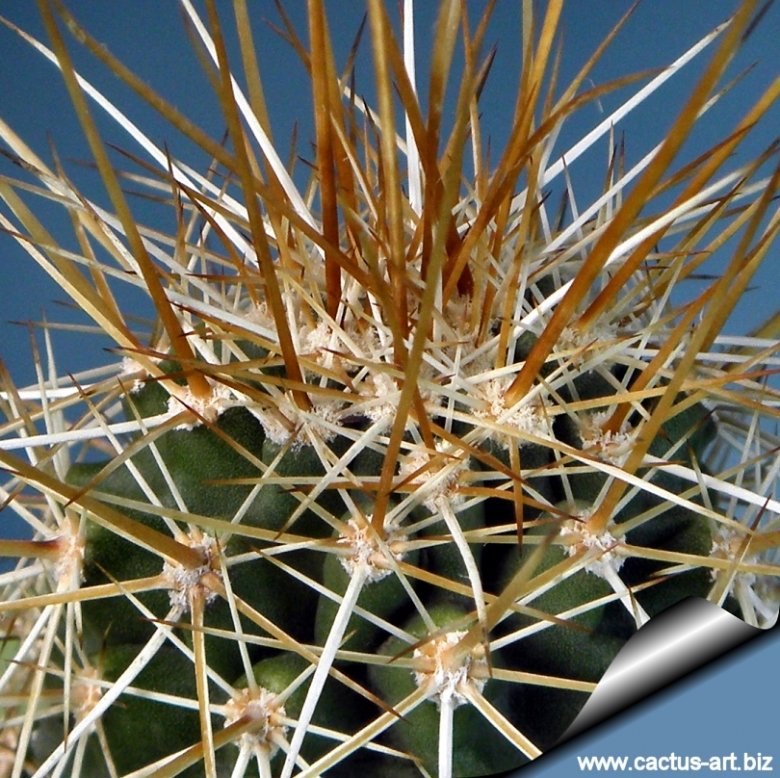
Areoles: 6-15 mm apart, wool present in first year only.
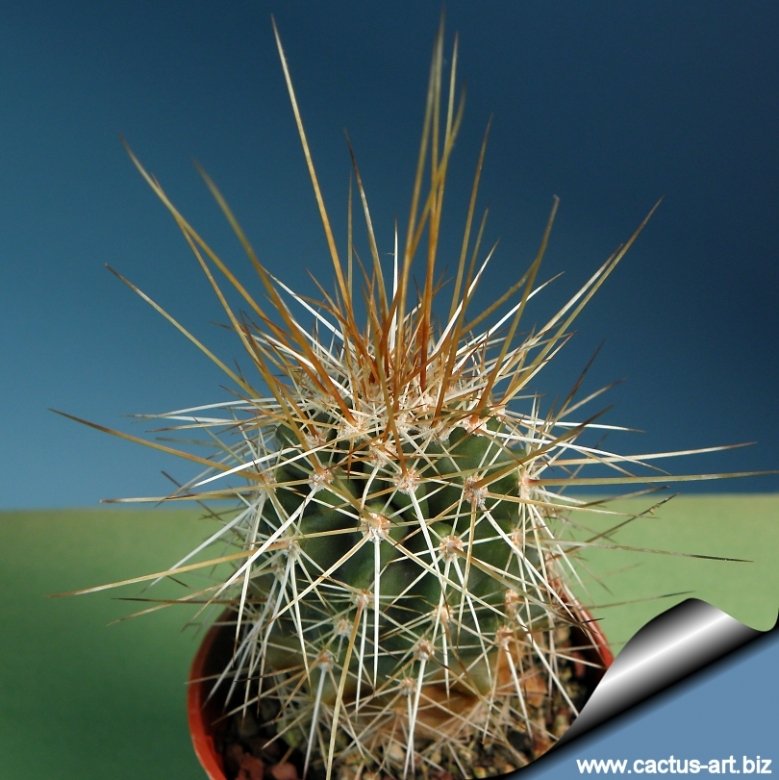
Spines: 8-20 per areole up to 13 cm long; divergent-porrect, stout, and rigid, straight or curving and somewhat twisted, brownish-pink or (usually) dull golden-yellow.
Radial spines: Lighter whitish to creamy coloured 8-20 mm long long, spreading.
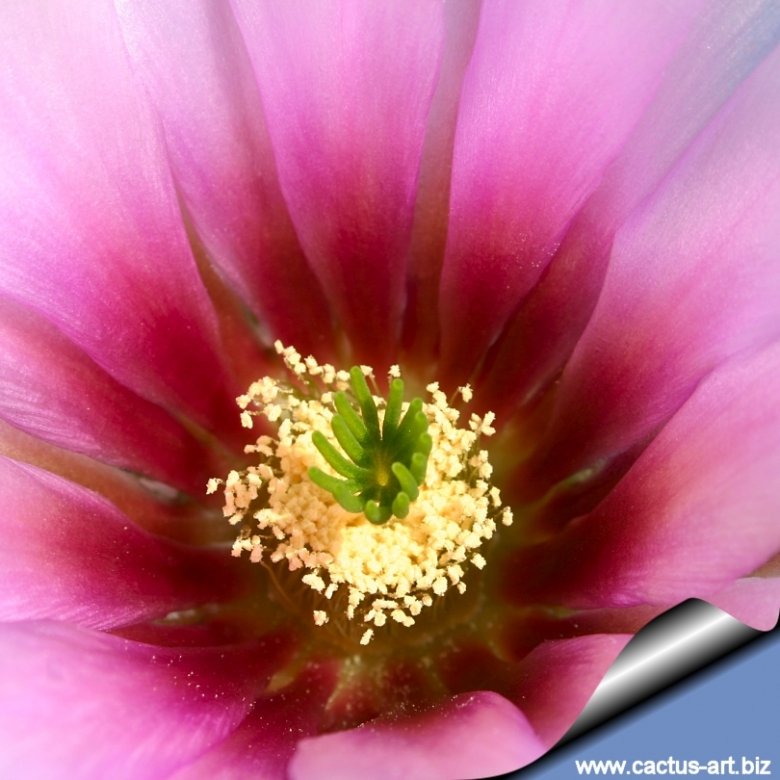
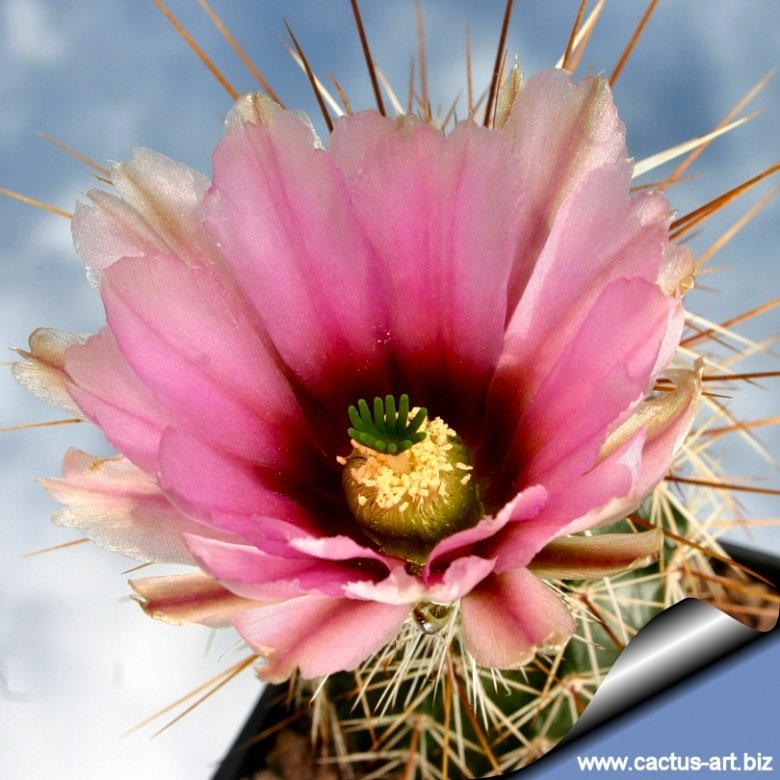
Flowers: From purple to lavender. The flowers are up to 7 cm in diameter, 5-8 cm long . Flower tube hairy.
Blooming season: Spring, flowers are diurnal close at night and reopen in the morning and last for about five days.
Fruit: Red or orangish 2,5-4cm long, spherical, fleshy, pulp whitish be-coming infused with pink or red from the skin. The fruit is edible, it is said to taste like strawberry.
Origin and Habitat
Native to California in the Argus mountains, Inyo county and aest of Victoville, san Bernardino County but also found outside of California, but is confined to western North America.
Habitat: Grows on gravel, sand and rocky hills in Creosote Bush Scrub, Pinyon-Juniper Woodland, Joshua Tree Woodland.
Cultivation and Propagation
In cultivation the strawberry hedgehog grows rather slowly and it is sensitive to overwatering (rot prone) needs a very good drainage to avoid rotting, but requires more moisture than true desert cacti to grow and produce flowers, Keep drier and cool in winter. Need full sun. It is cold resistant to -10° ( or less depending on clones) for short periods of time. It is a fine plant for a rock garden or container, contrasts well with agaves, yuccas, and low-growing flowering plants. It will show its flowers only if we provide an adequate winter rest period.
Propagation: Seeds, also can be grown from cutting as it branches from the base.
Bibliography
Major references and further lectures:
-
Edward Anderson “The Cactus family” Timber Press, Incorporated, 2001
-
James Cullen, Sabina G. Knees, H. Suzanne Cubey “The European Garden Flora Flowering Plants: A Manual for the Identification of Plants Cultivated in Europe, Both Out-of-Doors and Under Glass” Cambridge University Press, 11/Aug/2011
-
David R Hunt; Nigel P Taylor; Graham Charles; International Cactaceae Systematics Group. “The New Cactus Lexicon” dh books, 2006
-
Urs Eggli, Leonard E. Newton: “Etymological Dictionary of Succulent Plant Names” Springer, Berlin/Heidelberg 2010
-
N. L. Britton, J. N. Rose: “The Cactaceae. Descriptions and Illustrations of Plants of the Cactus Family.” Volume II, The Carnegie Institution of Washington, Washington 1920
Gallery