Publication: Cactées 56. 1868
Description
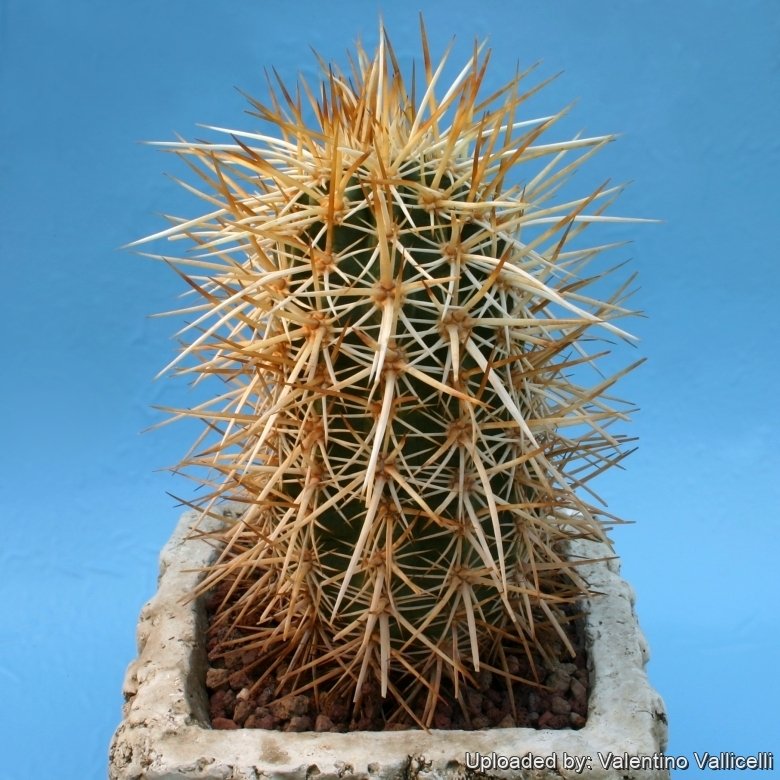
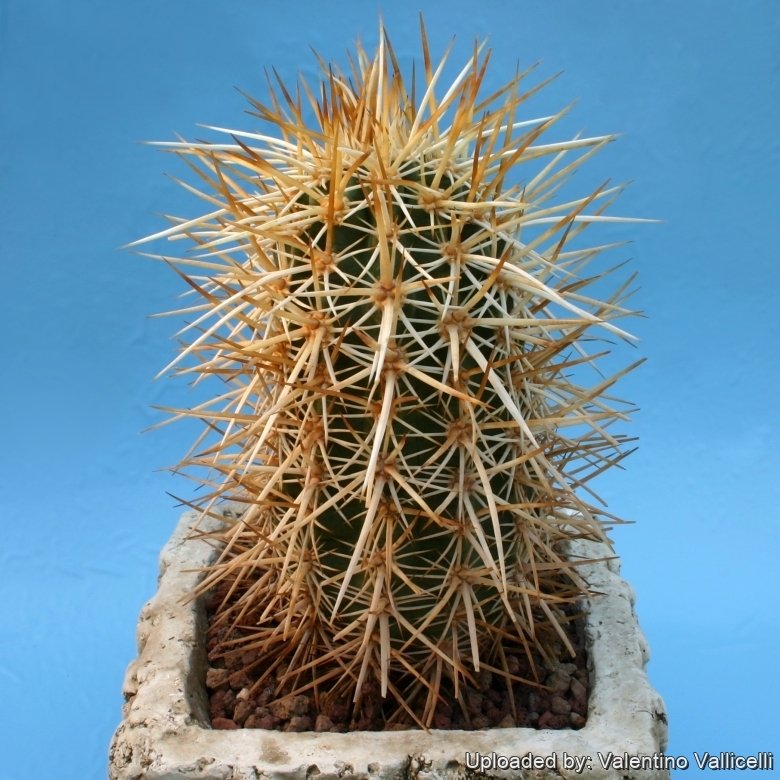
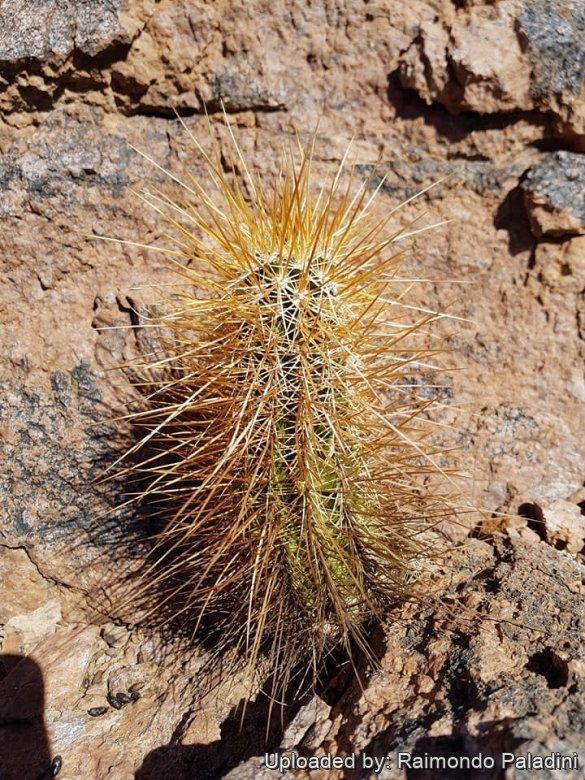
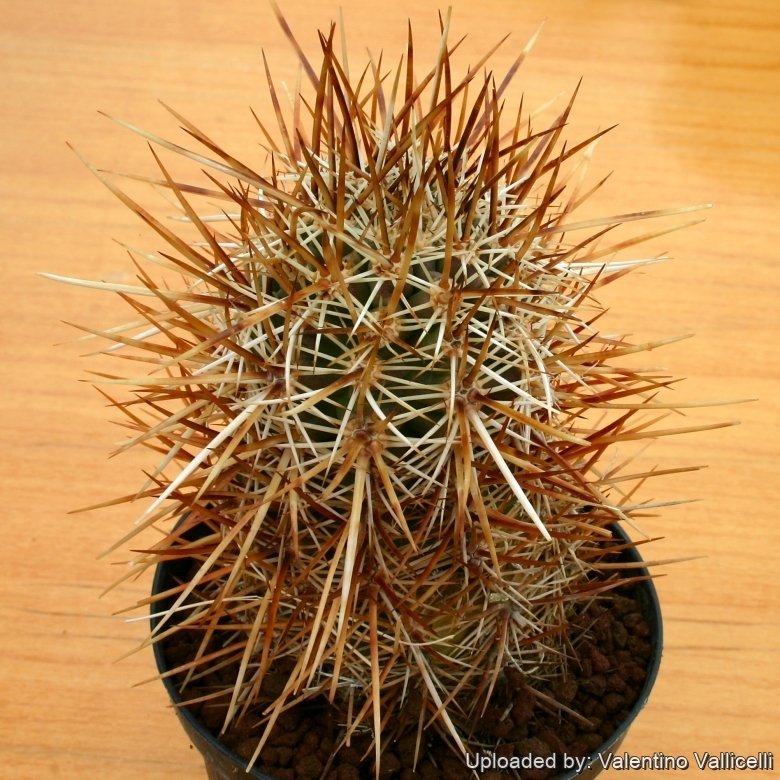
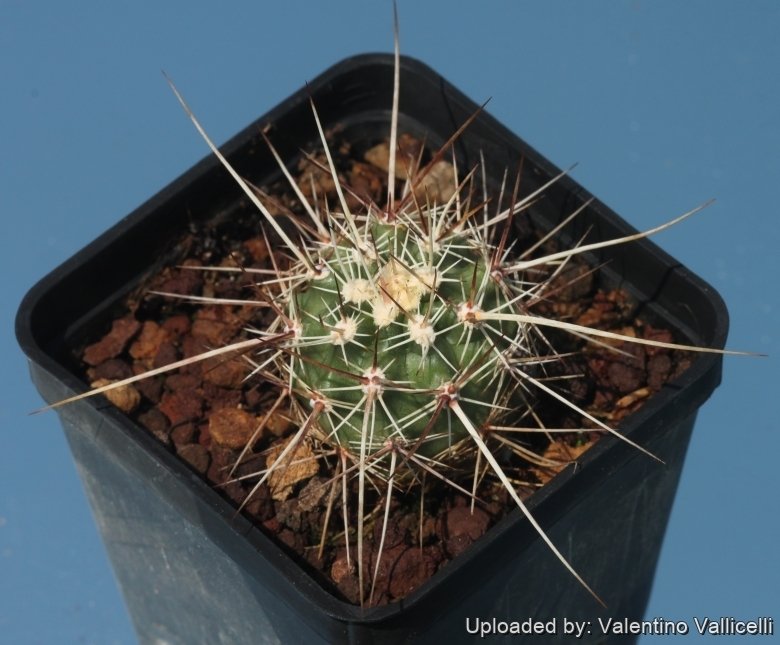
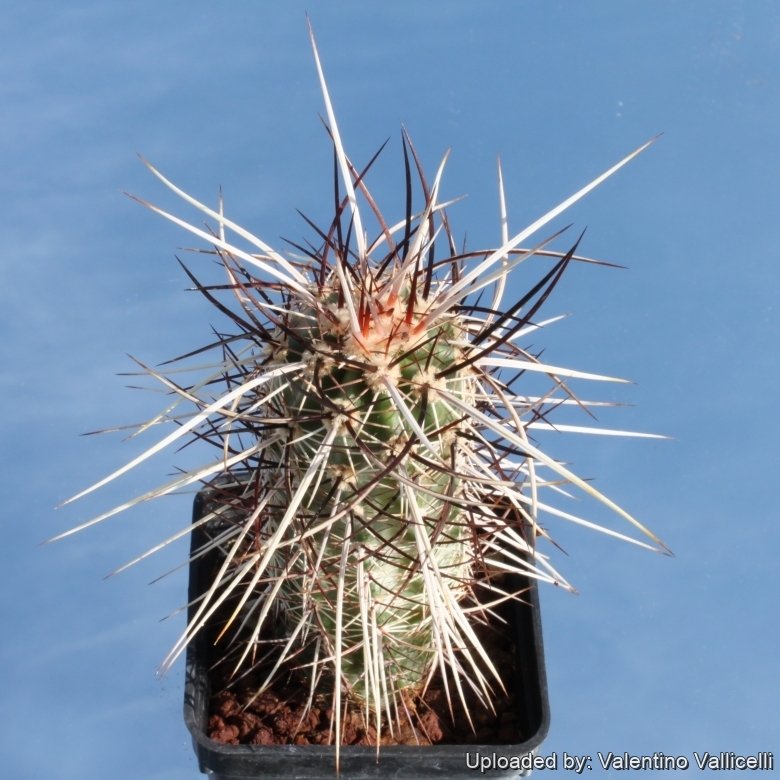
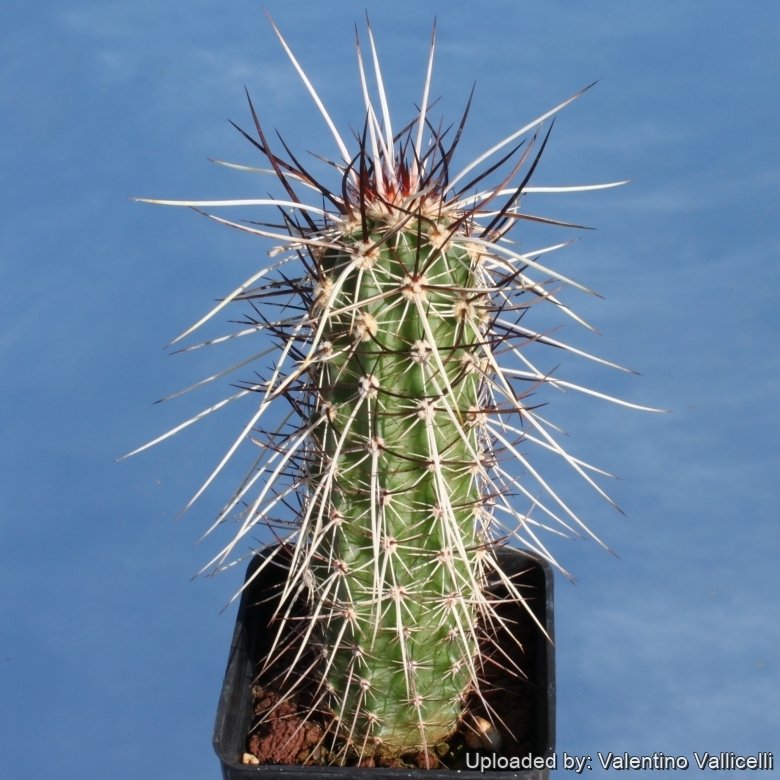
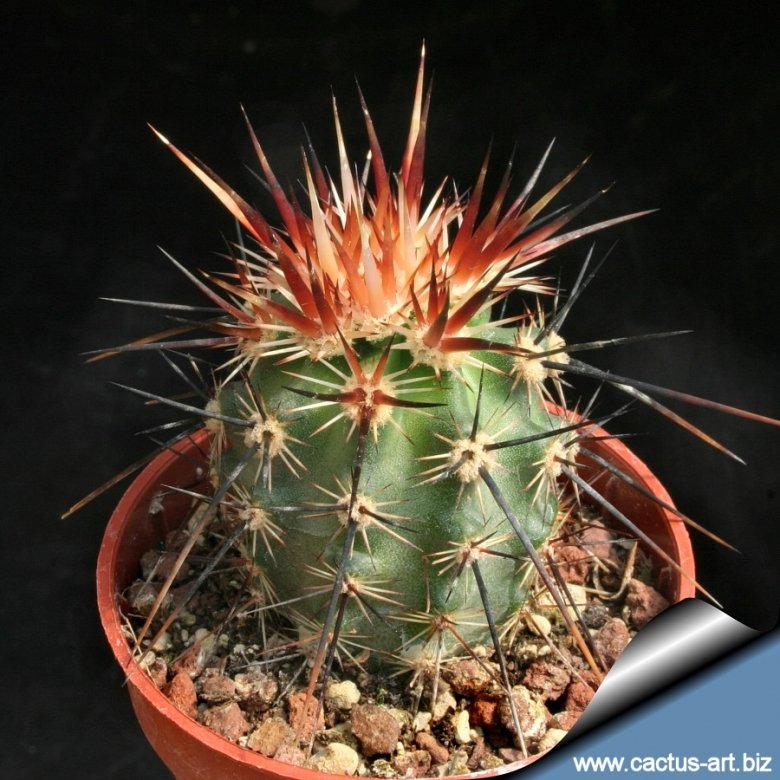
Echinocereus nicholii is a highly variable cactus species, sometimes divided into controversial varieties. Spine color polymorphism, common within Echinocereus engelmannii, provided the original basis for varieties chrysocentrus (yell spined form) and purpureus (dark purple spined form). The well-marked, identifiable extremes often occur in populations that include individuals easily assigned to other named varieties, or not assignable to any. The most formidably spiny extremes of the species were segregated as Echinocereus engelmannii var. howei and Echinocereus engelmannii var. armatus; however, other individuals in the original populations (type localities) are readily assigned to E. engelmannii var. chrysocentrus. W. Blum et al. (1998) placed all of the above varieties under E. engelmannii subsp. engelmannii.
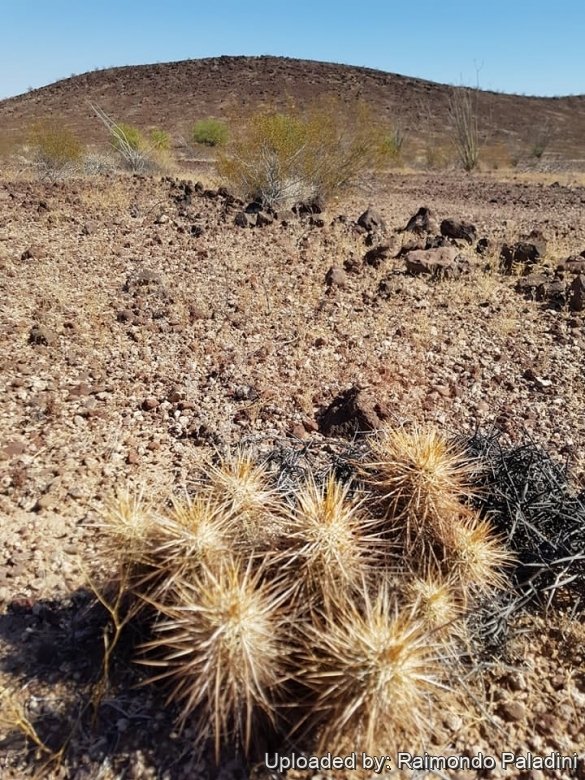
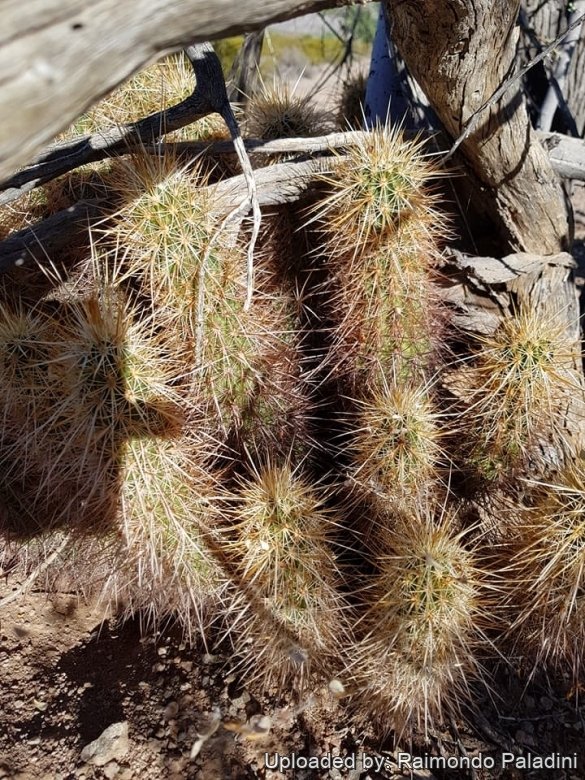
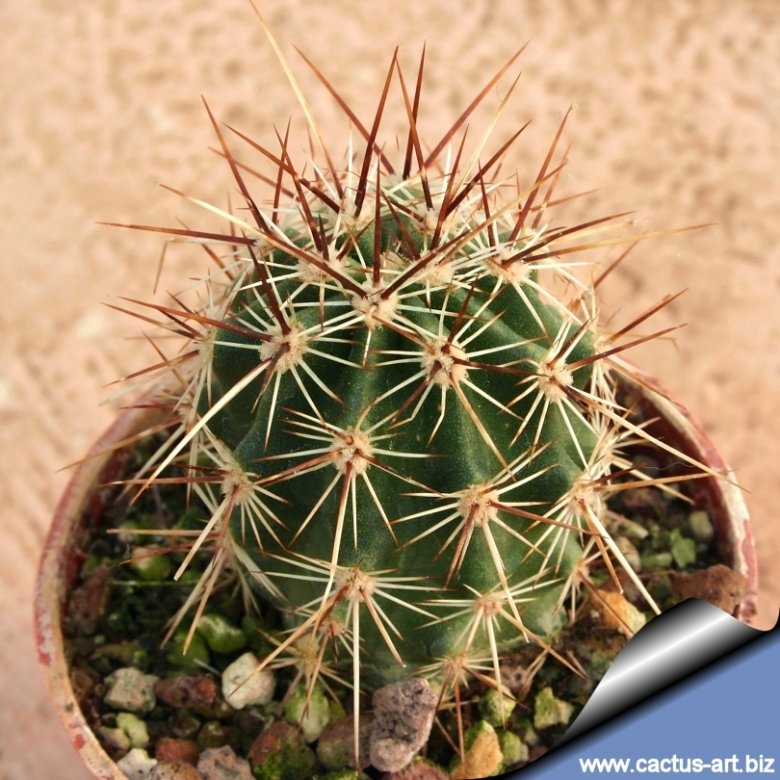
Habit: It is a clumping columnar cactus, 3-60-branched, ultimately forming somewhat open clumps of stems which can spread out as large as 1m in size.
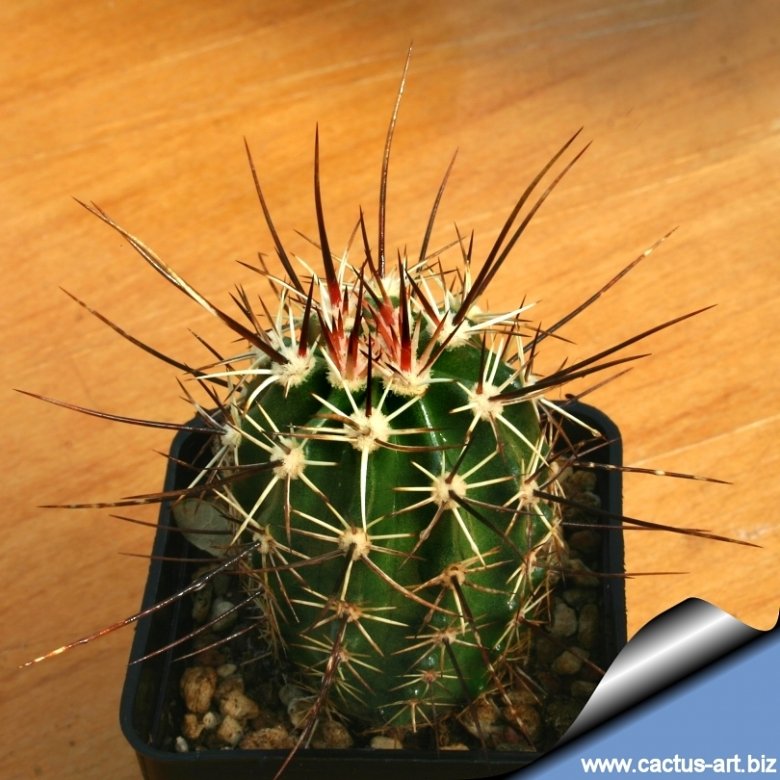
Stems: Mostly erect light green, cylindrical or somewhat tapering distally, 10-30 (or more up to 60 cm) cm tall, 5-10 cm diameter, branching freely from the base;
Ribs: 11 to 14 low obtuse, tubercles indistinct, crests slightly undulate.
Areoles: 6-15 mm apart, wool present in first year only.
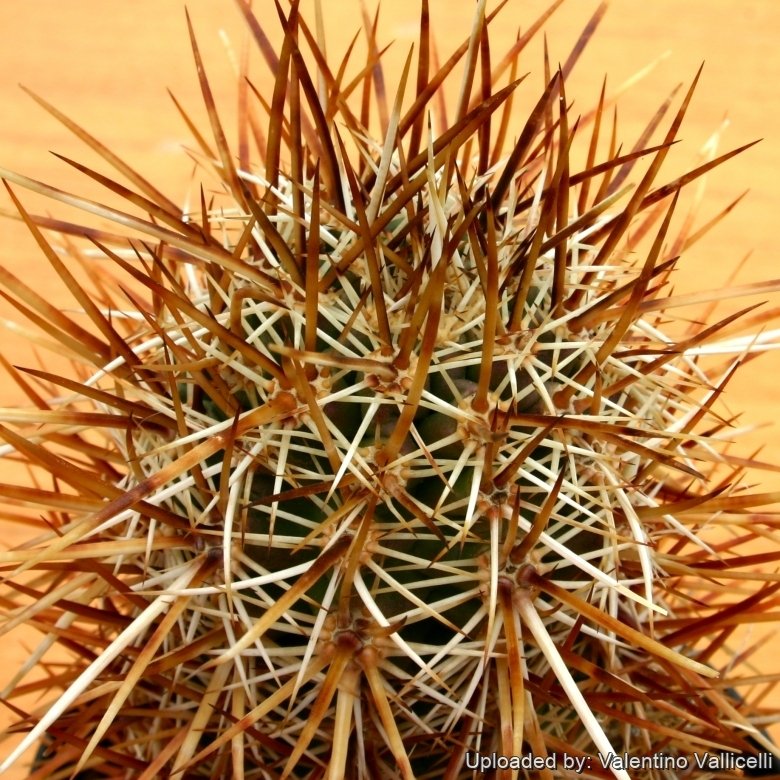
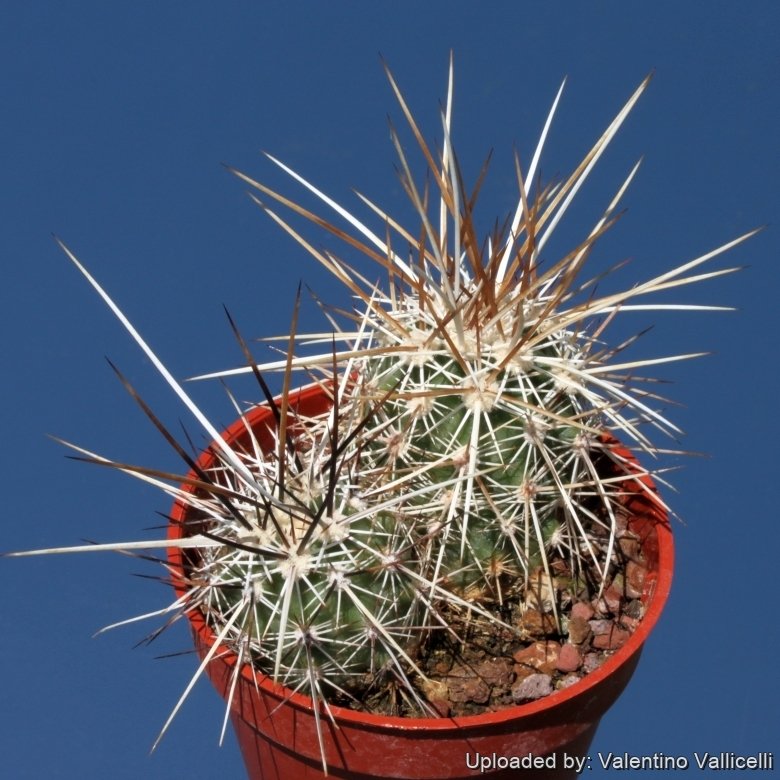
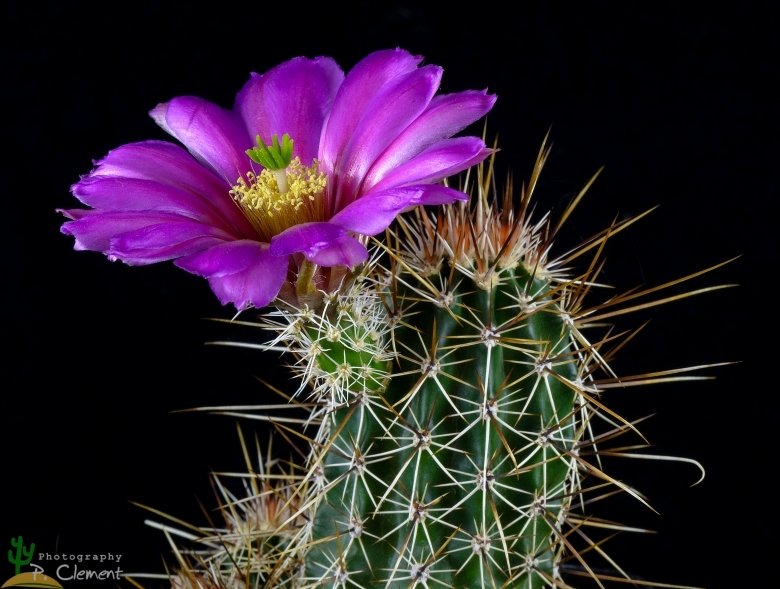
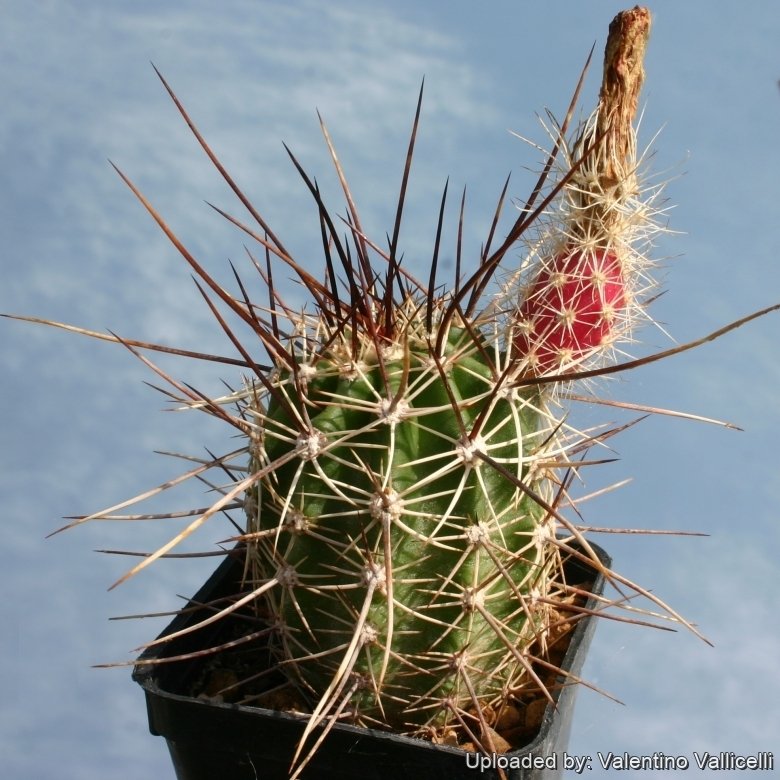
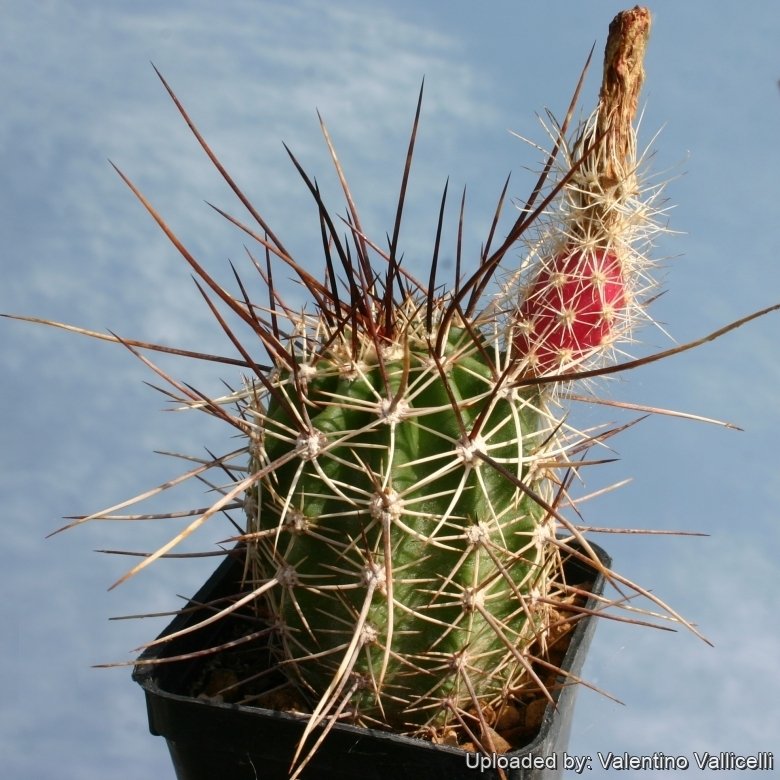
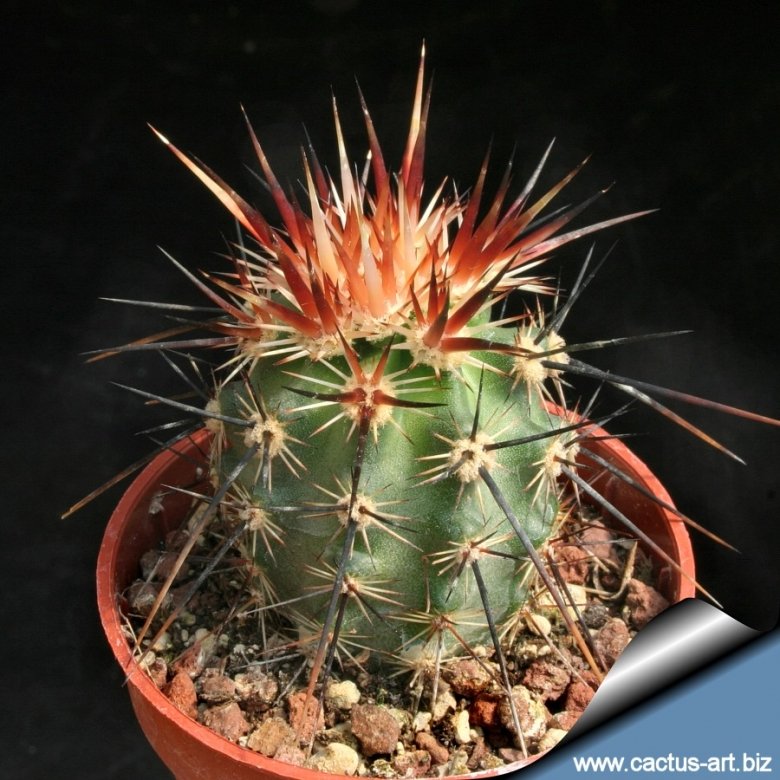
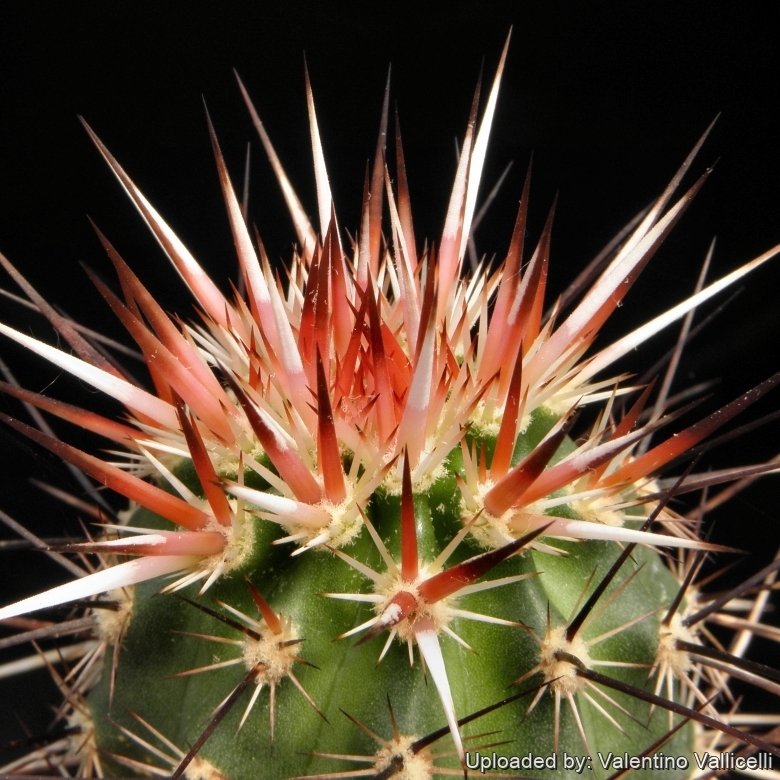
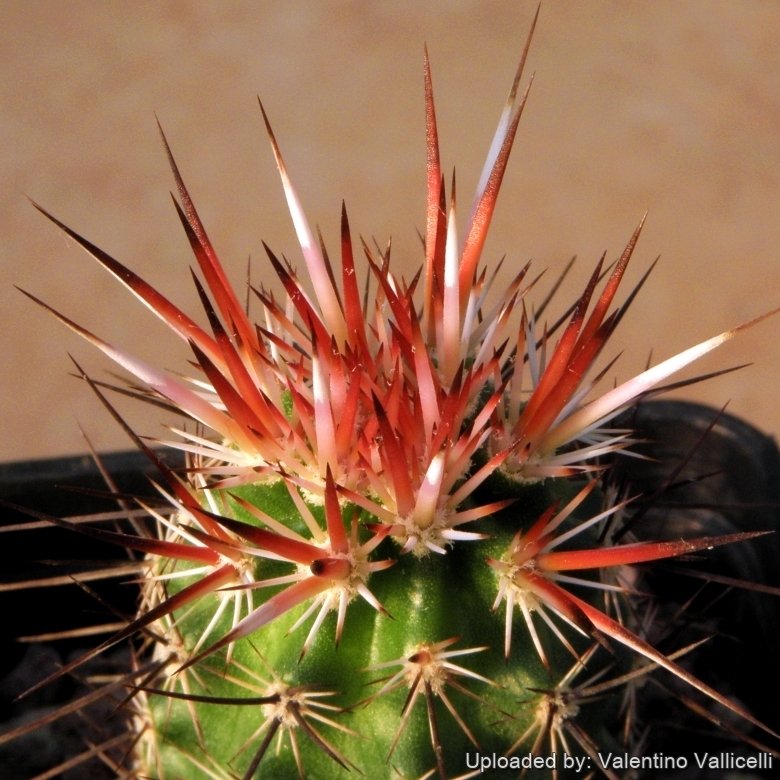
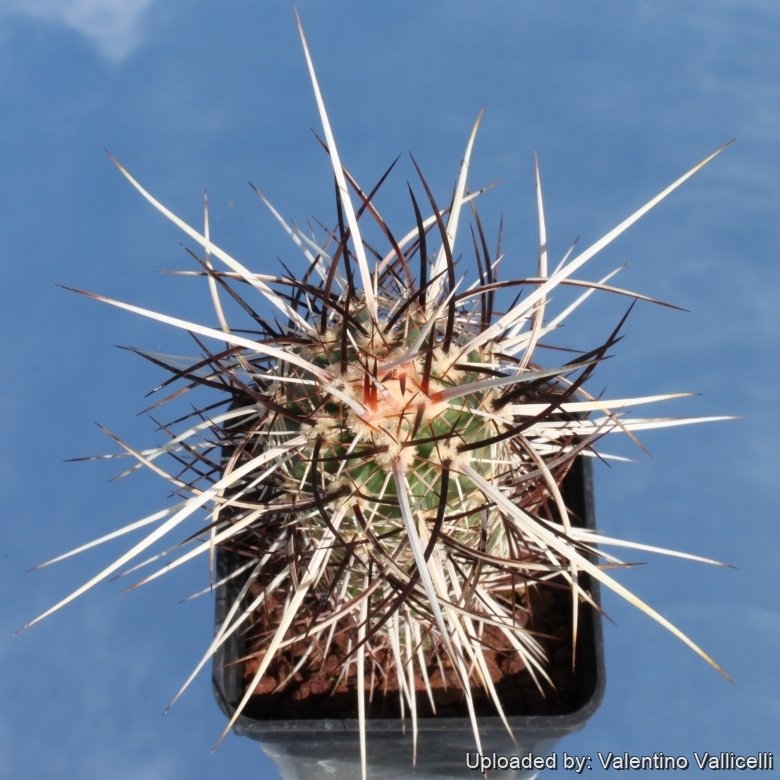
Spines: 8-20 per areole, usually straight (curved and twisted in desert mountains and peninsular ranges of California), individual spines with broad zones of different colours.
Central spines: 4 to 6 whitish or greyish, dull golden-yellow, or reddish brown to nearly black, 5-7(-8) cm long, divergent-porrect
Radial spines: 8 to 20 (or more) mm long .
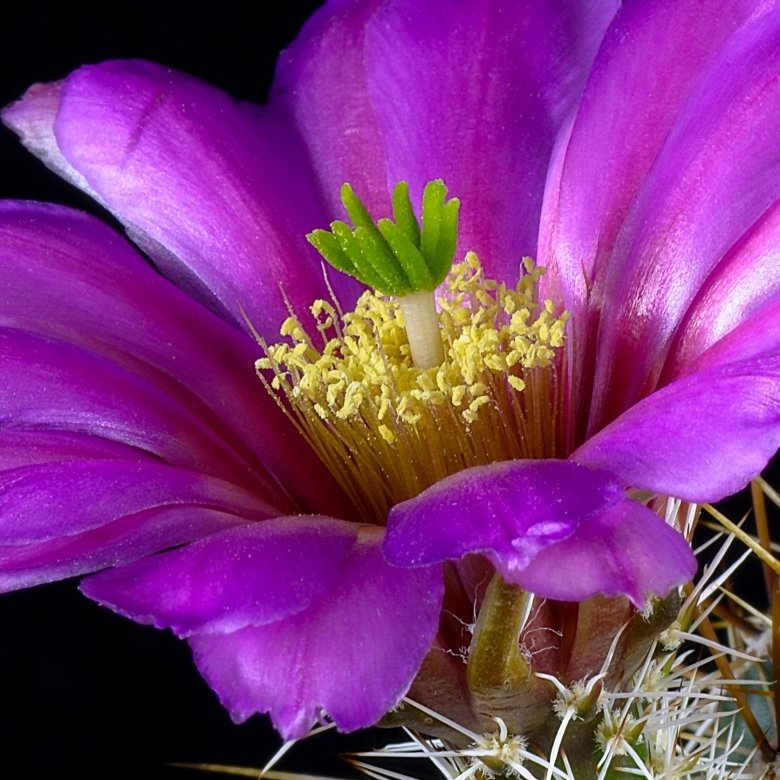
Flowers: The more common form has bright pink flowers (Often varying from paler to darker in same population) but some varieties have different colours, from purple to lavender. The flowers are up to 7 cm in diameter, 5-13 cm long . Flower tube hairy. Anthers yellow, Stigma green in the centre.
Blooming phenology: Spring (February to April), flowers are diurnal close at night and reopen in the morning and last for about five days.
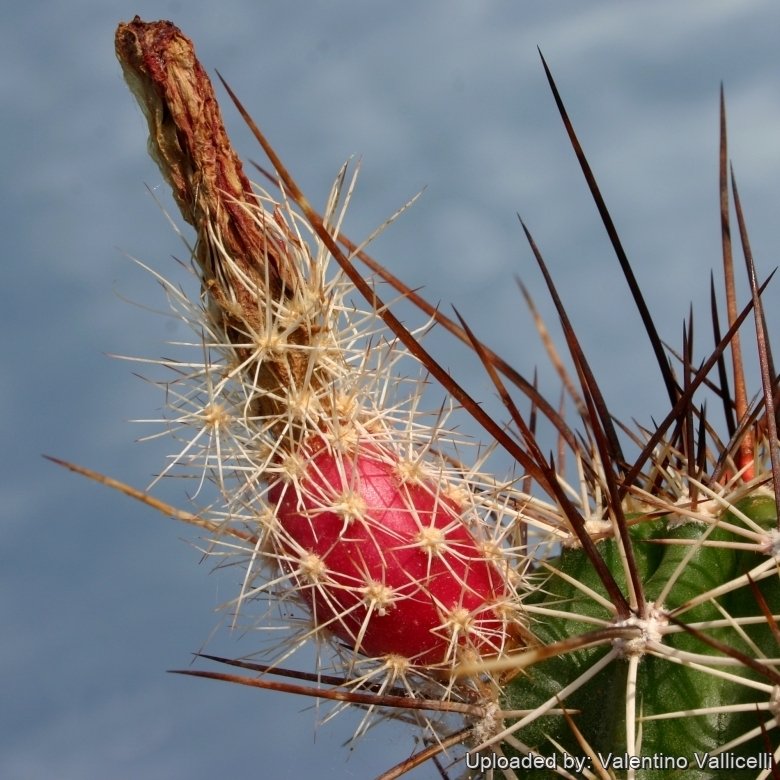
Fruit: Red or orangish 2.5-4 cm long, spherical, fleshy, pulp whitish be-coming infused with pink or red from the skin. Spine clusters deciduous. The fruit is edible (if you can reach through the spines). It is said to taste like strawberry, and is eaten readily by birds and rodents. Fruiting May-Jul.
Chromosome number: Echinocereus engelmannii is tetraploid 2n = 44 (whereas the related Echinocereus nicholii is diploid 2n = 22)
Origin and Habitat
It is one of the most common species of cactus in the south-western USA (southern California, Arizona, southern Nevada, Utah) and Mexico (Baja California down to northern Baja California Sur, Sonora). Still, there are a number of varieties of Echinocereus scopulorum, and some are quite rare.
Altitude: From near sea level to 2400 metres.
Habitat: It grows in different dry habitats normally in well drained deserts in Sonoran and Mojave deserts, chaparral, pinyon-juniper woodlands, grass, and Great Basin shrub in flats with fine sand on the plain, washes and canyons in the desert, and also in gravelly, sandy, or rocky hillsides, and in mountain ranges. The rich flora and diverse vegetation of the area comprises, among the others, Ferocactus cylindraceus, Mammillaria boolii, Mammillaria microcarpa, Mammillaria tetrancistra, Echinocereus scopulorum, Fouquieria macdougalii, Larrea tridentata, Cercicium microphyllum, Idria columnaris, Opuntia leptocaulis, Opuntia ramosissima and Opuntia engelmannii. The species is abundant throughout its range. Land use change is a threat affecting this species, however it is not a major.
Cultivation and Propagation
The Strawberry Hedgehog Echinocereus engelmannii grows rather slowly and it is sensitive to overwatering (rot prone) and needs a very good drainage to avoid rotting, but requires more moisture than true desert cacti to grow and produce flower.
Soil: Use a loose well drained cactus mix.
Repotting: It require a deep pot suited to accommodate the swollen root, repotting with fresh potting-mix should be done every other year or when the plant has outgrown its pot. However, repotting doesn’t necessarily mean they’ll need larger containers.
Sun Exposure: Light shade when young, full sun later. Outside it likes strong sunshine, but is tolerant and do well with light shade during the hot Summer months. Tends to bronze in strong light, which encourages spine production.
Hardiness: It is cold resistant to -10° ( or less depending on clones) for short periods of time. It will show its flowers only if we provide an adequate winter rest period.
Watering: They require moderately watering through the growing season. This can be done weekly or more frequently during the summertime, if the weather is sunny enough, but allow to dry fully before watering again. Kept this way, plants will show a healthy growth. Keep rather dry as soon as the temperature starts dropping in October and keep it dry in winter. The plant survives outside without protection in winter (cold hardy to -5° ) but is then somewhat prone to rot, too.
Fertilization: Give an occasional high potassium liquid feed during the active growing period.
Garden uses: It is a fine plant for a rock garden or container, contrasts well with agaves, yuccas, and low-growing flowering plants. Nice planted with Agave utahensis, another very hardy species.
Pest and diseases: They are generally fairly easy to grow, especially if kept pest-free. They are susceptible to, scale insects and spider mite. Watch carefully for infestations of stem and root mealy bugs, and damage from these may well initiate fungal attack.
Propagation: Seeds, also can be grown from cutting as it branches from the base. Take cuttings spring or summer, let them dry till the ends callous well. Then replant them in fresh cactus soil that is ever so slightly moist, and keep it that way till they root. Surface sowing is the best; seeds germinate in 14-28 days at 20° C, remembering that seedlings dislike strong light and dry conditions.
Bibliography
Major references and further lectures:
-
Edward Anderson “The Cactus family” Timber Press, Incorporated, 2001
-
James Cullen, Sabina G. Knees, H. Suzanne Cubey “The European Garden Flora Flowering Plants: A Manual for the Identification of Plants Cultivated in Europe, Both Out-of-Doors and Under Glass” Cambridge University Press, 11/Aug/2011
-
David R Hunt; Nigel P Taylor; Graham Charles; International Cactaceae Systematics Group. “The New Cactus Lexicon” dh books, 2006
-
Urs Eggli, Leonard E. Newton: “Etymological Dictionary of Succulent Plant Names” Springer, Berlin/Heidelberg 2010
-
N. L. Britton, J. N. Rose: “The Cactaceae. Descriptions and Illustrations of Plants of the Cactus Family.” Volume II, The Carnegie Institution of Washington, Washington 1920
-
Burquez Montijo, A., Butterworth, C., Felger, R.S. & Porter, J.M. 2013. Echinocereus engelmannii. In: IUCN 2013. “IUCN Red List of Threatened Species.” Version 2013.2. <www.iucnredlist.org>. Downloaded on 19 January 2014.
-
Echinocereus engelmannii. In: Flora of North America <http://www.efloras.org/florataxon.aspx?flora\_id=1&taxon\_id=242415249\>. Downloaded on 19 January 2014.
From llifle page Cereus engelmannii var. chrysocentrus
Description
Echinocereus engelmannii var. chrysocentrus is a formidably spined and free clumping columnar cactus, 6-25-branched, ultimately forming somewhat open clumps of stems.
Stems: Suberect, erect or ascending light green, cylindric or somewhat tapering distally, (10-)15-20(-30) cm tall, and about 5-6 cm in diameter, branching freely from the base.
Ribs: 11 to 14 low, obtuse, tubercles indistinct, crests slightly undulate.
Areoles: Large, nearly circular, 6-15 mm apart, with few stout bristles, wool present in first year only.
Central spines: 5-6 Divergent-porrect, very stout, and rigid, straight or curving and somewhat twisted, terete or somewhat flattened, up to 7 cm long (or more) Yellowish to brown, more or less variegated (often purple when young).
Radial spines: About 10, appressed, stiff, lighter whitish to creamy coloured 8-20 mm long long, spreading.
Flowers: Purple, 5-8 cm long and even broader when fully expanded. Flower tube hairy, scales on ovary 3-5 mm long acuminate. Perianth segments oblong, 3-4 cm long, acunimate.
Blooming season: Spring, flowers are diurnal close at night and reopen in the morning and last for about five days.
Fruit: Spheric, obovoid or ovoid, spiny, red or orangish about 3 cm long, fleshy, pulp whitish becoming infused with pink or red from the skin. The fruit is edible, it is said to taste like strawberry.
Seeds: Black nearly globular, or a little oblique, 1,5 mm in diameter or less, tuberculate.
Origin and Habitat
South-western USA (Southern California, Arizona, southern Nevada, Utah) TL: Arizona, Bill Williams River, J. M. Bigelow, 13 Feb. 1854 (MO).
Habitat: Grows on gravel, sand and rocky hills.
Cultivation and Propagation
In cultivation the strawberry hedgehog grows rather slowly and it is sensitive to overwatering (rot prone) needs a very good drainage to avoid rotting, but requires more moisture than true desert cacti to grow and produce flowers, Keep drier and cool in winter. Need full sun. It is cold resistant to -10° ( or less depending on clones) for short periods of time. It is a fine plant for a rock garden or container, contrasts well with agaves, yuccas, and low-growing flowering plants. It will show its flowers only if we provide an adequate winter rest period.
Propagation:: Seeds, also can be grown from cutting as it branches from the base.
Bibliography
Major references and further lectures:
-
Edward Anderson “The Cactus family” Timber Press, Incorporated, 2001
-
James Cullen, Sabina G. Knees, H. Suzanne Cubey “The European Garden Flora Flowering Plants: A Manual for the Identification of Plants Cultivated in Europe, Both Out-of-Doors and Under Glass” Cambridge University Press, 11/Aug/2011
-
David R Hunt; Nigel P Taylor; Graham Charles; International Cactaceae Systematics Group. “The New Cactus Lexicon” dh books, 2006
-
Urs Eggli, Leonard E. Newton: “Etymological Dictionary of Succulent Plant Names” Springer, Berlin/Heidelberg 2010
-
N. L. Britton, J. N. Rose: “The Cactaceae. Descriptions and Illustrations of Plants of the Cactus Family.” Volume II, The Carnegie Institution of Washington, Washington 1920
Source: Cereus engelmannii var. chrysocentrus, LLIFLE - Encyclopedia of living forms, CC-BY-SA, retrieved 2026-10-25.
From llifle page Cereus engelmannii var. variegatus
Description
Echinocereus engelmannii var. variegatus is a local or morphological form of the widespread and variable Echinocereus engelmannii. It differs from the type variety mainly for its lowermost central spines mainly 2.8-4.5 cm long, often markedly differing in colour from other spines and varying from white to brown often mottled with black. However the distinguishing characteristics of Echinocereus engelmannii var. variegatus, appear to fall within the natural variation of Echinocereus engelmannii and it should be synonymized with the latter, but it still has a value for a collector because they identify plants with particular characters.
Derivation of specific name: ‘variegatus’ Lat., mottled, variegated; for the variable spine colours.
Habit: Echinocereus engelmannii var. variegatus is a small mound-forming cactus with nearly black clusters of 2 to 12 erect stems.
Stems: Sark green 10 to 20 cm tall, 2 to 5.5 cm in diameter.
Spines: Highly variegated (variable) in colour, being either white, horn-colored, dark-red or black; lower central 3.75 cm long, straight, stiff; other centrals shorter, darker in colour. The three upper centrals often curved.
Flowers: varied in colour from pink to purple to magenta. 5 cm (2 inches) in diameter, 5 cm (2 inches) long.
Blooming season. Spring (April).
Fruits: Spiny, 3.75 cm long, red when ripe.
Seeds: c. 4 mm wide, black.
Origin and Habitat
Arizona (Mojave County to House Rock Valley and the Navajo Bridge, mainly not of the Colorado canyons), USA.
Type locality: Head of Bill Williams River, Mojave County.
Altitude range: 1,080 to 1,705 metres above sea level.
Habit and ecology: This species dwells in desert soils and grasslands.
Cultivation and Propagation
Echinocereus engelmannii var. variegatus grows rather slowly and it is sensitive to overwatering (rot prone) and needs a very good drainage to avoid rotting, but requires more moisture than true desert cacti to grow and produce flower.
Bibliography
Major references and further lectures:
-
W. Hubert Earle “Cacti of the Southwest” Rancho Arroyo Book, 1986
-
Urs Eggli, Leonard E. Newton “Etymological Dictionary of Succulent Plant Names” Springer Science & Business Media, 29 June 2013
-
“Great Basin Naturalist Memoirs”, 9 Ed. Brigham Young University, 1987
-
Denny Rodgers “Liberty Hyde Bailey: A Story of American Plant Sciences”, Volume 2 Princeton University Press, 1949
Source: Cereus engelmannii var. variegatus, LLIFLE - Encyclopedia of living forms, CC-BY-SA, retrieved 2026-10-25.
From llifle page Cereus munzii
Description
Echinocereus engelmannii var. munzii, is a closely related mountain form of Echinocereus engelmannii, but some authors still recognize Echinocereus munzii as a separate species. The “var. munzii” is the smallest of all the variants of E. engelmannii, and superficially resembles Echinocereus triglochidiatus var. mojavensis. It is distinguished by the betacyanin pigmentation (magenta, i.e. red with blue, coloring) of the flowers (neither a pure red nor with yellow) and by the 4 central spines (except in an occasional areole) instead of 1. If the plants are not flowering with the typical Echinocereus engelmannii flowers it would be difficult to associate them with this species at all. White spines twist up from the small bodies. So small are the individual bodies that Parish, who described it originally, sought to differentiate it from Echinocereus triglochidiatus on the basis of flower colour!
Habit: It is a cespitose compact cactus species with very few to 60 stems crowded in cushion-like clumps.
Stems: Oblong, 10-20 cm long.
Ribs: 10-20, undulate, low.
Spines: All white to ashy grey, radials 0-16, acicular to narrowly subulate, spreading and interlocking, unequal, 2-3 cm long. Central spines 1-4, stouter than the radials, 2.5-5 cm long.
Flowers: Campanulate, 4-7 cm long, 3-4 cm broad when expanded, cerise-pink to magenta. Perianth-segments obtuse. Floral tube and ovary clothed with clusters of unequal, white acicular spines 5-12 mm long, embedded in short, felt-like white wool.
Fruit: Obovoid 2-2.5 cm long, red, clothed with clusters of acicular readily deciduous spines.
Seeds: Rugulose.
Origin and Habitat
Echinocereus engelmannii var. munzii is endemic to a small area in the lower margin of the arid transition zone in the desert side of the San Bernardino and San Jacinto Mountains, Southern California, USA, and probably the Laguna mountains. It is also found southward in adjacent Sierra Juarez in northern Baja California. Mexico.
Altitude range: 1,300 to 2,700 metres elevation.
Habitat and ecology: This cactus grows in dry stony slopes, gravel, or sand and rock crevices of mountains and canyons in yellow-pine forest and chaparral (which may resemble superficially the Juniper-Pinyon Woodland) and in alpine meadow on gently rolling ridges of the San Bernardino Mountain above Baldwin Lake.
Cultivation and Propagation
Echinocereus engelmannii var. munzii grows rather slowly and it is sensitive to overwatering (rot prone) and needs a very good drainage to avoid rotting, but requires more moisture than true desert cacti to grow and produce flower.
Soil: Use a loose well drained cactus mix.
Repotting: It require a deep pot suited to accommodate the swollen root, repotting with fresh potting-mix should be done every other year or when the plant has outgrown its pot. However, repotting doesn’t necessarily mean they’ll need larger containers.
Sun Exposure: Light shade when young, full sun later. Outside it likes strong sunshine, but is tolerant and do well with light shade during the hot Summer months. Tends to bronze in strong light, which encourages spine production.
Hardiness: It is cold resistant to -10° ( or less depending on clones) for short periods of time. It will show its flowers only if we provide an adequate winter rest period.
Watering: They require moderately watering through the growing season. This can be done weekly or more frequently during the summertime, if the weather is sunny enough, but allow to dry fully before watering again. Kept this way, plants will show a healthy growth. Keep rather dry as soon as the temperature starts dropping in October and keep it dry in winter. The plant survives outside without protection in winter (cold hardy to -5° ) but is then somewhat prone to rot, too.
Fertilization: Give an occasional high potassium liquid feed during the active growing period.
Garden uses: It is a fine plant for a rock garden or container, contrasts well with agaves, yuccas, and low-growing flowering plants. Nice planted with Agave utahensis, another very hardy species.
Pest and diseases: They are generally fairly easy to grow, especially if kept pest-free. They are susceptible to, scale insects and spider mite. Watch carefully for infestations of stem and root mealy bugs, and damage from these may well initiate fungal attack.
Propagation: Seeds, also can be grown from cutting as it branches from the base. Take cuttings spring or summer, let them dry till the ends callous well. Then replant them in fresh cactus soil that is ever so slightly moist, and keep it that way till they root. Surface sowing is the best; seeds germinate in 14-28 days at 20° C, remembering that seedlings dislike strong light and dry conditions.
Bibliography
Major references and further lectures
-
Le Roy Abrams, Roxana Stinchfield Ferris “An Illustrated Flora of the Pacific States: Geraniaceae to Scrophulariaceae, geraniums to figworts” Stanford University Press, 1923
-
Lyman David Benson “The Native Cacti of California” Stanford University Press, 1969
-
George Lindsay “Cacti of San Diego County: A Non-technical Guide” San Diego Society of Natural History, 1963
-
George Lindsay “Occasional Papers”, Ed. 11-15 San Diego Society of Natural History, The Society., 1961
-
British Cactus & Succulent Journal, Volume 23, page 114, Cactus & Succulent Society, 2005
-
Elmer Yale Dawson “The Cacti of California” University of California Press, 1966
Source: Cereus munzii, LLIFLE - Encyclopedia of living forms, CC-BY-SA, retrieved 2026-10-25.
From llifle page Echinocereus chrysocentrus var. purpureus
Description
Echinocereus engelmannii var. purpureus commonly known as the “purple-spined hedgehog cactus” is simply a dark-colored, short-spined morphological form that occurs sporadically interspersed throughout populations of Echinocereus engelmannii var. chrysocentrus. The two types of plants cross-pollinate readily in nature and represent only the variability within a multiform population rather than two distinct taxonomic groups. However Echinocereus engelmannii var. chrysocentrus shows many morphological variation within its range and Echinocereus engelmannii var. purpureus doesn’t exhibit any independent population integrity and cannot be defended as a distinct species, subspecies, or taxonomic variety.
Habit: It is a formidably spined and free clumping columnar cactus, 6-25-branched, ultimately forming somewhat open clumps of stems.
Stems: Suberect, erect or ascending light green, cylindric or somewhat tapering distally, (10-)15-20(-309 cm tall, and about 5-6 cm in diameter, branching freely from the base.
Ribs: 11 to 14 low, obtuse, tubercles indistinct, crests slightly undulate.
Areoles: Large, nearly circular, 6-15 mm apart, with few stout bristles, wool present in first year only.
Central spines: 5-6 Divergent-porrect, very stout, and rigid, straight or curving and somewhat twisted, terete or somewhat flattened, up to 7 cm long, brownish-purple (bright purple when young).
Radial spines: About 10, appressed, stiff, lighter whitish to creamy coloured 8-20 mm long long, spreading.
Flowers: Purple, 5-8 cm long and even broader when fully expanded. Flower tube hairy, scales on ovary 3-5 mm long acuminate. Perianth segments oblong, 3-4 cm long, acunimate.
Blooming season: Spring, flowers are diurnal close at night and reopen in the morning and last for about five days.
Fruit: Spheric, obovoid or ovoid, spiny, red or orangish about 3 cm long, fleshy, pulp whitish becoming infused with pink or red from the skin. The fruit is edible, it is said to taste like strawberry.
Seeds: Black nearly globular, or a little oblique, 1,5 mm in diameter or less, tuberculate.
Origin and Habitat
The purple-spined hedgehog cactus (Echinocereus engelmannii var. purpureus) was first described as a distinct taxonomic group in 1969 from specimens collected near St. George, Washington, Utah. It occurs sporadically interspersed throughout populations of Echinocereus engelmannii var. chrysocentrus.
Cultivation and Propagation
Echinocereus engelmannii var. purpureus grows rather slowly and it is sensitive to overwatering (rot prone) and needs a very good drainage to avoid rotting, but requires more moisture than true desert cacti to grow and produce flower
Soil: Use a loose well drained cactus mix.
Repotting: It require a deep pot suited to accommodate the swollen root, repotting with fresh potting-mix should be done every other year or when the plant has outgrown its pot. However, repotting doesn’t necessarily mean they’ll need larger containers.
Sun Exposure: Light shade when young, full sun later. Outside it likes strong sunshine, but is tolerant and do well with light shade during the hot Summer months. Tends to bronze in strong light, which encourages spine production.
Hardiness: It is cold resistant to -10° ( or less depending on clones) for short periods of time. It will show its flowers only if we provide an adequate winter rest period.
Watering: They require moderately watering through the growing season. This can be done weekly or more frequently during the summertime, if the weather is sunny enough, but allow to dry fully before watering again. Kept this way, plants will show a healthy growth. Keep rather dry as soon as the temperature starts dropping in October and keep it dry in winter. The plant survives outside without protection in winter (cold hardy to -5° ) but is then somewhat prone to rot, too.
Fertilization: Give an occasional high potassium liquid feed during the active growing period.
Garden uses: It is a fine plant for a rock garden or container, contrasts well with agaves, yuccas, and low-growing flowering plants.
Pest and diseases: They are generally fairly easy to grow, especially if kept pest-free. They are susceptible to, scale insects and spider mite. Watch carefully for infestations of stem and root mealy bugs, and damage from these may well initiate fungal attack.
Propagation: Seeds, also can be grown from cutting as it branches from the base. Take cuttings spring or summer, let them dry till the ends callous well. Then replant them in fresh cactus soil that is ever so slightly moist, and keep it that way till they root. Surface sowing is the best; seeds germinate in 14-28 days at 20° C, remembering that seedlings dislike strong light and dry conditions.
Bibliography
Major references and further lectures:
-
Edward Anderson “The Cactus family” Timber Press, Incorporated, 2001
-
James Cullen, Sabina G. Knees, H. Suzanne Cubey “The European Garden Flora Flowering Plants: A Manual for the Identification of Plants Cultivated in Europe, Both Out-of-Doors and Under Glass” Cambridge University Press, 11/Aug/2011
-
David R Hunt; Nigel P Taylor; Graham Charles; International Cactaceae Systematics Group. “The New Cactus Lexicon” dh books, 2006
-
Urs Eggli, Leonard E. Newton: “Etymological Dictionary of Succulent Plant Names” Springer, Berlin/Heidelberg 2010
-
N. L. Britton, J. N. Rose: “The Cactaceae. Descriptions and Illustrations of Plants of the Cactus Family.” Volume II, The Carnegie Institution of Washington, Washington 1920
-
Paul Foreman “Endangered Species: Issues and Analyses” Nova Publishers, 01/gen/2002
-
Endangered Species Program (U.S.), U.S. Fish and Wildlife Service “Endangered species technical bulletin” Dept. of the Interior, U.S. Fish and Wildlife Service, Endangered Species Program., Volums 11-14 page 12 1989
Source: Echinocereus chrysocentrus var. purpureus, LLIFLE - Encyclopedia of living forms, CC-BY-SA, retrieved 2026-10-25.
Cultivars and forms (7)
Subspecies (1)
Gallery