Description
Echinocereus engelmannii var. variegatus is a local or morphological form of the widespread and variable Echinocereus engelmannii. It differs from the type variety mainly for its lowermost central spines mainly 2.8-4.5 cm long, often markedly differing in colour from other spines and varying from white to brown often mottled with black. However the distinguishing characteristics of Echinocereus engelmannii var. variegatus, appear to fall within the natural variation of Echinocereus engelmannii and it should be synonymized with the latter, but it still has a value for a collector because they identify plants with particular characters.
Derivation of specific name: ‘variegatus’ Lat., mottled, variegated; for the variable spine colours.
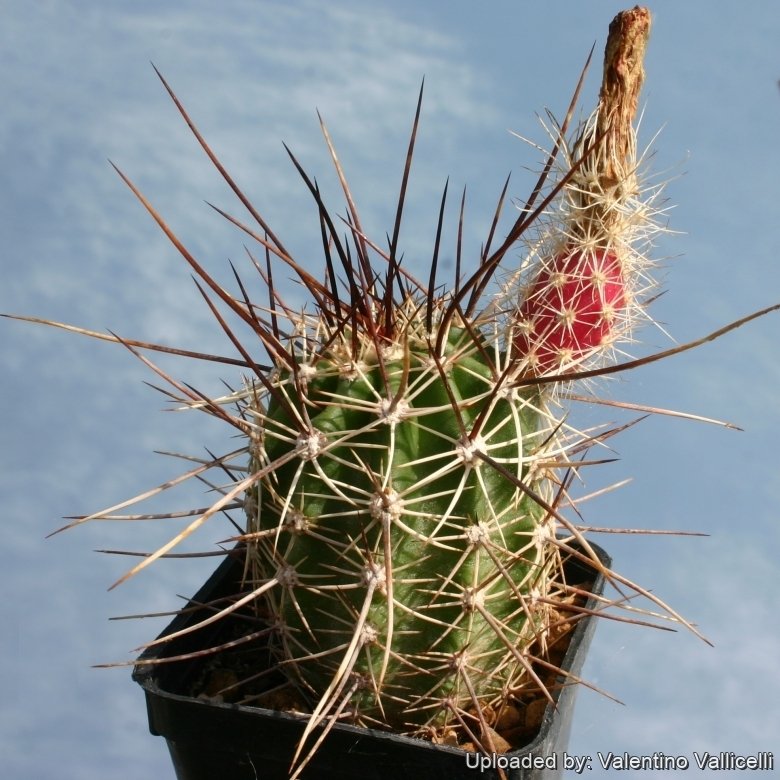
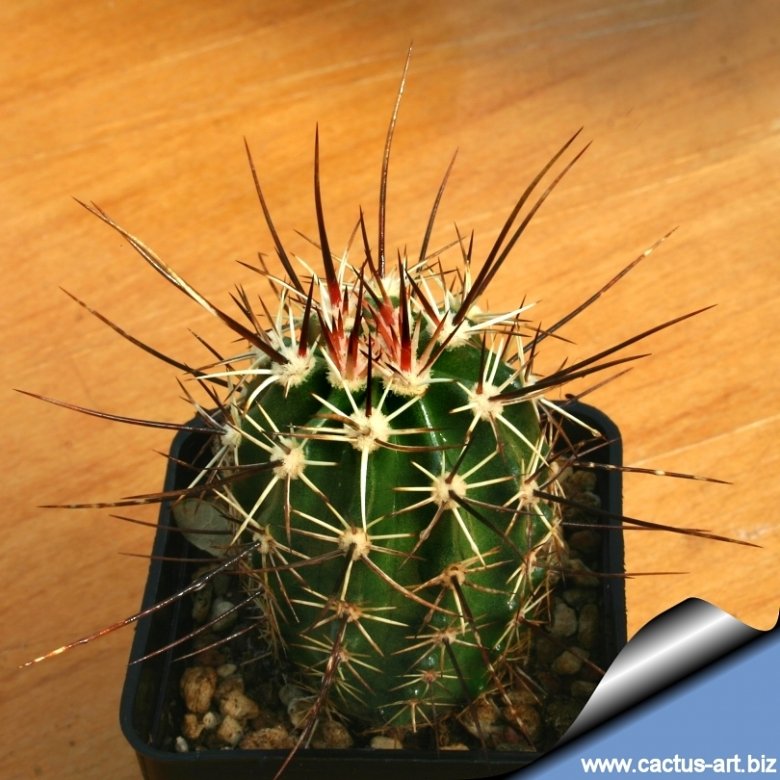
Habit: Echinocereus engelmannii var. variegatus is a small mound-forming cactus with nearly black clusters of 2 to 12 erect stems.
Stems: Sark green 10 to 20 cm tall, 2 to 5.5 cm in diameter.
Spines: Highly variegated (variable) in colour, being either white, horn-colored, dark-red or black; lower central 3.75 cm long, straight, stiff; other centrals shorter, darker in colour. The three upper centrals often curved.
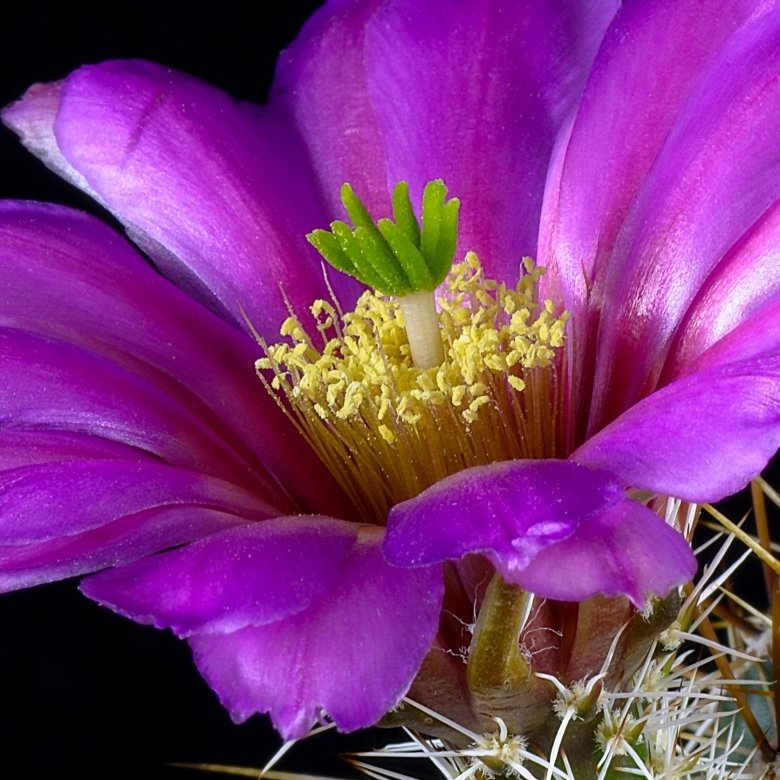
Flowers: varied in colour from pink to purple to magenta. 5 cm (2 inches) in diameter, 5 cm (2 inches) long.
Blooming season. Spring (April).
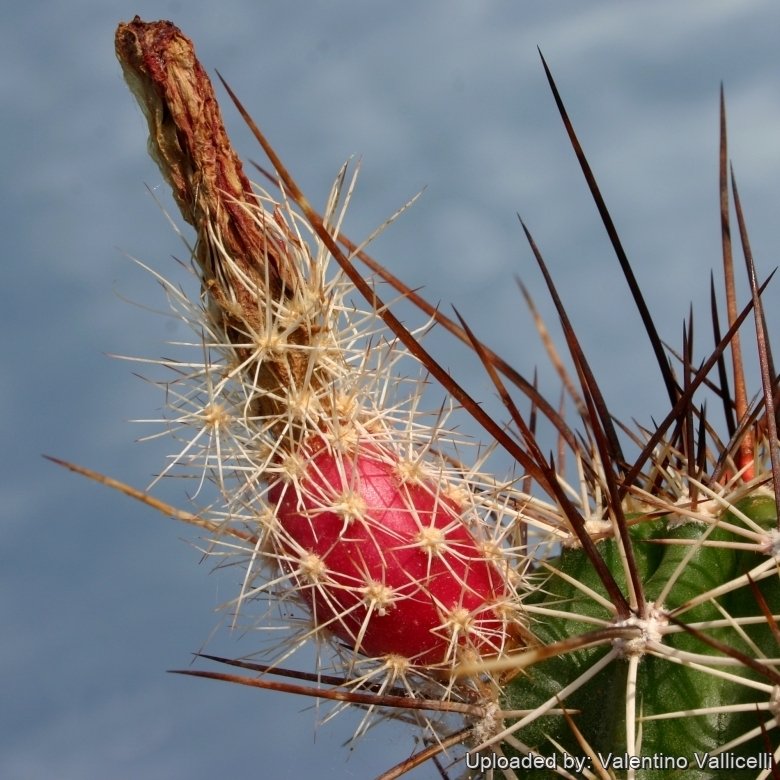
Fruits: Spiny, 3.75 cm long, red when ripe.
Seeds: c. 4 mm wide, black.
Origin and Habitat
Arizona (Mojave County to House Rock Valley and the Navajo Bridge, mainly not of the Colorado canyons), USA.
Type locality: Head of Bill Williams River, Mojave County.
Altitude range: 1,080 to 1,705 metres above sea level.
Habit and ecology: This species dwells in desert soils and grasslands.
Cultivation and Propagation
Echinocereus engelmannii var. variegatus grows rather slowly and it is sensitive to overwatering (rot prone) and needs a very good drainage to avoid rotting, but requires more moisture than true desert cacti to grow and produce flower.
Bibliography
Major references and further lectures:
-
W. Hubert Earle “Cacti of the Southwest” Rancho Arroyo Book, 1986
-
Urs Eggli, Leonard E. Newton “Etymological Dictionary of Succulent Plant Names” Springer Science & Business Media, 29 June 2013
-
“Great Basin Naturalist Memoirs”, 9 Ed. Brigham Young University, 1987
-
Denny Rodgers “Liberty Hyde Bailey: A Story of American Plant Sciences”, Volume 2 Princeton University Press, 1949
Gallery