Publication: Cactaceae Consensus Init. 3: 9. 1997
Description
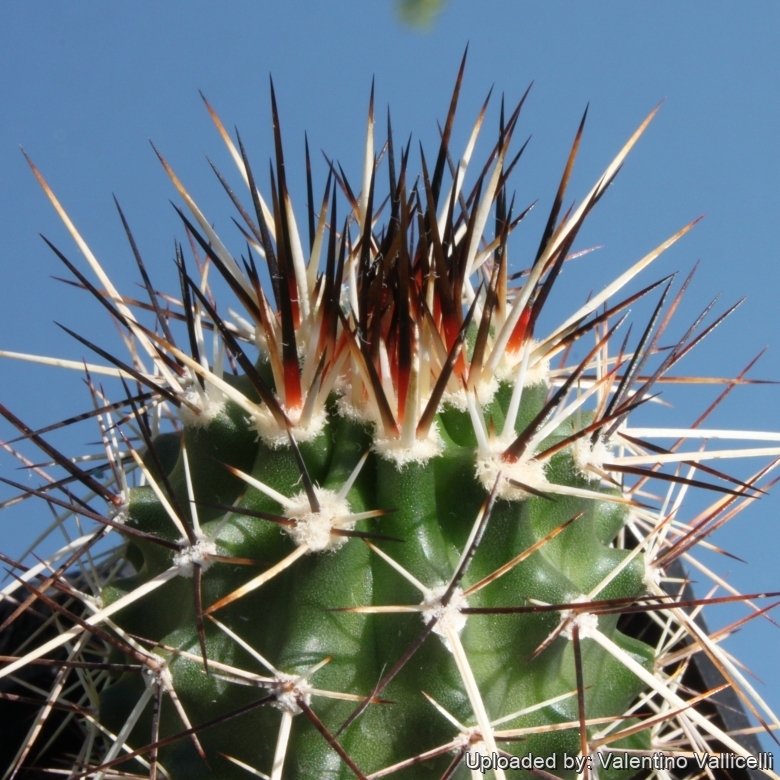
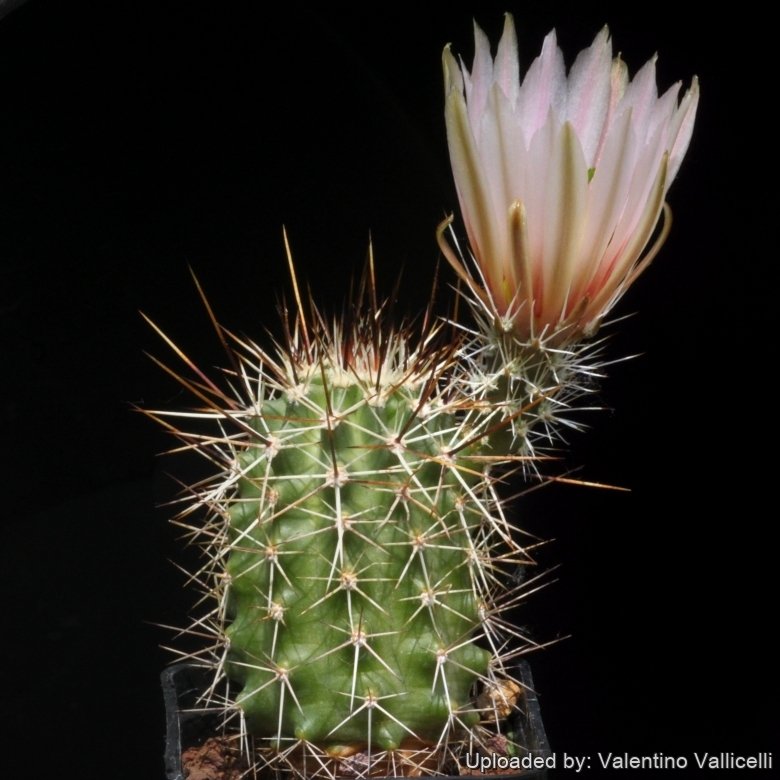
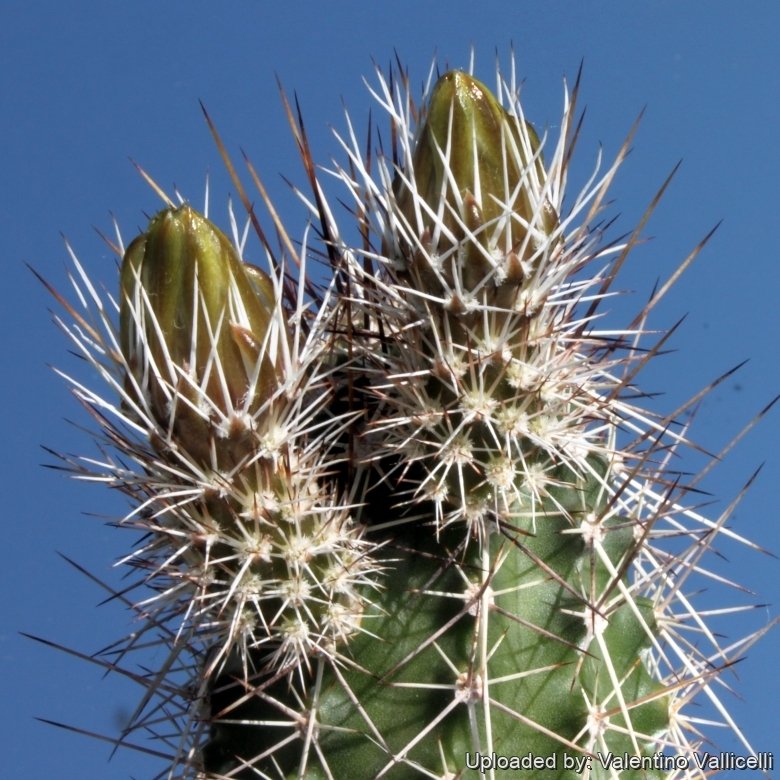
Echinocereus fendleri is a wide ranging and variable species with an indefinite number of geographic races. The var. rectispinus is a low growing, scrubby cactus, forming small clumps of up to 6-10, columnar stems to 20 cm tall. These stems have 8-11 ribs, which are narrower than the typical form and not tubercuate. The spines are rigid and stout, with a main porrect, straight central spine, with 1-2 upper accessory centrals.
Stems: Comparatively firm, columnar stems to 20(-25) cm tall.
Ribs: 8-11 , narrower than typical form, not tuberculate.
Areoles: As the species. Circular 8 to 17 mm apart.
Radial spines: 8-12, usually lighter in colour than typical form.
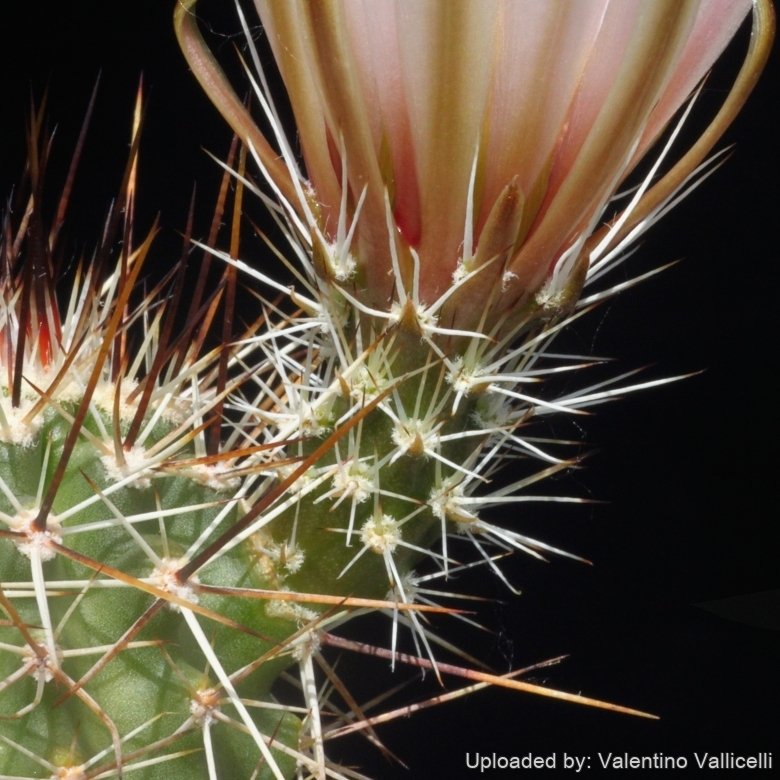
Central spines: 1 main central stout, rigid, porrect, and straight, 12-38 mm long; accessory centrals 6-18 mm long.
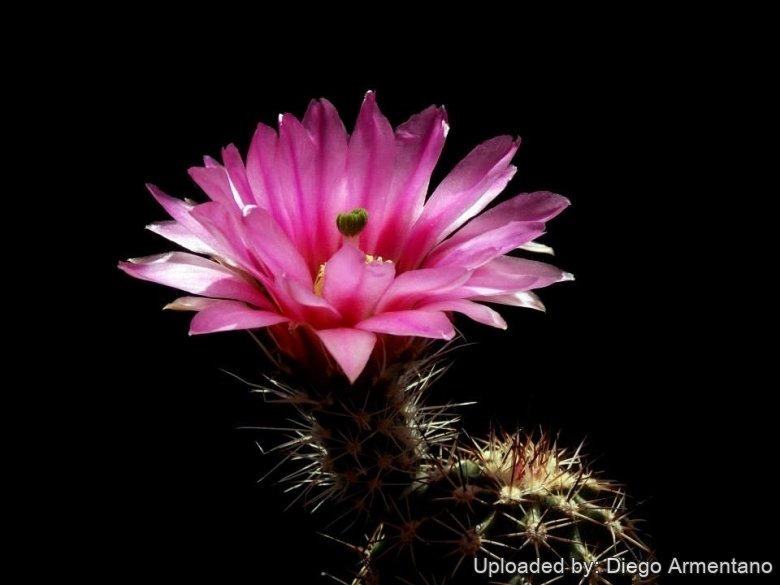
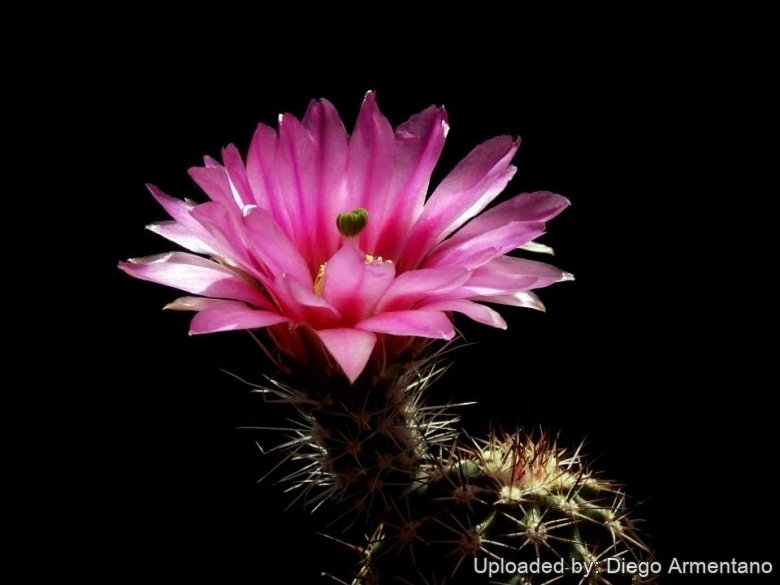
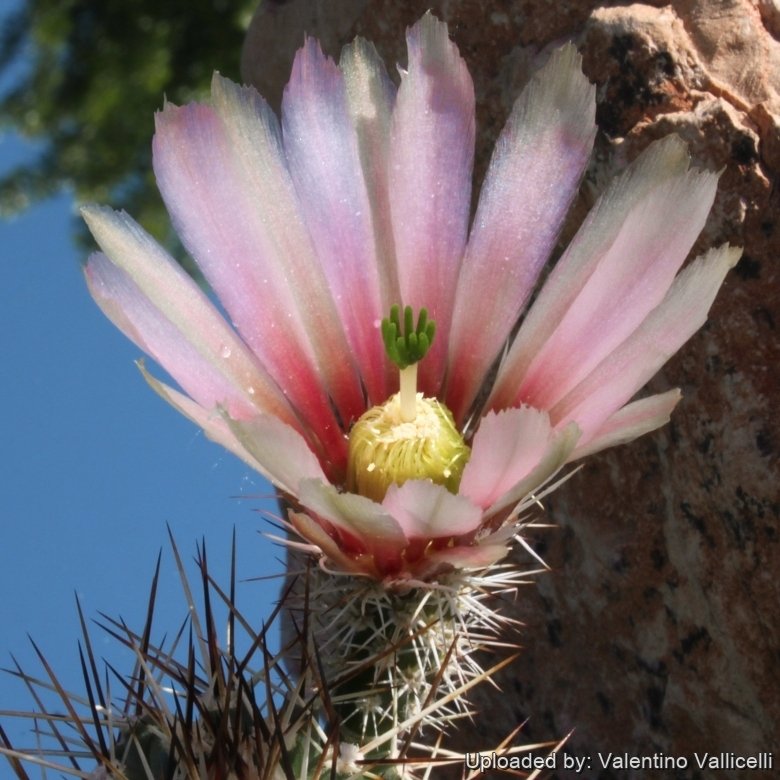
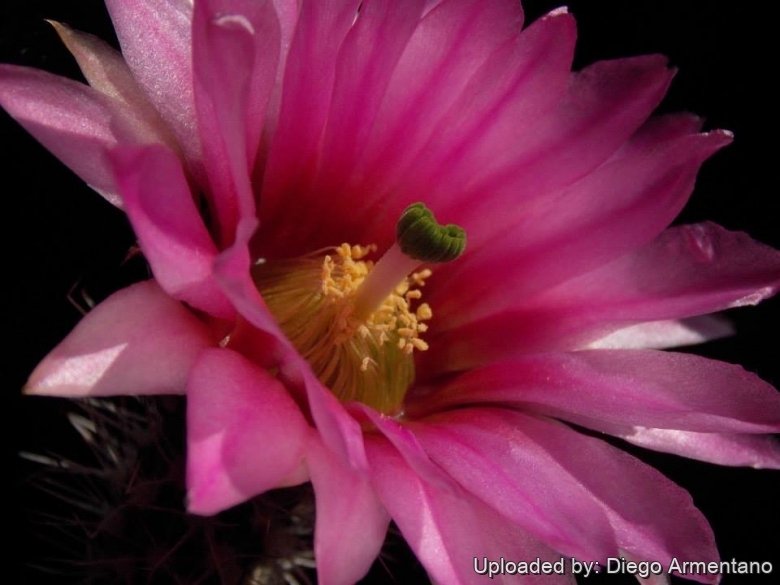
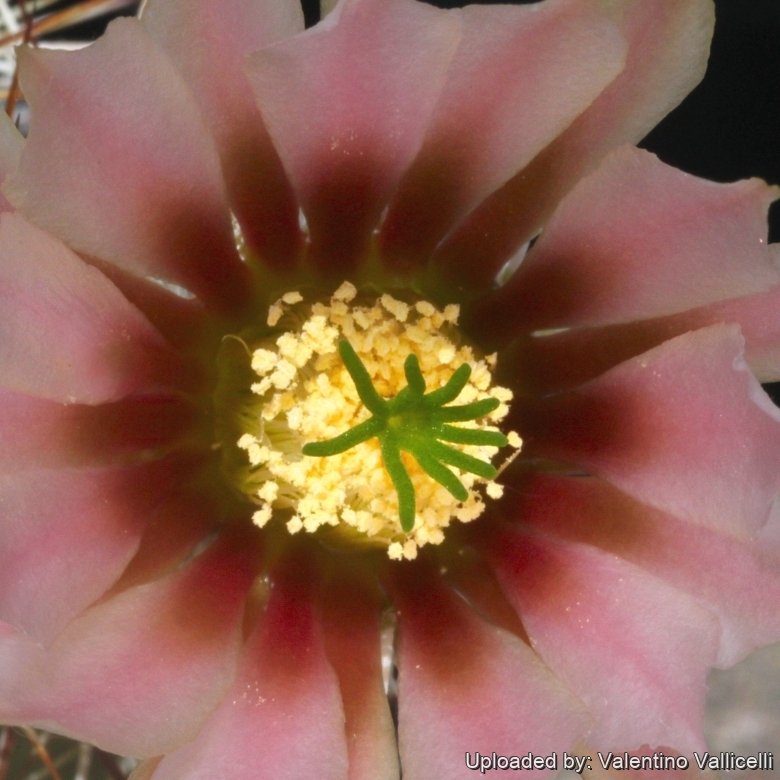
Flowers: As the species, except 10-13 stigma lobes. Close to the stem tips, funnelform, 7 cm in diameter purple-violet throat sometimes darker or purplish maroon, tips relatively thin and delicate. The stigma is green, and there is a very large number of stamens.
Blooming season: Spring (April).
Fruits: As the species. 2,5-5 cm long, 12 mm in diameter, edible, bright red or purplish maroon, pulp magenta or red.
Origin and Habitat
Extreme southwestern New Mexico (Hidalgo County), extreme southeastern Arizona (Graham, Final, Cochise, Pima, and Santa Cruz Counties).
Type locality. Santa Cruz County, Arizona.
Altitude range: 1000-1650 metres above sea level.
Habitat and ecology: Grassland and on dry slopes and in rocky areas, mostly south-facing hillsides, rather common.
Cultivation and Propagation
It grows rather slowly and is sensitive to over-watering (rot prone). Keep drier and cool in winter. It needs full sun. Very cold resistant, reportedly to -18°C or less (depending on clones), but needs good drainage and protection from excessive moisture in winter and well mulched with gravel chips. It is a fine plant for a rock garden or container, and contrasts well with agaves, yuccas, and low-growing flowering plants. It will show its flowers only provided with an adequate winter rest period.
Propagation: Seeds, can also be grown from cuttings, as it branches from the base.
Bibliography
Major references and further lectures
-
Thomas Henry Kearney, Robert Hibbs Peebles “Flowering Plants and Ferns of Arizona” U.S. Government Printing Office, 1942
-
Del Weniger “Cacti of Texas and Neighboring States: A Field Guide” University of Texas Press, 1984
-
Del Weniger “Cacti of the Southwest: Texas, New Mexico, Oklahoma, Arkansas, and Louisiana” University of Texas Press, 1969
-
Lyman David Benson “The Cacti of the United States and Canada” Stanford University Press, 1982
-
James Cullen, Sabina G. Knees, H. Suzanne Cubey “The European Garden Flora Flowering Plants: A Manual for the Identification of Plants Cultivated in Europe, Both Out-of-Doors and Under Glass” Cambridge University Press, 11 August 2011
-
Edward Anderson “The Cactus family” Timber Press, Incorporated, 2001
-
David R Hunt; Nigel P Taylor; Graham Charles; International Cactaceae Systematics Group. “The New Cactus Lexicon” dh books, 2006
-
A. Michael Powell, James F. Weedin “Cacti of the Trans-Pecos & Adjacent Areas” Texas Tech University Press, 2004
Gallery