Publication: Handb. Cacteenk. (ed. 2 - Rümpler) ed. 2: 801 1885 (et: Sencke ex J.N. Haage in Preis-Verz. Cact. Succ. 22 22 1860)
Description
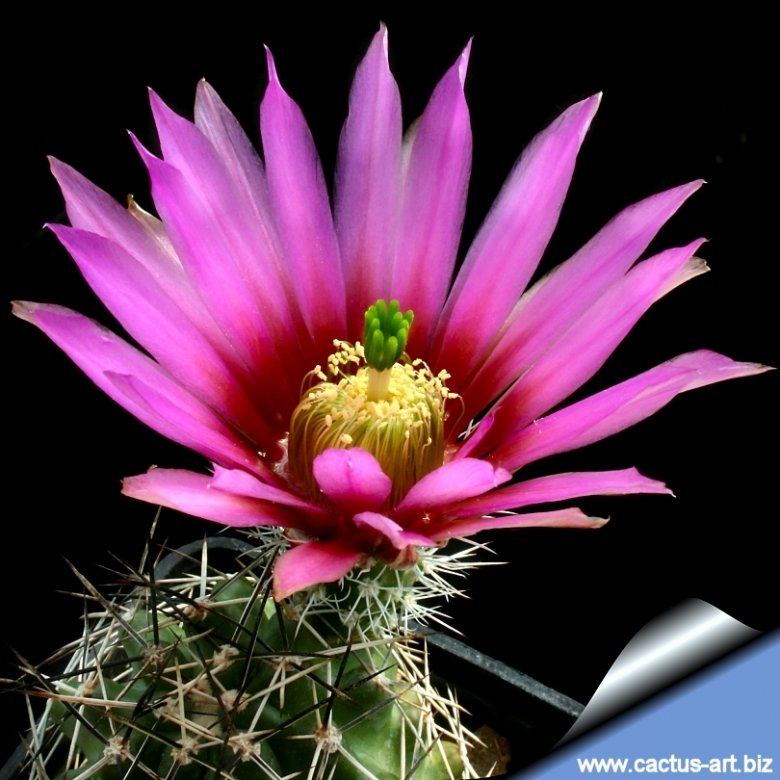
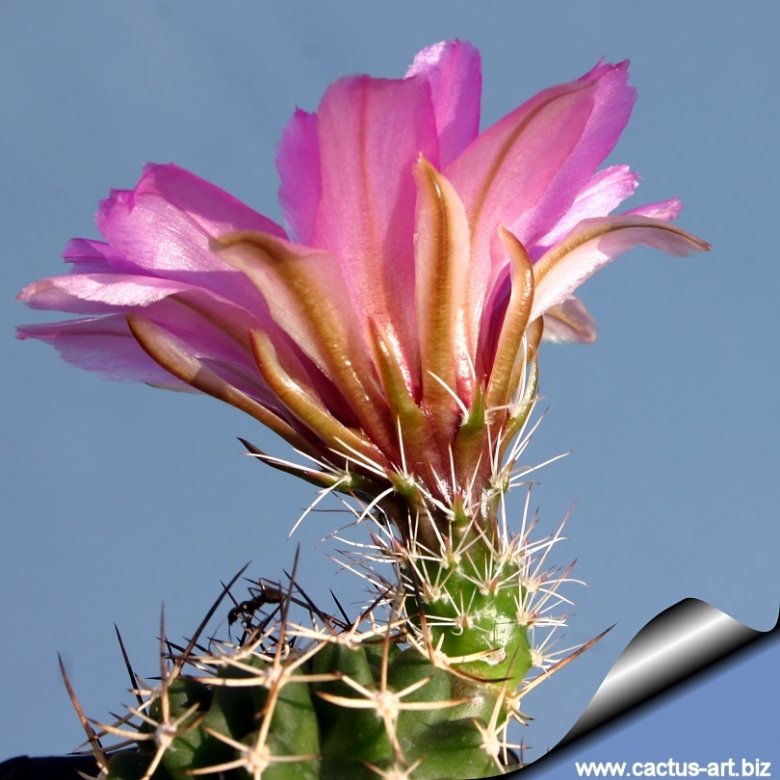
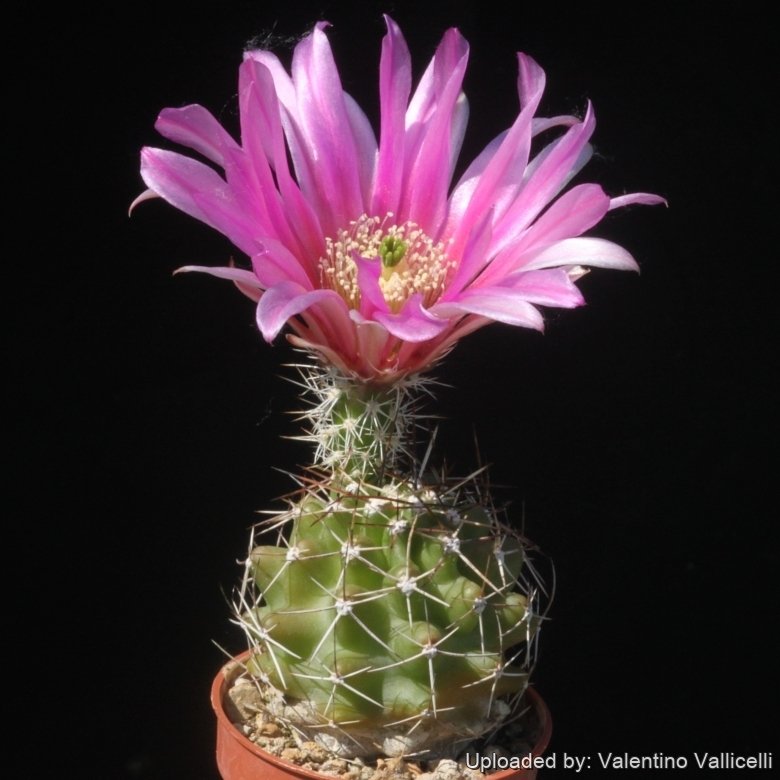
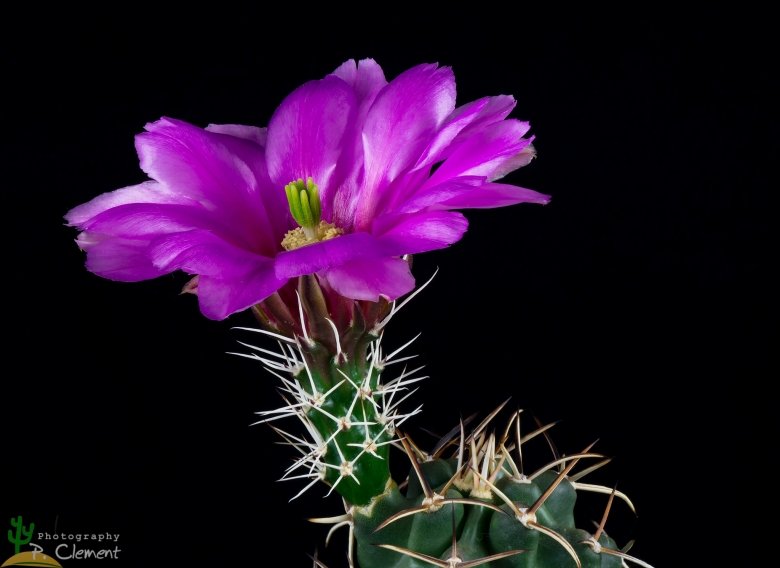
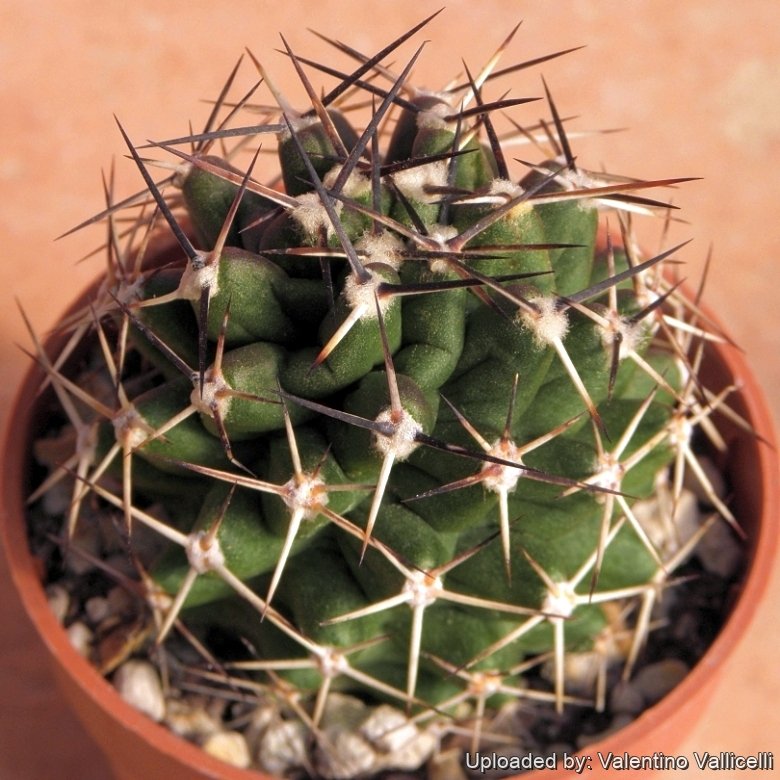
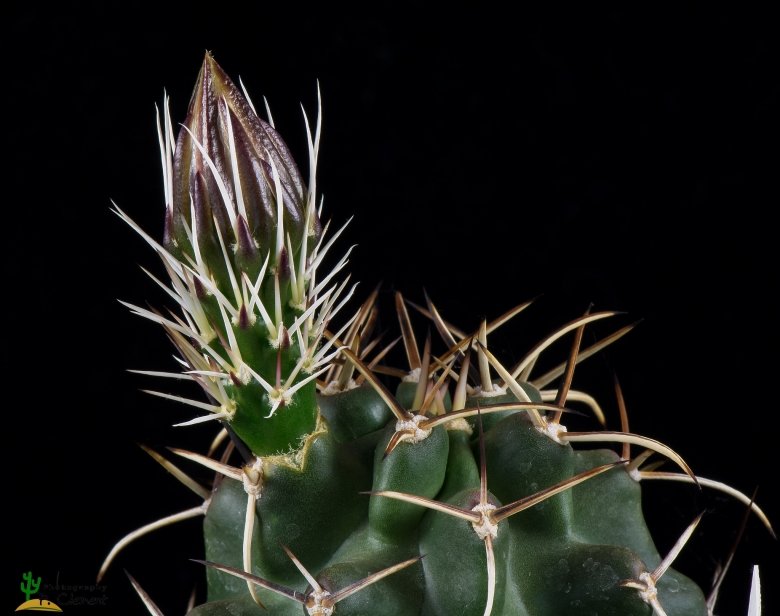
Echinocereus fendleri is a wide ranging and variable species with an indefinite number of geographic races. It is a low growing , scrubby cactus, that grows solitary or in small clumps with 5 to 20 stems. The classic fendleri form has huge violet-purple flowers and attractive white/black spination. All varieties have large red delicious edible fruits.
Stems: 10 to 30 cm tall, 5 to 7 cm in diameter somewhat flaccid erect or slightly decumbent, ovoid to cylindric with age.
Ribs: 9 to 13, uninterrupted or sometimes wavy, with sinus between areoles.
Areoles: Circular areoles 8 to 17 mm apart.
Radial spines: (2 to) 5 to 11 radials, 3 to 20 mm long, spreading, opaquely white, commonly with dark stripe on underside, often with contrasting black or brown spines in same areoles (rarely all brown or all white)
Central spines: 0 to 3 (more often 1) dark, becoming lighter with age, rigid, straight or curved up to 4 cm long, porrect or ascending, if curved, then usually directed upward, abaxial central spine like others in colour or darker, flat to sharply angled. In some areloes accompanied by short accessory centrals.
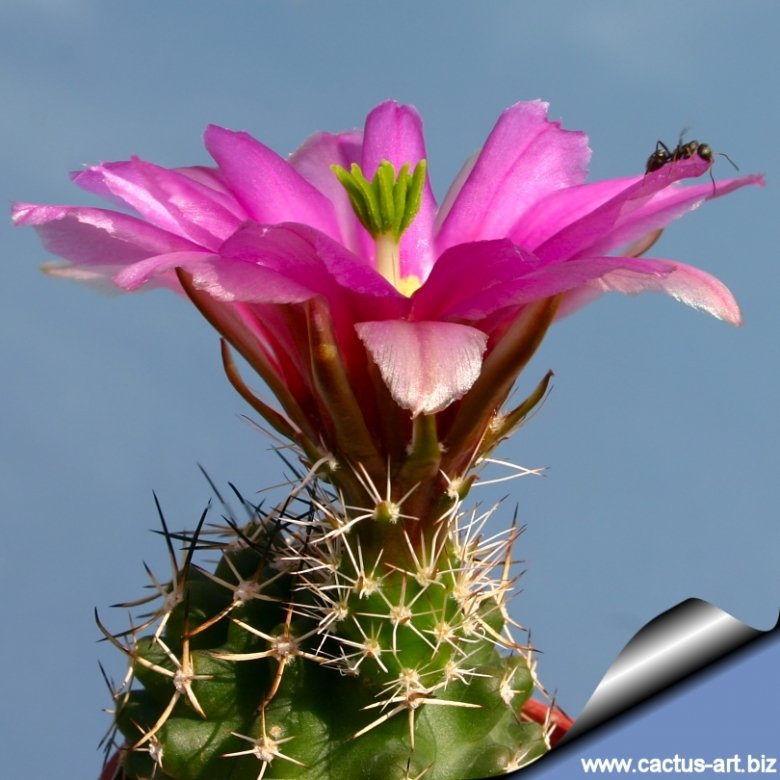
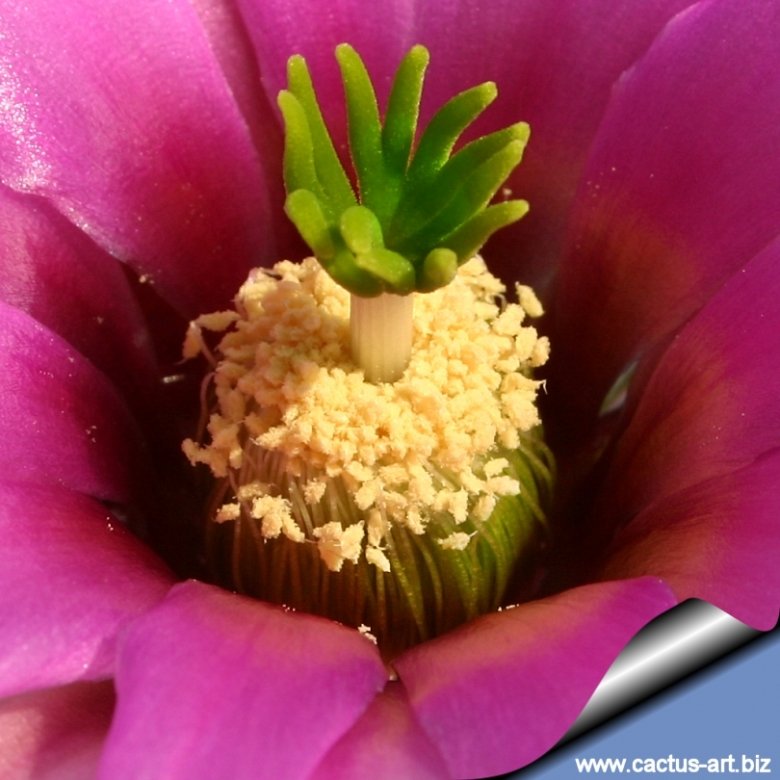
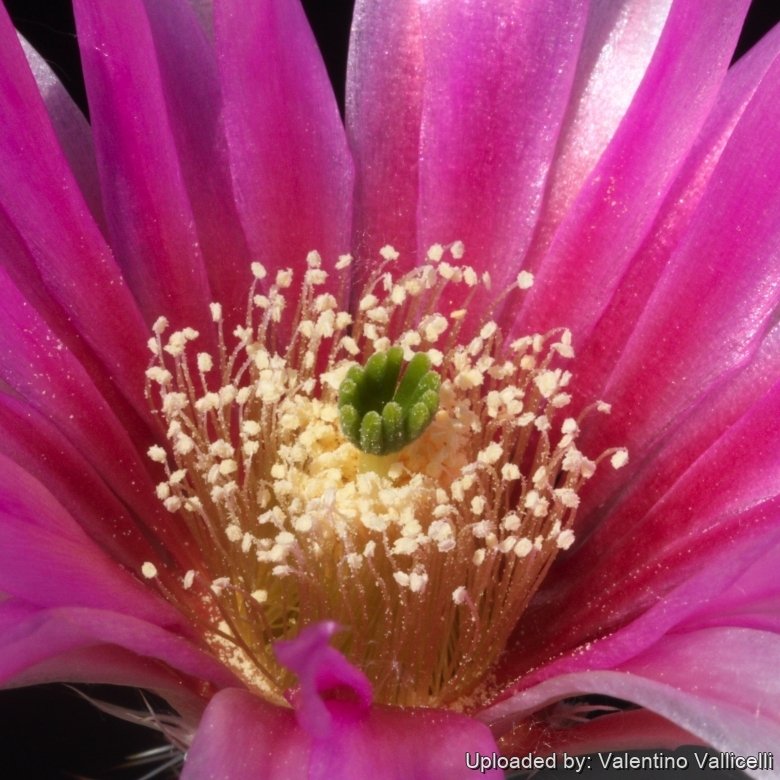
Flowers: Close to the stem tips, funnelform, 7 cm in diameter purple-violet (sometime pink to almost white) throat sometimes darker or purplish maroon, tips relatively thin and delicate. The stigma is green, and there is a very large number of stamens.
Blooming season: April to June.
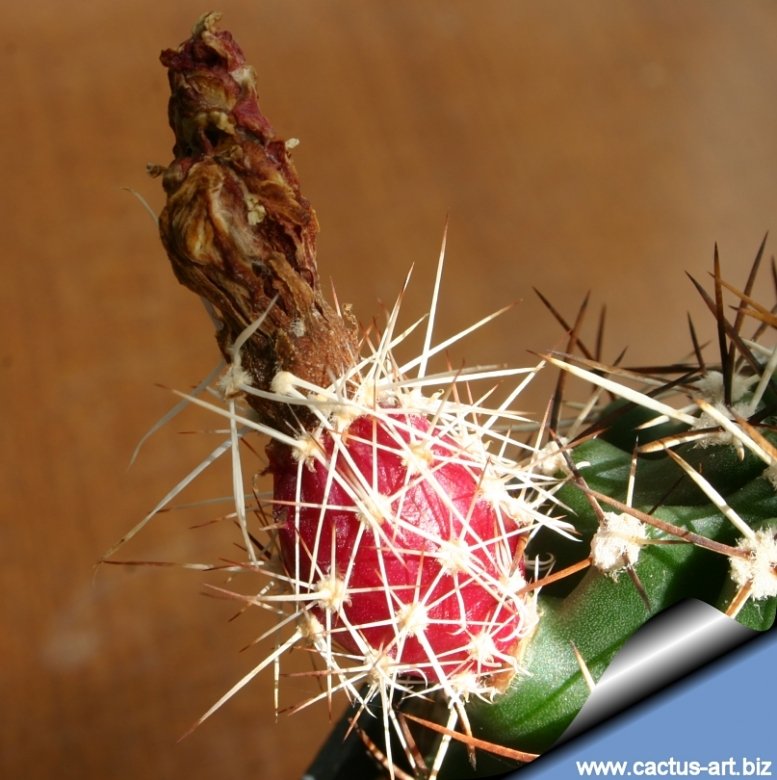
Fruit: 2,5-5 cm long, 12 mm in diameter, edible, bright red, dull carmine, or purplish maroon, less often orange-tan or purplish orange, pulp magenta or red.
Origin and Habitat
USA (New Mexico, Texas, Colorado, Arizona, Utah) and northern Mexico (northern Sonora, Chihuahua)
Habitat: Echinocereus fendleri is found on dry slopes and in rocky areas in semidesert grasslands, interior chaparral, pinyon-juniper or pine-oak woodlands, on limestone or igneous substrates, mostly south-facing hillsides; 900-2400 m;
Cultivation and Propagation
It grows rather slowly and is sensitive to over-watering (rot prone). Keep drier and cool in winter. It needs full sun. Very cold resistant, reportedly to -18°C or less (depending on clones), but needs good drainage and protection from excessive moisture in winter and well mulched with gravel chips. It is a fine plant for a rock garden or container, and contrasts well with agaves, yuccas, and low-growing flowering plants. It will show its flowers only provided with an adequate winter rest period.
Propagation: Seeds, can also be grown from cuttings, as it branches from the base.
Bibliography
Major references and further lectures
-
Edward Anderson “The Cactus family” Timber Press, Incorporated, 2001
-
Nathaniel Lord Britton, Joseph Nelson Rose “Cactaceae: Descriptions and Illustrations of Plants of the Cactus Family” vol. 4 The Carnegie Institution of Washington, Washington 1923
-
James Cullen, Sabina G. Knees, H. Suzanne Cubey “The European Garden Flora Flowering Plants: A Manual for the Identification of Plants Cultivated in Europe, Both Out-of-Doors and Under Glass” Cambridge University Press, 11/Aug/2011
-
David R Hunt; Nigel P Taylor; Graham Charles; International Cactaceae Systematics Group. “The New Cactus Lexicon” dh books, 2006
From llifle page Cereus roemeri
Description
The name roemeri has been used to indicate 2 distinct Echinocereus species generating more confusion among cactus fanciers and grower about it than about any other Echinocereus species. Echinocereus roemeri Engelm. ex F.Haage (firstly described as Cereus roemeri by Engelman in 1849)is a synonym of Echinocereus coccineus. The other, Echinocereus roemeri(Muehlenpf.) Rydb. (firstly described as Cereus roemeri by Muehlenpf. in 1848) is a homonym and is a synonym of Echinocereus fendleri)
Source: Cereus roemeri, LLIFLE - Encyclopedia of living forms, CC-BY-SA, retrieved 2026-10-25.
From llifle page Echinocereus kuenzleri
Description
Echinocereus fendleri var. kuenzleri is a weakly defined variety of the wide ranging and very variable Echinocereus fendleri distinguished by its unusually small spine clusters, with 2-6 radials that are up to 2,5 cm long and no central spine (or rarely one central), thus revealing more of the dark green stem surface as compared with standard var. fendleri. Moreover the flowers are very showy and comparatively larger ( up to 11 cm in diameter), the maximum flower size for the species, and it is therefore one of the most desirable ornamental species in the genus.
Note: Echinocereus fendleri var. kuenzleri (Castetter, P. Pierce & K. H. Schwerin) L. D. Benson and its Mexican counterpart, Echinocereus hempelii Fobe, are based mainly on the stem feature.
Habit: It is a low growing, scrubby cactus, that grows solitary or in small clumps with 5 to 20 stems.
Stems: 10 to 30 cm tall, 5 to 10 cm in diameter, dark green, soft, with a flabby surface.
Ribs: 9-12 very tuberculate
Areoles: Circular areoles 8 to 17 mm apart.
Radial spines: Few (2 to 6) up to 2,5 cm long, very thick, angular, flattened, somewhat corky, chalky-white, and often curved or twisted. This spines are quite unusual, superficially resembles Echinocereus triglochidiatus, and var. kuenzleri thus may be confused with young plants of Echinocereus triglochidiatus if not blooming.
Central spines: Usually absent (or rarely one central, brown or blackish up to 2,5 cm long).
Flowers: Close to the stem tips, funnelform, up to 11 cm in diameter purple and delicate, inner perianth segments relatively broad and fringed. Outer perianth segments thinner and entire.
Blooming season: Spring (in habitat April to June).
Fruit: 2,5-5 cm long, 12 mm in diameter, turning scarlet, less often orange-tan or purplish orange, pulp magenta or red. All varieties have delicious edible fruits.
Origin and Habitat
It has a restricted distribution just north of the Trans-Pecos in the Sacramento and Guadalupe mountains (Otero, Lincoln and may be Eddy counties) of southern New Mexico
Altitude: 1500-2000 meters above sea level.
Habitat: The plants are found in pinion-juniper woodlands mostly on gently sloping limestone outcrops on the east side of the Sacramento Mountains.
Bibliography
Major references and further lectures
-
Edward Anderson “The Cactus family” Timber Press, Incorporated, 2001
-
Nathaniel Lord Britton, Joseph Nelson Rose “Cactaceae: Descriptions and Illustrations of Plants of the Cactus Family” vol. 4 The Carnegie Institution of Washington, Washington 1923
-
James Cullen, Sabina G. Knees, H. Suzanne Cubey “The European Garden Flora Flowering Plants: A Manual for the Identification of Plants Cultivated in Europe, Both Out-of-Doors and Under Glass” Cambridge University Press, 11/Aug/2011
-
David R Hunt; Nigel P Taylor; Graham Charles; International Cactaceae Systematics Group. “The New Cactus Lexicon” dh books, 2006
-
A. Michael Powell, James F. Weedin “Cacti of the Trans-Pecos & Adjacent Areas” Texas Tech University Press, 2004
-
Del Weniger “Cacti of Texas and Neighboring States: A Field Guide” University of Texas Press, 1984
-
United States. Bureau of Land Management. Las Cruces District Office “Grazing management: McGregor Eis Area, New Mexico” U.S. Dept. of the Interior, Bureau of Land Management, Las Cruces District Office, 1980
Source: Echinocereus kuenzleri, LLIFLE - Encyclopedia of living forms, CC-BY-SA, retrieved 2026-10-25.
Cultivars and forms (6)
Subspecies (3)
Forms (1)
Gallery