Publication: Cact. Succ. J. (Los Angeles) 50: 80, figs. 1978
Description
Solitary or slowly clumping cacti.
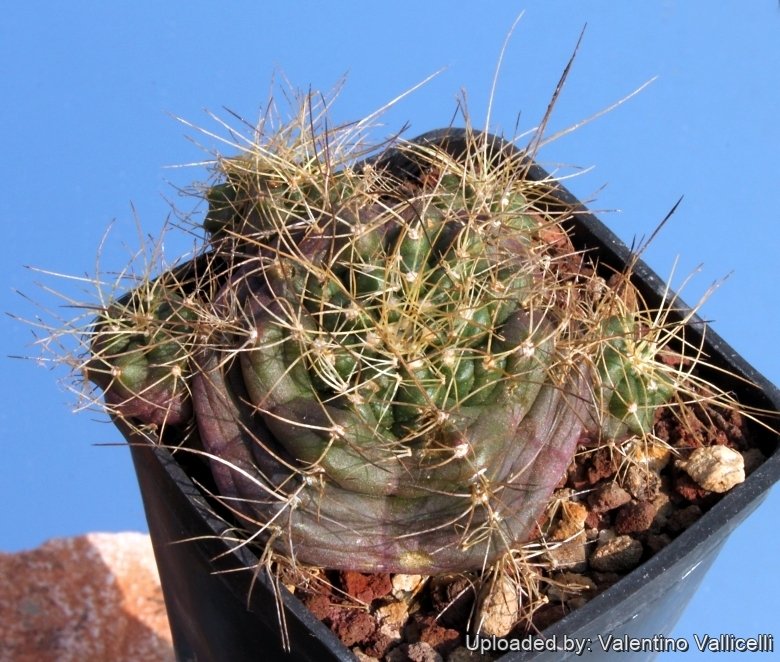
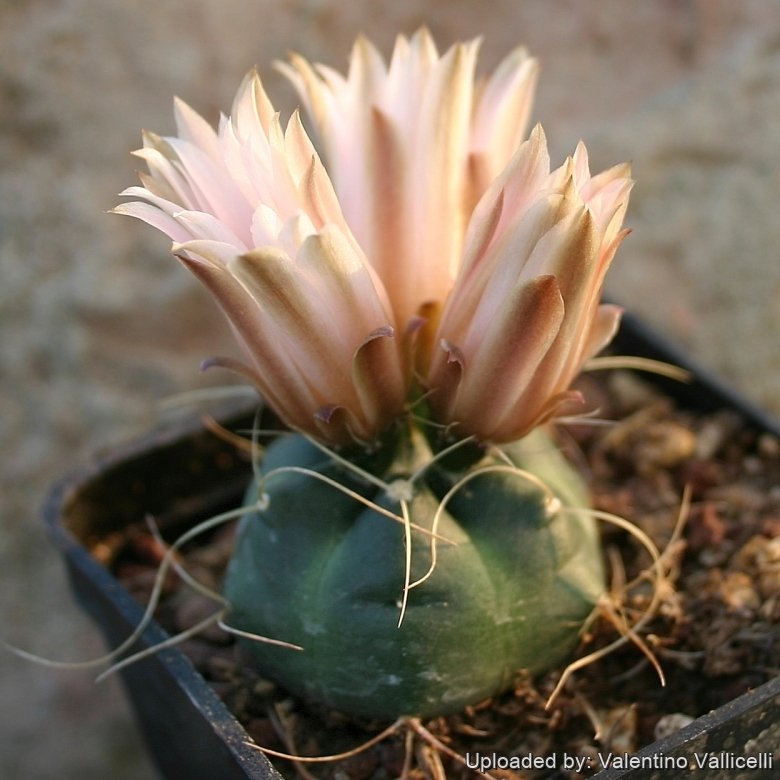
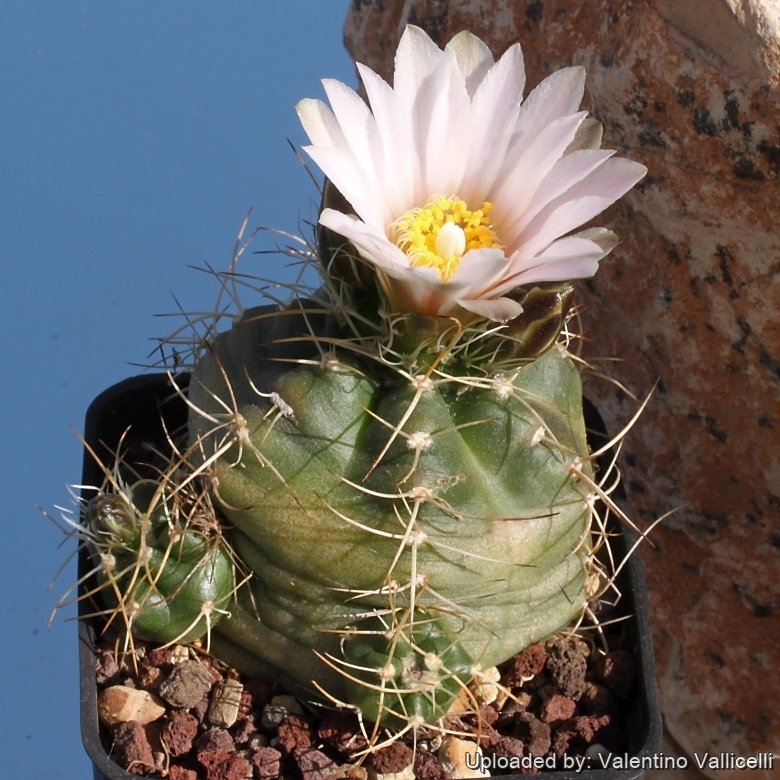
Stem: Plump, soft, flattened or globose , dark green with slightly lighter ridges, up to 10 cm tall, 8 cm in diameter.
Ribs: 5 to 7 ribs, either tuberculate or slightly wavy, separated by broad furrows.
Areoles: Small with whitish felt, 5 mm inches apart.
Spines: Nearly spineless, with 1 to 3 thin yellow spines, 3 to 15 mm long.
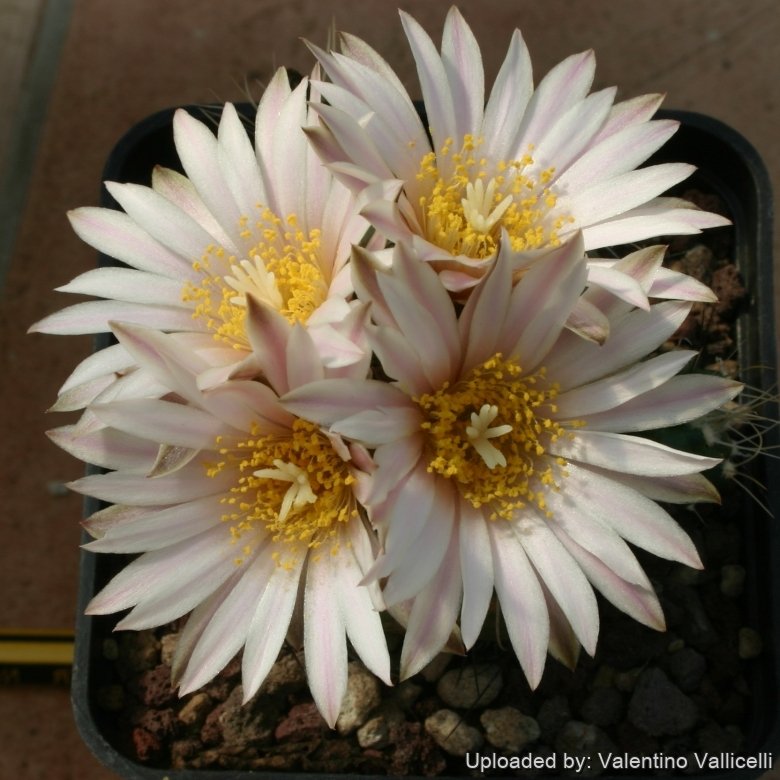
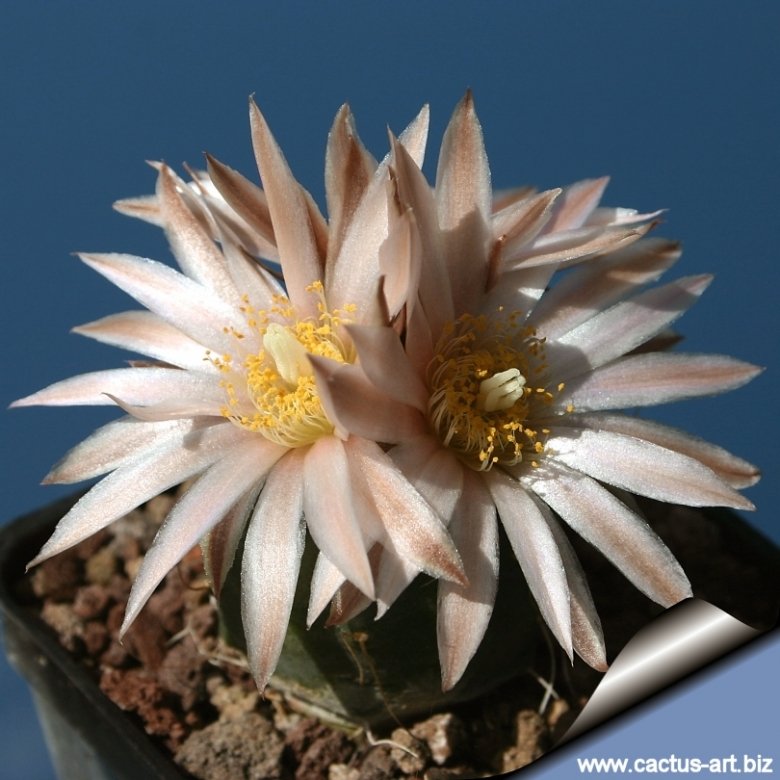
Flowers: Pink or white funnel-shaped flowers, 2.5-4 cm long, up to 6 cm in diameter, appearance in spring and summer. Flowers push through the body from the crown.
Fruits: Green berries near the stem tip
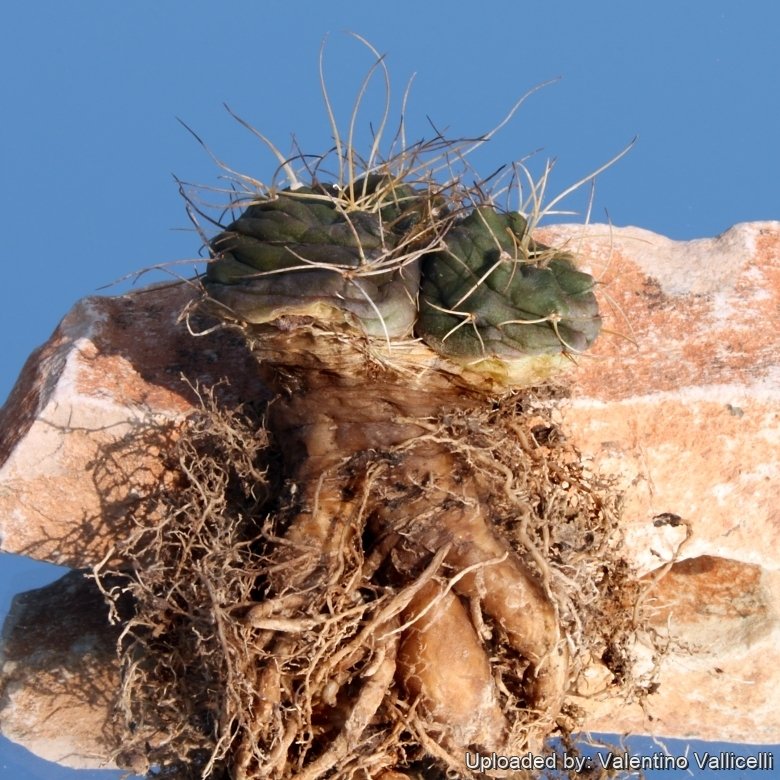
Roots: Thick tuberous root that pulls the plant below ground to avoid the hot sun.
Origin and Habitat
Mexico, Sierra Madre Oriental Mountains at over 2200 m elevation. TL: Mexico, Nuevo Leon, north of Ascencion near San Juanito, Glass & Foster 3902, 1 Mar. 1972 (POM).
Habitat: This high mountain cactus is found growing in the semi-shade of rocks and pines.
Cultivation and Propagation
In culture Echinocereus knippellianus is without problems and regularly shows its pink flowers, if we provide an adequate winter rest period. It is sensitive to over-watering (rot prone), and needs good drainage. Fertilize with half- strength liquid fertilizer in summer. Keep drier and cool in winter. Needs full sun. Very cold resistant, hardy to -12° C or less for short periods of time.
Propagation: Seeds or cutting (if available)
Gallery