Publication: Monatsschr. Kakteenk. v. (1895) 170.
Description
Solitary or slowly clumping cacti.
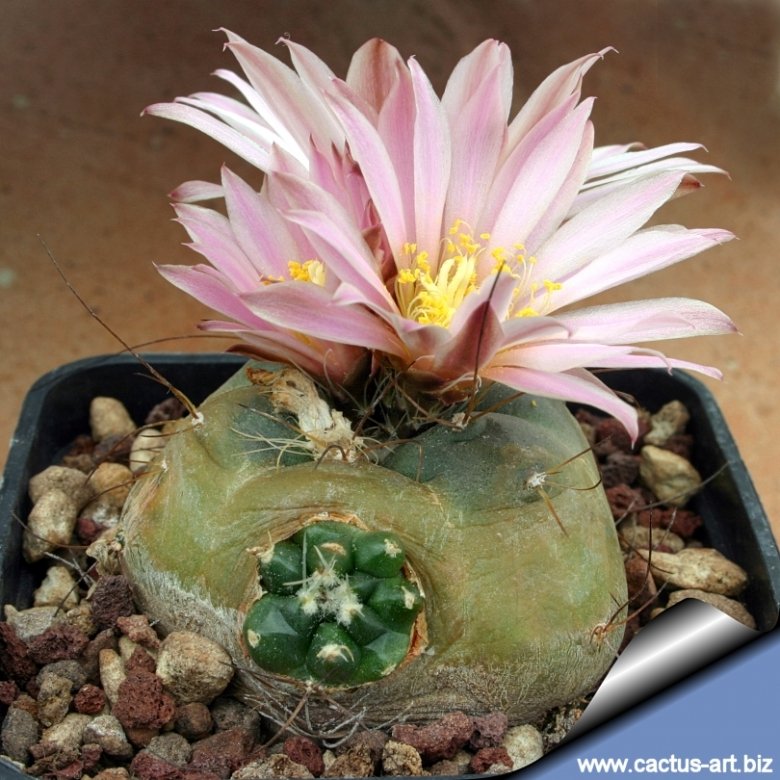
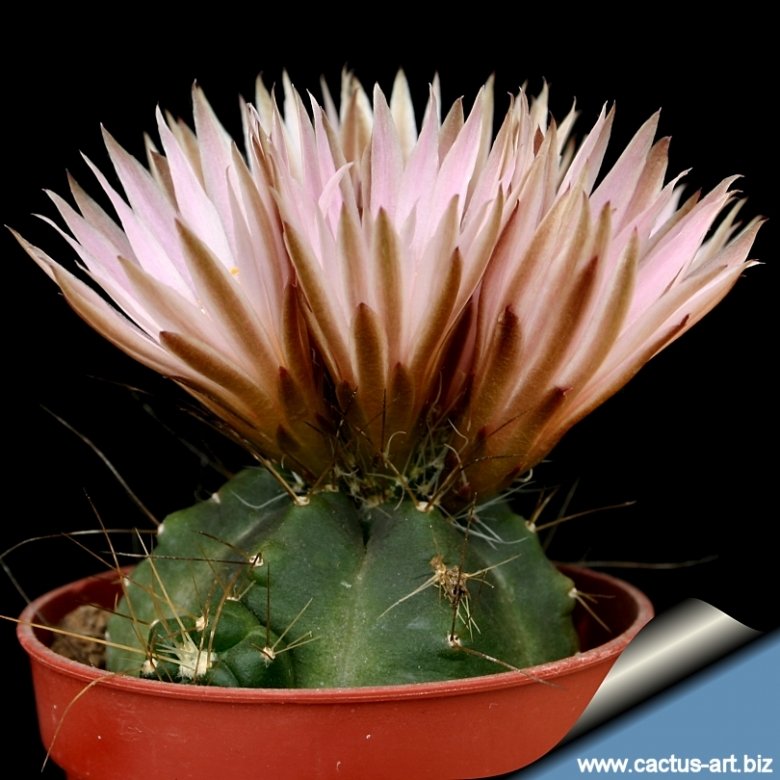
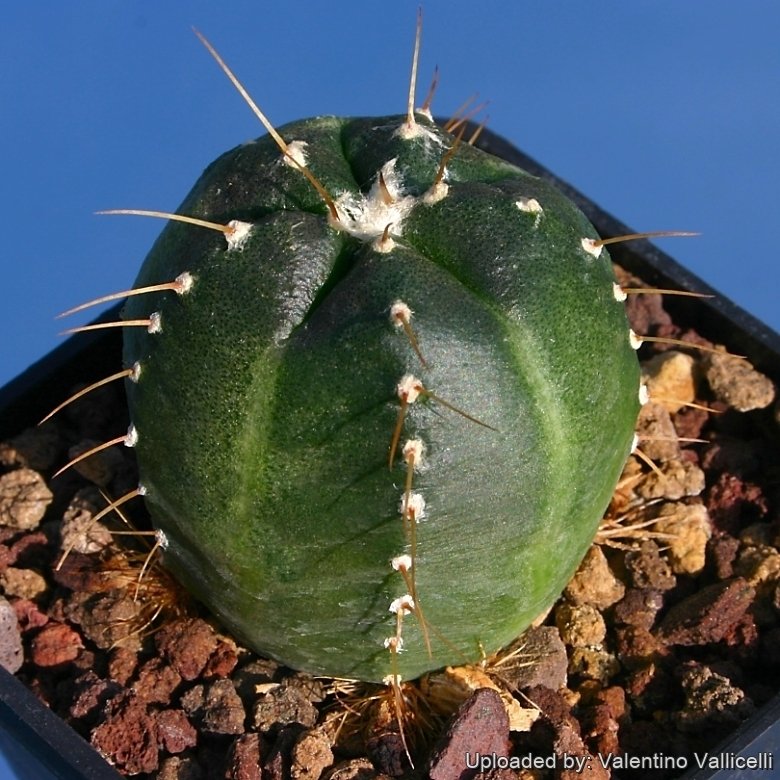
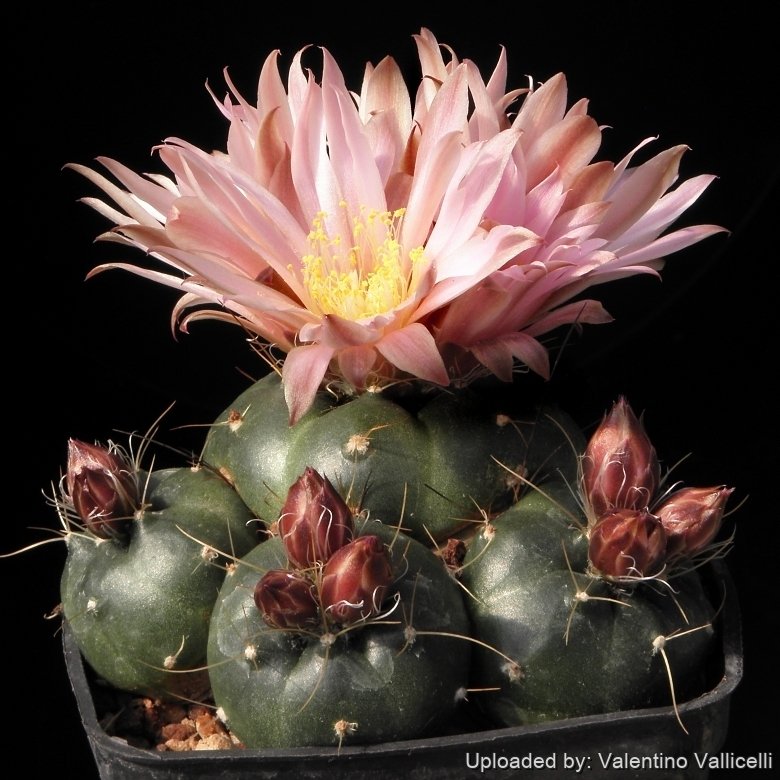
Stem: Plump, soft, flattened or globose , dark green with slightly lighter ridges, up to 10 cm tall, 8 cm in diameter.
Ribs: 5 to 7 ribs, either tuberculate or slightly wavy, separated by broad furrows.
Areoles: Small with whitish felt, 5 mm inches apart.
Spines: Nearly spineless, with 1 to 3 thin yellow spines, 3 to 15 mm long.
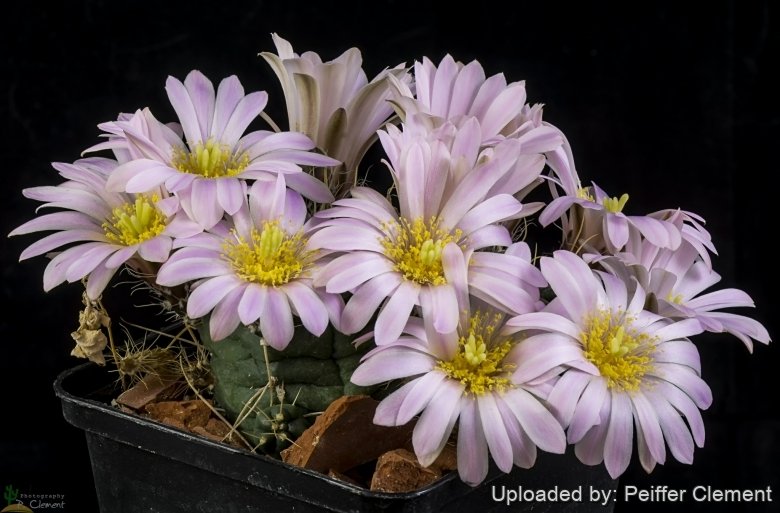
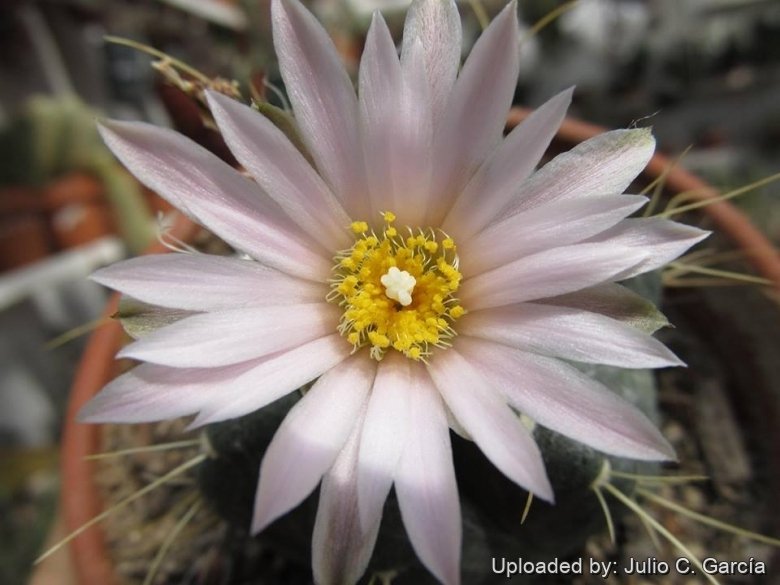
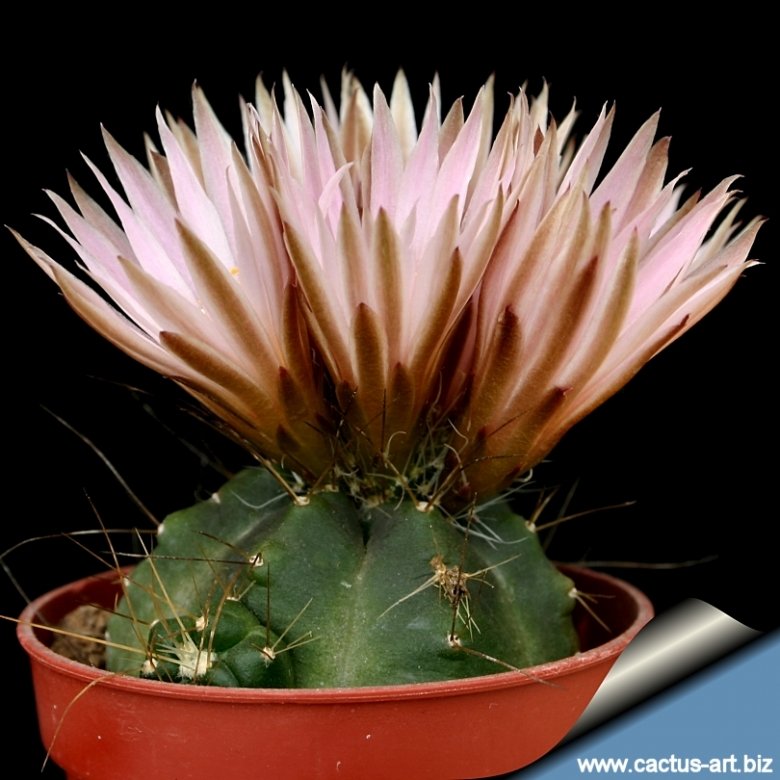
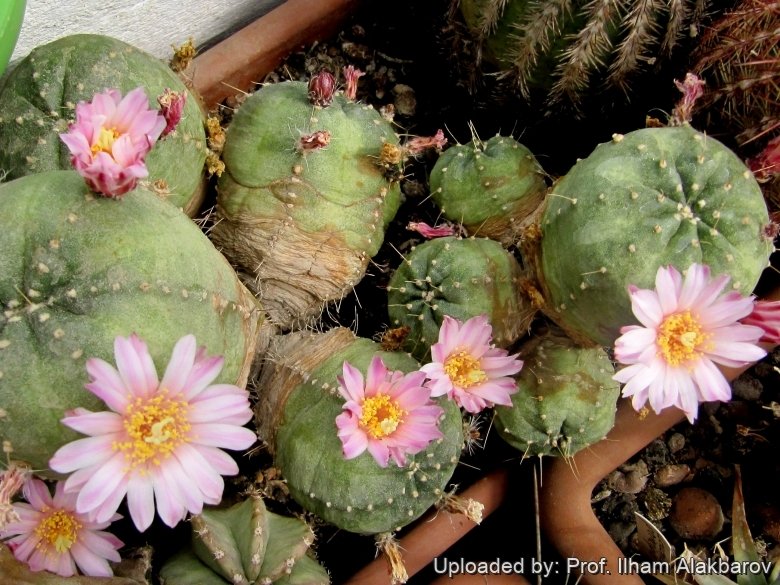
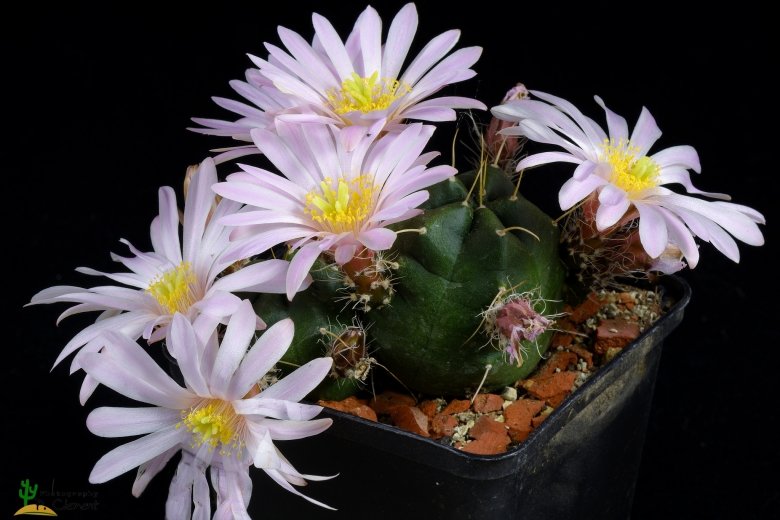
Flowers: Pink or white funnel-shaped flowers, 2.5-4 cm long, up to 6 cm in diameter, appearance in spring and summer. Flowers push through the body from the crown.
Fruits: Green berries near the stem tip
Roots: Thick tuberous root that pulls the plant below ground to avoid the hot sun.
Origin and Habitat
Mexico, Sierra Madre Oriental Mountains (Coahuila, Nuevo Leon). The population is estimated to be greater that one million individuals.
Elevation range: Around 2,000-2,200 metres above sea level.
Type locality: Unknown [Relocated in Sierra Parras, Coahuila, Mexico].
Habitat: This high mountain cactus is found growing on limestone soil in grassland and pine forests often the semi-shade of rocks and pines. There is some illegal collection of this species, but it is not a major threat.
Cultivation and Propagation
In culture E. knippellianus is without problems and regularly shows its pink flowers, if we provide an adequate winter rest period. It is sensitive to over-watering (rot prone), and needs good drainage. Fertilize with half- strength liquid fertilizer in summer. Keep drier and cool in winter. Needs full sun. Very cold resistant, hardy to -12° C or less for short periods of time.
Propagation:: Seeds or cutting (if available)
Bibliography
Major references and further lectures
-
Ulises Guzmán, Salvador Arias, Patricia Dávila “Catálogo de cactáceas mexicanas.” Universidad Nacional Autónoma de México, Mexiko-State 2003
-
Fitz Maurice, B & Fitz Maurice, W.A. 2013. Echinocereus knippelianus. The IUCN Red List of Threatened Species. Version 2014.2. <www.iucnredlist.org>. Downloaded on 14 August 2014.
-
Edward Anderson “The Cactus family” Timber Press, Incorporated, 2001
-
James Cullen, Sabina G. Knees, H. Suzanne Cubey “The European Garden Flora Flowering Plants: A Manual for the Identification of Plants Cultivated in Europe, Both Out-of-Doors and Under Glass” Cambridge University Press, 11/Aug/2011
-
David R Hunt; Nigel P Taylor; Graham Charles; International Cactaceae Systematics Group. “The New Cactus Lexicon” dh books, 2006
-
Urs Eggli, Leonard E. Newton: “Etymological Dictionary of Succulent Plant Names” Springer, Berlin/Heidelberg 2010
Cultivars and forms (3)
Varieties (1)
Gallery