Publication: Nova Acta Phys.-Med. Acad. Caes. Leop.-Carol. Nat. Cur. 16(1): 342, t. 23, f. 2. 1832
Description
Echinocereus pulchellus ranges over almost 1600 km from north to south down the backbone of Mexico, and many forms and subspecies are recognized.
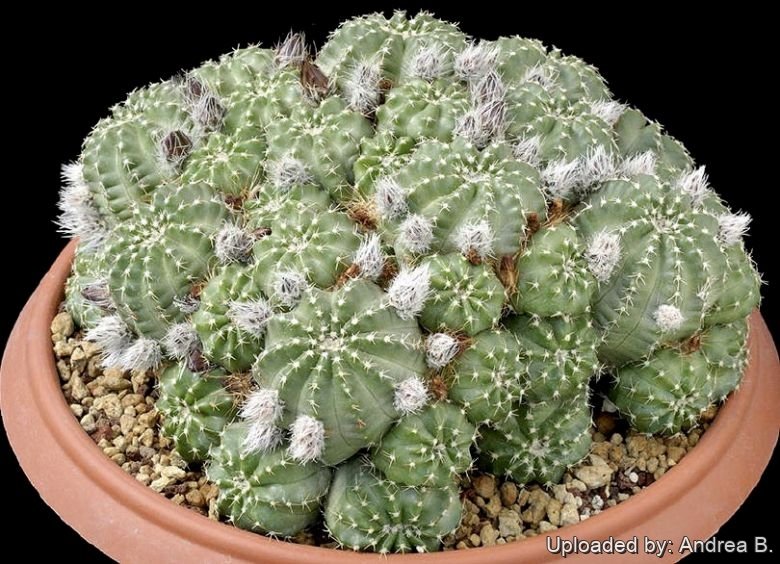
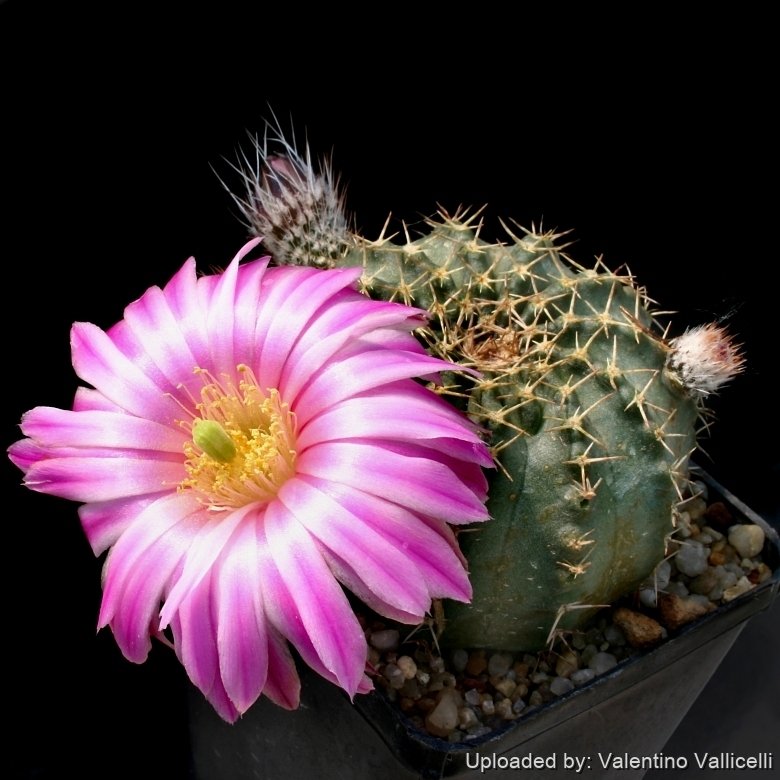
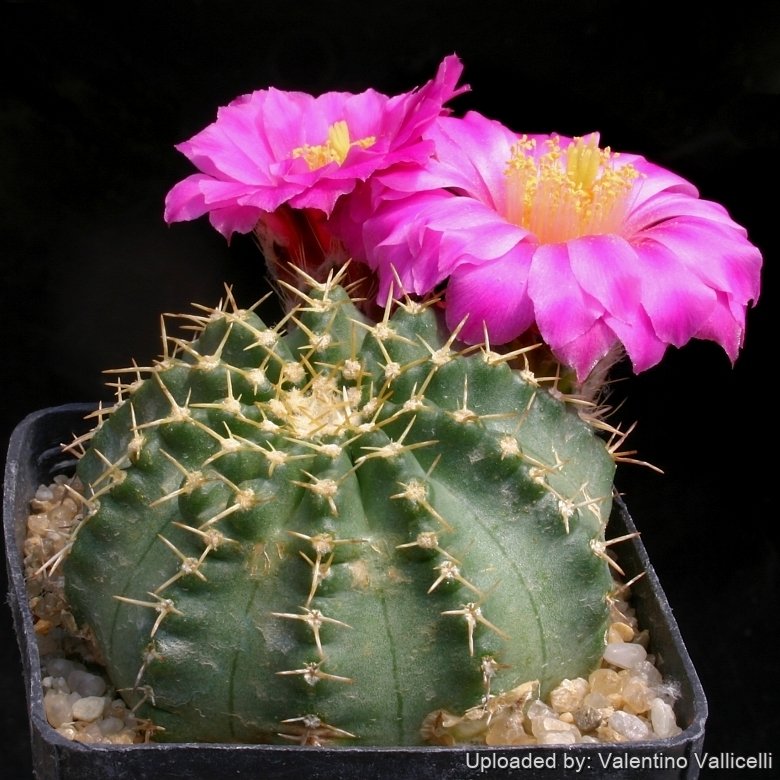
Habit: It is a tiny flat species that offsets sparingly, if at all.
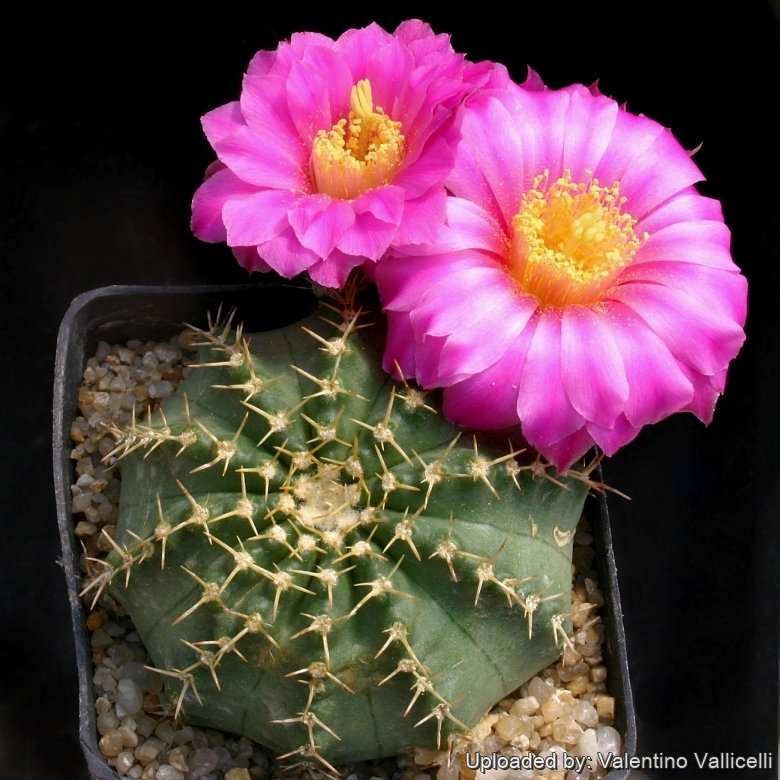
Stems: Hemispherical, only 2-4 cm in diameter with short tubercles. The tubercles are arranged in ribs, sometimes subtly spiraled.
Spines: Inconspicuous in clusters of 3–7 spines.
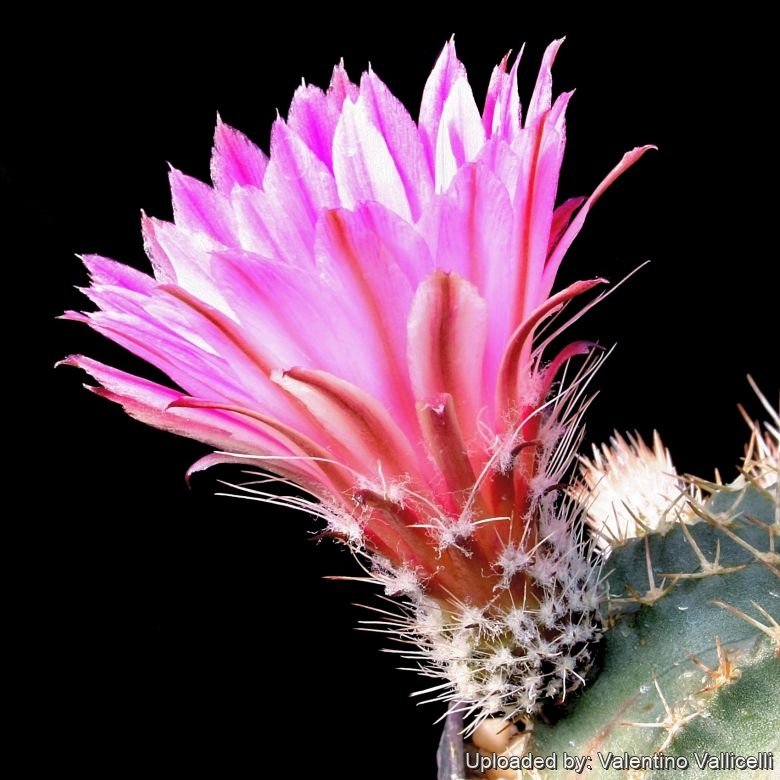
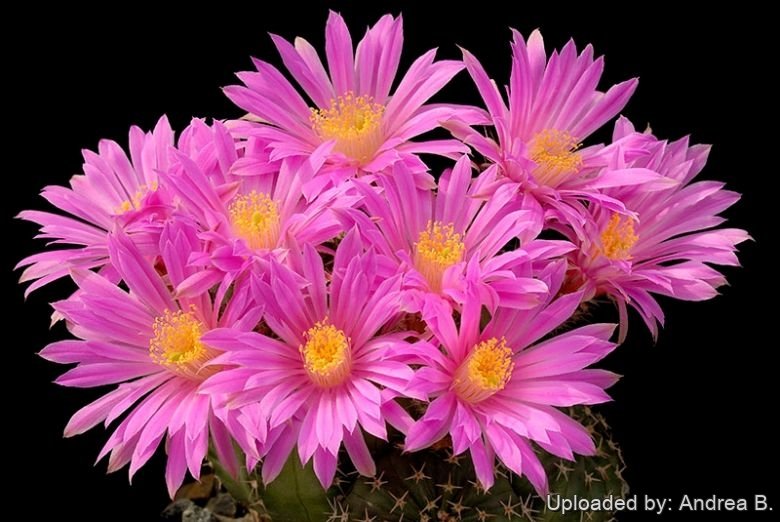
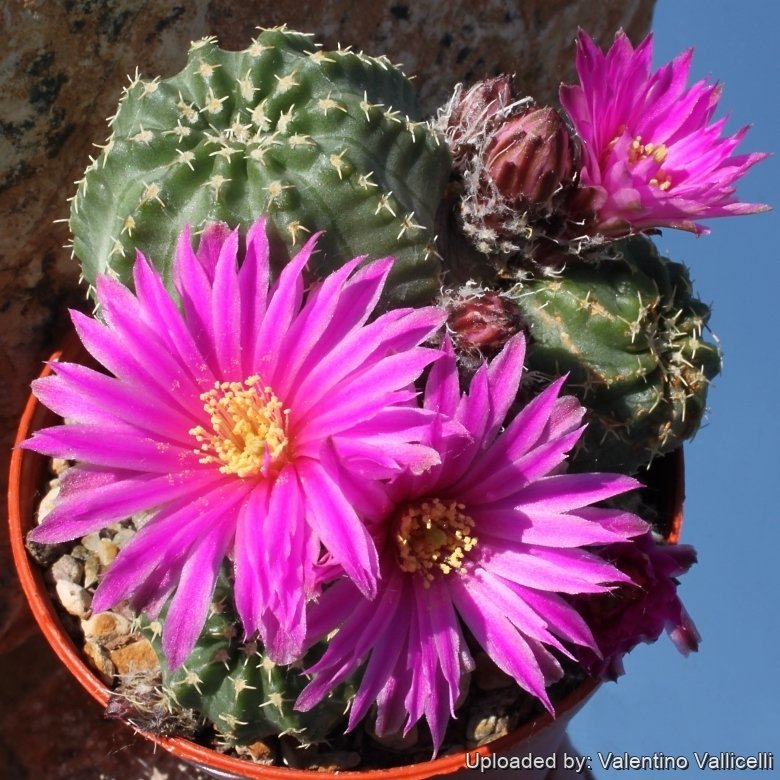
Flowers: At the top of stems, showy, pinkish-white to hot-pink up to 4 cm across.
Origin and Habitat
Mexico (northern Oaxaca, Puebla, Hidalgo, San Luis Potosi, and Queretaro)
Ecology: It is a geophyte cactus with a swollen underground storage taproot, in the wild tends to disappear completely in the ground in time of drought.
Cultivation and Propagation
It is relatively easy to grow on its own roots.
Growth rate: It is a relatively slow growing and easily flowering species that will make clumps given the best conditions.
Soils: It likes very porous standard cactus mix soil.
Repotting: It has a strong tap root and should have a deep pot to accommodate it. Use pot with good drainage.
Watering: Water carefully, too much water will make it rot, keep dry in winter.
Fertilization: Feed with a high potassium fertilizer in summer.
Hardiness: Keep dry at minimum temperature of 5° C in winter although will tolerate brief periods to -10 degrees. Sun Exposure: Full sun to light shade. However warmth throughout the year will increase the grower’s success (5-12°C during rest season).
Exposition: Outside full sun to light shade or afternoon shade, inside it needs bright light, and some direct sun. Subject to sunburn if exposed to direct sun for too long. Tends to bronze in strong light, which encourages flowering.
Uses: It is an excellent plant for container growing. It always looks good and stays small. It look fine in a cold greenhouse and frame or outdoor in a rockery.
Pests & diseases: It may be attractive to a variety of insects, but plants in good condition should be nearly pest-free, particularly if they are grown in a mineral potting-mix, with good exposure and ventilation. Nonetheless, there are several pests to watch for:
- Red spiders: Red spiders may be effectively rubbed up by watering the plants from above.
- Mealy bugs: Mealy bugs occasionally develop aerial into the new growth among the wool with disfiguring results, but the worst types develop underground on the roots and are invisible except by their effects.
- Scales: Scales are rarely a problem.
- Rot: Rot is only a minor problem with cacti if the plants are watered and “aired” correctly. If they are not, fungicides won’t help all that much.
Propagation: It grow easily from seed or cutting (if available).
Bibliography
Major references and further lectures
-
Edward Anderson “The Cactus family” Timber Press, Incorporated, 2001
-
James Cullen, Sabina G. Knees, H. Suzanne Cubey “The European Garden Flora Flowering Plants: A Manual for the Identification of Plants Cultivated in Europe, Both Out-of-Doors and Under Glass” Cambridge University Press, 11/Aug/2011
-
David R Hunt; Nigel P Taylor; Graham Charles; International Cactaceae Systematics Group. “The New Cactus Lexicon” dh books, 2006
-
Nathaniel Lord Britton, Joseph Nelson Rose “Cactaceae: Descriptions and Illustrations of Plants of the Cactus Family” Volume 3, 1922
From llifle page Cereus amoenus
Description
Solitary or slowly clumping
Stems: Flat globular up to 6 cm (but cultivated plants are frequently higher), 5-7cm in diameter, bluish green when young;
Ribs: 9 to 13;
Areoles: 5 to7 mm inch apart; 3 to 7 pale yellowish spines.
Roots: It has a strong taproot.
Flowers: Abundant pink or purple/red (rarely white) flowers, up to 6 cm in diameter.
Remarks: Many of the plants usually known in cultivation as “Echinocereus amoenus” are instead a form of Echinocereus weinbergii.
Bibliography
Major references and further lectures
-
Edward Anderson “The Cactus family” Timber Press, Incorporated, 2001
-
James Cullen, Sabina G. Knees, H. Suzanne Cubey “The European Garden Flora Flowering Plants: A Manual for the Identification of Plants Cultivated in Europe, Both Out-of-Doors and Under Glass” Cambridge University Press, 11/Aug/2011
-
David R Hunt; Nigel P Taylor; Graham Charles; International Cactaceae Systematics Group. “The New Cactus Lexicon” dh books, 2006
-
Nathaniel Lord Britton, Joseph Nelson Rose “Cactaceae: Descriptions and Illustrations of Plants of the Cactus Family” Courier Dover Publications, 1963
Source: Cereus amoenus, LLIFLE - Encyclopedia of living forms, CC-BY-SA, retrieved 2026-10-25.
From llifle page Echinocereus aguirrei
Description
Echinocereus aguirrei is one of the several forms of the very variable Echinocereus pulchellus which form a complex of related taxon. It is still unclear whether this variable complex is one or several species. There is so much variation that most authors choose to lump them together. Echinocereus aguirrei typically forms small clumps and produces great pink flower and is very similar to Echinocereus amoenus and the two are frequently confused. The ‘aguirrei’ form differs from subspecies ‘pulchellus’ in that the stems are not so crunched against each other, they’re a bit taller, and the tubercles stand out more. The body colour is also different, being a lighter green to grey green, tending toward bluish on some individuals.
Habit: Solitary or slowly clumping, often shrinking into the ground during drought.
Roots: It has a strong taproot.
Stems: Flat globular up to 6 cm (but cultivated plants are frequently higher), 5-7 cm in diameter, bluish green when young;
Ribs: 9 to 13;
Areoles: 5 to7 mm inch apart; 3 to 7 pale yellowish spines.
Flowers: Abundant pink or purple/red (rarely white) flowers, up to 6 cm in diameter.
Blooming season: Spring. Plants start flowering when only few centimeter in diameter.
Fruits: Globose, small, nearly dry at maturity, with few seeds.
Bibliography
Major references and further lectures
-
Edward Anderson “The Cactus family” Timber Press, Incorporated, 2001
-
James Cullen, Sabina G. Knees, H. Suzanne Cubey “The European Garden Flora Flowering Plants: A Manual for the Identification of Plants Cultivated in Europe, Both Out-of-Doors and Under Glass” Cambridge University Press, 11/Aug/2011
-
David R Hunt; Nigel P Taylor; Graham Charles; International Cactaceae Systematics Group. “The New Cactus Lexicon” dh books, 2006
-
Nathaniel Lord Britton, Joseph Nelson Rose “Cactaceae: Descriptions and Illustrations of Plants of the Cactus Family” Courier Dover Publications, 1963
-
Cactus and Succulent Journal - Volume 80, 1-6 2008 - Page 132
Source: Echinocereus aguirrei, LLIFLE - Encyclopedia of living forms, CC-BY-SA, retrieved 2026-10-25.
Cultivars and forms (11)
Subspecies (5)
Varieties (4)
Gallery