Publication: non E. albispinus Lahman see: E. baileyi var. albispinus
Description
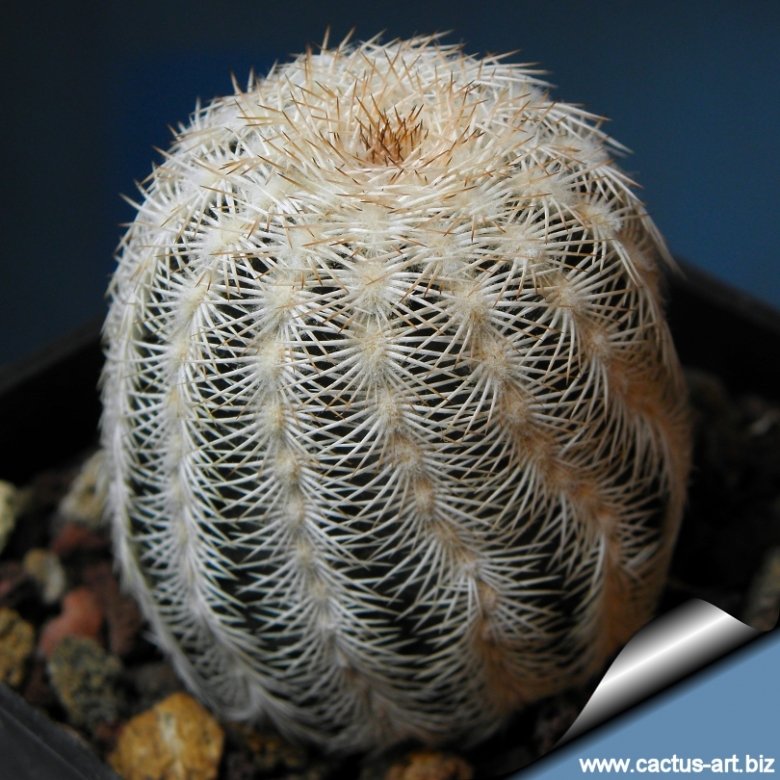
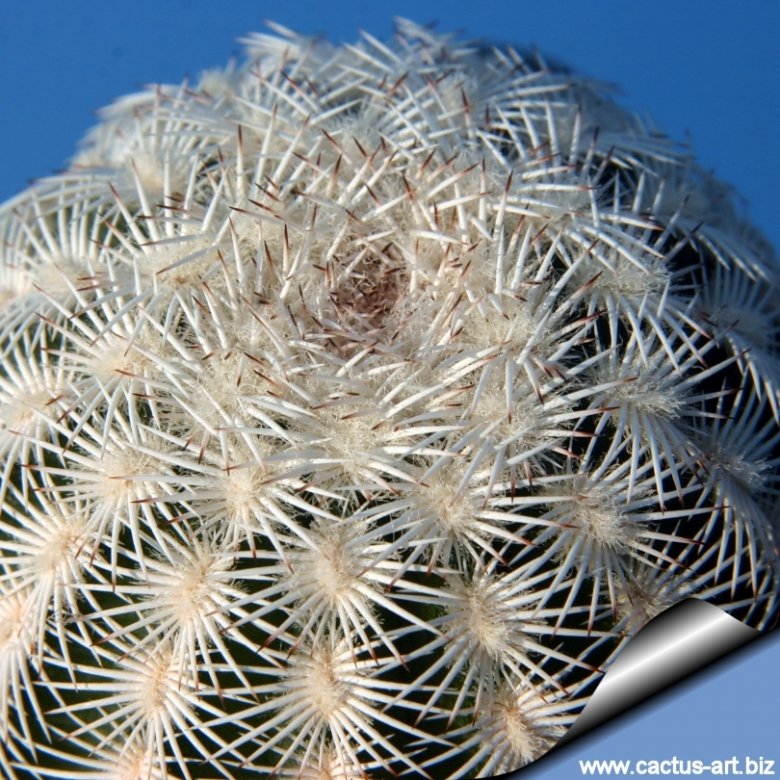
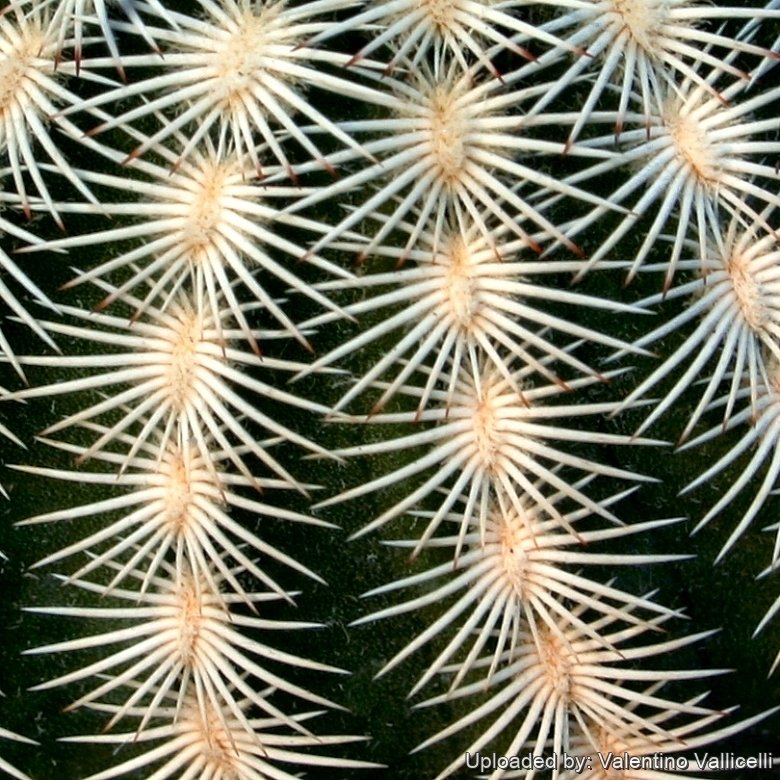
Echinocereus reichenbachii f. albispinus is an undescribed name (n.n.) used in some catalogue to describe a morphological form of Echinocereus reichenbachii. This peculiar plant can be easily tell apart from standard Echinocereus reichenbachii for its pure white spines. This plant is intermediates between Echinocereus baileyi and Echinocereus reichenbachii subsp. caespitosus.
Remark: Do not confound this plant with Echinocereus reichenbachii var. albispinus| (Lahman) L.D.Benson, which is a white form of Echinocereus baileyi.
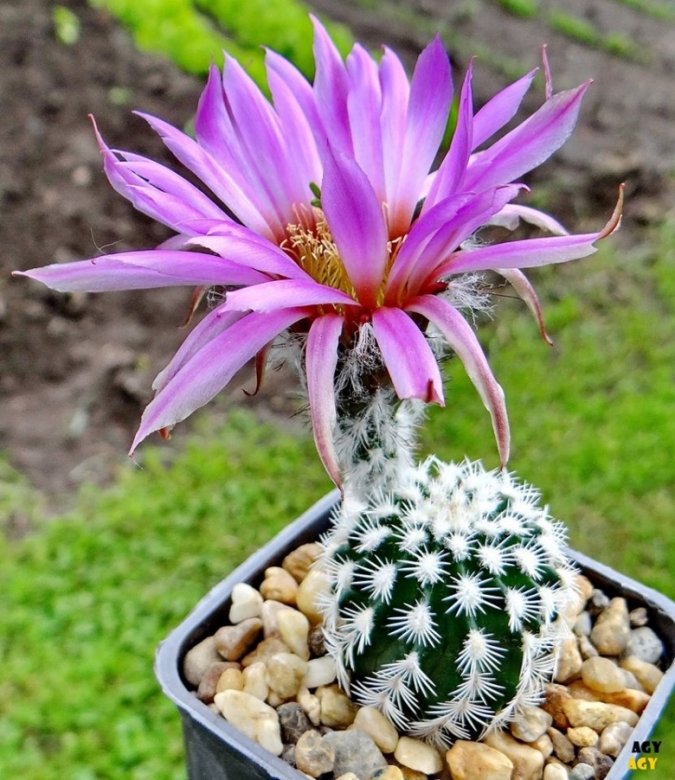
Habit: It is a solitary or slowly branching cylindrical shaped cactus with up to 12 branches. It is one of the smaller Echinocereus species.
Stem: Erect, cylindrical or short cylindrical, 7 to 10 cm tall, 2,5 to 8 cm in diameter.
Ribs: 10-19 straight or slightly undulate.
Areoles: 1-6(-10) mm apart.
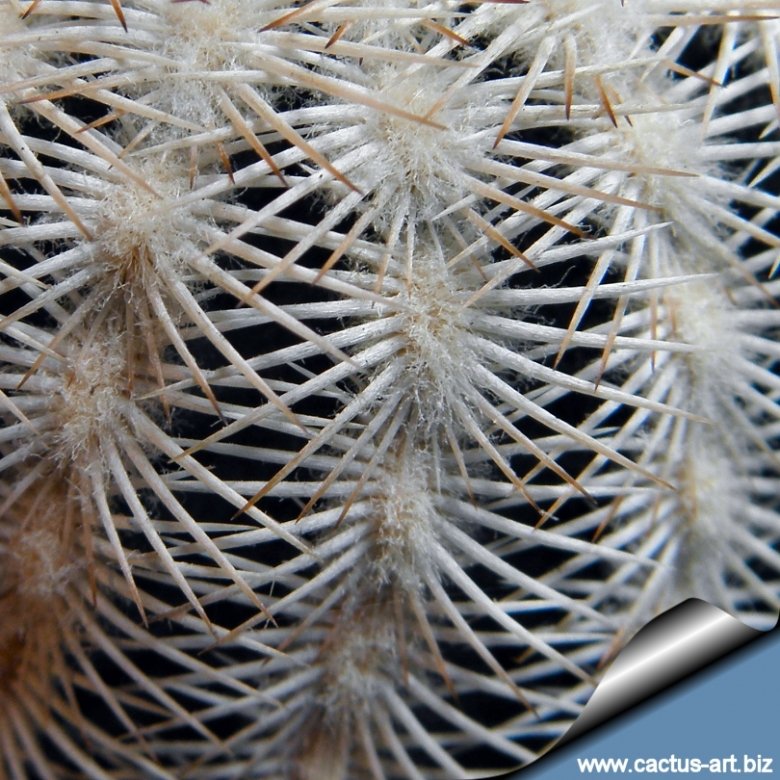
Radial spines: 20 to 36, straight to slightly curved, held closely against the the ribs of the stems, organized in 2 series, pectinately arranged or nearly so, 5 to 8 mm long, pure white, eventually whit darker tip.
Central spines: Sbsent
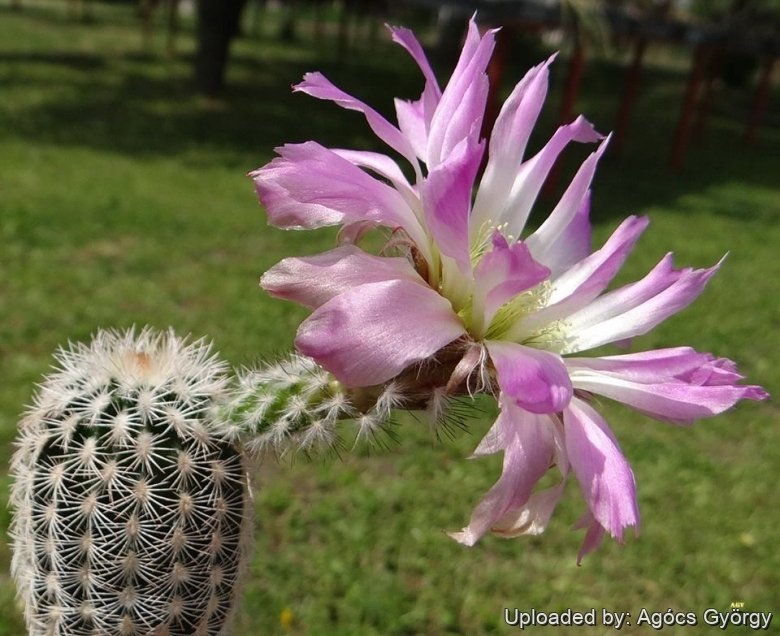
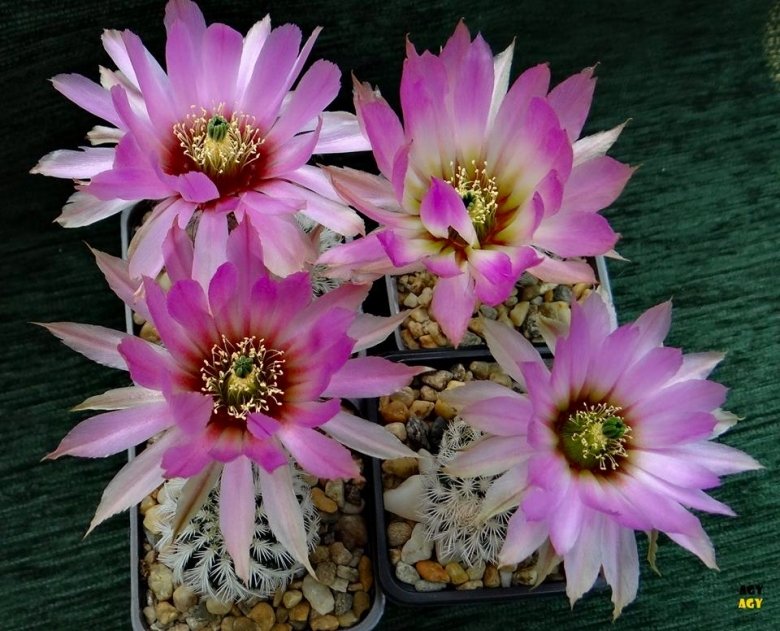
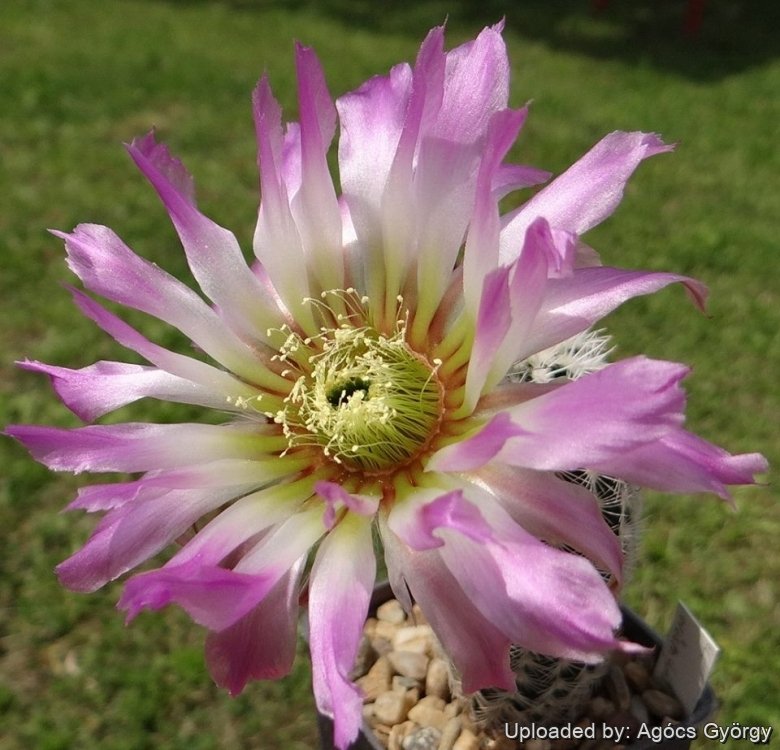
Flowers: Beautiful, abundant, scented, intense pink flowers, 5 to 7 cm long (5-7 cm). Flower tube 22-40 × 10-30 mm; flower tube hairs 5-15 mm; inner tepals silvery pink to magenta, usually white, crimson, green, or multicoloured proximally, 23-40 × 5-15 mm, tips relatively thin, delicate; anthers yellow; nectar chamber 2-5 mm.
Blooming season: Early May to Late June.
Fruits: Ovoid green, olive green, or dark green, fruit up to 28 mm long; fruiting 1.5-2.5 months after flowering.
Seeds: Black.
Origin and Habitat
Echinocereus reichenbachii f. albispinus is a selected form known only in cultivation.
Cultivation and Propagation
It is sensitive to overwatering (rot prone) needs a very good drainage to avoid rotting, but requires more moisture than true desert cacti to grow and produce flowers, Keep drier and cool in winter. Need full sun. It is very cold resistant from -10° to -25° C (depending on clones) or less for short periods of time. It is a fine plant for a rock garden or container, contrasts well with agaves, yuccas, and low-growing flowering plants.
Propagation: Seeds, also can be grown from cutting as it slowly branches from the base.
Bibliography
Major references and further lectures
-
Edward F. Anderson (2001) “ The Cactus Family”.
-
Curt Backeberg “Cactus Lexicon” Sterling Publishing Company, Incorporated, 1978
-
David Hunt, Nigel Taylor “The New Cactus Lexicon” DH Books, 2006
-
Del Weniger “Cacti of the Southwest: Texas, New Mexico, Oklahoma, Arkansas, and Louisiana” University of Texas Press, 1969
-
James Cullen, Sabina G. Knees, H. Suzanne Cubey “The European Garden Flora Flowering Plants: A Manual for the Identification of Plants Cultivated in Europe, Both Out-of-Doors and Under GlassCambridge University Press, 11/August/2011
-
Lyman David Benson “The Cacti of the United States and Canada” Stanford University Press, 1982
Gallery