Publication: Cactaceae (Britton & Rose) 3: 25. 1922 [12 Oct 1922] ; vide Gray Herb. Card Cat
Description
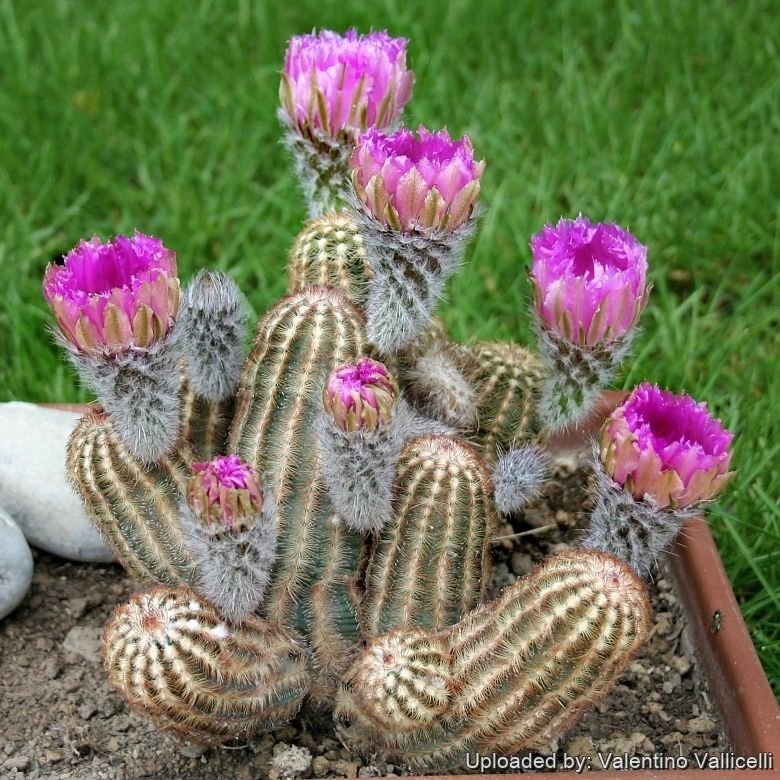
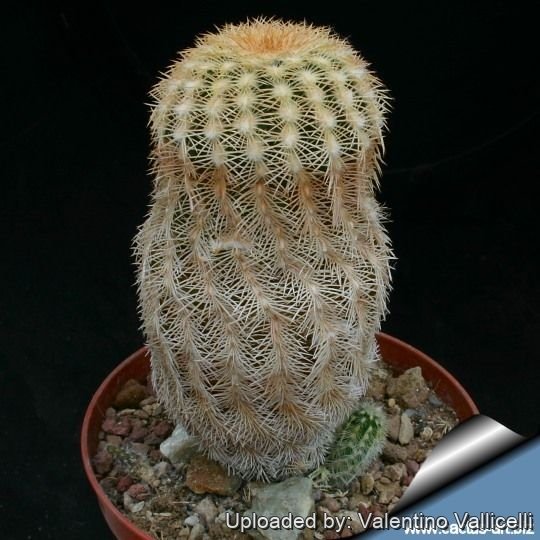
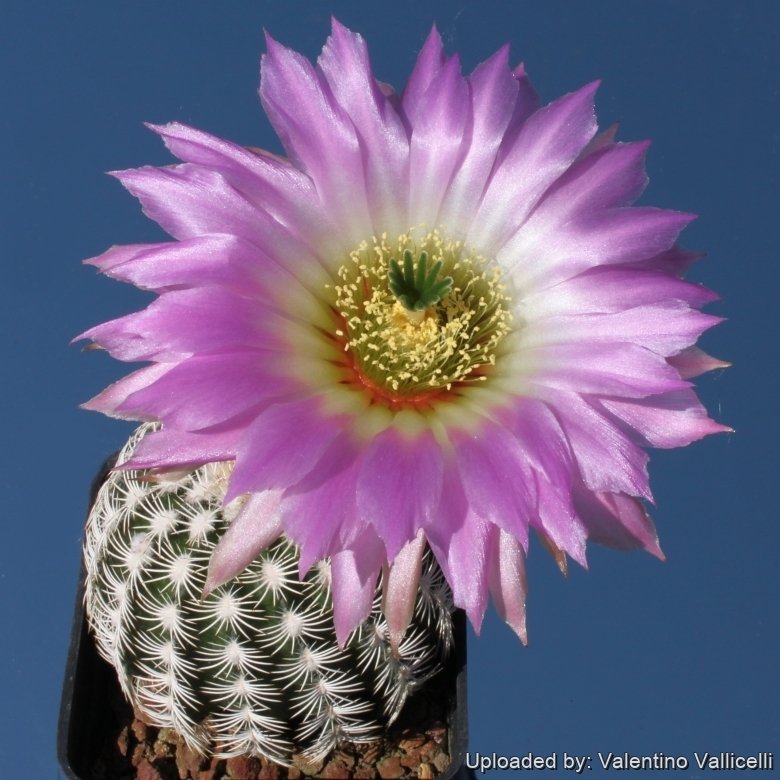
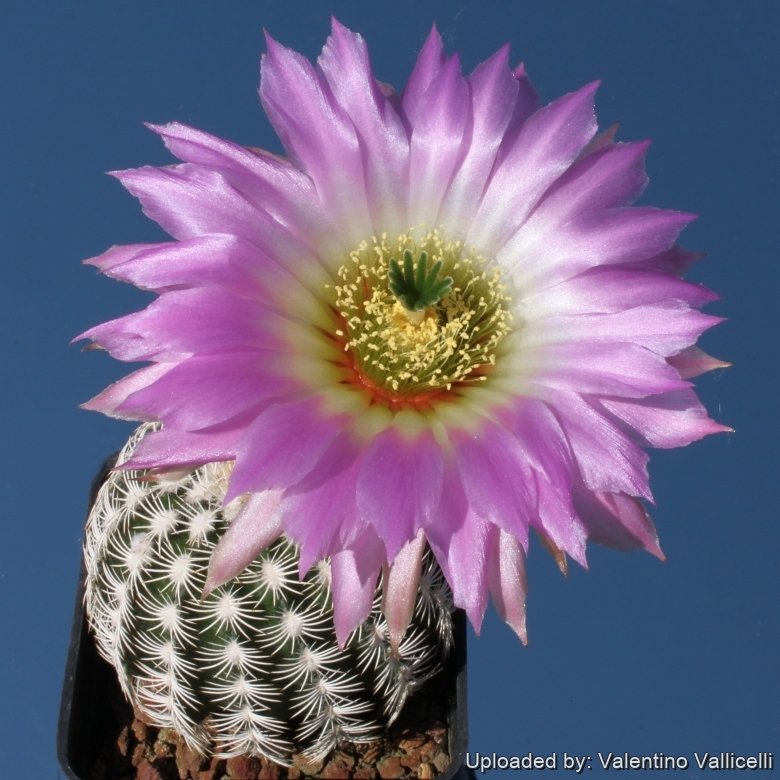
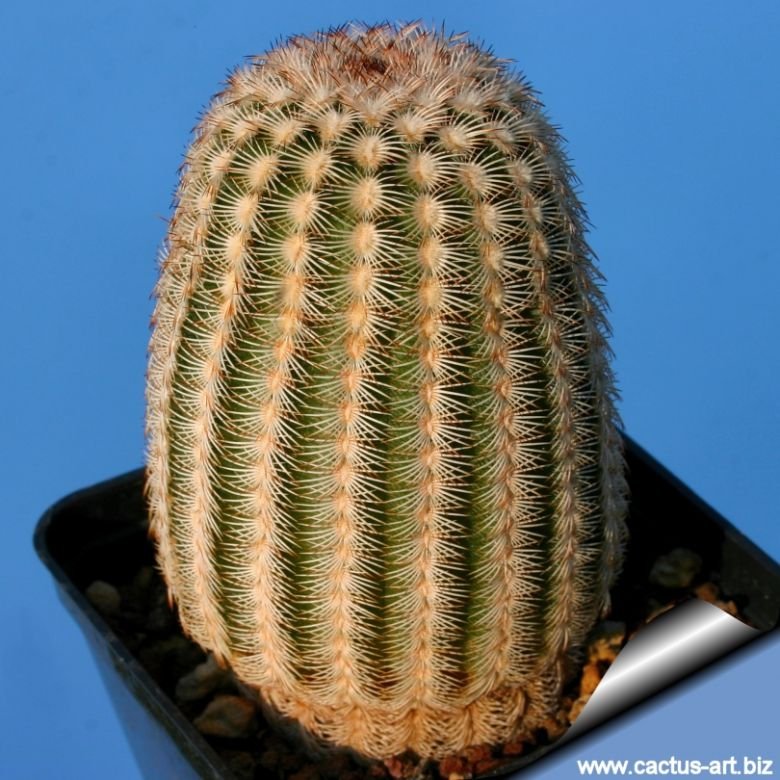
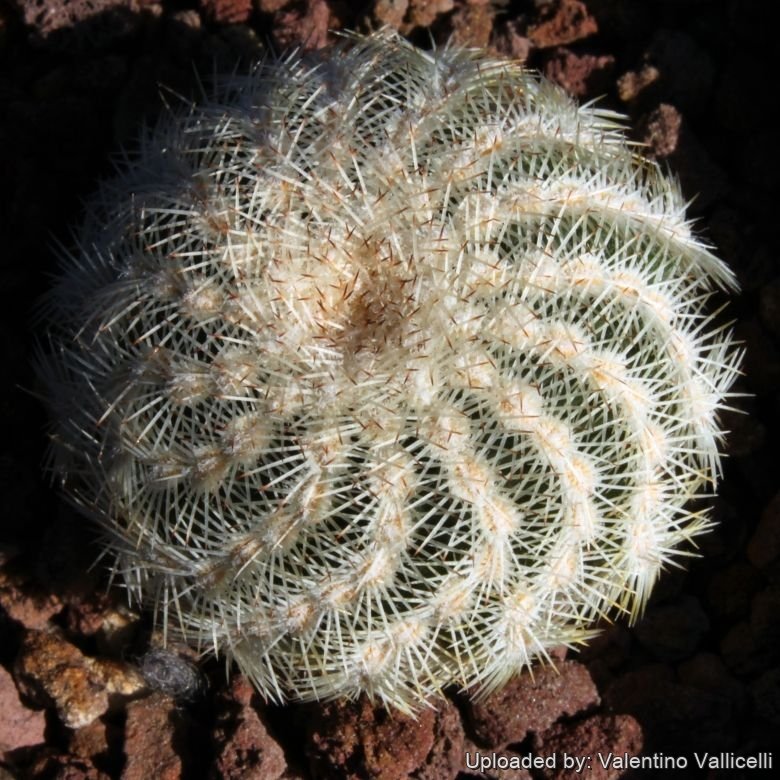
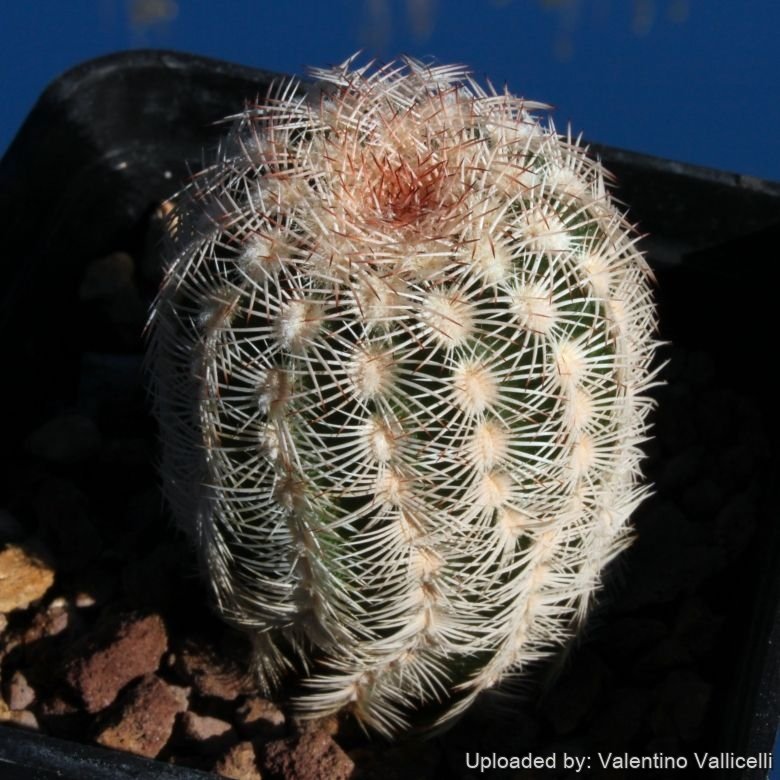
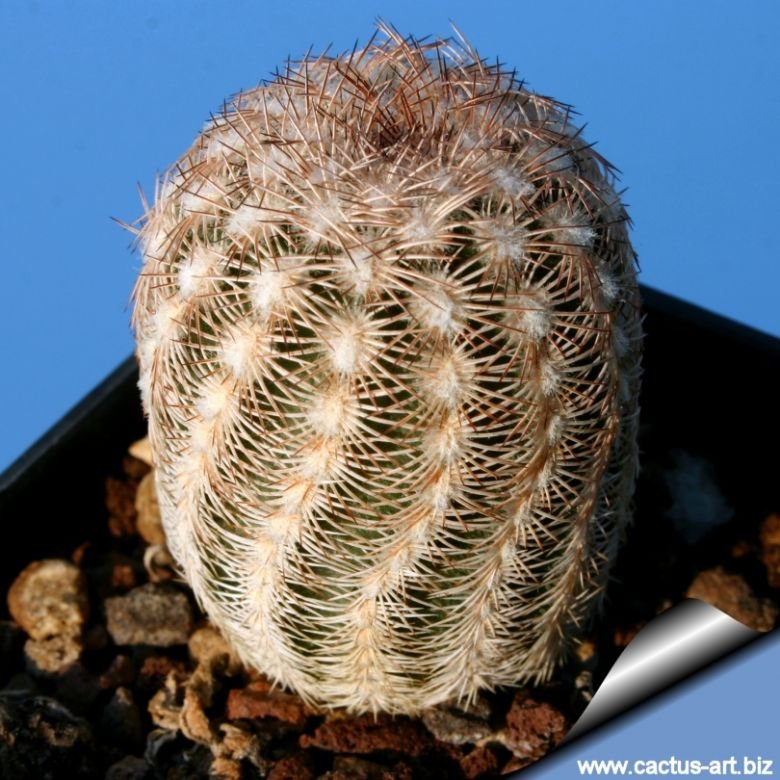
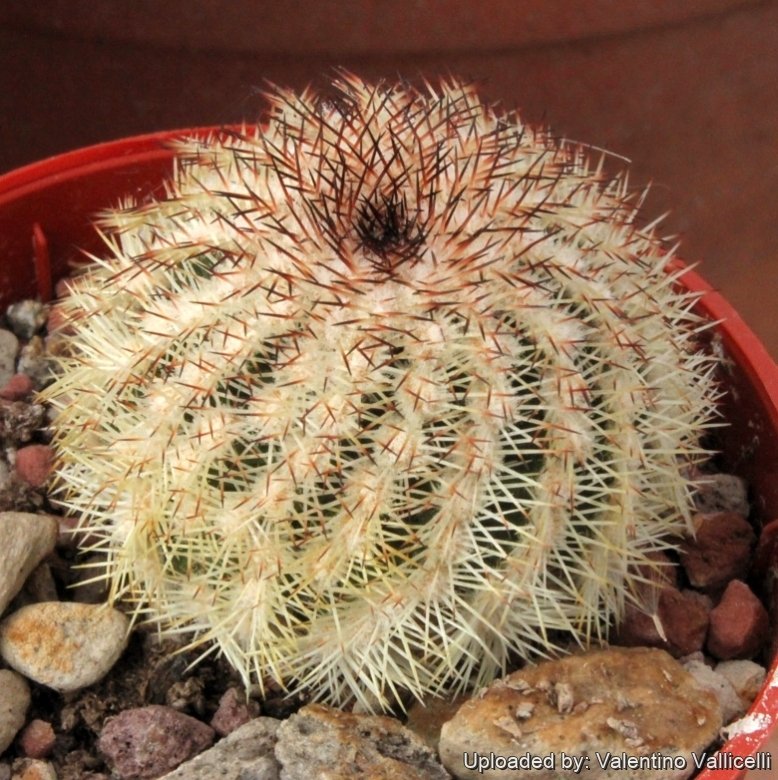
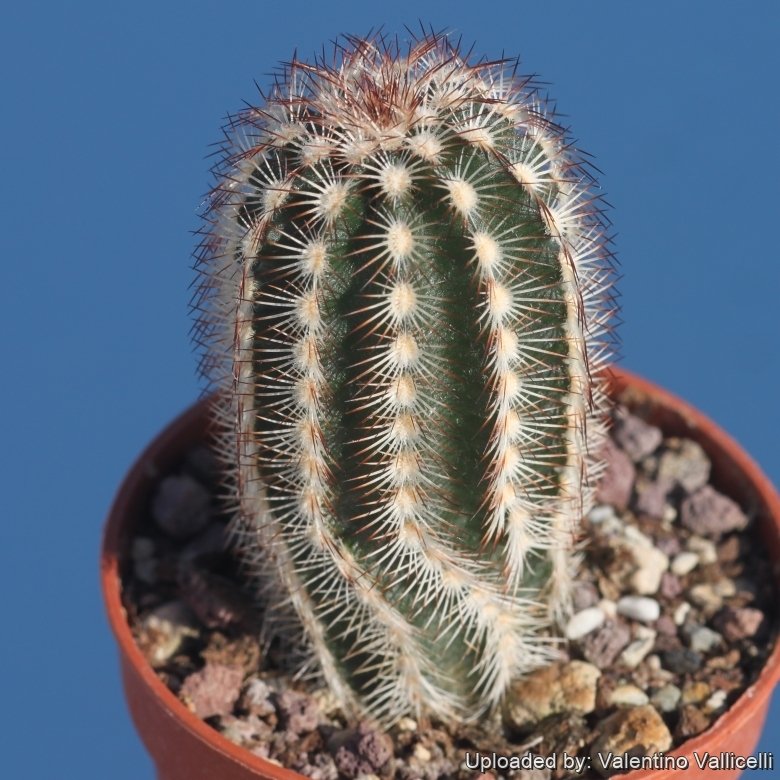
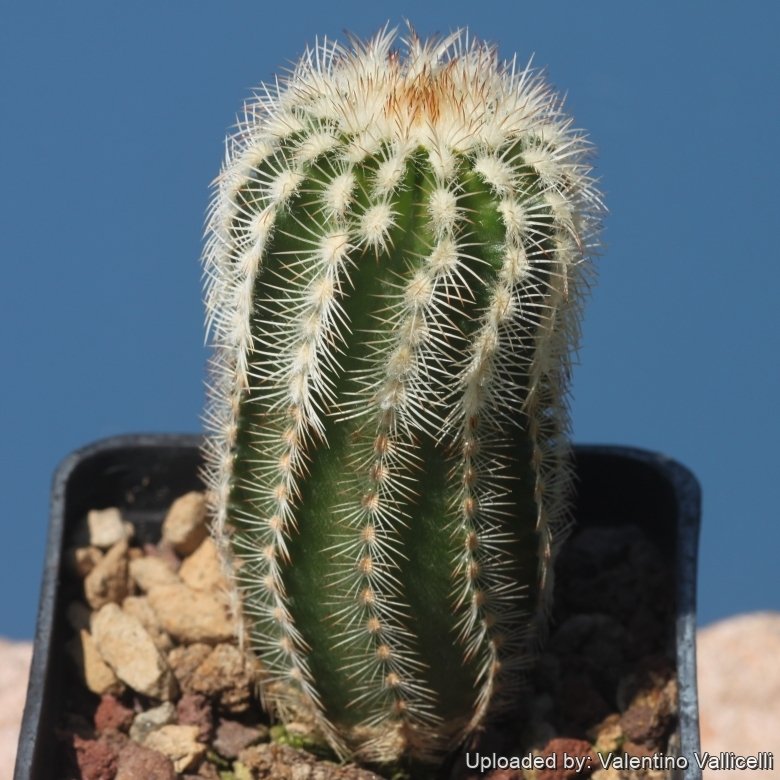
Echinocereus reichenbachii is a slowly branching cylindrical shaped cactus more or less cespitose with up to 12 branches covered strongly pectinate, appressed truly lacy spines. The flowers are very showy, fragrant, produced in profusion, rather variable as to size, often 6 to 7 cm long and fully as broad, opening during the day, always closing at night and sometimes opening the second day, purple. The basis of flowers are clothed with dense greyish wool. It is a distinct species with six subspecies: the nominate form, subsp. armatus (Poselg.) N.P.Taylor, subsp. baileyi (Rose) N.P.Taylor, subsp. burrensis G.Frank, Metorn & E.Scherer, subsp. fitchii (Britton & Rose) N.P.Taylor and subsp. perbellus (Britton & Rose) N.P.Taylor.
Stem: Erect, simple or commonly branched to form cluster of up to 12 upright stems, globose when very young, elongate or short cylindrical when mature, (2.5)7-20(-40) cm tall, (2,5-) 5-9(-10) cm in diameter dark green.
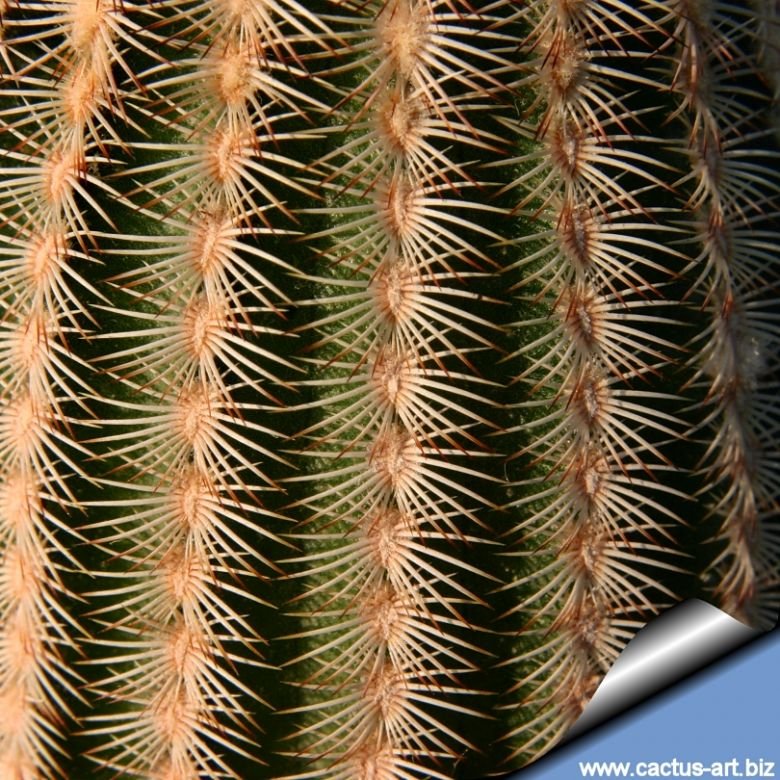
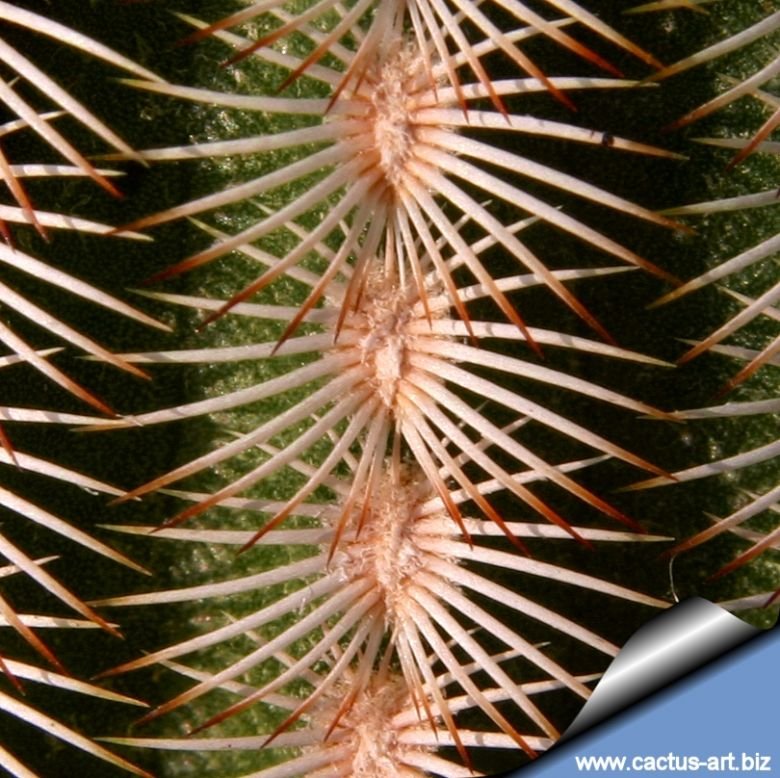
Ribs: 10-19 narrow, definite, straight or slightly undulate divided into distinct tubercles.
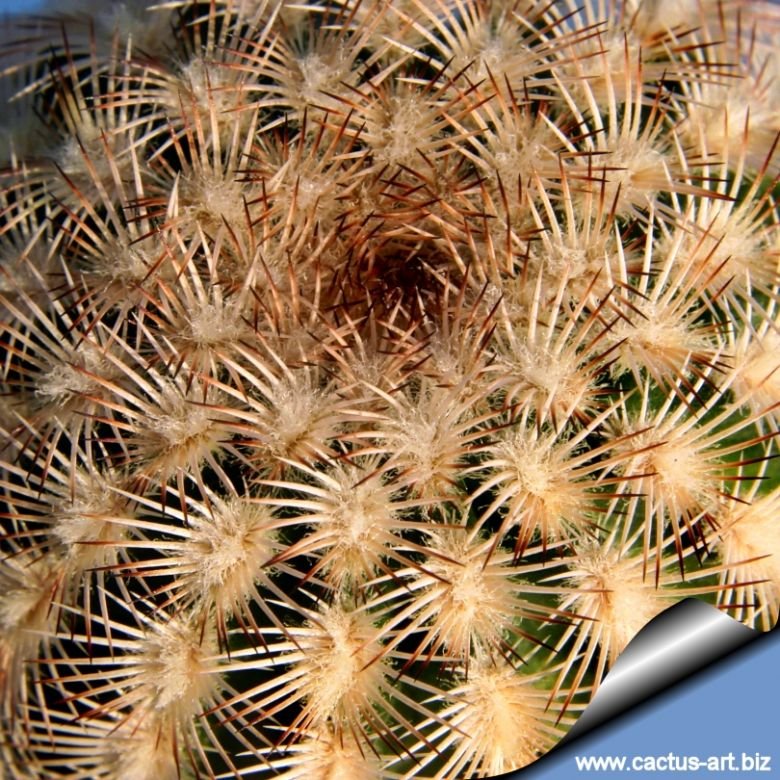
Areoles: Elliptic elongated vertically, approximate, 1.5-3 mm long, 1-6(-10) mm apart, quite woolly when young, and bare when older
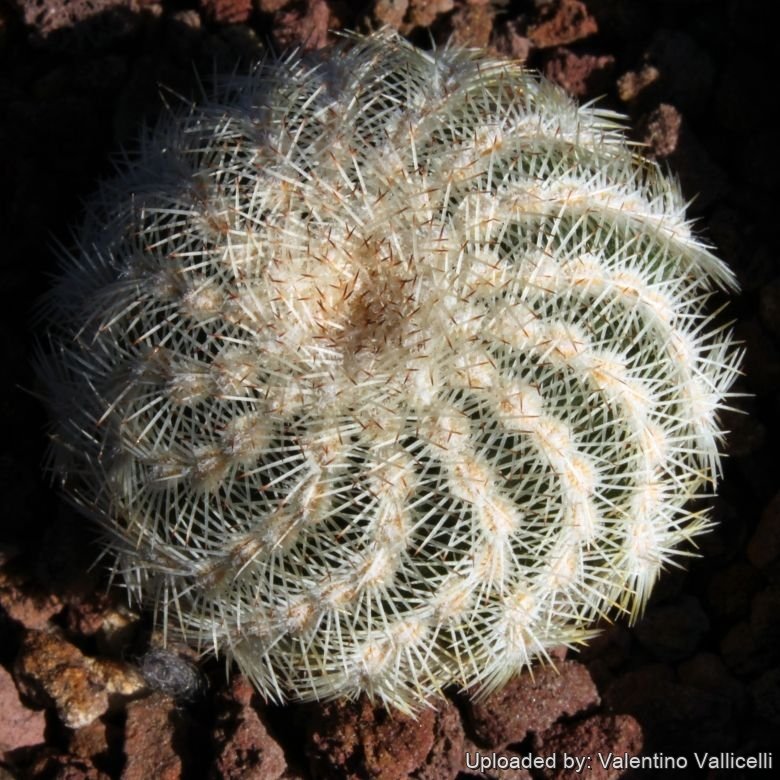
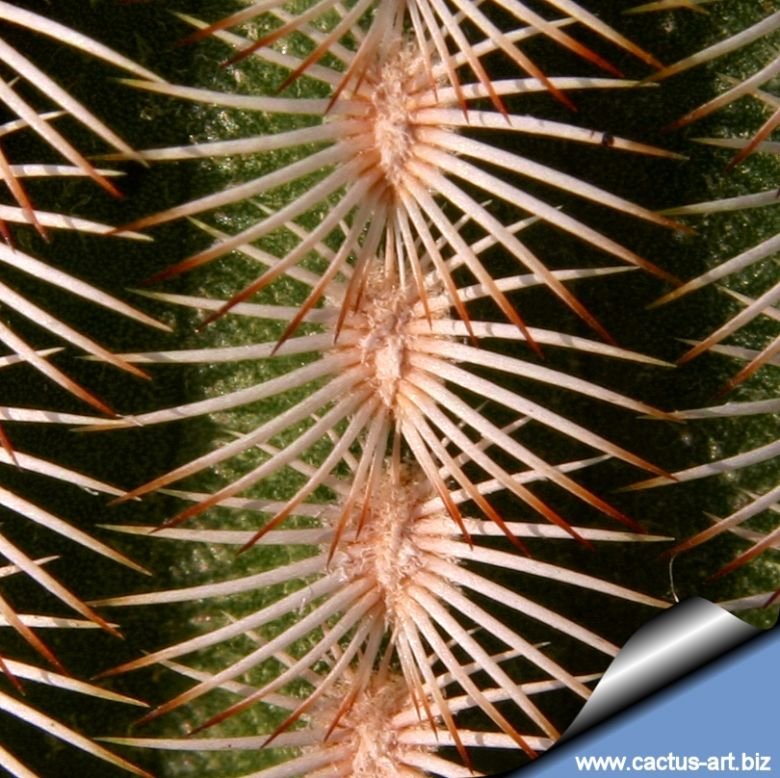
Radial spines: 20 to 36, rigid, slender, straight, spreading to slightly curved, held closely against the the ribs of the stems, organized in 2 series, pectinately arranged or nearly so, 5 to 8 mm long. Top ones very tiny, almost bristlelike; laterals more robust; lower 1-3 somewhat smaller; spines of adjacent clusters often interlocking. Multi-coloured, white to tan, dull pink, dark brown, or purplish black, white with brown tips, yellowish with brown tips, or outer half black or purplish; spines of any single areole never variegated, but usually those of each individual plant of one colour.
Central spines: 0 to 7, but usually absent. If present usually only 1 central standing straight out, or 2 centrals, one above the other; these stout, firm, small, like the radials,0.5-6 mm long (rarely more), often darker yellowish with a brown tip, at first, whitish on older areoles.
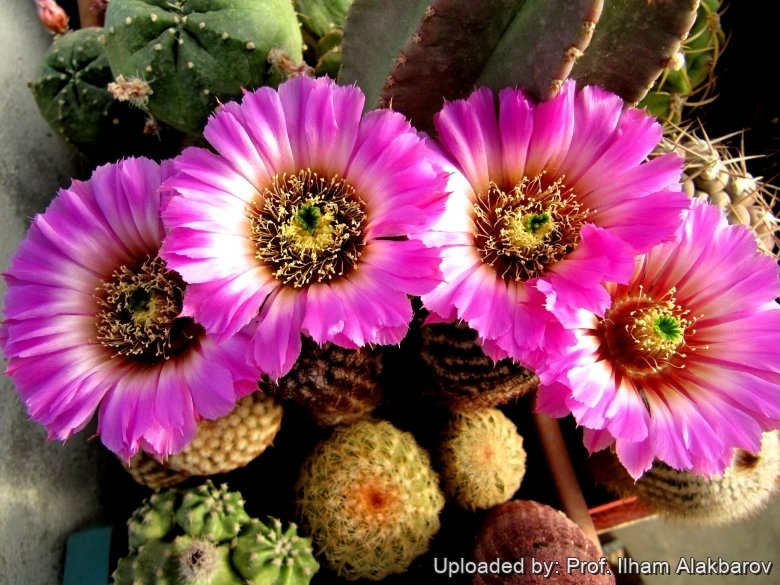
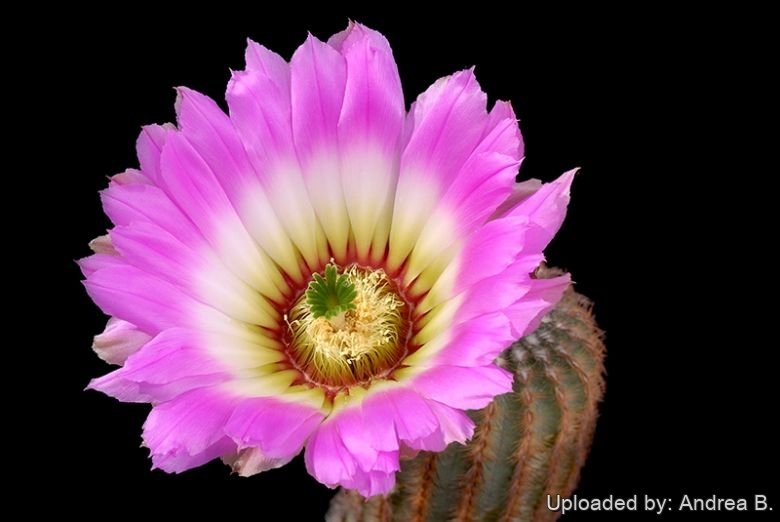
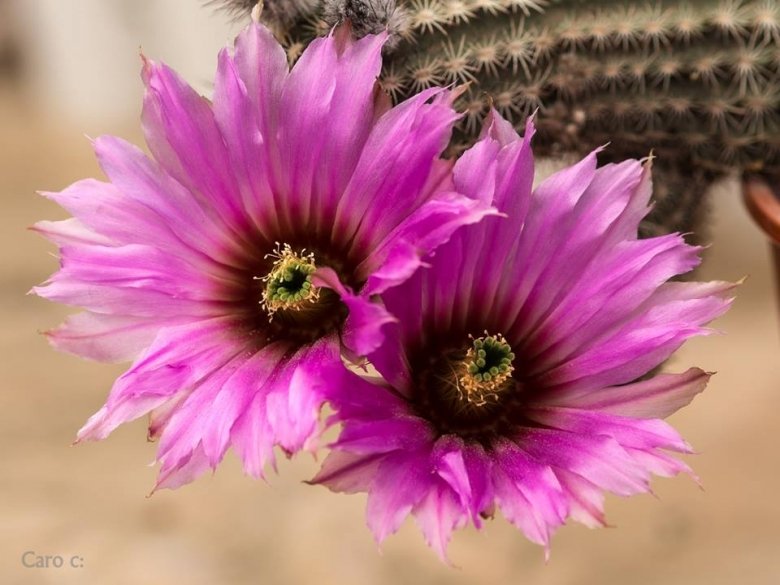
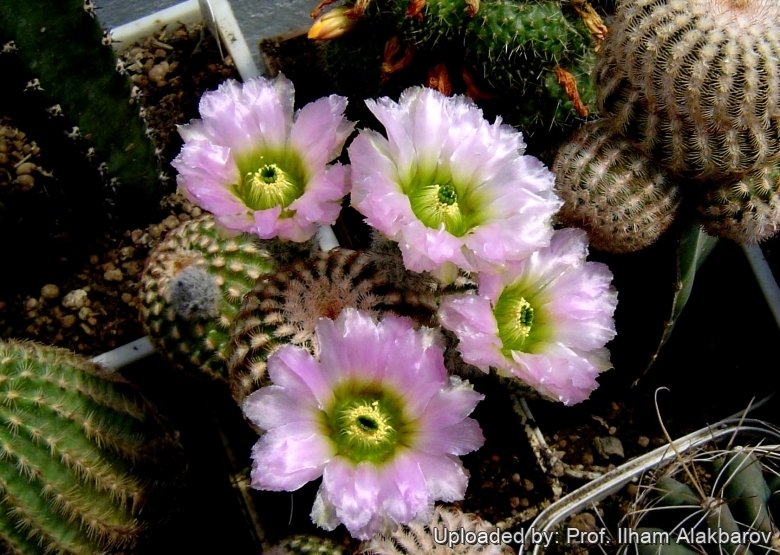
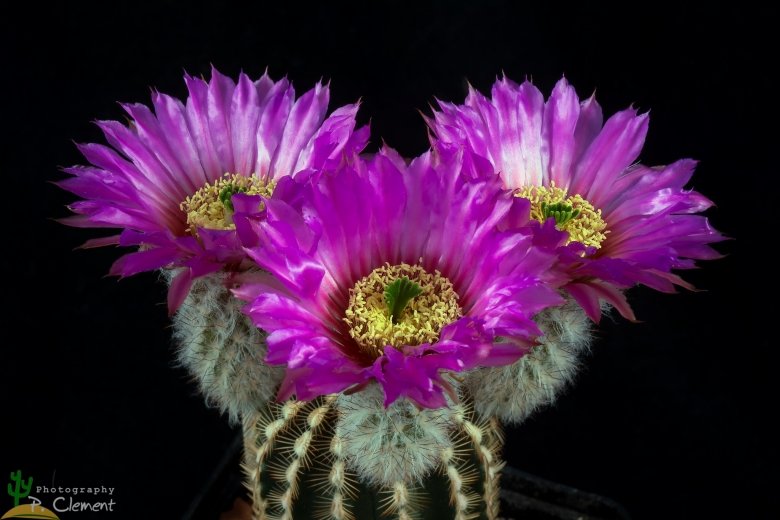
Flowers: Beautiful, very large, abundant, diurnal, scented, intense pink to purple, 5 to 12 cm long and fully as broad. Flower tube 22-40 × 10-30 mm covered with white, cobwebby wool, 5-15 mm long, and clusters of 10-14 very fine, hairlike, white, grey, or black spines c 6 mm long. Outer segments lengthen gradually, with greenish or brownish mi lines and pink edges. Inner perianth-segments 30-50 (or more) narrow, often reflexed, silvery pink to magenta, usually white, crimson, green, or multicoloured at base, 23-40 × 5-15 mm, tips relatively thin, delicate rather blunt to almost entire and definitely pointed, the margin more or less ragged, often notched. Filaments pinkish or reddish fading above; anthers cream-colored to yellow. Nectar chamber 2-5 mm. Style long reddish or pinkish, crowned by 8-22 large, dark green stigma lobes.
Blooming season: Early May to Late June.
Fruits: Ovoid or almost spherical, green, olive green, or dark green, 10-28 mm long, covered with slender spines and wool, fruiting 1.5-2.5 months after flowering.
Seeds: Black, nearly globose, 1.2 to 1.4 mm. in diameter.
Chromosome number: 2n = 22.
Similar species: This species is similar to Echinocereus pectinatus but its spines are net not so extremely pressed against the plant or quite so heavy as Echinocereus pectinatus. Echinocereus reichenbachii has much long wool, extremely thin, flexible, hairlike spines up to 18 mm long on flower tube and remaining on fruit. E. pectinatus has shorter wool, comparatively thick, rigid spines up to 9 mm long.
Origin and Habitat
This species is distributed in Mexico (Coahuila, Nuevo León, and Tamaulipas); United States (Colorado, New Mexico, Oklahoma, and Texas). The species is very common and abundant.
Altitude range: From sea level to 1,500 metres above sea level.
Habitat and Ecology: The species is found in grasslands, thorn shrublands and mesquite woodlands. It occurs in shrubland/chaparral, grassland/herbaceous in gravelly, rocky, or sandy soils of various origins: Lime-stone, granite. The species is used as an ornamental, and is common in trade. There are no major threats for the species, however, land use change and fire affect some subpopulations.
Cultivation and Propagation
Echinocereus reichenbachii is sensitive to overwatering (rot prone) needs a very good drainage to avoid rotting, but requires more moisture than true desert cacti to grow and produce flowers, Keep drier and cool in winter. Need full sun. It is very cold resistant from -10° to -25° C (depending on clones) or less for short periods of time. It is a fine plant for a rock garden or container, contrasts well with agaves, yuccas, and low-growing flowering plants.
Propagation: Seeds, also can be grown from cutting as it slowly branches from the base.
Bibliography
Major references and further lectures
-
Nathaniel Lord Britton, Joseph Nelson Rose “Cactaceae: Descriptions and Illustrations of Plants of the Cactus Family” Volume 3, 1922
-
Edward F. Anderson (2001) “ The Cactus Family”.
-
Curt Backeberg “Cactus Lexicon” Sterling Publishing Company, Incorporated, 1978
-
David Hunt, Nigel Taylor “The New Cactus Lexicon” DH Books, 2006
-
Del Weniger “Cacti of the Southwest: Texas, New Mexico, Oklahoma, Arkansas, and Louisiana” University of Texas Press, 1969
-
James Cullen, Sabina G. Knees, H. Suzanne Cubey “The European Garden Flora Flowering Plants: A Manual for the Identification of Plants Cultivated in Europe, Both Out-of-Doors and Under GlassCambridge University Press, 11/August/2011
-
Lyman David Benson “The Cacti of the United States and Canada” Stanford University Press, 1982
-
Terry, M. & Heil, K. 2013. Echinocereus reichenbachii. The IUCN Red List of Threatened Species 2013: e.T151886A572535. http://dx.doi.org/10.2305/IUCN.UK.2013-1.RLTS.T151886A572535.en. Downloaded on 13 February 2016.
-
A. Michael Powell, James F. Weedin “Cacti of the Trans-Pecos & Adjacent Areas” Texas Tech University Press, 2004
From llifle page Cereus caespitosus
Description
Echinocereus reichenbachii subs. caespitosus is a local or morphological form of the widespread and variable Echinocereus reichenbachii found in central Texas. The subs. caespitosus usually lack central spines and is weakly distinguished from typical “reichenbachii”. A few specimens have 1 or 2 central spines, but in most cases central spines are not present, giving the entire stem surface an uniform, lace spines appearance. However the distinguishing characteristics of subs. caespitosus, appear to fall within the natural variation of Echinocereus reichenbachii and it should be synonymized with the latter, but it still has a value for a collector because they identify plants with particular characters.
Stems. As the species.
Areoles: As the species.
Spines: As the species, except 15-36 radial spines, usually interlocking with adjacent areoles; in extreme northwestern part of range individuals with 15-20 radials become majority in some populations.
Origin and Habitat
The so called “caespitosus” is the form found in central Texas.
Habitat: It thrives in a variety of sites and soils often found growing out of cracks in solid limestone rock.
Cultivation and Propagation
Echinocereus reichenbachii subs. caespitosus is sensitive to overwatering (rot prone) needs a very good drainage to avoid rotting, but requires more moisture than true desert cacti to grow and produce flowers, Keep drier and cool in winter. Need full sun. It is very cold resistant from -10° to -25° C (depending on clones) or less for short periods of time. It is a fine plant for a rock garden or container, contrasts well with agaves, yuccas, and low-growing flowering plants.
Propagation: Seeds, also can be grown from cutting as it slowly branches from the base.
Notes
The Echinocereus reichenbachii species group (E. reichenbachii, E. chisosensis, E. rigidissimus, E. pseudopectinatus, and a number of Mexican species) has unusually thin, bristle-like spines clothing the flowers and fruits as well as conspicuous, cobwebby tomentum of unusually long areolar hairs. The persistent, dry, white features of the flower tube are an essential distinction contrasting with the otherwise similar Echinocereus pectinatus species group (E. pectinatus, E. dasyacanthus, and possibly E. bonkerae), regardless of the spectacular, colourful floral displays.
Bibliography
Major references and further lectures
-
Edward F. Anderson (2001) “ The Cactus Family”.
-
Curt Backeberg “Cactus Lexicon” Sterling Publishing Company, Incorporated, 1978
-
David Hunt, Nigel Taylor “The New Cactus Lexicon” DH Books, 2006
-
Del Weniger “Cacti of the Southwest: Texas, New Mexico, Oklahoma, Arkansas, and Louisiana” University of Texas Press, 1969
-
James Cullen, Sabina G. Knees, H. Suzanne Cubey “The European Garden Flora Flowering Plants: A Manual for the Identification of Plants Cultivated in Europe, Both Out-of-Doors and Under GlassCambridge University Press, 11/August/2011
-
Lyman David Benson “The Cacti of the United States and Canada” Stanford University Press, 1982
Source: Cereus caespitosus, LLIFLE - Encyclopedia of living forms, CC-BY-SA, retrieved 2026-10-25.
From llifle page Echinocereus caespitosus var. purpureus
Description
The “Echinocereus purpureus” from Oklahoma is merely one of the several forms of the very variable Echinocereus reichenbachii and is intermediate between Echinocereus reichenbachii subsp. baileyi and Echinocereus reichenbachii subsp. caespitosus. It has reddish neat comb-like short spination. It is one of the smaller Echinocereus species. However Echinocereus reichenbachii occurs over quite a wide area and the “purpureus” form is often regarded as a mere ecotype. However red spined form with bright purple flowers occurs at random elsewhere.
Stem: Erect, cylindrical or short cylindrical, as the the species, but smaller in maximum size and in diameter.
Ribs: 10-19 straight or slightly undulate.
Areoles:1-6 mm apart.
Radial spines: 14 to 22, straight to slightly curved, held closely against the the ribs of the stems, organized in 2 series, pectinately arranged or nearly so, 5 to 8 mm long. Multi-coloured, dullcreamy-white, glistering purplish to almost black at their tips, at first, whitish on older areoles.
Central spines: 0 to3 ( but usually absent) small, terete.
Flowers: Beautiful, abundant, scented, always purple in colour, 5 to 7 cm long. Flower tube 22-40 long, 10-30 mm in diameter, clothed with dense greyish wool, flower tube hairs 5-15 mm long; anthers yellow; nectar chamber 2-5 mm. Stigma lobes 12.
Blooming season: Early May to Late June.
Fruits: Ovoid green, olive green, or dark green, fruit up to 28 mm long; fruiting 1,5-2,5 months after flowering.
Seeds: Black.
Origin and Habitat
Oklhoma
Cultivation and Propagation
It is sensitive to overwatering (rot prone) needs a very good drainage to avoid rotting, but requires more moisture than true desert cacti to grow and produce flowers, Keep drier and cool in winter. Need full sun. It is very cold resistant from -10° to -25° C (depending on clones) or less for short periods of time. It is a fine plant for a rock garden or container, contrasts well with agaves, yuccas, and low-growing flowering plants.
Propagation: Seeds, also can be grown from cutting as it slowly branches from the base.
Bibliography
Major references and further lectures
-
Edward F. Anderson (2001) “ The Cactus Family”.
-
Curt Backeberg “Cactus Lexicon” Sterling Publishing Company, Incorporated, 1978
-
David Hunt, Nigel Taylor “The New Cactus Lexicon” DH Books, 2006 ISBN 0953813444, 9780953813445
-
Del Weniger “Cacti of the Southwest: Texas, New Mexico, Oklahoma, Arkansas, and Louisiana” University of Texas Press, 1969
-
James Cullen, Sabina G. Knees, H. Suzanne Cubey “The European Garden Flora Flowering Plants: A Manual for the Identification of Plants Cultivated in Europe, Both Out-of-Doors and Under GlassCambridge University Press, 11/ago/2011
-
Lyman David Benson “The Cacti of the United States and Canada” Stanford University Press, 1982
Source: Echinocereus caespitosus var. purpureus, LLIFLE - Encyclopedia of living forms, CC-BY-SA, retrieved 2026-10-25.
From llifle page Cereus caespitosus var. minor
Origin and Habitat
Without definite locality
Source: Cereus caespitosus var. minor, LLIFLE - Encyclopedia of living forms, CC-BY-SA, retrieved 2026-10-25.
Cultivars and forms (18)
Subspecies (7)
Varieties (7)
Gallery