Publication: Cactaceae (Britton & Rose) 3: 150, fig. 155. 1922
Description
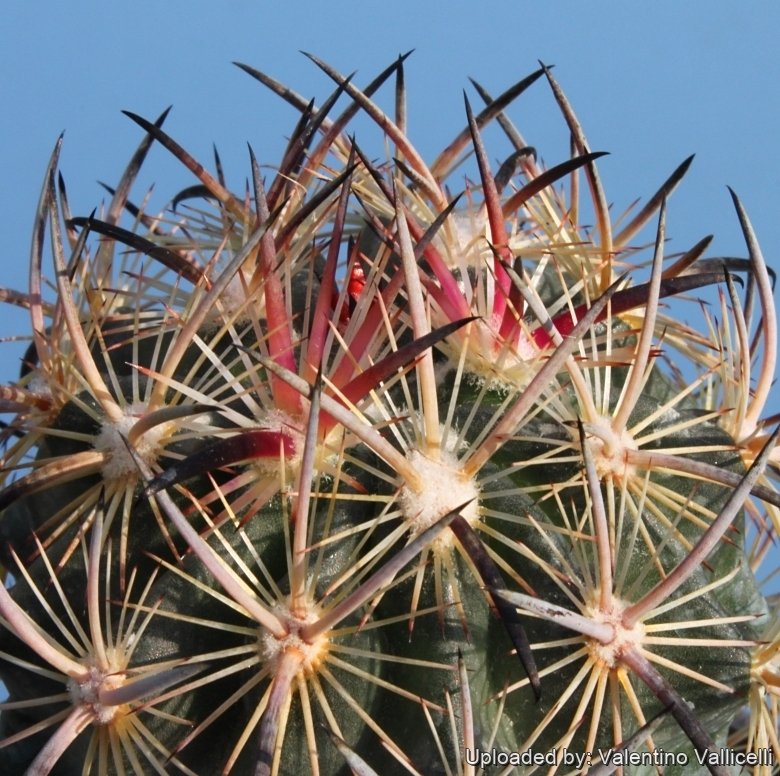
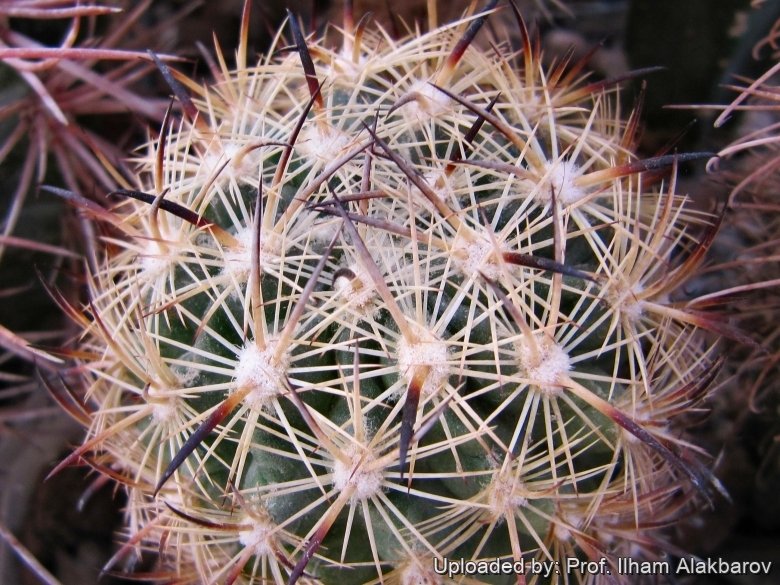
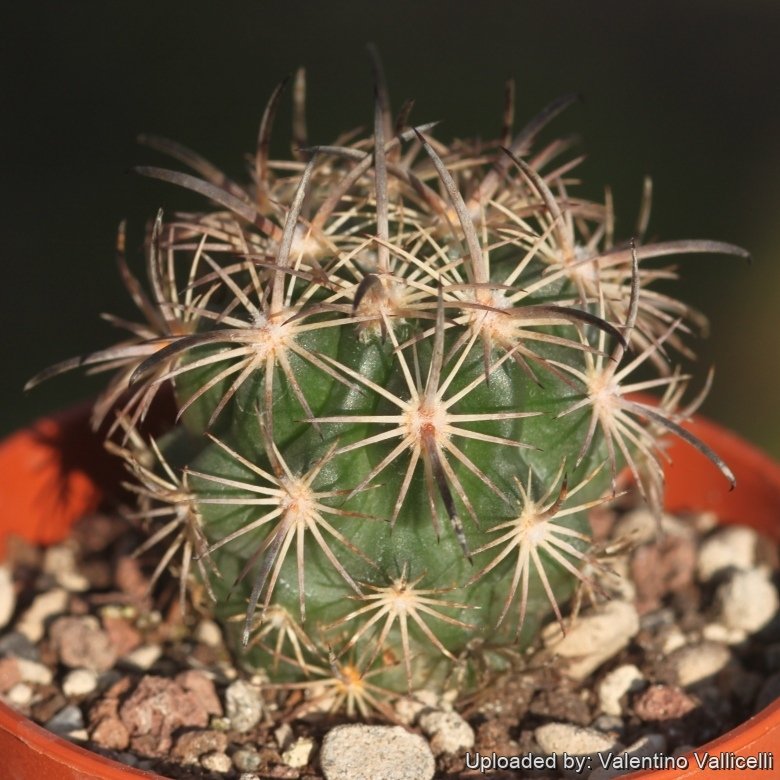
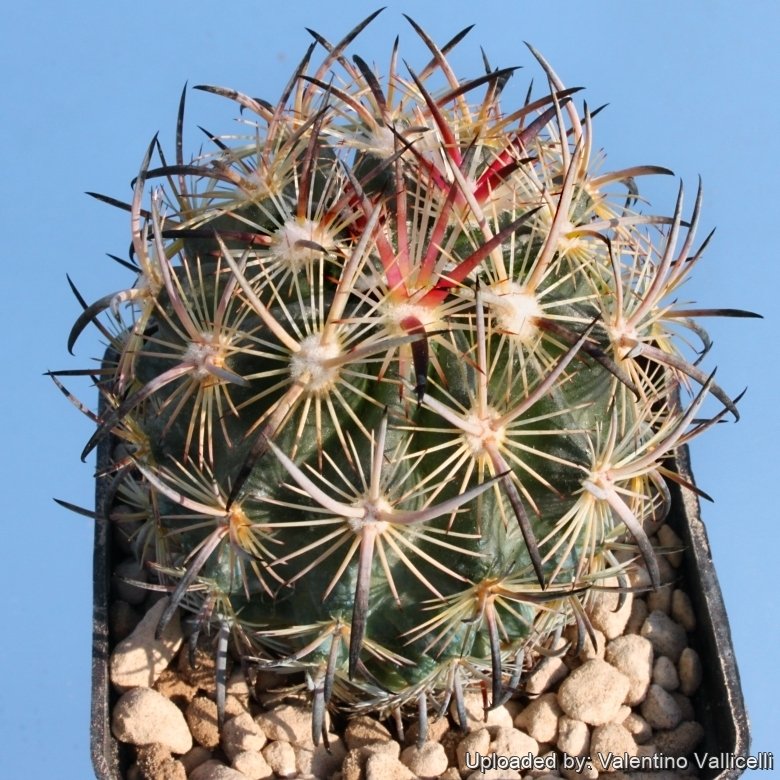
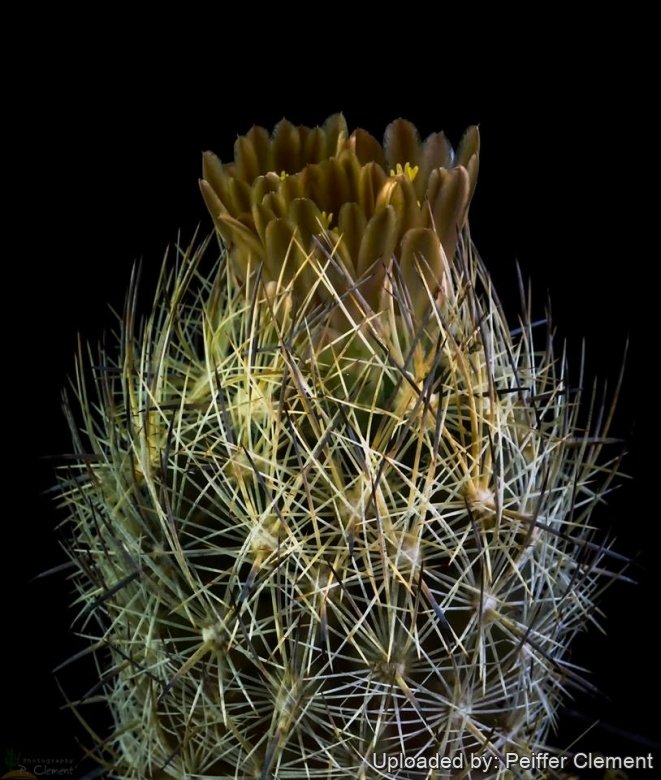
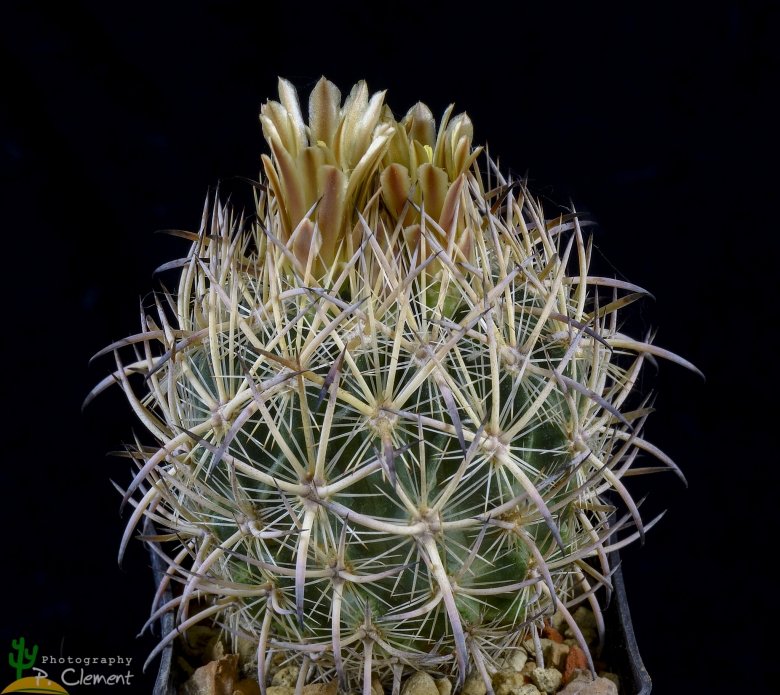
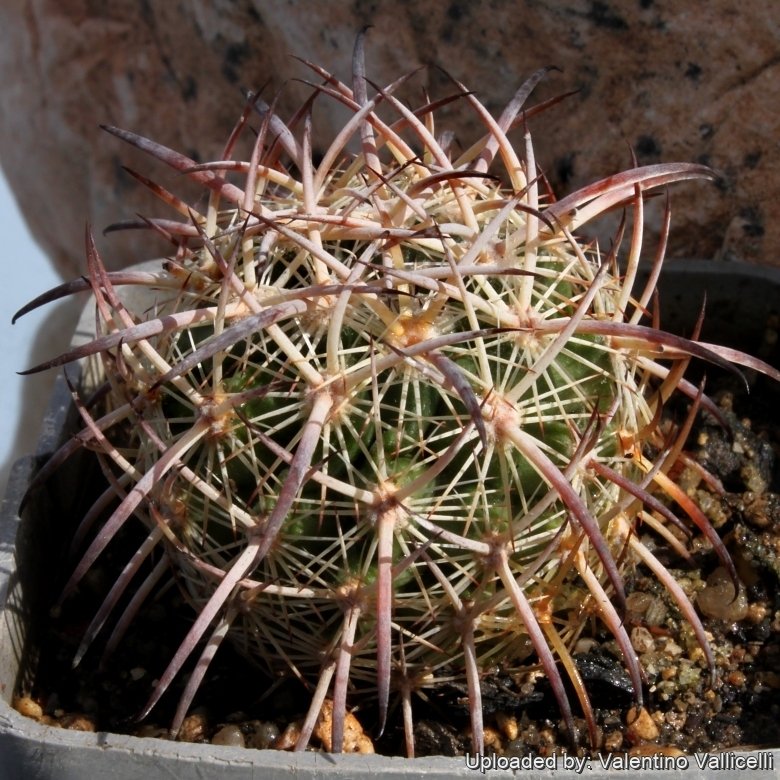
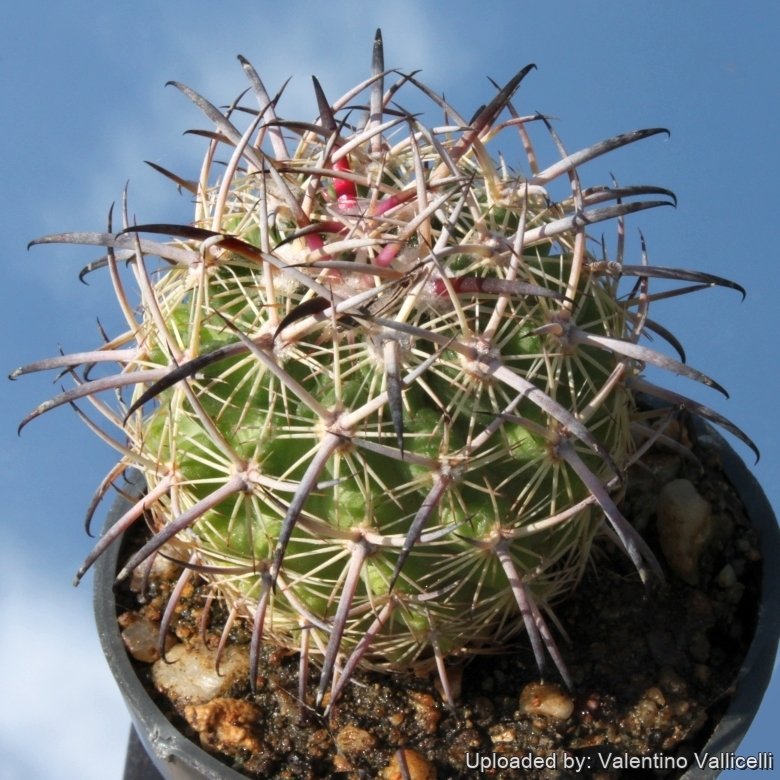
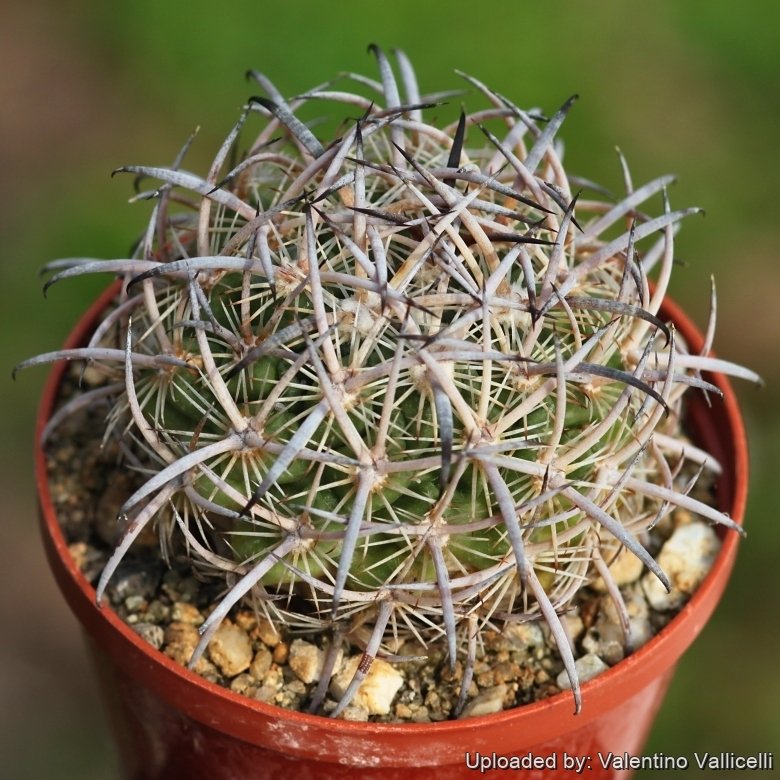
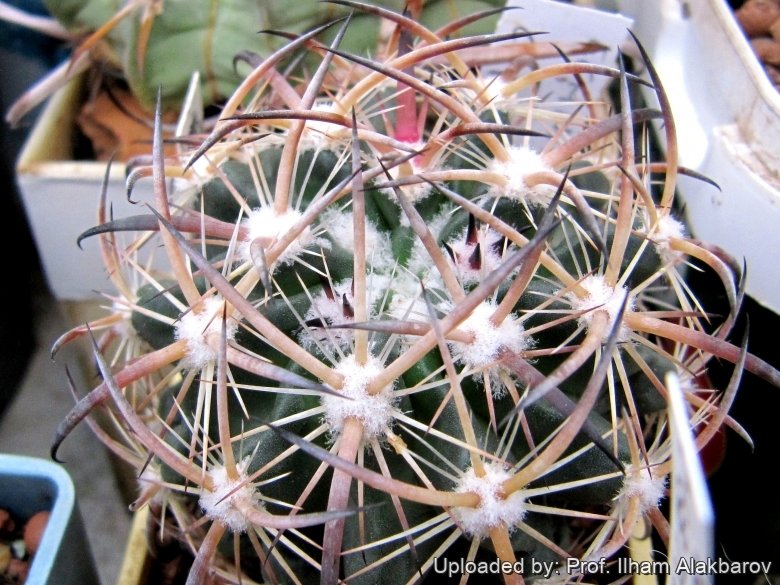
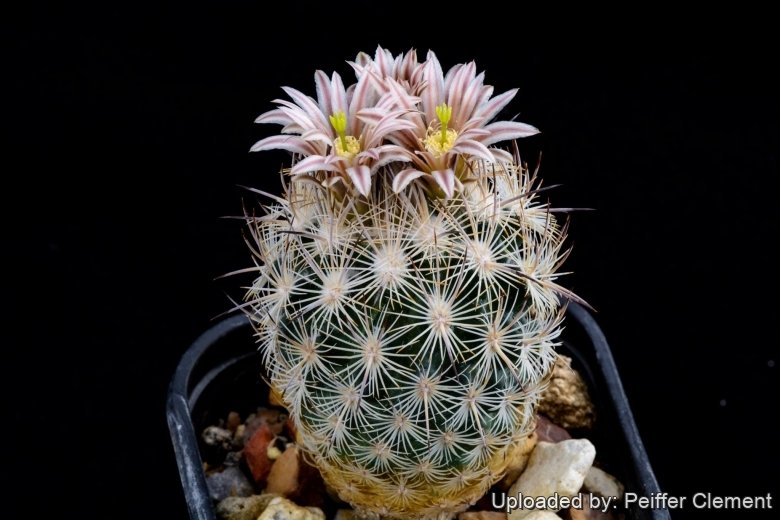
Plants solitary with spines almost hiding the body, but quite variable, two varieties are commonly accepted, namely Echinomastus unguispinus v. unguispinus and Echinomastus unguispinus v. durangensis, while the rank of variety is generally not recognized to the forms mapimiensis and laui.
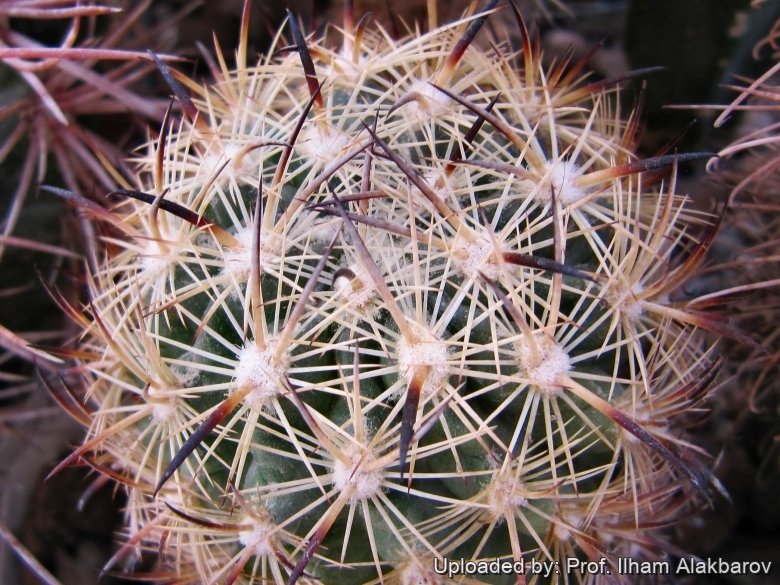
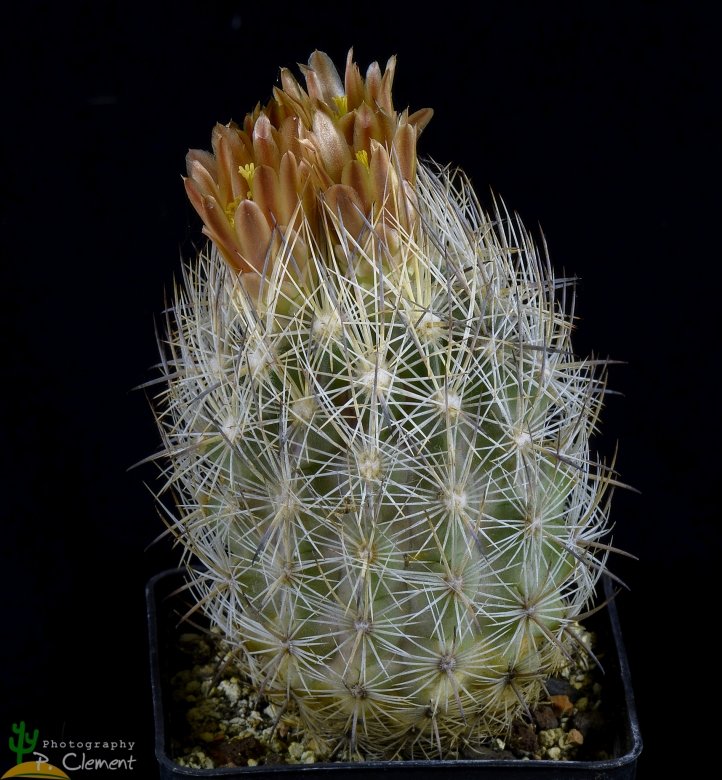
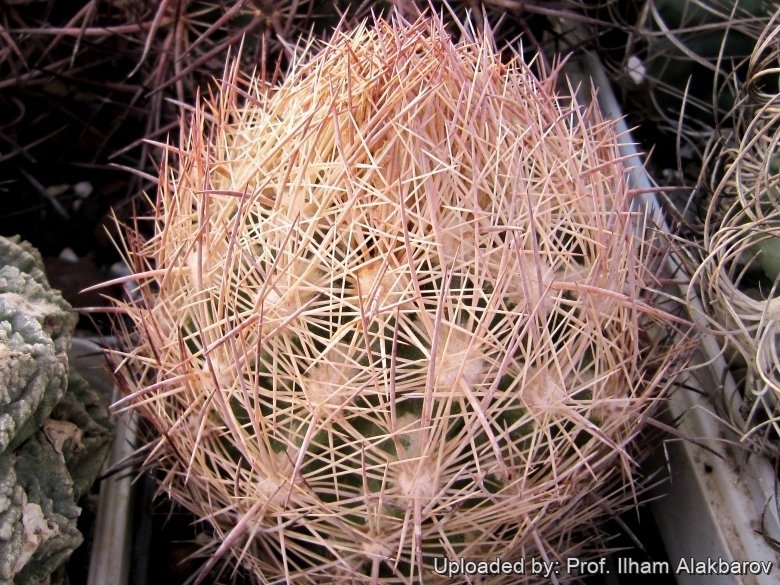
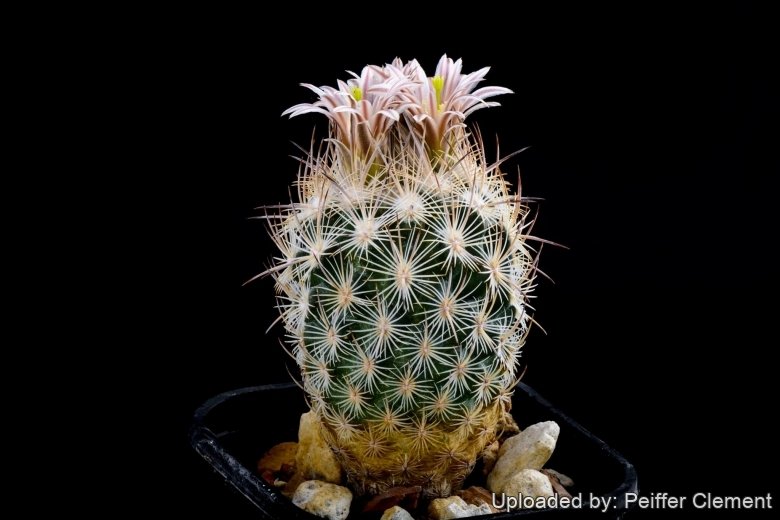
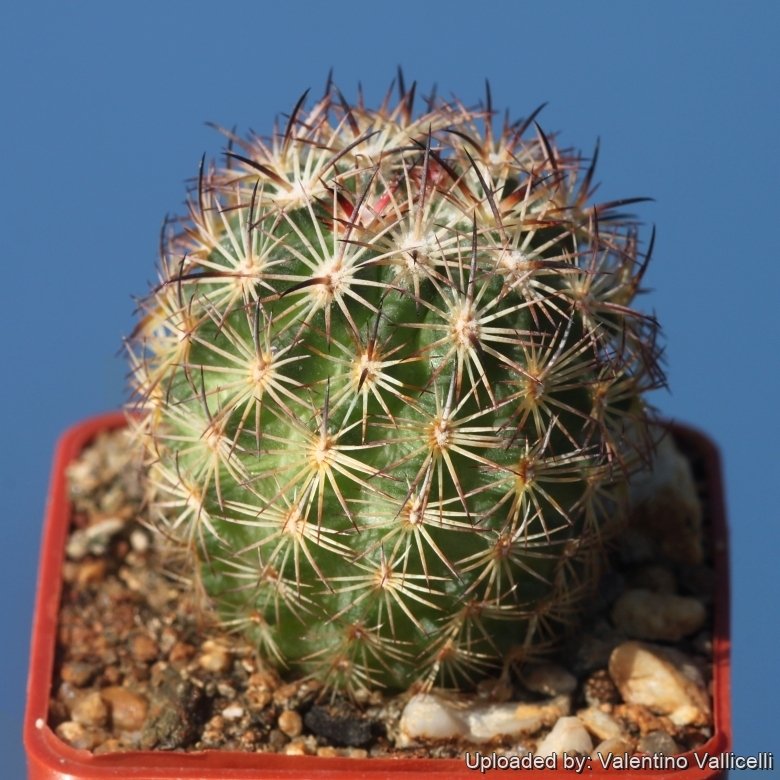
Stem: Globular with a slightly flattened apex to short cylindrical 7-14 cm tall, 7-15 cm in diameter, gray-green or bluish green.
Ribs: 13-21(-25) strongly tuberculate.
Areoles: Slightly elongated without (or with very reduced) nectar glands.
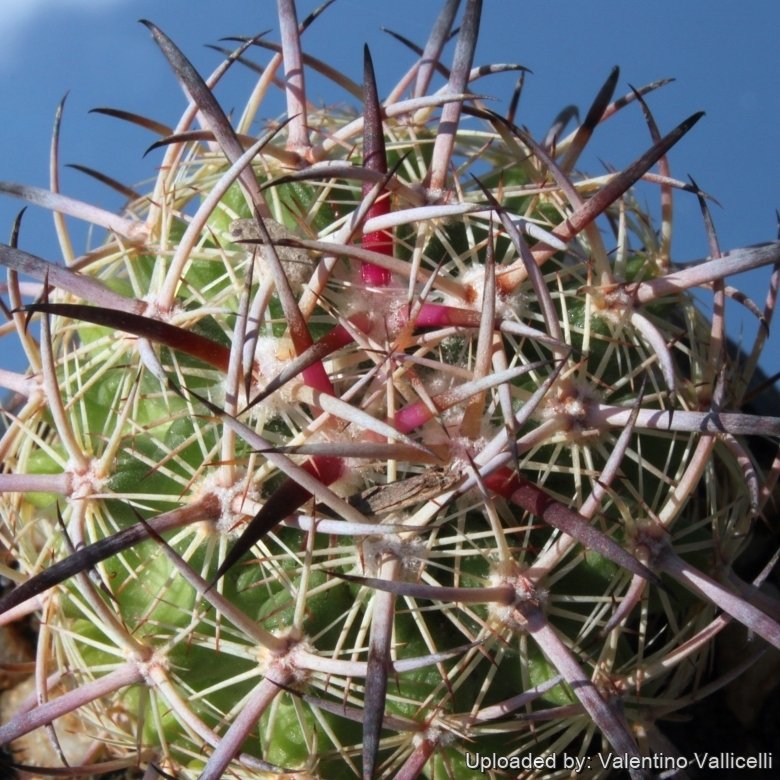
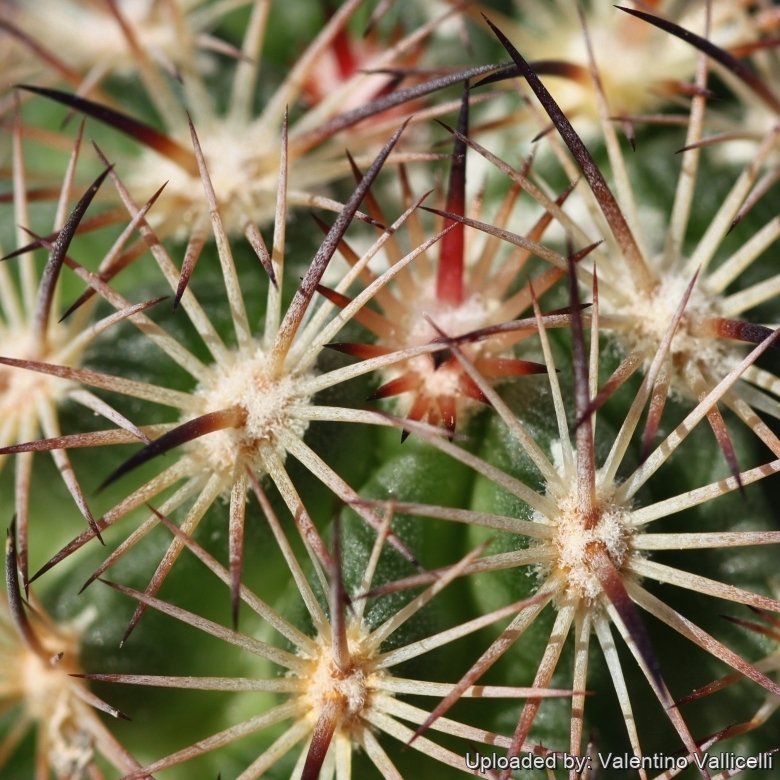
Radial spines:15-30 white to yellowish to blue-gray with black apex, becoming gray with age, 15-33 mm long irregularly spreading, some interlacing.
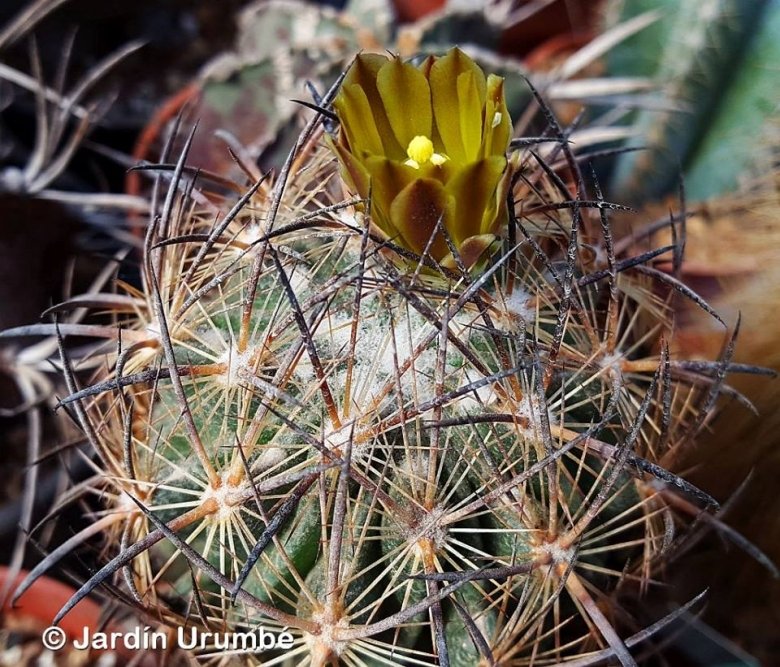
Central spines: 3-9 (usually 4), stronger, acicular, white, pale yellow to brownish but with brown to black tips, the upper side is always darker than the bottom side, straight to curved,15-35 mm long, directed upwards, lower one robust, noticeably down-curved from near the base pointing outward and downward.
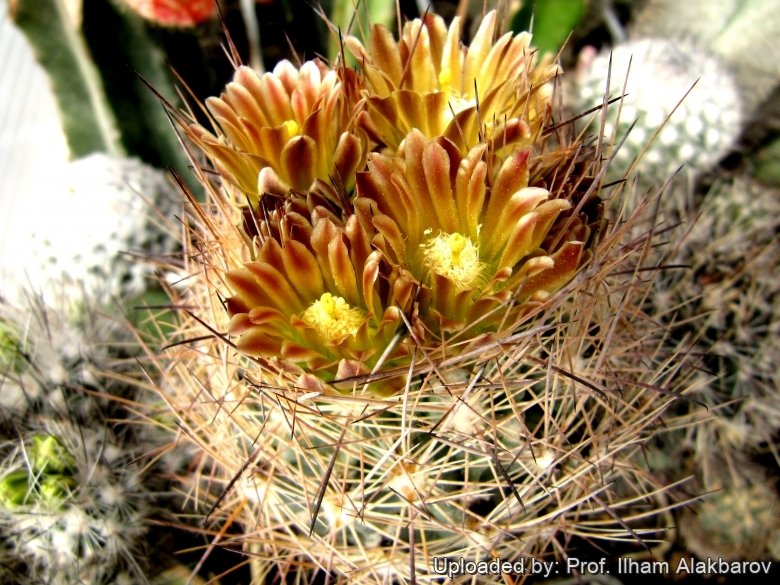
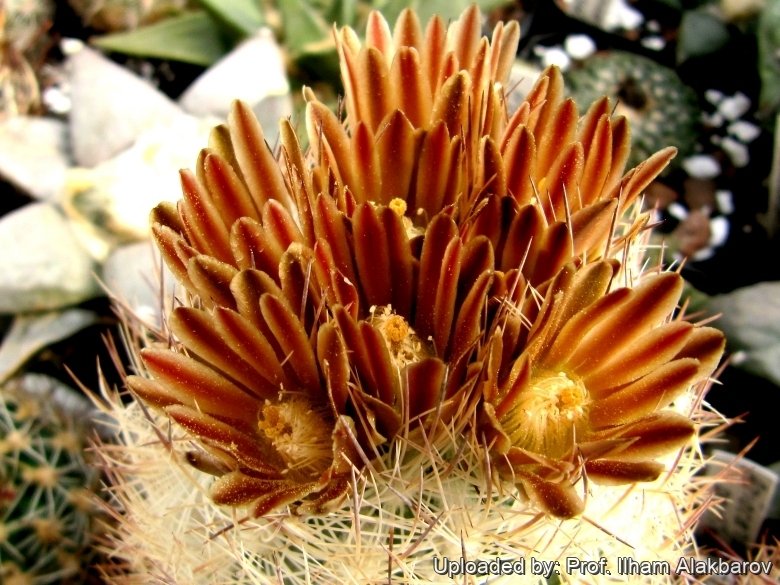
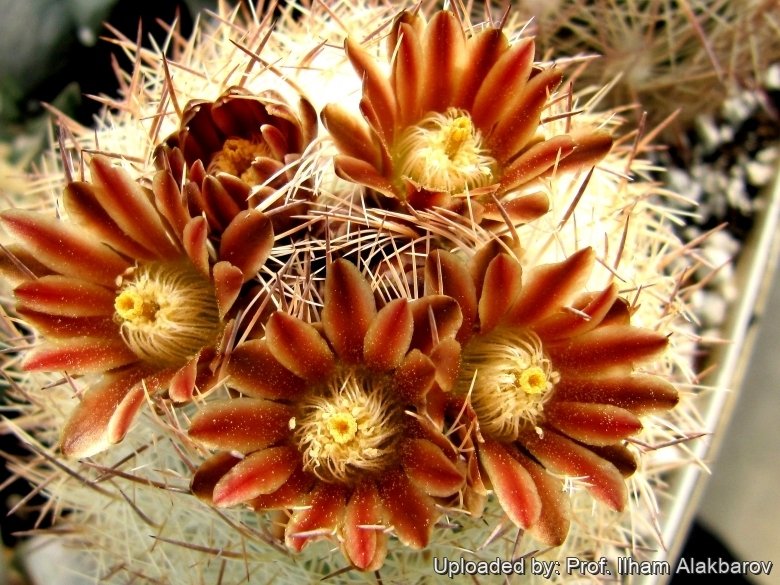
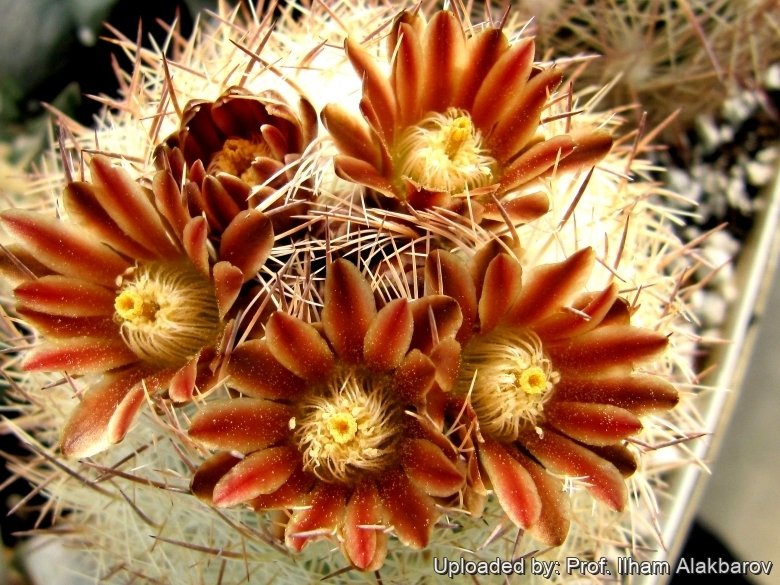
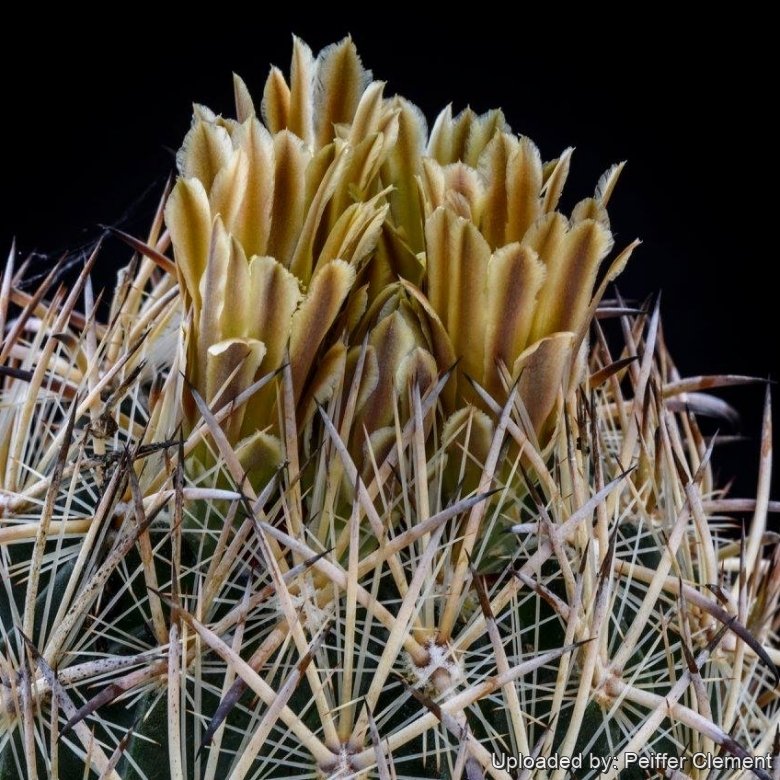
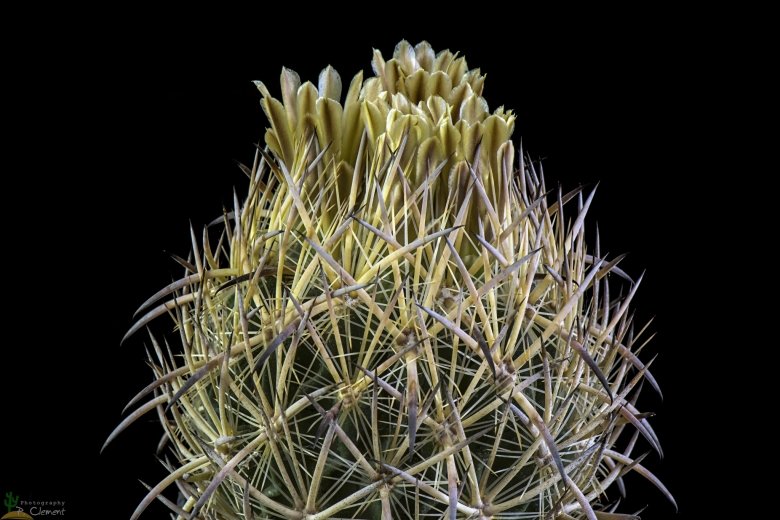
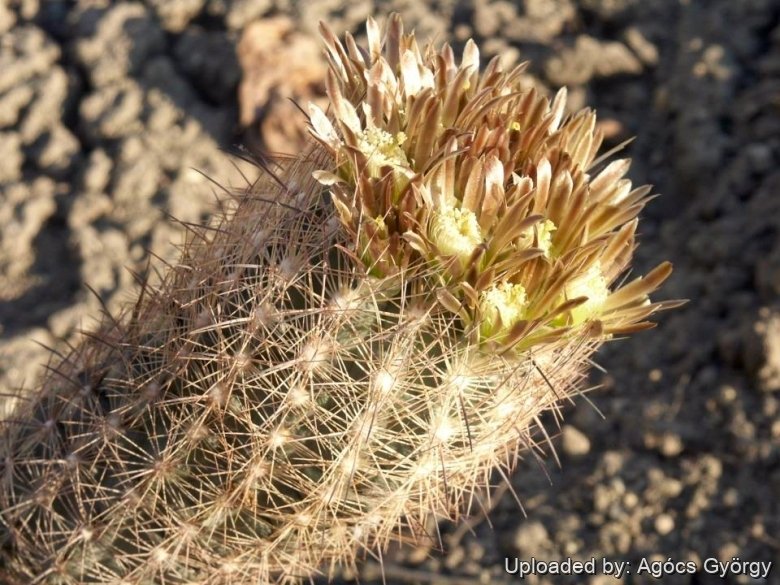
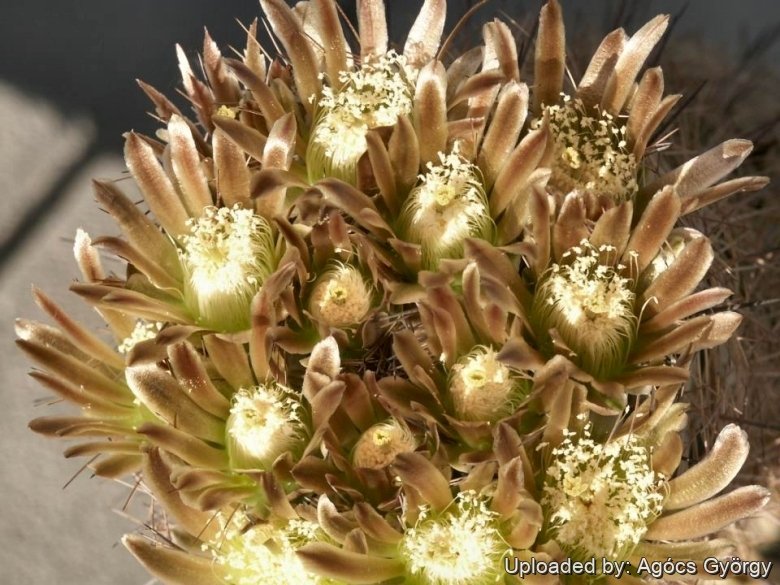
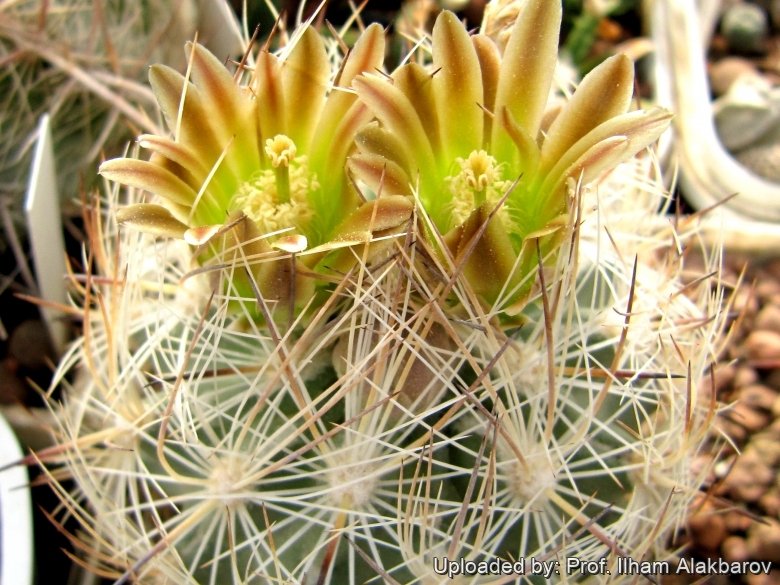
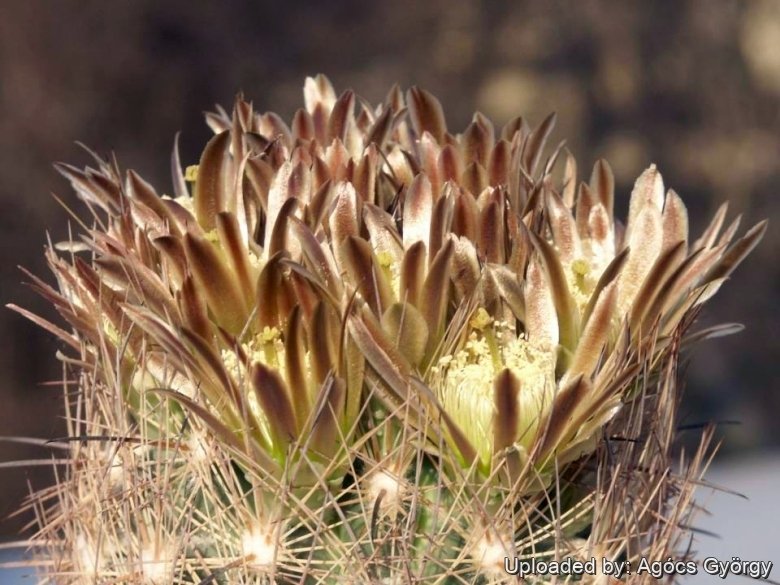
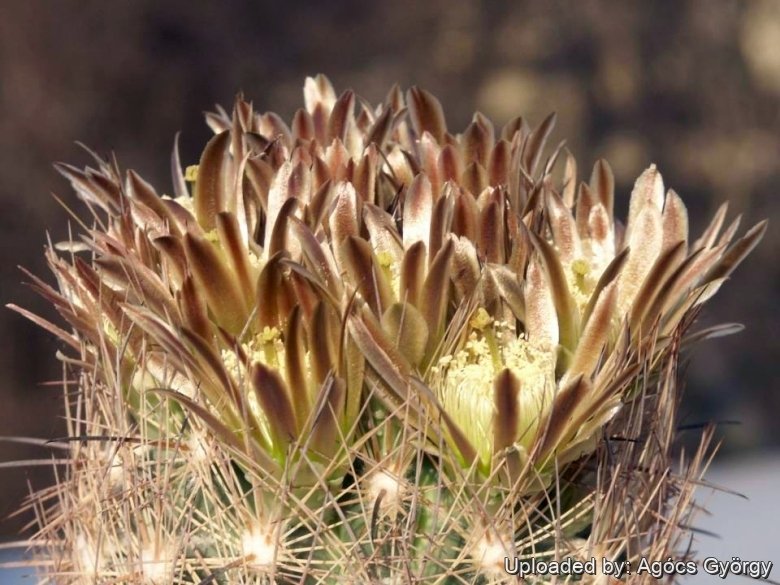
Flowers: Hardly gettig through the dense apical spines, funnelform, dirty yellowish-green but darkening as they ripen getting from green to reddish-brown, remaining erect up to 2.5 cm in diameter.
Blooming season: Early spring.
Fruit: 13-25 mm long, 8-12 mm wide, green to brown.
Seeds: 2 mm in diameter black.
Origin and Habitat
Chihuahua, Coahuila, Durango, Zacatecas and San Luis Potosi, Mexico.
Altitude: 1300 and 2100 meters above sea level.
Habitat: Echinomastus unguispinus grows in typical chihuahuan desert formations (xerophytic shrubland and very dry grassland). This area is particularly rich of succulent endemisms such as: Coryphantha valida, Coryphantha poselgeriana, Coryphantha macromeris, Coryphantha kracikii, Coryphantha difficilis, Corynopuntia grahamii, Epithelantha micromeris, Echinomastus durangensis, Echinomastus mapimiensis, Echinocereus stramineus, Glandulicactus uncinatus, Ibervillea sonorae, Mammillaria lasiacantha, Mammillaria grusonii, Mammillaria gasseriana, Mammillaria pottsii, Peniocereus greggii, Thelocactus bicolor, Ariocarpus fissuratus v. lloydyi etc. The habitat is overgrazed by goats. Plants are removed from the wild by collectors but this is not thought to be a threat.
Cultivation and Propagation
This is one of the most beautiful cacti but rarely seen in cultivation, it needs perfect drainage to flourish. It is quite difficult to grow on its own roots. Very easily rot! It’s thought that’s better to watch this species in photo or in the natural habitat rather than to try to cultivate it. For this reasons the plant is often grafted on a frost hardy stock.
Soil: Give an open soil that drains fast, and avoid mixtures containing peat or any other form of sphagnum moss.
Exposure: This plant need full sun and above all a very good ventilation, especially in winter.
Water requirements: Keep totally dry during winter, and in summertime make sure that the soil dries enough between waterings. It can tolerate temperature below zero (-5° C or less).
Remarks: Mature individuals - if the growing conditions are not optimal, easily rot and die.
Propagation: Seeds are relatively difficult to germinate (only a limited percentage of seeds germinate). Moreover it is easy for the seed to get lost behind the spines, which are stiff enough that when you try to retrieve them you just might loose them altogether. Grafting is often used to speed growth rate and to create a back-up for plants in collection.
Bibliography
Major references and further lectures
-
Edward Anderson “The Cactus family” Timber Press, Incorporated, 2001
-
James Cullen, Sabina G. Knees, H. Suzanne Cubey “The European Garden Flora Flowering Plants: A Manual for the Identification of Plants Cultivated in Europe, Both Out-of-Doors and Under Glass” Cambridge University Press, 11/Aug/2011
-
David R Hunt; Nigel P Taylor; Graham Charles; International Cactaceae Systematics Group. “The New Cactus Lexicon” dh books, 2006
-
Krainz, Hans et al. “Die Kakteen” 1956-1975
-
Hiroshi Hirao “Colour encyclopaedia of cacti” Seibundo Shinkosha, 1979
-
Gómez-Hinostrosa, C. & Hernández, H.M. 2013. Sclerocactus unguispinus. In: IUCN 2013. “IUCN Red List of Threatened Species.” Version 2013.2. <www.iucnredlist.org>. Downloaded on 16 February 2014.
From llifle page Echinocactus durangensis
Description
Echinomastus unguispinus subs. durangensis (firstly described as Echinocastus durangensis by C.Runge in 1890) is a great-looking plant that gets its name from its home state of Durango, Mexico. It is a local or morphological form of the widespread and variable Echinomastus unguispinus with white woolly areoles that bear dense spines hugging the body, except for one of the centrals, which sticks out and curves down. This plant is similar to E. unguispinus, but not so large, with more slender, much finer and lighter-colored spines, none of them strongly recurved. However the distinguishing characteristics of subsp. durangensis, appear to fall within the natural variation of E. unguispinus and it should be synonymized with the latter.
Stems: Simple, ovoid to elongate, up to 20 cm long, and 7-14 cm in diameter, though in most cases they will be smaller.
Ribs: 18 to 21, low.
Areoles: White-woolly when young, but without wool when old.
Radial spines: 1 5 to 30, mostly curved upwards and sidewards, the lower ones shorter than the upper, more or less incurved, white to creamy-pink, except the dark tips, 1.5 cm long.
Central spines: 3 or 4, a little longer than the radials, acicular, about 2 cm. long.
Flowers: The flowers, which can last for a week or more, are funnel shaped with petals brown in the centre fading to a light yellow-brown at the edges.
Fruits: Relatively small, with very few, large seed.
Origin and Habitat
Zacatecas and Durango, Mexico.
Type locality: Rio Nazas, west of Villa Lerdo, Durango, Mexico.
Altitude range: 1300-1600 metres above sea level.
Habitat and ecology: Echinomastus unguispinus subs. durangensis grows in rocky areas on low hills and terraces together with a rich succulent flora comprising: Mammillaria lasiacantha, Mammillaria gasseriana, Thelocactus bicolor, Coryphantha delaetiana, Echinocereus stramineus, Opuntia kleiniae, Opuntia violacea, Opuntia imbricata, Euphorbia antisyphilitica, Ferocactus hamatacanthus, Coryphantha durangensis, Astrophytum niveum, only to cite a few of the more common.
Bibliography
Major references and further lectures
-
Britton & Rose 5) “Cactaceae: Descriptions and Illustrations of Plants of the Cactus Family” vol. 3: 1922 [12 Oct 1922]
-
Cactus and Succulent Journal, Volume 78, Editions 1-6, 2006
-
Edward Anderson “The Cactus family” Timber Press, Incorporated, 2001
-
James Cullen, Sabina G. Knees, H. Suzanne Cubey “The European Garden Flora Flowering Plants: A Manual for the Identification of Plants Cultivated in Europe, Both Out-of-Doors and Under Glass” Cambridge University Press, 11/Aug/2011
-
David R Hunt; Nigel P Taylor; Graham Charles; International Cactaceae Systematics Group. “The New Cactus Lexicon” dh books, 2006
-
Vera Higgins “Succulents in Cultivation (Cacti Included)” St. Martin’s Press, 1960
Source: Echinocactus durangensis, LLIFLE - Encyclopedia of living forms, CC-BY-SA, retrieved 2026-10-25.
From llifle page Echinomastus laui
Description
Echinomastus unguispinus subs. laui , better known as Echinomastus laui is one of the geographical or morphological forms of Echinomastus unguispinus. Many of its geographical variant was early classified as different independent species, but nowadays all this plant are considered part of a multiform species, where each form is linked to others by populations of plants with intermediate characteristics. E. unguispinus subs. Laui does not appear to differ from typical E. unguispinus in any significant respect apart its heavier central spines and occupies the southernmost regione of the distribution range of the species.
Habit: Plants solitary with spines almost hiding the body.
Stem: Globular with a slightly flattened apex to short cylindrical 7-14 cm tall, 7-15 cm in diameter, gray-green or bluish green.
Ribs: 13-21(-25) strongly tuberculate.
Areoles: Slightly elongated without (or with very reduced) nectar glands.
Radial spines:15-30 white to yellowish to blue-gray with black apex, becoming gray with age, 15-33 mm long irregularly spreading, some interlacing.
Central spines: 3-9 (usually 4), stronger than in typical Echinomastus unguispinus, acicular, white, pale yellow to brownish but with brown to black tips, the upper side is always darker than the bottom side, straight to curved, up to 35 mm long, directed upwards, lower one robust, noticeably down-curved from near the base pointing outward and downward.
Flowers: Hardly gettig through the dense apical spines, funnelform, dirty yellowish-green but darkening as they ripen getting from green to reddish-brown, remaining erect up to 2.5 cm in diameter.
Origin and Habitat
Salinas, San Luis Potosi, Mexico.
Altitude: 1800-2000 metres above sea level.
Habitat: Grows together with Echinofossulocactus zacatecasensis.
Bibliography
Major references and further lectures
-
Edward Anderson “The Cactus family” Timber Press, Incorporated, 2001
-
James Cullen, Sabina G. Knees, H. Suzanne Cubey “The European Garden Flora Flowering Plants: A Manual for the Identification of Plants Cultivated in Europe, Both Out-of-Doors and Under Glass” Cambridge University Press, 11/Aug/2011
-
David R Hunt; Nigel P Taylor; Graham Charles; International Cactaceae Systematics Group. “The New Cactus Lexicon” dh books, 2006
-
Krainz, Hans et al. “Die Kakteen” 1956-1975
-
Hiroshi Hirao “Colour encyclopaedia of cacti” Seibundo Shinkosha, 1979
-
Gómez-Hinostrosa, C. & Hernández, H.M. 2013. Sclerocactus unguispinus. In: IUCN 2013. “IUCN Red List of Threatened Species.” Version 2013.2. <www.iucnredlist.org>. Downloaded on 06 April 2014.
Source: Echinomastus laui, LLIFLE - Encyclopedia of living forms, CC-BY-SA, retrieved 2026-10-25.
From llifle page Echinomastus mapimiensis
Description
Plants solitary with spines almost hiding the body.
Stem: globose to short cylindrical 8-11 cm tall, 7-9 cm in diameter, gray-green or bluish green.
Ribs: 18-20 low, tuberculate
Radial spines: White to yellowish brown to blue-gray with black apex, becoming gray with age,15-30 mm long irregularly spreading, some interlacing.
Central spines: Stronger, 3-6, white to brownish but occasianally black, the upper side is always darker than the bottom side, straight to curved,15-20 mm long, directed upwards, lower one pointing outward and downward.
Flowers: Funnelform, dirty brownish red or yellowish- brown, up to 2.5 cm in diameter.
Origin and Habitat
Bolson de Mapimi (a.k.a. Comarca Lagunera), Durango, center-north of the Mexican Plateau.
Altitude: 1000-1200 m above sea level.
Habitat: The Bolson de Mapimi is a semi-desert plateau generally low and flat, closed at the bottom and surrounded on all sides by mountain slopes and covered for part of the year by lagoons, which during the rainy season overflow through the rivers Nazas and Aguanaval. The bottom of such lagoons are typically occupied by unvegetated shallow salt lakes or salt pans. The lowest area of a bolson is called the playa, and the lakes that form there are known as playa lakes. Although some playa lakes are nearly permanent, most are ephemeral. Vegetation is usually restricted to low gravelly hills in typical chihuahuan desert formations. This area is particularly rich of succulent endemisms such as: Coryphantha valida, Coryphantha poselgeriana, Coryphantha macromeris, Coryphantha kraciki, Coryphantha difficilis, Corynopuntia grahami, Epithelantha micromeris, Echinomastus durangensis, Echinomastus mapimiensis, Echinocereus stramineus, Glandulicactus uncinatus, Ibervillea sonorae, Mammillaria lasiacantha, Mammillaria grusoni, Mammillaria gasseriana, Mammillaria pottsii, Peniocereus greggii, Thelocactus bicolor, Ariocarpus fissuratus v. lloydyi etc.
Bibliography
Major references and further lectures
-
Edward Anderson “The Cactus family” Timber Press, Incorporated, 2001
-
James Cullen, Sabina G. Knees, H. Suzanne Cubey “The European Garden Flora Flowering Plants: A Manual for the Identification of Plants Cultivated in Europe, Both Out-of-Doors and Under Glass” Cambridge University Press, 11/Aug/2011
-
David R Hunt; Nigel P Taylor; Graham Charles; International Cactaceae Systematics Group. “The New Cactus Lexicon” dh books, 2006
-
Gómez-Hinostrosa, C. & Hernández, H.M. 2013. Sclerocactus unguispinus. In: IUCN 2013. “IUCN Red List of Threatened Species.” Version 2013.2. <www.iucnredlist.org>. Downloaded on 06 April 2014.
Source: Echinomastus mapimiensis, LLIFLE - Encyclopedia of living forms, CC-BY-SA, retrieved 2026-10-25.
Cultivars and forms (4)
Gallery