Publication: Lobivia 3: 140. 1977
Description
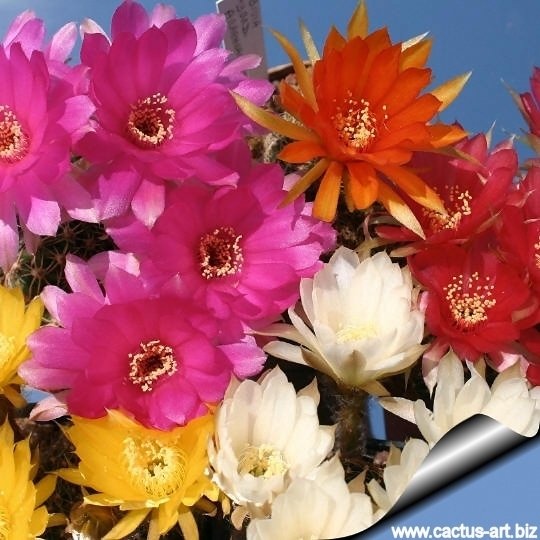
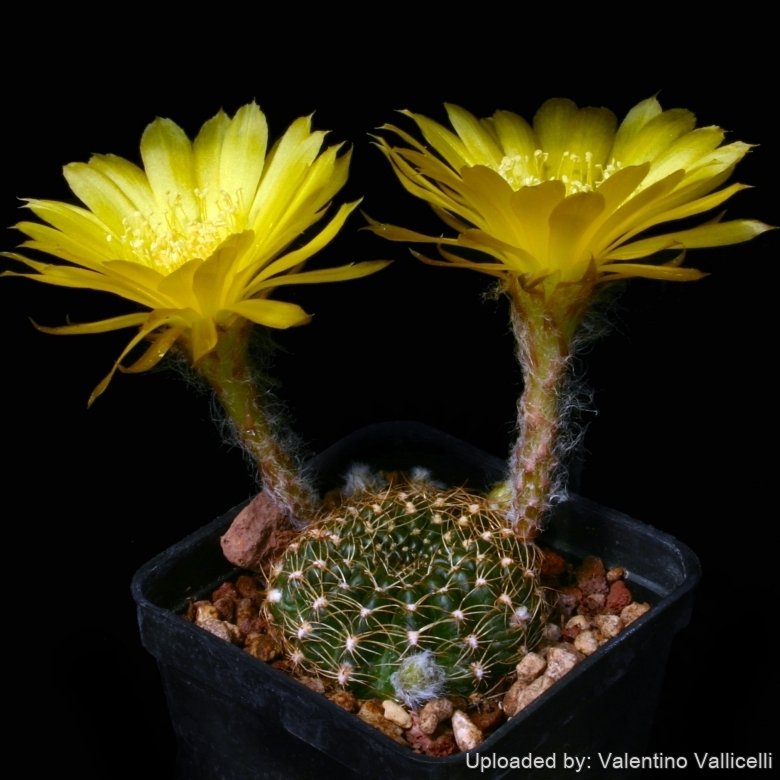
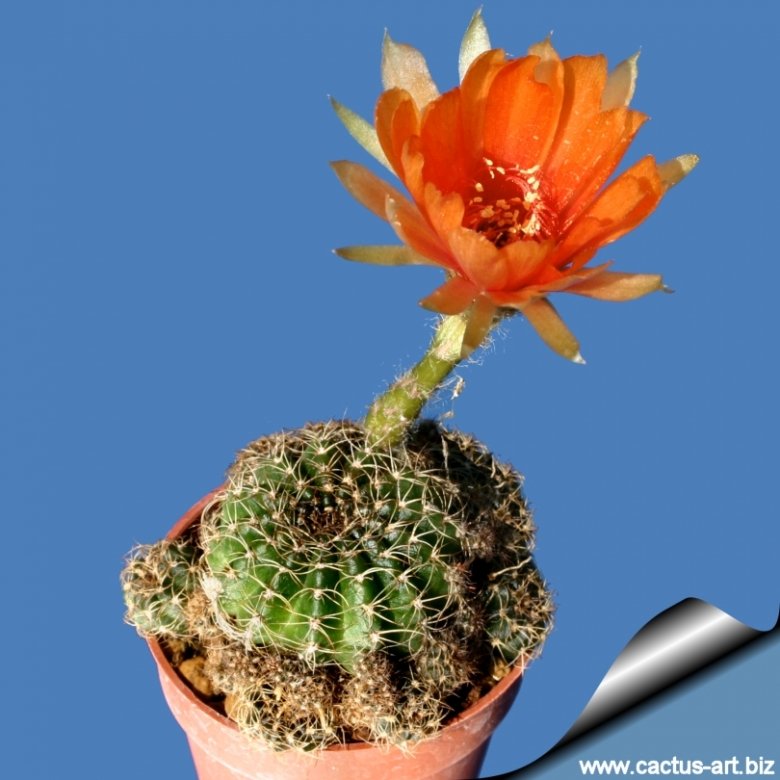
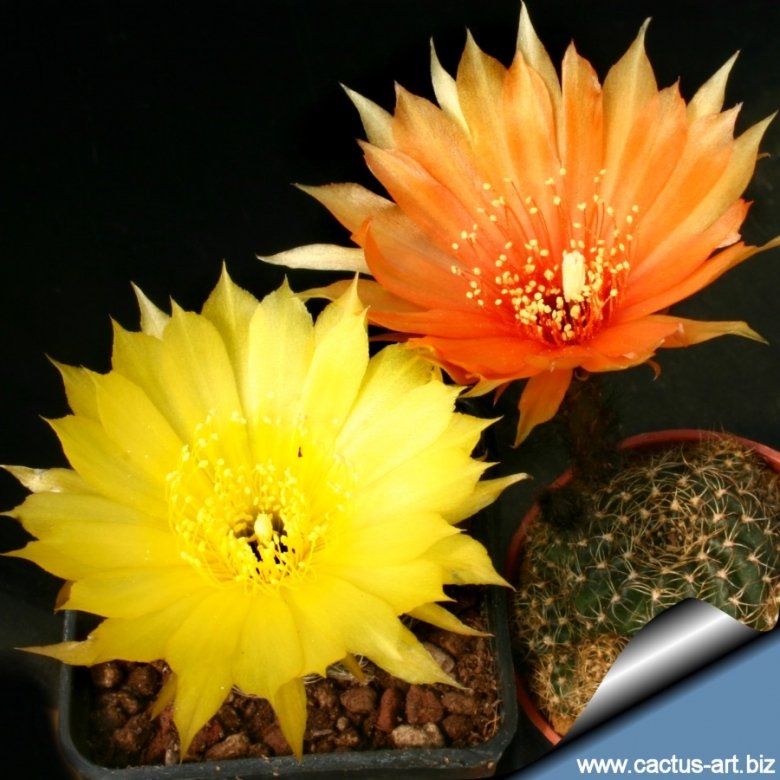
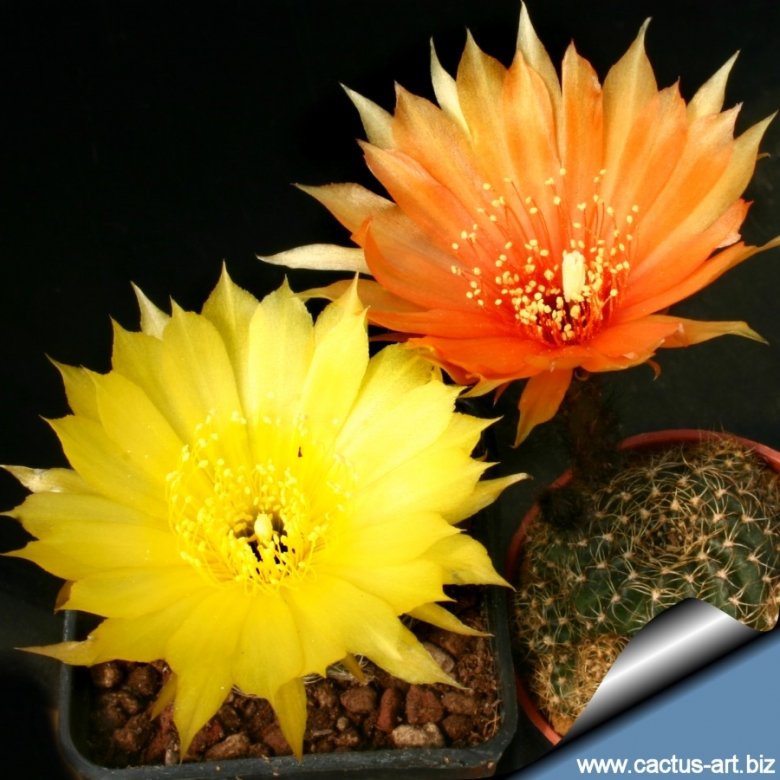
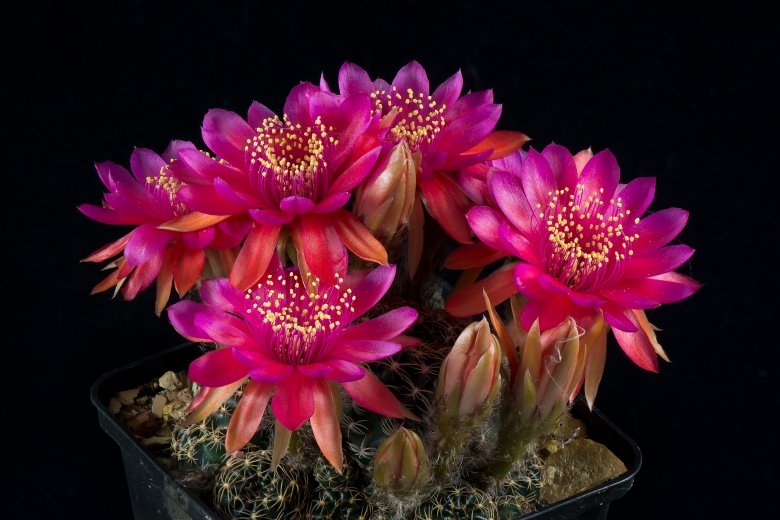
Lobivia arachnacantha (Echinopsis ancistrophora subs. arachnacantha) is an example of one of the smaller clustering species that were once in the genus lobivia, this free-flowering plant clusters freely and will form large clumps in time. The relatively large flowers are easily produced and can be yellow to orange (occasionally white, violet or shades of red).
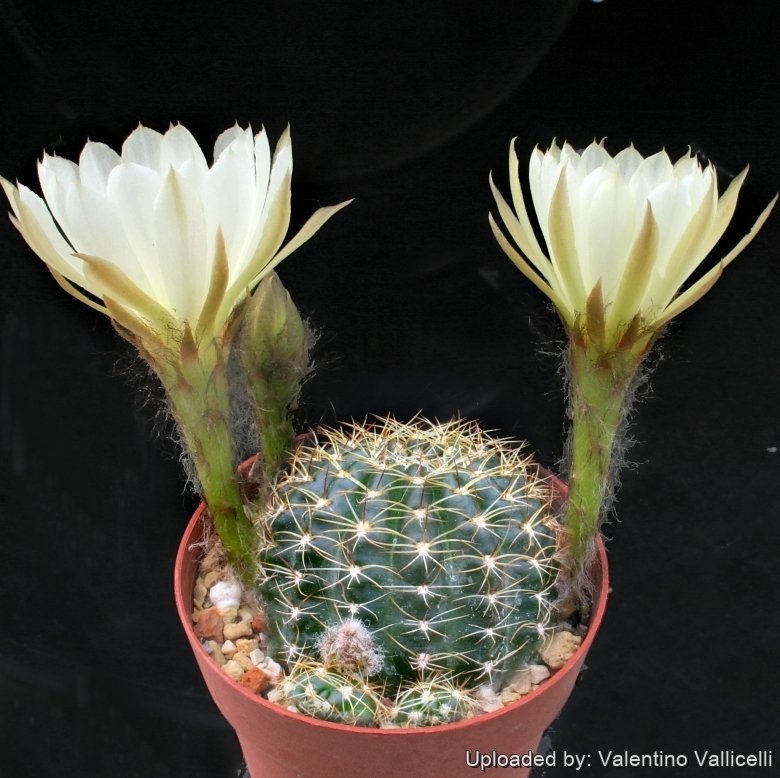
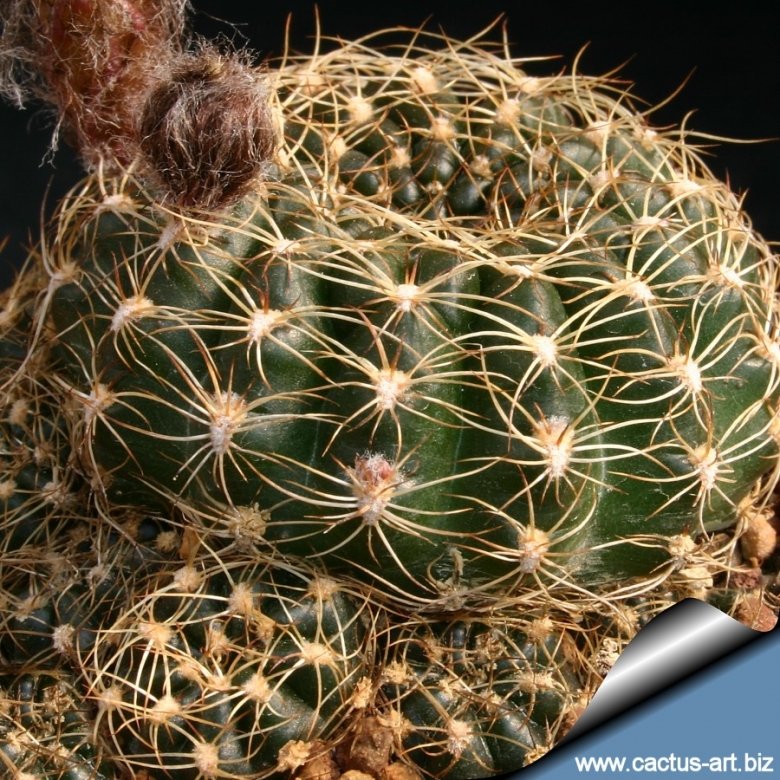
Stem: Flattened to spherical, dark green with ribs weakly notched. Each head is 2-4 cm thick.
Ribs: c. 14.
Radial spines: 9-15 resembling spiders’ legs, c. 5 mm long, pale to dark brown, or yellowish-brown at first, later whitish, bristly, curved and short.
Central spine: Often missing, if present 1.5 mm long, black, upcurved.
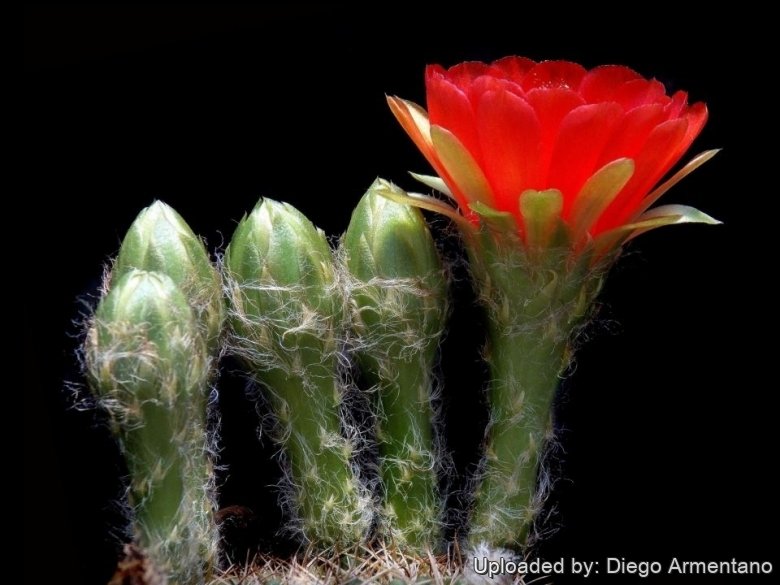
Flowers: Very showy, about 5 cm cm wide with a slender floral tube up to 5cm (or more) long, commonly golden yellow to orange often bigger than the plant itself. But red, violet or white coloured flowers are also reported.
Blooming season: Blooms open during the day from spring through summer.
Fruits: Reddish green.
Similar species: Echinopsis tiegeliana.
Origin and Habitat
Bolivia (Santa Cruz, Chuquisaca, Samaipata, Cochabamba ) and northern Argentina (Salta).
Altitude range: 1800-2600 metres above sea level.
Habitat and ecology: This species grows in stony hill in places with reliable summer rainfall.
Cultivation and Propagation
It is a good beginner cactus and very easy to grow and flower. It is quite resistant and occasionally gets covered by bright showy yellow blossoms also neglected in a dry windowsill. Requires good drainage and very porous potting mix. Watering Needs Need regular water in spring to fall but do not water again until dry. Also, it is a species that is dormant in the winter and require very little water (maybe even none) during the cold months.
Frost Tolerance: Light frost protection required. Minimum of 5ºC for safe growing (but hardy up to -5°C or less) but some clones are hardy to lower temperatures. Requires to be kept below 7°C in winter to flower well in the spring.
Sun Exposure: Requires bright light (protect from strong midday sun). In shade the body colour will remain mostly green, while full sun will darken it and give it red/brown body colour. Can be sunburned if moved from shade/greenhouse into full sun too quickly. The amount of sunlight it can withstand without scorching depends upon the how hot it becomes in the summer in the locale in which it is planted. It will have more colour if it receives more light. During the spring it may be able to take full sun until the heat arrives at the end of spring. In an area that has hot afternoon sun, it may be able to take full morning sun, but requires afternoon shade or afternoon light shade.
Propagation: Seeds or offsets that appear at the base; leave them attached to form a cluster, or wait until they are 1/3 the size of the parent and then detach and plant.
Bibliography
Major references and further lectures
-
Edward Anderson “The Cactus family” Timber Press, Incorporated, 2001
-
James Cullen, Sabina G. Knees, H. Suzanne Cubey “The European Garden Flora Flowering Plants: A Manual for the Identification of Plants Cultivated in Europe, Both Out-of-Doors and Under Glass” Cambridge University Press, 11/Aug/2011
-
David R Hunt; Nigel P Taylor; Graham Charles; International Cactaceae Systematics Group. “The New Cactus Lexicon” dh books, 2006
From llifle page Echinopsis arachnacantha subs. densiseta
Description
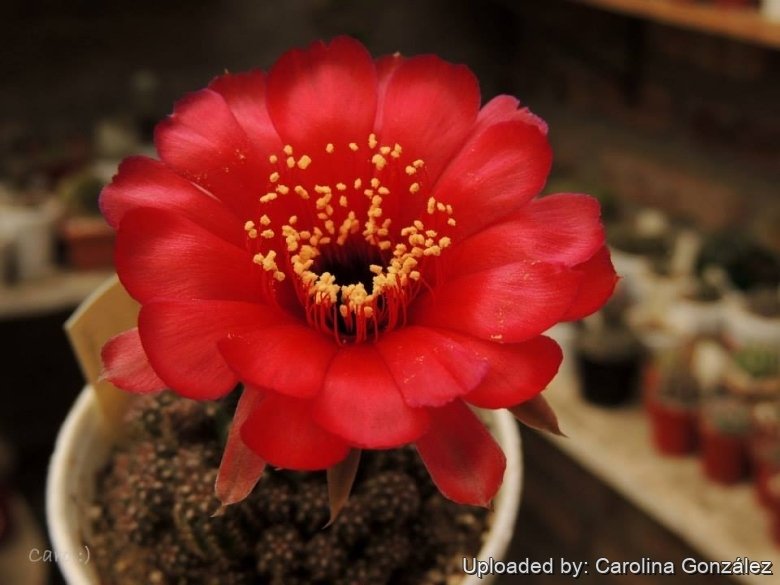
Echinopsis ancistrophora var. densiseta (a.k.a. Lobivia arachnacantha ssp densiseta) is a cold hardy species in the Cactus family (Cactaceae). This is one the several questionable varieties of the morphologically variable Echinopsis ancistrophora subs. arachnacantha (a.k.a. Lobivia arachnacantha), a taxon growing widespread in southern Bolivia and northern Argentina. The great variability of Echinopsis ancistrophora is due to the fact that cross pollination among different varieties (in habitat and especially in collections) is very frequent and it can be quite difficult to determine what is the “pure type” and the cross. The var. densiseta has longer spines than some of the others. And when the plant is hunkered down over winter the spines really are quite dense (hence the specific name). In the growing season they are more spread out, but if you compare the plant with var. torrecillasensis, for instance, then it really does have dense spines, however the colouring, size and density of spines is greatly influenced by the conditions of culture, at lower light levels the spines are less numerous, delicate and paler, while with strong solar radiation the spines are stronger with a darker tint. The var. densiseta has red blossoms, but sometime with a more pink or orange tint, while the var. arachnacantha has often yellow or orange flowers.
Origin and Habitat
Vallegrande, Santa Cruz, Bolivia. Echinopsis ancistrophora var. densiseta grows just at east of var. vallegrandensis.
Cultivation and Propagation
Echinopsis ancistrophora var. densiseta is a good beginner cactus and very easy to grow and flower. It is quite resistant and occasionally gets covered by bright showy yellow blossoms also neglected in a dry windowsill. Requires good drainage and very porous potting mix. Watering Needs Need regular water in spring to fall but do not water again until dry. Also, it is a species that is dormant in the winter and require very little water (maybe even none) during the cold months.
Frost Tolerance: Light frost protection required. Minimum of 5ºC for safe growing (but hardy up to -5°C or less) but some clones are hardy to lower temperatures. Requires to be kept below 7°C in winter to flower well in the spring.
Sun Exposure: Requires bright light (protect from strong midday sun). In shade the body colour will remain mostly green, while full sun will darken it and give it red/brown body colour. Can be sunburned if moved from shade/greenhouse into full sun too quickly. The amount of sunlight it can withstand without scorching depends upon the how hot it becomes in the summer in the locale in which it is planted. It will have more colour if it receives more light. During the spring it may be able to take full sun until the heat arrives at the end of spring. In an area that has hot afternoon sun, it may be able to take full morning sun, but requires afternoon shade or afternoon light shade.
Propagation: Seeds or offsets that appear at the base; leave them attached to form a cluster, or wait until they are 1/3 the size of the parent and then detach and plant.
Bibliography
Major references and further lectures
-
Walter Rausch “Lobivia: The Day Flowering Echinopsidinae from a Geographical Distribution Point of View”, Volumes 1-3 R. Herzig, 1975
-
Cactus and Succulent Journal, Volume 81(1-6): 38 2009
Source: Echinopsis arachnacantha subs. densiseta, LLIFLE - Encyclopedia of living forms, CC-BY-SA, retrieved 2026-10-25.
Gallery