Description
Lobivia wrightiana is a solitary or rarely clumping species and one of the more popular, hardy, and beautiful among the small, globe-shape Easter Lily cacti.
Stem: Flattish-globose to more or less clavate or short-cylindric ash-green to dark greyish green up to 7 cm tall, 5 cm in diameter. Ribs (13-)16-17(-19), slightly spiral, low, slightly tuberculate, with round white areoles.
Root: Large turnip-like storage root.
Central spines: Conspicuous, erect, curved to almost hooked, variable in length mostly 4-6 cm long but sometime up to 18 cm long (there are also forms with only short spines).
Radial spines: Thin, variable in number and length.
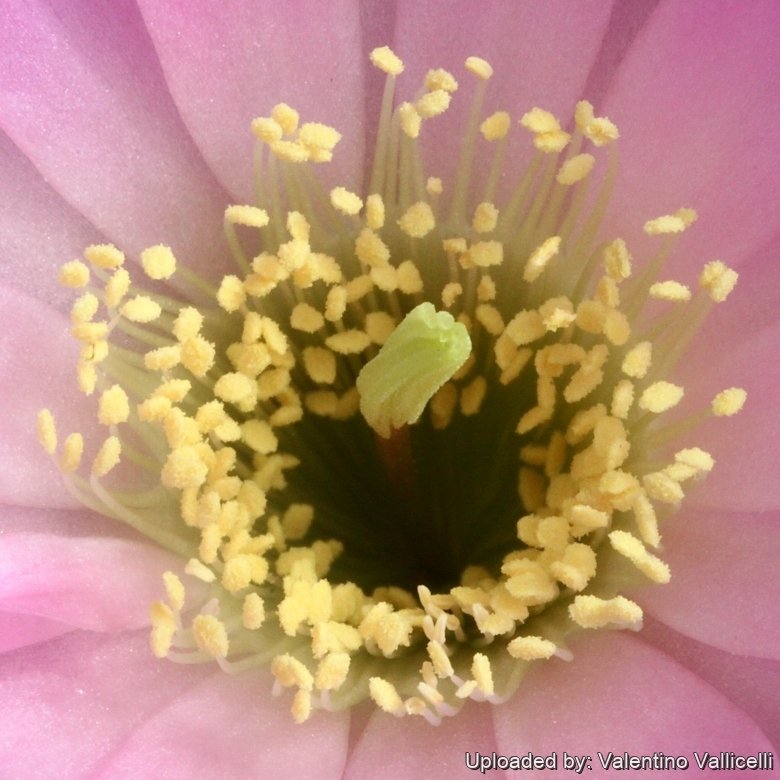
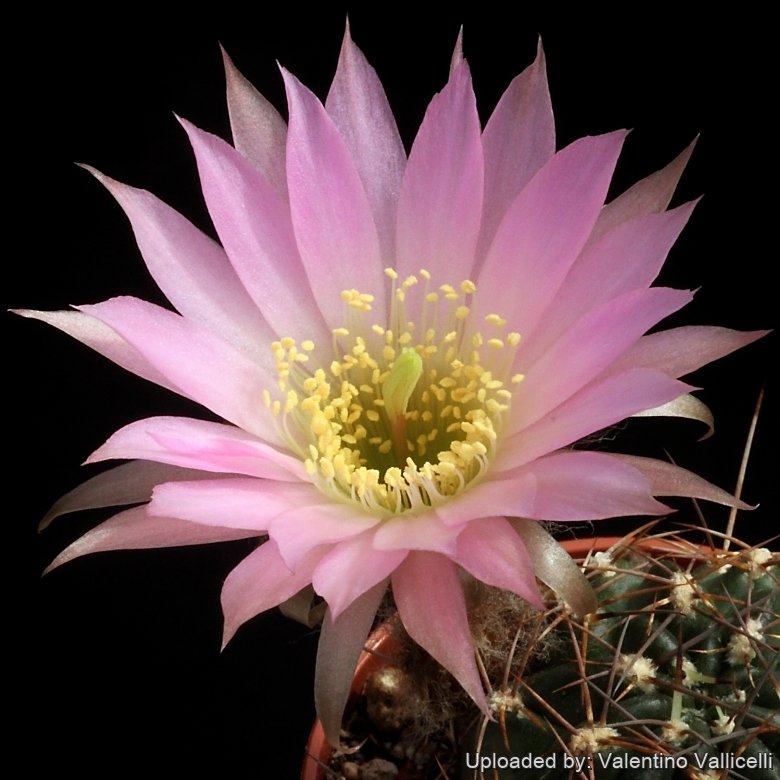
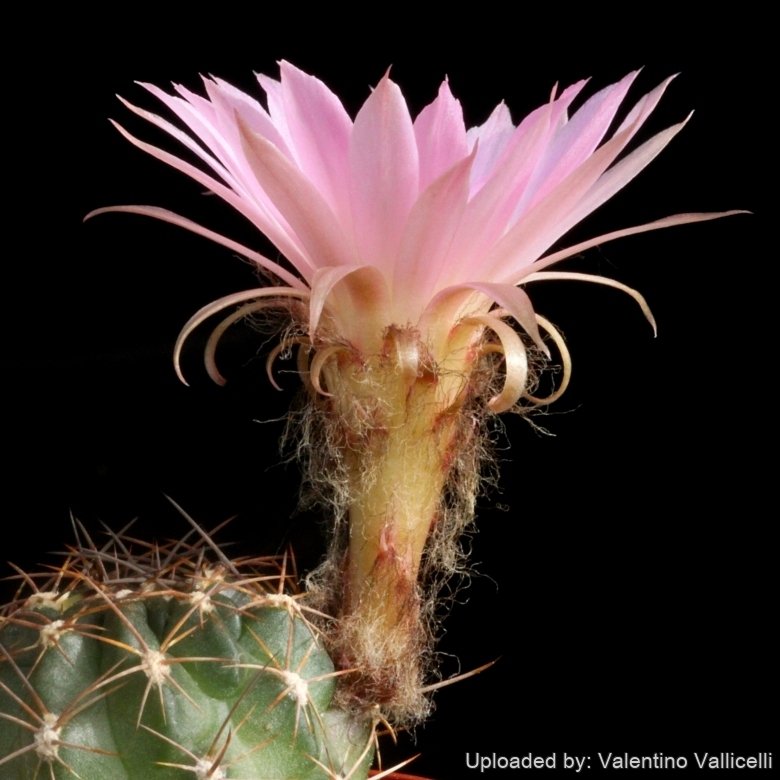
Flowers: On the side of the stem, 4 cm in diameter, 4-5(or more) cm tall, pale lilac to bright-pink with often lighter throats, stamens adpressed, short, longer in older specimens; the flower tube is long and narrow.
Blooming season: Flowers are produced in spring and remain open for about four days. Easy to grow and flower if kept cool during winter.
Origin and Habitat
Central Peru.
Habitat: Mountains and high mountains.
Cultivation and Propagation
It is a good beginner cactus and easy to grow and flower. It is quite resistant and occasionally gets covered by bright showy blossoms also neglected in a dry windowsill. Requires good drainage and very porous potting mix. Watering Needs Need regular water in spring to fall but do not water again until dry. Also, it is a species that is dormant in the winter and require very little water (maybe even none) during the cold months. Frost Tolerance: Light frost protection required. Minimum of 5ºC for safe growing (but hardy up to -5°C or less). Requires to be kept below 7°C in winter to flower well in the spring. Sun Exposure: Requires bright light (protect from strong midday sun). In shade the body colour will remain mostly green, while full sun will darken it and give it red/brown body colour. Can be sunburned if moved from shade/greenhouse into full sun too quickly. The amount of sunlight it can withstand without scorching depends upon the how hot it becomes in the summer in the locale in which it is planted. It will have more colour if it receives more light. During the spring it may be able to take full sun until the heat arrives at the end of spring. In an area that has hot afternoon sun, it may be able to take full morning sun, but requires afternoon shade or afternoon light shade.
Propagation: Seeds or offsets that appear at the base; leave them attached to form a cluster, or wait until they are 1/3 the size of the parent and then detach and plant.