Publication: [Basionym: Lobivia lateritia var. citriflora Rausch 1980]
Description
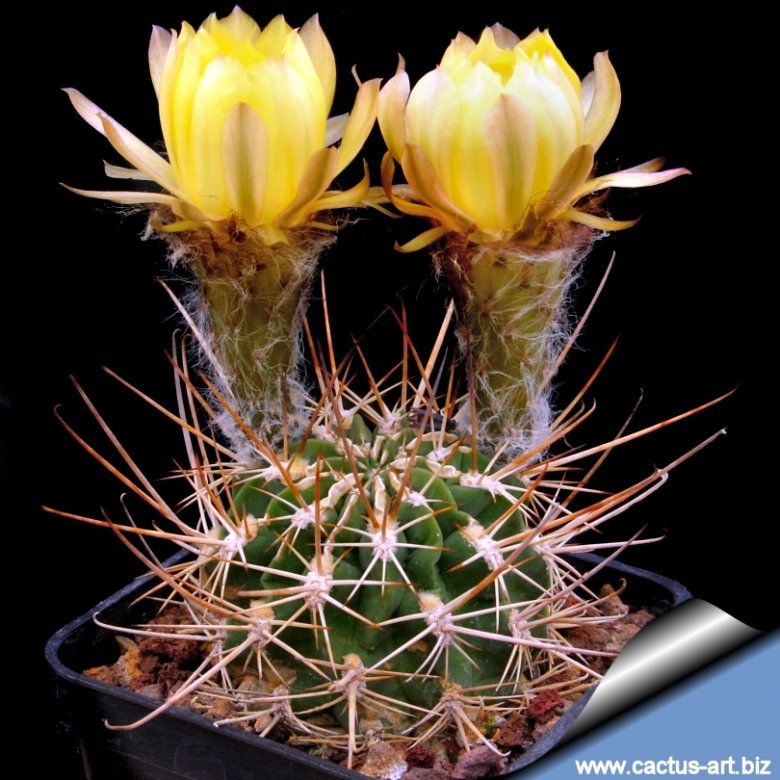
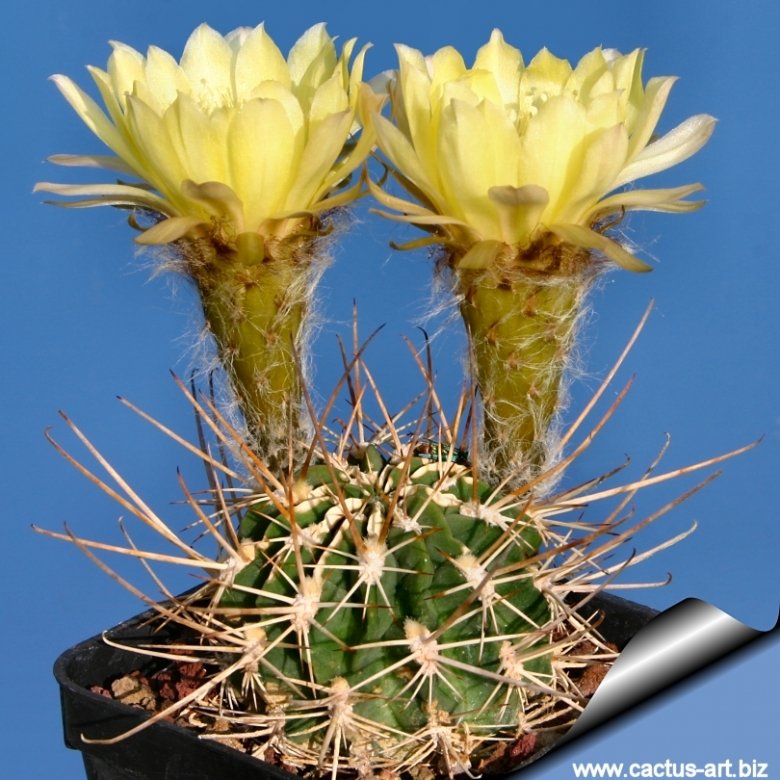
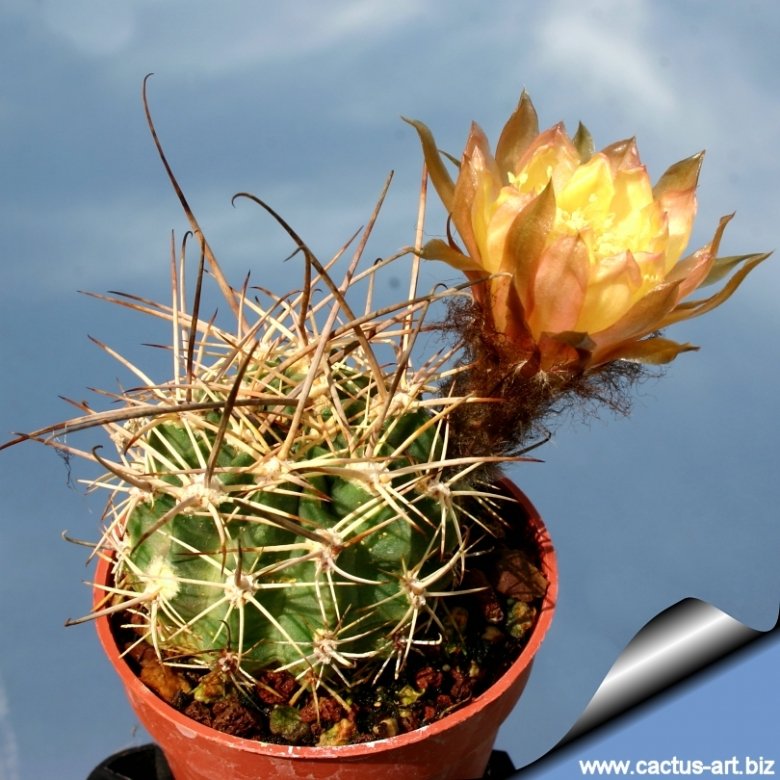
Lobivia lateritia var citriflora is a pretty species, with a low thick flat to cylindrical stem 15 cm high and 9 cm thick. Plant almost always grows solitary but sometime ramifies from the base to form clusters.
Root: Tap root.
Ribs: About 18, broad at the base, acute straight, approx 1 cm high.
Areoles: Felted1-2 cm apart.
Radial spines: 9-10 straight interlaced horizontally with one another, up to 5 cm long, whitish, yellowish or brownish.
Central spines: 1 to 2 ± longer than the radials curved upward, somewhat thickened at the base sometime slightly hooked. Older plant begins to produce very long spines (up to 10 cm in some clones)
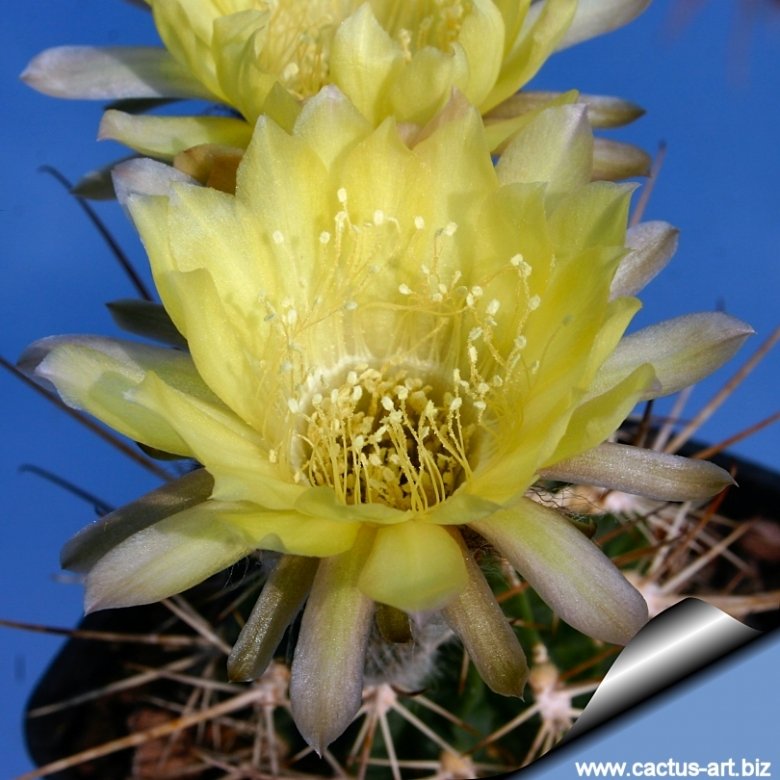
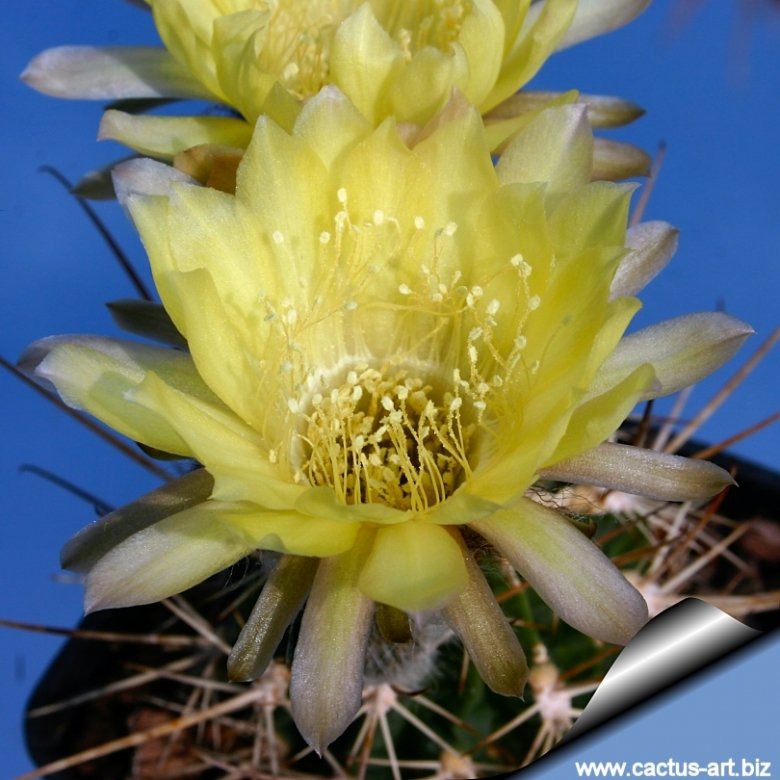
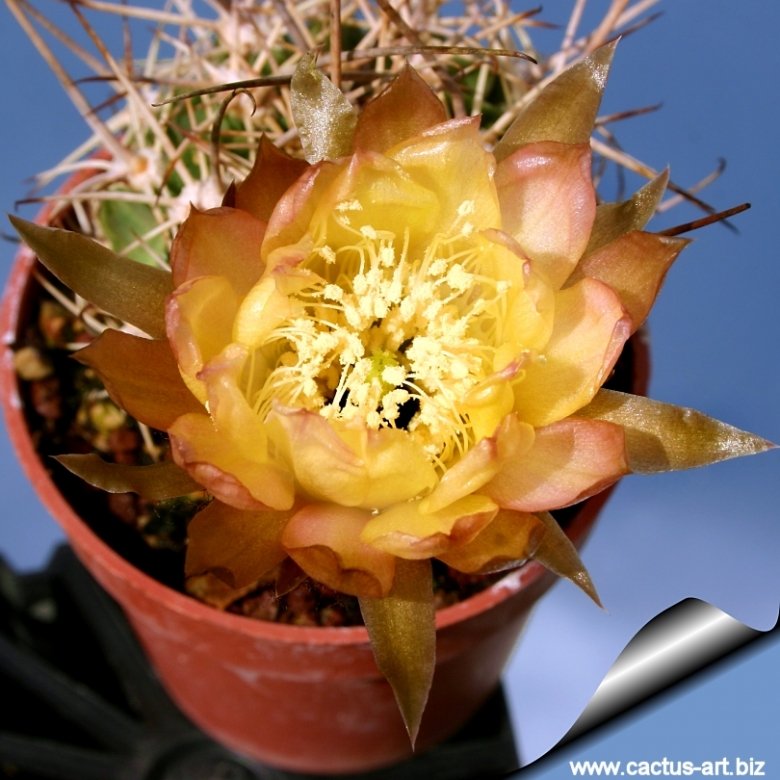
Flowers: Short funnel-formed 3 to 5 cm long, 5-6 cm in diameter, the name “citriflora” means “lemon-like flower” and refers to the lemon-yellow or whitish-yellow colour of the blooms. colour) that are usually clearer at centre. Inner perianth segments oblong, acute. Scales on the ovary and flower tube lanceolate, acute with dull-white hairs in the axil. Filaments yellow, anthers yellowhis-white. Stigma lobes about 7 or 8.
Blooming season: Bloom in the daytime, from late spring to summer and remain open for about three days.
Fruits: Similar to theLobivia lateritia var. kupperiana.
Origin and Habitat
Potosi, (Southern Bolivia) Type location close Talina. Altitude 3300-3500 m
Cultivation and Propagation
It is a summer grower species that offers no cultivation difficulties. Water regularly in summer (but do not overwater ) Needs a large pot to accommodate a large root system. Use a very draining and porous substrate, since it’s natural habitat is in volcanic soil, it has adapted to more acidic conditions; keep rather dry in winter.
It is quite frost resistant if kept dry (hardy to -5° C) Outside full sun or afternoon shade, inside needs bright light, and some direct sun.
Propagation: Propagate by seed or shoots.
Notes
The Echinopsis lateritia complex comprises a large number of infraspecific taxa, differing in various combinations of flower colour, spine colour, number and thickness of central spines, and other characters. The taxonomic and geographic boundaries among the segregate species or infraspecific taxa of E. lateritia remain nebulous and controversial. In no place do pure populations exist sympatrically, and all taxa appear completely interfertile.
Bibliography
Major references and further lectures
-
Edward Anderson “The Cactus family” Timber Press, Incorporated, 2001
-
James Cullen, Sabina G. Knees, H. Suzanne Cubey “The European Garden Flora Flowering Plants: A Manual for the Identification of Plants Cultivated in Europe, Both Out-of-Doors and Under Glass” Cambridge University Press, 11/Aug/2011
-
David R Hunt; Nigel P Taylor; Graham Charles; International Cactaceae Systematics Group. “The New Cactus Lexicon” dh books, 2006
-
N. L. Britton, J. N. Rose “The Cactaceae. Descriptions and Illustrations of Plants of the Cactus Family.” Volume 4, The Carnegie Institution of Washington, Washington 1923
Gallery